13 Rustic Living Room Ideas
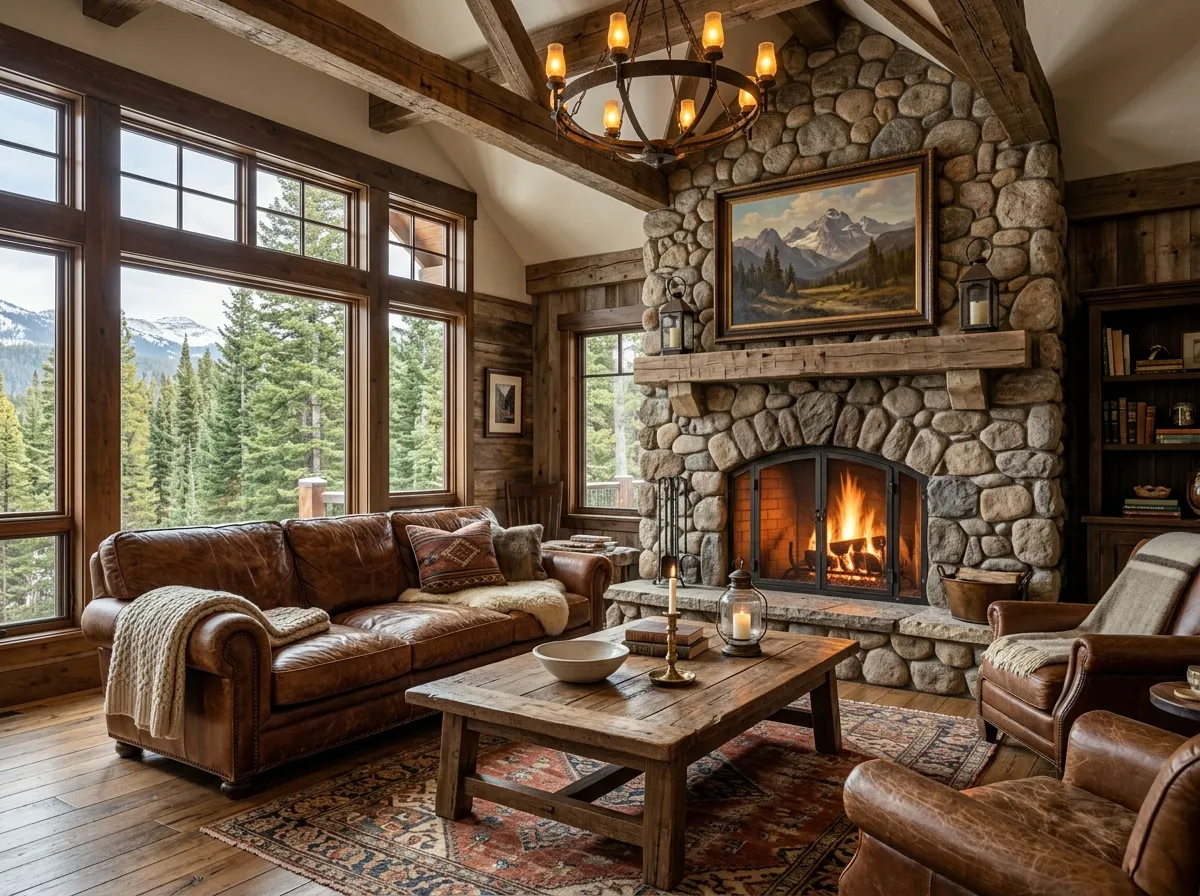
The rustic living room does not apologize for itself. It walks into the room with the same unhurried confidence of someone who understands the weight of good leather and the warmth of a wood fire. Someone who values honest materials over fashionable ones. Someone who has no interest in careful calculated decorating that produces rooms nobody actually wants to sit in. The rustic aesthetic is built on materials that are genuinely tough, genuinely beautiful, and genuinely honest about what they are. Timber that shows its grain and its knots. Leather that develops patina with use. Stone that carries geological history. Iron that communicates strength through weight and finish. These materials improve with time rather than dating with it. A living room built around them has quality of settled permanence that more fashionable interiors can never achieve.
The appeal of rustic living room extends beyond specific regions or styles. It speaks to something universal about desire for warmth, solidity, and shelter in the deepest sense. These thirteen ideas translate rustic aesthetic into practical design decisions that any living room can accommodate. They give you tools to create space of genuine rustic character regardless of where you live or what your living room currently looks like.
1. Build Around a Stone Fireplace as Focal Point
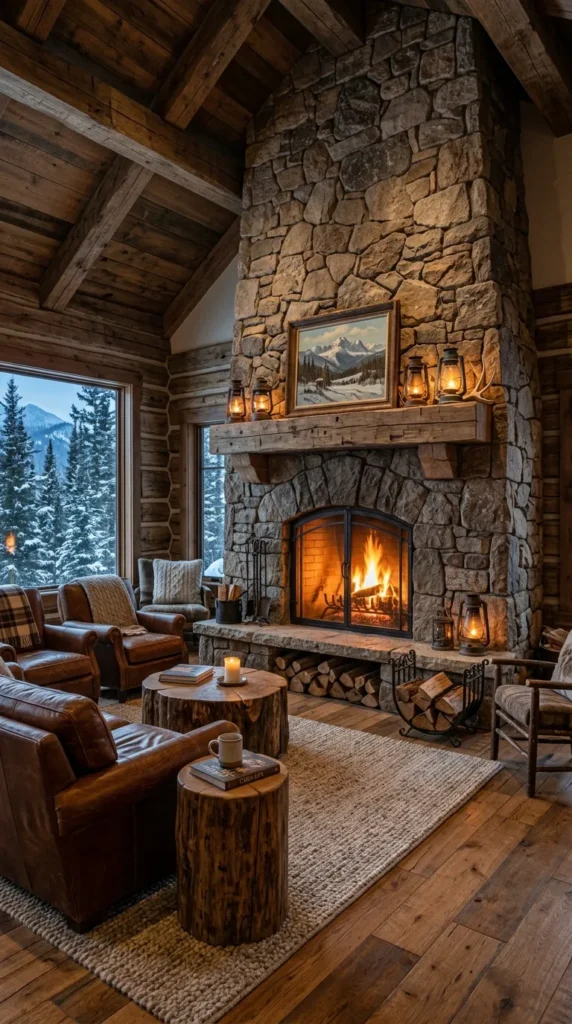
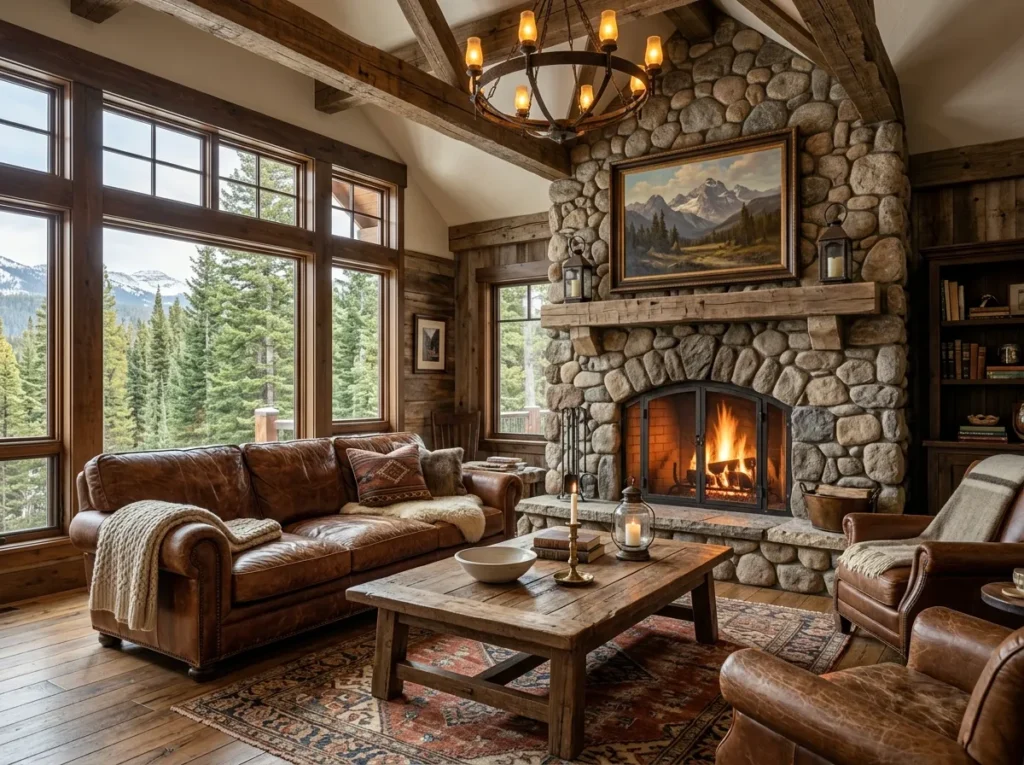
No single element defines the rustic living room more completely than a substantial stone fireplace. A fireplace built from rough hewn stone, fieldstone, river rock, or stacked flagstone creates focal point of extraordinary material beauty and architectural presence. The stone communicates permanence, geological history, and the quality of strength that rustic aesthetic values above almost everything else.
Design stone fireplace when stone is allowed to be itself rather than shaped into overly formal forms. Rough natural stones in varied sizes and tones laid in irregular courses create fireplace of genuine organic character. The hearth should be generous in proportions, deep enough for proper wood fire and wide enough to create gathering zone in front of it. Heavy timber mantelpiece above the stone firebox in rough sawn wood with original saw marks intact completes the fireplace and provides primary display surface for objects and art that tell story of your life and interests.
2. Choose Leather Seating as Foundation
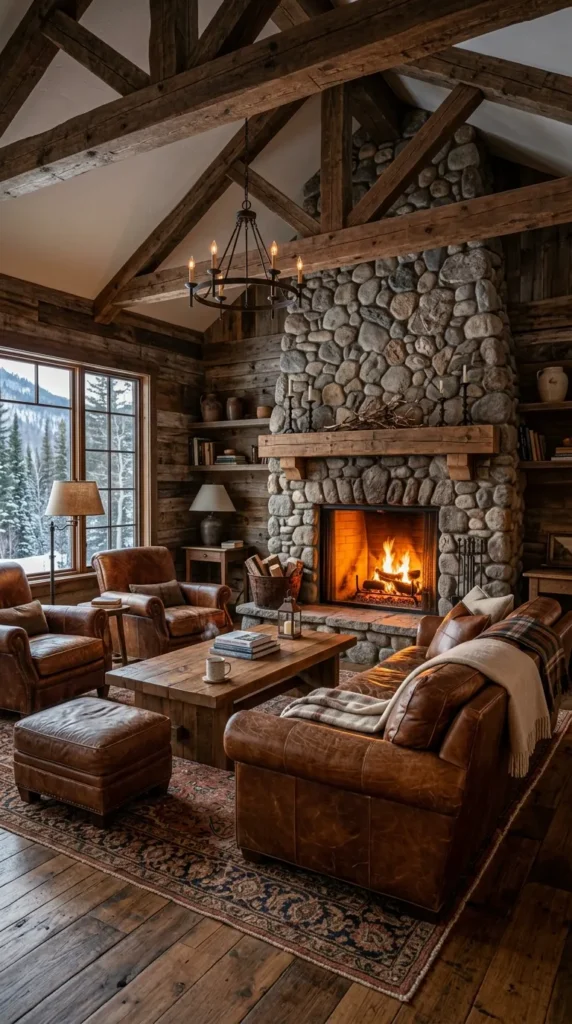
Leather is the upholstery material of rustic living room. Not because it looks more expensive though it does, not because it is more durable though it is, but because leather carries specific quality of material honesty and working life association that rustic aesthetic requires. Good leather sofa in warm tan, deep saddle brown, or rich cognac communicates through material character alone the honest unaffected strength that rustic aesthetic expresses in every design choice. Unlike fabric upholstery that shows wear as deterioration, leather shows wear as character, developing patina and suppleness that makes it more beautiful the longer it is lived with.
Choose leather seating in generous proportions and comfortable depths. The rustic living room is not place for narrow upright sofas that prioritize visual elegance over comfort. Deep seats, broad arms, substantial cushioning, these create leather seating that feels genuinely rustic in its invitation to sit down and stay. Pair leather sofa with armchairs in slightly different leather tone or texture, flanking fireplace, creating layered seating composition that rustic room needs to feel complete and comfortable for gatherings.
3. Install Reclaimed Timber Flooring
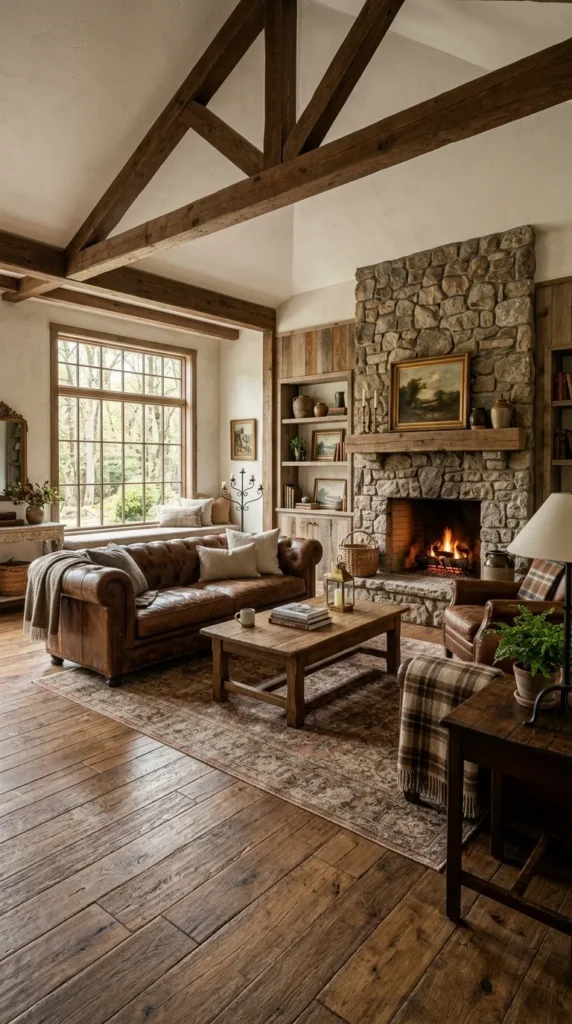
The floor of rustic living room should feel like it has been there for long time. Reclaimed timber flooring achieves this quality more convincingly than any other flooring option. Reclaimed timber boards from old barns, warehouses, or demolished buildings carry surface character of their previous lives in every mark, nail hole, and color variation that decades of existence created. This accumulated character creates floor of genuine material depth and historical resonance that newly milled timber cannot approach because it has not yet developed patina that age and use produce.
Wide plank reclaimed timber flooring with individual boards thirty centimeters or more in width creates floor of particular visual presence and rustic character. Broad boards emphasize natural qualities of timber more completely than narrow strip flooring. Finish reclaimed timber floors with hard wax oil that protects surface while maintaining natural color and texture rather than coating it with polyurethane that seals the wood away. The wax oil allows the wood to breathe and maintain tactile quality that makes reclaimed timber so beautiful to walk on.
4. Use Natural Fiber Rugs for Warmth
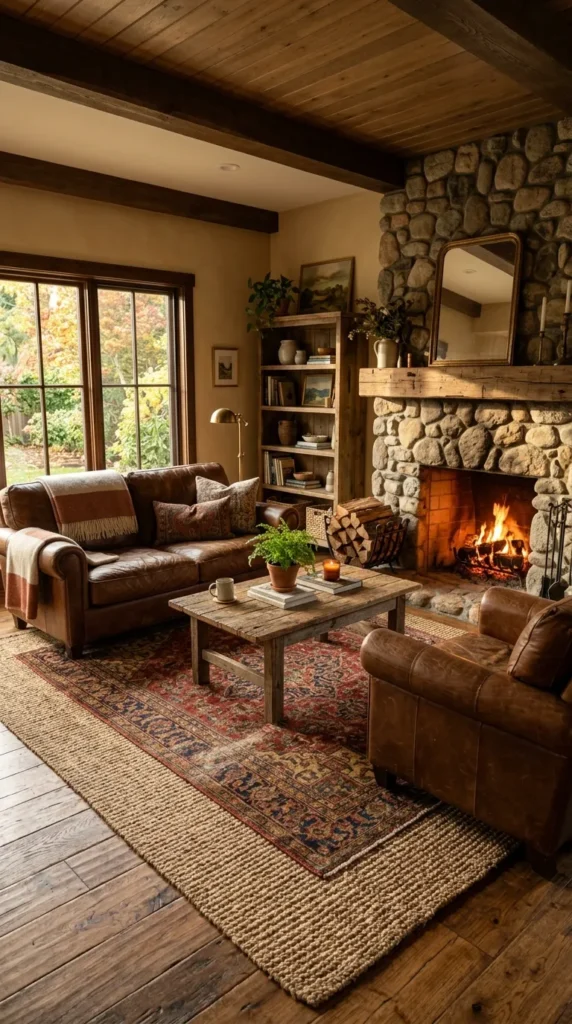
Natural fiber rugs in jute, sisal, and wool anchor rustic living room and provide foundation for color and pattern. Large neutral natural fiber rug in seating area grounds the space and provides contrast to darker timber flooring. The natural material quality of these rugs coordinates perfectly with leather seating and stone fireplace. The neutral tone allows for layering additional rugs or throws in warmer colors creating depth and visual interest while maintaining rustic aesthetic.
Vintage or antique rugs with genuine patina bring additional character and story to rustic space. A worn Turkish rug or faded Persian piece in earth tones creates focal point of color and pattern that natural fiber alone cannot provide. The layering of multiple rugs in different materials and tones creates casual accumulated quality that rustic aesthetic values. Size matters considerably. A rug too small looks tentative. Choose largest size that suits proportions of seating area.
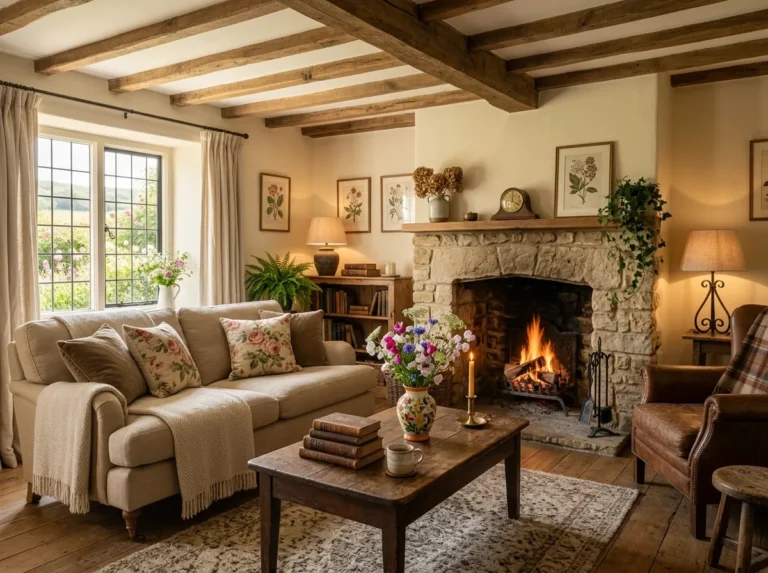
Love cozy countryside interiors? Explore 14 Cottagecore Living Room Ideas for charming spaces filled with warmth and character.
5. Expose Timber Ceiling Beams
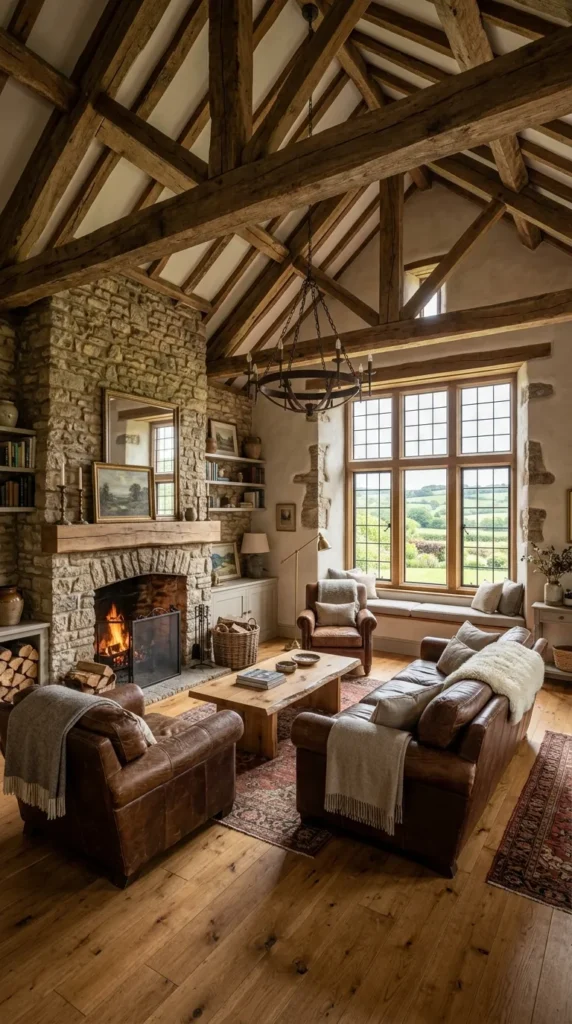
Exposed timber ceiling beams in rustic living room do for ceiling what reclaimed flooring does for floor. They bring natural material presence of genuine wood into upper zone and create quality of enveloping warmth that flat painted ceilings cannot approach. Heavy hewn beams in dark stained timber running across white or cream ceiling create graphic contrast that is characteristic of rustic aesthetic. The beams create sense of structural solidity overhead contributing to feeling of shelter and permanence that rustic living room values.
Dark stained beams against white ceiling create most dramatic and strongest rustic version of this treatment. Natural unstained beams in warm pine or oak create lighter slightly more refined version. Faux beams in lightweight timber casing attached to ceiling make this treatment accessible in rooms where genuine structural beams do not exist. Whatever the beam material space them generously across ceiling rather than crowding them, allowing white or cream ceiling surface between beams to breathe and ensuring beams create rhythm and drama.
6. Incorporate Wrought Iron Details
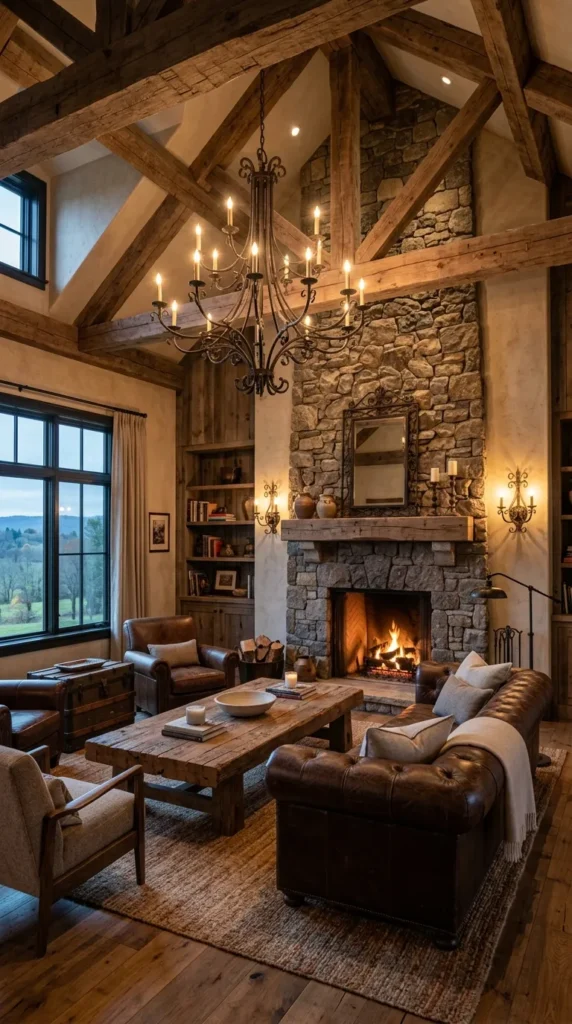
Wrought iron and dark forged metal are hardware materials of rustic living room, appearing in curtain rods, light fixtures, fireplace tools, cabinet pulls, and decorative objects. Iron in rustic living room does not pretend to be anything other than what it is. It does not imitate gold or silver. It presents its own color, weight, and surface quality with directness and confidence consistent with rustic aesthetic’s broader attitude toward materials and honesty.
Iron curtain rods with simple finials hold curtains in heavy linen or canvas. Iron chandelier with candle style bulbs provides ambient lighting with atmospheric character. Iron fireplace tools in simple strong forms stand beside hearth. Iron cabinet pulls and door hardware throughout room create consistent material thread tying every functional detail into same design language. Large iron wall clock or decorative iron wall panel adds sculptural element that suits material palette and scale of rustic room. Cumulative effect of iron present throughout room in multiple forms creates material coherence and quality of grounded honest character.
7. Display Nature and Landscape Inspired Art
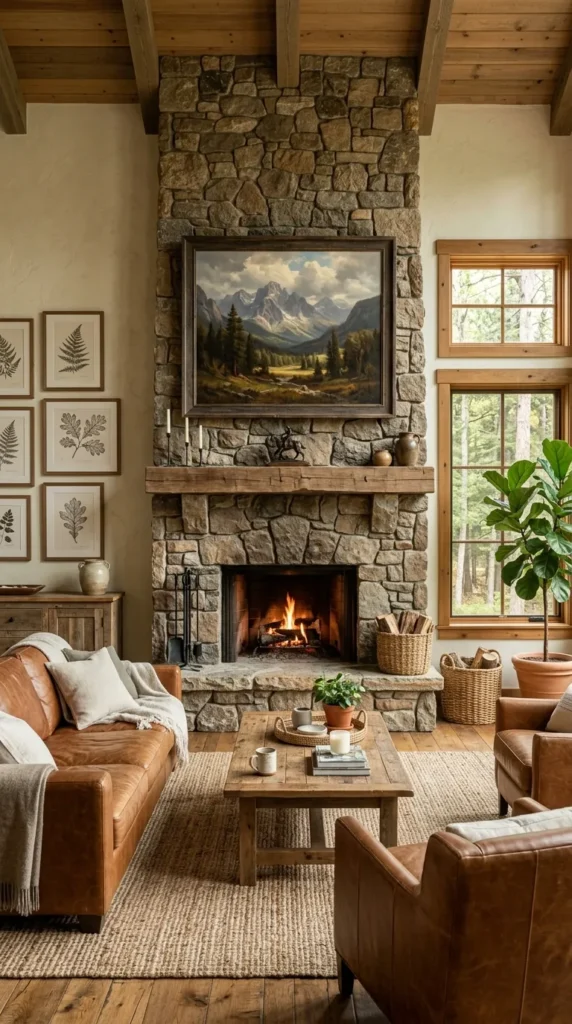
Art on walls of rustic living room carries responsibility for communicating aesthetic’s character. Landscape paintings, botanical illustrations, nature photography, vintage naturalist drawings, topographic maps, all of these subject matters belong naturally in rustic living room and create wall presence of genuine thematic coherence. The frames are as important as images. Heavy timber frames, dark frames, and simple frames all suit rustic aesthetic with equal authority.
Large landscape painting or photograph above fireplace is single most impactful art choice because it places image of natural world at room’s primary focal point, creating visual connection between interior space and landscape beyond walls fundamental to rustic sensibility. Choose work whose scale matches fireplace. Small painting above large fireplace looks tentative. Large generous landscape that fills wall above mantelpiece creates impact that primary focal point deserves. Mix landscape paintings with nature photography and botanical studies creating gallery arrangement of natural world themes.
8. Use Vintage and Antique Textiles
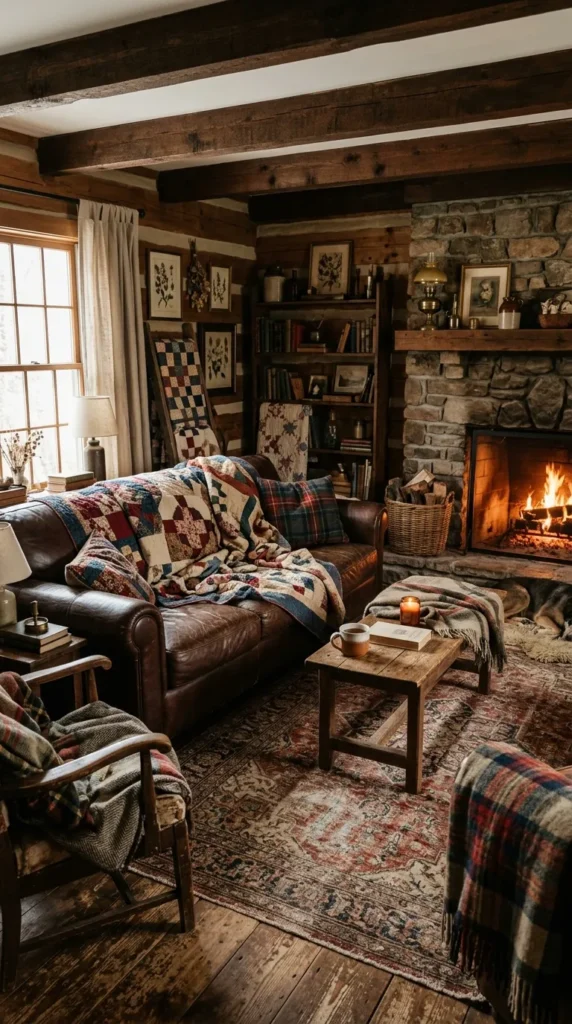
Vintage and antique textiles bring warmth and history to rustic room. Traditional patterns, faded colors, handwoven quality all contribute to authentic rustic character. Antique tapestries displayed on walls. Vintage quilts draped over seating. Antique kilim rugs layered on flooring. These textiles carry stories of their origins and create quality of accumulated history that new textiles cannot replicate no matter how well designed.
Use textiles generously rather than sparingly in rustic living room. Large antique or vintage rug anchoring seating area creates room’s strongest color and pattern statement. Vintage throw blankets draped over sofa arms bring warmth and tactile invitation. Cushions in coordinating vintage patterns on seating complete textile story. The combination of textiles in different scales and positions creates room of genuine color richness and depth that leather and timber and stone alone cannot provide.
9. Bring in Natural Antique Objects and Collectibles
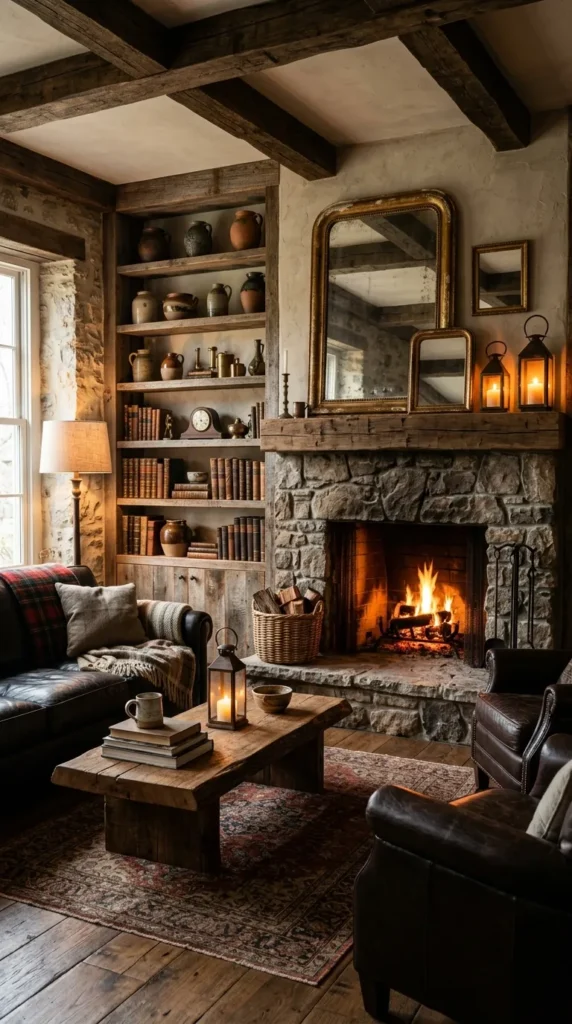
Natural objects and genuine antiques bring authenticity and specific character to rustic living room. Antique mirrors with original mercury glass. Vintage lanterns and oil lamps. Collectible pottery and ceramics. Old leather bound books displayed on shelving. Vintage botanical prints in simple frames. These elements bring specific quality of history and genuine material character that no new manufactured object can replicate.
Display antiques with intention and confidence. A collection of vintage glass bottles on open shelving. Antique frames in varying sizes hung in gallery arrangement. Vintage tools displayed decoratively on walls or shelves. Books organized by color creating visual interest on bookshelves. These objects create focal points of genuine historical character and cultural depth. The cumulative effect of antiques present throughout room grounds aesthetic in genuine history rather than manufactured rusticity.
10. Choose Warm Amber and Earth Toned Lighting
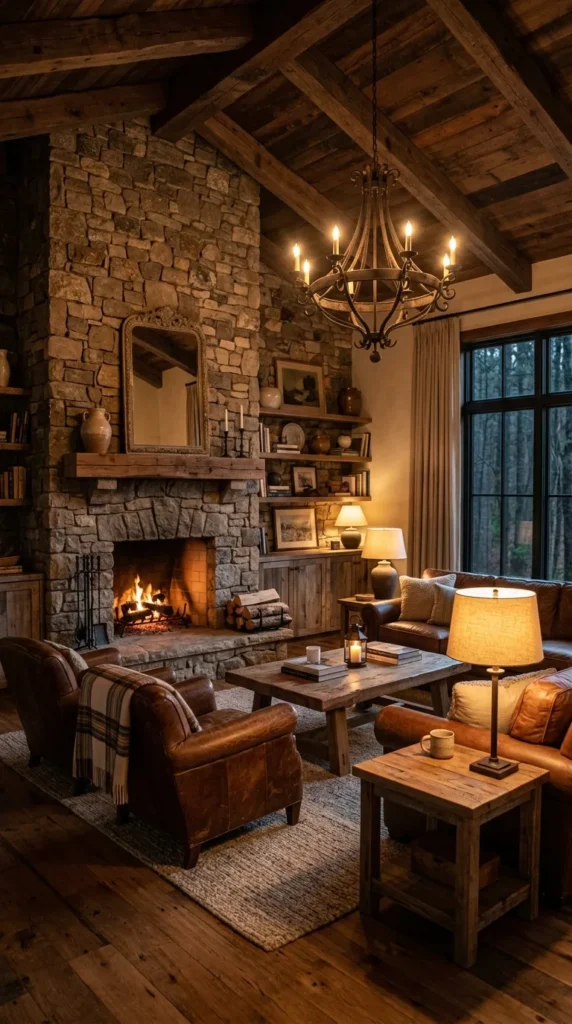
Quality of artificial light in rustic living room should evoke warm amber glow of firelight and candlelight rather than cool even brightness of contemporary LED. The rustic aesthetic at most atmospheric is evening aesthetic, room that comes alive when fireplace burns and lamps cast pools of warm amber light across seating and timber surfaces. Achieving this quality requires deliberate choices about bulb color temperature, fixture style, and number and position of light sources.
Choose bulbs in warmest available color temperature 2200K to 2700K for every fixture. At these temperatures light has warm amber quality genuinely similar to incandescent bulbs and candles and oil lamps preceding them. This warmth is essential to atmospheric quality of rustic interior at its most beautiful. Table lamps with drum shades in linen or canvas. Floor lamps with dark metal standards and warm fabric shades. Wall sconces in dark metal. Chandelier with candle style bulbs. All create layered distributed warm light environment that rustic room requires.
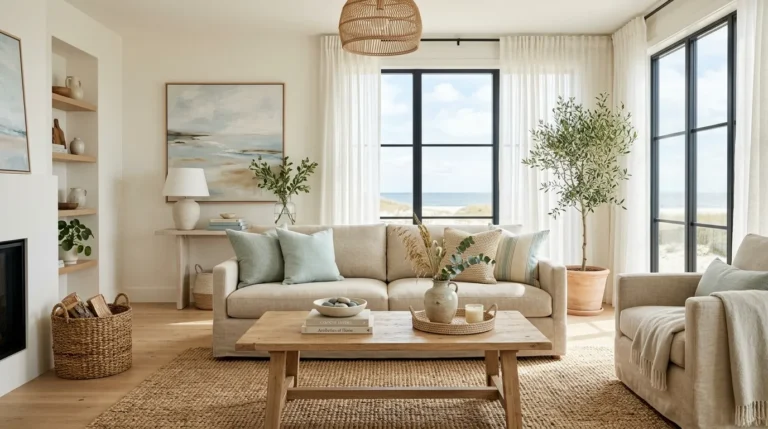
Complete the timeless look with these 16 Vintage Living Room Ideas for classic decorating inspiration.
11. Add Architectural Character and Salvaged Elements
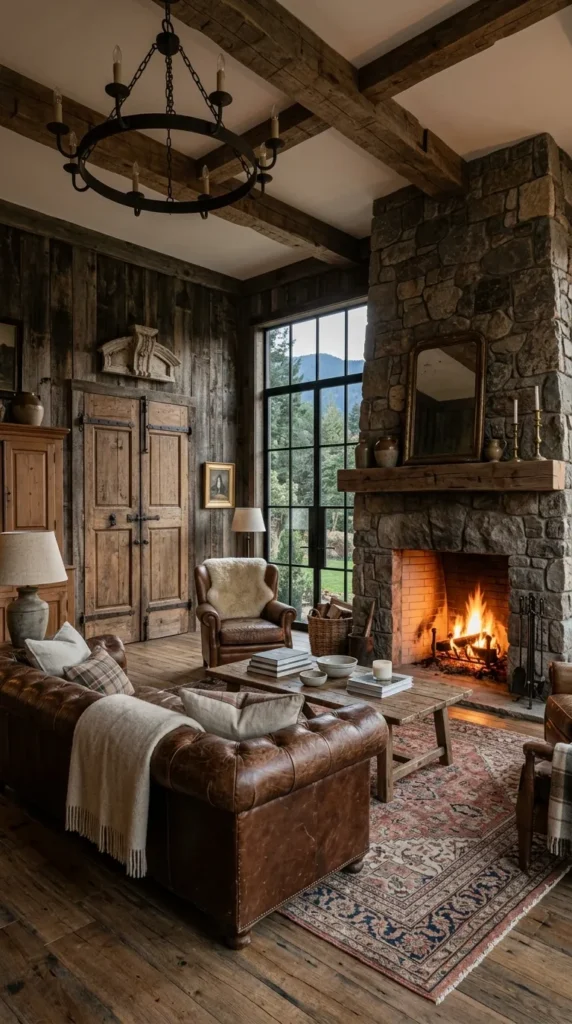
Salvaged architectural elements bring genuine character and authenticity to rustic spaces. Antique doors repurposed as wall art or headboards. Vintage mantels displayed on walls. Reclaimed paneling. Old windows as design features. Salvaged hardware repurposed throughout room. These elements carry history and genuine material character that new architectural details cannot provide. They create focal points of authentic rustic character and specific visual interest.
Genuine salvaged architectural elements are available from specialist dealers, architectural salvage yards, and online platforms where supply is genuinely abundant. Antique wooden doors hung as wall art or used as cabinet fronts. Vintage mantels displayed above fireplaces or as standalone wall features. Old windows used as room dividers or decorative wall installations. Reclaimed wood paneling on accent walls. Any of these elements creates authentic focal point grounding room’s aesthetic in genuine history.
12. Use Natural Stone and Slate Accents
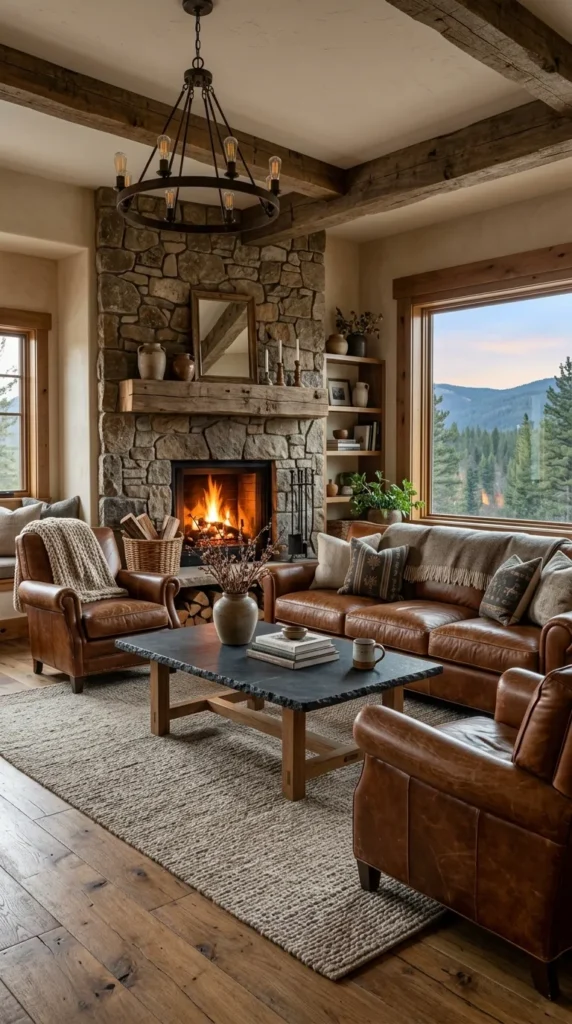
Natural stone and slate appear in rustic living room beyond fireplace in stone topped side tables, slate hearth areas, stone accent walls, and collections of river stones and geological specimens. Stone in any form brings specific quality of geological permanence and natural material beauty. Each piece of natural stone is genuinely unlike any other piece, creating surfaces of complete uniqueness that manufactured material cannot replicate.
Stone topped coffee table with thick slab of rough edged slate or polished river stone as surface creates functional object of considerable visual weight and material beauty. Slate hearth area in front of fireplace provides practical surface for fireplace tools while adding visual interest. Stone accent wall behind seating creates focal point of material beauty. The combination of stone with leather and timber and iron creates complete rustic material palette with each element contributing its specific quality of natural material honesty.
13. Layer Throws and Blankets Generously
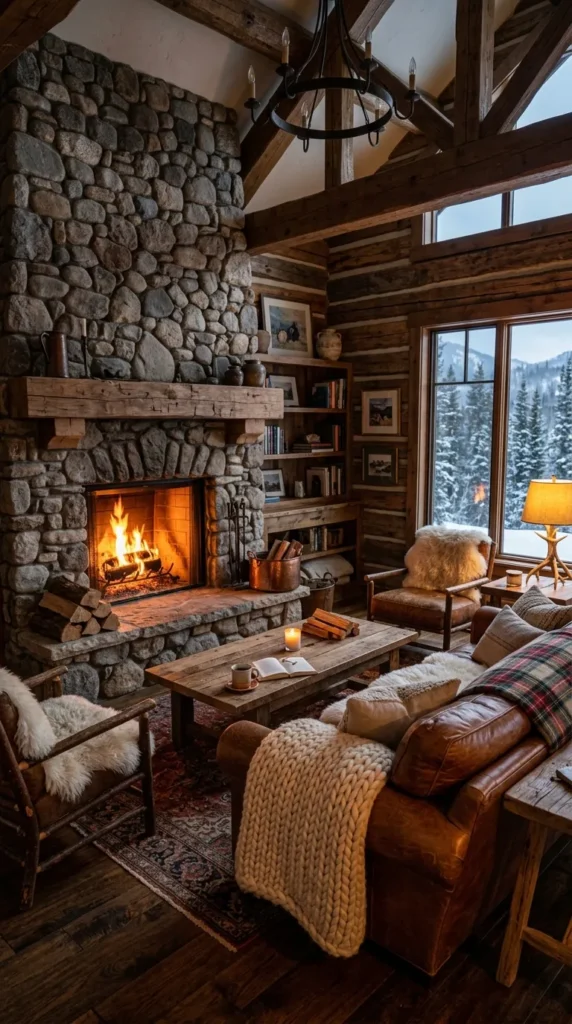
Finishing touch transforming rustic living room from beautifully designed space into genuinely inviting one is generous layering of throws and blankets across seating. Heavy wool blanket draped over sofa back. Fringed throw over armchair arm. Thick knitted blanket folded on hearth basket beside fireplace. These textiles create final layer of warmth and tactile invitation completing rustic room.
Throws and blankets should feel genuinely warm and substantial rather than decoratively light. Heavy wool, thick cotton, genuine sheepskin, soft linen, these materials suit rustic aesthetic and deliver warmth that room built around stone fireplace and leather seating needs. Choose in warm earthy tones terracotta, camel, cream, warm brown, and layer with casual confidence of someone putting blankets on furniture because they want to use them rather than because they look good in photographs.
Creating Your Rustic Living Room
The rustic living room is among most genuinely achievable and most genuinely rewarding design directions for anyone responding to beauty of natural materials, warmth of honest craft, and specific quality of settled grounded comfort that rustic aesthetic creates naturally and completely. It does not require specific location or mountain view. It requires understanding of materials and values making aesthetic work and willingness to commit to those materials and values with same unhesitating confidence that rustic living room itself embodies.
Start with fireplace and leather seating, two elements most completely defining rustic character, and let everything else follow from them. Choose natural materials over synthetic at every decision point. Choose aged and imperfect over new and flawless. Choose warmth and strength over refinement and delicacy. Apply these principles consistently and rustic living room develops character steadily and surely becoming more beautiful and more genuinely itself with every season.