15 Built-In Living Room Shelves for Style and Function
Your living room walls hold far more potential than most homeowners ever realize. While freestanding furniture sits in a room, built-in shelves become part of it they transform plain walls into purposeful architectural features that store, display, and define your space simultaneously. Built-in shelves are one of the most valuable investments you can make in your home, both financially and aesthetically. They add genuine square footage of functional storage without consuming floor space, increase your property’s value, and create a custom, considered quality that no amount of freestanding furniture can replicate. The room that has well-designed built-in shelving simply looks more intentional, more resolved, and more expensive than a room without it regardless of what furniture sits in the middle. Whether you want floor-to-ceiling library walls, flanking fireplace alcoves, understated floating shelves, or a complete built-in media wall, these 15 built-in shelves ideas will inspire you to transform your living room walls into the hardest-working and most beautiful surfaces in your home.
1. Floor-to-Ceiling Library Walls
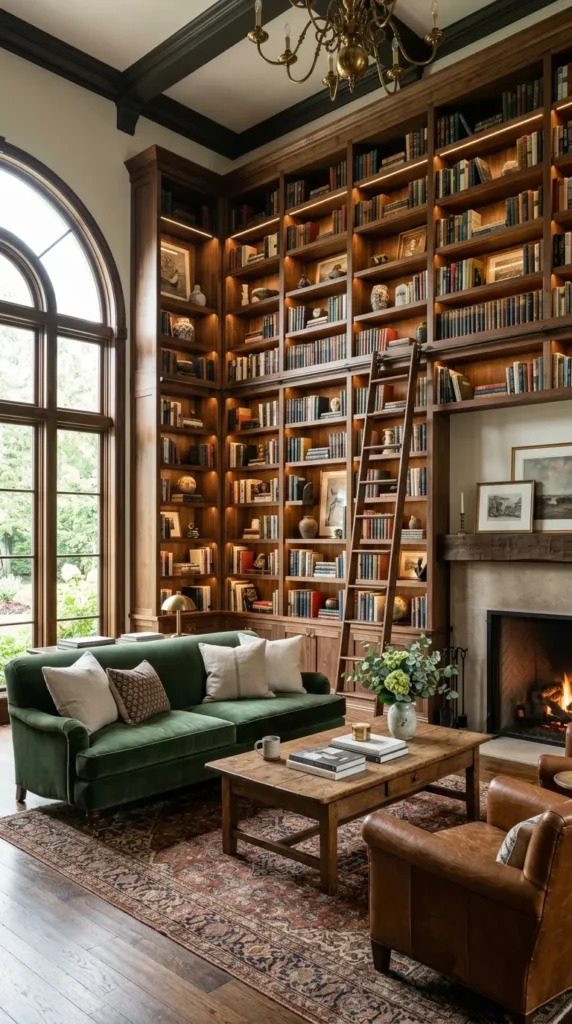
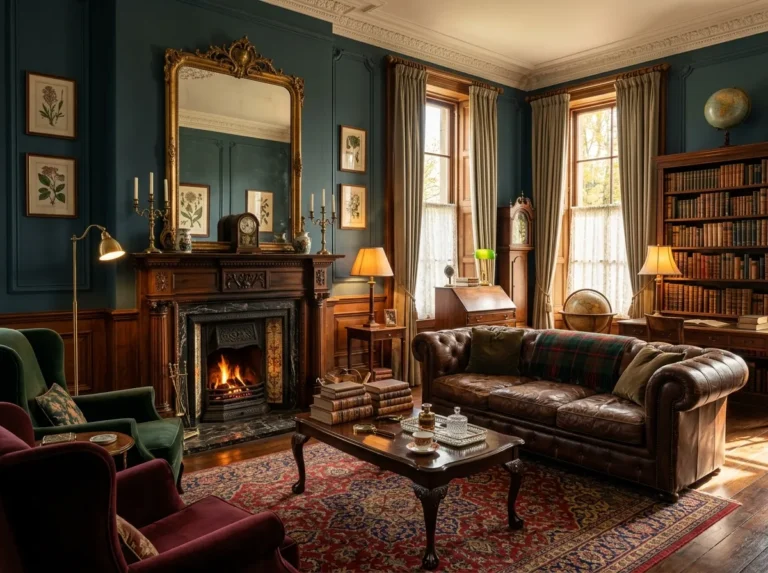
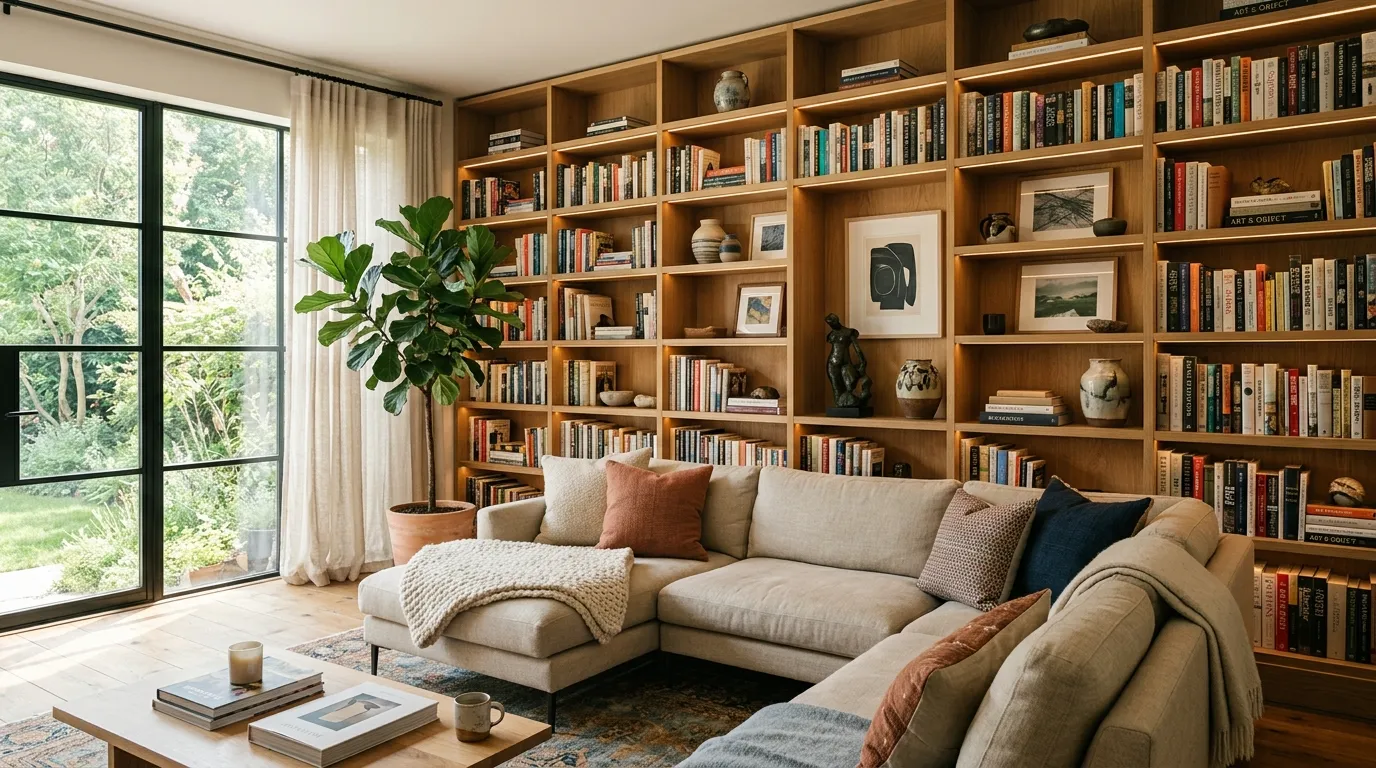
A floor-to-ceiling built-in library wall is one of the most transformative and aspirational design features a living room can have. It turns an entire wall into a statement of intellectual life, personal history, and design ambition simultaneously. The sight of books filling a wall from floor to ceiling creates an atmosphere of warmth, learning, and cultivated living that no other single design element can match. Beyond the books themselves, a full library wall provides storage for objects, photographs, art, and collections creating a display surface of enormous richness and visual complexity.
The construction of a floor-to-ceiling library wall requires careful planning around your room’s specific proportions. Shelves for standard books need a minimum depth of 10 to 12 inches and a height between 10 and 13 inches between shelves for most hardback books. Consider integrating a rolling library ladder on a brass rail for the upper shelves this single addition transforms a practical storage wall into a genuinely romantic and theatrical design feature. Lighting within the shelving is essential: integrated LED strip lighting along the underside of each shelf illuminates both the books and objects on display while creating beautiful ambient light in the room. Paint the interior of the shelving in a contrasting or deeper tone than the room walls to create visual depth that makes the shelving appear to recede and the objects within it to advance.
2. Flanking Fireplace Alcove Shelves
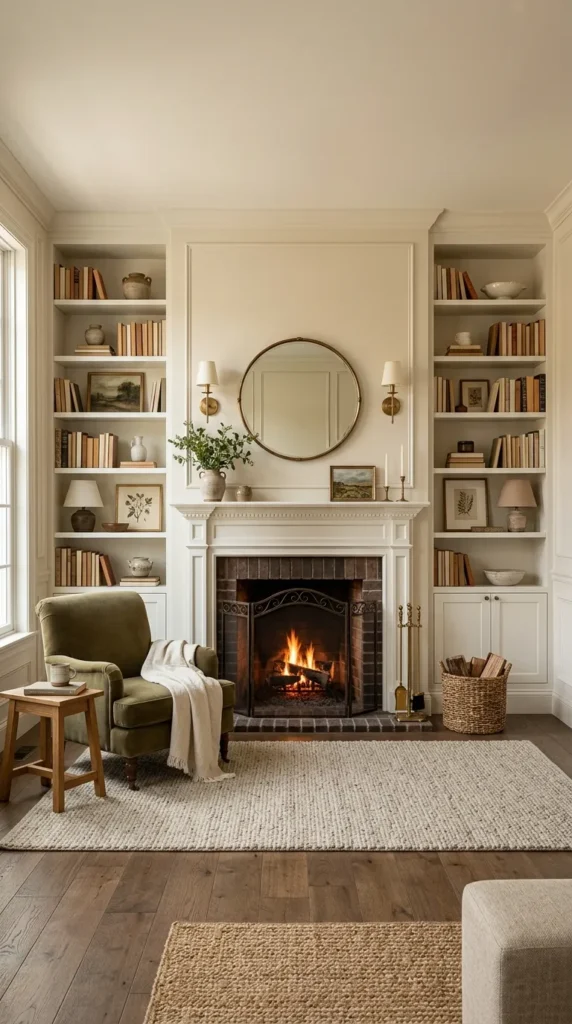
The alcoves on either side of a chimney breast are among the most naturally perfect locations for built-in shelving in any living room. These recessed spaces created by the projection of the chimney stack into the room are essentially readymade frames for built-in storage, and filling them with well-designed shelving is one of the most satisfying design decisions a homeowner can make. Symmetrical built-in shelves flanking a fireplace create formal balance and architectural intention that immediately elevates a room’s entire character.
The design of alcove shelves flanking a fireplace offers considerable flexibility. Full-height shelving from floor to ceiling on both sides creates maximum storage and maximum visual drama. A combination of open shelving above and closed cabinetry below with the cabinetry at a height that aligns with the fireplace mantel creates a more refined, furniture-like quality. Consider making the lower cabinets deeper than the upper shelves to accommodate larger objects and provide a surface at mantel height for display. The key to beautiful alcove shelving is symmetry both alcoves should be treated identically in terms of shelf heights, depths, and finish for the formal balance that makes this configuration so satisfying. Style both sides as mirror images of each other for maximum elegance.
3. Built-In Media Wall with Concealed Storage
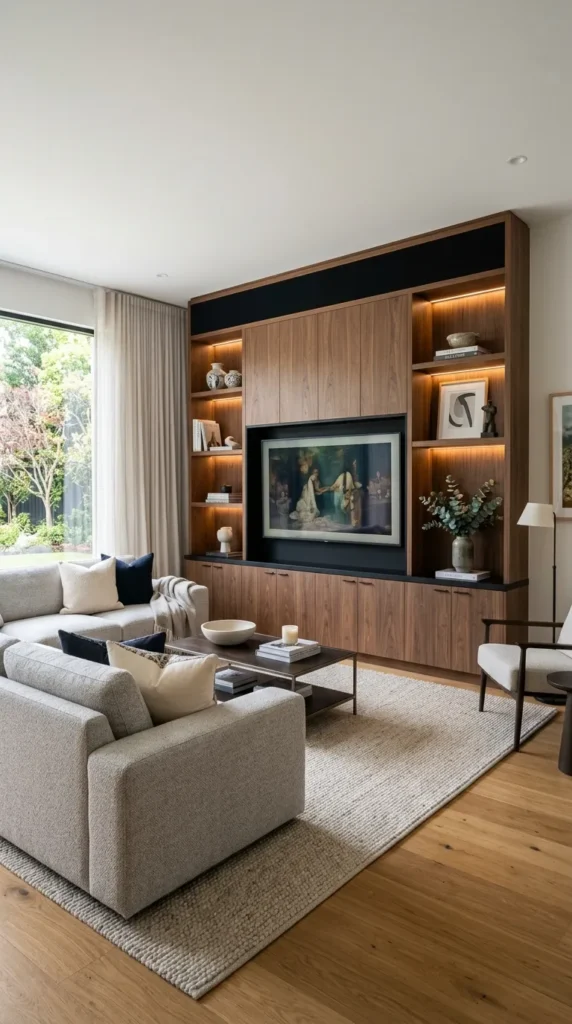
The built-in media wall solves one of the most persistent challenges in contemporary living room design: how to accommodate the television, media equipment, cables, and associated storage without those practical necessities dominating the room’s aesthetic. A well-designed built-in media wall conceals everything that needs concealing, displays everything worth displaying, and frames the television as a considered design element rather than a black rectangle dominating an otherwise beautiful room.
The most successful media walls combine open and closed storage in a carefully considered composition. The television sits within a framed recess that gives it visual containment it becomes part of the wall rather than sitting on top of it. Closed cabinets at lower levels conceal media equipment, cable boxes, gaming consoles, and the inevitable tangle of cables that modern entertainment systems generate. Open shelving above and beside the television provides display space for books, objects, and artwork. Consider integrating LED backlighting behind the television panel and beneath open shelves this creates ambient lighting that reduces eye strain during viewing and gives the entire wall a sophisticated, considered quality. A built-in media wall that addresses every practical need while looking genuinely beautiful is one of the most appreciated features any living room can have.
4. Floating Shelves in Asymmetric Arrangements
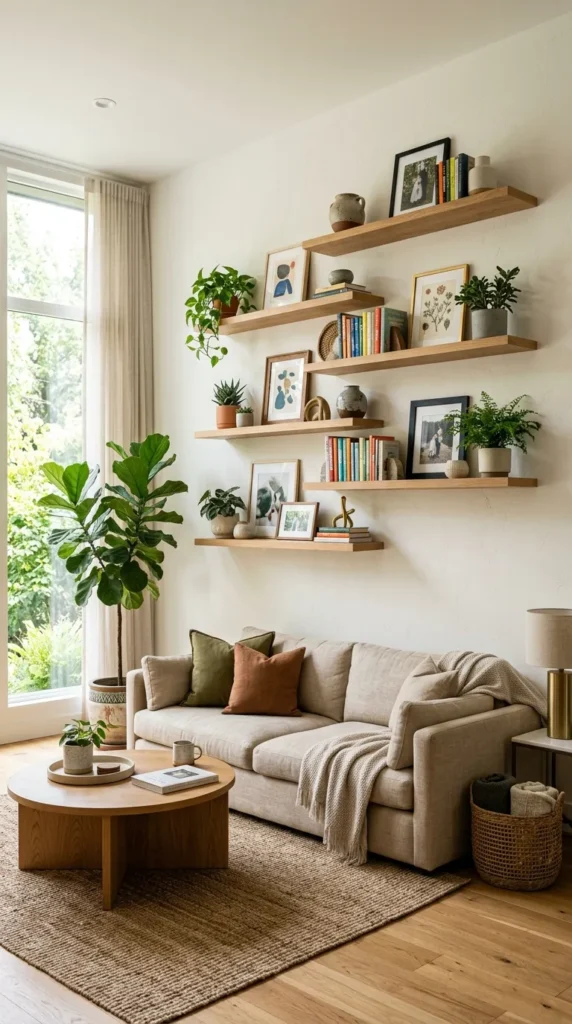
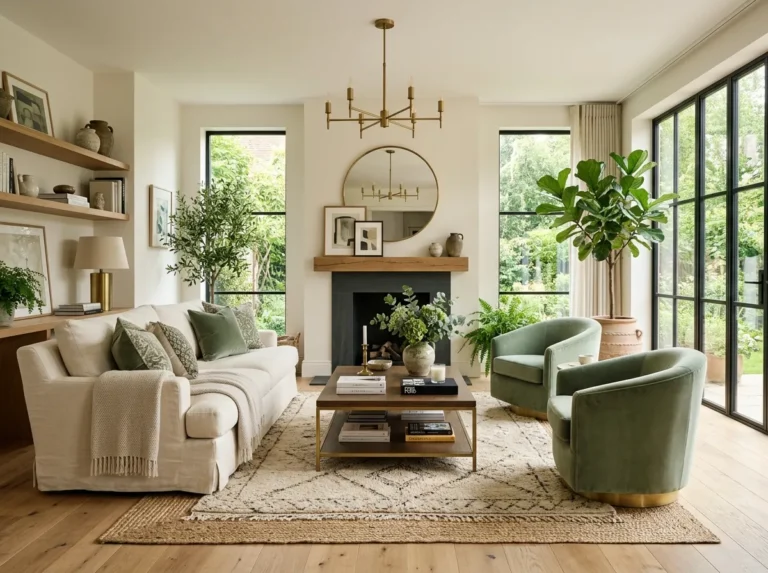
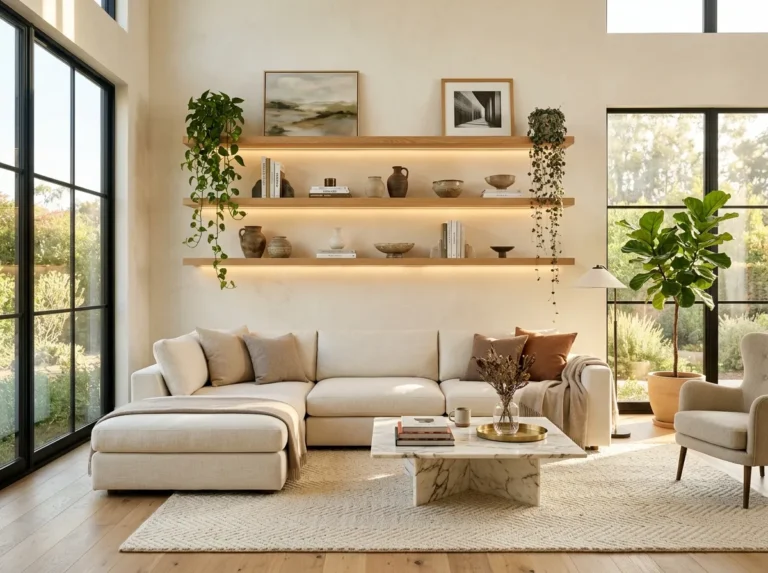
Floating shelves those that appear to project from the wall without visible supports, their fixings concealed within the wall and shelf construction bring a clean, contemporary elegance to living room walls. Unlike traditional shelving systems with visible brackets and supports, floating shelves have a pure, minimal quality that suits modern and Scandinavian design aesthetics particularly well. An asymmetric arrangement of floating shelves at varying heights creates visual interest and a curated, gallery-like quality that regular grid arrangements cannot achieve.
The beauty of floating shelves lies in their apparent simplicity and the quality of their styling. Because each shelf is visible from all angles with no surrounding framework to provide context, the objects placed on floating shelves must be chosen and arranged with particular care. Group objects in odd numbers. Vary heights within each grouping. Mix books with plants, ceramics with framed photographs, meaningful objects with empty space. The empty space between and around objects on floating shelves is as important as the objects themselves it gives each piece room to be appreciated and prevents the arrangement from looking cluttered. Choose floating shelves in materials that complement your room solid wood in warm tones for organic warmth, painted MDF for clean contemporary lines, or steel and wood combinations for industrial character.
Love cozy and timeless living rooms? Get inspired by 14 Brown Couch Living Room Ideas to create a warm and welcoming space.
5. Built-In Window Seat with Surrounding Shelves
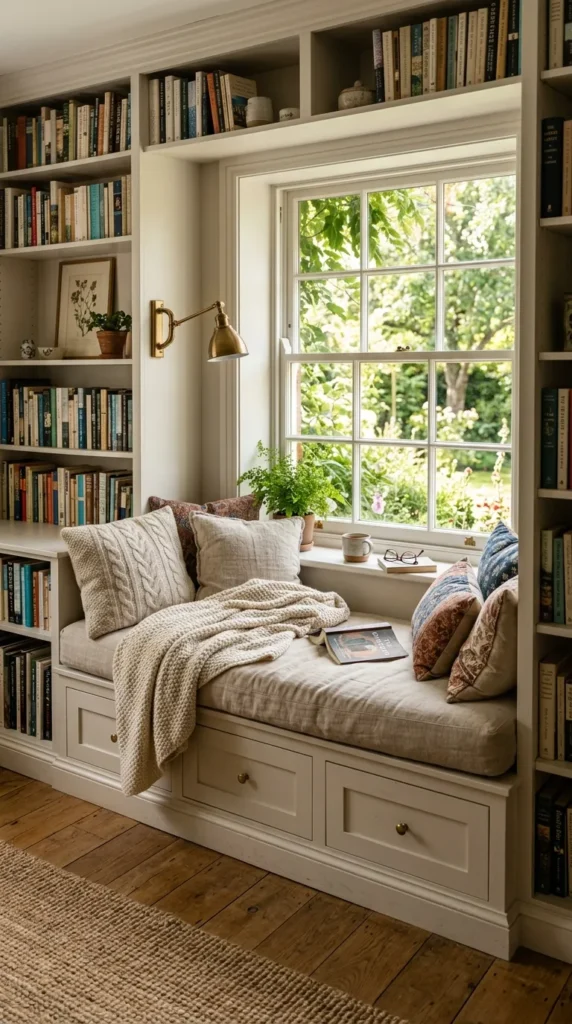
A built-in window seat with surrounding shelves transforms a window bay or alcove into the most beloved spot in the entire house. The window seat itself a padded, upholstered bench built into the window recess creates a perfect reading nook, a casual seating spot, and a place where natural light pools throughout the day. Surrounding the window seat with built-in shelving on both sides and potentially above creates a cocoon of books and objects that makes the space feel genuinely special and apart from the rest of the room.
The practical design of a window seat with shelves requires thinking about several elements simultaneously. The seat height should be between 17 and 20 inches from the floor comfortable for sitting with feet flat on the ground. The seat depth should be at least 20 inches for comfortable sitting; 24 inches allows lounging. Include storage beneath the seat hinged seat lids that reveal deep storage boxes below are extraordinarily practical for storing cushions, throws, board games, and seasonal items. The shelves flanking the window seat should begin at seat height on both sides, creating a natural sense of enclosure. Upholster the seat cushion in a durable, beautiful fabric a bold pattern or rich solid color that complements the room’s palette while being robust enough for regular use.
6. Painted Built-Ins in Bold Colors
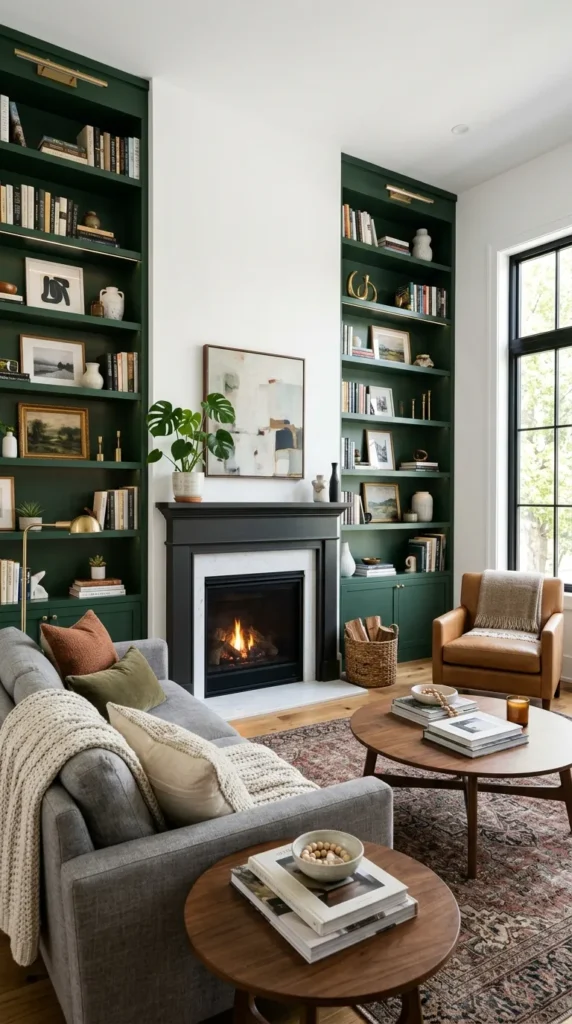
The color you paint your built-in shelving is as important a design decision as the shelving’s construction. Most built-in shelves are painted white or off-white, which is clean and versatile but also predictable and somewhat visually flat. Painting built-in shelving in a bold, confident color deep forest green, rich navy, warm terracotta, dramatic charcoal, dusty sage transforms the shelving from storage into a genuine design feature that defines the room’s character and creates a powerful focal point.
Bold-colored built-ins work particularly well when the shelving is painted in a tone that contrasts with the surrounding wall color. Deep green shelving against warm white walls creates a botanical, sophisticated look. Navy shelving against pale grey walls feels nautical and refined. Charcoal shelving against warm cream walls is dramatic and contemporary. Paint both the shelving framework and the back panels of the shelves in the same bold color for maximum depth and impact the back panel color creates a rich backdrop that makes displayed objects appear more vivid and intentional. Consider painting the interior of closed cabinets in a contrasting color that is revealed only when doors are opened, creating a delightful surprise element that adds character and personality to your built-ins.
7. Industrial Pipe and Wood Floating Shelves
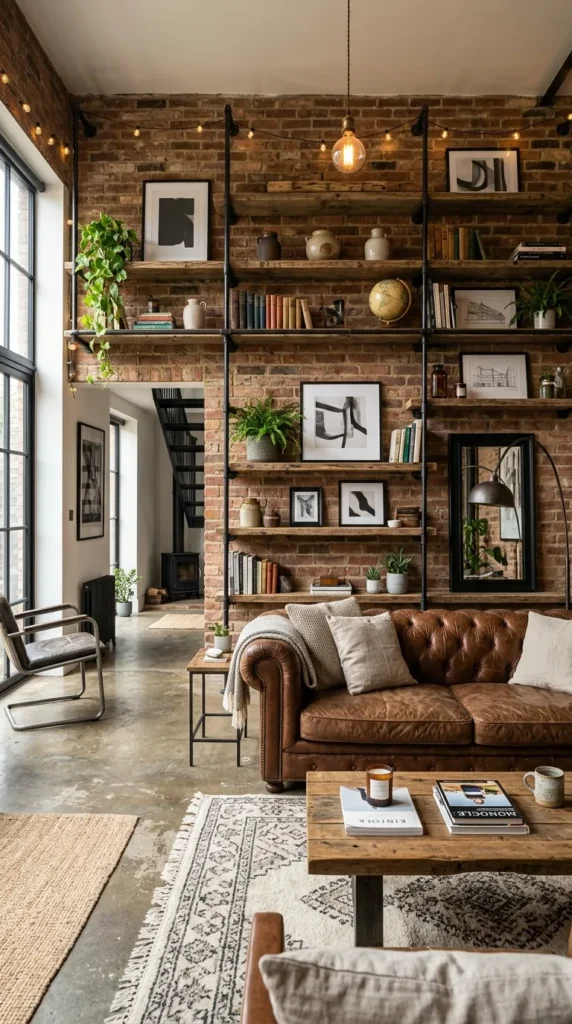
Industrial-style built-in shelves combining raw steel pipe brackets with solid wood shelving boards bring an urban, workshop-inspired character to living rooms that suits industrial, contemporary, and eclectic design aesthetics. The contrast between the cold precision of black steel pipe fittings and the warm organic character of solid wood creates a visual tension that is genuinely attractive each material makes the other look better by contrast. These shelves have an honest, structural quality that feels authentic and considered rather than decorative.
The construction of pipe and wood shelving is relatively straightforward and can be achieved as a confident DIY project. Industrial pipe fittings flanges, nipples, elbows are widely available from plumbing and specialty hardware suppliers and can be assembled without specialist tools. Solid wood boards, either new or reclaimed, provide the shelf surfaces. The combination works beautifully in living rooms with exposed brick walls, concrete floors, or other industrial elements. In more conventional living rooms, pipe and wood shelving introduces a deliberate industrial contrast that adds character and edge. Choose pipe fittings in matte black for a contemporary industrial feel or in raw steel for a more utilitarian, workshop aesthetic.
8. Built-In Shelves with Integrated Lighting
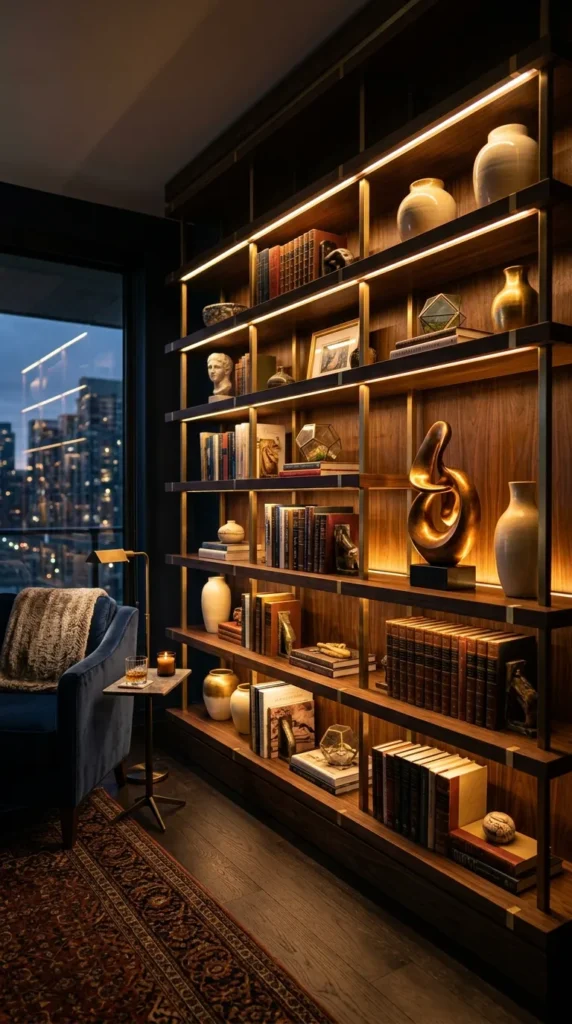
Lighting transforms built-in shelving from practical storage into dramatic display. Integrated lighting LED strip lights running along the underside of each shelf, individual spotlights recessed into shelf undersides, or backlit panels behind display areas creates an effect that is impossible to achieve with freestanding furniture and ambient room lighting alone. Lit shelving glows with warmth in the evening, drawing the eye and creating pools of illuminated display that make the objects within them appear precious and intentional.
There are several approaches to integrating lighting into built-in shelves, each creating a different effect. LED strip lighting under each shelf creates horizontal bands of warm light that illuminate the shelf below while adding a layered, rhythmic quality to the overall wall. Individual recessed spotlights above specific objects create gallery-style illumination that treats each displayed piece as significant. Backlit panels colored or warm white LED panels behind translucent or frosted panels at the rear of display niches create a luminous, dramatic backdrop. All integrated shelf lighting should be connected to dimmers so you can control the intensity and mood independently from the room’s general lighting. The ability to illuminate your shelving independently at low levels in the evening creates an atmosphere of exceptional warmth and sophistication.
9. Understated Alcove Shelves with Clean Lines
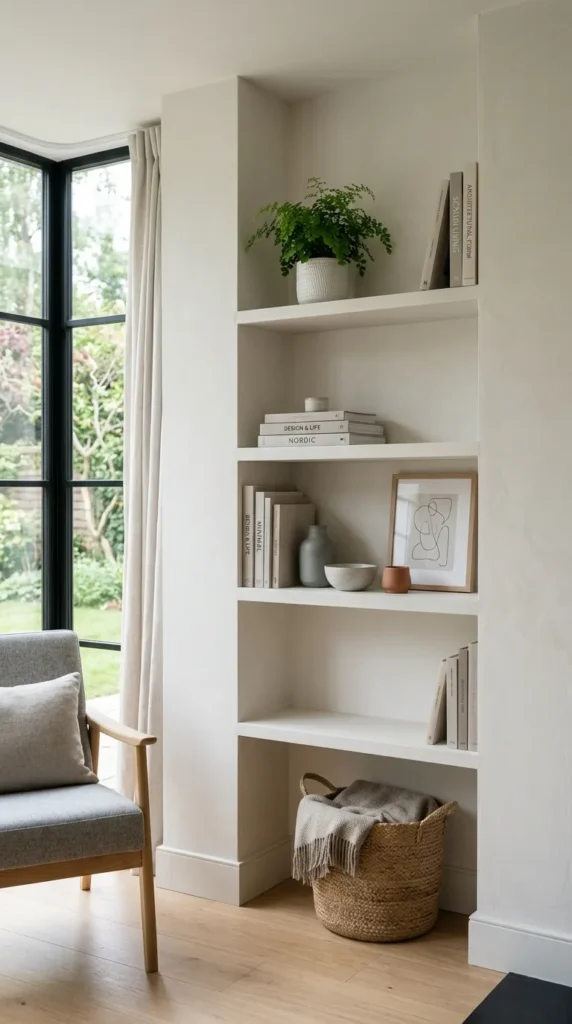
Not every built-in shelving solution needs to make a dramatic statement. Understated alcove shelves with clean, minimal lines no decorative molding, simple rectangular forms, flush-fitted with invisible fixings bring functional elegance to living rooms without competing with furniture or artwork for visual attention. This approach suits minimalist, Scandinavian, and contemporary design aesthetics where the beauty lies in restraint and precision rather than elaboration.
The success of understated shelving depends entirely on the quality of construction and finishing. Because there are no decorative details to distract attention, every line must be perfectly straight, every joint seamlessly filled, every surface immaculately painted. Shelves should be set into alcoves with tight, precise fits that make them appear to grow from the wall rather than being inserted into it. Choose a paint finish that matches the surrounding wall color precisely for shelves that feel architectural rather than added the shelving becomes part of the wall rather than an addition to it. Style these clean-lined shelves with equally restrained objects: a small number of carefully chosen ceramics, a few quality books, a single plant each item given generous space and allowed to be fully appreciated.
10. Built-In Bookshelves with a Rolling Library Ladder
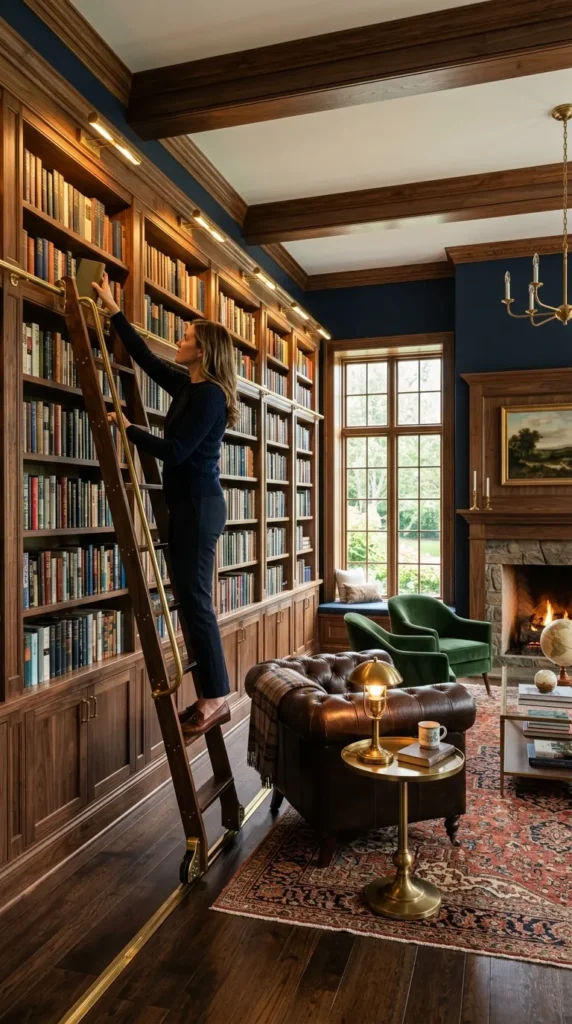
A rolling library ladder on a brass or matte black rail is one of those design elements that is simultaneously entirely practical and utterly theatrical. It solves the genuine functional problem of accessing upper shelves safely while transforming the act of reaching for a book into something that feels drawn from the pages of a beautiful novel. The presence of a library ladder signals a serious book collection, intellectual aspiration, and a commitment to genuine luxury of the most refined and literary kind.
Installing a library ladder requires a continuous rail at the top of the shelving that runs the full width of the unit, with the ladder hanging from rolling hooks that slide along the rail. The rail must be securely fixed to a structural element the top of the shelving framework or a dedicated wall-mounted rail to bear the weight of a person safely. Brass rails have a warm, traditional quality that suits classic library aesthetics. Matte black rails feel more contemporary and industrial. The ladder itself can be simple and utilitarian or more ornate and decorative depending on your design direction. Whichever style you choose, a library ladder makes a living room bookshelf into something genuinely extraordinary one of those design features that guests immediately notice, remember, and invariably describe as the best thing about your home.
11. Corner Built-In Shelves That Maximize Every Inch
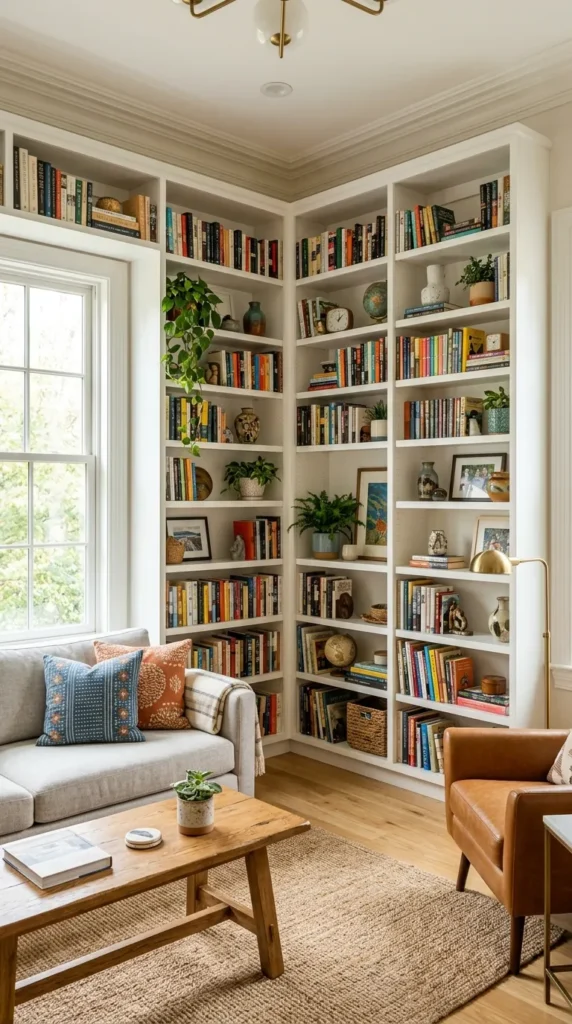
Corner built-in shelves transform the most commonly wasted space in any living room the corner into productive, beautiful storage and display. Standard furniture arrangements leave corners unused because most furniture is designed to sit against flat walls. Built-in corner shelving fills these dead zones with purposeful storage while creating a continuous flow of shelving that wraps around the room’s perimeter and makes the space feel more cohesive and considered.
Corner shelving can be designed in several configurations. Simple diagonal shelves that cut across the corner at 45 degrees create triangular shelf surfaces that suit smaller objects and plants. Full corner units that fit precisely into the corner with dedicated corner shelves at each level maximize storage capacity. Wrap-around shelving that turns the corner from one wall to another creates a sense of a room lined with shelving that feels library-like and immersive. The practical design of corner shelving requires careful measurement and precise cutting to achieve tight fits, but the result justifies the effort entirely. A living room with beautifully designed corner shelving feels resolved and architecturally complete in a way that rooms with unused corners never can.
Looking for more living room inspiration? Explore 16 70s Living Room Ideas to Bring Back the Vibe for creative retro décor ideas and timeless design inspiration.
12. Shelves with Closed Cabinet Bases
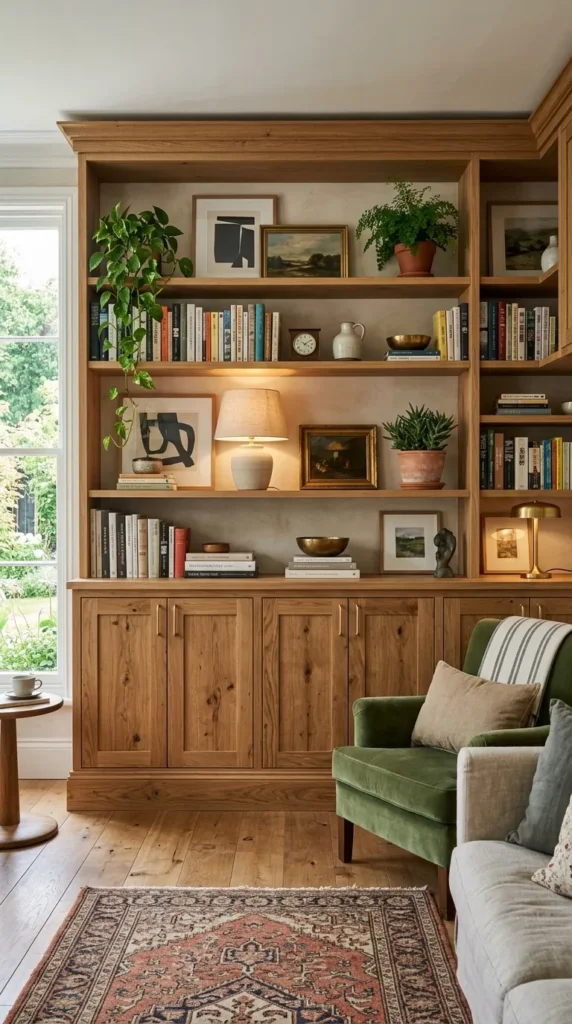
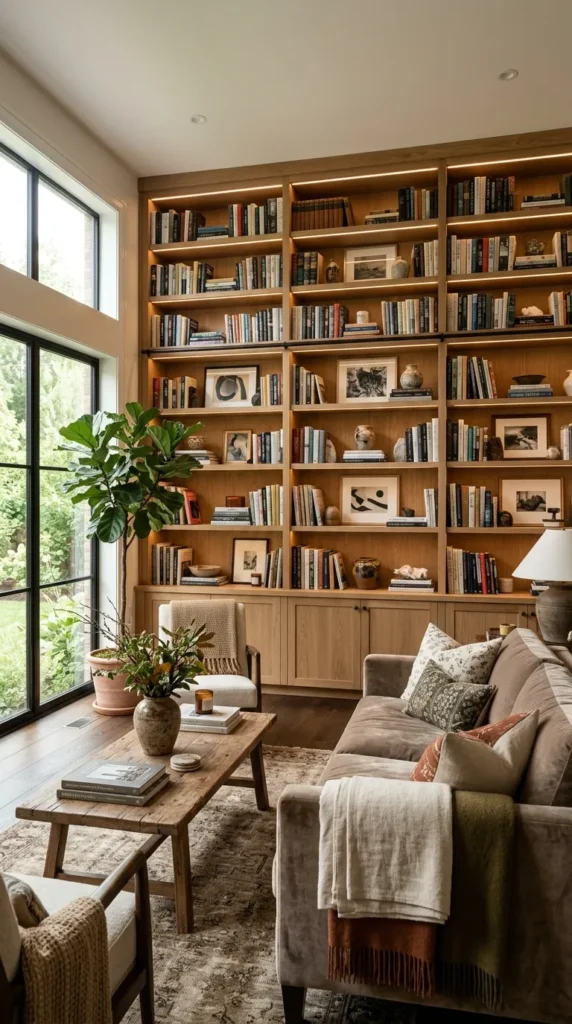
The combination of open shelving above with closed cabinet storage below creates the most practical and visually sophisticated built-in configuration for most living rooms. The lower closed cabinets typically at a height between 30 and 36 inches conceal the everyday items that need storing but not displaying: board games, remote controls, charging cables, seasonal items, children’s toys, spare cushions. The open shelving above displays the things worth seeing: books, artwork, plants, ceramics, meaningful objects.
This combination approach delivers aesthetic and practical benefits simultaneously. The closed cabinet surfaces at lower level create a continuous horizontal plane that can serve as a display surface in its own right candles, vases, lamps, and objects arranged along the top of lower cabinets create a credenza-like display. The transition between closed and open storage at approximately waist height creates a visual horizon line that organizes the wall composition satisfyingly. Choose cabinet door styles that complement your room’s design direction: flat-panel doors for contemporary minimalism, raised-panel doors for traditional elegance, glass-front doors for displaying fine objects while protecting them. The hardware on cabinet doors is a detail worth investing in quality brass or bronze handles add a jewellery-like finish to the entire built-in composition.
13. Shallow Display Shelves for Art and Objects
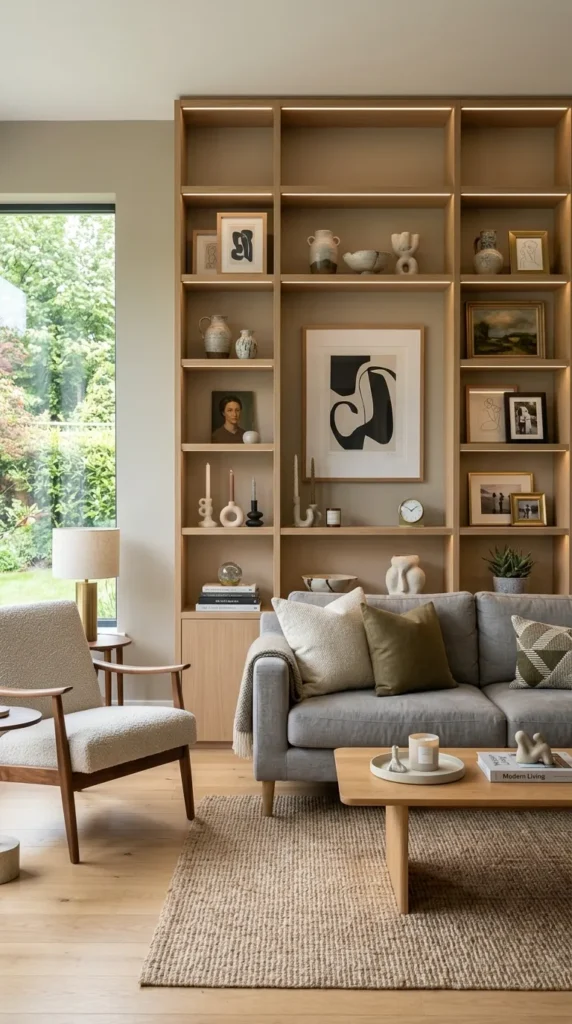
Not all built-in shelving needs to be deep enough for books. Shallow display shelves between four and six inches deep create beautiful dedicated display surfaces for artwork, framed photographs, ceramics, and small sculptural objects that would look lost on deeper book shelves. These shallow shelves have a gallery-like quality, treating each displayed object as significant and worthy of individual attention. They work beautifully in living rooms where display is more important than storage and where the objects being displayed are small and precious.
Shallow display shelves are particularly effective when installed in a continuous horizontal band across a wall at picture-rail height approximately five to six feet from the floor. At this height, objects displayed on the shelves sit at or slightly above eye level, which is the most flattering and naturally comfortable viewing height. A continuous band of shallow shelving at this height creates an instant gallery effect that can be constantly refreshed and rearranged as your collection grows and changes. Lean framed artwork against the wall behind displayed objects rather than hanging it to create a layered, gallery-storage aesthetic that feels both practical and beautiful. Change the display seasonally to keep your living room feeling fresh without any permanent alteration.
14. Built-In Shelves Around a Television
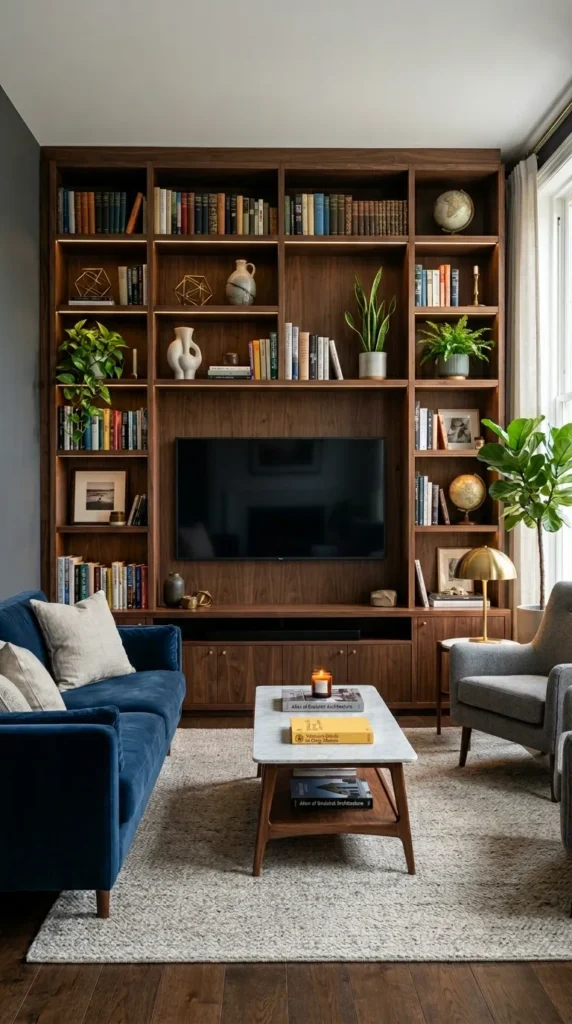
Rather than treating the television as the visual problem to be hidden or minimized, built-in shelving designed specifically around a television recesses and frames the screen as a considered design element within a broader composition. The television sits within a dedicated recess or panel, flanked and surrounded by shelving that gives it context and scale. The shelving, styling, and the television together become a single composed wall feature rather than a screen awkwardly surrounded by mismatched furniture.
The design of built-in shelving around a television requires careful attention to television size and wall composition proportions. The television recess should be sized for your current screen with some room for future upgrading. Shelving to the sides and above should be sized and proportioned to balance the television’s visual weight deeper shelves beside the television for larger objects; shallower shelves above for books and smaller items. Consider installing a panel of wallpaper, painted wood, or stone behind the television recess to distinguish it from the surrounding shelving and give the screen area visual definition. Style the surrounding shelves with careful attention to how they will appear in the frame of the television guests will see your shelving composition constantly during viewing, so it deserves particular care.
15. Bespoke Built-Ins with Architectural Molding Details
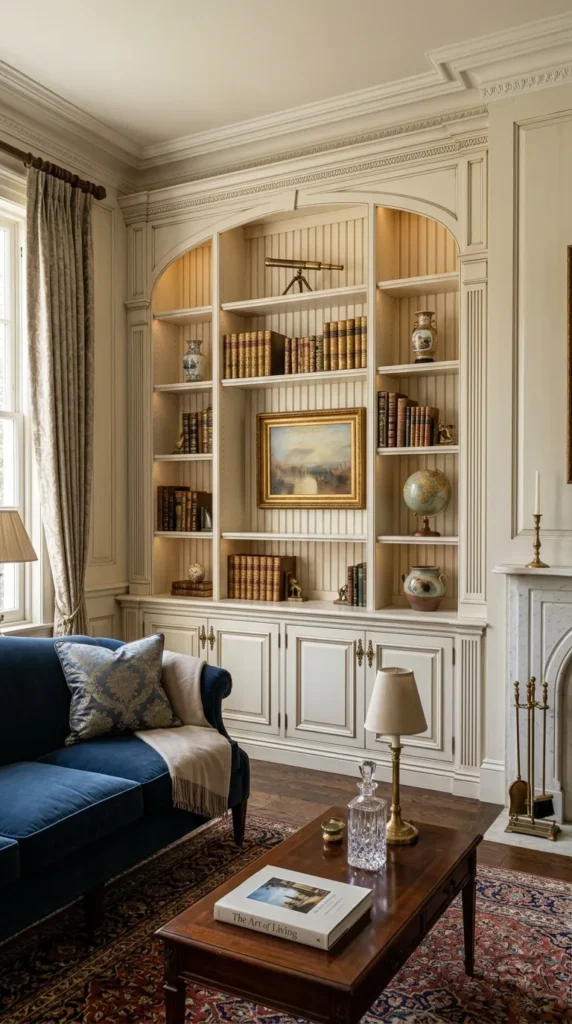
The difference between standard built-in shelving and truly exceptional built-in shelving often lies entirely in the architectural molding details. Crown molding at the top where shelving meets ceiling, base molding at the bottom where it meets the floor, pilasters framing the sides, dentil molding along shelf fronts, beaded insets on panel faces these details are what elevate functional built-in storage into genuine architectural cabinetry that looks as though it has always been part of the house.
The level of molding detail appropriate for your built-in shelving should reflect your home’s overall architectural character. A period home with high ceilings, original cornicing, and traditional features deserves built-ins with corresponding molding richness deep crown molding, raised panel doors, detailed pilasters. A contemporary home with clean lines and minimal detailing suits built-ins with simple, precise profiles that echo the home’s restraint. Whatever your home’s character, the addition of some architectural molding detail to built-in shelving even a simple crown molding at the top makes the difference between shelving that was clearly added and shelving that appears to be an original and permanent feature of the house. This quality of apparent permanence and architectural intention is the ultimate achievement of built-in shelving design.
Building Your Perfect Living Room Shelves
The right built-in shelving for your living room depends on your space, your storage needs, your design aesthetic, and your budget. Start by identifying the wall or walls that offer the greatest potential alcoves flanking a fireplace, a long uninterrupted wall, a corner that currently sits empty. Measure carefully and think about what you genuinely need to store and display before committing to a design. The most successful built-in shelving solutions balance storage and display in proportions that suit your actual life a household of avid readers needs different shelving than one that primarily needs media storage and display space for a curated object collection.
Invest in quality construction and finishing. Built-in shelving is a permanent feature of your home it will be there when you sell, and it will affect how every buyer perceives the value and quality of your property. Poorly constructed or badly finished shelving detracts from a room’s value; beautifully constructed and finished shelving adds genuine value and enormous appeal. Whether you build it yourself, hire a carpenter, or commission a bespoke joiner, the investment in quality built-in shelving is one of the most consistently rewarding decisions you can make for your living room.