19 Living Room Desk Ideas for Small Spaces
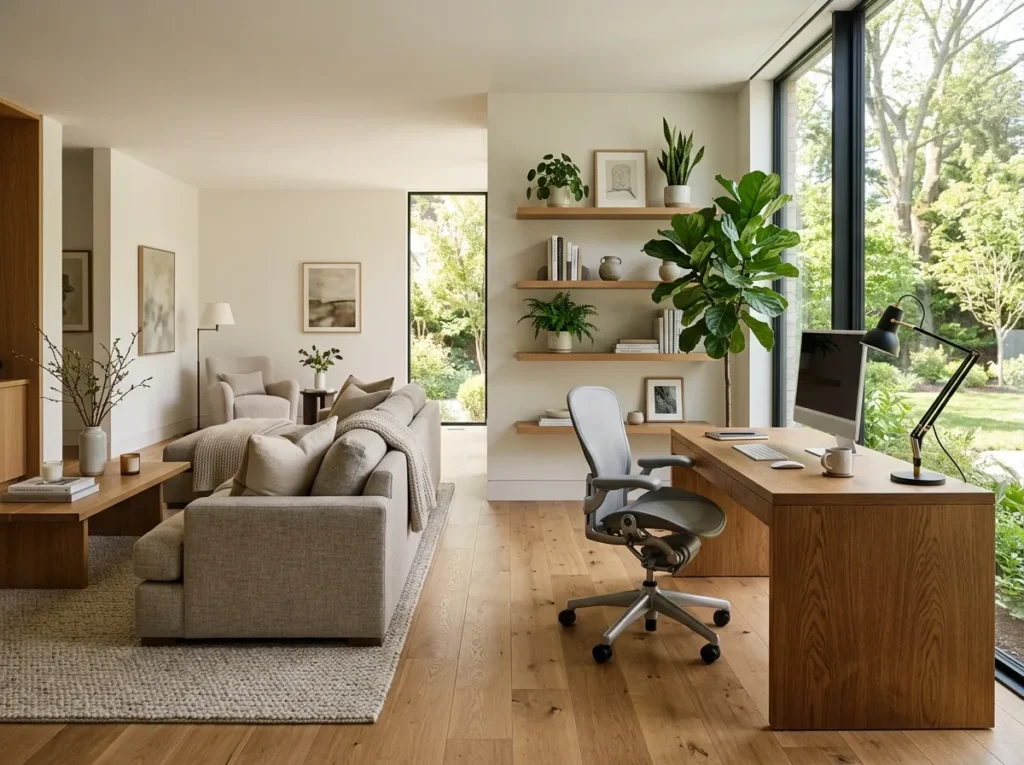
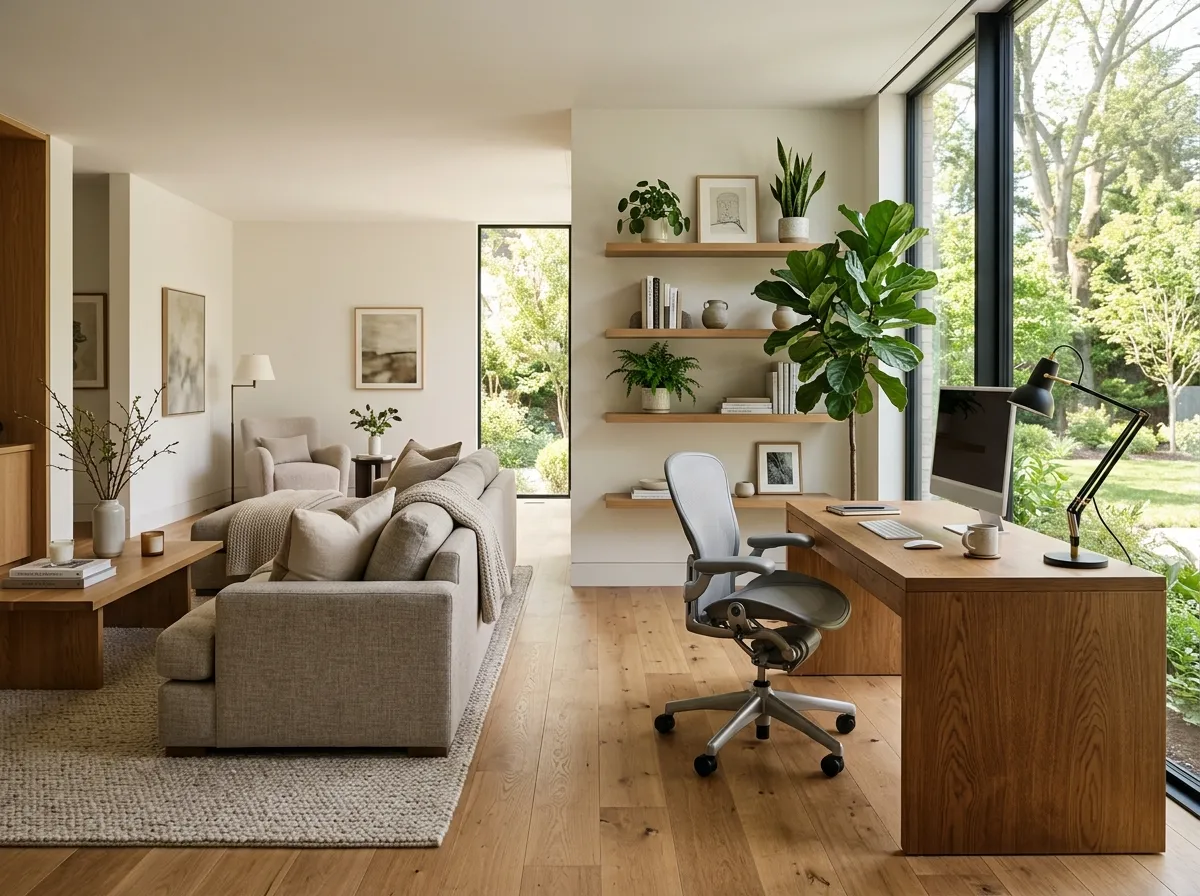
Let me be honest. Adding a desk to your living room is not actually about desk ideas. It is about solving a real problem. You need a workspace but you do not have a dedicated office. You work from home and your living room is the only space available. You want to have a real workspace but you do not want your living room to feel like a home office. You want to actually live in the space while also being able to work there. That is the actual challenge. It is not about finding a cute desk. It is about making a functional workspace that does not destroy the feeling of your living room as a place of rest and comfort. These nineteen ideas address real solutions to real problems. How to create a desk that disappears when you are not working. How to make a workspace that actually functions for eight hours of work. How to keep the living room feeling like a living room even though someone works there. These are the problems that actually matter.
1. Floating Wall Mounted Desk for Space Efficiency
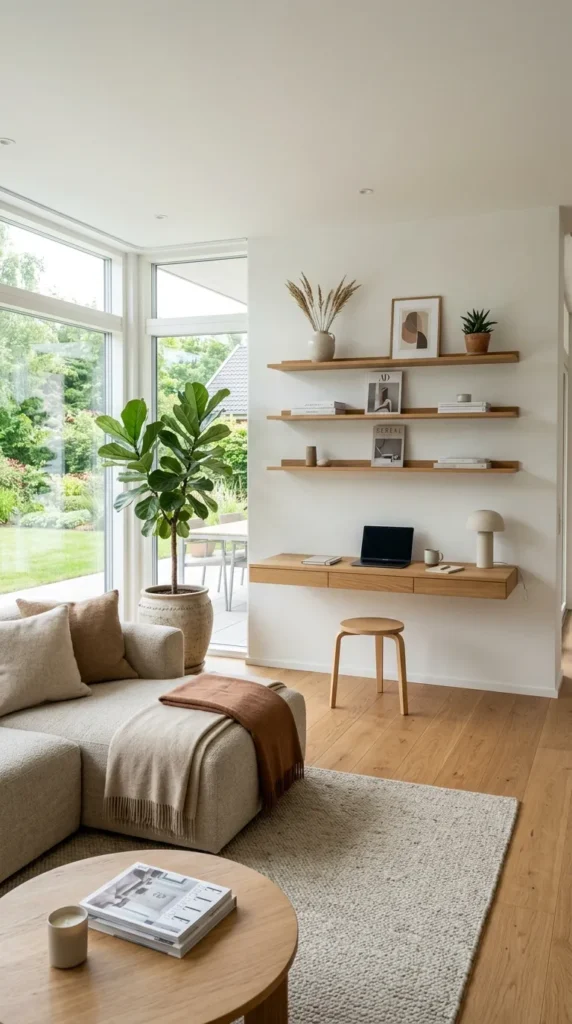
A floating desk mounted directly to the wall takes zero floor space making it ideal for small living rooms. When you are not working, it occupies wall space that would be empty anyway. The desk can be small enough for laptop work or large enough for actual workspace depending on what you need. The key is proper wall mounting ensuring it holds weight without sagging.
This works if you have wall space available and if the desk does not need to be accessible all day. A wall mounted desk works beautifully for someone who works a few hours then puts the laptop away. It does not work if you need constant access or if you have heavy equipment that stays on the desk. The floating aesthetic keeps the space feeling open and minimal. The openness below the desk prevents the living room from feeling like a closed off workspace.
2. Console Table as Functional Desk
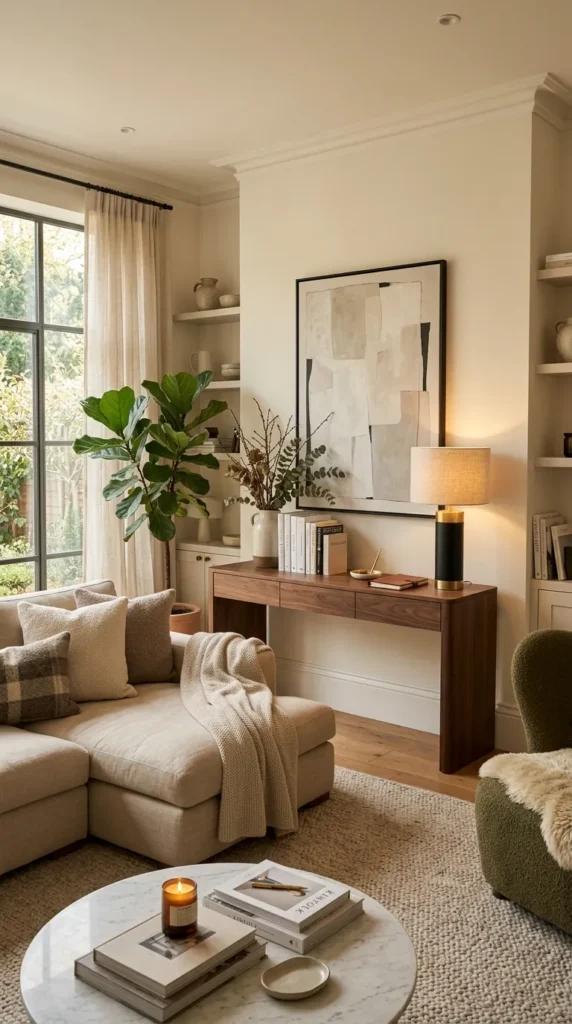
A beautiful console table functions perfectly as a desk. It looks like furniture rather than office equipment. The console table aesthetic makes the workspace feel more integrated into the living room. A narrow console with two legs at the back and two at the front takes minimal space while providing adequate work surface. Choose a console in wood or metal matching your living room design.
A console table desk works well because it looks intentional as a furniture piece not like a desk stuck in a living room. You can style it with plants or decor when not actively working. The functionality is hidden by the design. A quality console table can be beautiful enough to be seen as part of the room design rather than as office furniture.
3. Desk in Window Nook Using Natural Light
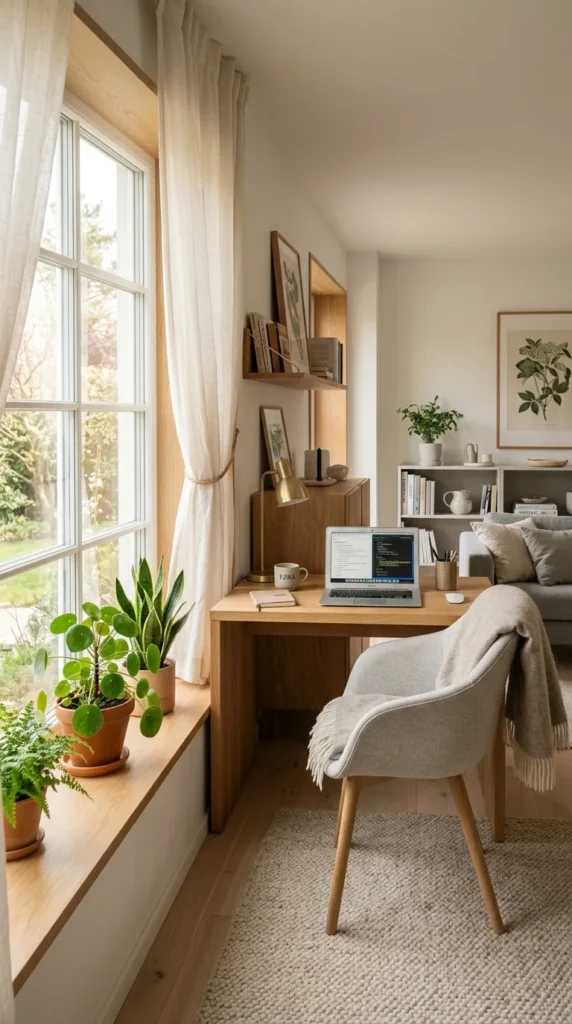
Position a desk in a window nook capturing natural light and creating a distinct workspace area. Natural light improves mood and productivity. The window view creates psychological relief during work. The nook creates natural separation from the rest of the living room without walls or screens. The space feels like an intentional workspace not an afterthought.
Window placement requires having actual window space available and being positioned so you are not backlit during video calls. The natural light is a genuine functional advantage worth the positioning considerations. A window nook desk feels like intentional design not like you squeezed a desk into available space.
4. Sliding Door or Pocket Door Desk Enclosure
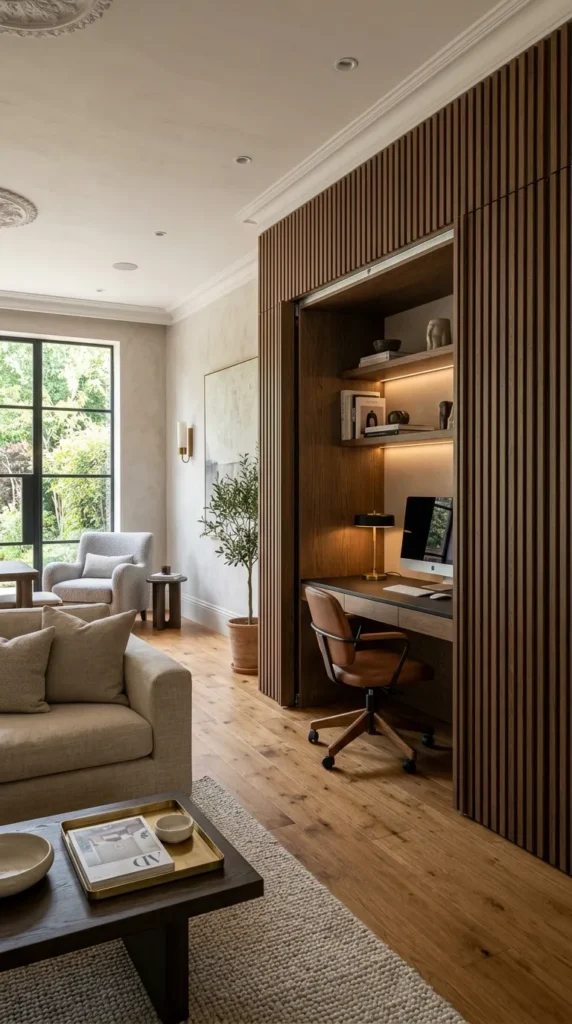
Install a sliding or pocket door in front of a desk creating an enclosed workspace that disappears when closed. When you open the door you have a full office. When you close it, the wall appears solid and the living room feels complete. This works if you have an alcove or corner space where a door makes sense. The sliding door creates physical separation without permanent walls.
This is a genuine solution for people who need to mentally separate work from home. You close the door and you are done working. The living room is for living. This approach requires structural space but solves a real psychological need for separation. The door should be beautiful enough that the closed appearance looks intentional not like something is hidden behind it.
Create a workspace that still feels warm and welcoming with these 21 Cottage Living Room Ideas for cozy decorating inspiration.
5. Standing Desk for Flexibility and Health
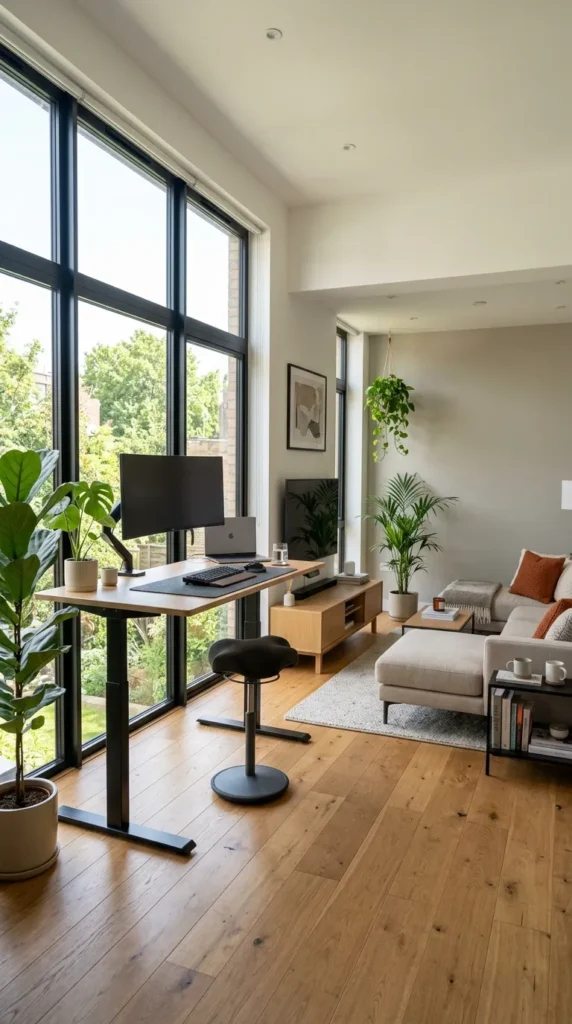
A standing desk allows you to work standing part of the time preventing the stagnation of sitting all day. Height adjustable standing desks allow you to alternate between sitting and standing. The active posture changes throughout the day improve circulation and reduce back pain from sitting. A standing desk is smaller footprint than traditional desk chair setup.
Standing desks work better in living rooms because you need less floor space for the desk and no space for a large office chair. The standing position means you can face the room while working. You can turn and talk to someone without swiveling in a chair. The functionality gains matter as much as the space efficiency.
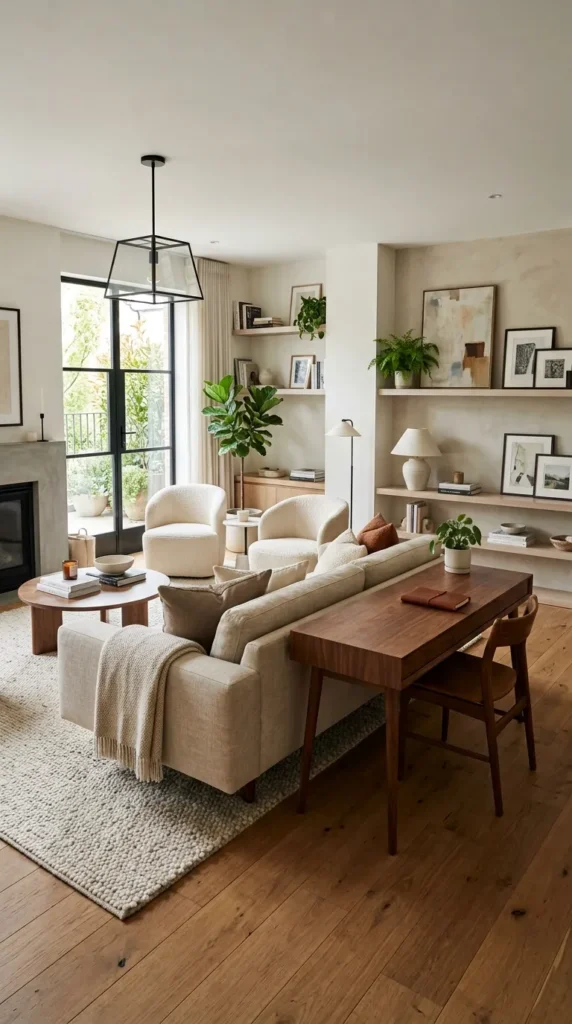
6. Desk Behind Sofa Using Negative Space
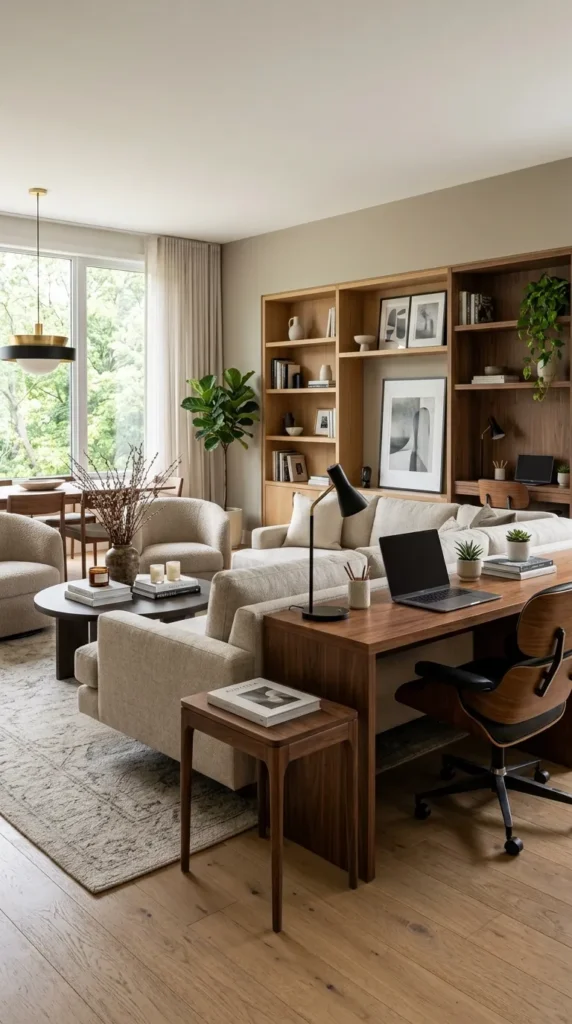
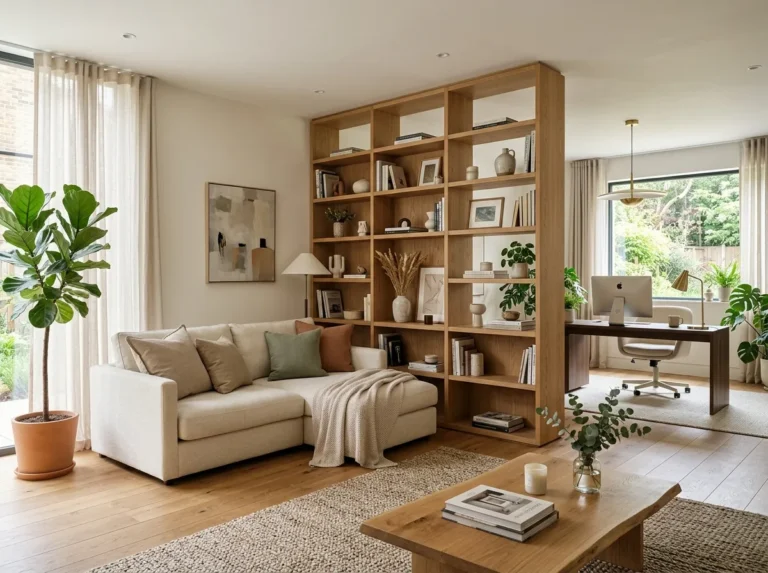
Position a desk behind the sofa using the back of the sofa as visual separation. This works if your living room layout has the sofa floating in the room rather than against a wall. The desk feels tucked away from the main living space. The back of the sofa creates natural visual boundary. People sitting on the sofa do not see your work area.
This approach uses space that would otherwise be wasted. The sofa creates psychological separation without taking up additional room. You can reach over the sofa to grab something from the living room while working. The integration feels natural because the furniture is doing double duty creating both living space and work space division.
7. Desk in Corner Using Awkward Space
Corner spaces in living rooms are often unusable for typical furniture. A corner desk fits perfectly using space that would otherwise sit empty. Corner desks come in triangular or curved shapes fitting the corner geometry. The corner positioning creates natural visual separation from the rest of the living room. The corner feels like an intentional workspace not furniture crammed into available space.
Corner placement works if you have a corner where a desk makes sense. The natural boundary created by walls on two sides defines the workspace. You are not centered in the room. You are tucked into a defined corner. The separation happens naturally without screens or doors.
8. Industrial Style Desk That Looks Like Furniture
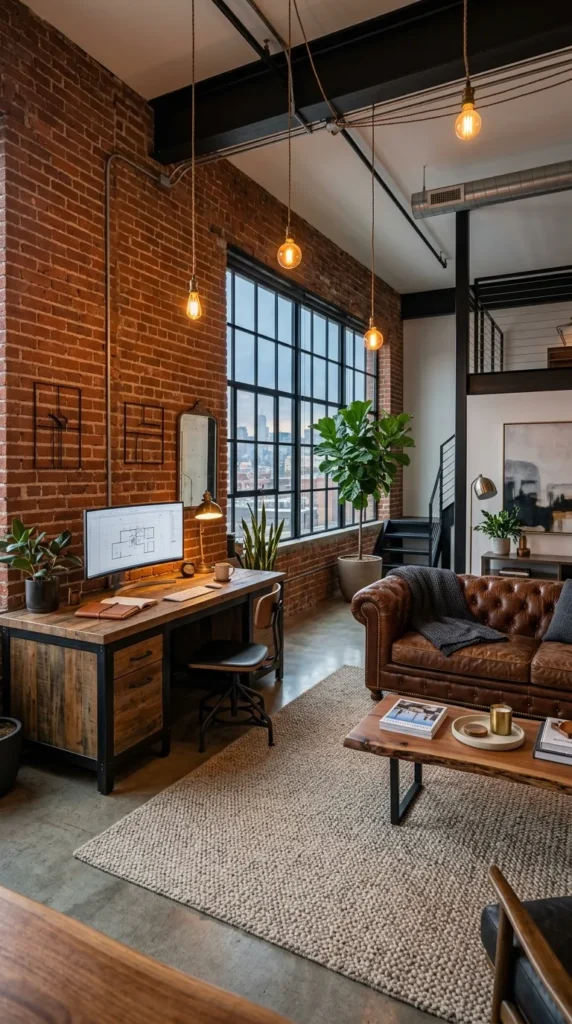
An industrial style desk in metal and reclaimed wood looks more like a design statement than an office desk. The raw materials and honest construction make it feel like it belongs in a living room. The industrial aesthetic coordinates with many design styles from minimalist to eclectic. An industrial desk can be beautiful enough that it is not hidden or disguised. It is proudly on display.
This approach works if you actually like the industrial aesthetic and want your desk to be visible. The desk becomes a design element rather than something you try to hide. The visual interest of the desk itself prevents the workspace from feeling like an office intrusion.
9. Desk with Built In Storage Eliminating Paper Clutter
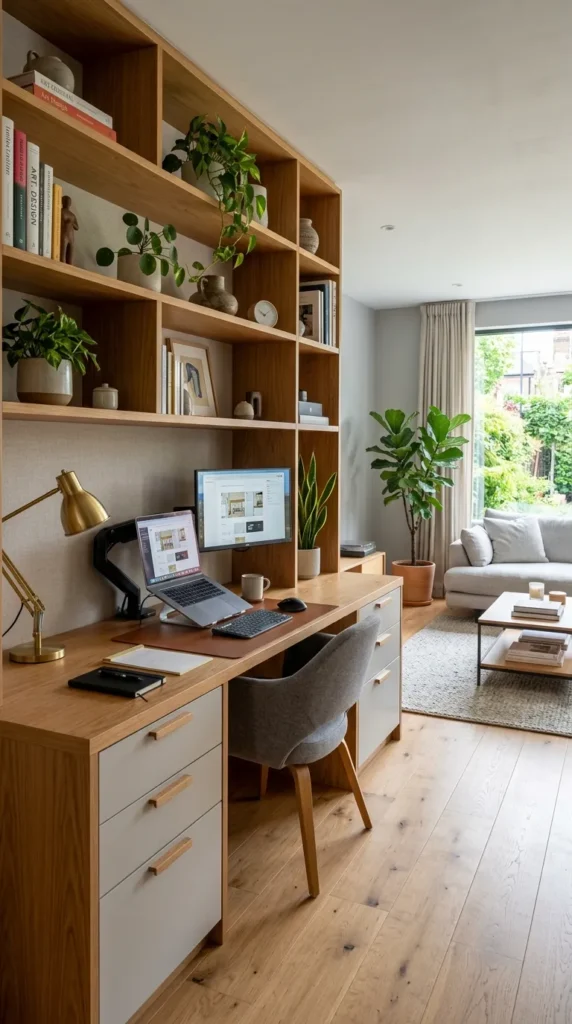
A desk with drawers, shelves, and storage compartments keeps all work supplies and papers contained. The storage eliminates the visual chaos of papers and supplies scattered across surfaces. Everything has a home inside the desk. The closed storage hides the work clutter when you close drawers or doors. The visual containment matters as much as the functional storage.
This addresses a real problem. Work stuff spreads across living room surfaces making the space feel chaotic. A desk with integrated storage solves this by containing everything in the desk itself. You work, you put everything away, the living room appears clean. The containment is key.
10. Drop Front Desk for Hidden Workspace
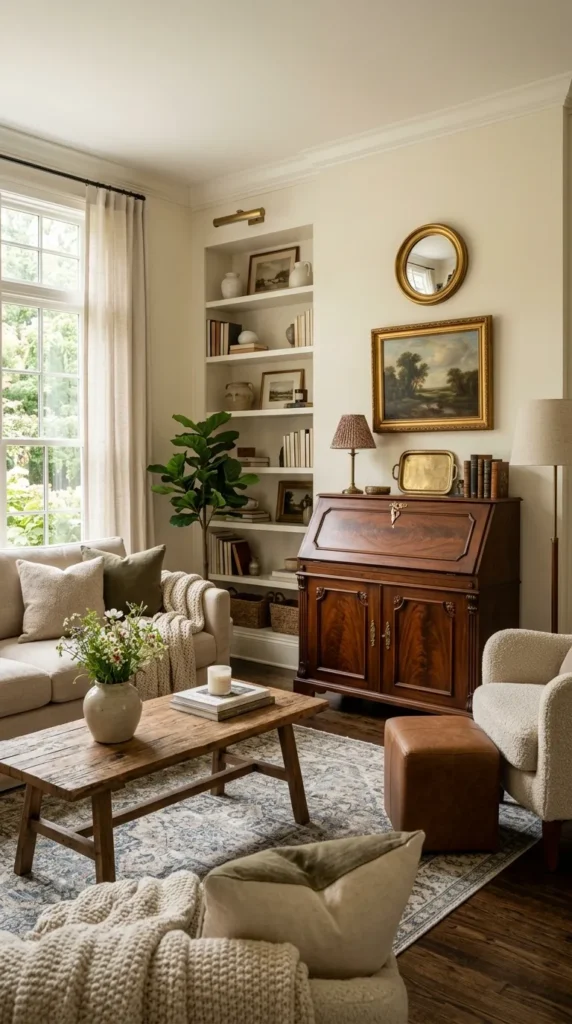
A drop front desk has a hinged top that folds down creating a work surface. When closed, it looks like an attractive cabinet or console table. When you need to work you open the top creating instant workspace. Everything stays inside the desk hidden from view. This is the ultimate disguise for a workspace in a living room.
This works if you need workspace that completely disappears when not in use. The aesthetic is more traditional or vintage but modern versions exist. The functionality is genuine. You have a complete workspace that disappears instantly. The visual cleanliness matters when the desk is not in use.
Looking for something more fun and colorful? Explore 16 Toca Boca Living Room Ideas Worth Trying for playful living room inspiration.
11. Small Side Table Desk for Minimal Workspace Needs
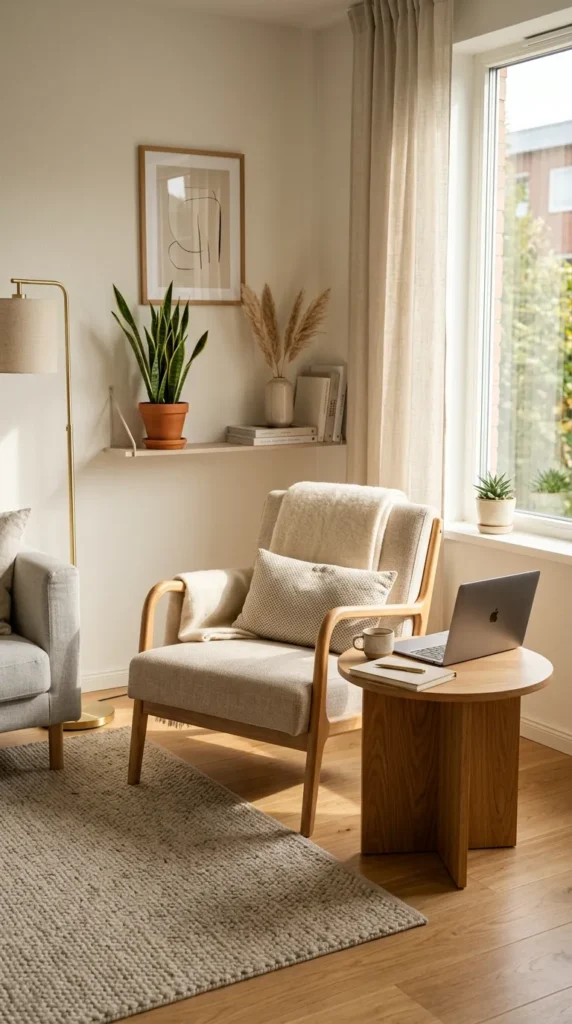
A small side table serves as desk if you only need space for a laptop and notebook. The minimal footprint takes up almost no room. The small scale makes the workspace feel like part of the living room furniture not like an office. If your work is primarily digital not paper-based, a small side table provides adequate workspace.
This addresses the reality that not all work requires large surfaces. Someone working primarily on a laptop needs minimal desk surface. A small table takes minimal space and disappears visually because it looks like normal living room furniture. This works for people with minimal work surface needs.
12. Desk on Wheels for Flexible Positioning
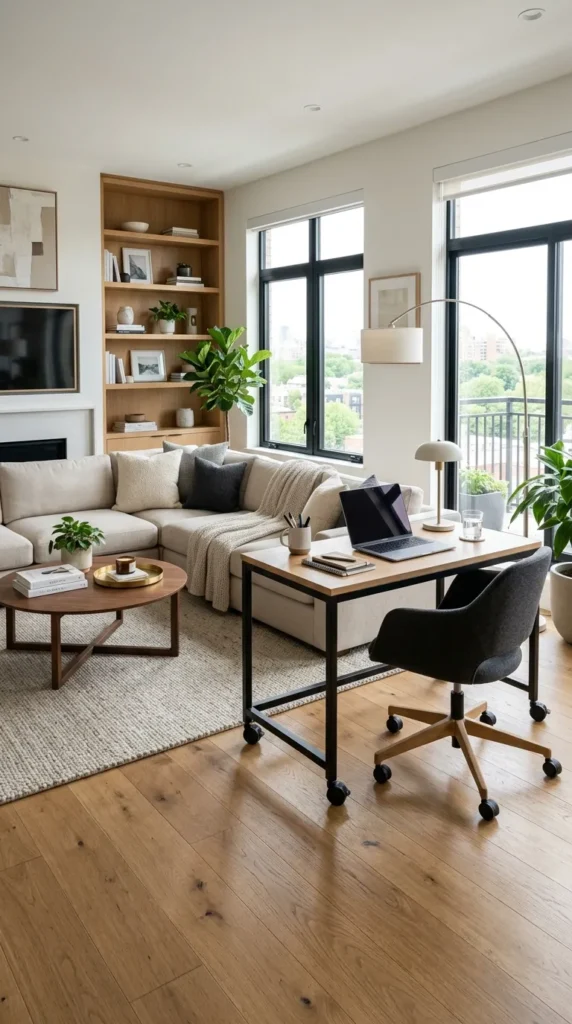
A desk on wheels can be positioned for work then moved aside when not working. The flexibility allows the space to function as living room or office depending on current needs. The wheels should lock securely so the desk does not shift during work. The ability to move the desk creates genuine flexibility in how the space functions.
This works if you have space to store the desk when it is moved. The flexibility means you are not committed to the desk permanently occupying a specific spot. When you need workspace you roll the desk into position. When you are done you move it out of sight. The adaptability solves the real problem of shared space.
13. Desk in Bookshelf Creating Integrated Workspace
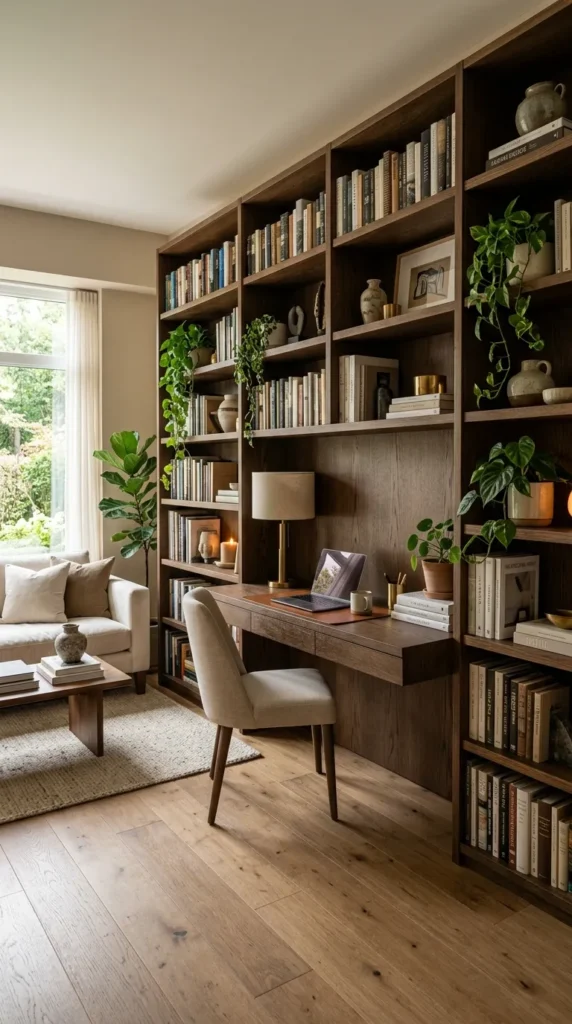
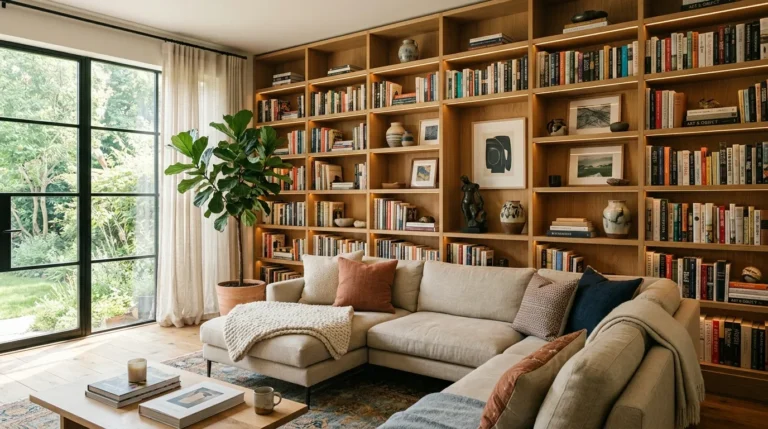
A desk integrated into a shelving unit creates workspace that feels like part of the furniture system. The shelves above and around the desk provide storage while the desk provides workspace. The integrated system feels intentional and designed. The desk does not feel like it was added on. It is part of the furniture composition.
This approach works if you have space for a built-in unit. The integration creates visual cohesion. The shelves provide both functional storage and visual interest preventing the workspace from feeling stark. The bookshelf aesthetic makes the workspace feel more like part of the room design.
14. Narrow Writing Desk Taking Minimal Floor Space
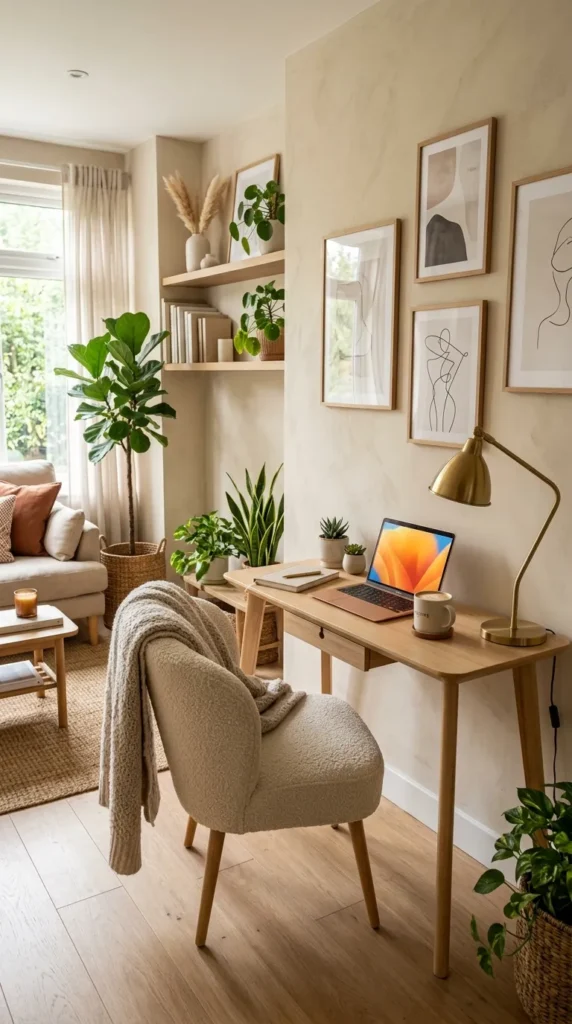
A narrow writing desk approximately eighteen to twenty-four inches wide takes minimal floor space while providing adequate laptop workspace. The narrow depth prevents the desk from protruding far into the room. The compact nature makes the workspace feel intentional and minimal not wasteful of space.
This works if your work is primarily laptop-based. The narrow width requires less space than traditional desks. The compact scale makes the workspace disappear visually better than larger desk footprints. The minimal size prevents the workspace from dominating the room.
15. Desk with Proper Ergonomics for All Day Work
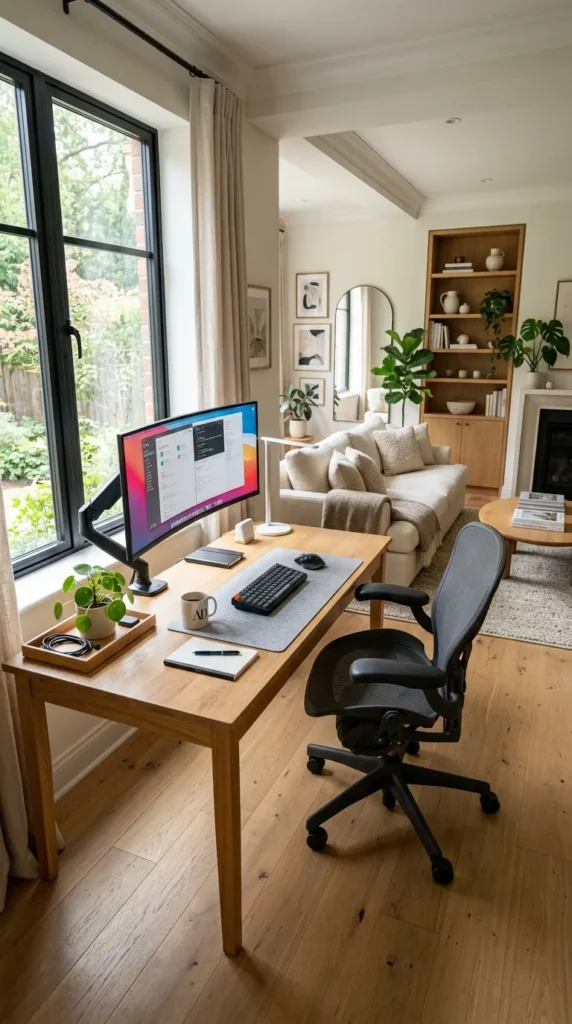
If you work eight hours daily at a desk, ergonomics matter genuinely. An adjustable monitor arm positions the screen at eye level preventing neck strain. An ergonomic chair supports your back. A desk at appropriate height prevents wrist and shoulder strain. The proper workspace setup prevents physical pain that undermines quality of life.
This addresses the reality that if you work from home you need a proper workspace not a cute improvisation. Your body spends eight hours in this space. Making it physically comfortable and ergonomically correct is not optional. The investment in proper setup prevents genuine health problems. Do not compromise on ergonomics for aesthetics.
16. Acoustic Panels or Screens for Sound Management
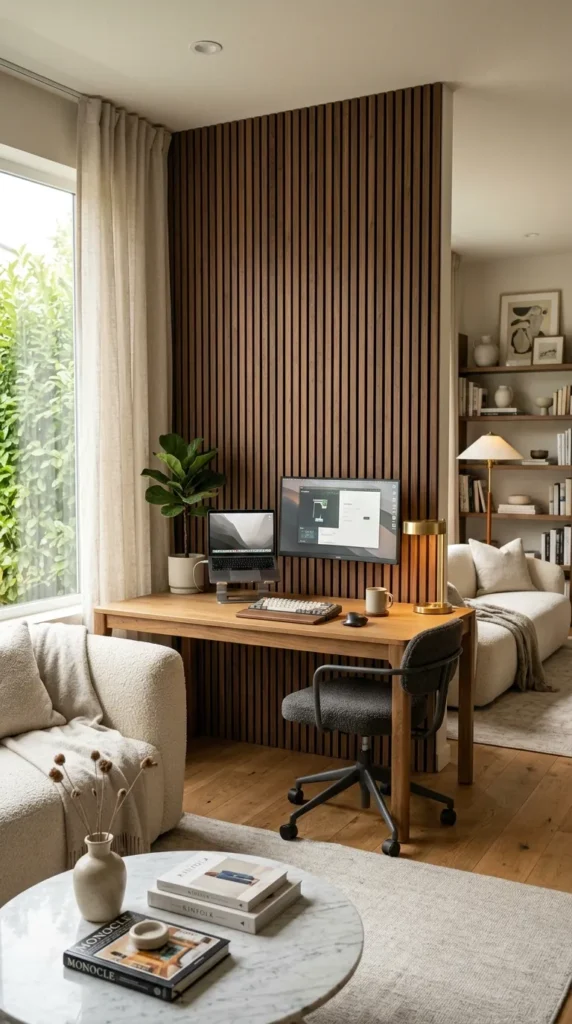
If you take video calls in your living room, background noise matters. Acoustic panels absorb sound improving audio quality during calls. Sound absorbing screens behind the desk reduce echoing. The panels also create visual separation defining the workspace area. The acoustic function is practical improvement not just aesthetic.
This addresses the real problem of living room noise during video calls. Traffic outside, household sounds, other people. Acoustic treatment improves call quality and reduces background interruptions. The panels serve dual function as both acoustic treatment and workspace definition.
17. Proper Desk Lighting for Focus and Eye Comfort
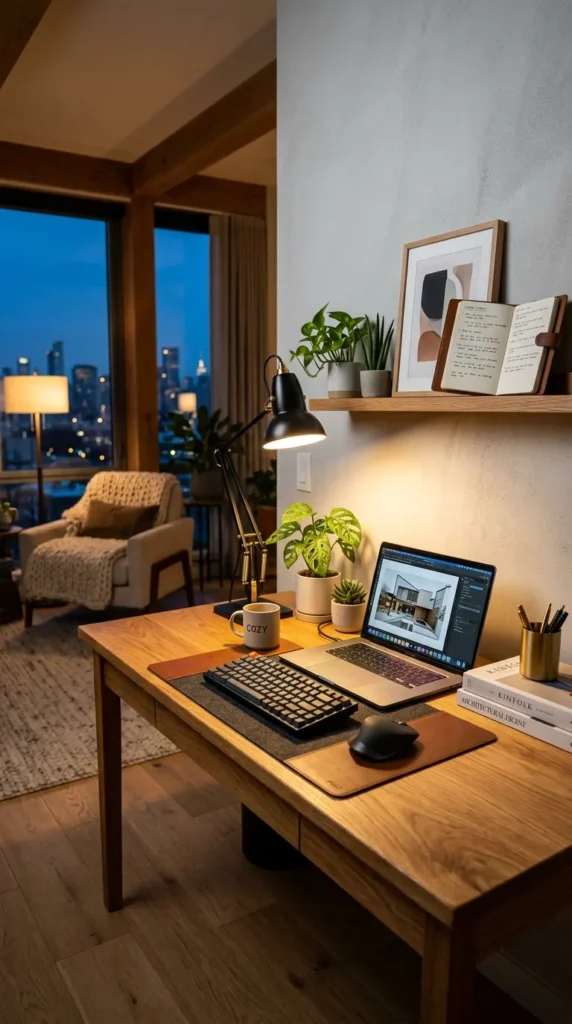
A task lamp focused on the work surface improves focus and reduces eye strain. Proper lighting prevents the workspace from feeling gloomy or depressing. The lamp should provide focused light on work surface not ambient room lighting. The dedicated task lighting prevents the workspace from feeling like a dark corner of the living room.
This addresses the reality that good lighting improves both function and feeling of the workspace. The proper lighting makes the space feel intentional and purposeful. The focused light creates definition for the workspace area. The eye comfort matters for actual work performance.
18. Small Printer and Supply Storage Nearby
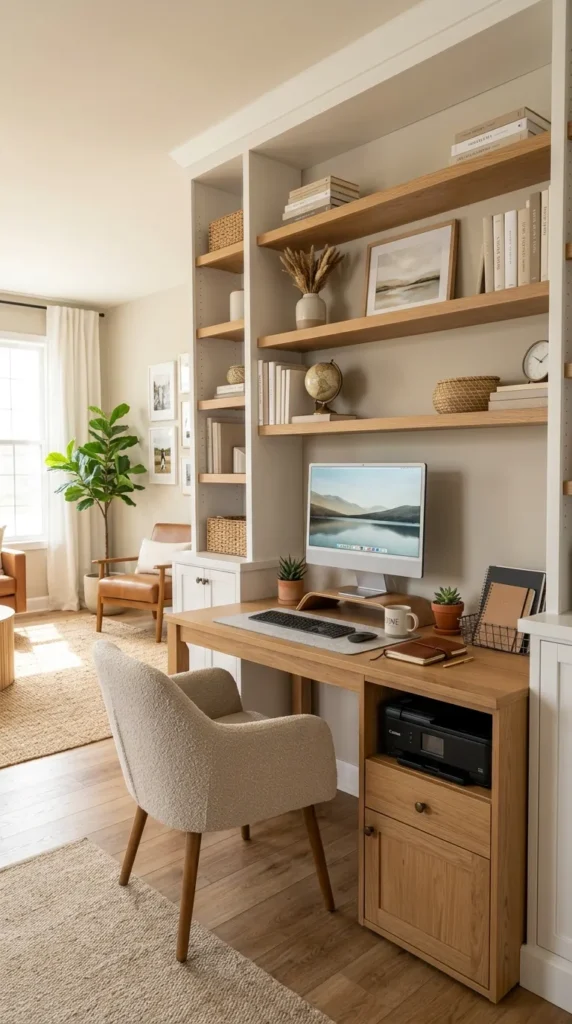
If you need to print or access supplies regularly, having them near the desk maintains workflow. A narrow cabinet holding paper, printer, and supplies keeps items contained and accessible. The storage containment prevents supplies from spreading across the living room. The proximity to the desk maintains functionality without constant trips across the room.
This addresses the reality of actually working. You need supplies accessible. Having them scattered makes the living room feel chaotic. Having them contained near the desk keeps the workflow functional and the living room visually clean.
19. Visual Separation Without Physical Walls
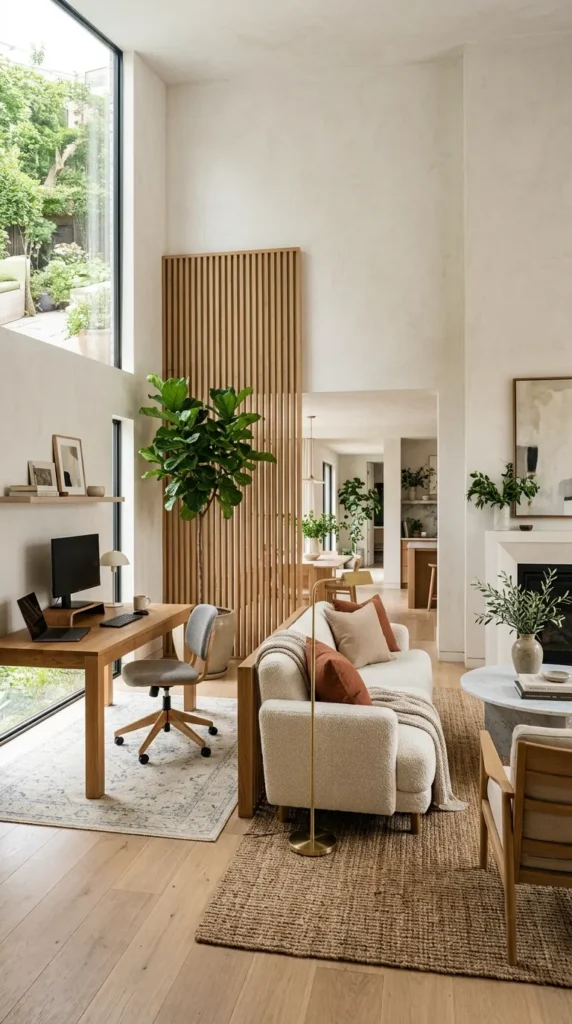
Create visual separation through furniture arrangement, rugs, and screens without building walls. A rug defining the workspace area. A tall plant or bookshelf creating soft boundary. A decorative screen behind the desk. The visual separation makes the workspace feel distinct without permanent structural changes.
This addresses the psychological need for separation without the physical constraint of permanent walls. You feel like you are working in a defined area. The living room feels like a separate space for relaxing. The visual boundaries create mental distinction between work and home.
The Real Challenge of Working in Your Living Room
The genuine issue is not finding a cute desk. It is creating a workspace that actually functions for work while maintaining your living room as a place where you can relax and feel at home. These are competing needs requiring intentional solutions. You need ergonomic setup that supports eight hours of work. You need proper lighting and sound management. You need storage that contains work clutter. You also need the space to feel like a living room when you are not working. You need visual separation that makes you feel like you have left work when you step away from the desk.
The best solution depends on your specific situation. How many hours do you work? How much desk space do you actually need? Do you have a dedicated room corner or are you using main living space? Do you need the workspace to disappear when not in use? How important is the living room feeling like a living room?
Answer these questions honestly. Then choose solutions that actually address your real needs. The cutest desk means nothing if it does not support your actual work. The most space efficient setup fails if you spend eight hours in physical pain. The most invisible desk does not help if you cannot find your supplies or if the light is too dim to see properly.
The best desk solution is one that works for your actual life not for a design magazine. Make it functional first. Make it beautiful after you have solved the functional problems. Your work performance and your quality of life depend on making the workspace actually work.