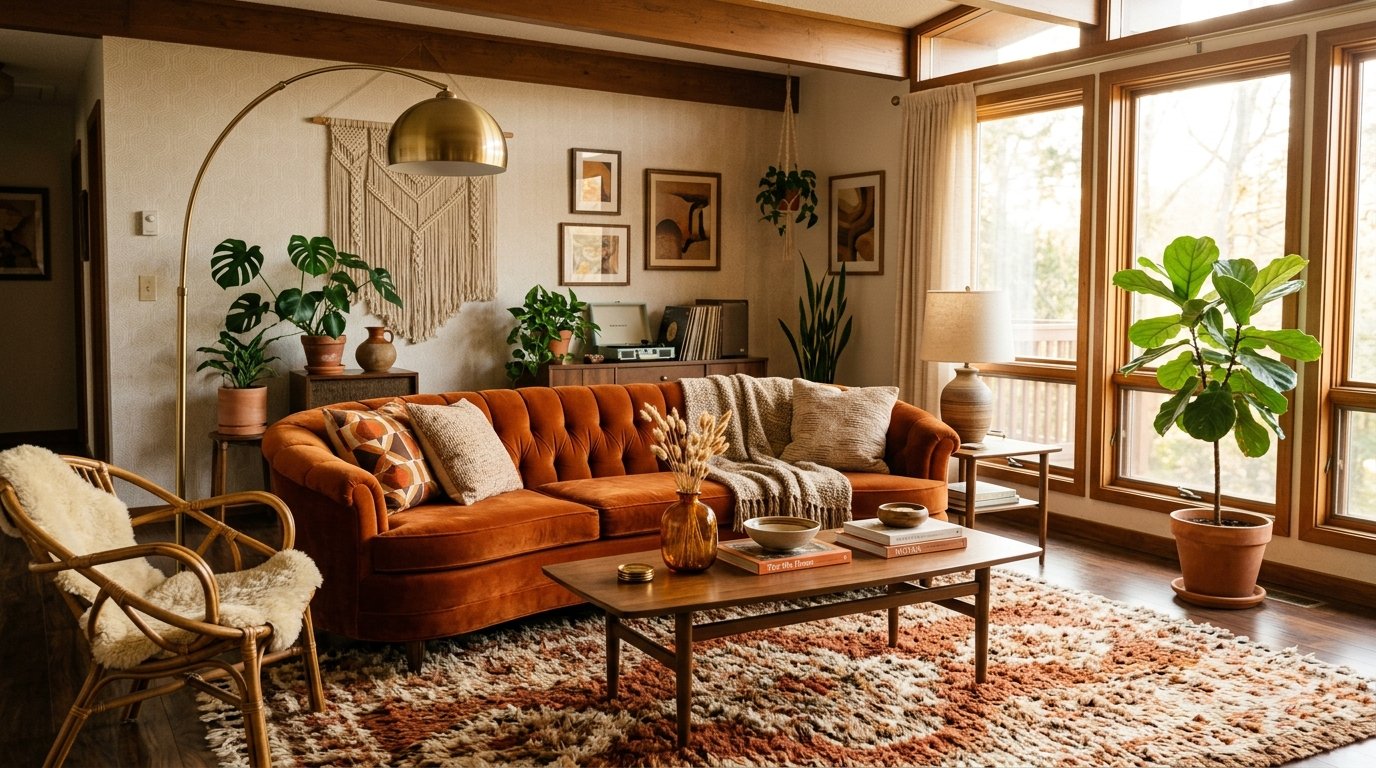
16 70s Living Room Ideas to Bring Back the Vibe
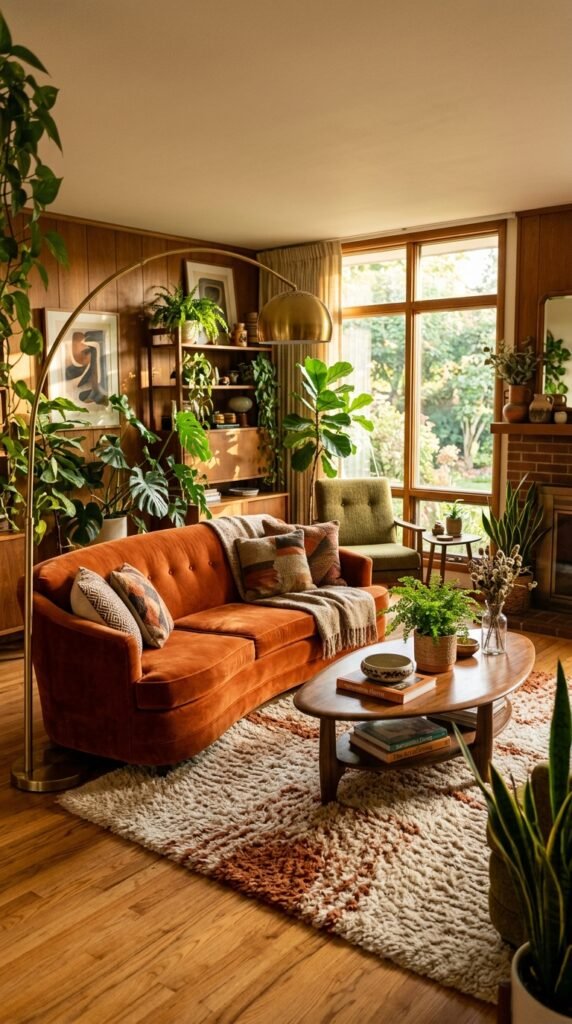
The 1970s had a design confidence that is genuinely hard to argue with in hindsight. People committed to color in ways that feel almost radical by today’s standards of greige walls and safe neutrals. They mixed textures with a freedom that contemporary minimalism has largely trained out of us. They brought nature indoors with a seriousness and a genuine enthusiasm that the current houseplant trend is only beginning to rediscover. And they treated the living room as a place of genuine pleasure and genuine personality rather than a curated space designed primarily to photograph well. There is something deeply appealing about all of that, and it explains why the 70s aesthetic keeps returning to interior design conversations with increasing frequency and increasing seriousness.
The good news is that bringing 70s energy into a living room does not require a complete renovation or a commitment to period accuracy that turns the room into a museum exhibit. It requires an understanding of what made 70s interiors feel the way they did, the warmth, the earthiness, the layered texture, the unapologetic color, and the willingness to bring those qualities into a contemporary space with a confident and selective hand. These sixteen ideas cover every dimension of the 70s living room aesthetic from the color palette to the furniture forms to the materials and accessories that make the whole thing feel genuinely alive.
1. Embrace the Earthy Color Palette
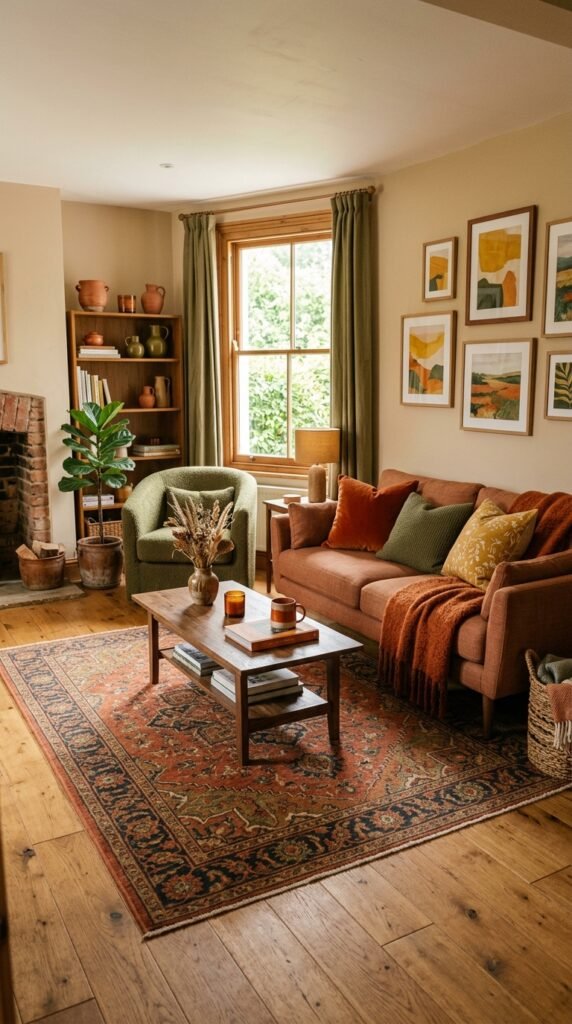
The color palette of the 1970s is one of the most immediately recognizable and most genuinely beautiful palettes in the history of interior design. Burnt orange, mustard yellow, avocado green, warm brown, terracotta, rust, and the deep warm tones of natural materials used extensively throughout the decade created interiors of extraordinary warmth and visual richness. These colors were not chosen randomly. They reflected a cultural movement toward nature, toward the earth, toward organic and authentic materials that defined the decade’s design sensibility at its best.
Bringing the earthy 70s palette into a contemporary living room does not mean painting everything the color of a vintage kitchen appliance. It means introducing these warm tones in proportions that suit the room and the light it receives, perhaps a deep terracotta on a single feature wall, or mustard yellow cushions on a neutral sofa, or a warm rust colored rug anchoring the seating area. The earthy palette works particularly well in living rooms with good natural light because the warm tones interact with sunlight in a way that creates a genuinely golden quality of light throughout the space. In rooms with limited natural light, opt for the lighter end of the earthy spectrum, warm cream, pale terracotta, soft sage green, to keep the room feeling open while maintaining the decade’s characteristic warmth.
2. Choose a Sunken Conversation Pit
Nothing says 1970s living room with quite the same authority and quite the same commitment as the sunken conversation pit, the recessed seating area set below the level of the surrounding floor and furnished with low cushioned seating on all sides to create an enclosed, intimate gathering space at the center of the room. The conversation pit was the decade’s most distinctive and most architecturally ambitious domestic innovation, born from a genuine belief that the living room should be designed first and foremost as a place for people to gather, talk, and enjoy each other’s company rather than as a space for displaying furniture and impressing guests.
Genuine sunken conversation pits require structural work that is not possible in every home, but the aesthetic can be referenced and approximated in any living room through the use of low modular seating arranged in a U or square configuration around a central low table, with the floor area of the seating zone defined by a large area rug that creates a visual boundary equivalent to the step down of a genuine pit. Keep the seating low, genuinely low, with seat heights of thirty five to forty centimeters rather than the standard forty five, and choose upholstery in warm 70s tones, ochre, rust, warm brown, to complete the reference with conviction.
3. Layer Textures With Shag and Bouclé
The 1970s understood texture in a way that contemporary minimalism has largely forgotten, and the living rooms of the decade were extraordinary sensory environments precisely because they combined so many different tactile qualities in a single space. Shag pile carpets or rugs underfoot. Velvet or corduroy upholstery on the seating. Macramé wall hangings with their complex knotted texture. Woven throws and cushions in natural fibers. Rattan and cane furniture with their basketwork surfaces. All of these textures together created living rooms that invited touch and rewarded it, spaces that felt warm and generous and deeply comfortable in a way that smooth, hard, reflective contemporary interiors simply do not.
Bringing this textural richness into a contemporary living room starts with the rug and the upholstery, which together occupy the largest surface area and have the greatest impact on how the room feels. A large shag pile rug in a warm earthy tone, rust or camel or warm cream, changes the feeling of a room immediately and sets the textural tone for everything above it. Bouclé upholstery on a sofa or armchair, with its looped, nubby surface that catches light in multiple directions, creates the same quality of textural warmth at seating height. Add macramé or woven wall hangings, knitted or woven cushions, and a throw in a natural fiber and the room begins to feel genuinely, properly 70s in its sensory generosity.
4. Bring in Macramé and Woven Wall Art
Macramé is the craft that most completely captures the spirit of 1970s domestic decoration, the combination of natural materials, handmade quality, organic pattern, and casual bohemian warmth that defined the decade’s approach to interior styling at its most characteristic. A large macramé wall hanging above a sofa or fireplace creates an immediate 70s reference point that requires no other period elements to read clearly as intentional, because the material, the technique, and the aesthetic are so completely associated with the decade that their presence is immediately understood.
Contemporary macramé is available in a much wider range of scales, complexity, and material quality than the original decade’s versions, and choosing a piece with genuine craft quality rather than a mass produced approximation makes a significant difference to how the wall hanging reads in the room. Look for pieces made with natural fibers, cotton rope, jute, hemp, in natural undyed tones or in warm earthy colors that coordinate with the living room’s palette. A very large piece, one that fills a significant portion of the wall behind the sofa or above the mantelpiece, has a presence and an authority that smaller pieces cannot match. The scale of commitment communicates genuine enthusiasm for the aesthetic rather than a tentative or apologetic reference to it.
Love warm earthy tones? Don’t miss 14 Brown Couch Living Room Ideas for more cozy and timeless styling inspiration.
5. Choose Low Modular Seating
The furniture forms of the 1970s were uniformly low, close to the ground, horizontal in their emphasis rather than vertical, and this low profile created a quality of casual ease and relaxed comfort that higher, more upright furniture simply does not provide. Low modular sofas, the kind that could be arranged and rearranged in different configurations depending on the occasion, were the decade’s most characteristic seating form and the one that most directly expressed the decade’s social values, its preference for informal gathering, for flexibility, for comfort over formality. A low modular sofa in a warm earthy upholstery is the single piece of furniture that most completely transforms a contemporary living room into something that genuinely references the 70s aesthetic.
The low seating profile requires commitment to consistency throughout the room, because a low sofa paired with standard height coffee tables and side tables creates awkward proportions that make neither the furniture nor the space read correctly. Keep everything low. A coffee table with a height of thirty to thirty five centimeters suits low seating beautifully and creates the correct proportional relationship between the seating and the table. Side tables at arm height for low seating, approximately fifty to fifty five centimeters, keep drinks and books within reach without requiring uncomfortable reaching. The overall effect of consistently low furniture in a living room is one of genuine horizontal ease, a room that invites you to sink in, stretch out, and stay.
6. Add Rattan and Cane Furniture
Rattan, cane, and wicker furniture were ubiquitous in 1970s interiors, appearing as chairs, side tables, room dividers, plant stands, magazine holders, and almost every other furniture category, and their return to contemporary interior design has been enthusiastic and entirely deserved. The natural basketwork texture of rattan and cane creates a warm, organic quality in a living room that no manufactured furniture material can replicate, and the slightly irregular, handmade character of woven natural fiber furniture adds a quality of authenticity and craft to a room that mass produced furniture inevitably lacks.
The iconic rattan pieces that most immediately evoke the 70s are the hanging egg chair, suspended from the ceiling on a single hook and providing a uniquely cocooning seated experience, and the large fan back peacock chair, with its dramatically oversized circular woven back that creates a throne like presence in a corner of the living room. Either of these statement rattan pieces creates an immediate and committed 70s reference, but more restrained rattan choices, a pair of cane side chairs, a rattan side table, a woven magazine stand, achieve the same material reference in a less emphatic way that suits rooms where the 70s aesthetic is being introduced as a note within a broader contemporary setting rather than as the room’s complete design identity.
7. Install Wood Paneling on One Wall
Wood paneling was one of the most distinctive features of 1970s interior design and one of the most misunderstood in retrospect. The dark, poorly finished paneling that became synonymous with dated 70s basements is not the paneling worth revisiting. The beautifully executed timber paneling of the decade’s best interiors, warm honey toned boards with visible grain creating a wall of genuine material warmth, is a completely different proposition and one that looks extraordinary in contemporary living rooms when applied with a confident and considered hand.
A single wall of warm timber paneling behind the sofa or the television creates a feature wall of genuine material richness that painted walls cannot approach, and the warmth of the natural wood grain creates a quality of domestic warmth that makes the living room feel genuinely cozy rather than simply decorated. Choose a light to medium toned timber, pale oak, warm pine, honey colored ash, rather than the dark stained finishes that contributed to the negative associations of 70s paneling in poorly lit rooms. Keep the finish light, a clear oil or wax that enhances the natural color without darkening it significantly, and the paneling will read as warm and contemporary rather than dated and oppressive.
8. Use Velvet Upholstery Throughout
Velvet upholstery is one of those material choices that sounds indulgent until you live with it and realize that it is simply one of the most beautiful and most comfortable upholstery fabrics available. The pile of velvet catches light in multiple directions simultaneously, creating a surface that appears to change color as you move around it, darker from one angle, lighter from another, richer in shadow, more luminous in direct light. In a 70s living room, velvet upholstery in warm earthy tones, deep teal, burnt orange, forest green, warm brown, mustard yellow, creates seating of extraordinary visual richness and tactile pleasure that coordinates with every other characteristic element of the decade’s aesthetic.
The durability concern that many people have about velvet upholstery is largely overstated for contemporary performance velvets, which are engineered to resist crushing, staining, and wear far more effectively than the velvet fabrics of the original decade. A high quality contemporary velvet sofa or armchair will perform well in a family living room for years with appropriate care, and the visual and tactile pleasure it provides throughout its life justifies the investment. Choose velvet in a tone that anchors the room’s earthy palette, a sofa in deep teal or burnt orange becomes the room’s primary color statement and allows everything else to be chosen in relation to it rather than independently.
9. Display an Abundance of Houseplants
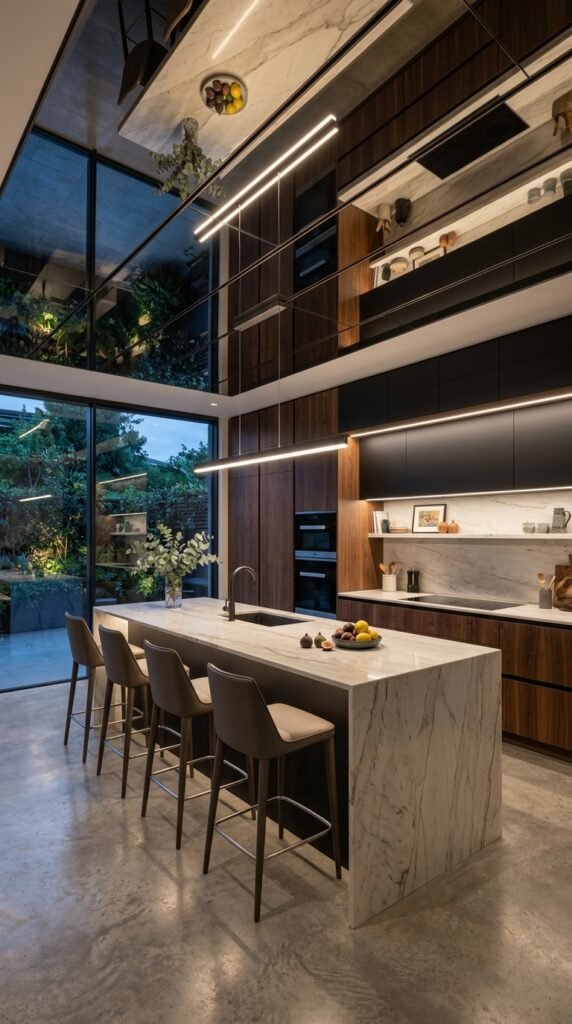
The 1970s houseplant obsession was not a style choice so much as a genuine cultural conviction that living with plants made life better, and the living rooms of the decade reflected this conviction with an abundance and an enthusiasm that the current houseplant trend is genuinely rediscovering. Large statement plants in every corner, hanging plants trailing from ceiling hooks, shelves of smaller plants grouped by family or by color, collections of terracotta pots on every available surface, ferns and palms and spider plants and rubber trees filling every zone of the living room from floor to ceiling.
Recreating this plant abundance in a contemporary living room requires both enthusiasm and some basic horticultural knowledge, because the key to a genuinely lush plant display is choosing plants that suit the specific light conditions of the room rather than the ones that look most impressive at the garden center. A living room with good natural light can support an extraordinary range of plants including fiddle leaf figs, bird of paradise, monstera, and various palms that create the dramatic foliage presence that the 70s plant aesthetic requires. A room with limited natural light needs to be stocked with genuinely shade tolerant species, pothos, snake plants, ZZ plants, cast iron plants, that will thrive rather than slowly deteriorate in the available conditions.
10. Choose Geometric Patterned Textiles
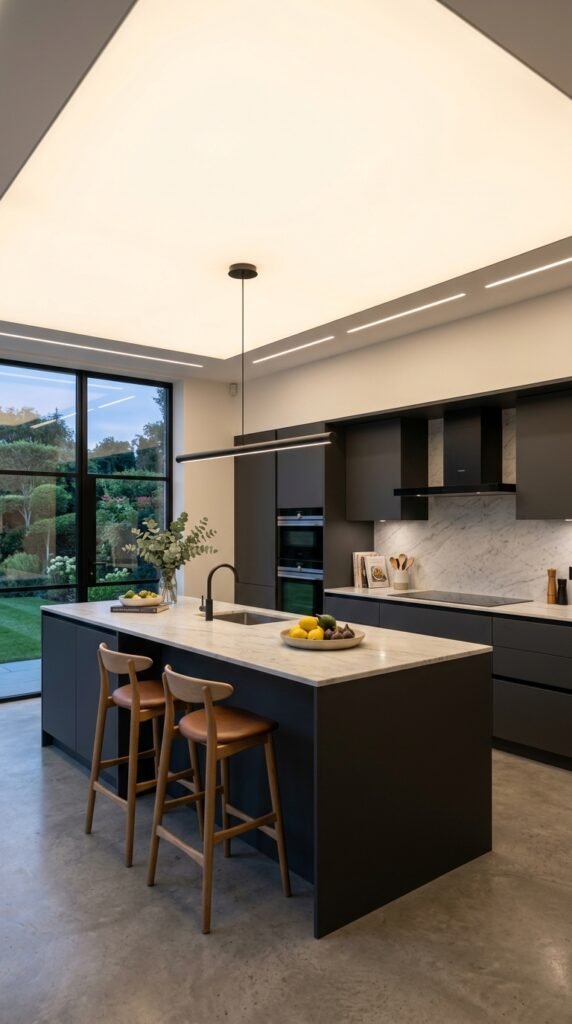
Geometric patterns in bold, warm colors were one of the most characteristic textile choices of 1970s interior design, appearing on curtains, cushions, upholstery, and wall hangings in the strong graphic combinations of orange and brown, teal and mustard, rust and cream that feel immediately and unmistakably of the decade. The geometric designs of the era ranged from simple repeating diamonds and hexagons to complex interlocking forms influenced by Op Art and by the decade’s interest in mathematical and natural pattern systems. All of them share a visual boldness and a color confidence that contemporary textile design frequently lacks.
Introducing geometric patterned textiles into a contemporary living room is one of the most accessible and most reversible ways to bring the 70s aesthetic into the space. Cushions in geometric patterns are affordable, easy to change, and have a significant cumulative impact on the room’s visual character when grouped in sets of four or six across the sofa and armchairs. Geometric curtains in warm tones can transform the room’s atmosphere completely, particularly in a room with large windows where the curtains occupy a significant proportion of the visual field. A geometric patterned rug anchoring the seating area creates the strongest and most fundamental 70s reference available in the textile category.
11. Incorporate a Statement Fireplace
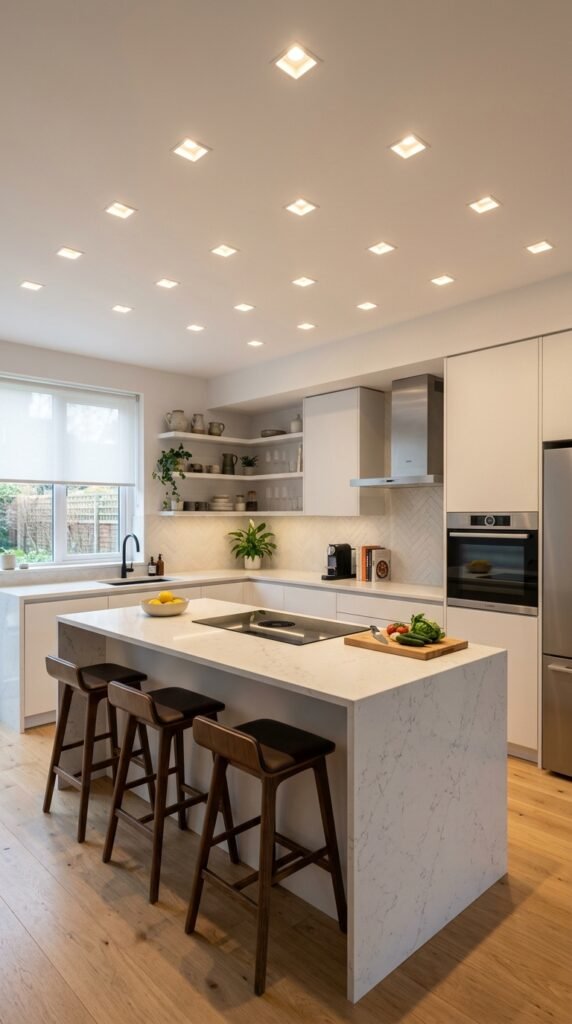
The fireplace in a 1970s living room was rarely a subtle architectural element. It was typically a bold, sculptural form in a material that made a genuine design statement, white rendered plaster in a dramatic geometric form, rough stone in a rugged natural finish, or dark brick in a strong graphic pattern. The fireplace surround was as much a piece of furniture as an architectural element, often built out from the wall to create a hearth platform, sometimes incorporating built in shelving or seating on either side, almost always functioning as the room’s primary focal point and the surface around which everything else in the room was organized.
A contemporary living room that wants to reference the 70s fireplace aesthetic has several options depending on what exists in the room already. An existing traditional fireplace can be updated with a new surround in a warm rendered plaster or a simple geometric timber form that references the decade’s characteristic shapes. A room without a fireplace can incorporate a large format freestanding fireplace in a bold form, or a linear gas fireplace set into a plaster or stone feature wall, that creates the same focal point function as the original decade’s fireplaces without requiring the structural work of a traditional chimney installation.
12. Use Arc Floor Lamps
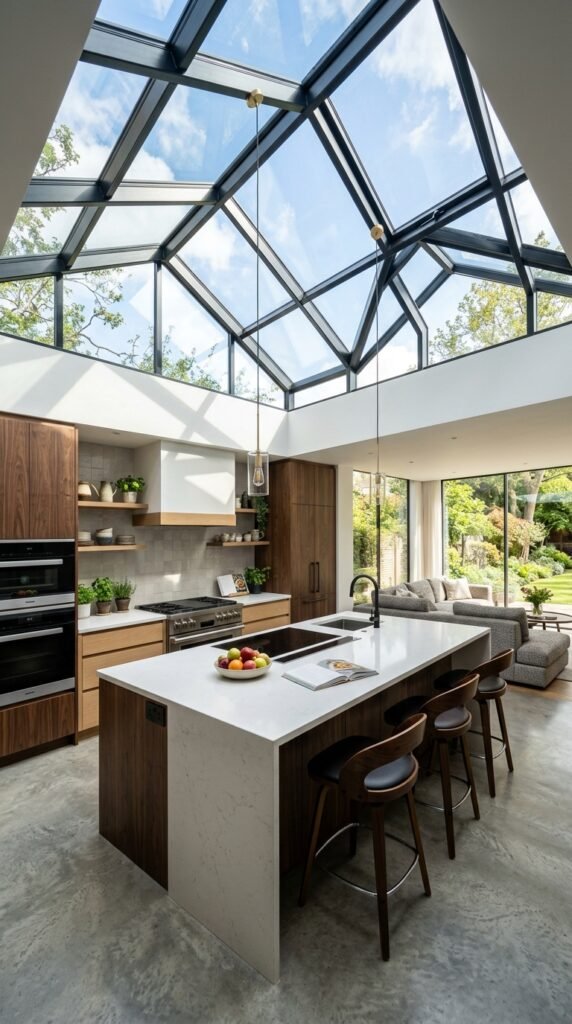
The arc floor lamp, with its long curved stem rising from a weighted base and sweeping outward to position the light source above a seating area without requiring a ceiling fixture or a side table for support, is one of the most characteristic and most beautiful lighting forms of the 1970s and one that has returned to contemporary interior design with considerable enthusiasm. The dramatic arc of the lamp creates a sculptural presence in the living room that no other floor lamp form can replicate, and the way it positions the light source above the seating area creates a quality of directed, intimate illumination that ceiling fixtures cannot achieve.
A large arc floor lamp in a warm metallic finish, aged brass, burnished copper, or antique gold, positioned to arc over one end of the sofa creates both a practical reading and ambient light source and a sculptural element of considerable visual presence. The weighted base of the arc lamp, typically a heavy stone or metal disc that prevents the lamp from tipping despite the leverage of the curved arm, is a design element in itself and should be chosen with the same care as the shade and the arm. A marble base in a warm honey tone, a dark slate disc, or a brushed brass platform all create different qualities of grounded weight that suit different versions of the 70s living room aesthetic.
Looking for stylish ways to display décor and accessories? Explore 15 Built-In Living Room Shelves for Style for even more inspiring ideas.
13. Hang Oversized Botanical Art
The relationship between the 1970s interior and the natural world went beyond the abundance of actual houseplants to include a genuine enthusiasm for botanical imagery in art and decoration. Large scale botanical prints, paintings of tropical plants, oversized photographs of natural forms, and illustrated botanical charts in vintage frames all appeared in the decade’s living rooms as expressions of the same nature loving sensibility that filled them with living plants. The visual connection between the printed or painted botanical imagery on the walls and the living plants elsewhere in the room created a layered natural environment of considerable visual richness.
Oversized botanical art in a contemporary living room creates an immediate 70s reference while also functioning as genuinely beautiful decoration independent of any period association. A large framed print of a tropical leaf, a monstera or a bird of paradise or a banana palm, in a simple natural timber or aged brass frame creates a wall feature of considerable presence and warmth. A collection of smaller botanical prints grouped salon style on a wall, in mismatched vintage frames of different sizes and finishes, creates a more eclectic and more layered version of the same idea. Either approach works beautifully alongside real plants, creating the dialogue between living and represented nature that was one of the 70s interior’s most characteristic and most appealing qualities.
14. Choose Warm Ambient Lighting
The 1970s living room was lit with a warmth and an intimacy that contemporary living rooms frequently sacrifice to the practical requirements of adequate illumination. Table lamps with warm glowing shades, floor lamps positioned to create pools of directed light rather than general room illumination, candles on every available surface, and the warm glow of a working fireplace all combined to create a quality of evening light that was genuinely flattering, genuinely warm, and genuinely conducive to the relaxation and social ease that the decade valued so highly in its domestic spaces.
Recreating this quality of warm ambient lighting in a contemporary living room requires a deliberate decision to prioritize atmosphere over illumination and to accept that a living room lit entirely by warm, low level ambient sources will be less bright and less uniformly lit than one with recessed ceiling downlights blazing at full capacity. Choose bulbs in the warmest available color temperature, 2200K to 2700K, for all the lamps in the living room. Use multiple lamp sources rather than overhead lighting to create the distributed pools of warm light that characterize 70s interior photography. Connect everything to dimmers so the light level can be adjusted from afternoon reading brightness to evening ambient glow without changing any of the fixtures.
15. Incorporate Ceramic and Pottery Accessories
The ceramic and pottery objects that filled 1970s living rooms were some of the most beautiful domestic objects of the century, combining the decade’s enthusiasm for natural materials with a genuine craft tradition that produced vessels, vases, bowls, and sculptural forms of extraordinary quality and character. The characteristic forms were organic and earthy, round shouldered vessels in uneven glazes, textured surfaces in warm brown, amber, and cream tones, hand thrown pieces whose slight irregularity communicated the presence of the maker’s hand rather than the precision of machine production.
Collecting genuine vintage ceramic pieces from the 1970s is one of the most rewarding ways to bring authentic period character into a contemporary living room, and vintage markets, charity shops, and online vintage platforms regularly offer beautiful examples at very accessible prices. A collection of three to five ceramic vessels in related earthy tones grouped on a coffee table, a shelf, or a fireplace mantel creates an instant 70s focal point of genuine material beauty. Contemporary ceramic artists working in the same organic, earthy tradition produce equally beautiful pieces that bring the same quality of handmade character and natural material warmth without the search required to find authentic vintage examples.
16. Layer Rugs for Warmth and Texture
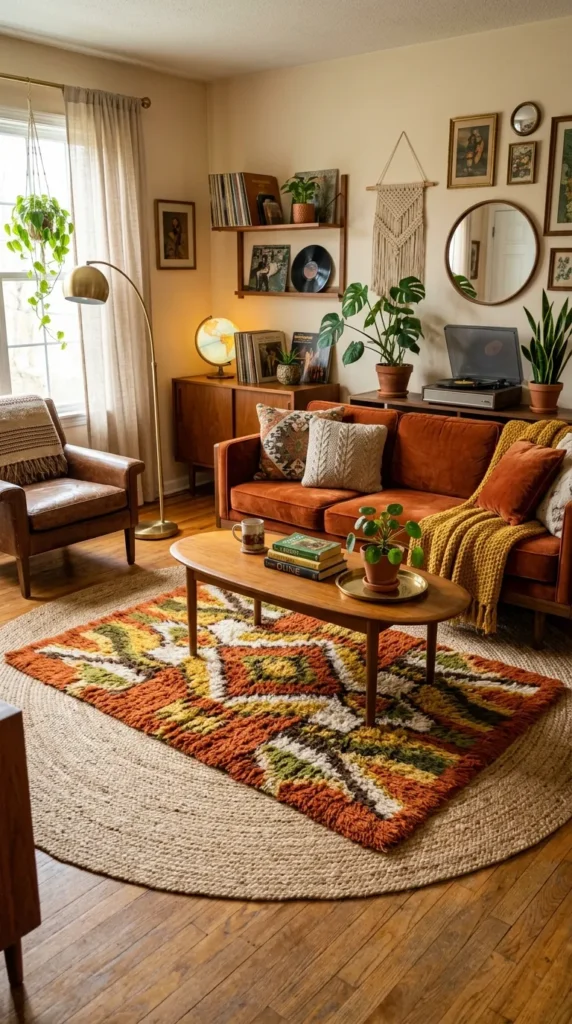
Layering rugs, placing one rug on top of another to create a composite floor covering of combined texture and pattern, was a common and confident styling choice in 1970s interiors that has returned strongly to contemporary interior design. The combination of a large flat weave or natural fiber rug as a base layer with a smaller, more textural or more patterned rug placed on top creates a floor covering of layered visual interest and genuine tactile warmth that a single rug cannot achieve. The technique also allows two rugs that might not individually be large enough to anchor the seating area to work together as a unified floor element that succeeds where either alone would fail.
The most successful rug layering combinations in a 70s inspired living room pair a large natural jute or sisal rug as the base with a smaller vintage or vintage style kilim, a shag pile rug in a warm earthy tone, or a geometric patterned rug in the warm colors of the decade’s characteristic palette. The base rug provides the neutral ground and the natural material warmth while the top rug provides the pattern, the color, and the textural contrast that gives the combination its visual interest. Keep the top rug positioned consistently within the base rug so that a margin of the base rug is visible on all sides, and the layered combination will read as designed and intentional rather than accidental or improvised.
Creating Your 70s Living Room
The 70s living room at its best was not a chaotic collection of period objects assembled without thought. It was a genuinely warm, genuinely comfortable, genuinely personal space that reflected the values and the tastes of the people who lived in it with a confidence and an honesty that contemporary design sometimes lacks. Bringing that quality into a living room today means understanding what made those spaces feel the way they did and recreating those qualities with contemporary materials and a contemporary sensibility rather than period accuracy for its own sake.
Choose the elements from these sixteen ideas that genuinely appeal to you and that suit the specific light, the specific proportions, and the specific character of your living room. The 70s aesthetic is generous enough to accommodate every level of commitment, from a single shag pile rug and a macramé wall hanging all the way to a full sunken conversation pit with velvet modular seating and a wall of timber paneling. Whatever level of commitment you choose, bring it with confidence, and the room will reward you with the warmth, the personality, and the genuine livability that made 70s living rooms so memorable and so worth revisiting.