13 Floating Shelves Living Room Ideas That Deliver
Floating shelves are one of those home additions that seem simple on the surface but end up changing the way a room works and feels more completely than almost anything else you could do to it. A wall that was blank becomes purposeful. A room that had no display space suddenly has a place for the books and the ceramics and the small objects that have been looking for a home. A living room that felt unfinished gets an element of genuine design intention that pulls everything else in the room together. The investment is modest, the installation is manageable, and the results are immediate. It is hard to think of another home improvement that delivers this much for this little.
The challenge is not deciding whether to install floating shelves but deciding how to use them well. A floating shelf loaded with whatever happens to need a home is not a design asset. It is visual clutter at eye level, which is worse than no shelf at all. The ideas here address both the installation and the styling, giving you a complete picture of how to make floating shelves work in a living room in ways that genuinely improve the space rather than simply adding storage to it.
1. Floor to Ceiling Shelves on One Wall
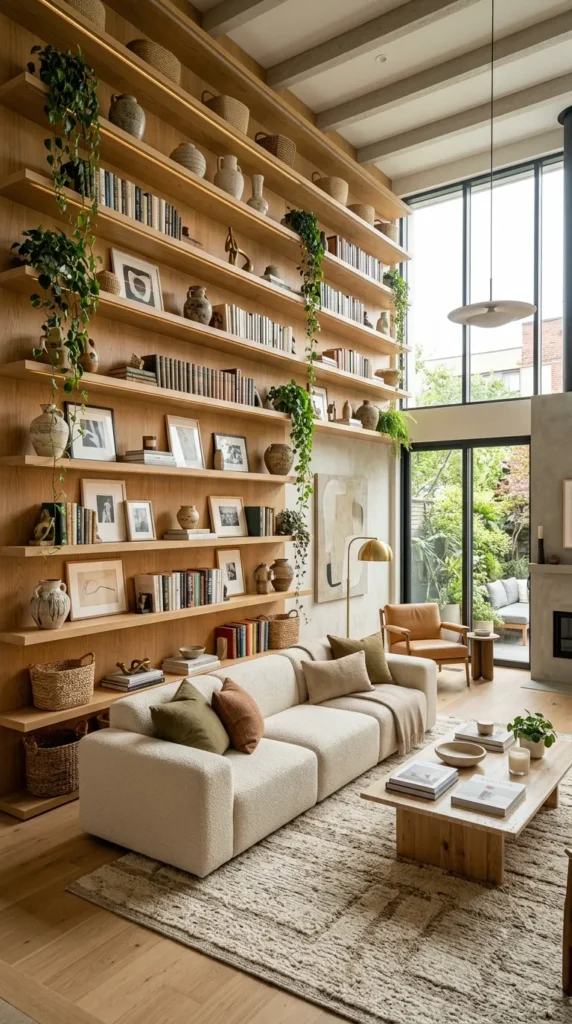
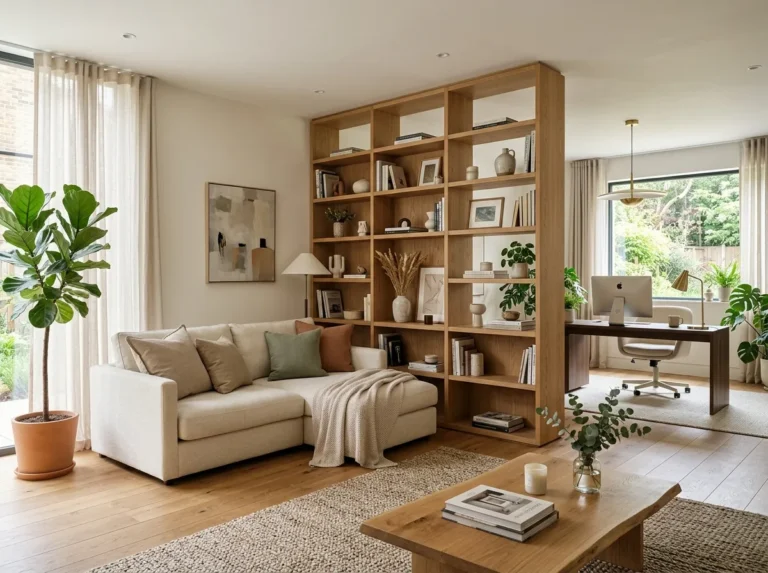
Dedicating one complete wall of the living room to floor to ceiling floating shelves creates a feature of genuine architectural presence that transforms the room more dramatically than any other single shelf installation. The wall of shelves becomes the room’s defining element, the thing that gives it its identity and its character, and everything else in the room, the sofa, the rug, the lighting, is chosen and arranged in relation to it. Done well, a floor to ceiling shelf wall is one of the most beautiful and most personally expressive things a living room can contain. Done poorly, it is a wall of visual noise that overwhelms every other element in the space.
The key to making floor to ceiling shelves work is organization by zone. The shelves at eye level and comfortable reach height, roughly between eighty centimeters and one hundred and eighty centimeters from the floor, are where the most visually important and most frequently used items live. Books arranged by color or by height, a collection of ceramics grouped by tone, framed photographs leaning against the shelf back, plants that receive adequate light at this height. The zone below eye level holds larger, heavier items, stacked books, baskets, larger vessels. The zone above comfortable reach, accessed with a step stool, holds purely decorative items that contribute to the visual story of the wall from a distance without needing to be accessed regularly.
2. Asymmetric Shelf Arrangements
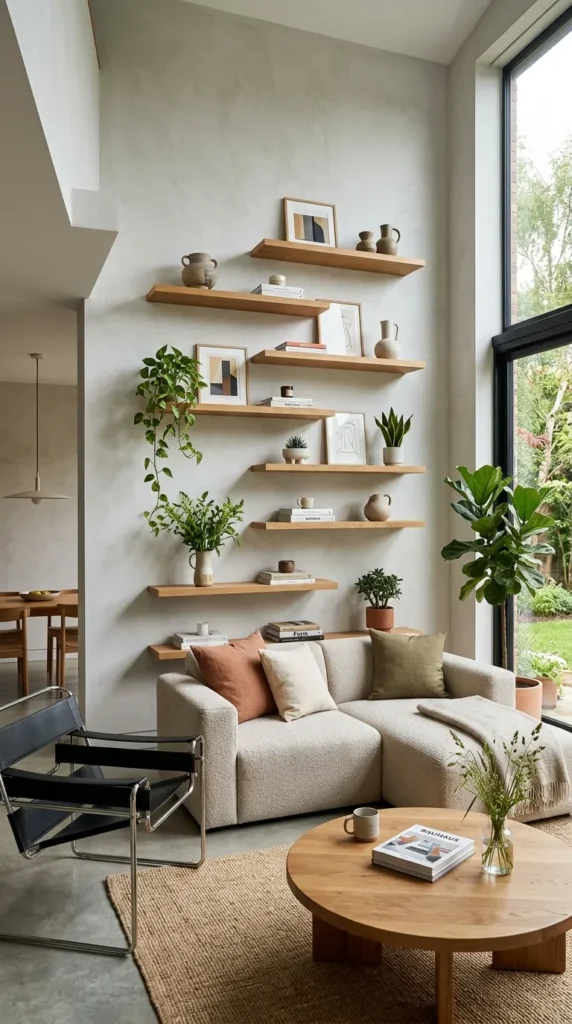
A set of floating shelves arranged in a deliberate asymmetric pattern, shelves of different lengths at different heights with intentional empty wall space between them, creates a living room wall of considerable visual dynamism and design sophistication that a uniform grid of identical shelves at regular intervals simply cannot match. The asymmetry creates a composition rather than a storage system, and the relationship between the shelves and the empty wall space between them becomes as important as the shelves themselves. This approach requires more planning than a standard shelf installation but delivers a result that looks genuinely designed rather than simply installed.
Planning an asymmetric shelf arrangement works best on paper or on a scale drawing of the wall before any fixings are made. Sketch the wall to scale and experiment with shelf positions, lengths, and heights until the composition feels balanced in an interesting rather than symmetrical way. Consider where the largest and most visually prominent objects will be displayed and ensure those shelf positions have adequate surrounding space to let those objects breathe. Consider the relationship between the shelf arrangement and any other features on the wall, a doorway, a window, a fireplace, and use the asymmetric composition to create a visual dialogue with those fixed elements rather than ignoring them.
3. Shelves Framing a Television
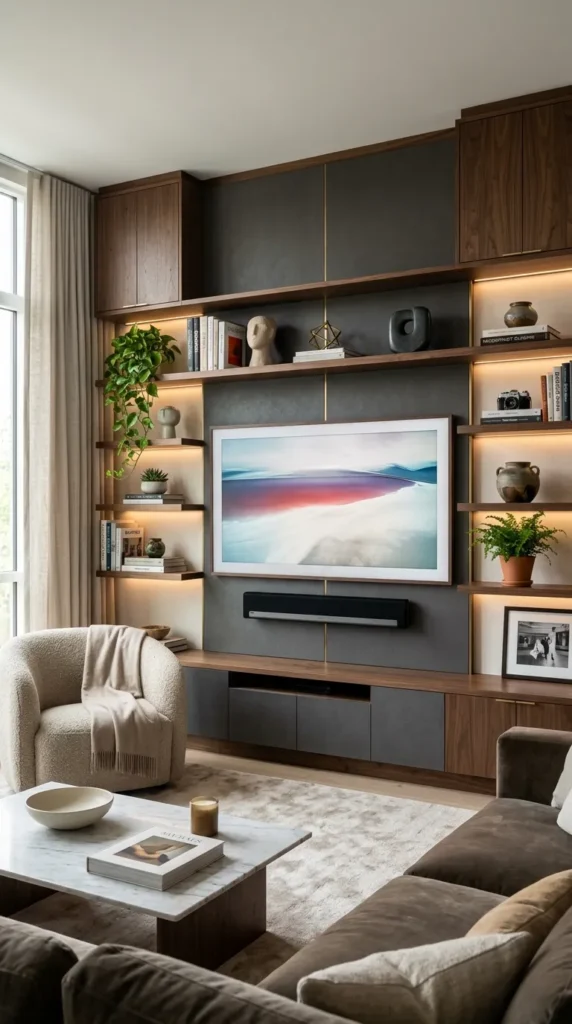
Floating shelves arranged on either side of a wall mounted television create a built in media wall effect that transforms the television from an unavoidable black rectangle into part of a considered display composition. The shelves provide homes for the media equipment, the books, the plants, and the decorative objects that make the display wall feel personal and interesting, while the television sits centered within the composition as one element among many rather than the dominant visual presence it tends to be when mounted on a plain wall with nothing around it.
The practical design of shelves around a television requires attention to the television’s dimensions and its position on the wall before the shelf positions are planned. The shelves should not be positioned so close to the television that they interfere with the viewing experience, casting shadows on the screen or placing objects so close to eye level during viewing that they become distracting. Keep the shelf zone at the same height as the television or above it, and leave the area directly to the sides of the screen relatively open so that the display composition frames the television without crowding it. Cable management behind the shelves, with cables routed through the wall or along the back edge of the shelves in cable trunking, keeps the composition clean and prevents the visual clutter of exposed wires from undermining the shelf arrangement.
4. Corner Floating Shelves
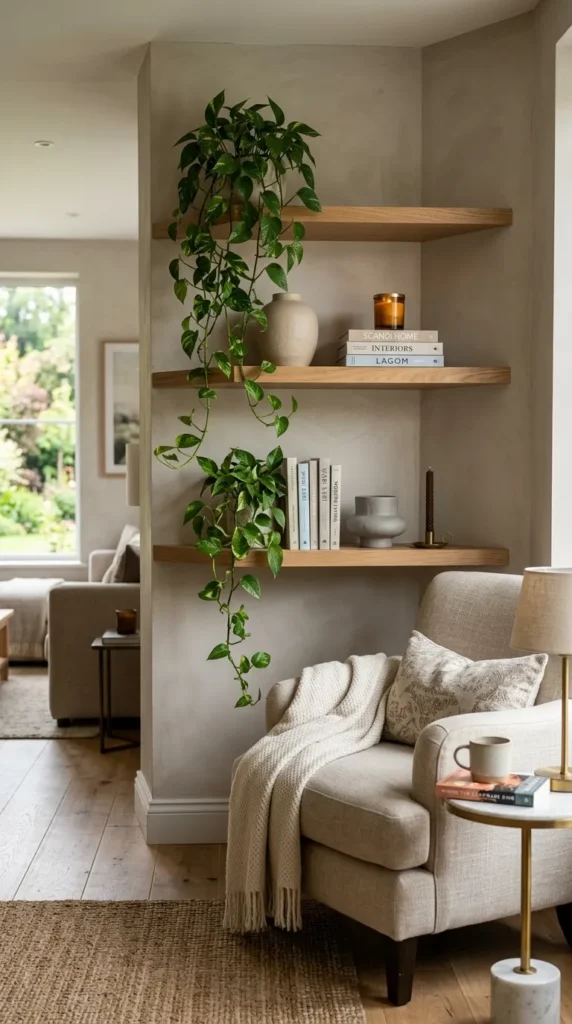
Corner floating shelves make productive use of the space that living rooms most consistently waste, the interior corners where two walls meet and where standard furniture placement is difficult and standard shelf installation is typically avoided because the geometry seems complicated. A set of corner shelves, whether triangular shelves that span the corner or L shaped shelves that wrap around it, creates a display zone in a position that would otherwise contribute nothing to the room’s visual interest or its storage capacity.
Corner shelves work particularly well in smaller living rooms where every wall surface has value and where the corner is too important to leave as empty painted plaster. A stack of three or four corner shelves at varying heights creates a display column in the corner that draws the eye without requiring floor space, which makes it especially valuable in rooms where the floor plan is tight. Style corner shelves with a considered collection of objects chosen specifically for their visual relationship to each other, a small plant, a ceramic vessel, a few books stood upright, rather than loading them with whatever needs a home. The corner position means these shelves are visible from multiple angles in the room and the styling should work from all of those viewpoints rather than just from the front.
5. Shelves With Integrated Lighting
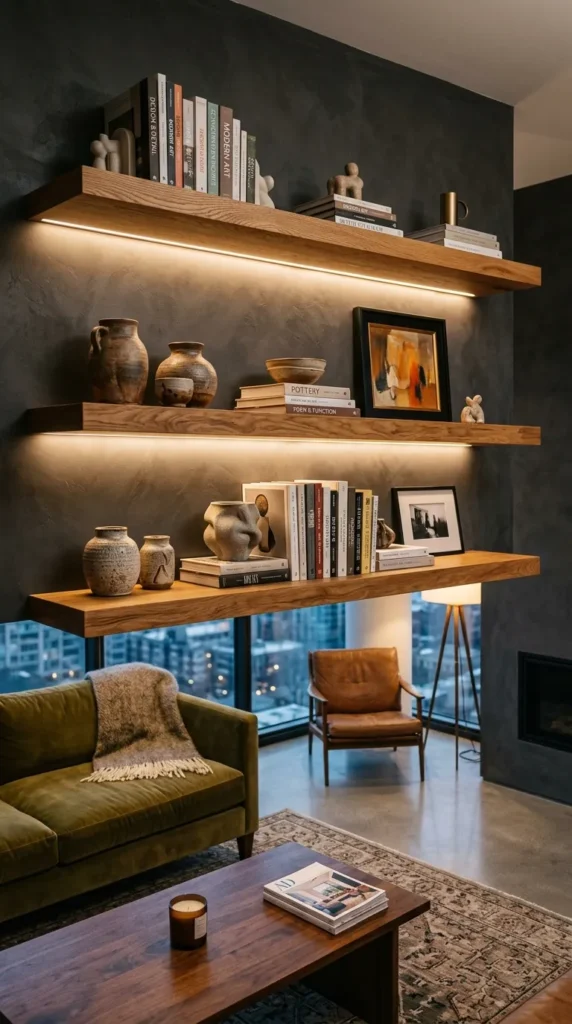
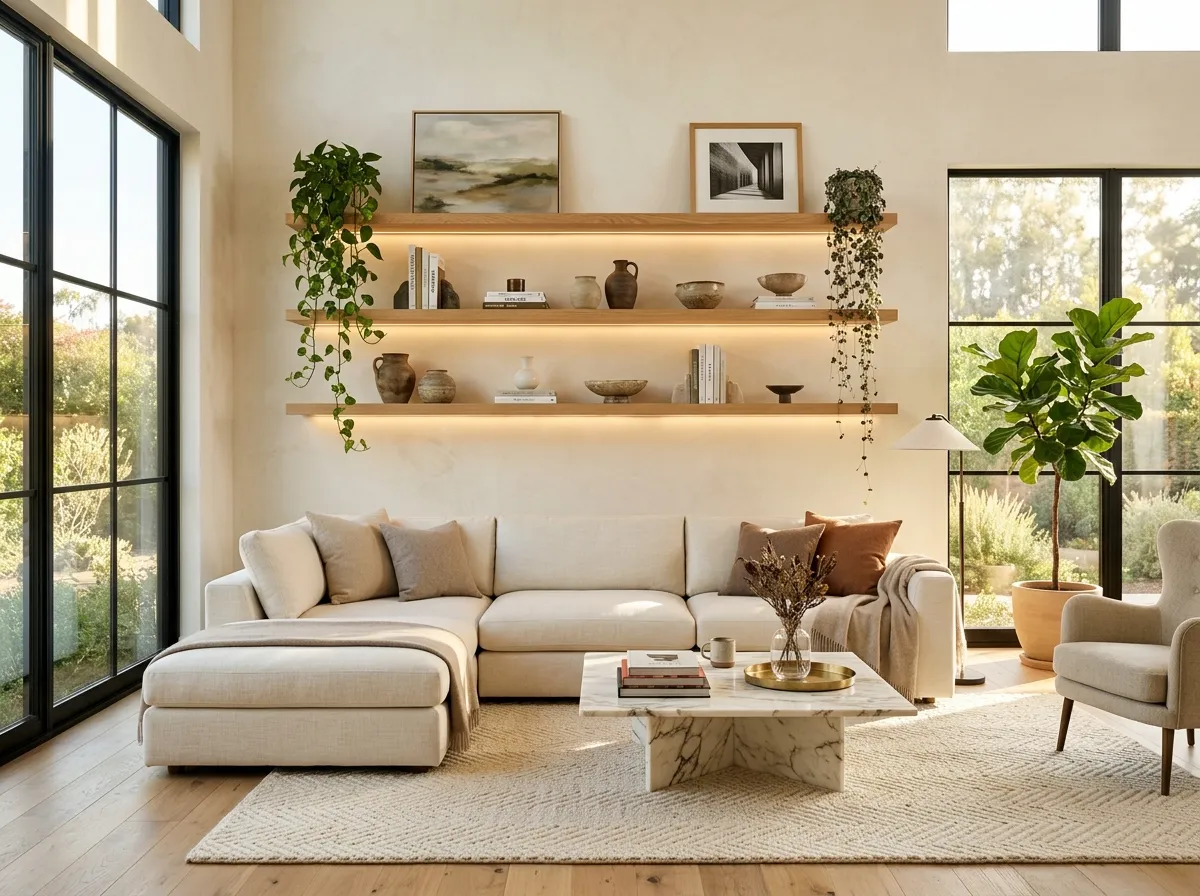
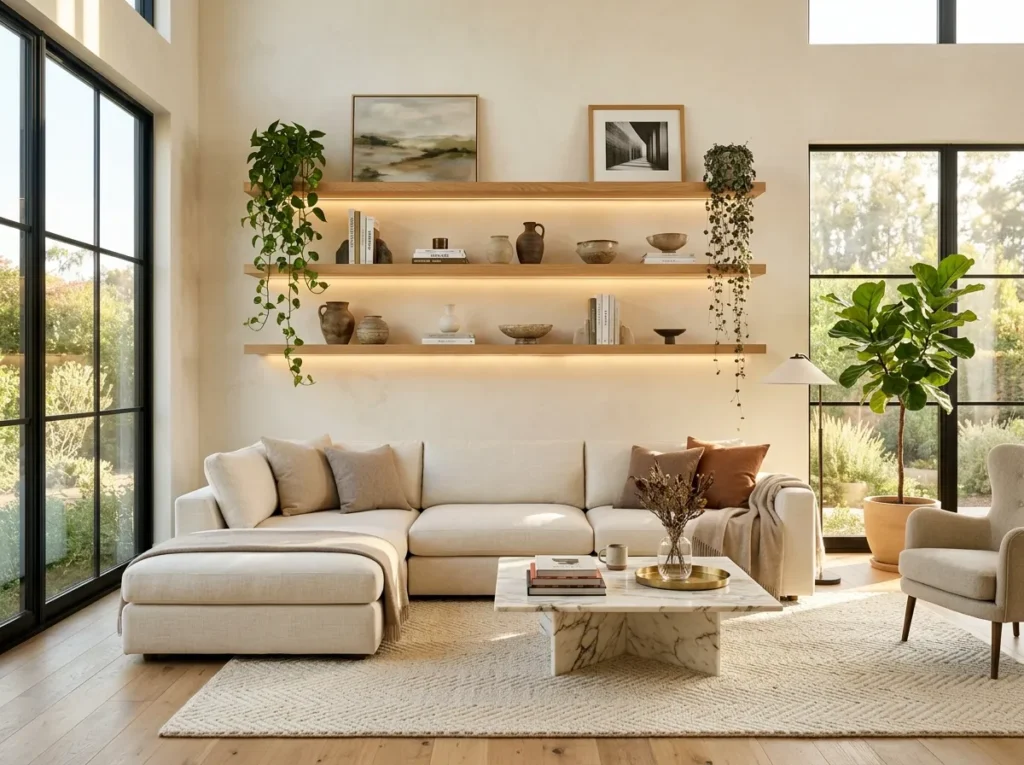
Floating shelves with LED strip lighting installed along their undersides create a living room display that looks genuinely considered and genuinely beautiful both during the day and in the evening when the shelf lighting becomes one of the room’s primary atmospheric light sources. The light from under shelf LEDs falls directly onto the objects displayed on the shelf below, illuminating them with a quality of directed, close range light that makes even simple ceramic objects and paperback books look more beautiful and more considered than they do in standard room lighting.
The installation of LED strips on floating shelves is straightforward and accessible as a DIY project. Adhesive backed LED strip in a warm color temperature, 2700K to 3000K, applied along the underside of each shelf near the front edge where it is concealed from direct view but positioned to direct light forward and downward onto the shelf below. Connect the strips to a single dimmer switch so the shelf lighting intensity can be adjusted from full display brightness to a warm low glow that suits the living room’s evening atmosphere. The warm glow of lit shelves in the evening is one of the most beautiful effects available in a living room at very low cost and with very modest installation effort.
6. Minimalist Single Shelf Display
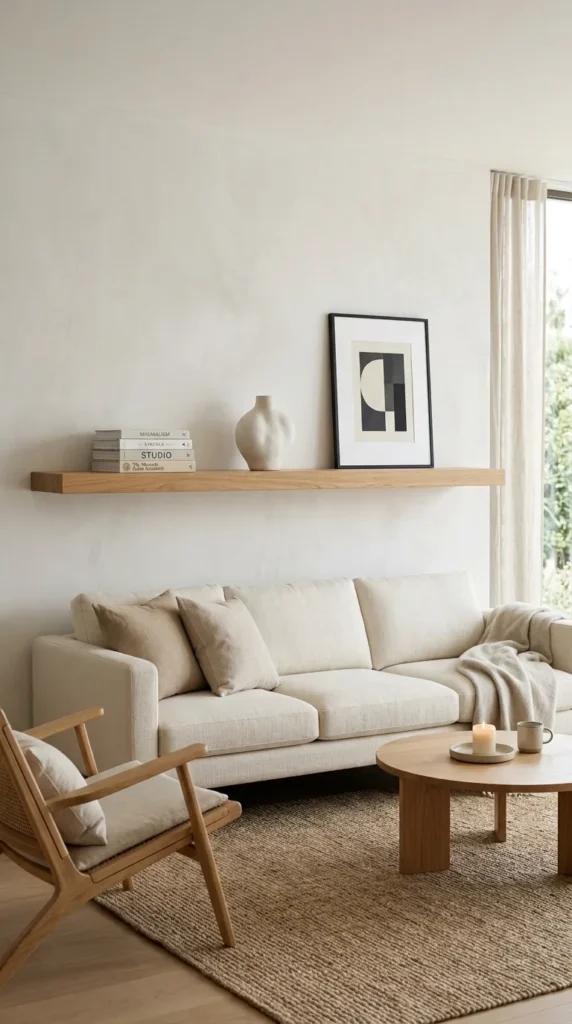
A single floating shelf in a prominent position in the living room, a long shelf at picture rail height above the sofa or a medium length shelf centered on a feature wall, styled with a carefully chosen and deliberately sparse collection of objects, creates a display of quiet, confident beauty that is very different in character from a wall of many shelves but equally effective as a design element. The single shelf approach requires more confidence in the styling because there is no collection of objects to create visual interest through variety and quantity. Every single object on the shelf is completely visible and completely exposed to scrutiny, which means every single object needs to be genuinely beautiful or genuinely meaningful.
The styling discipline required by a single shelf is actually its greatest advantage. It forces a level of editorial intention that multi shelf arrangements do not require, and the result is a display of objects that are genuinely the best and the most considered things available for display rather than a mixture of beautiful things and things that simply needed somewhere to go. Three or five objects on a long single shelf, an odd number always creates more visual interest than an even one, chosen for their relationship to each other in form, color, and material, create a shelf of genuine design quality that improves the room without competing with any other element in it.
7. Timber Shelves With Black Brackets
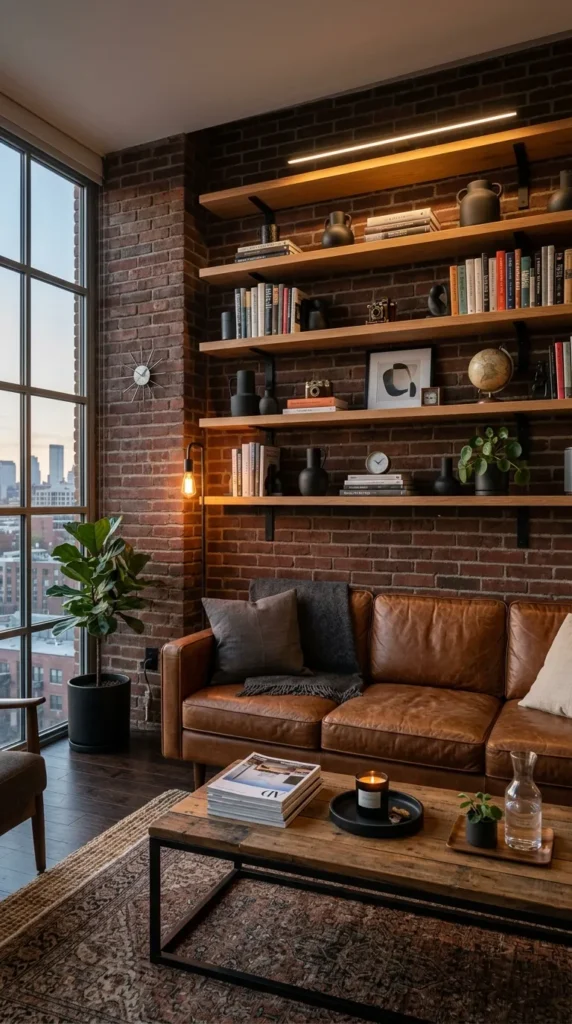
Timber shelves on visible black metal brackets create a combination of warmth and graphic quality that suits a wide range of living room aesthetics from industrial to contemporary to transitional, and that is more visually interesting than either timber shelves on concealed fixings or plain painted shelves on matching painted brackets. The black bracket creates a deliberate contrast with the warm timber shelf surface and with the wall behind it, and this contrast gives the shelf installation a quality of designed intentionality that more subdued bracket and shelf combinations sometimes lack.
The bracket style matters more than most people realize in this combination. A slim, angular black metal bracket with clean geometric lines creates a contemporary and somewhat industrial quality. A more decorative bracket in a traditional profile creates a more classic and more formal quality. A pipe style bracket in black iron creates an industrial and slightly rustic quality that suits shelves in reclaimed or rough sawn timber particularly well. Choose the bracket style that suits the overall character of the living room rather than simply the bracket that is most readily available, because the bracket is a visible and significant design element in this configuration rather than a hidden structural component.
8. Shelves as a Reading Nook Backdrop
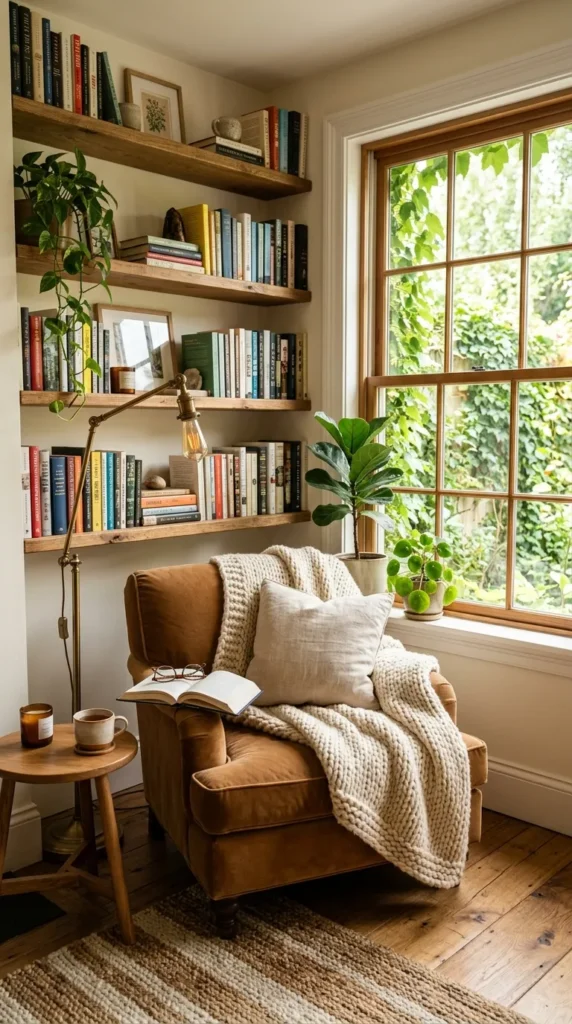
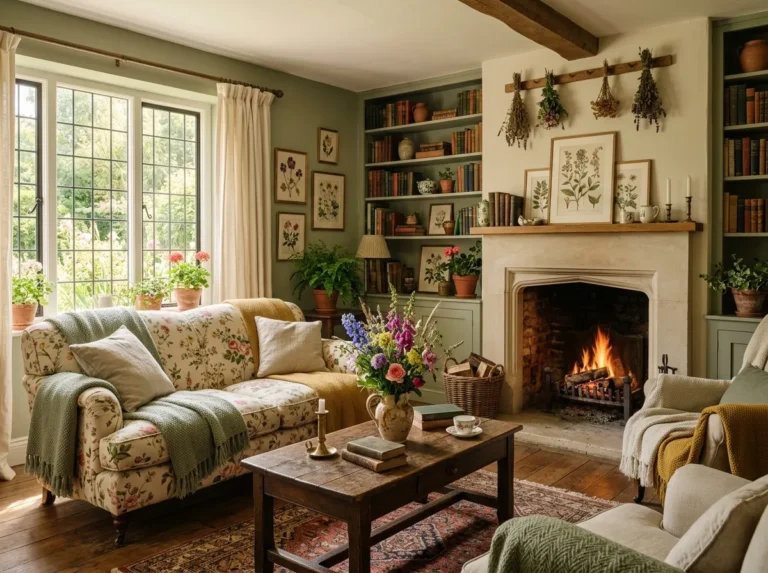
Floating shelves installed on the walls of a reading nook or window seat alcove create a display and storage environment of extraordinary coziness and personal character. The books and objects on the shelves surrounding a reading position are visible and accessible from the most comfortable seated position in the room, which makes them feel more intimate and more personally relevant than shelves on a distant wall. The combination of comfortable seating, good reading light, and walls lined with books and personal objects creates a reading nook of genuine domestic pleasure that is one of the most universally appealing spaces a home can contain.
Design the shelf arrangement in a reading nook around the seated eye line rather than the standing eye line that governs shelf placement in the rest of the room. The most beautiful and most frequently referenced books and objects should be at the height that is most visible and most comfortable to look at from the reading position, which is typically somewhat lower than the standing eye level that governs display decisions elsewhere. Build the shelves as close to the seating as the depth of the seat allows, so that reaching a book from the shelf requires only the smallest movement rather than getting up from the seat, which is one of those small practical improvements that makes an enormous difference to how much the reading nook is actually used.
9. Shelves for Plant Display
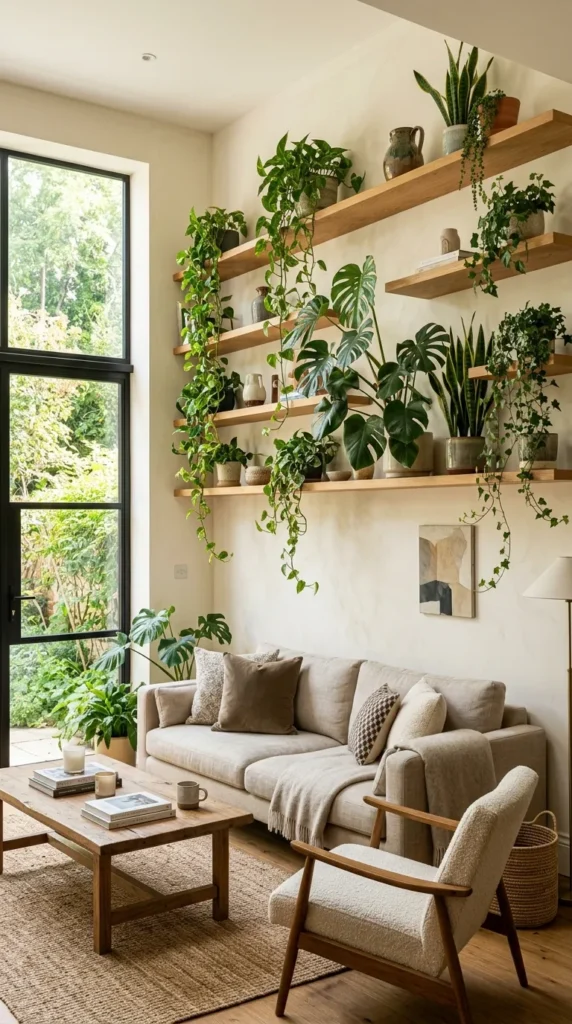
Floating shelves dedicated primarily to plant display create a living room wall of genuine natural beauty and living organic warmth that no other shelf styling approach can replicate. Plants at different heights, trailing plants whose growth habit creates a cascading quality at the shelf edges, upright plants that add vertical presence, compact plants that create textural variety at shelf level, all arranged across a series of floating shelves create a wall of living greenery that changes and grows over time and creates a genuinely alive quality in the living room that static object displays cannot match.
The practical requirements of plant display shelves differ from those of book and object shelves in ways that need to be considered at the installation stage. The shelves need to be positioned to receive adequate natural light for the specific plants intended for display, which typically means positioning them on or near walls with windows rather than on interior walls far from natural light sources. The shelf surface needs to be protected from water damage through regular watering, either by choosing a naturally moisture resistant shelf material, sealed timber, painted MDF, or by placing plants in drip trays that prevent water from reaching the shelf surface. Keep a small watering can on the lowest shelf so that watering the display is convenient enough to be done consistently rather than postponed until the plants show stress.
10. Gallery Wall Combined With Shelves
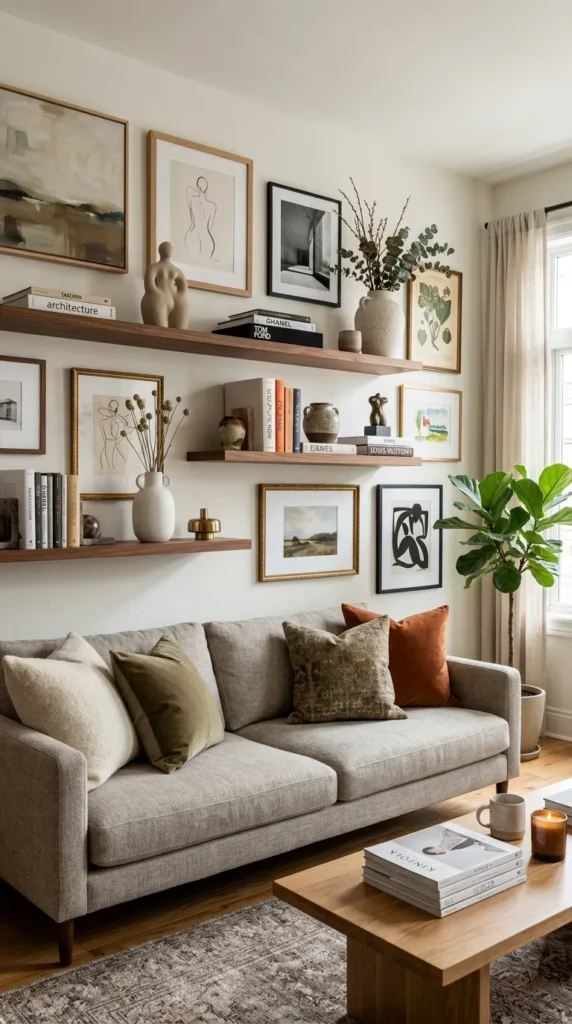
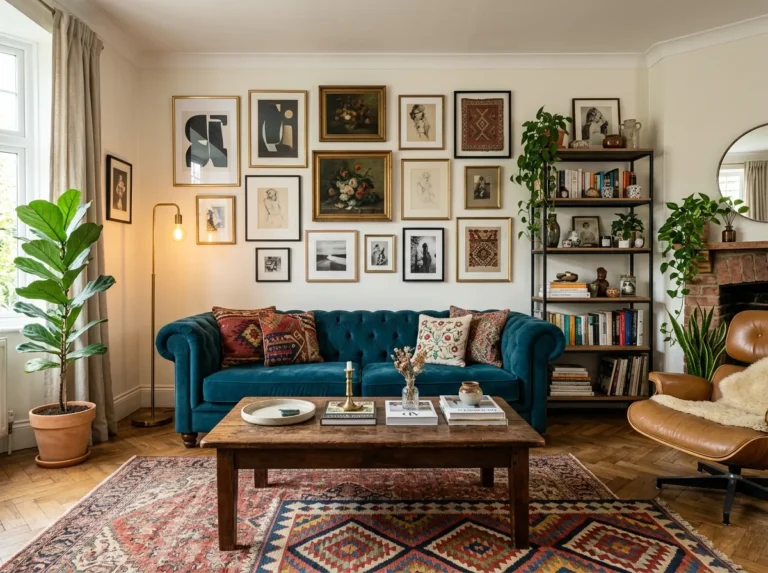
Combining floating shelves with framed artwork in a single wall composition creates a gallery wall of unusual depth and variety that the standard flat gallery wall, where all frames hang flush against the wall surface, cannot achieve. The shelves create a zone of three dimensional display within the composition, where objects project from the wall and cast shadows and create visual depth, while the framed artwork on the wall surface around and above the shelves creates the flat graphic element that anchors the composition and gives it height. The combination of three dimensional and two dimensional display creates a living room wall of genuine visual complexity and personal character.
The balance between shelves and artwork in this combined composition matters considerably. Too many shelves and too little artwork creates a display wall that reads primarily as storage. Too much artwork and too few shelves creates a standard gallery wall with a couple of shelves awkwardly inserted into it. The most successful versions treat the shelves and the artwork as genuinely equal elements of a single designed composition, with the shelf positions and the artwork positions planned together on paper before any fixings are made, so that the relationship between them feels considered rather than arrived at through a series of individual decisions made without reference to each other.
11. Painted Shelves That Disappear Into the Wall
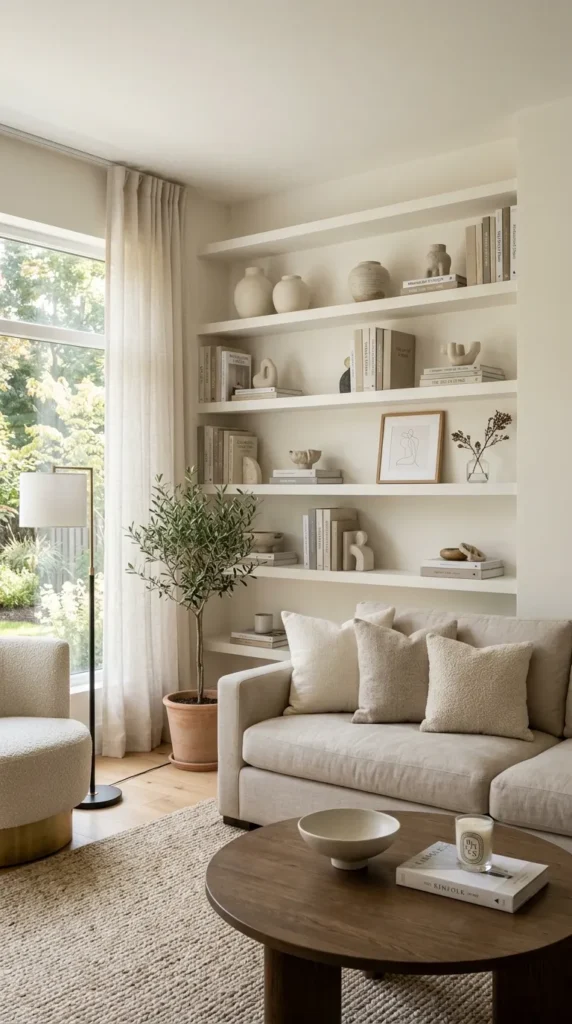
Floating shelves painted in exactly the same color as the wall behind them create a display installation of unusual sophistication and visual calm, where the shelves themselves almost disappear and what remains visible are the objects displayed on them, appearing to float against the wall surface without any visible means of support. This approach works particularly well with shelves mounted on fully concealed fixings, where the absence of visible brackets combined with the absence of color contrast between shelf and wall creates the impression that the objects on display are simply resting in space against the painted surface.
The styling of painted invisible shelves needs to account for the fact that the objects displayed on them will have no shelf color or material to relate to, only the wall color behind them. This makes the color and material relationship between the displayed objects more important than it would be on a timber or contrasting painted shelf, because the objects are in direct visual relationship with each other and with the wall rather than mediated by a shelf surface of its own color and material character. Group objects with a strong relationship in color or material, all white ceramics, all natural timber objects, all objects in a specific color family, so the display reads as a considered composition against the painted wall rather than a random collection of things that happen to share a shelf.
12. Shelves Above a Sofa
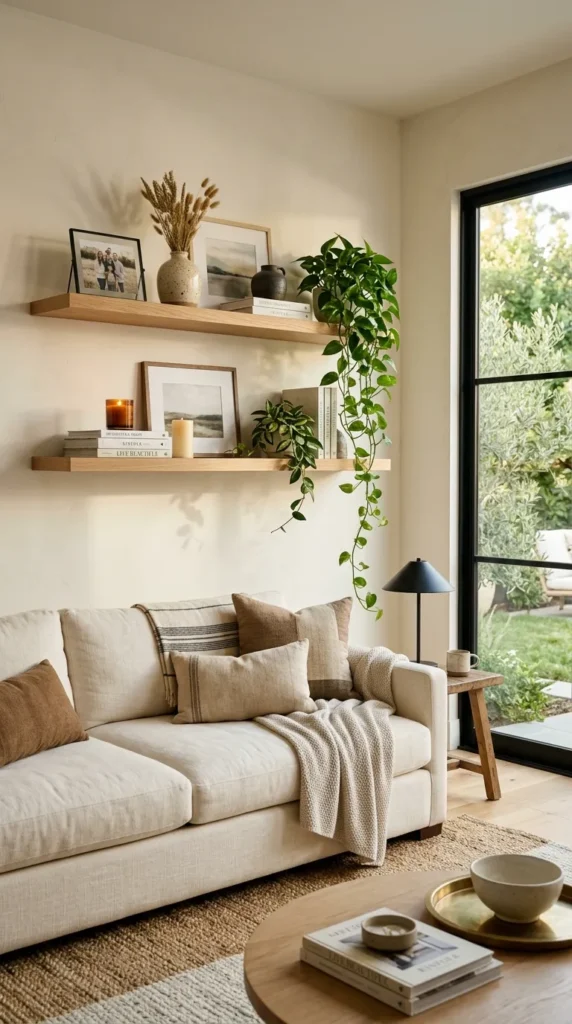
Floating shelves positioned above the sofa create one of the most useful and most visually satisfying shelf configurations available in a living room, because the sofa back is typically the largest blank wall surface in the room and the most visible from the primary seating and circulation positions. Shelves above the sofa are seen constantly and from multiple angles, which makes them the most impactful display position in the room and the one most worth investing styling time and attention in.
The safety consideration with shelves above a sofa is the weight and stability of the objects displayed on them. Heavy objects, large ceramic vessels, stacked books, glass objects, should not be placed on shelves directly above where people sit without ensuring that the shelf fixings are genuinely secure in the wall structure and that the shelf itself is rated for the weight it carries. Lighter objects, small plants, framed photographs, small ceramics, lightweight books, are appropriate for above sofa shelves without special concern. Position the lowest shelf at least thirty centimeters above the top of the sofa back so that people sitting on the sofa do not feel the shelf looming uncomfortably close overhead.
13. Seasonal Styling of Floating Shelves
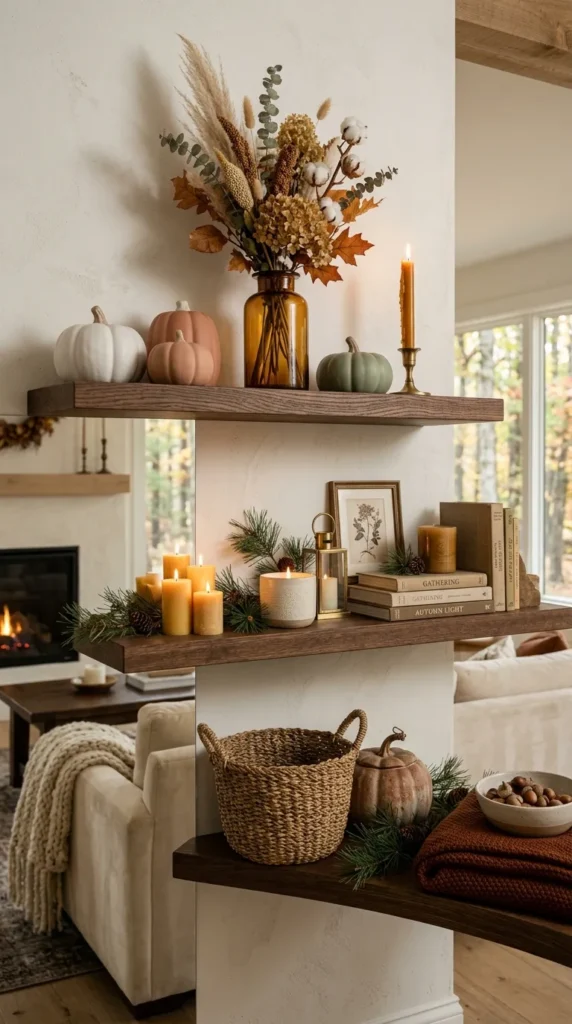
One of the underappreciated advantages of floating shelves over built in display cases or fixed furniture is the complete freedom they offer to restyle the display as frequently as the mood or the season suggests. A set of floating shelves is not a permanent commitment to a specific collection of objects in a specific arrangement. It is a flexible display platform that can be completely transformed in an afternoon by changing what is on it and how it is arranged, which means the living room can feel genuinely different at different times of the year without any permanent change to the room’s design.
Seasonal restyling of floating shelves works best when it follows a consistent underlying organizational logic that changes in its surface expression rather than in its fundamental structure. The same shelves that hold a collection of warm earthy ceramics, candles, and pine cones in winter can hold a collection of light glass vessels, fresh flowers in simple vases, and small potted plants in spring without requiring any change to the shelf positions or the overall arrangement strategy. Keeping a consistent approach to the number of objects per shelf, the balance between different object types, and the relationship between the display and the room’s overall palette, and varying the specific objects within that consistent structure, creates seasonal variety that feels refreshing and considered rather than chaotic.
Making Floating Shelves Work for You
The floating shelves that work best in a living room are the ones installed with a clear understanding of what they need to do, how much display and storage space the room actually needs, what objects will live on them, and how the shelf positions relate to the room’s other design elements. Take time with the planning before any fixings go into the wall, because moving floating shelves after installation leaves visible marks that are difficult to repair cleanly, and the planning stage is where the difference between a shelf arrangement that works and one that does not is entirely determined.
Style the shelves with genuine intention and genuine editing. Put beautiful things on them and keep everything else somewhere else. Return to the shelves periodically and remove what is no longer earning its place. The living room floating shelf that is treated as a curated display rather than a convenient dumping ground will be one of the most beautiful and most personally expressive elements in the room, and one that you will find yourself genuinely proud of rather than simply relieved to have resolved.