15 Vintage Living Room Decor Ideas
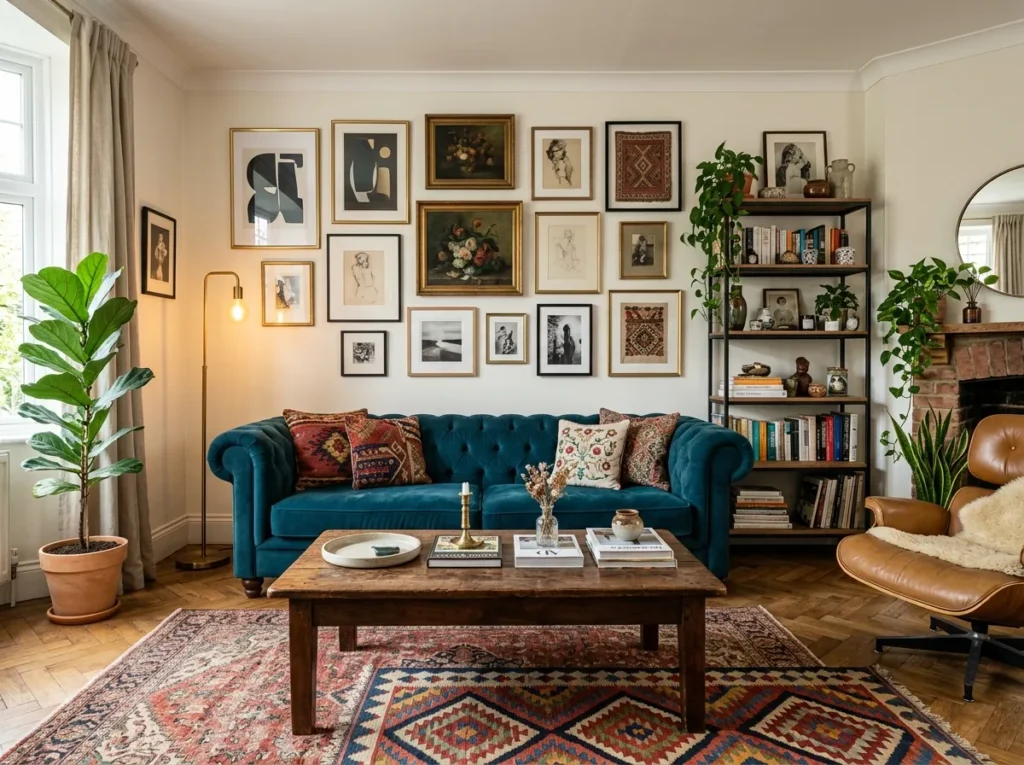
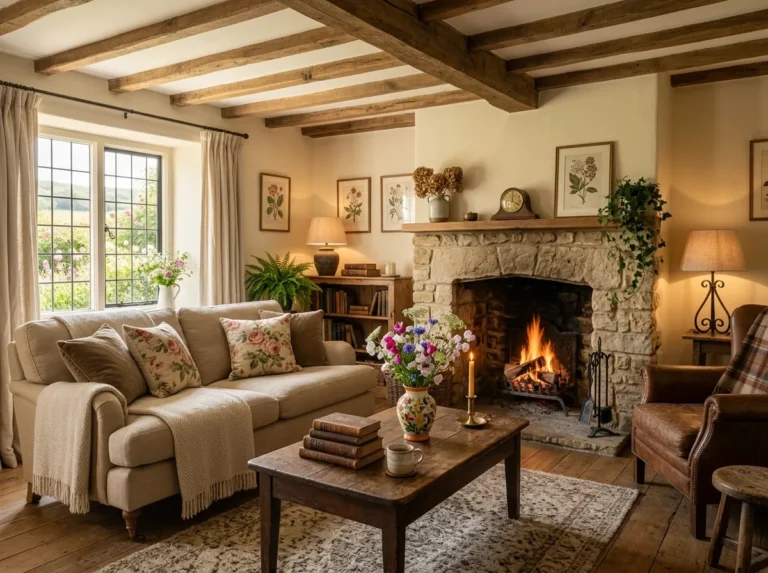
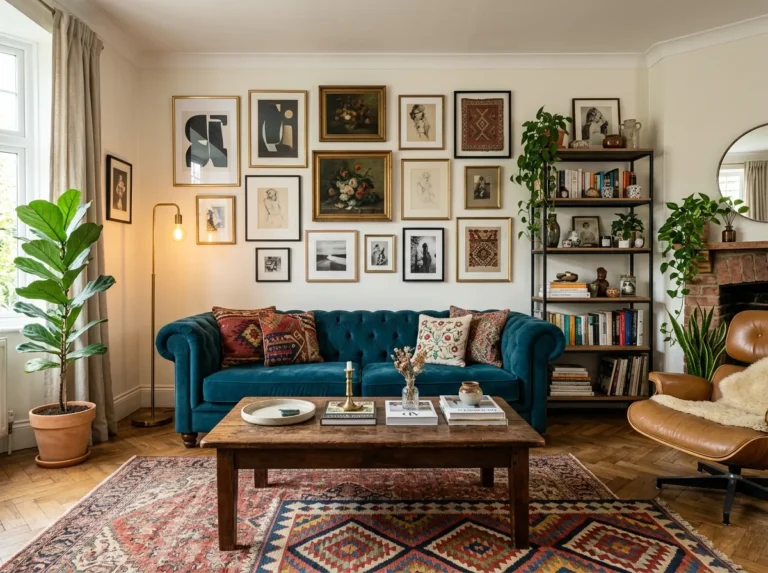
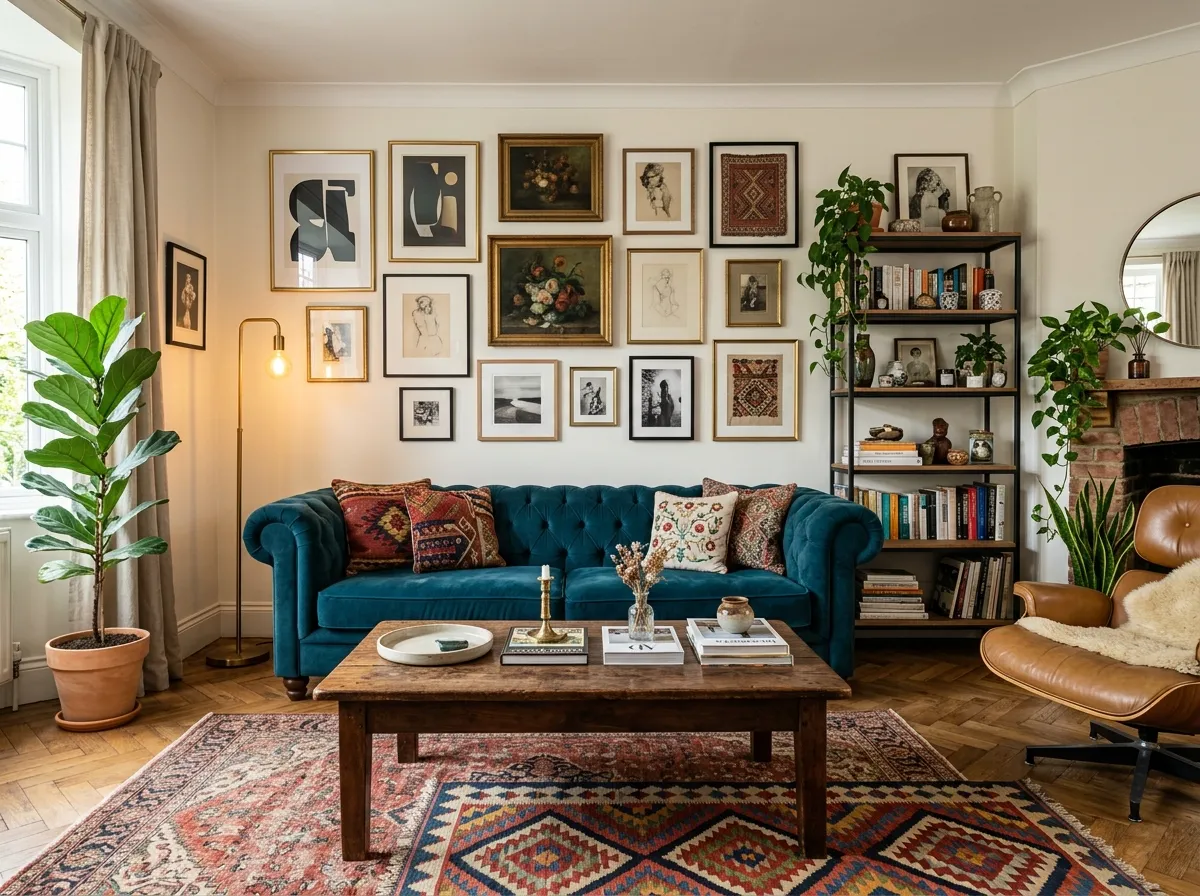
Vintag living rooms done badly look like charity shops. Things from different eras and different aesthetic traditions piled together without any organizing principle beyond being old. Vintage living rooms done well look like they belong to someone with genuine taste and genuine history, a room where every object has a reason for being there and the accumulation of things over time has created a whole that is more interesting than any single piece within it. The difference between those two outcomes is not the age or value of the objects. It is the understanding of what makes collected rooms feel considered rather than cluttered.
Vintage decor in a living room is not about recreating a specific historical period. It is about bringing the qualities that aged and authentic objects possess, material richness, individual character, the evidence of being made by a specific person at a specific time, into a room that is lived in now rather than preserved as a museum. The best vintage living rooms feel simultaneously old and current because the vintage elements are chosen and arranged with the same design intelligence that any contemporary room requires rather than simply accumulated because they are old. These 15 ideas cover every aspect of creating a vintage living room that feels genuine and considered rather than assembled and derivative.
1. Anchor the Room With One Genuinely Significant Vintage Piece
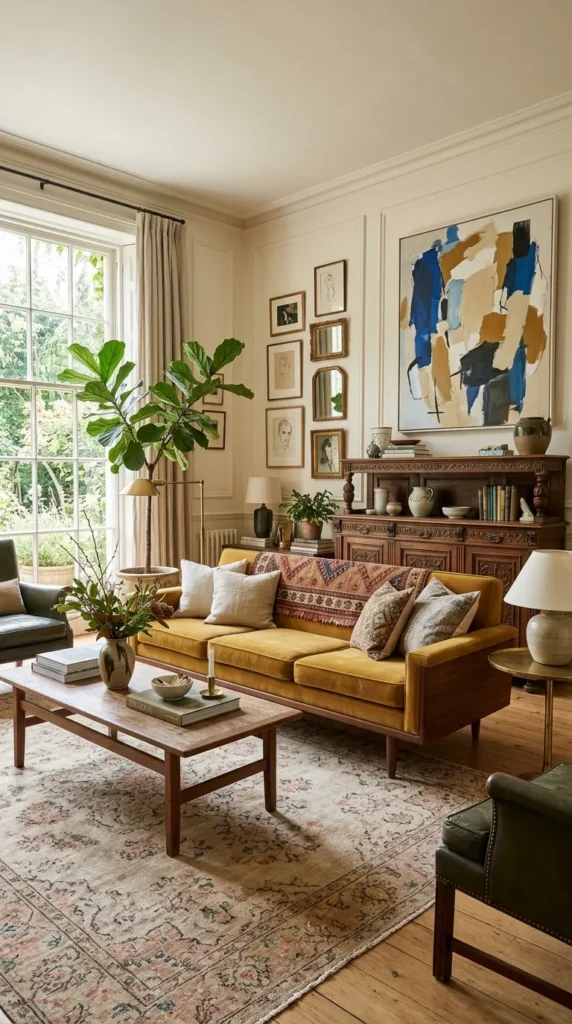
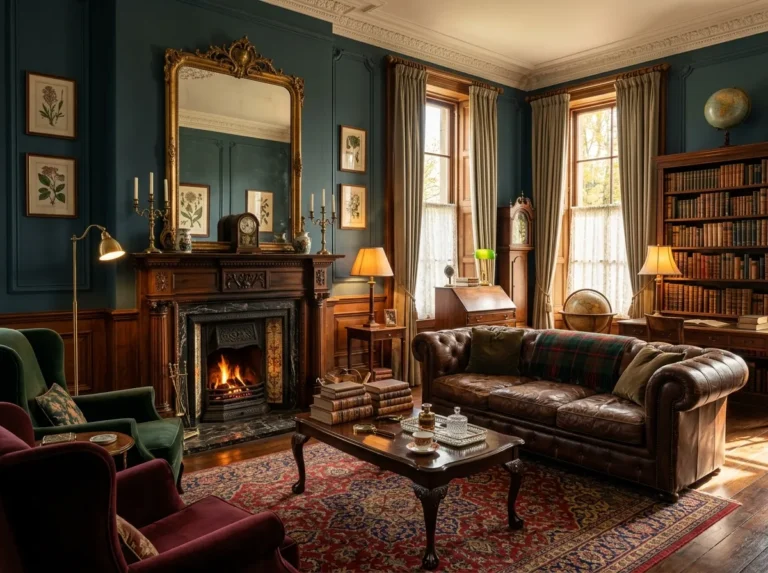
Every successful vintage living room has one piece that is clearly more significant than everything around it, a piece whose age, quality, or character gives the room its identity and around which everything else organizes. A genuine Victorian chesterfield sofa. A mid century credenza in figured walnut with original brass hardware. An art deco drinks cabinet with its original mirrored interior. An early twentieth century Chesterfield armchair that has been reupholstered in a fabric that suits the current room rather than the era it came from. Any of these can be the anchor piece that gives a vintage living room its center of gravity.
The anchor piece should be chosen for genuine quality rather than for age alone because old things of poor quality do not improve with age in the way that old things of good quality do. An old sofa in a poor original design looks like an old sofa in a poor design regardless of what surrounds it. A genuinely well designed old sofa that has aged into its patina looks like something worth keeping rather than replacing. The investment in one genuinely significant vintage piece is the investment that makes the most difference to a vintage living room’s overall quality.
2. Mix Vintage With Contemporary Rather Than Going All Period
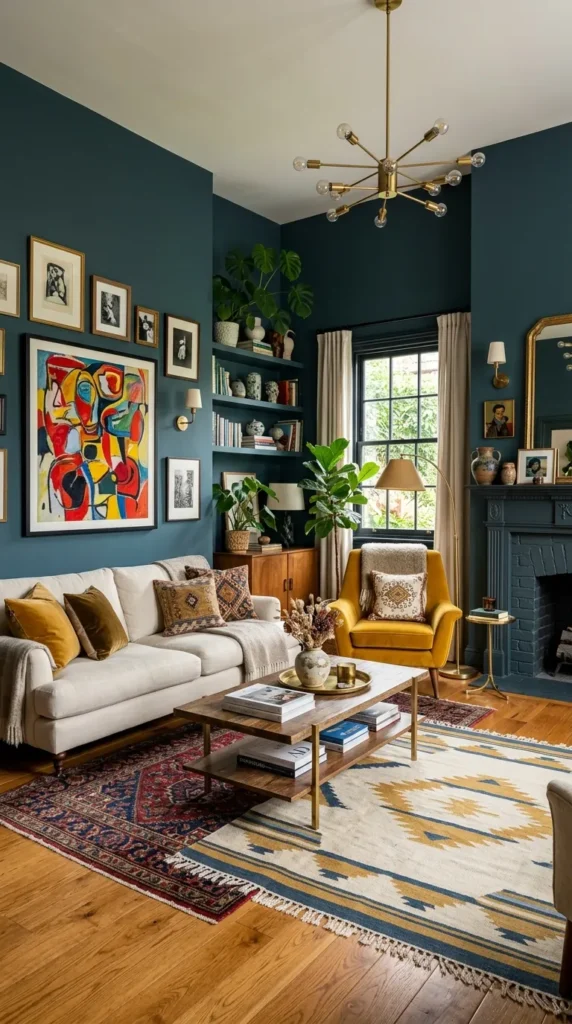
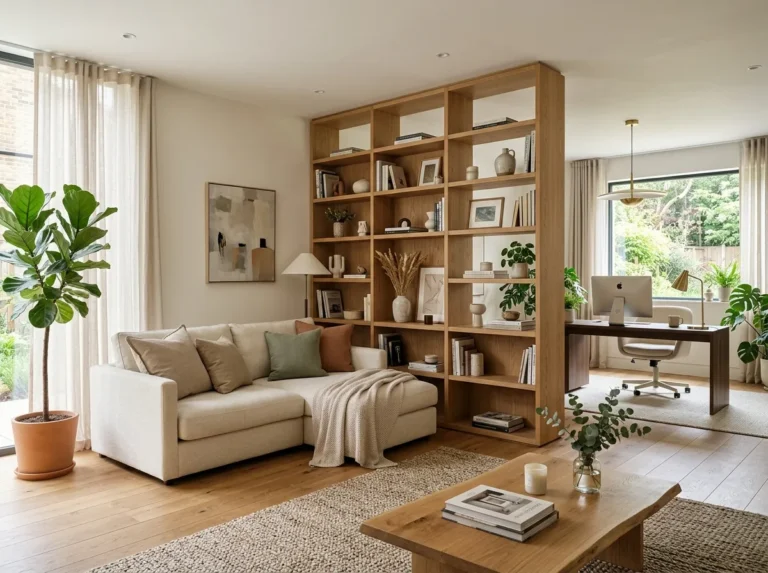
A living room furnished entirely with period pieces from a single era looks like a set from a historical drama rather than a home someone genuinely inhabits. The contemporary detail, a current fabric on a vintage frame, a modern coffee table beside an antique sofa, a contemporary art print in an old frame, is what makes a vintage room feel lived in rather than preserved. This mixing signals that the vintage pieces were chosen because they are genuinely good rather than because they match a period brief and that distinction makes the room feel personal rather than theatrical.
The contemporary elements in a vintage room do not need to be from a specific contemporary design movement. They simply need to be things of current relevance that create the temporal contrast that makes the vintage elements read as chosen rather than inherited by default. A beautifully made linen sofa cushion in a fabric that was not available in the era of the sofa it sits on tells the room’s story as accurately as any period accessory because it demonstrates that someone is living in this room now rather than preserving it from the past.
3. Use Vintage Textiles as the Room’s Color Source
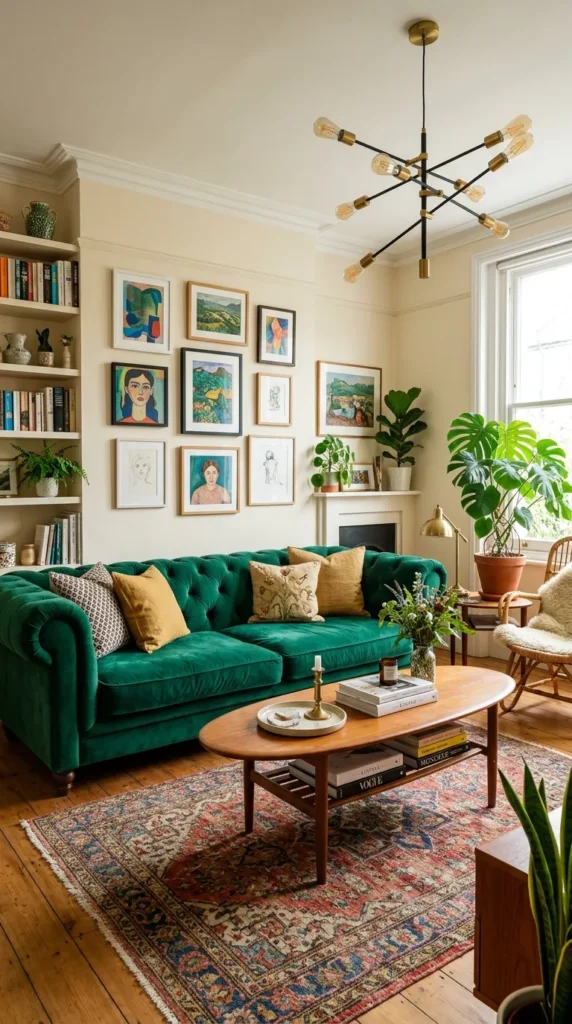
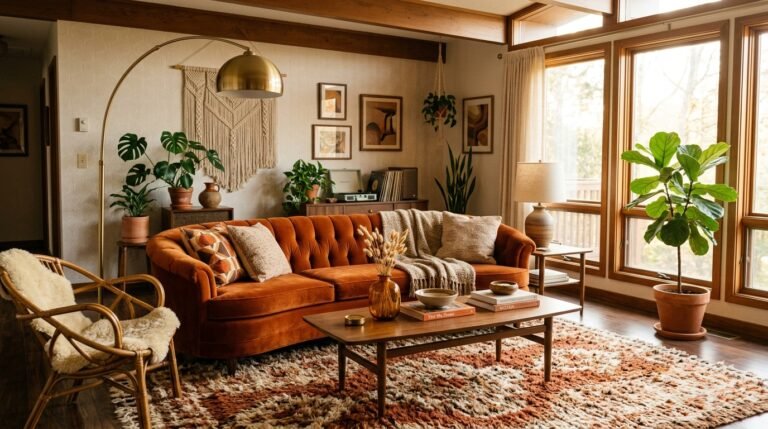
Vintage textiles, old kilim rugs, antique needlepoint cushion covers, faded velvet curtains from an earlier decade, embroidered throws with visible signs of use, create color in a vintage living room with a quality that contemporary textiles cannot replicate because the colors in vintage textiles have been altered by time in a way that creates the specific faded richness that distinguishes genuinely aged color from new color made to look old. A kilim rug with fifty years of foot traffic has a color quality that no new kilim in a similar pattern achieves regardless of how faithfully the dye recipe replicates the original.
Build the living room’s color palette from the vintage textiles rather than choosing textiles to match a predetermined palette because the colors in genuine vintage textiles are specific and often unusual in ways that predetermined palettes are not. The faded terracotta of an old kilim, the slightly grayed jade of worn velvet, the dusty rose of aged embroidery thread. These specific colors create rooms with individual character that rooms built from contemporary color palettes consistently approach and rarely achieve.
4. Create a Gallery Wall From Collected Artwork and Prints
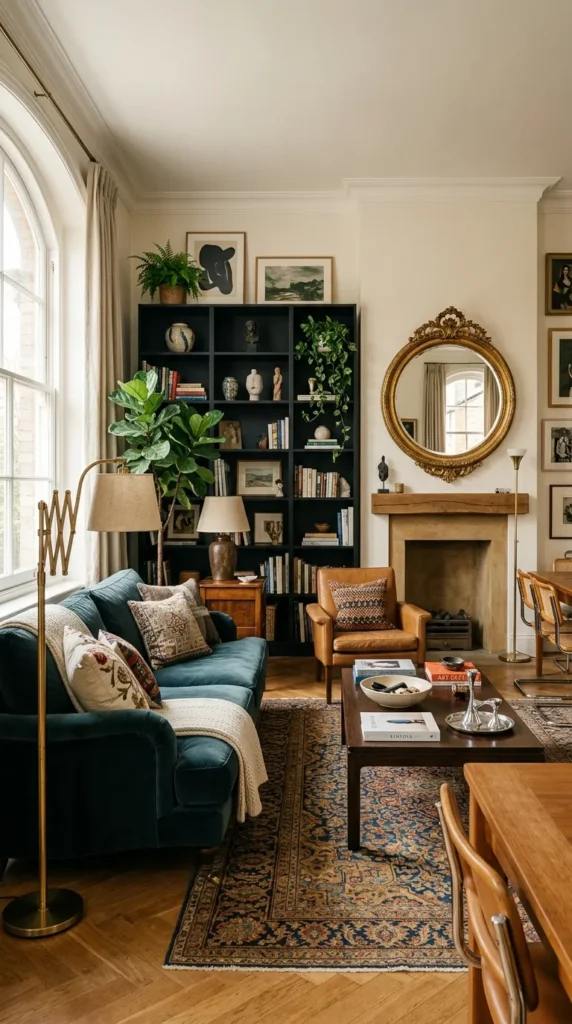
A gallery wall in a vintage living room is an opportunity to display the accumulated artwork, prints, photographs, and framed objects that give a room its specific character and that reveal something about the person who lives in it. Old botanical prints found in a market. A family photograph from an early decade enlarged and reframed. A landscape painting of modest quality but specific personal significance. A decorative plate hung beside a framed poster from an exhibition attended years ago. The variety of content, scale, and frame type creates a wall that tells a story rather than making a single visual statement.
The frames in a gallery wall do not need to match but they do need to share some quality that makes them read as related rather than random. All aged and slightly worn frames regardless of their specific color or material. All frames with gilt or gold tone regardless of their specific profile. All simple dark wood frames regardless of their specific size. The shared quality creates coherence across the varied content without requiring the uniformity that makes contemporary gallery walls look designed rather than collected.
Looking for complete room inspiration? Browse 16 Vintage Living Room Ideas for timeless layouts and styling ideas.
5. Restore and Reupholster Rather Than Replace
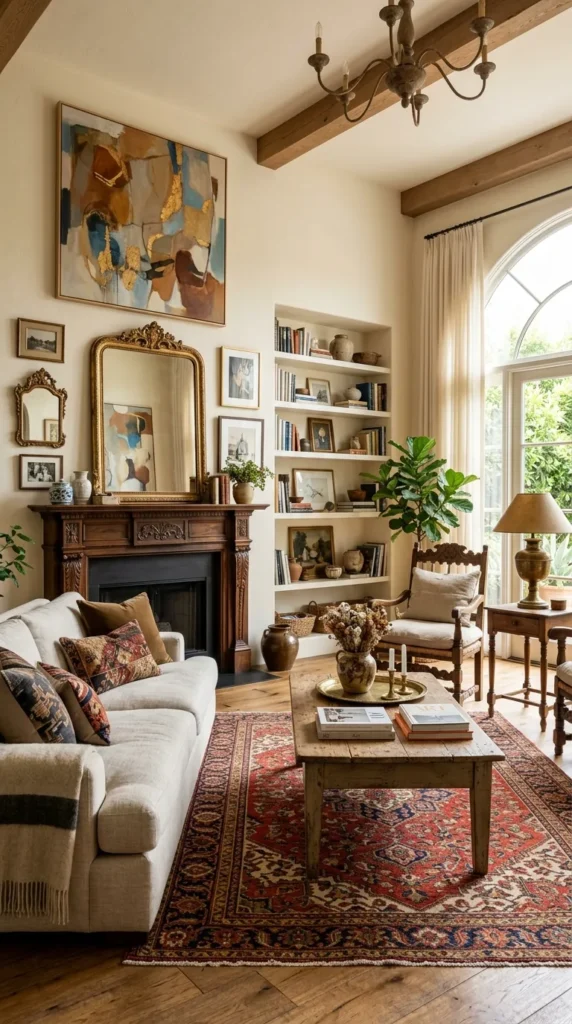
The vintage living room that uses restored and reupholstered furniture rather than vintage looking new furniture has a quality that cannot be purchased because it has to be made through the process of finding old furniture worth saving and investing in making it work in the current room. A Victorian armchair reupholstered in a contemporary fabric is both genuinely old and genuinely current simultaneously in a way that a new chair in a Victorian style can only approximate from the outside. The frame’s age is visible in the joints, in the slight irregularity of the hand carved details, in the weight and proportion that mass production cannot replicate.
The fabric choice for a reupholstered vintage piece is the decision that determines whether the piece reads as genuinely collected or simply old. A Victorian armchair reupholstered in a heavy period appropriate fabric looks like a period piece. The same chair in a clean contemporary linen or a bold graphic fabric looks like a piece of vintage furniture living in a current room which is the more interesting and more honest result. The reupholstery choice is where the past and the present of the piece meet and the choice should reflect both rather than simply one.
6. Display Collected Objects With Genuine Curatorial Attention
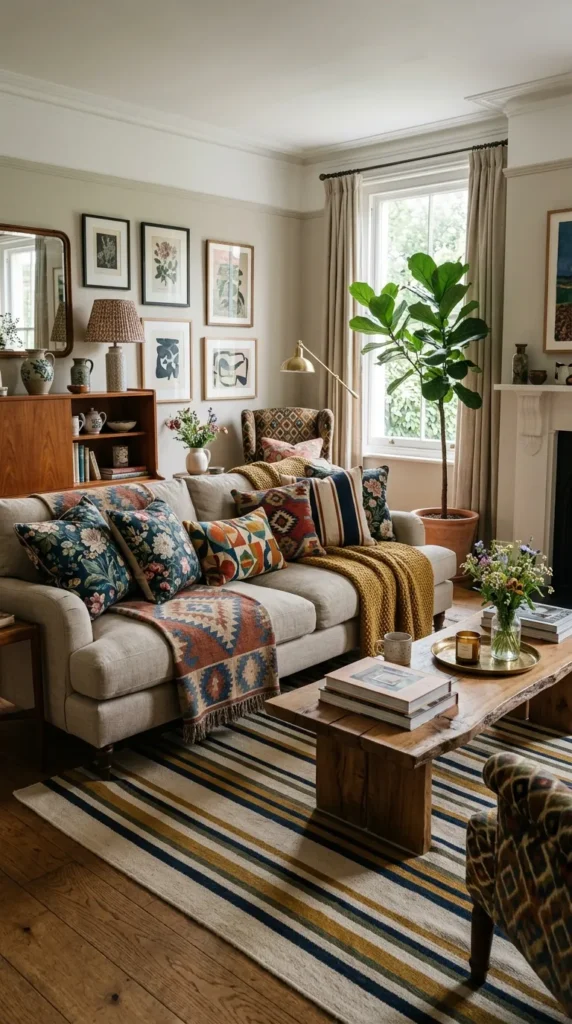
The objects on the surfaces of a vintage living room, the mantelpiece, the shelves, the side tables, are where the room’s character becomes most specific and most personal. A collection of old glass bottles in varied greens and ambers gathered over years from different markets and different travels. A group of ceramic pieces from a specific maker whose work was collected deliberately. A set of vintage travel clocks bought for the quality of their mechanisms rather than for their decorative appeal. Each of these collections tells a specific story that generic decorative objects do not tell.
Curatorial attention means editing as deliberately as collecting. The objects on a vintage living room surface should be there because they belong together in terms of material, color, or subject rather than because they arrived on the surface at different times and were never removed. A surface with five genuinely related objects creates more visual interest than the same surface with twelve unrelated ones because the five objects can be read as a collection and the twelve cannot. The space between objects in a curated display is as important as the objects themselves.
7. Use Warm Layered Lighting From Multiple Sources
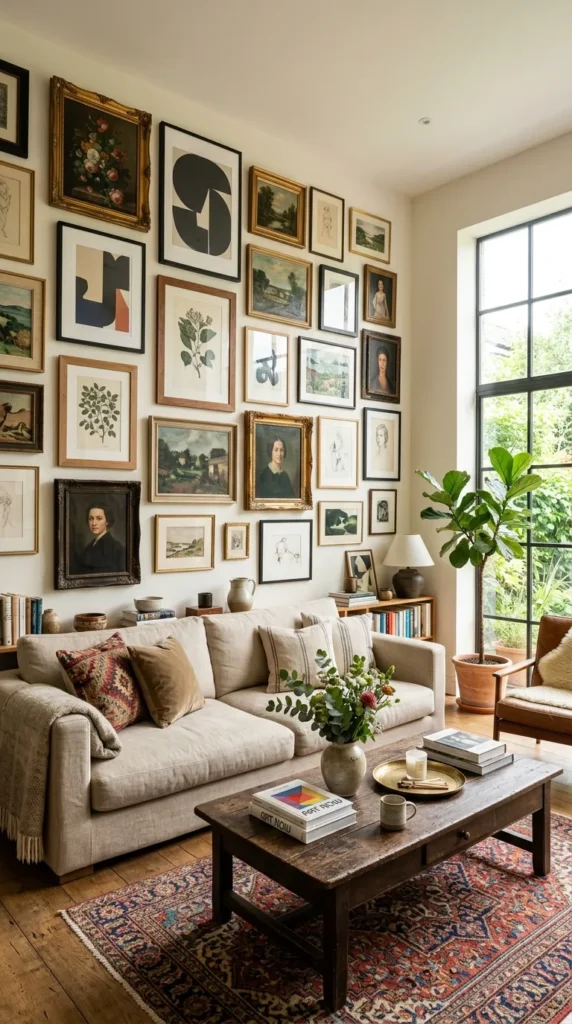
Lighting in a vintage living room should come from multiple warm sources at different heights rather than from a single central fixture that distributes light uniformly from above. Old floor lamps with their original shades still intact or with replacement shades in appropriate materials, table lamps on side tables, a central chandelier or pendant that provides ambient light at a lower level than a modern ceiling fixture, and candles on the mantelpiece or on a coffee table all contribute to the layered warm light quality that vintage rooms at their best possess.
The warm quality of old lamp shades, the slight yellowing of aged paper or fabric that filters the light through a material that has itself aged, creates a light quality in a vintage room that new lamp shades in new materials rarely replicate perfectly. When original shades are worn beyond use the replacement shade should be in a material that ages similarly, silk, cotton, linen, paper, rather than a synthetic material that stays uniformly bright regardless of its age. The slight imperfection of aged light is part of what makes vintage rooms feel warm rather than simply illuminated.
8. Include Books as a Design Element Rather Than Storage
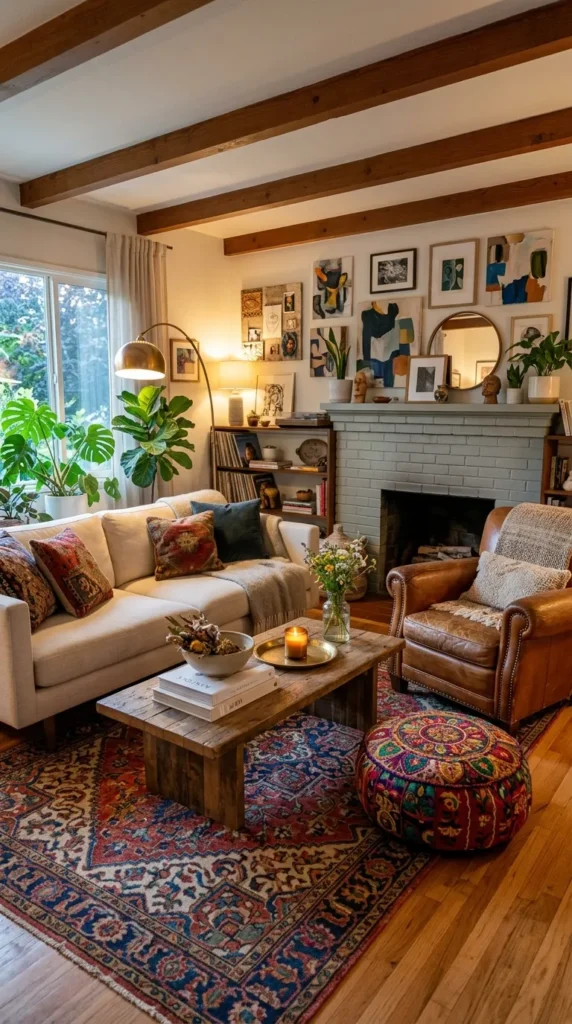
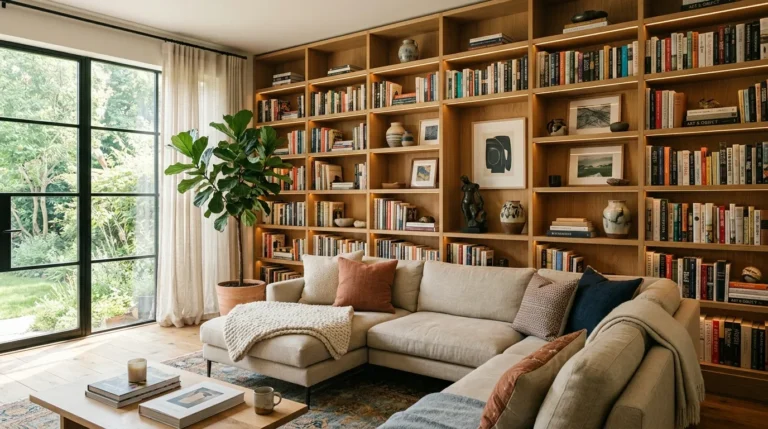
Books in a vintage living room are not simply reading material waiting to be read and returned to a shelf. They are objects with physical presence, visual texture, and the specific quality of having been handled and read and lived with over time. A shelf of genuinely read books, their spines showing the variation of different publishers across different decades, some slightly worn, some with bookmark remnants, some clearly read multiple times and some clearly waiting to be read, creates a surface with more visual richness and more character than any decorative object arrangement.
Old books in particular have qualities that new books do not. The specific colors of cloth bound spines from earlier decades. The slight smell of aged paper. The weight and feel of earlier printing and binding methods. A shelf of genuinely old books has a material quality that is part of the room’s atmosphere in the same way that aged furniture and vintage textiles contribute their own specific material qualities. Books bought for their appearance rather than their content do contribute visual texture but they do not contribute the lived quality that genuinely read books possess.
9. Choose Paint Colors With Historical Reference
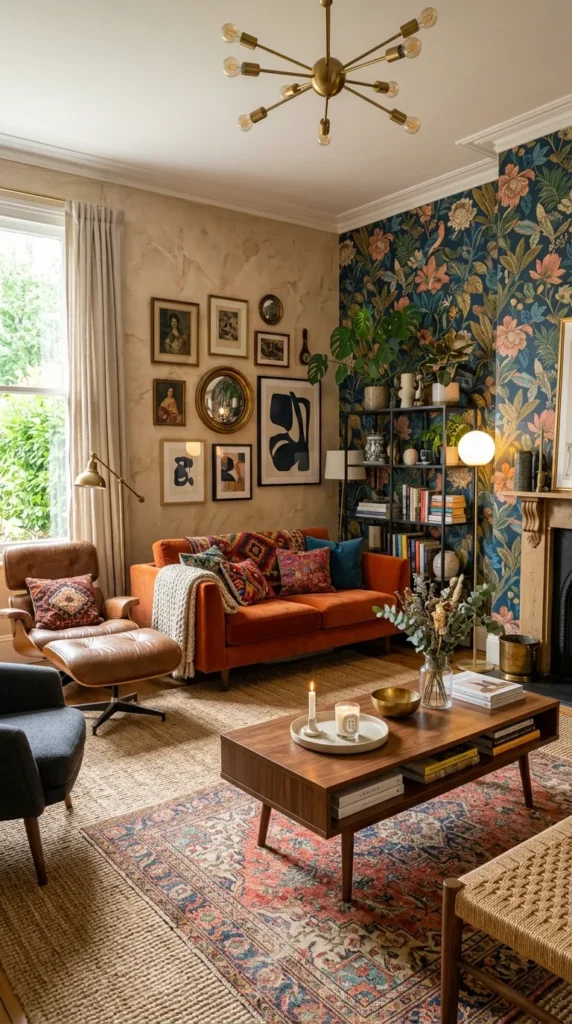
Paint colors with historical reference, the ochres and umbers and deep greens and warm reds that appear in Georgian and Victorian interiors, the dusty mauves and sage greens of the arts and crafts period, the warm creams and terracottas of earlier domestic interiors, create walls in a vintage living room that relate to the aged and patinated quality of vintage furniture and objects in a way that contemporary paint colors often do not. A newly available cool gray on the walls of a room full of genuinely old furniture creates a tension between the wall color’s contemporaneity and the furniture’s age that a historically referenced color avoids.
Several paint manufacturers have historical color ranges developed from the study of period interiors and original paint fragments. These ranges are worth considering for a vintage living room not because historical accuracy is the goal but because colors developed from the study of earlier domestic interiors tend to have the warmth, depth, and slight complexity that makes them harmonious with aged materials in a way that colors developed for contemporary interiors are not always calibrated to achieve.
10. Find and Display Objects With Provenance and Stories
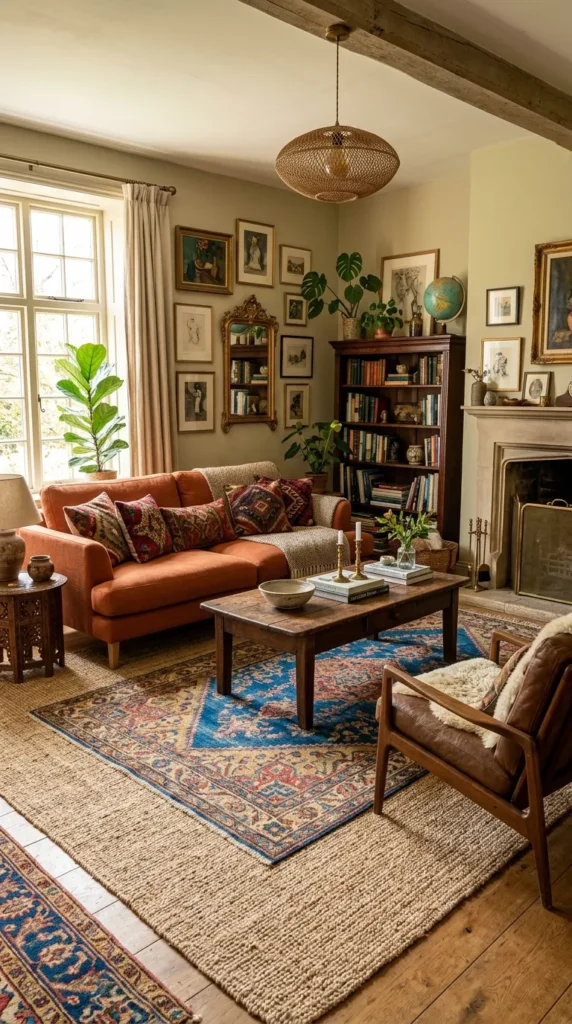
The most powerful vintage living room objects are those with provenance and stories rather than simply age. An object whose history is known, where it came from, who made it, what it was used for, where it has been, has a quality of meaning that an equally old object without history does not possess. This does not mean that every object needs documented provenance in the formal sense. It means that objects acquired through specific experiences, found in a specific market on a specific trip, inherited from a specific person, bought because of a specific connection, have a quality of meaning that objects bought generally from an antiques dealer do not.
Tell the stories of significant objects to guests and to children who will live with them because the stories are part of what makes vintage objects valuable rather than simply old. An object whose story is known and told becomes more significant over time as the telling accumulates. An object whose origin is unknown remains simply old rather than specifically meaningful and the distinction determines whether it becomes part of the room’s identity or simply part of its inventory.
11. Use Mirrors With Character Rather Than Plain Glass
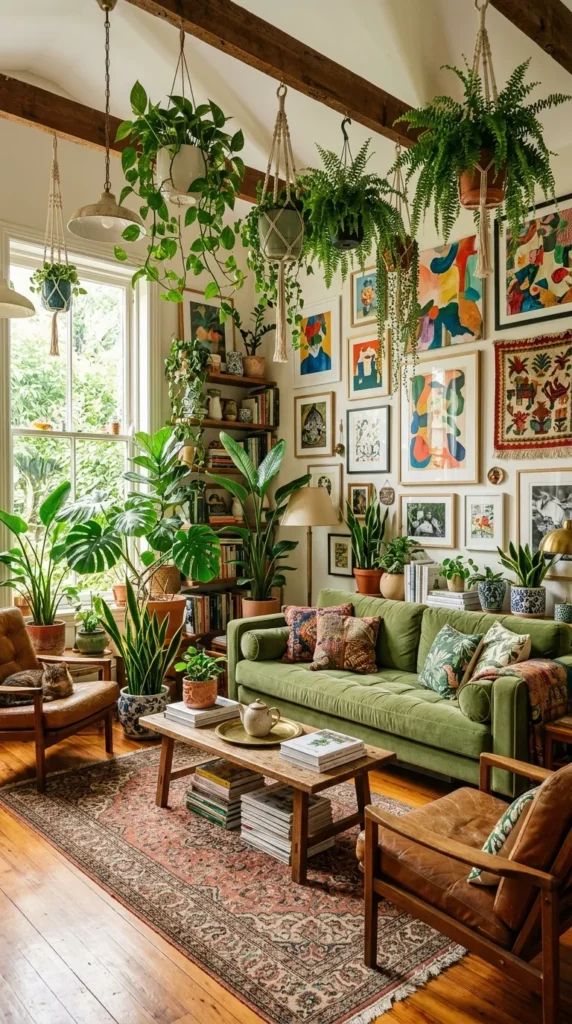
Mirrors in a vintage living room should have frames with character rather than the frameless or minimally framed mirrors that suit contemporary interiors. An old gilt mirror with slightly foxed glass that reflects the room with a slight warmth and imperfection that new clear glass does not. A Victorian mantel mirror with its original frame still intact. A collection of small framed mirrors of different ages and styles grouped together on a wall. Any of these creates a mirror presence in the room that contributes character as well as reflection.
Slightly foxed mirror glass, where the silver backing has developed spots and variations over time, creates a specific quality of aged reflection that many people find more beautiful than the perfect reflection of new mirror glass. This is an acquired appreciation rather than a universal one but in a vintage living room where the evidence of age and use is valued throughout the room the foxed mirror’s imperfection belongs to the same aesthetic family as the patinated furniture and the faded textiles that surround it.
Choose the perfect palette with these 13 Living Room Color Schemes That Work for a beautifully balanced space.
12. Layer Rugs for Visual Warmth and Depth
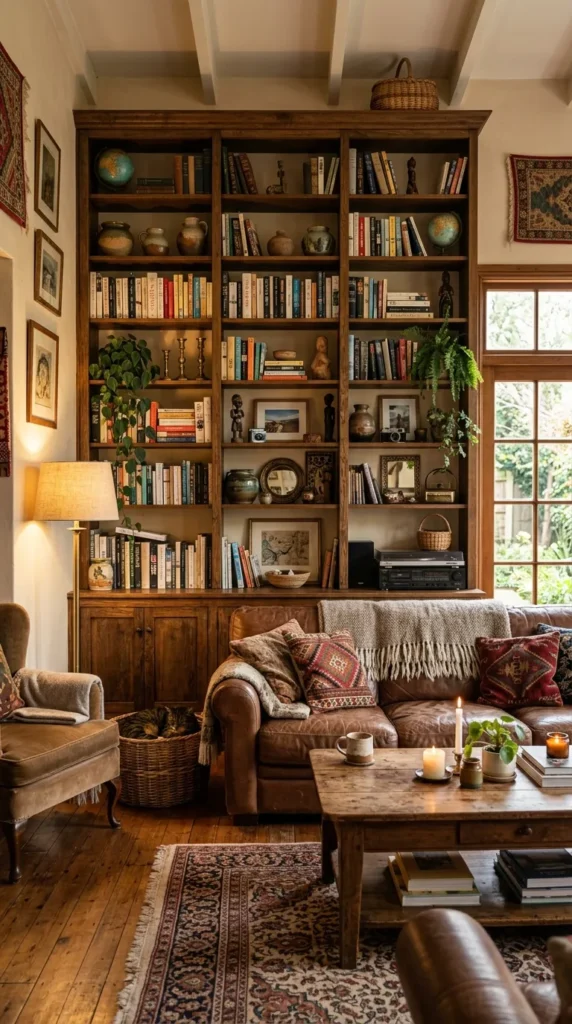
Layering rugs in a vintage living room, a larger flat woven rug as the base with a smaller patterned rug on top, creates a floor surface with more visual depth and more material warmth than a single rug on the floor achieves. The layering is a technique with genuine historical precedent in domestic interiors from various periods and cultures and it creates a floor treatment that reads as genuinely gathered rather than designed to a brief.
The two rugs in a layered arrangement should share a color temperature rather than matching a specific color because the layering’s visual richness comes from the variation between the two rugs’ patterns and scales within a consistent tonal family. A warm cream flat weave beneath a small faded kilim in terracotta and navy creates a floor with warmth and pattern at different scales. The same cream flat weave beneath a bold contemporary geometric rug creates a different kind of floor tension that suits some rooms and disrupts others. The vintage living room benefits from layers in the vintage tonal family rather than layers that introduce contemporary design elements at floor level.
13. Introduce Plants and Fresh Flowers as Living Elements
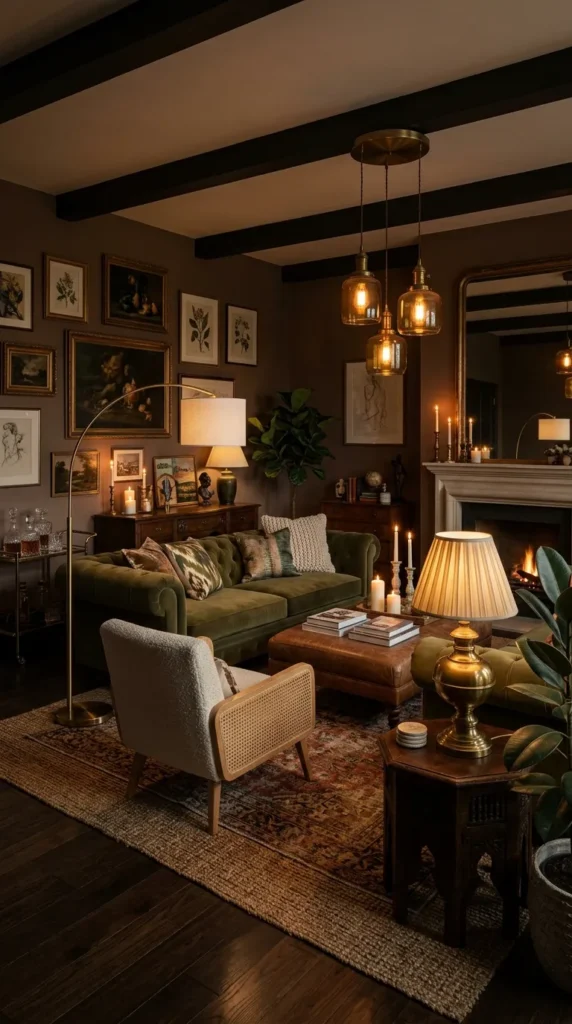
A vintage living room without plants and flowers risks becoming a room that feels like a collection of objects from the past rather than a living space inhabited in the present. Plants and fresh flowers introduce the quality of current life into a room that otherwise contains primarily things from earlier times and create the temporal balance that makes vintage rooms feel inhabited rather than curated. A large potted plant in an old ceramic pot, fresh flowers in a vintage vase, herbs growing in a window box visible from inside the room, all create this quality of current life.
The containers for plants in a vintage living room should be as considered as the plants themselves. Old ceramic pots with their original glazes still showing. Vintage jugs and pitchers used as vases. Aged terracotta. Copper vessels that have developed their natural green patina. These containers continue the vintage material quality of the room into the plant display rather than interrupting it with contemporary planters that create a material inconsistency at the point where living elements meet the room’s other objects.
14. Edit Regularly to Prevent Accumulation Overwhelming the Design
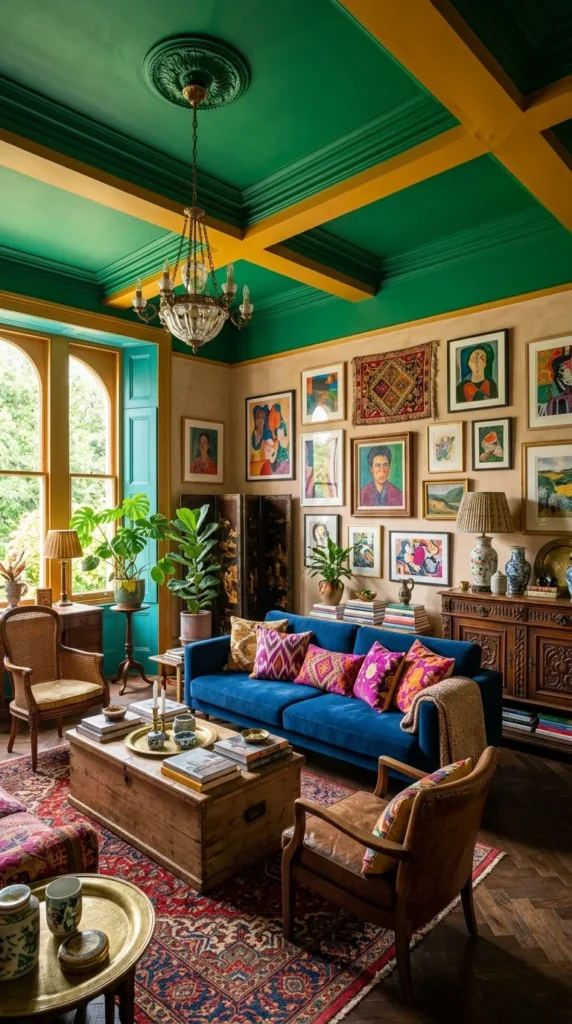
The vintage living room that is never edited eventually becomes the charity shop that its worst version resembles because vintage collecting is additive by nature and a room that only receives objects without ever releasing them accumulates beyond the point where any individual object can be seen and appreciated properly. Editing a vintage living room, removing objects that no longer belong or that have been superseded by something better, is not a betrayal of the collecting principle. It is the practice that keeps the room a curated space rather than a storage space.
The objects removed from a vintage living room in an editing process are not wasted. They find better homes in contexts that suit them more specifically. A piece that looks wrong in the current room may look exactly right in a different position, a different room, or a different home. The willingness to release objects that have stopped contributing to the room’s quality is what keeps a vintage living room genuinely curated rather than simply accumulated and the discipline of that willingness distinguishes the collector who edits from the collector who only adds.
15. Make the Room Comfortable Enough to Live In Daily
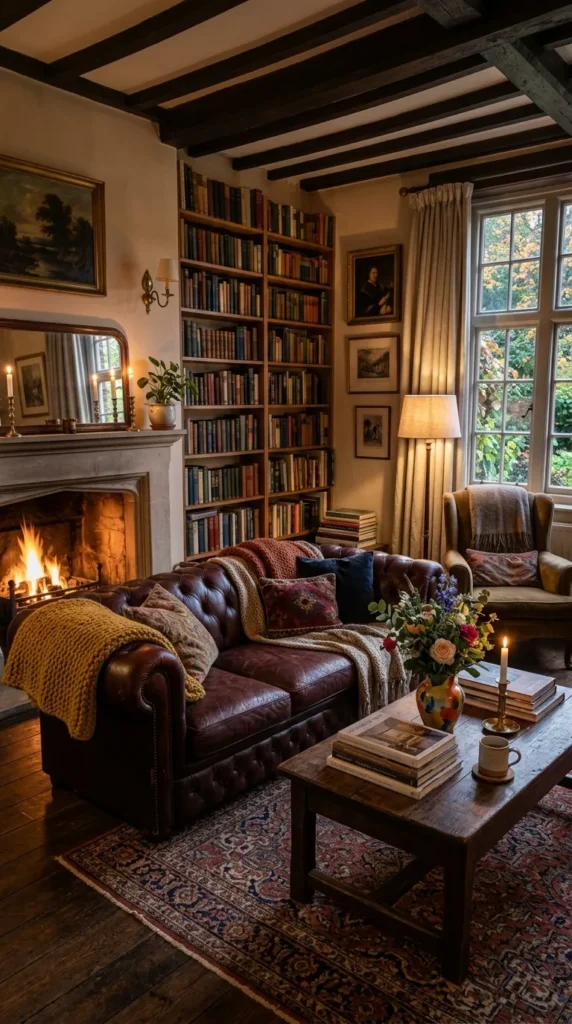
A vintage living room that is too precious to use daily has failed at its most basic purpose regardless of how beautiful it is. Vintage furniture is generally more durable than its age might suggest precisely because good furniture from earlier periods was made to last and has already demonstrated its durability by surviving to the present. The chesterfield sofa that looks fragile because of its age is almost certainly structurally sound enough to be sat on firmly rather than perched on respectfully. The vintage rug that looks too beautiful to be walked on without shoes has survived decades of use and will survive more.
Use the room, sit on the furniture, walk on the rug, use the vintage glasses for actual drinks rather than display, light the candles on the mantelpiece rather than leaving them unlit to preserve them. A vintage living room that is genuinely lived in develops a quality of use and inhabitation that rooms treated as museums never achieve and that quality of genuine use is what makes a collected room feel like a home rather than a collection.
Final Thoughts
A vintage living room that works is a room built from genuine collecting over genuine time rather than from a purchasing decision made during a single renovation project. The rooms that achieve the quality of accumulated character that vintage decor at its best provides are rooms that grew piece by piece as good things were found, as objects were inherited or acquired through specific experiences, as collections developed from genuine interest rather than from a design brief.
Start with one genuinely significant piece and let it set the standard for everything that follows. The anchor piece defines what the room’s quality level should be and makes the editing decisions about subsequent additions clearer because there is a reference point for what belongs rather than a general openness to whatever is old. The vintage living room that builds from that anchor piece outward will develop the specific and personal character that distinguishes genuine vintage rooms from rooms that only look vintage from a distance.