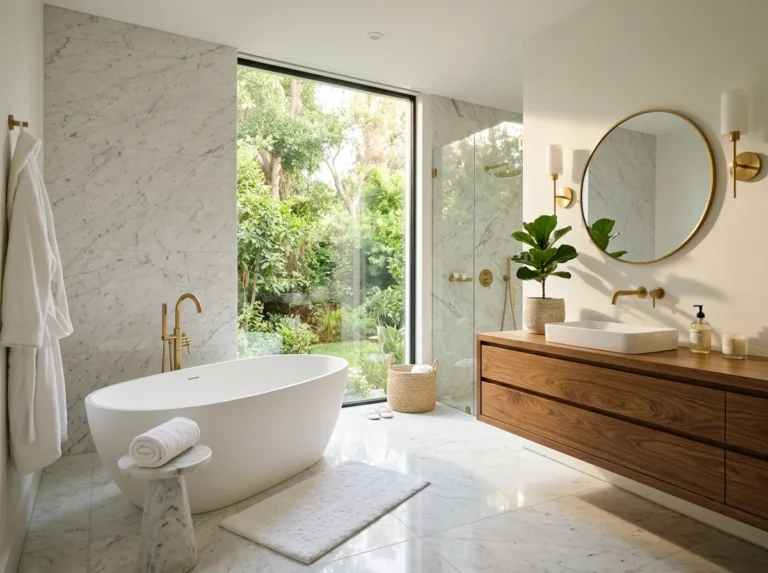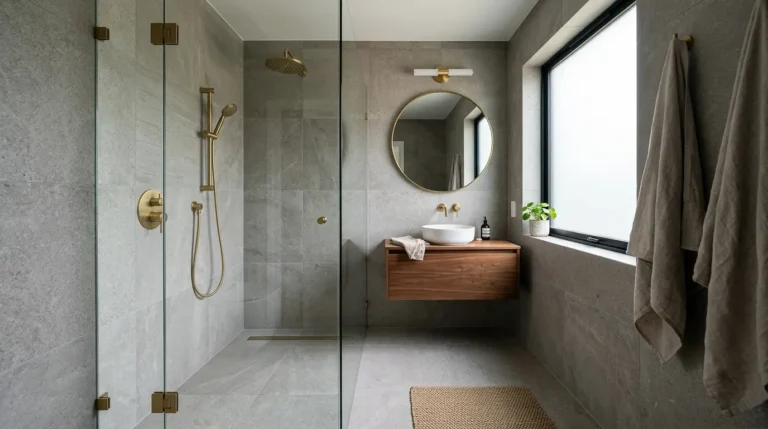
18 Bathroom Rugs That Actually Work
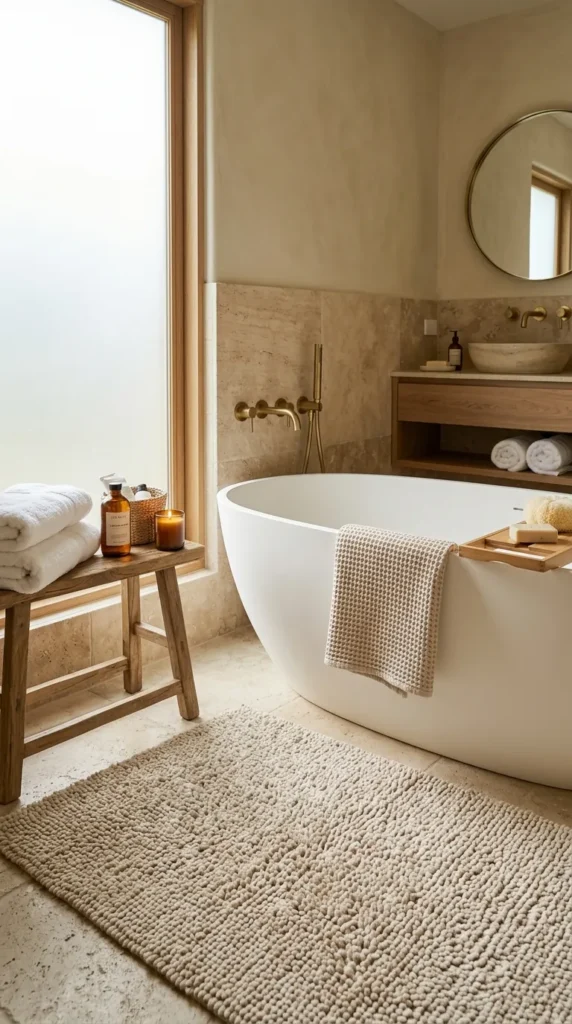
Bathroom rugs are one of those purchases that most people make without thinking and then replace every year because the one they bought does not hold up, does not stay in place, goes stiff after washing, or looks fine in the shop and wrong in the actual bathroom. The bathroom rug market is full of options that look adequate in a product photograph and perform poorly in the reality of a wet, high traffic space used multiple times daily by people who are barefoot and damp. Getting a bathroom rug right is not complicated but it requires knowing what to look for beyond color and price.
A bathroom rug that actually works does several things simultaneously. It absorbs water quickly so the floor does not stay wet after a shower. It dries fast enough that it does not smell between washes. It stays flat so it does not become a tripping hazard. It holds its shape and color through regular machine washing. And it looks good enough that it contributes to the bathroom rather than simply occupying floor space. These 18 ideas and recommendations cover every aspect of choosing, placing, and caring for bathroom rugs that meet all of those requirements in real bathrooms used by real people every day.
1. Choose Cotton Over Synthetic for Absorbency
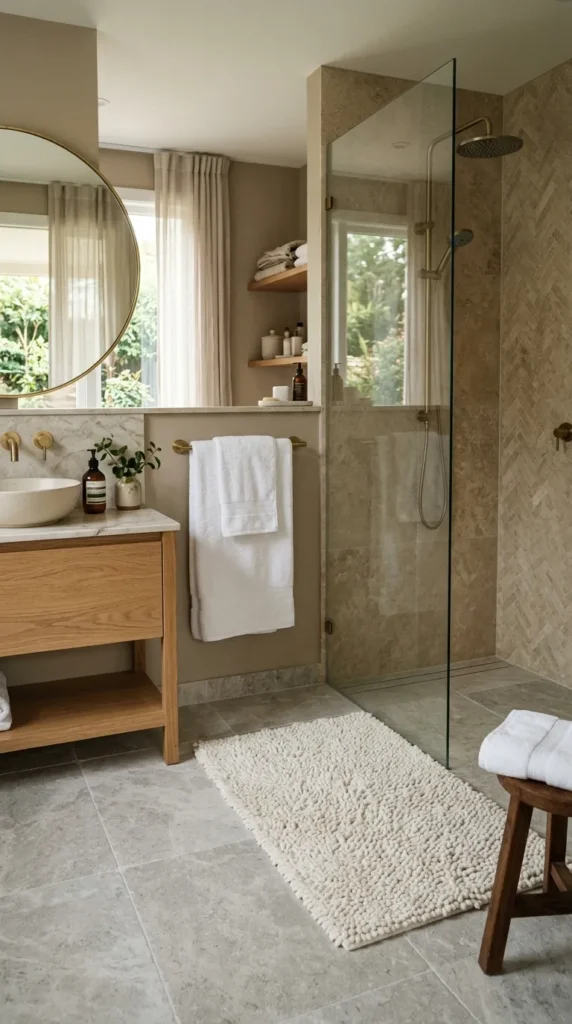
Cotton bathroom rugs absorb water significantly faster and more completely than synthetic alternatives because natural cotton fibers are inherently absorbent in a way that polyester and nylon are not. Stepping out of a shower onto a cotton rug and feeling it absorb the water from wet feet immediately is a completely different experience from stepping onto a synthetic rug that sits damp underfoot rather than drawing moisture away from the skin.
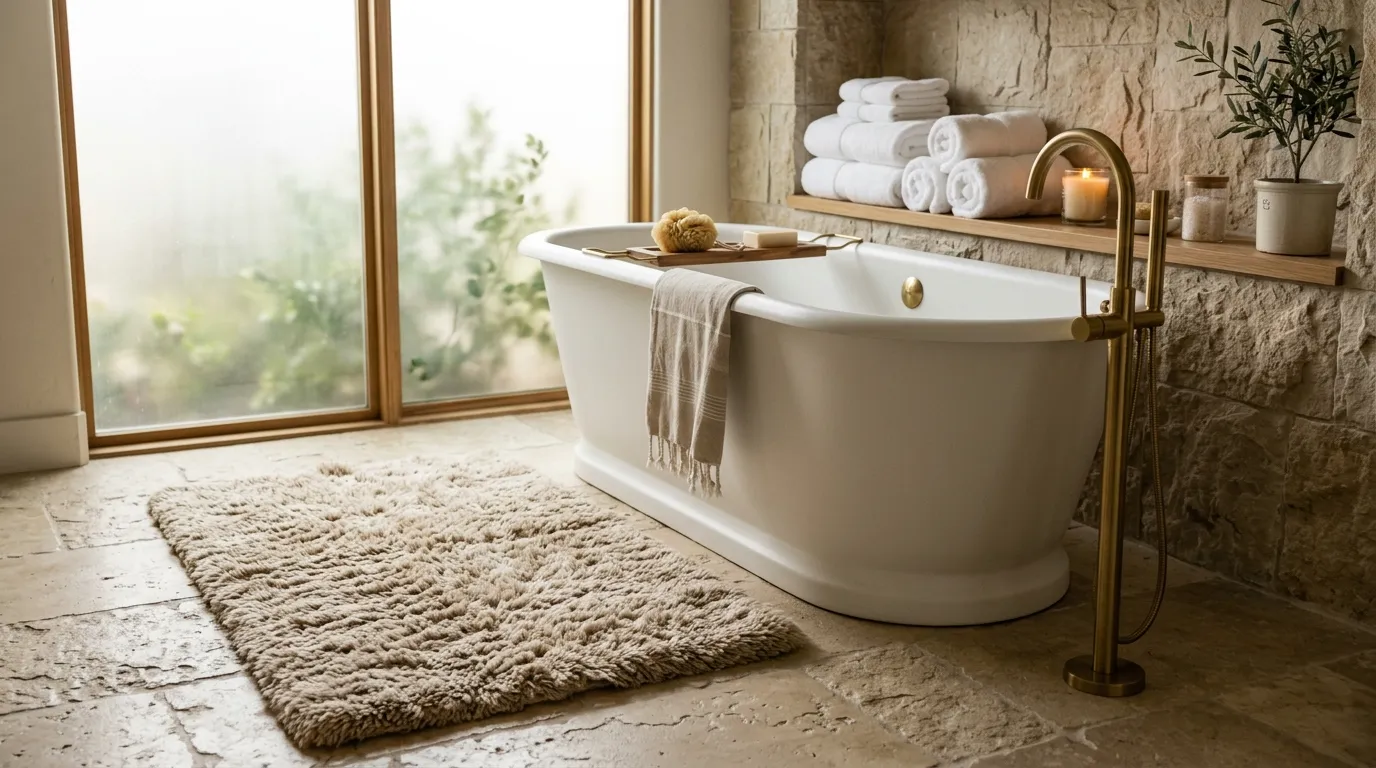
Long loop cotton rugs, sometimes called shaggy or high pile cotton, have more fiber surface area per square centimeter than flat weave cotton and therefore absorb more water per step. The trade off is that high pile cotton takes longer to dry than flat weave which matters in bathrooms with poor ventilation. In well ventilated bathrooms high pile cotton is the most absorbent and most comfortable underfoot option. In poorly ventilated bathrooms flat weave cotton dries faster and is the more practical choice.
2. Size the Rug to the Space Rather Than Buying Standard
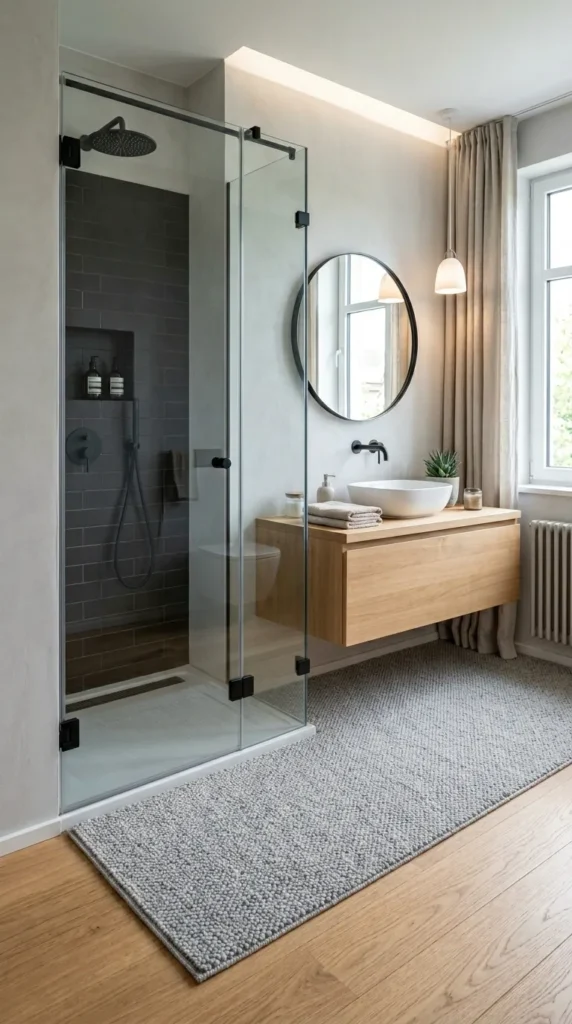
Standard bathroom rug sizes are sized for an average bathroom layout rather than for the specific space in a particular bathroom. A rug that is too small for the space in front of the shower or bath looks lost and provides insufficient coverage for wet feet. A rug that is too wide for the available floor space creates a trip hazard at the edges where it curls against the vanity or the toilet.
Measure the floor space available for the rug before buying. The rug in front of the shower or bath should extend at least as wide as the shower opening or bath width so wet feet land on the rug rather than on the tile. The rug in front of the vanity should be wide enough that both feet are on it when standing at the sink. Buying to these specific measurements rather than accepting standard sizes creates a bathroom that looks considered and works better in daily use.
3. Use a Non Slip Backing or a Separate Grip Mat
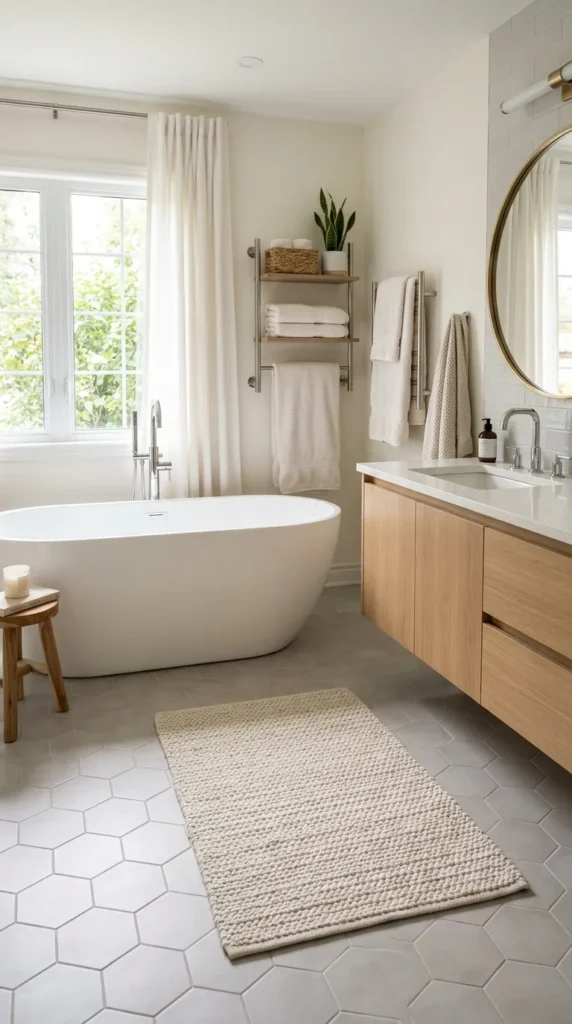
A bathroom rug without a non slip backing on a wet tile floor is a genuine safety hazard because wet feet on a rug that can slide create exactly the conditions for a slip. A rug with a good quality latex or rubber non slip backing grips the tile surface effectively and stays in place even when stepped on from an angle or when the floor is wet around the rug edges.
Non slip backings on rugs degrade over time and lose their grip after repeated washing and extended use. Checking the backing condition regularly and replacing the rug when the backing no longer grips effectively is a safety habit worth maintaining. Alternatively a separate non slip grip mat placed under any rug provides the same gripping function and can be replaced independently of the rug when it degrades without replacing the rug itself.
4. Wash the Rug Weekly Without Exception
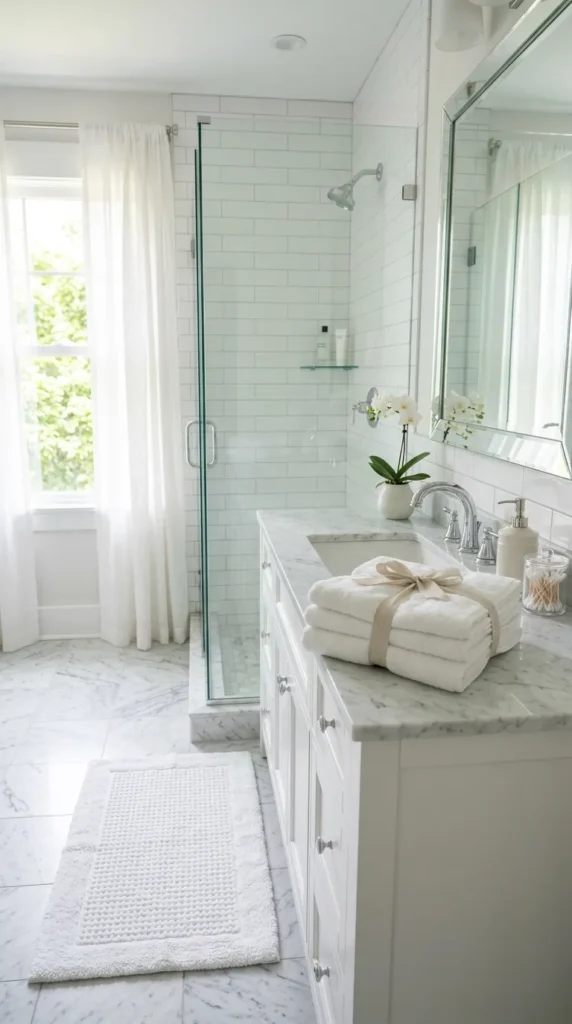
A bathroom rug absorbs significant amounts of water, skin cells, and the general biological material of a room used for washing and grooming multiple times daily. A rug left unwashed for more than a week begins to harbor bacteria and develop the musty smell that most people associate with bathroom rugs rather than recognizing as a maintenance failure.
Weekly machine washing at the temperature recommended for the rug material keeps the rug hygienically clean and prevents the buildup of residue that causes permanent discoloration and smell over time. Two bathroom rugs used on alternating weeks make this routine easier to maintain because one rug is always clean and ready to use while the other is being washed and dried. The investment in a second rug eliminates the period between washing and drying when the bathroom has no rug at all.
5. Buy a Rug That Can Be Machine Dried
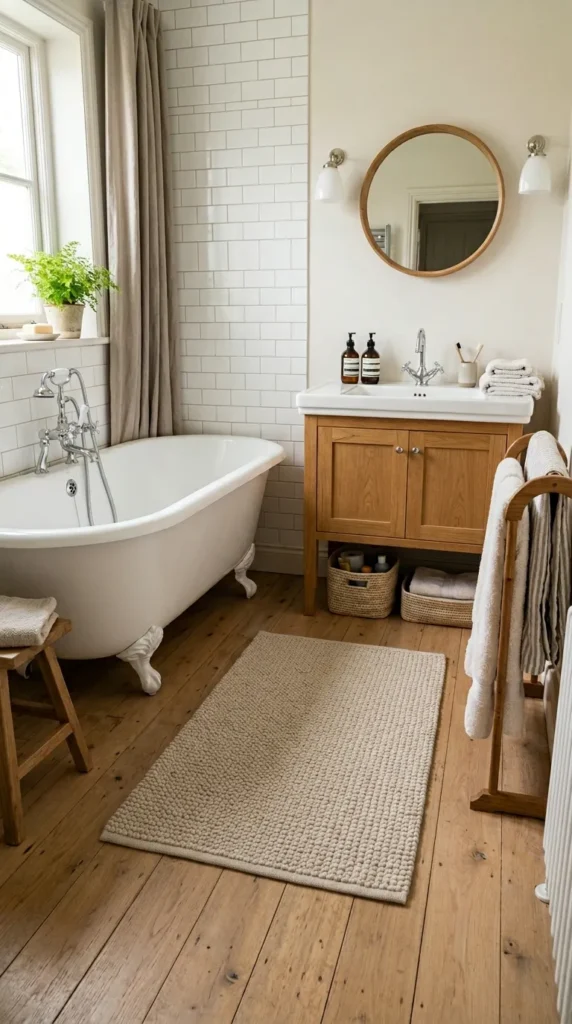
A bathroom rug that requires flat drying or line drying rather than machine drying creates a practical problem in the weekly washing routine because finding space to dry a rug flat or hanging it outside to dry takes significantly more effort than putting it in the dryer with everything else. A rug specified as machine dryer safe at a low heat setting removes this friction from the washing routine and makes the weekly wash genuinely easy rather than effortful.
Check the care label before buying rather than assuming machine drying is permitted. Cotton rugs with latex backings often cannot be machine dried because the heat damages the backing. Rugs with microfiber surfaces sometimes cannot be machine dried because heat melts synthetic fibers. Rugs made entirely from natural fibers without latex backing are typically the most dryer friendly and the most practical for a weekly washing routine.
6. Choose a Color That Hides Daily Variation
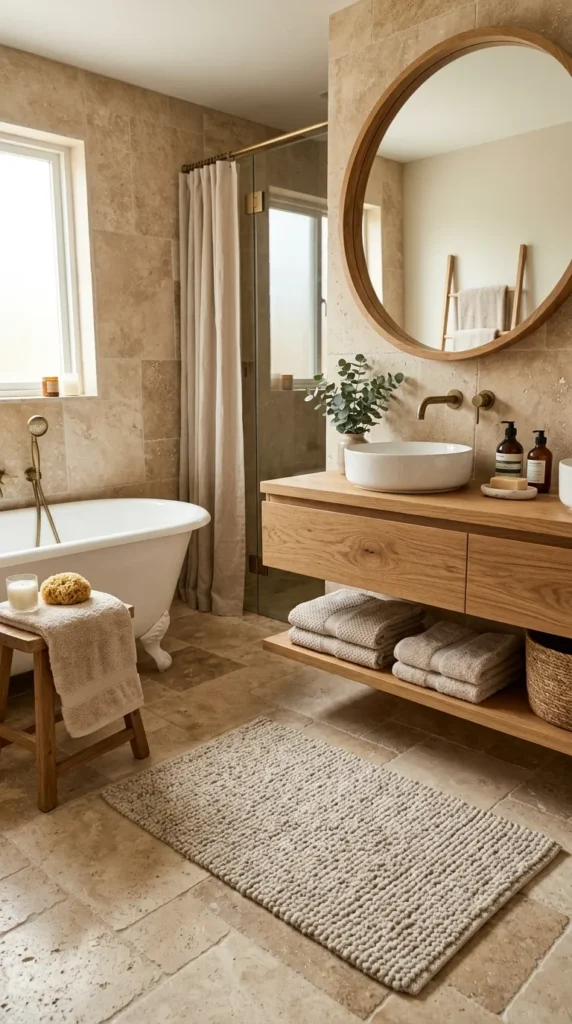
A pure white bathroom rug looks beautiful in a product photograph and shows every mark, stain, and discoloration in daily use. A bathroom rug that starts white and becomes grey or spotted with use within a few weeks is not a rug that actually works regardless of how good its other qualities are. Choosing a color with enough depth that daily variation in cleanliness is not immediately visible at a glance extends the period between washes during which the rug looks acceptable.
Warm stone, natural oatmeal, soft sage, warm grey, and deep navy all provide enough color depth that light soiling from daily use does not show immediately. These colors also coordinate with most bathroom color schemes because they sit within the neutral and earthy palette that most bathrooms use. A bathroom rug in a color chosen for daily practicality as well as appearance is a rug that continues to look good throughout the week rather than only on the day it is washed.
7. Try a Teak Bath Mat as a Non Textile Alternative
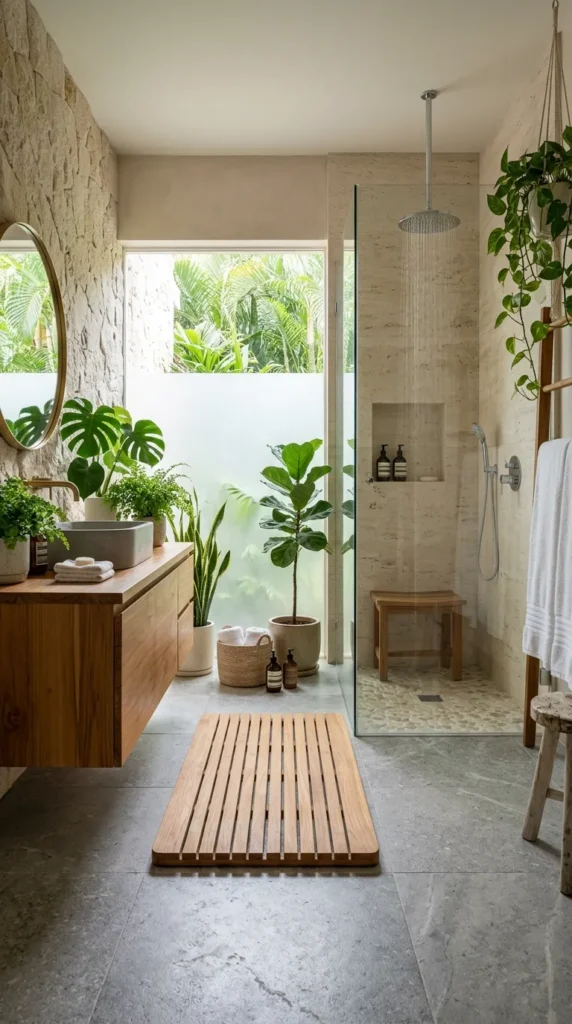
A teak bath mat, a slatted wooden platform made from teak or another water resistant hardwood, provides a stable and non absorbent surface for wet feet that dries almost instantly rather than remaining damp between uses. The wooden slats allow water to drain through and evaporate quickly which eliminates the moisture retention that causes conventional textile rugs to smell.
Teak bath mats suit bathrooms with a natural or spa aesthetic where the warm wood material adds organic warmth to a tiled surface. They suit shower areas particularly well because the drainage through the slats is most effective when the floor beneath is also draining rather than holding water. Teak requires occasional oiling to maintain the water resistance of the wood and prevent it from drying and cracking but the maintenance is minimal and less frequent than weekly washing.
8. Use Two Rugs in a Large Bathroom Rather Than One
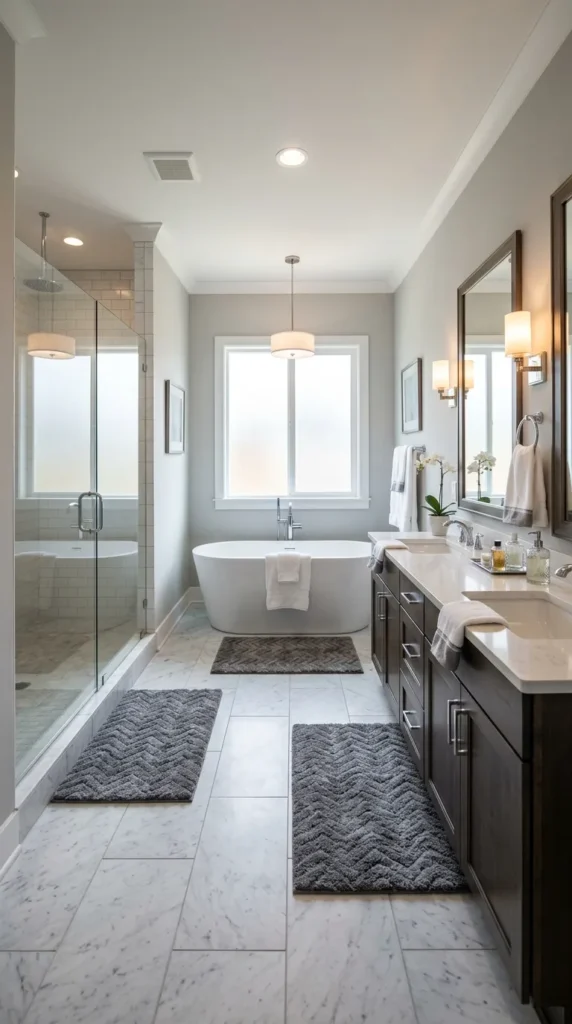
A single rug in a large bathroom often looks insufficient and provides inadequate coverage for the multiple areas where wet feet contact the floor. A rug in front of the shower, a separate rug in front of the bath, and a third in front of the vanity each address a specific wet foot moment rather than one rug attempting to cover all three zones from a central position.
Using the same rug in two or three sizes throughout the bathroom creates a coordinated look that feels intentional rather than assembled. Most rug ranges offer the same design in multiple sizes which makes this approach straightforward. The coordinated rug treatment also defines the bathroom zones visually which creates a sense of considered layout in a larger bathroom where the floor space can otherwise feel undefined.
9. Consider a Round Rug in Front of a Pedestal Basin
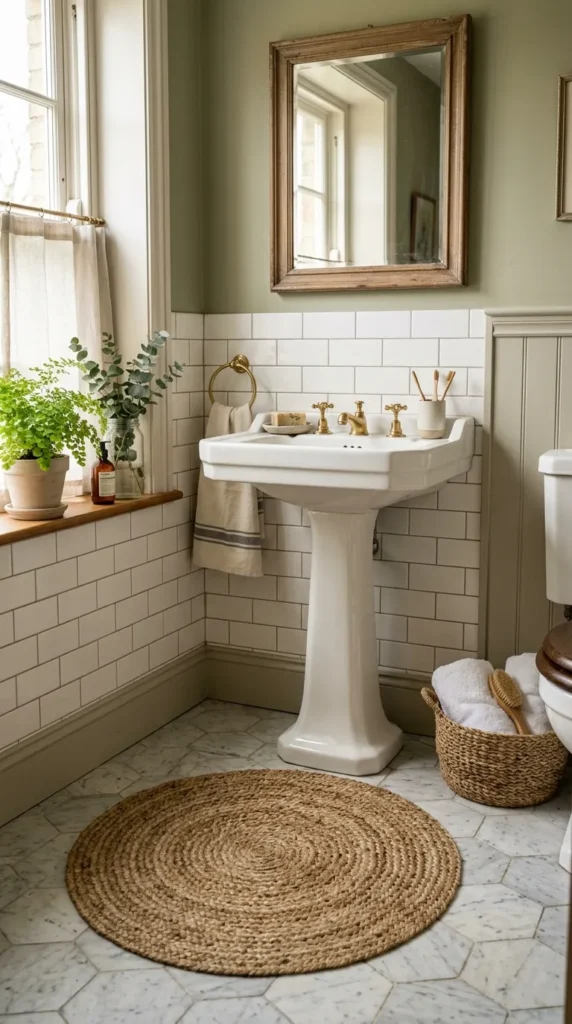
A round rug in front of a pedestal basin creates a visual relationship between the circular rug form and the pedestal form beneath the basin that feels natural and considered. The round rug also softens the visual corner created by the basin meeting the floor which is a detail that contributes to the overall quality of the bathroom without being consciously noticed.
Round rugs in front of vanity units with no pedestal also work because the circular form contrasts interestingly with the rectangular form of the vanity and creates visual variety on the bathroom floor that a rectangular rug alongside a rectangular vanity does not. The round form also suits smaller bathroom spaces where a rectangular rug in front of the vanity might feel too large and formal for the size of the room.
10. Layer a Small Rug Over a Larger Bath Mat
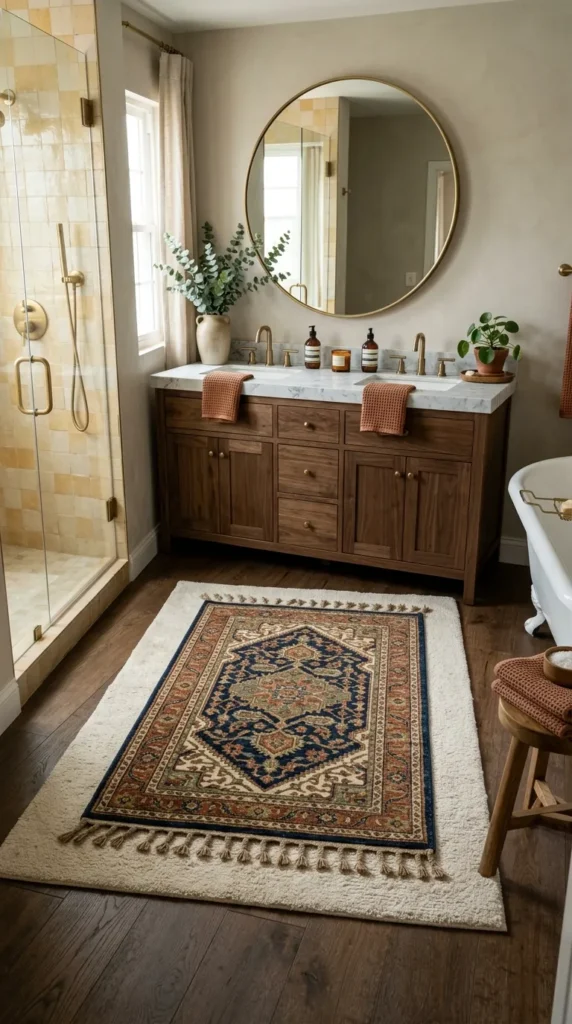
Layering a smaller decorative rug over a larger plain absorbent bath mat creates a bathroom floor treatment that is both functional and visually interesting. The plain large mat underneath handles the water absorption and the smaller decorative rug on top adds pattern, color, or texture that the plain mat alone does not provide.
This layering approach allows a more decorative rug in a material that might not be absorbent enough for direct wet foot contact to be used in the bathroom without compromising the water absorption function. A woven kilim style rug over a plain cotton bath mat brings pattern and warmth to the bathroom floor while the cotton mat beneath handles the practical wet foot requirements. The layered look also suits bathrooms with a more eclectic or boho aesthetic where the layering of textiles is part of the overall design approach.
11. Match the Rug Material to the Bathroom Ventilation
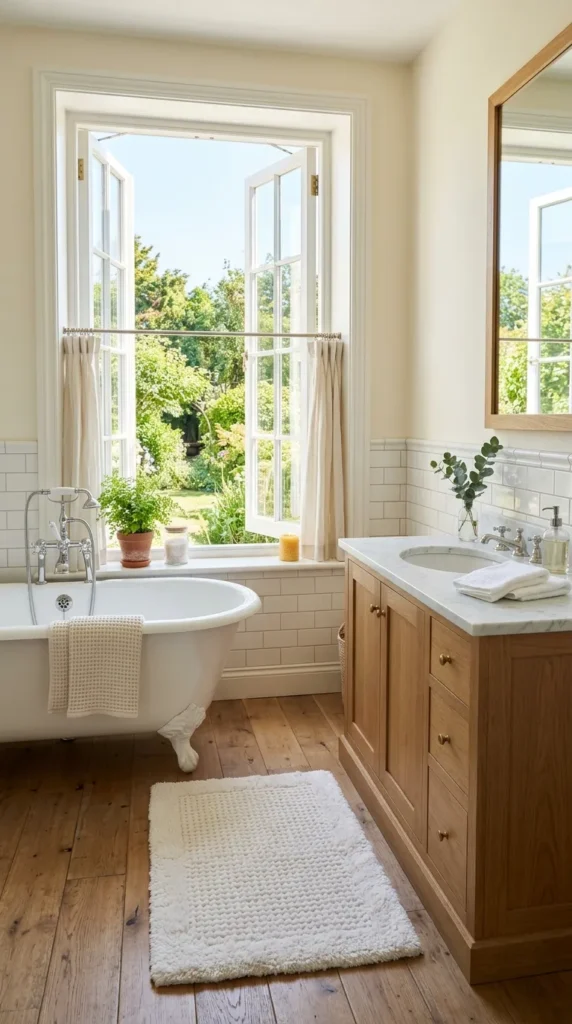
The ventilation quality of a bathroom determines which rug material is practical rather than which material is preferred aesthetically. A bathroom with good ventilation and a window or extractor fan that clears moisture quickly can support a high pile cotton rug that takes longer to dry without the rug developing mildew smell between washes. A bathroom with poor ventilation needs a rug that dries as quickly as possible regardless of other qualities.
Microfiber rugs dry faster than cotton rugs of equivalent pile height because the fine synthetic fibers release moisture more quickly than the thicker natural fibers of cotton. Flat weave cotton dries faster than looped pile cotton. Teak and other non textile materials dry almost instantly. Matching the rug material to the drying conditions of the specific bathroom prevents the most common bathroom rug failure which is a rug that never fully dries between uses and eventually smells despite regular washing.
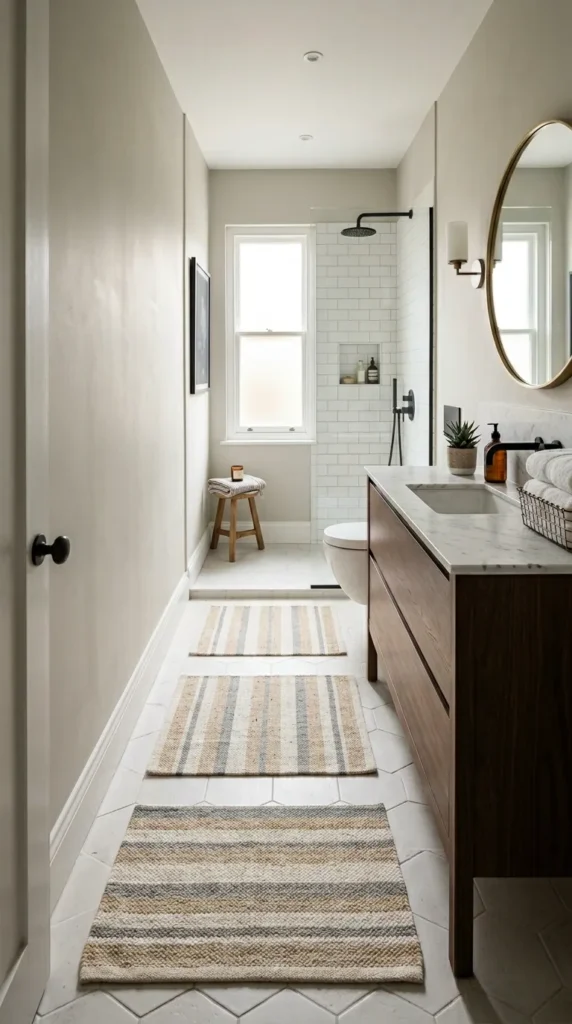
12. Use a Long Runner in a Narrow Bathroom
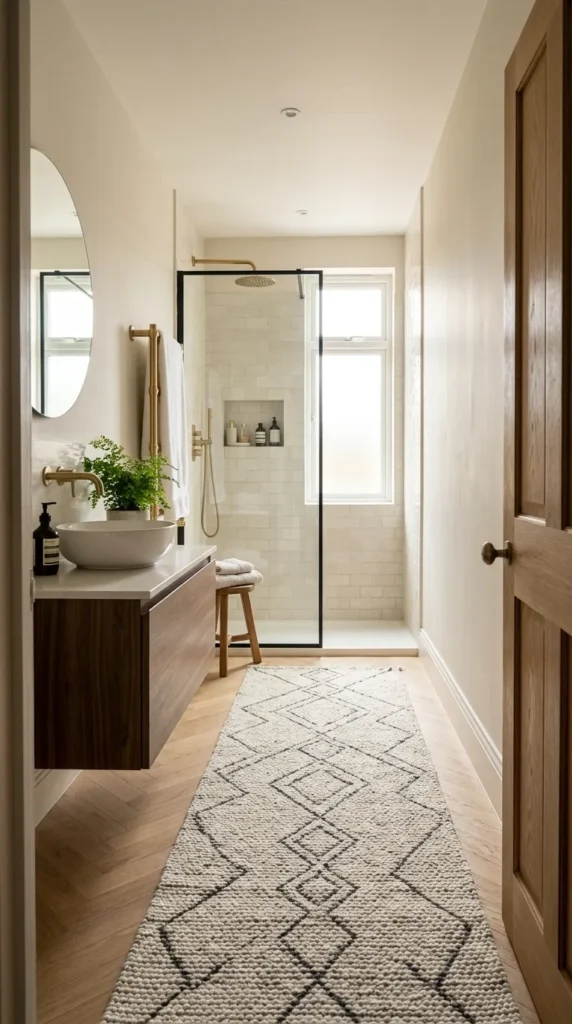
A narrow bathroom benefits from a long runner rug along the central floor space rather than a standard rectangular mat in front of a single fixture. A runner that extends from the shower end of the bathroom to the door end covers the full length of the floor that wet feet travel and creates a continuous soft surface throughout the room rather than a single mat that covers only the highest wet foot traffic point.
A runner in a narrow bathroom also makes the room feel wider because the long narrow form of the rug emphasizes the length of the room rather than its width. A standard rectangular mat in a narrow bathroom can feel too wide relative to the floor space on either side of it which makes the room feel even narrower than it is. The proportions of the runner format suit the proportions of a narrow bathroom more naturally.
13. Choose Rugs With Finished Edges That Will Not Fray
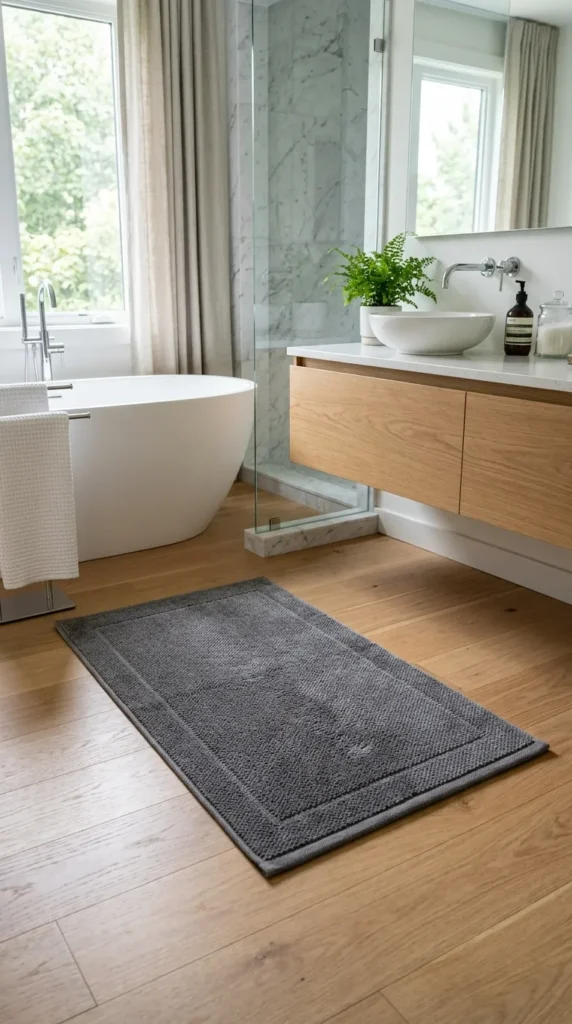
The edges of a bathroom rug take significant abuse from repeated washing, foot traffic, and the curling that occurs when rug edges meet walls or fixtures. A rug with well finished edges, either bound in a contrasting material, serged with a tight overlock stitch, or finished with a woven border, maintains its appearance through years of washing and use. A rug with unfinished or poorly finished edges begins to fray and shed fibers within months of regular washing.
Checking the edge finish before buying is worth the effort because edge quality is not always apparent from a product photograph and price alone is not a reliable indicator. A moderately priced rug with well finished edges will outlast an expensive rug with poorly finished ones. Running a finger along the edge of a rug in a shop to check for loose threads and checking the corners where fraying typically starts first reveals the edge quality that the overall appearance of the rug might not suggest.
14. Avoid Rugs With Rubber Backing on Heated Floors
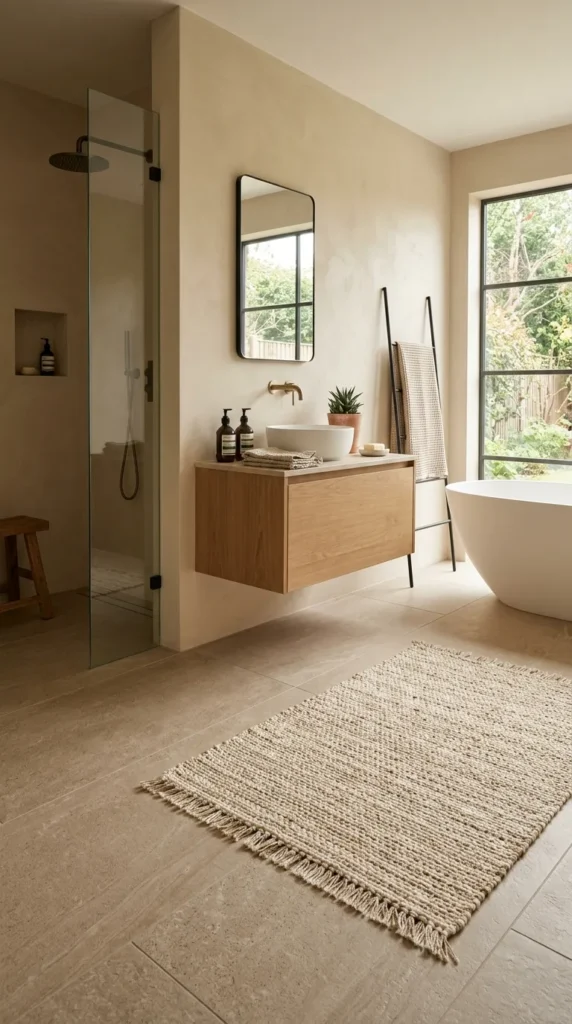
Underfloor heating in a bathroom creates a floor surface that is warmer than the ambient temperature of the room which degrades rubber and latex rug backings significantly faster than an unheated floor does. A rug with a rubber or latex non slip backing on a heated bathroom floor will break down within months rather than years, leaving a sticky residue on the tile that is difficult to remove and making the rug unsafe as the grip degrades.
For heated bathroom floors the alternatives are rugs with a woven textile backing rather than a rubber backing, teak bath mats that require no backing, or a separate non slip mesh grip mat placed between the rug and the heated floor rather than a backing bonded to the rug itself. The mesh grip mat can be replaced when it degrades without replacing the rug and the woven backing handles heat better than rubber because there is no material that melts or breaks down at the temperatures a heated floor produces.
15. Store Spare Rugs Properly Between Uses
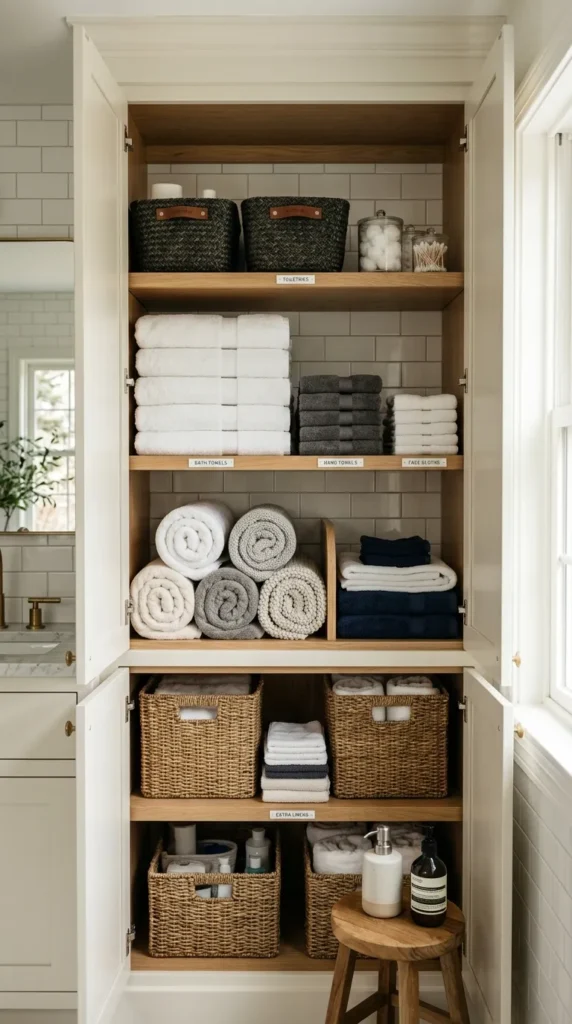
A bathroom rug stored rolled rather than folded maintains its shape better between uses because folding creates permanent crease lines that make the rug lie unevenly when unrolled. A rolled rug stored in a cool dry location away from direct sunlight maintains both its shape and its color better than a folded rug stored in a damp or sunny location.
For households that rotate between two bathroom rugs, storing the clean spare rolled in a linen cupboard or a bathroom cabinet keeps it clean, fresh, and ready to use immediately when the rug in use goes into the wash. A rug stored rolled on a shelf is also easier to unroll and place flat than a rug that needs to be unfolded and smoothed out which removes another small friction from the weekly rotation routine.
16. Use a Striped Rug to Make a Narrow Bathroom Feel Wider
A striped bathroom rug with stripes running perpendicular to the length of the bathroom creates a visual widening effect that makes a narrow bathroom feel broader than it is. The horizontal lines of the stripe draw the eye across the width of the room rather than along its length which creates an impression of width that a plain rug or a striped rug with stripes running lengthwise does not produce.
Narrow stripes create a more graphic and contemporary effect. Wide stripes create a more relaxed and casual effect. Both work for the widening purpose as long as the stripes run across the width of the bathroom rather than along its length. A striped cotton rug in two tones that coordinate with the bathroom color scheme achieves the widening effect while also adding visual interest to a floor that might otherwise be entirely plain tile.
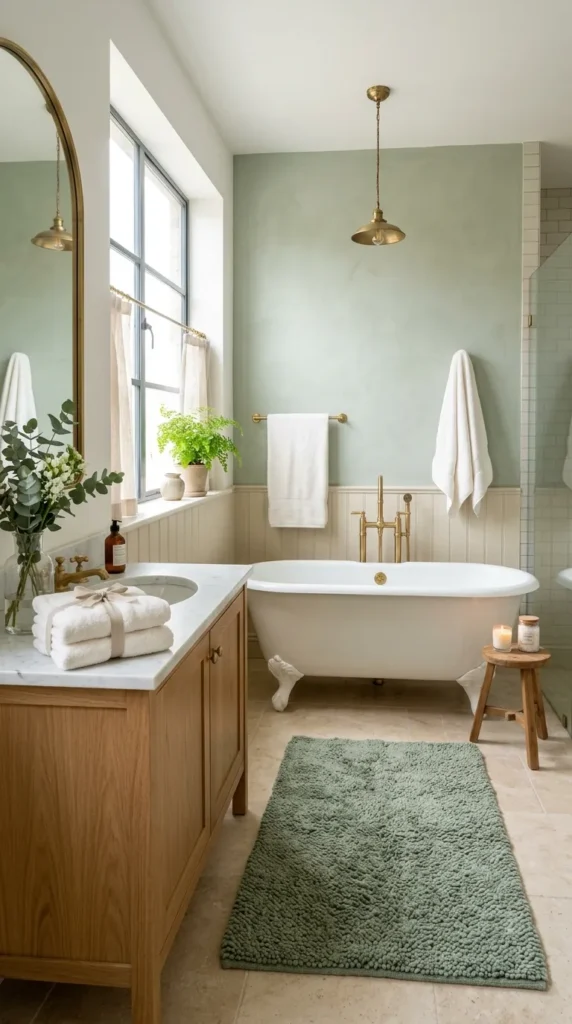
17. Let the Rug Coordinate Rather Than Match
A bathroom rug that exactly matches the towels, the wall color, or the tiles creates a room where everything is too obviously coordinated and the result reads as overly deliberate rather than considered. A rug that coordinates with the bathroom palette without matching any single element exactly creates a more natural and more visually interesting relationship between the rug and its surroundings.
Coordination rather than matching means choosing a rug that contains a color present elsewhere in the room without being the same color as any specific element. A sage green rug in a bathroom with white tiles, grey grout, and white towels coordinates with the cool grey undertone of the grout and adds a natural accent that feels related to the room rather than imposed on it. This approach requires a slightly more considered color choice but creates a bathroom that feels designed rather than decorated.
18. Replace the Rug When It Stops Performing Not When It Looks Worn
The decision to replace a bathroom rug is typically made on appearance, when the color has faded, the edges have frayed, or the rug looks visibly tired. The more important replacement trigger is performance. A rug that no longer absorbs water effectively, no longer stays flat, no longer grips the floor, or no longer dries quickly enough to prevent smell between washes has stopped working regardless of how it looks and should be replaced on those functional grounds rather than kept because it still looks adequate.
A bathroom rug with a lifespan of one to two years with weekly washing is performing normally for a textile in a high use wet environment. Expecting a bathroom rug to last five years with weekly washing is expecting more than most textiles can deliver in those conditions. Budgeting for rug replacement every one to two years and choosing a well made rug within that budget rather than the cheapest available option creates a bathroom that consistently has a rug that works rather than one that persists past its useful life.
Final Thoughts
A bathroom rug that actually works is not the most expensive one or the most visually striking one. It is the one that absorbs water well, dries quickly, stays in place, holds up through weekly washing, and looks good enough that it contributes to the bathroom rather than simply occupying floor space. Finding that combination requires knowing what to look for and being willing to replace it when it stops performing rather than when it looks visually worn.
Start with the material and the size. Get those two decisions right for the specific bathroom and the specific ventilation conditions and every other quality of the rug is easier to evaluate. The bathroom rug that results from that considered approach will work for as long as its materials allow and will be worth replacing with the same considered approach when the time comes.