14 Apartment Living Room Ideas for a Stylish Small Space
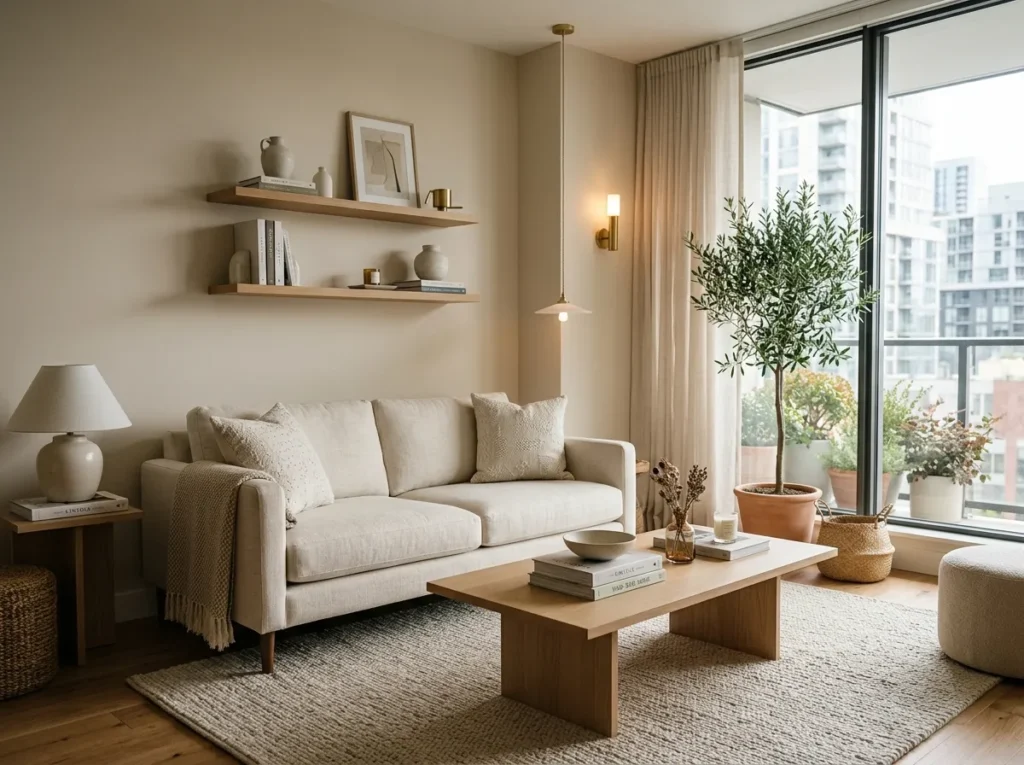
If you’re living in an apartment with a tiny living room, you already know the struggle. Your furniture barely fits. Natural light is limited. The space feels cramped before you even unpack your belongings. But here’s the thing—a small apartment living room doesn’t have to feel like a storage closet. With the right approach, you can design a space that’s both functional and actually enjoyable to spend time in.
This isn’t about squeezing in every trendy piece or pretending your studio has square footage it doesn’t. These are real strategies that people use to transform their tiny living rooms into spaces that work harder and look better.
1. Float Your Furniture Away From the Walls
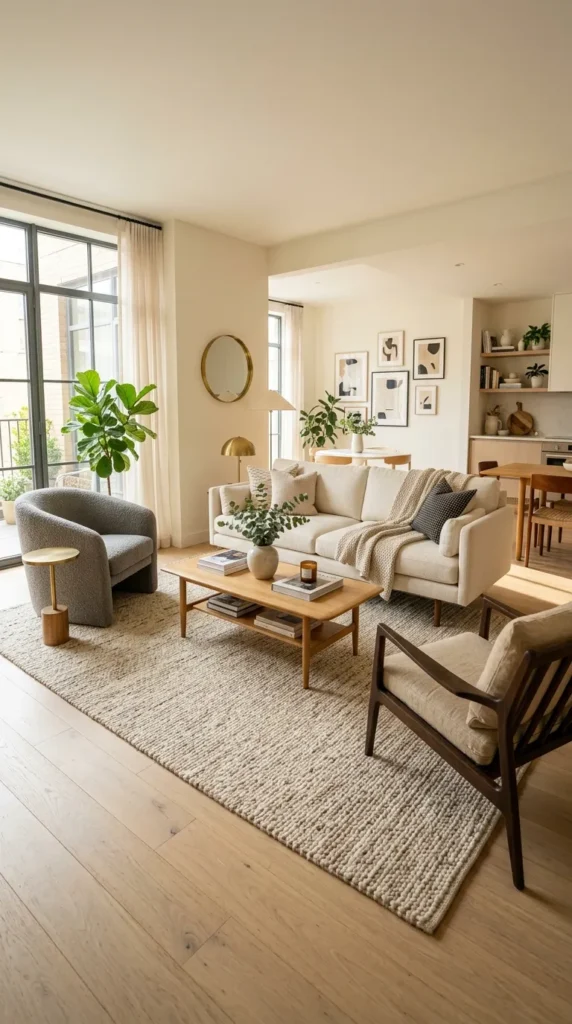
The biggest mistake people make in a small apartment living room is pushing everything against the walls. It seems logical—if the furniture is against the walls, you have more floor space in the middle, right? But counterintuitive as it sounds, floating your furniture—actually pulling it into the center of the room—makes the space feel noticeably larger and more intentional. This is a design principle that works across all room sizes, but it’s especially powerful in tiny spaces where every visual cue matters.
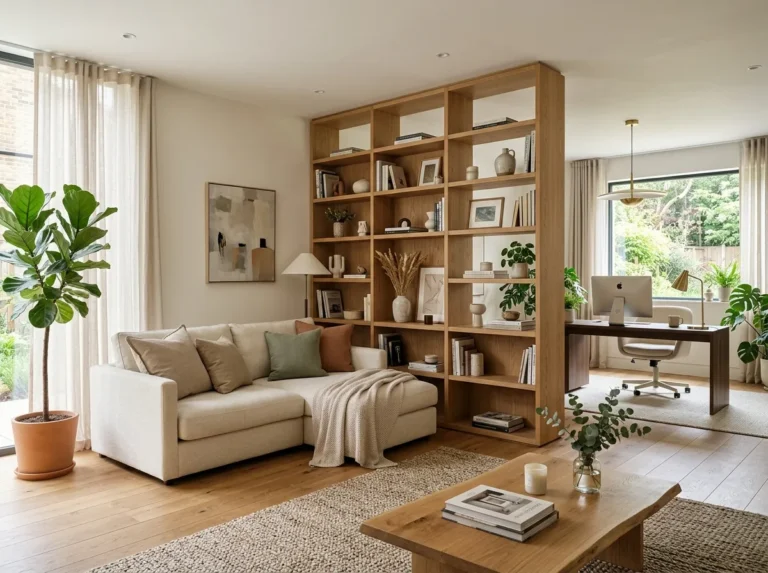
When you float a sofa or chair arrangement, you’re psychologically defining a distinct living area. Your eye reads this as deliberate design rather than cramped desperation. The arrangement becomes a purposeful zone instead of furniture scattered against walls because there’s nowhere else to put it. This works especially well if you have an entryway that separates your living room from the bedroom or kitchen area. By floating your furniture, you create a clear boundary that makes both spaces feel larger and more separate. In an open floor plan apartment, this floating arrangement can be the only thing that defines your living room as distinct from your sleeping area or kitchen, which is invaluable when you’re working with minimal square footage.
In a tiny living room, this approach requires some careful measuring and planning. You need enough clearance around your furniture to actually walk through the space without constantly bruising your shins or feeling like you’re navigating an obstacle course. A good rule of thumb is to leave at least 18 inches of clear walkway on all sides of your sofa arrangement. If your living room is particularly small, even 12-15 inches works, but anything less than a foot starts to feel cramped when you’re actually moving through the space. This measurement might seem tight, but it’s the difference between a deliberately designed living room and one that feels suffocating.
2. Choose a Smaller Sofa or Loveseat
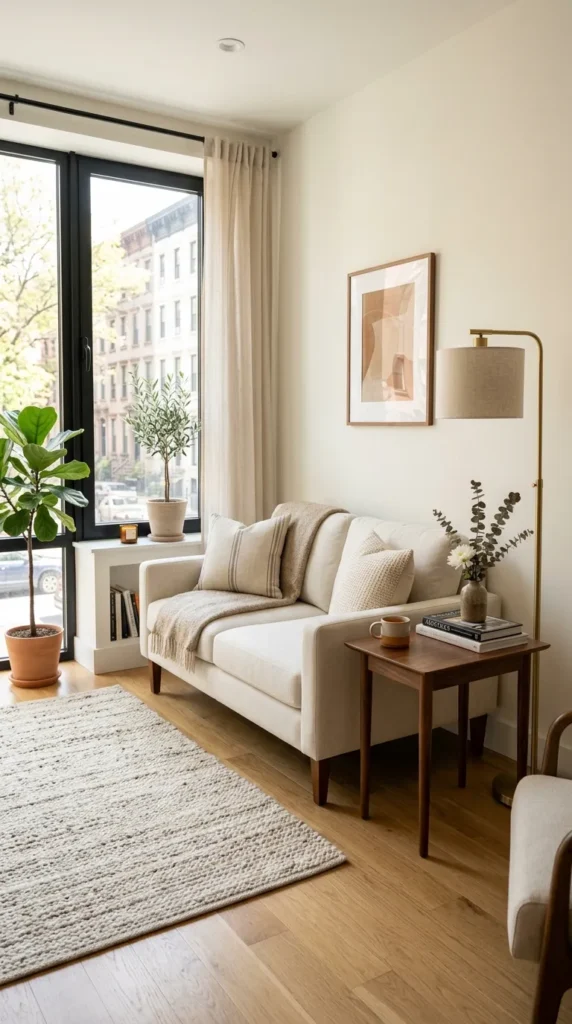
You don’t need a full sectional in an apartment living room, and honestly, forcing one into the space is a decision you’ll regret. That oversized sectional that works beautifully in a house—the one that takes up an entire wall and dominates the living room—looks absolutely massive in a 200-square-foot apartment space. Beyond just looking too big, an oversized sectional dictates how you use the entire room. It forces you to arrange everything else around it, leaves no room for other furniture pieces, and eliminates any flexibility in how you might want to configure your space as your needs change.
Instead, go intentionally smaller. A loveseat, an apartment-scale sofa, or even a quality settee gives you the comfortable seating you actually need without letting a single furniture piece dominate your entire living room. When you’re shopping, look for sofas under 72 inches wide. Some brands like Room & Board, West Elm, and Article specifically design their collections with apartment living in mind, and they understand that not everyone needs a massive piece to be comfortable. A 60-inch sofa is actually quite substantial for seating two people comfortably, and if you need additional seating, you can add a single accent chair or a small ottoman rather than buying one massive sectional.
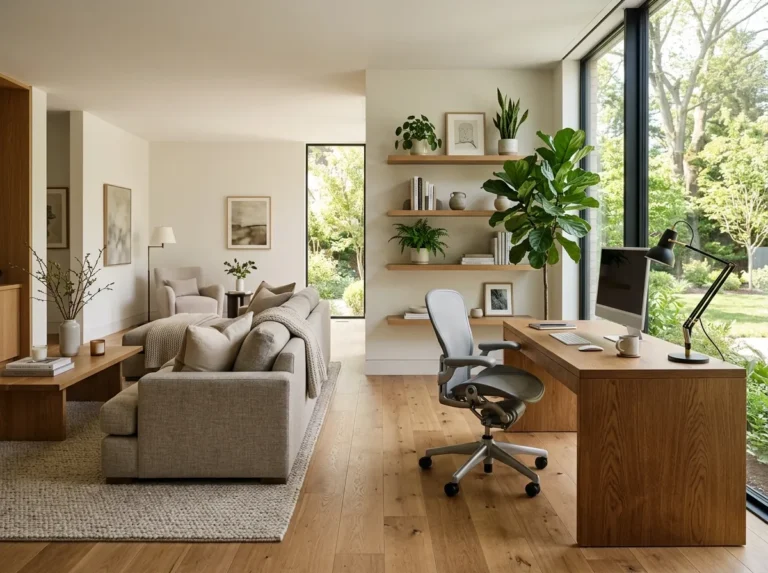
The real benefit of keeping your seating compact becomes obvious once you’ve made the change. When your sofa doesn’t dominate the room, you suddenly have space for other things—a proper side table where you can actually set down a drink without reaching, a plant that brings greenery into the space, or a narrow bookshelf that stores things you actually use. Your living room stops being purely functional (the place where you sit) and becomes a multi-purpose space where different activities can happen. You might read in one corner, work at a small desk in another, and relax on the sofa in the third. That kind of versatility is what transforms a tiny apartment living room from feeling cramped into feeling livable.
3. Use Vertical Space Strategically
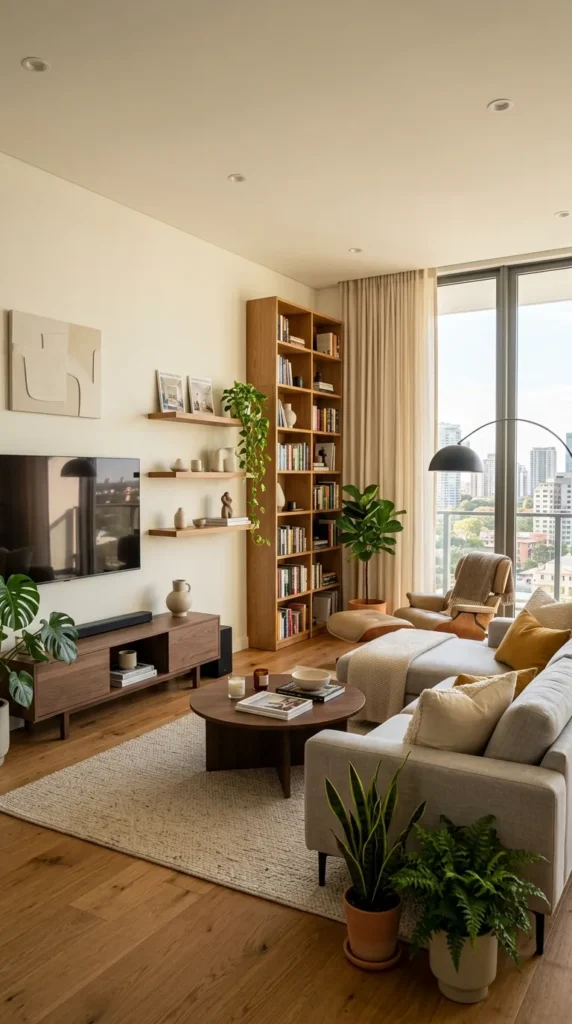
Your tiny living room has significantly more usable space above eye level than you’re probably utilizing right now, and learning to think vertically is where apartment living room design gets genuinely creative. Most people in small spaces focus entirely on horizontal floor space, but the truth is that your walls are available real estate that many people overlook entirely. When you stop thinking about your apartment living room as a box and start thinking about it as a three-dimensional space where vertical design matters just as much as horizontal arrangement, everything changes.
Install floating shelves on one wall to display objects you love while keeping the floor clear. Use tall, narrow bookcases instead of wide, squat furniture pieces that eat up valuable horizontal space. Mount your TV or hang artwork at varying heights rather than in a single straight line—this draws the eye upward and creates visual movement that makes the room feel less cramped and more intentionally designed. When someone’s eye naturally travels up instead of staying at eye level, the space instantly feels taller and less claustrophobic. A tall floor lamp positioned in a corner is also a form of vertical design. It doesn’t take up much floor space at all, but it fills the room with ambient light and draws attention upward, adding visual interest to what might otherwise be an empty corner. Even hanging curtains higher than the window frames it creates the illusion that your windows and ceilings are taller than they actually are—a simple trick that genuinely impacts how large the room feels.
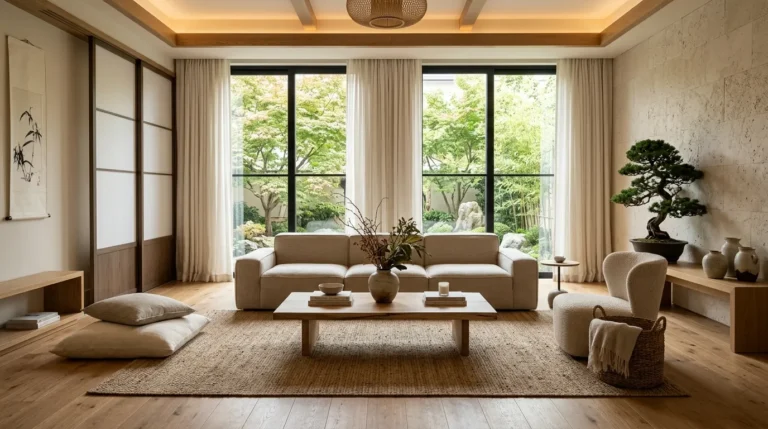
Create a peaceful and functional apartment by exploring 14 Japanese Living Room Ideas for minimalist design inspiration.
4. Go Light on Colors and Busy Patterns
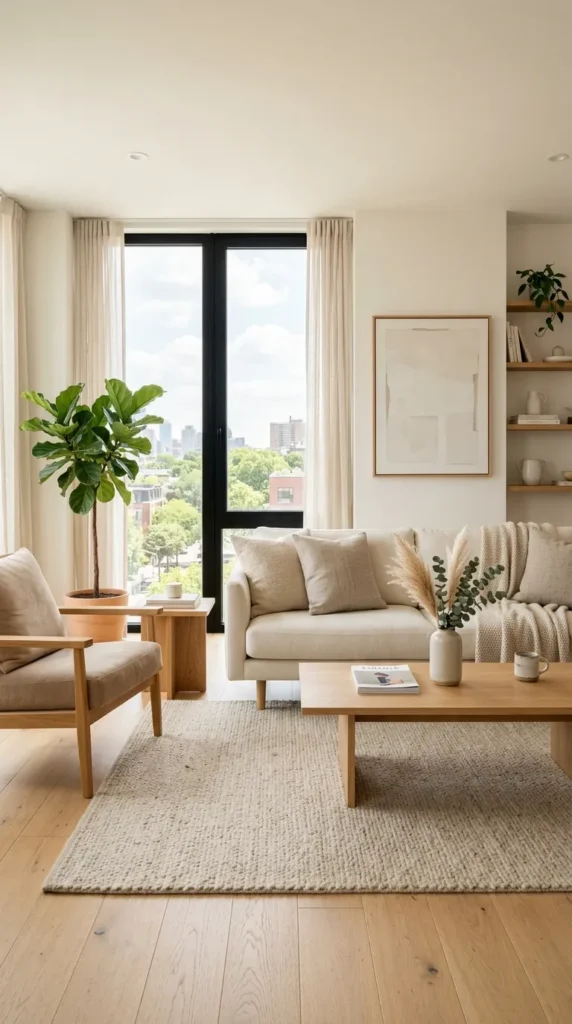
A tiny living room painted in dark jewel tones or heavy colors can genuinely feel like a cave, no matter how bright your lights are or how clever your design choices are. The psychology of color in small spaces is real—light, neutral walls in shades like cream, soft gray, pale greige, or warm white reflect light and make the space feel like it actually breathes. When light bounces off pale walls instead of being absorbed by dark paint, the room physically feels more open and less enclosed. This isn’t about saying dark colors are wrong or that you need a boring, sterile space. It’s about understanding that in a confined space, wall color has an outsized impact on how large and comfortable the room feels.
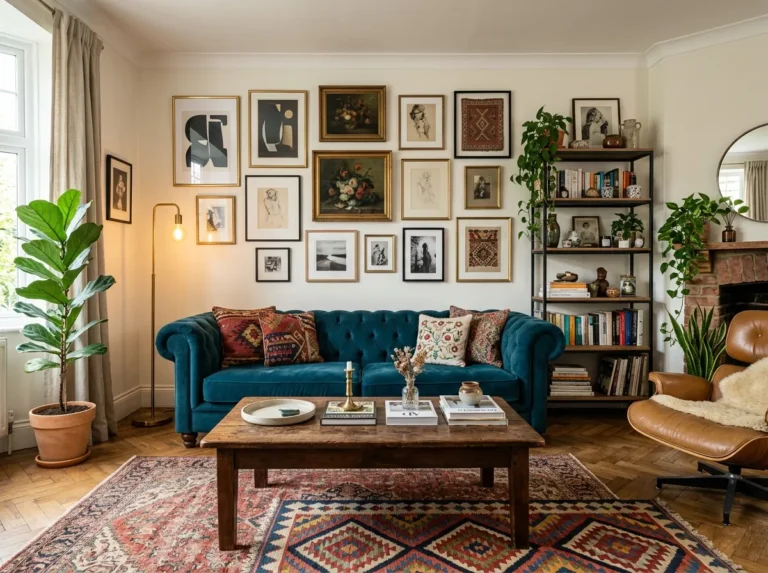
This approach doesn’t mean your apartment living room has to be bland or colorless. You can add genuine personality and visual interest through textiles, artwork, accent pieces, and decorative objects. A cream-colored wall can become the perfect backdrop for a gallery of artwork in jewel tones, for example. Your throw pillows, area rug, and curtains can provide all the color and personality you want. The strategy is just keeping your walls and larger furniture pieces neutral to create a calm, spacious-feeling base. If you absolutely want pattern and color on your walls, restrict it to one accent wall rather than surrounding yourself with busy design. Use pattern in smaller doses—throw pillows, an area rug, a gallery wall, or artwork. The more solid-colored your walls and larger furniture pieces are, the larger and more intentional your tiny apartment living room automatically feels, and you maintain the flexibility to change accent pieces without repainting or buying new furniture.
5. Invest in an Area Rug That Anchors the Space
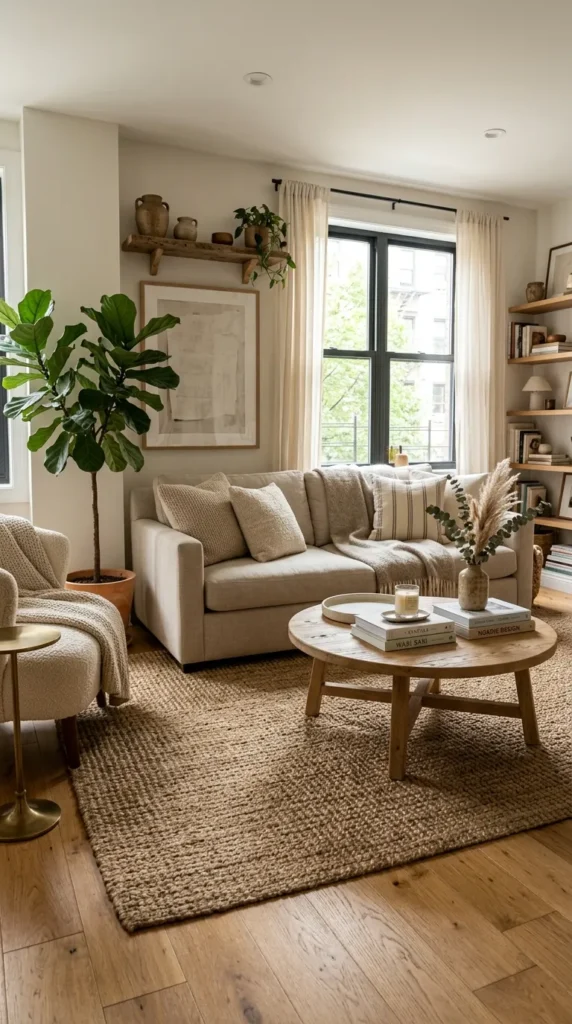
An area rug does two critical things in a tiny apartment living room that most people underestimate. First, it physically defines your seating area and separates it from the rest of your space—crucial in an open floor plan where you need visual boundaries. Second, it makes the space feel intentionally designed rather than like you just grabbed whatever furniture fit and arranged it randomly. A room with a properly chosen rug immediately looks more put-together and deliberately planned, which changes how the entire space feels.
The key is choosing a rug that’s large enough to actually anchor your furniture arrangement. You want your sofa to sit partially on the rug, with at least the front legs touching the rug surface. Your side table should also sit on the rug. If you go too small with your rug, it actually cuts your living room visually into smaller, more disconnected sections, which makes everything feel more cramped. Conversely, if you go with an oversized rug that’s too large for your space, it absorbs more visual real estate and paradoxically makes your space feel more crowded. In a small apartment living room, an 8×10 or 8×6 rug usually works better than jumping for the largest option. Measure your actual furniture arrangement and leave at least 18 inches of bare floor visible around the edges of the rug. This creates a frame effect that makes the room feel intentional rather than like you tried to cover everything in one giant rug. The color and texture of your rug should complement your wall color while adding enough visual interest to anchor the room—this is where you can bring in the color and pattern that you kept off your walls.
6. Pick Furniture with Exposed Legs
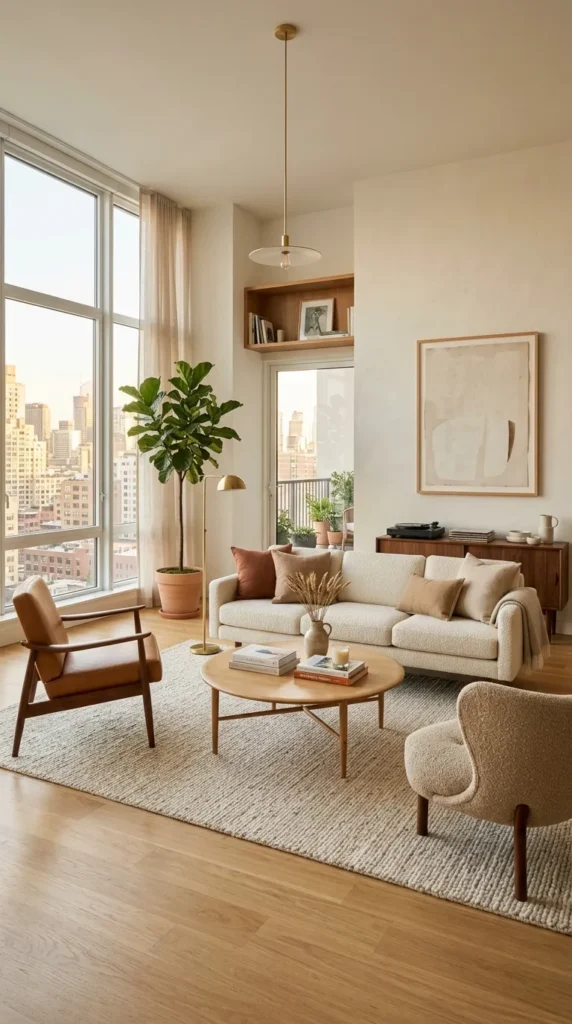
Solid-base furniture without visible legs underneath makes a space feel heavier, more grounded, and more enclosed—the opposite of what you want in a small apartment living room. Furniture with exposed legs—where you can actually see the floor underneath—creates a genuine illusion of more floor space because your eye can literally see the ground beneath it. This is a small design detail that has an outsized impact on how large and airy a space feels.
This principle applies to everything: sofas, chairs, coffee tables, TV consoles, nightstands if your living room opens directly to your bedroom, even shelving units. When you can see floor space under a piece of furniture, the room reads as less crowded. It’s the difference between furniture sitting directly on the floor (which looks heavy and static) and furniture elevated off the floor on visible legs (which looks lighter and more intentional). Aim to elevate everything off the floor by at least 3-4 inches. This measurement might seem small, but it’s genuinely the difference between a room that feels cramped and a room that feels thoughtfully designed. When you’re shopping for furniture in a tiny apartment living room, this becomes a key criteria. Yes, a solid-based ottoman might be cheaper than one with legs, but spending a bit more for furniture with visible legs is one of the best investments you can make for how your space actually feels and functions. It’s a simple design principle, but it works immediately and noticeably.
7. Layer Your Lighting
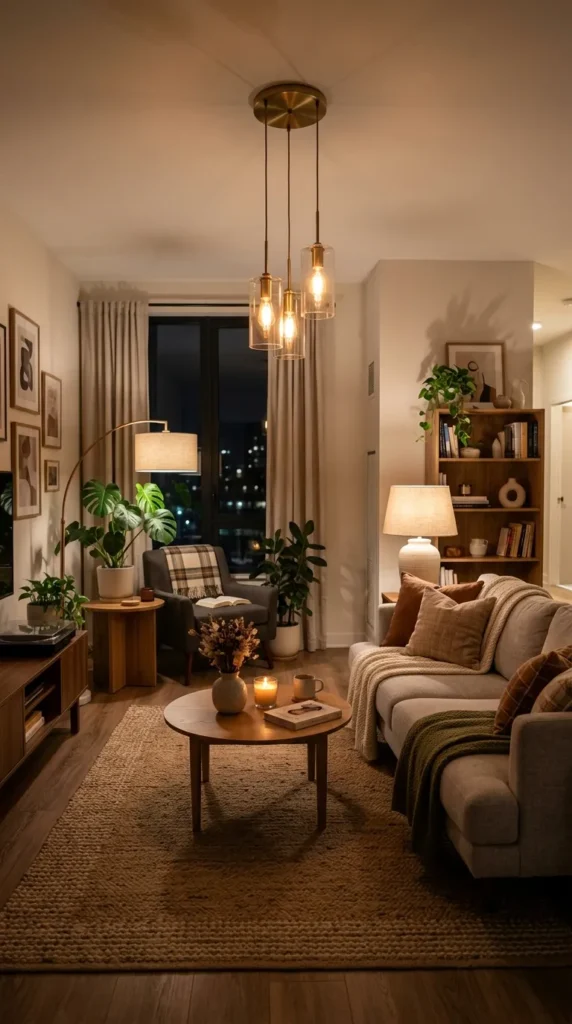
Don’t ever rely on a single overhead light in your apartment living room, no matter how bright it is. A room with only overhead lighting creates harsh shadows, flat-looking spaces, and makes everything feel institutional and uninviting. The quality of light matters as much as the brightness, and single-source lighting can’t deliver what you need in a small space where you want every element to feel intentional and comfortable.
Instead, combine three types of light to create depth and make your tiny living room feel purposefully designed. Ambient lighting is your base layer—this might be an overhead fixture, but it’s just one part of the puzzle, not your only light source. Task lighting is directed light for specific activities, like a floor lamp positioned next to a reading chair where you actually read, or a table lamp on your nightstand if your living room opens to your sleeping area. Accent lighting highlights specific areas or objects—a small table lamp on a floating shelf that illuminates artwork or plants, for example. When you layer these three types together, the room instantly feels cozier, more finished, and more thoughtfully lit. This layering approach also gives you flexibility—you can dim different lights depending on what you’re doing and the mood you want to create. LED bulbs are your friend in this system because they don’t add heat to a small space, they’re incredibly energy-efficient, and they last long enough that you’re not constantly replacing them. This lighting investment pays for itself in how much better your apartment living room looks and feels.
8. Use Mirrors Strategically
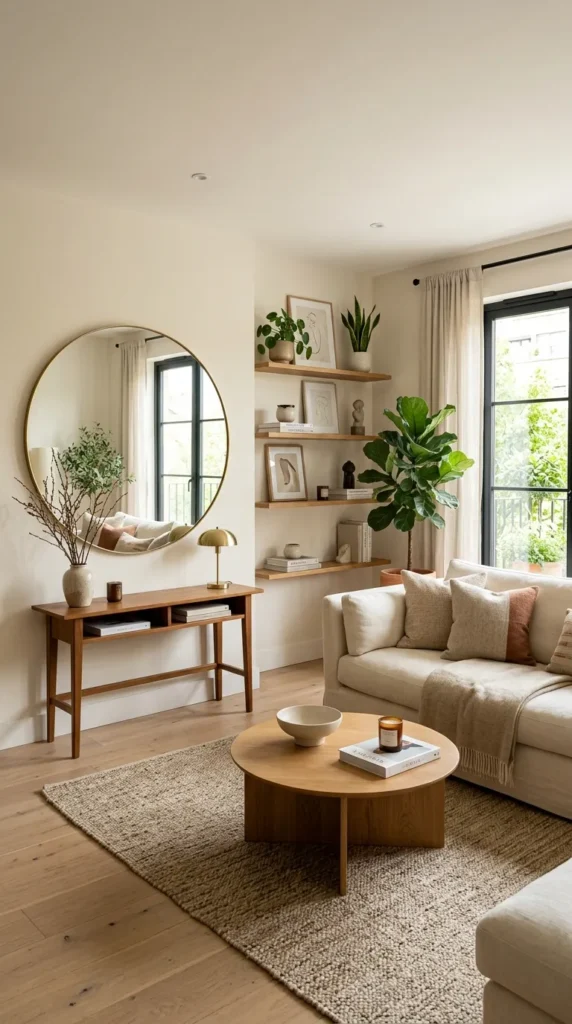
A strategically placed mirror reflects light around your apartment living room and creates a genuine illusion of depth—two things that can transform how a tiny space feels. Light bouncing off a mirror reaches corners that might otherwise feel dark, and reflected views make a small room appear larger than it actually is. The key word here is “strategically” because haphazard mirror placement doesn’t create the effect you want.
Hang a mirror opposite a window so it bounces natural light back into the room, especially useful if you only have one small window. Or position a mirror across from your sofa so it visually expands the seating area and creates the illusion of an additional room beyond. A large mirror on a wall can genuinely make people think the space extends further than it does. That said, avoid mirror walls—covering an entire wall in mirror is overwhelming in a small space and feels more like being in a department store fitting room than in a living room. Instead, use one statement mirror (a large, beautifully framed piece that becomes part of your design) or a few smaller mirrors arranged thoughtfully on a wall. This gives you the light-reflecting and space-expanding benefits without the overwhelming effect of too much reflection. A simple rule: if you can see too much of your reflection when you look around the room, you have too many mirrors. The mirrors should enhance the space, not dominate it.
9. Keep the Coffee Table Small or Skip It
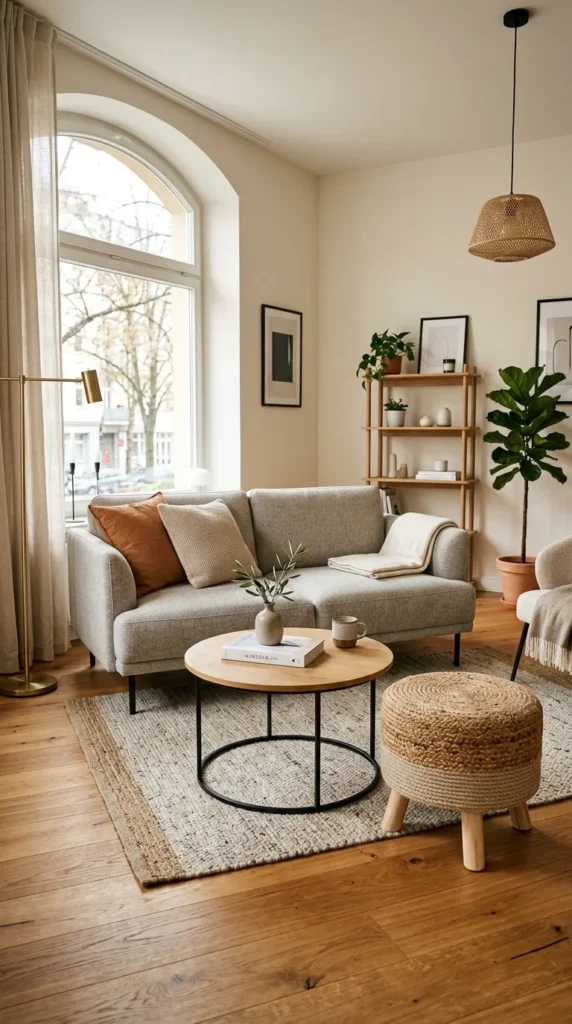
In a tiny apartment living room, a bulky, oversized coffee table steals valuable real estate and can make the space feel cramped before you’ve even arranged your seating. Coffee tables are functional, but they’re also often unnecessary in small spaces, and many design professionals suggest rethinking whether you actually need one. If you do use a coffee table, make sure it’s no wider than 24 inches and preferably under 20. Narrow rectangular designs work better than chunky square tables because they don’t block sightlines across the room.
Some apartment dwellers skip the traditional coffee table entirely and use a small side table next to the sofa instead, which serves exactly the purpose a coffee table does (a place for drinks, remotes, and books) without taking up the center of your living room and forcing you to navigate around it constantly. This is especially practical if you entertain rarely or if you like the flexibility of rearranging your space. If you do want a coffee table, nesting tables are a brilliant solution for tiny living rooms—you get the functionality you want but can tuck one table under the other when you need more floor space for movement or different activities. The point is to think intentionally about what furniture you actually need rather than defaulting to the full set because that’s what you see in design magazines. Your tiny apartment living room doesn’t need a matching coffee table set to feel complete—it needs to function for your actual life.
10. Maximize Storage with Multi-Functional Pieces
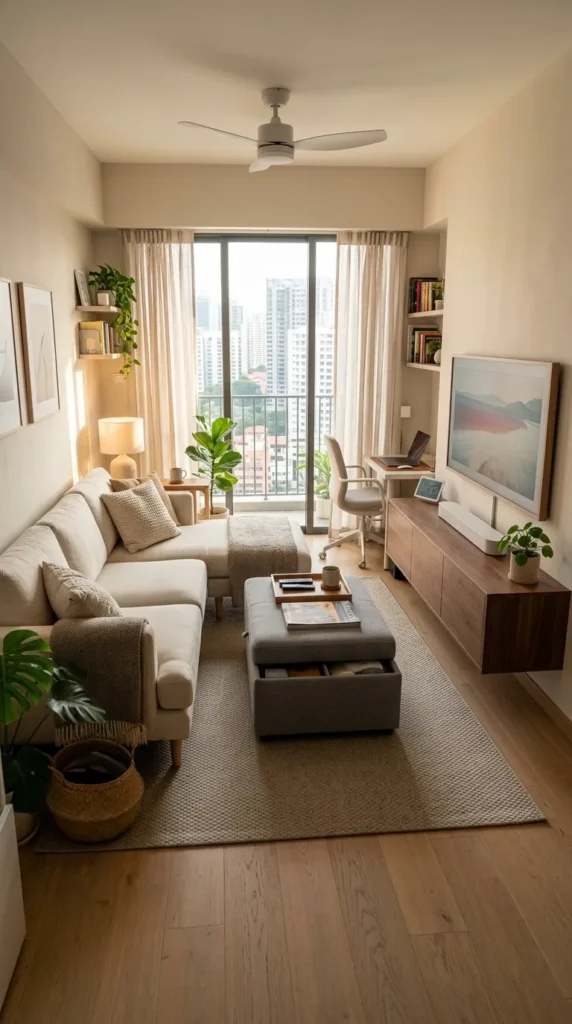
Your small apartment living room needs to work significantly harder than a larger space, which means every piece of furniture should ideally serve multiple purposes. A TV console that’s just a TV console is wasted opportunity. Instead, choose a TV console with drawers and shelves where you can store remotes, streaming device boxes, books, and other items you use in that room. An ottoman that opens for storage is one of the best investments you can make in a small space—it serves as a footrest or additional seating when friends visit, but it also provides hidden storage for throws, pillows, or anything you want out of sight. A narrow wall-mounted desk can function as a console table where you style with plants and artwork, but it also gives you a workspace if you work from home or need a spot for your laptop and papers.
This multi-functional approach transforms how your apartment living room actually functions. Instead of having a wall dedicated to storage and another wall for a desk, you combine purposes and free up your limited square footage. Every item should earn its spot by doing more than one job. Storage doesn’t have to be ugly, either—sleek storage solutions that double as design elements are the key. When your living room is organized with everything having a designated place, the space automatically feels larger and less cluttered. Clutter is the enemy of small spaces, and smart storage solves the clutter problem by giving everything a home. This is truly one of the most practical investments you can make in your tiny apartment living room.
Looking for the perfect palette? Browse 13 Living Room Color Schemes That Work for colors that make any space feel inviting.
11. Declutter Ruthlessly
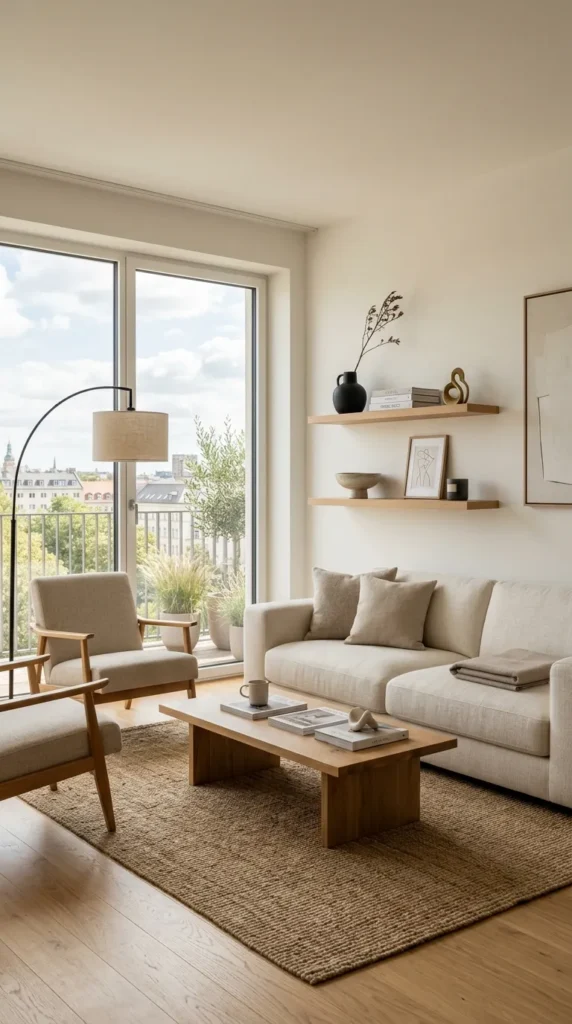
This might sound obvious, but it’s genuinely the most important step in making a tiny living room feel larger and actually livable. A small apartment living room with too much stuff will always feel small and cramped, no matter how good your design decisions are elsewhere. But a small apartment living room with only what you actually use and love feels open, intentional, and genuinely enjoyable to spend time in. The difference is remarkable, and most people underestimate how transformative decluttering actually is.
Go through everything in your living room with brutal honesty. If you haven’t used it in a year, don’t love looking at it, or it doesn’t serve an actual purpose, remove it. This includes decorative items you keep “just in case,” magazines and books you’ll never read, extra remotes for devices you no longer own, and furniture that’s just taking up space because you felt like you needed it. Every object in your apartment living room should either be useful (you actually use it regularly) or beautiful (you love looking at it). If something is neither useful nor beautiful, it’s just taking up space and mental energy. Be especially ruthless with decorative items—one well-chosen piece of artwork or a beautiful plant is infinitely more impactful than five mediocre items scattered around. The goal is a living room where every object earns its spot, where you can walk through without obstacles, and where your eye isn’t overwhelmed by too many competing visual elements. This kind of intentional minimalism isn’t about owning nothing—it’s about owning only things that genuinely matter to you and contribute to the space you want to inhabit.
12. Add Plants (But Don’t Overdo It)
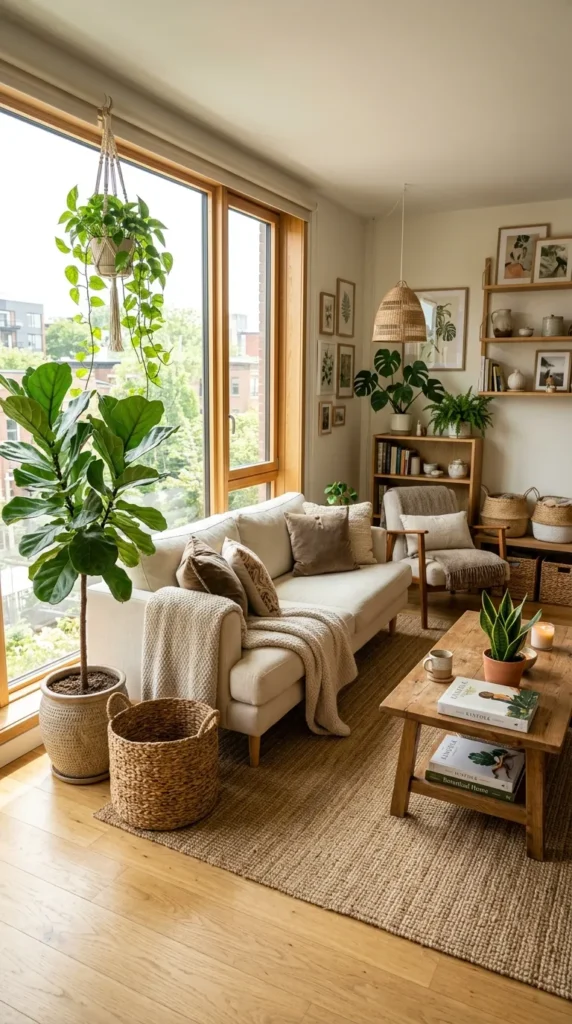
A few well-chosen plants bring life and natural elements into your apartment living room without cluttering the space or making it feel busy and chaotic. Plants add color, texture, freshness, and genuinely improve the quality of the air you’re breathing, which matters when you’re spending a lot of time in a small space. A tall plant standing in a corner draws the eye upward (remember that vertical design principle), a trailing plant on a floating shelf brings organic movement to a shelf display, or a small succulent on your side table adds a pop of green without taking up significant space.
The key is restraint. Avoid the temptation to group dozens of plants on every available surface—that turns your tiny living room into a jungle and creates visual chaos that makes small spaces feel even more cramped. Choose three to five plants maximum for your apartment living room and give them space to breathe. Vary the heights and placement: one tall plant, one medium shelf plant, one trailing plant on a high shelf, maybe a small accent plant on a table. This creates visual interest without overwhelming the space. Real, living plants are genuinely better than artificial plants. Plastic greenery feels heavy, collects dust, and doesn’t have the life-giving quality of actual plants. If you don’t have a lot of natural light, choose low-light plants like pothos or snake plants that thrive in apartments with limited sunlight. The maintenance is minimal, and the payoff in how much better your space feels is significant. Plants are one of those additions that seem optional but genuinely transform small spaces into places that feel alive and welcoming.
13. Choose Artwork That Complements Your Style
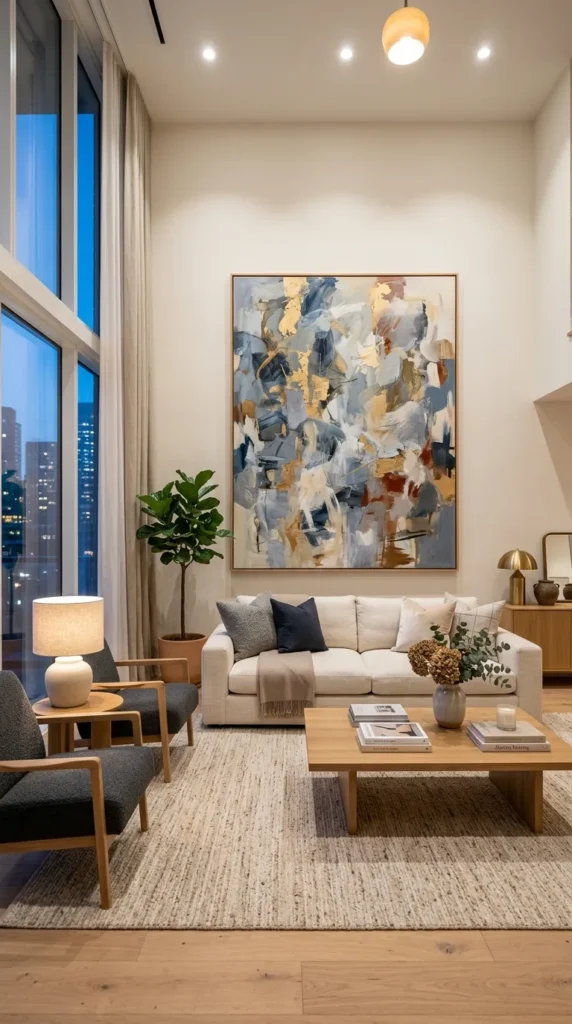
Instead of filling every wall with mismatched artwork that fragments your visual space, choose one or two statement pieces that genuinely reflect your taste and let everything else remain minimal. A large statement artwork can anchor a wall and create a focal point that draws the eye, making your small apartment living room feel more intentional and designed. This is especially powerful if you’ve kept your walls neutral—that statement piece becomes the personality of the room.
A gallery wall can absolutely work in an apartment living room, but the key is keeping it cohesive and intentional rather than random. Consistent frames, a consistent theme (all black and white photography, for example, or botanical prints), and consistent spacing makes a gallery wall feel like a deliberate design choice rather than a collection of things you’ve accumulated. Oversized artwork sometimes works better than several small pieces in a tiny space because it doesn’t fragment the visual space as much as multiple competing pieces do. When you’re looking at wall space in a small room, every visual element matters, and too many small artworks can make the space feel busy and scattered. One or two strong pieces, or a carefully curated gallery wall with clear visual unity, is more impactful than random artwork scattered around. The artwork you choose becomes a focal point that gives your living room character and shows visitors who you are and what you love, without needing to fill every available wall.
14. Keep Window Treatments Simple and Light
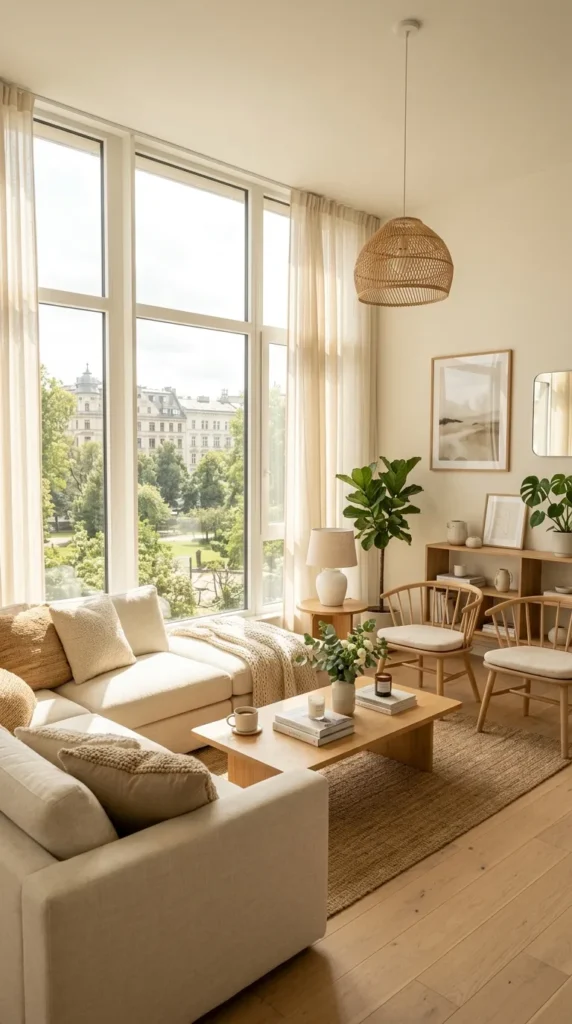
Heavy drapes and thick, dark window coverings make a small space feel cave-like and block natural light, which is one of your most valuable resources in a tiny apartment living room. Instead of heavy fabrics, use sheer curtains, roller shades, or simple linen panels that allow light to filter through while still providing some degree of privacy. Sheer materials let light into the room during the day but still obscure the view from outside when the sun is shining through, which is often enough privacy for apartment living.
If you need more substantial privacy, layer your window treatments: a lightweight sheer under a more opaque shade that you can roll up during the day. This gives you flexibility—you get natural light and an open feeling during the day, but you can close the shade in the evening for privacy. This approach keeps the look clean and minimal while still meeting your functional needs. Avoid heavy valances, swags, and decorative tops on your curtains in a small space—these add visual weight and take up wall space that feels precious in a tiny apartment. Simple, streamlined window treatments let the window itself become a design element rather than making your window treatment the focal point. Light-filtering fabrics in neutral colors are your best bet for keeping your small space feeling open, light, and intentionally designed. Window treatments might seem like a minor detail, but they have an outsized impact on how much natural light your apartment living room receives throughout the day, and natural light is one of the best ways to make a small space feel larger and more livable.
Putting It All Together: A Small Apartment Living Room That Works
Your apartment living room doesn’t need to look like something from a design magazine or compete with someone else’s space. What it actually needs to be is functional for your real life—with comfortable seating where you can actually relax, good layered lighting that makes the space feel intentional and cozy, enough smart storage so you’re not constantly stepping over clutter or feeling like you’re living in chaos, and a design that genuinely reflects who you are and what you value.
Start with the bigger foundational decisions first: how you’re going to arrange your furniture, what color you’re painting your walls, and how you’re going to handle lighting. These three things are the structural foundation of your space. Once you’ve settled those, everything else layers naturally on top. Add personality and warmth through textiles—throw pillows in colors you love, an area rug that anchors your seating arrangement, and window treatments that let light in. Then bring in artwork, plants, and the smaller decorative pieces that make the space feel like it belongs to you. The space will come together organically and intentionally rather than feeling haphazard or overdone.
Remember that a tiny living room in 2026 absolutely does not have to look minimal and cold if that’s not your aesthetic. Minimalism is just one design approach, and it works beautifully for some people, but you can also create a cozy, colorful, eclectic, or sophisticated small apartment living room if that better reflects who you are. The key across all styles is being intentional about what goes in the space and ruthless about what you keep out. Every piece should have a reason for being there—either because it’s useful, because you love looking at it, or because it serves an important design function.
Most people genuinely underestimate how much transformation is possible in their apartment living room with just a few smart, intentional changes. You don’t need to move to a larger place. You don’t need to do an expensive renovation. You just need to work thoughtfully with the space you actually have and stop automatically assuming that small has to feel small. Design a space that functions for your life, that brings you comfort when you’re in it, and that reflects your personality. That’s something you absolutely can do in a tiny apartment living room, and the result is a space that’s genuinely enjoyable to inhabit.