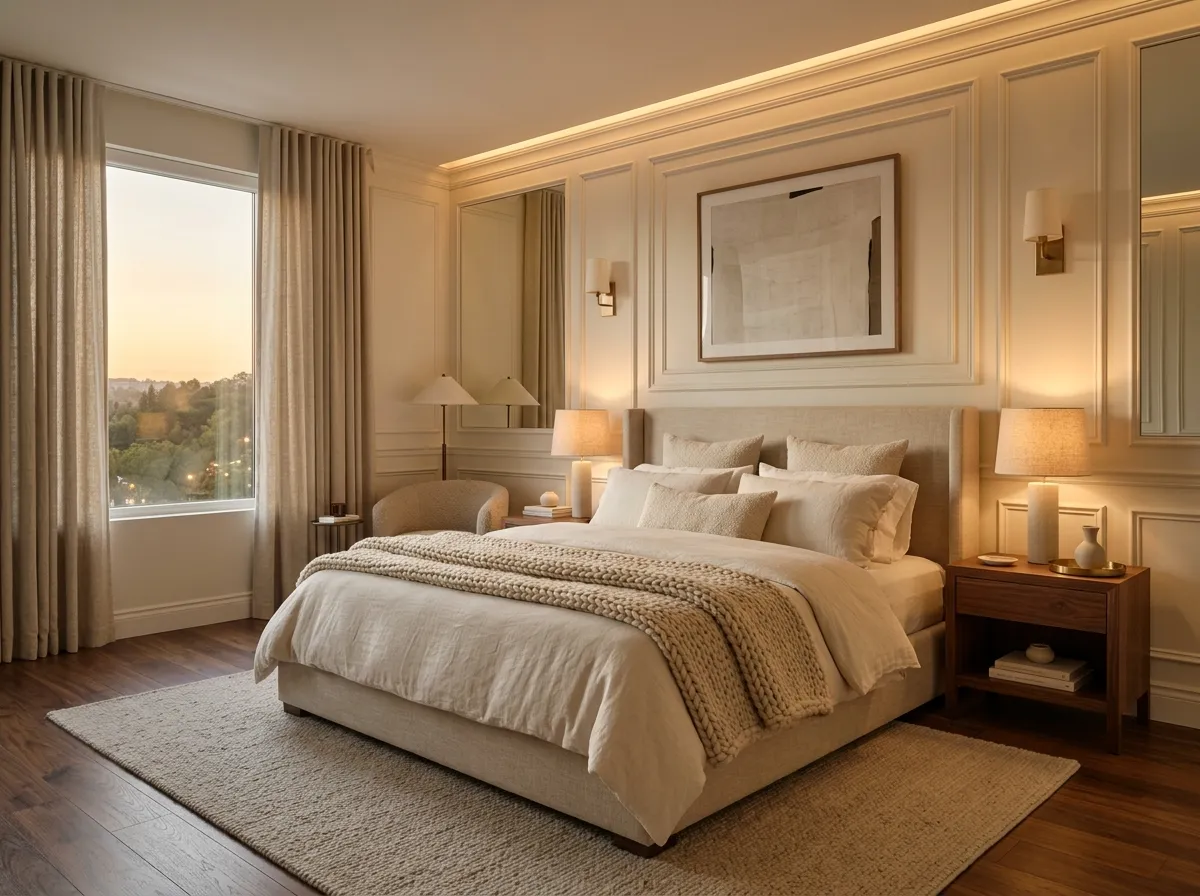
12 Bedroom Lamp Ideas for a Cozy and Relaxing Space
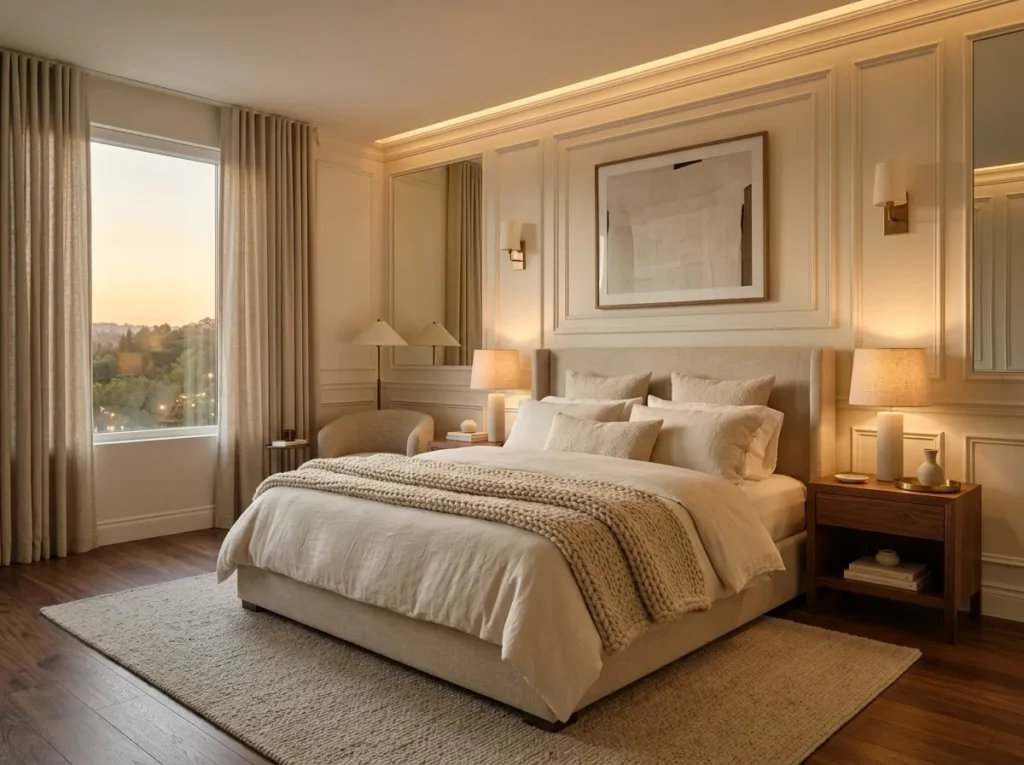
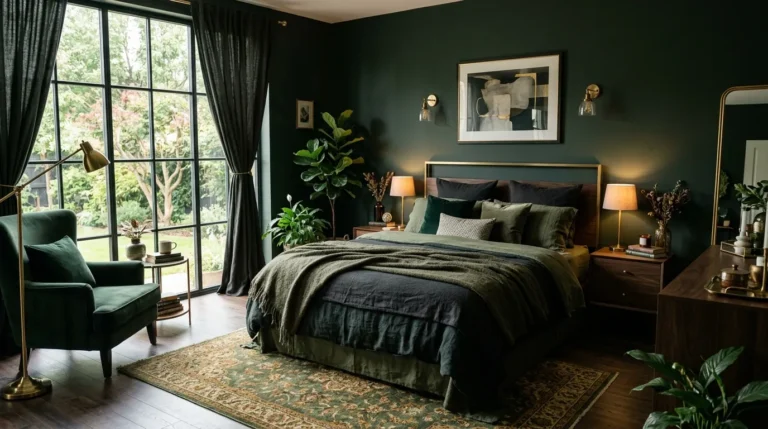
There is a particular moment that happens in almost every bedroom at some point in its life — the moment when someone turns on the overhead light at the end of the day and the room immediately feels wrong. Too bright, too flat, too much like a room being examined rather than a room being rested in. The ceiling fixture that works adequately during the day, when natural light fills the room and the overhead light is merely supplementary, reveals its inadequacy the moment it becomes the primary light source in the evening, because overhead light in a bedroom does something that no bedroom needs: it illuminates everything equally, flattens the room into a single plane of brightness, and eliminates the shadows and the pools of warmth that make a bedroom feel like somewhere the body and the mind can genuinely decompress. The overhead light in a bedroom is a utility fixture. The lamps in a bedroom are the room’s actual character, its atmosphere, its invitation to relax.
What the right bedroom lamp does is not simply illuminate a surface — it creates a territory of warmth within the room, a pool of golden light whose edges dissolve into comfortable darkness, a quality of illumination that the body reads as evening rather than as daytime extension. The difference between a bedroom lit only by overhead light and a bedroom lit by well-chosen lamps is not a difference of degree but a difference of kind — it is the difference between a room that is lit and a room that has atmosphere, between a space that functions and a space that genuinely restores. Every bedroom deserves at least two good lamps, and the twelve ideas here represent every format, every aesthetic, and every functional configuration that the bedroom lamp can take — from the simplest bedside table lamp to the most architectural wall-mounted reading solution.
1. A Matching Pair of Bedside Table Lamps
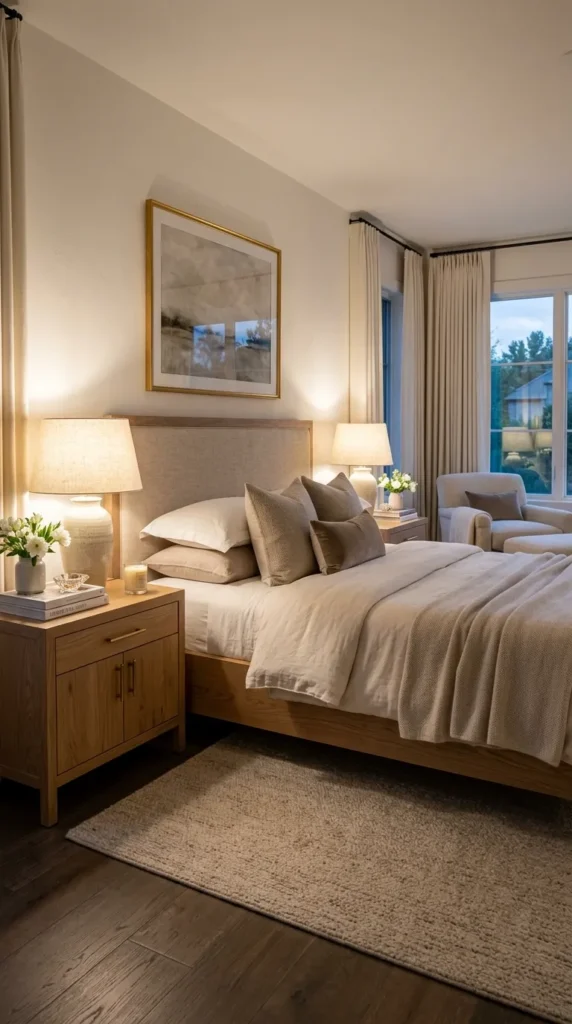
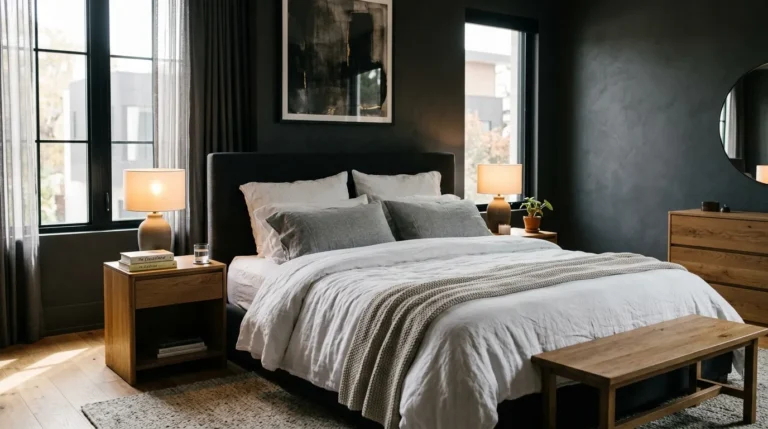
The matching pair of bedside table lamps is the bedroom lighting decision that most people make and that, when it is made well — with genuine attention to the shade height, the base material, the light quality, and the relationship of the lamps to the bed and the bedside tables they sit on — creates a bedroom of immediate visual symmetry and warm, balanced illumination that no other single lighting decision can produce as efficiently. The symmetry of a pair of identical lamps flanking the bed creates a visual composition of satisfying completeness — the bed becomes a framed element between two warm light sources, the bedside tables become equally important rather than one being a lamp surface and one being a flat surface that merely holds a glass of water, and the room acquires the balanced, considered quality of a space that was designed rather than accumulated. A well-chosen pair of bedside lamps also delivers practical benefits of genuine daily value — each occupant of the bed has their own light source for reading, and each light can be switched independently without disturbing the other person in the room.
The selection of a bedside table lamp pair requires decisions about height, shade size, and light quality that together determine whether the lamps work in the bedroom’s specific context. The lamp’s height should position the shade’s bottom edge at approximately shoulder height when the user is sitting up in bed — typically 55 to 65 centimeters from the bedside table surface — so that the light falls onto the book or the phone or the reading material at a useful angle rather than shining directly into the eyes of a reclined reader or casting its light entirely above the bed’s surface. The shade diameter should suit the scale of the bedside table — a shade wider than the table looks precarious and unbalanced, while a shade significantly smaller than the table looks lost and insufficient. A warm white bulb in the 2700K range creates the quality of golden, evening light that bedside lamps should produce, while a higher color temperature creates the cool alertness that suits a desk lamp but actively works against the bedroom’s purpose of promoting relaxation and sleep.
2. A Wall-Mounted Bedside Sconce for Clean Simplicity
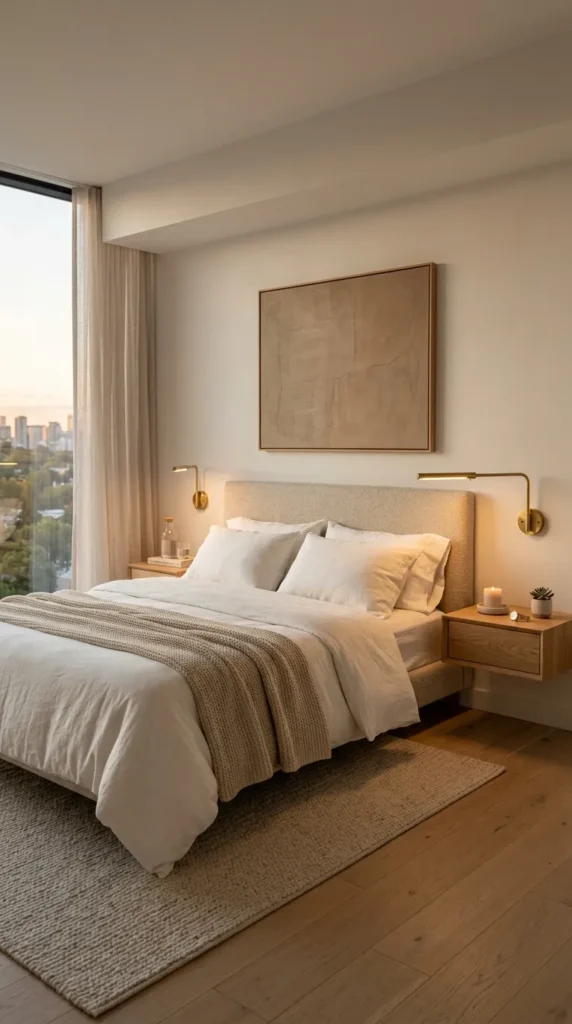
The wall-mounted bedside sconce — a lamp fixture attached directly to the wall beside the bed rather than sitting on a bedside table — solves several bedroom lighting problems simultaneously and creates one that it does not: it frees the bedside table entirely from the obligation to support a lamp, returning that surface to the use of books, glasses, phones, and the other items that compete with a lamp base for the limited surface area that most bedside tables provide. It positions the light source at precisely the height determined by where the sconce is mounted rather than the height of whatever table happens to be beside the bed. It eliminates the lamp’s cord from the bedside table’s visual field, and with a hardwired installation it eliminates visible cords entirely, creating a lamp that appears to emerge cleanly from the wall without any of the cord management that table lamps always require. The visual quality of a well-chosen wall sconce beside a bed is one of architectural simplicity — a designed element that is part of the room’s architecture rather than a piece of furniture placed within it.
The practical decisions involved in installing wall-mounted bedside sconces begin with the wiring — a hardwired sconce requires an electrician to run wiring within the wall to the mounting position, which is straightforward in new construction and more complex in an existing room where walls must be opened or wiring must be channeled to the mounting position. A plug-in wall sconce — one that has a cord running from the fixture down the wall to a baseboard outlet, managed with a cord cover or a painted cable channel — provides the visual benefit of a wall-mounted lamp without the electrical complexity of hardwiring and suits existing bedrooms where rewiring is impractical or undesirable. The mounting height of a bedside sconce should position the shade’s center at approximately 150 to 160 centimeters from the floor — a height that places the light source at a comfortable reading level for someone sitting up in bed against pillows — and the shade or diffuser should direct light downward and toward the bed rather than outward into the room, to create focused reading light rather than general ambient illumination.
3. A Tall Arc Floor Lamp in the Bedroom Corner
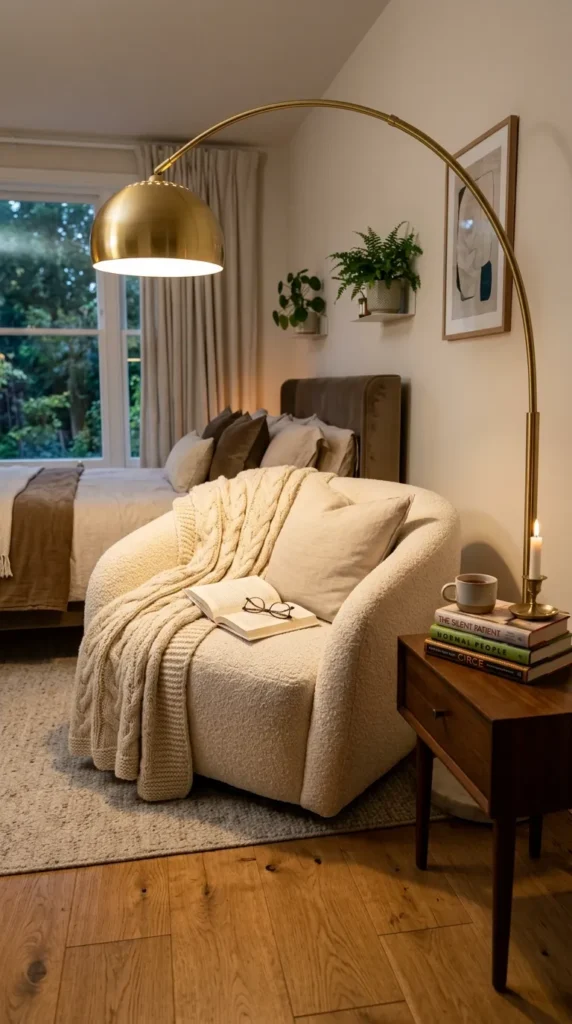
The arc floor lamp — a tall floor lamp whose curved neck extends the light source out over a seating area or a reading chair rather than positioning it above the lamp’s own base — creates a quality of dramatic, architectural presence in a bedroom corner that no table lamp or wall sconce can replicate at the same scale. A large arc lamp positioned behind a bedroom reading chair, its curved neck sweeping overhead to position a generous shade directly above the reader, creates a complete reading environment — chair, lamp, sufficient light — that is self-contained and fully functional without requiring additional furniture or additional light sources to supplement it. The arc lamp’s visual presence in a bedroom corner also creates an anchor for the corner’s composition — a tall, graceful vertical element that gives the bedroom’s floor plan a clear point of interest in the space between the bed and the wall, preventing the corner from reading as empty and unused while contributing an element of genuine design character to the room.
The bedroom arc lamp that works best is one whose scale is genuinely suited to the room’s proportions — an arc lamp too small for the room looks delicate to the point of disappearing, while one that is too large creates an overwhelming presence that dominates rather than complements the room’s other furniture. In a bedroom of standard proportions — roughly 3.5 by 4 meters — an arc lamp whose total height reaches 185 to 200 centimeters and whose arc extends 80 to 100 centimeters horizontally creates the right relationship between the lamp’s scale and the room’s dimensions. The base of the arc lamp must be heavy enough to prevent tipping — arc lamps are inherently top-heavy, and a lightweight base is a safety concern as well as a practical annoyance. Marble, heavy steel, and weighted concrete bases provide the stability that arc lamps require, and the base material can be chosen to coordinate with the bedroom’s material palette.
Layer your lighting beautifully with these 17 Fairy Lights Bedroom Ideas for a cozy bedroom atmosphere.
4. A Ceramic Base Lamp for Artisanal Character
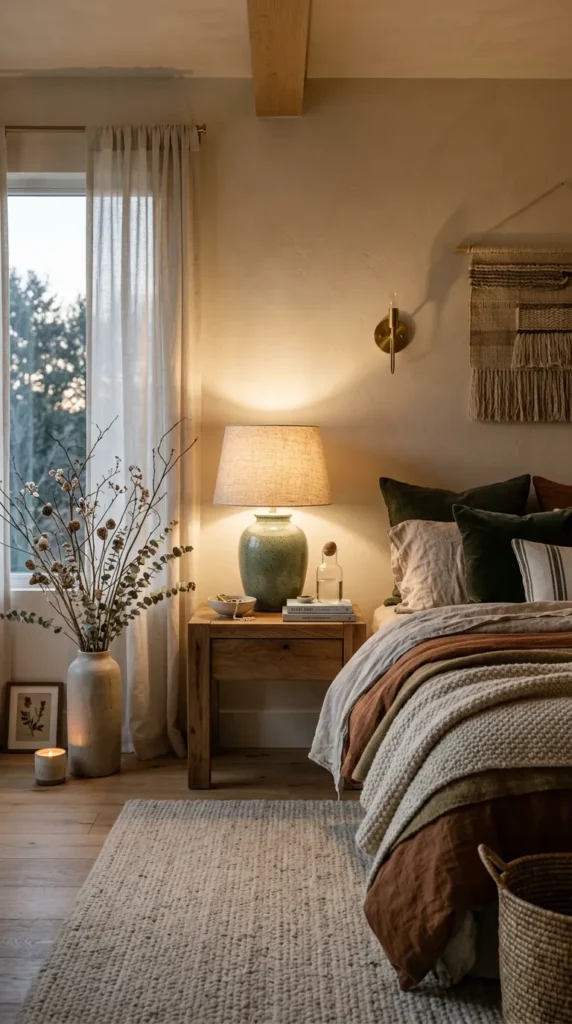
The ceramic base bedside or table lamp is the lamp choice that contributes the most individual character and the most artisanal quality to a bedroom, because ceramic is a material whose production involves the hand of its maker in a way that most lamp base materials do not — the slight irregularity of a hand-thrown form, the variation in a hand-applied glaze, the small imperfections that distinguish a craft object from a manufactured one are all present in a quality ceramic lamp base and give it a quality of genuine individuality that no two ceramic bases share exactly. A bedside lamp with a hand-thrown ceramic base in a beautiful glaze — a warm sage green, a deep navy, a warm terracotta, a cream with a reactive glaze that creates subtle color variation across its surface — is not simply a light source beside the bed but a small piece of ceramic art that is beautiful when switched off as well as when illuminated. This quality of being worth looking at as well as being functional is what distinguishes a lamp that contributes to a bedroom’s character from one that merely occupies a surface.
The pairing of a ceramic base with the right shade is as important as the ceramic itself, because the shade determines the lamp’s light quality and its overall visual proportion as much as the base determines its material character. A simple linen shade in a warm cream or ivory tone suits almost any ceramic base color and creates a warm, golden light that flatters the bedroom’s atmosphere. A shade in a color that picks up one of the tones in the ceramic glaze — a sage shade on a ceramic with sage undertones, a blush shade on a ceramic whose glaze has a pinkish quality — creates a composed, intentional relationship between base and shade that makes the lamp read as a considered design choice rather than a base-and-shade combination assembled from separate purchases. Choose a shade whose height relates to the base’s height in a proportion that feels balanced — a shade that is too tall relative to a short, squat ceramic base looks top-heavy, while a shade too small for a tall ceramic base looks pinched and insufficient.
5. A Rattan or Woven Shade Lamp for Organic Warmth

The rattan or woven shade bedside lamp creates a quality of light that no other shade material quite replicates — a warm, dappled, slightly filtered light that passes through the gaps and the weave of the natural fiber shade and creates a pattern of warmth on the ceiling and walls around it, making the light itself textural rather than simply bright. In a bedroom whose material palette includes natural fibers, timber, linen, and the other organic materials that create warmth and the sense of being close to the natural world, a rattan shade lamp participates in that material language with such naturalness that it looks as if the room was always intended to contain it — as if the organic warmth of the rattan shade was the completing element the room had been waiting for rather than an addition to a room already complete without it. The light quality that a rattan shade creates is also among the most flattering available in a bedroom setting — the dappled, warm quality of the light it casts creates the atmosphere of a room lit by candlelight rather than electricity, which is the atmosphere that bedrooms benefit from most during the evening hours.
The practical consideration with rattan and woven shades in a bedroom is the shade’s density — very tightly woven shades allow less light through their surface and create a dimmer, more atmospheric quality of general illumination, while more loosely woven shades allow more light through and create a brighter, more patterned quality of light with a more visible dappling effect on surrounding surfaces. The choice between these depends on whether the lamp is the primary light source in its zone of the bedroom or one of several light sources whose combined illumination is adequate for reading and other tasks — a tightly woven rattan shade that creates atmospheric dimness is beautiful and appropriate if the room has other light sources to supplement it, but inadequate as the only light source in a bedroom where reading in bed is a regular activity. Pair a rattan shade with a warm Edison or warm white LED bulb rather than a cool white one, as the cool light of higher color temperature bulbs conflicts with the warm, organic character of the rattan material in a way that warm light does not.
6. A Adjustable Reading Lamp Mounted at the Bedside
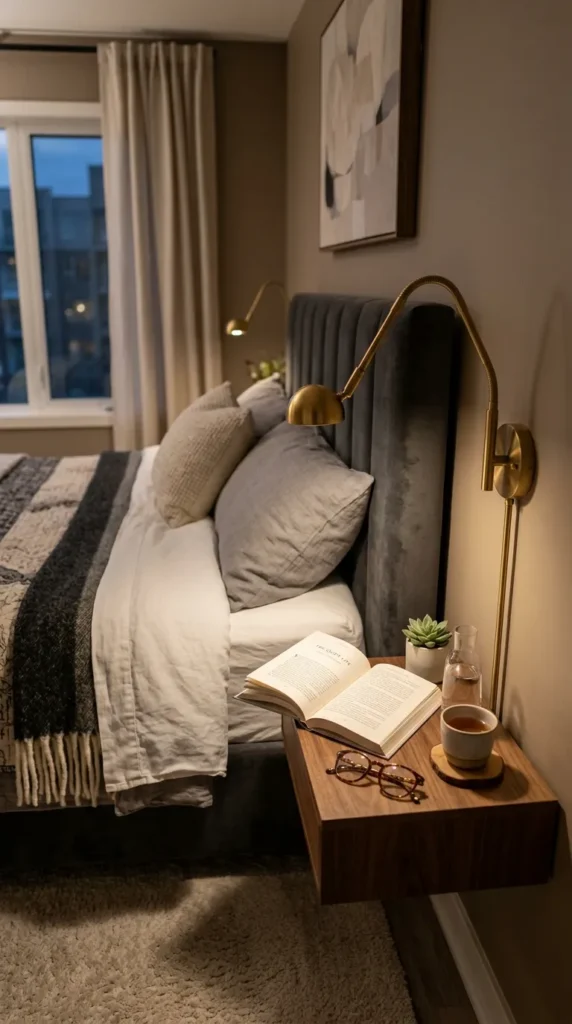
The adjustable reading lamp — whether wall-mounted with a swing arm, table-mounted with a flexible neck, or clipped to the headboard with a book light — is the most honestly functional bedroom lamp format available, the one that most directly serves the specific activity that most people do in bed most frequently and that most bedroom lighting fails to serve adequately. Reading in bed with a fixed overhead bedside lamp requires either a lamp position that illuminates the book well but shines directly into the eyes of the reader when they look up, or a lamp position that avoids the eyes but fails to illuminate the book with adequate clarity for comfortable extended reading. An adjustable lamp solves this problem by allowing the light source to be directed precisely at the reading material and repositioned as the reader’s position changes — sitting up straight, reclined against pillows, lying on one side — without requiring the lamp itself to be moved. The result is a reading experience of genuine comfort and genuine adequacy that fixed bedside lamps rarely provide.
The adjustable bedside reading lamps that work best in a bedroom context are those that combine genuine adjustability with sufficient design quality to contribute to the bedroom’s aesthetic rather than reading as purely utilitarian equipment. A swing-arm wall sconce in aged brass or matte black with a simple directional shade brings the aesthetic quality of a considered design object to the functional form of an adjustable reading lamp — it looks at home on a bedroom wall rather than suggesting a hospital bed or a desk environment. A table lamp with a flexible articulated neck in a warm material — a brass or copper neck with a simple shade — provides adjustability at the bedside table surface without requiring wall mounting. The minimum standard for a bedroom reading lamp is that it provides enough light — at least 40 to 60 watts equivalent in LED — directed precisely at the reading material to allow comfortable extended reading without eye strain, a standard that atmospheric bedside lamps often fail and that an adjustable reading lamp is specifically designed to meet.
7. A Table Lamp With a Linen Shade for Classic Warmth
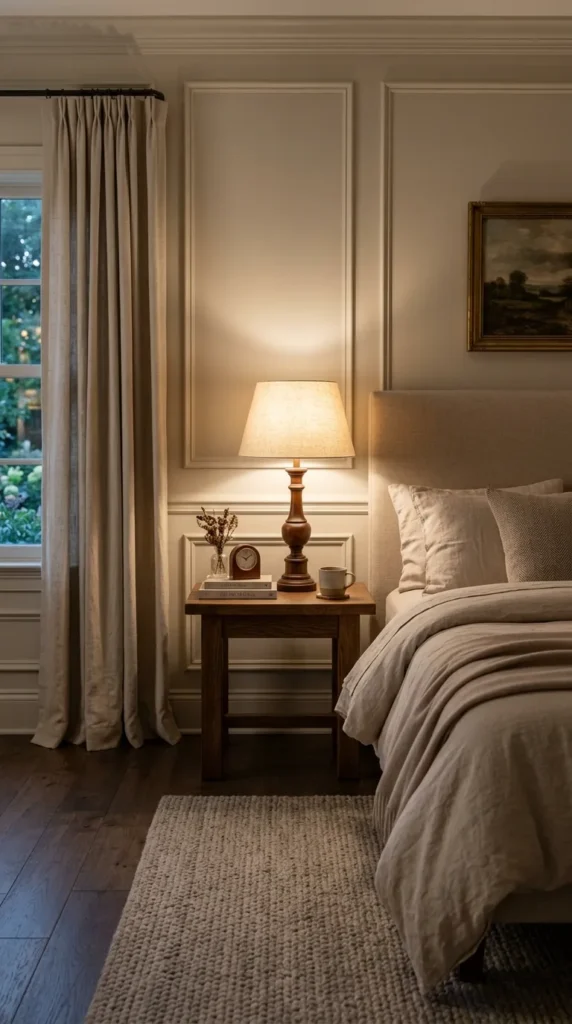
The table lamp with a natural linen shade is the bedroom lamp choice that has earned its place through decades of consistent performance in the role it is asked to play — providing warm, diffused, golden-toned light from a bedside or dresser surface in a form whose visual character suits almost any bedroom aesthetic from the most traditional to the most contemporary. The linen shade’s translucency is the quality that determines its light character — the light passing through natural linen acquires a warmth and a slight amber quality from the fabric’s natural color that transforms even a relatively neutral bulb into a source of genuinely golden, evening-quality illumination. The shade’s slight texture — the visible weave of the linen, the subtle variation in its surface — creates a visual interest at close range that a plain white synthetic shade lacks, and the natural, organic quality of the material suits the bedroom’s domestic character in a way that more manufactured-feeling shade materials do not. A linen shade on a well-chosen base — timber, brass, ceramic, or marble — creates a bedside lamp of quiet, enduring elegance that suits the bedroom’s purpose of rest and restoration with complete naturalness.
The care of a linen shade in a bedroom requires more attention than a synthetic shade, but less than most people fear — linen shades collect dust on their surface in the same way as any fabric surface, and a gentle wipe with a barely damp cloth or a light pass with the brush attachment of a vacuum removes accumulated dust without damaging the material. Linen shades are susceptible to water marks if cleaned with a wet cloth rather than a barely damp one, and the shade should be allowed to dry completely if any moisture is used in its cleaning before the lamp is switched on again. The natural color of linen shades varies between manufacturers and between batches of the same manufacturer’s products — an ivory linen shade has a different quality of light from a natural ecru shade, which differs again from a bleached white linen shade — and these differences are worth attending to when replacing one shade in a matched pair, where a slight color difference between the two shades is immediately visible in the symmetrical composition they create at the bedside.
8. A Sculptural Base Lamp as a Bedroom Statement Piece
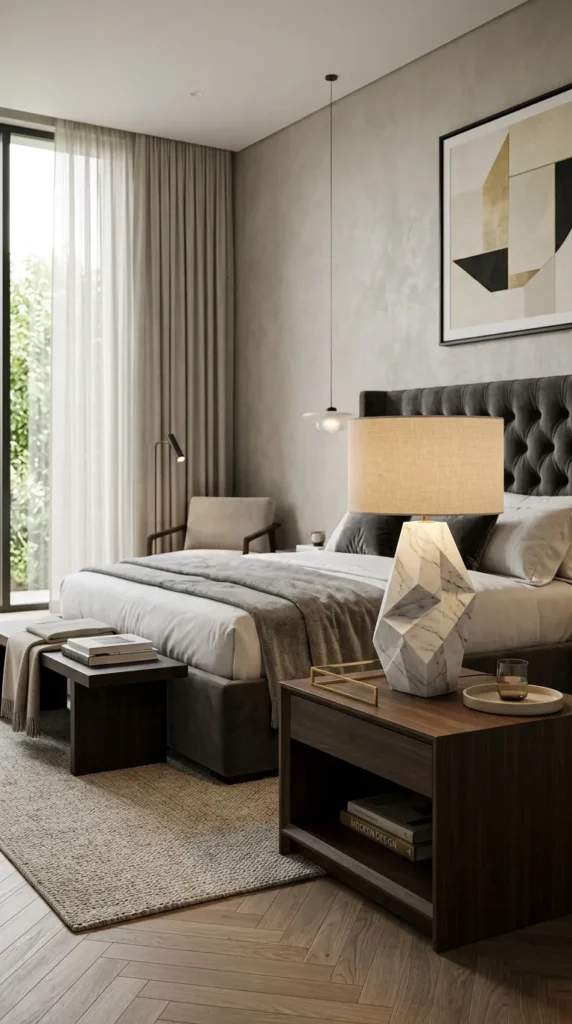
Not every bedroom lamp needs to be quietly appropriate — to blend into the room’s material palette, to provide its light without drawing attention to itself as an object, to earn its place through its useful illumination rather than through the quality of its form. The sculptural base lamp — a lamp whose base is itself a designed object of genuine visual interest, whose form is distinctive enough to be worth looking at when the lamp is switched off and whose material is rich enough to be worth touching — earns its place in the bedroom through both its functional contribution and its contribution to the room’s visual character as a designed object. A bedside lamp with a base in the form of a geometric abstraction in polished marble, a sinuous organic form in cast bronze, a stacked disc composition in warm timber, or a single dramatic vessel in a deeply glazed ceramic — each of these creates a bedside presence of genuine character that adds to the bedroom’s design intelligence in a way that a conventional lamp base cannot.
The sculptural lamp base works best in a bedroom that has space for it to be seen and appreciated — a bedside table large enough that the base can be surrounded by a small amount of clear space rather than crowded by the accumulated objects of daily bedside use, and a room whose overall character is composed enough that the sculptural lamp can read as a deliberate design element rather than as a visually demanding piece that competes with other demanding elements in a room already overfull of design intention. A bedroom of relative simplicity and restraint — plain walls, simple bedding, minimal furniture — is the context in which a sculptural bedside lamp makes its fullest contribution, because the visual quiet of the surrounding room gives the lamp’s form the breathing space and the attention that its quality deserves. In a bedroom already full of pattern, texture, and visual complexity, even the most beautiful sculptural lamp base becomes one more competing element rather than a singular point of designed character.
9. A Plug-In Pendant Lamp as a Bedside Light
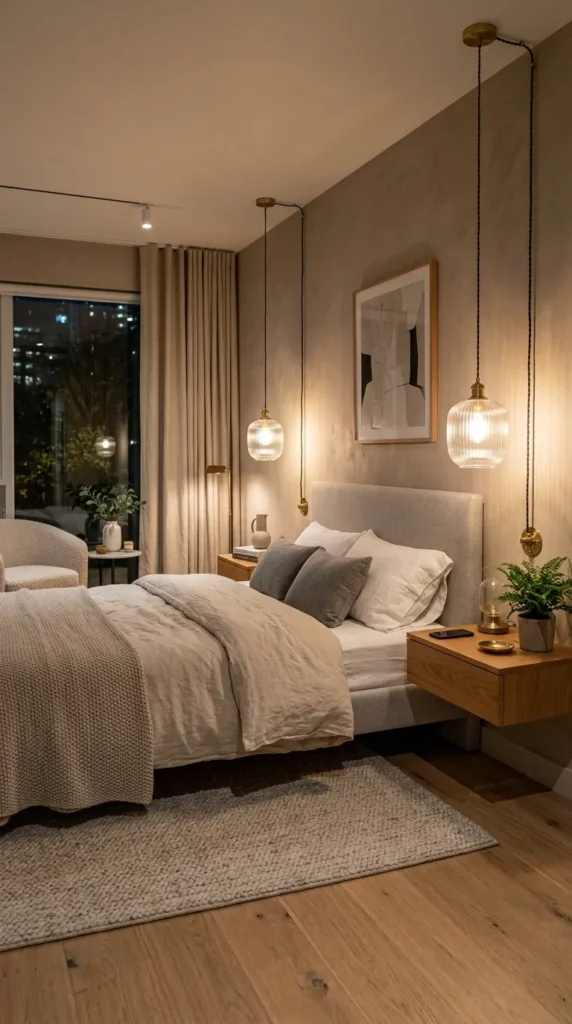
The pendant lamp hung at bedside height — a ceiling pendant light fitted with a long cord that runs from a ceiling hook or a wall hook down to a plug at the baseboard, hanging the shade at bedside reading height without requiring any hardwired installation — creates the visual impact and the design quality of a properly installed pendant bedside light at the cost and the installation complexity of hanging a picture. A plug-in pendant in a beautiful shade — a simple glass globe, a ceramic form, a paper lantern, a woven rattan ball — hung at each side of the bed creates a bedroom of dramatic, considered design character that the conventional table lamp arrangement simply cannot achieve at equivalent cost, because the pendant’s suspension from above gives the bedside light a quality of architectural presence that a lamp sitting on a surface cannot match. The cords that run from the hanging pendant down to the baseboard outlet can be managed with cord covers painted to match the wall, creating a clean, designed appearance that disguises the plug-in nature of the installation.
The practical design of a plug-in pendant bedside lamp requires decisions about hanging height — the shade’s bottom should hang at approximately 140 to 150 centimeters from the floor, positioning the light source at comfortable reading height for someone sitting up in bed — and about shade type, which determines both the light quality and the visual character of the pendant. A globe shade in clear or smoked glass creates a decorative, contemporary quality and allows the bulb itself to be a design element — a visible Edison bulb in a clear glass globe creates a warm, filament-visible quality of light that suits bedrooms with an industrial or vintage aesthetic. A ceramic or porcelain shade in a simple form creates a material quality and a light distribution that suits bedrooms with more artisanal or organic design directions. A fabric shade in linen or cotton creates the warmest, most diffused light quality and the most domestic character — the pendant that looks most like a lamp that belongs in a bedroom rather than one adapted from another context.
10. A Vintage or Antique Lamp for Bedroom Character
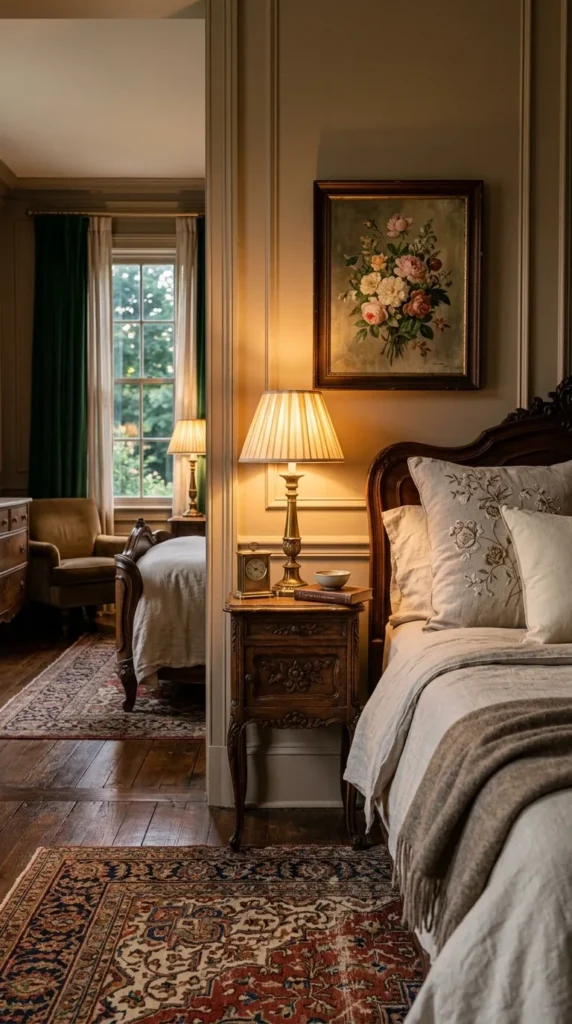
A vintage or antique lamp in a bedroom does something that no new lamp, however beautifully designed, can replicate — it brings the quality of genuine time into the room, the evidence of existence and use before the present owner, the slight patina and the small imperfections that distinguish an object that has been in the world for decades from one that arrived from a factory last month. A vintage brass lamp whose lacquer has worn unevenly and whose base has acquired the warm patina of aged metal. An antique ceramic table lamp in a glaze that no contemporary manufacturer reproduces exactly, whose form reflects the design sensibility of a specific decade and a specific place. A mid-century timber and brass standard lamp whose proportions and materials carry the design intelligence of an era that took its domestic objects seriously. Each of these brings a quality of character and history to a bedroom that makes the room feel genuinely inhabited — a room that has been assembled over time from objects chosen for their individual beauty and meaning rather than purchased simultaneously from a single source with a single design direction.
Finding vintage and antique lamps for a bedroom requires patience and an opportunistic approach — the lamp that is right for the specific bedroom will not always be available at the moment it is needed, and the search involves charity shops, antique markets, estate sales, online marketplaces, and the occasional serendipitous encounter in an unexpected place. When a vintage lamp is found whose base, proportions, and overall character suit the bedroom, the shade can almost always be replaced with a new one that modernizes the lamp without losing its vintage character — a new linen shade on an antique ceramic base, a simple white shade on a mid-century brass standard, creates a lamp that combines the character of the old with the practicality and the light quality of the new. Have vintage lamps checked by an electrician before use if their wiring is original and their age is uncertain, as the wiring of older lamps sometimes requires replacement for safety reasons that have no visible external evidence.
Complete your bedside setup with these 13 Bedroom Wall Decor Ideas for a stylish and personalized space.
11. A Dimmer-Controlled Lamp System for Versatile Bedroom Lighting
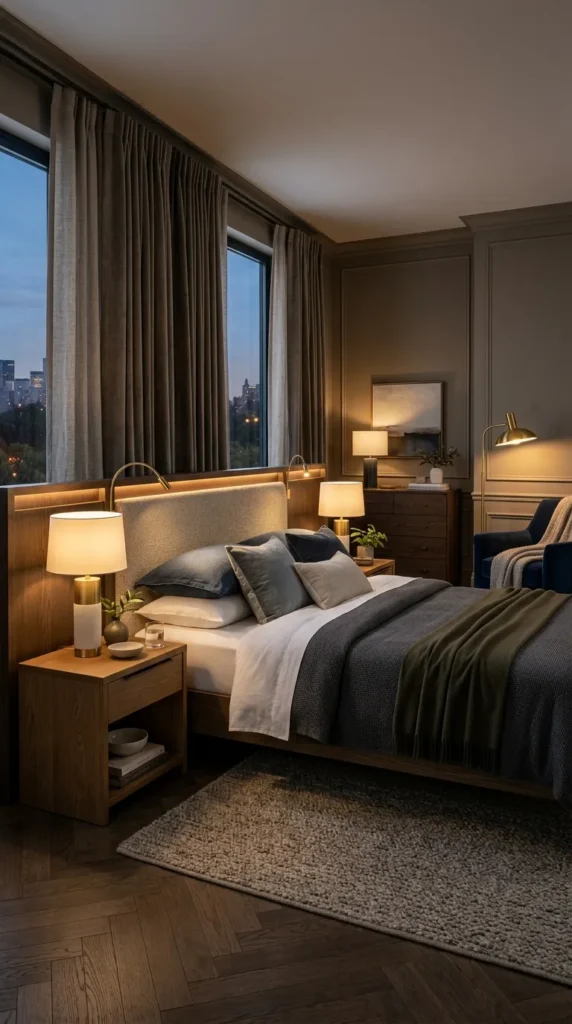
The bedroom lamp that is connected to a dimmer switch is categorically more useful than the same lamp without one, and the difference between a bedroom whose lamps can be dimmed and one whose lamps operate only at full brightness is experienced every single evening in the hours between arriving home and falling asleep. The bedroom’s lighting needs change dramatically across these hours bright enough for getting dressed and finding things in wardrobes in the earlier evening, warm and moderate for reading in bed before sleep, as dim as possible for the moments of transition into sleep when any light feels intrusive and a lamp that operates only at full brightness serves the first of these needs adequately and the other two poorly. A dimmer-controlled lamp serves all three with a single fixture, allowing the light level to be adjusted to precisely the quality each activity and each moment of the evening requires without switching between multiple lamps or compromising any activity with light levels designed for a different purpose.
The installation of dimmer control for bedroom lamps requires that the lamp’s bulb is compatible with dimming — LED bulbs vary significantly in their dimming performance, and only LED bulbs specifically labeled as dimmable should be used with dimmer switches, as non-dimmable LED bulbs connected to dimmers flicker, buzz, or fail prematurely in ways that neither illuminate adequately nor last as long as their specification promises. Smart bulbs LED bulbs controlled via a phone app or a voice assistant rather than a conventional dimmer switch provide dimming capability in any lamp with a standard bulb socket without requiring any electrical modification to the lamp or the wall switch, and allow the bedroom’s light levels to be adjusted from the bed without getting up, which is the quality that makes them particularly valuable in a bedroom context where the last thing anyone wants to do after achieving a comfortable reading position is get up to adjust a wall dimmer. The warmest available smart bulbs those capable of reducing their color temperature to 1800K to 2200K at their lowest settings create a firelight-quality of warm, amber illumination at the bedside that is the most sleep-promoting artificial light available.
12. A Floor Lamp in the Bedroom Corner for Ambient Fill
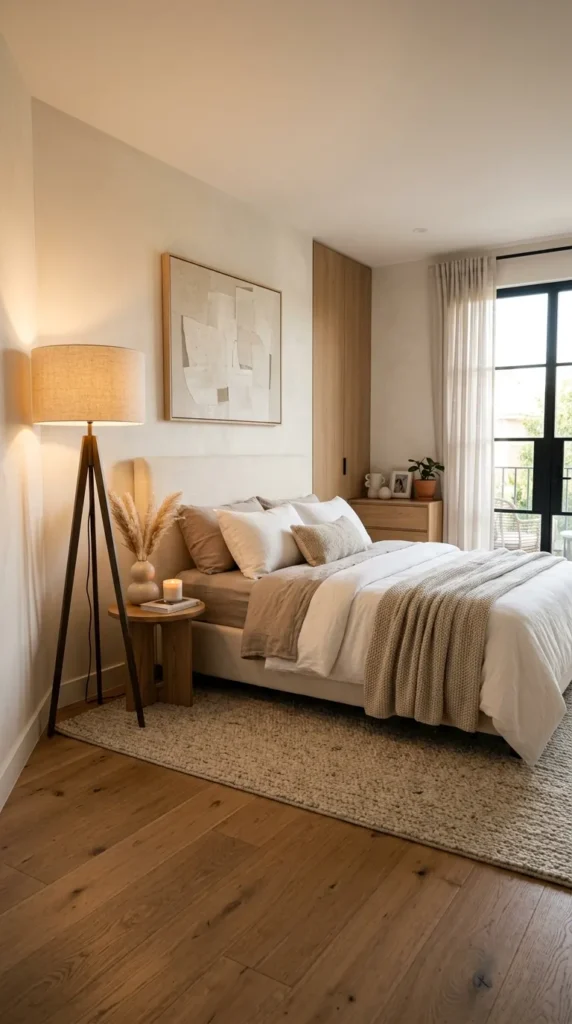
The bedroom floor lamp positioned in a corner not over a reading chair, not beside the bed, but in the corner of the room where its light bounces off two walls simultaneously and fills the room’s ambient light level without creating a single directed source creates a quality of background illumination that complements the focused warmth of bedside lamps with a gentle, room-filling light whose source is peripheral rather than central. The corner floor lamp is the lamp that prevents the bedroom from having areas of deep darkness at its edges and corners while the bedside lamps create intense pools of light at the room’s center, which is the lighting condition that makes a bedroom feel cave-like rather than warmly lit despite the presence of adequate bedside lighting. A torchière floor lamp one that directs its light upward toward the ceiling, which then bounces it back down as a soft, diffused ambient fill is particularly effective in this role because its light is genuinely ambient rather than directional, filling the room’s upper air and ceiling with warm reflected light rather than creating a visible source of illumination at floor level.
The floor lamp that suits a bedroom corner is one whose design suits the bedroom’s overall aesthetic without demanding the same level of design attention as the bedside lamps that occupy the room’s primary visual focus. A simple, slender floor lamp in a warm metal finish aged brass, brushed gold, warm bronze with a plain linen shade creates a composed, undemanding presence in the corner that contributes light and visual warmth without competing with the room’s other design elements. A rattan floor lamp whose woven shade creates the dappled, organic quality of light that suits the bedroom’s restful character adds material warmth to the corner’s ambient contribution. The floor lamp’s switch should be placed at a height convenient to operate from a standing position rather than requiring a floor-level reach — or the lamp should be connected to a wall outlet controlled by a wall switch, or fitted with a smart plug that allows it to be switched on and off from the bed using a phone or a voice assistant, eliminating the last-thing-at-night trip across the darkened bedroom that an inconveniently positioned switch always creates.
Choosing the Lamps That Make Your Bedroom Feel Like Yours
The bedroom lamps that make the most difference to how the room feels are not necessarily the most expensive ones or the most designed ones they are the ones that provide the right quality of light in the right positions for the specific activities that happen in the specific bedroom they inhabit, and that do so in materials and forms that suit the room’s aesthetic with enough coherence to feel chosen rather than assembled. Start with the light quality warm, dimmable, directed where the activities of the bedroom require it and then choose the lamp forms and materials that deliver that quality in a way that suits the room’s character. A bedroom whose lamps are chosen for their light quality first and their appearance second will always feel better to spend time in than one whose lamps were chosen for their appearance alone and whose light quality was an afterthought.
The bedroom deserves the same level of lighting thought that any other important room in the home receives, and the investment in lamps that genuinely work that provide the right light for reading, for getting dressed, for the transition into sleep, and for the quiet hours of a weekend morning when the bedroom is the whole world is an investment that pays back every single evening for as long as the lamps remain in the room. Good bedroom lighting is not a luxury. It is the difference between a room that functions and a room that restores, and restoration is precisely what a bedroom is for.