21 Cottage Living Room Ideas
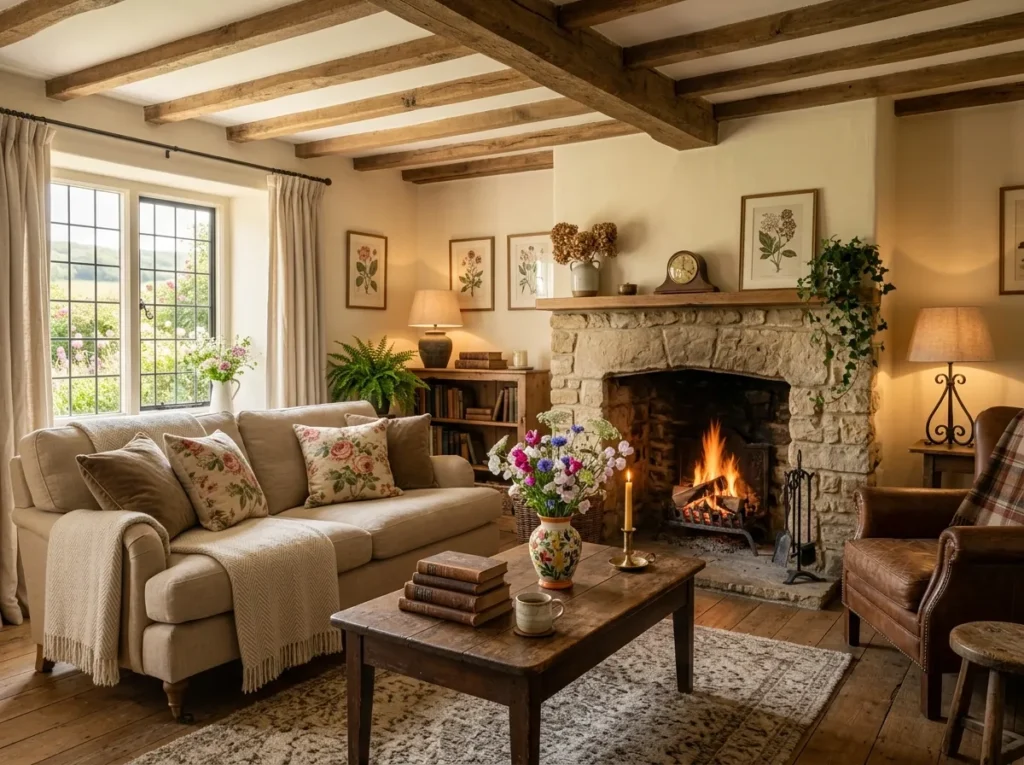
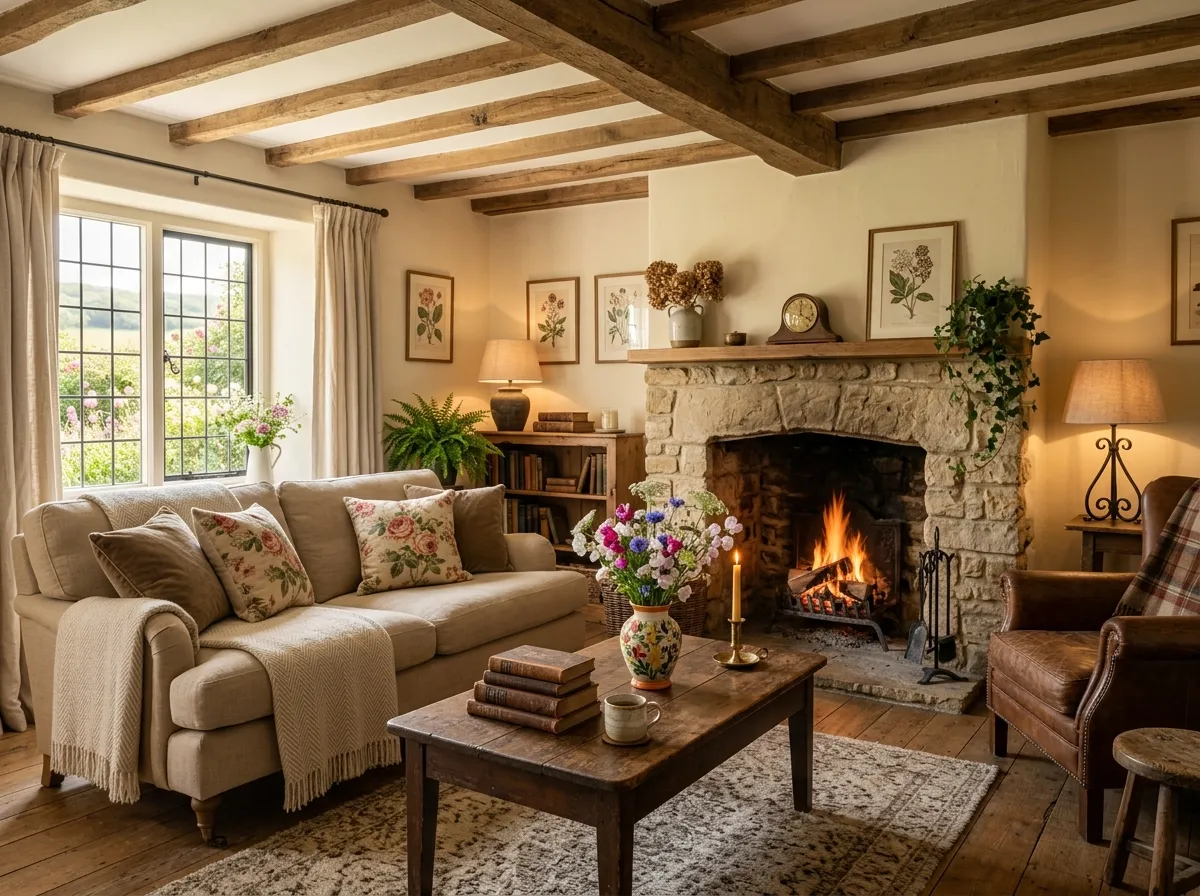
A cottage living room is about one thing. Making people feel welcomed the moment they walk in. Not impressing them. Not showcasing your design taste. Actually making them feel like they belong in your space and that you are genuinely happy they are there. That is what cottage aesthetic achieves when done right. It is fundamentally about hospitality. Everything in a cottage living room should say you live here and you are happy to have others here too. The space should feel like you are walking into someone’s actual home not someone’s design statement. These twenty-one cottage living room ideas explore how to create spaces that feel genuinely warm, genuinely lived in, and genuinely welcoming. Not precious or fussy. Not decorated for show. Just genuinely comfortable places where people want to spend time. Let me show you how to make it actually work.
1. Warm Color Palette That Feels Like a Hug
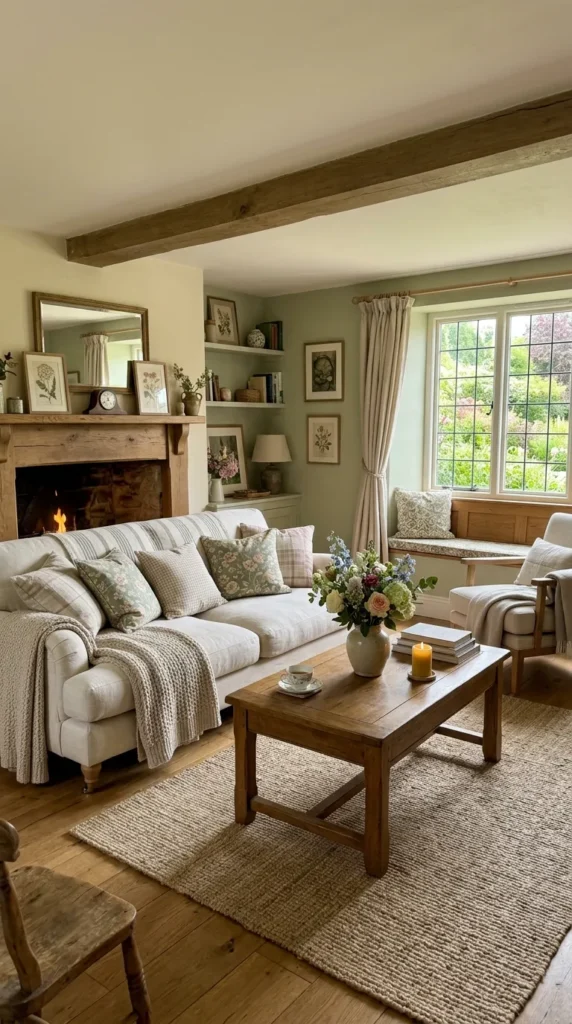
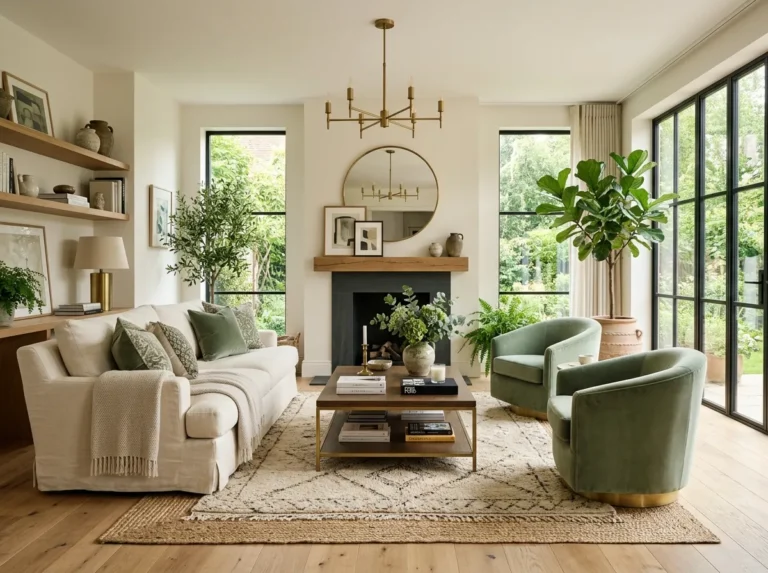
Start with colors that feel warm and inviting. Warm creams, soft whites with yellow undertones, warm greys, soft sage green, dusty rose, warm terracotta. Colors that come from nature. Colors that make you want to sit down and stay. Not clinical white. Not trendy gray. Warm colors that actually feel welcoming.
Paint walls in colors that make you genuinely happy. A soft cream with warm undertones feels inviting. A warm sage makes you think of gardens and comfort. A dusty rose brings personality. The color should make people feel like they are being hugged not like they are in a showroom. Choose one warm color and commit to it. The warmth is what creates the cottage feeling.
2. Comfortable Seating You Actually Want to Sit In
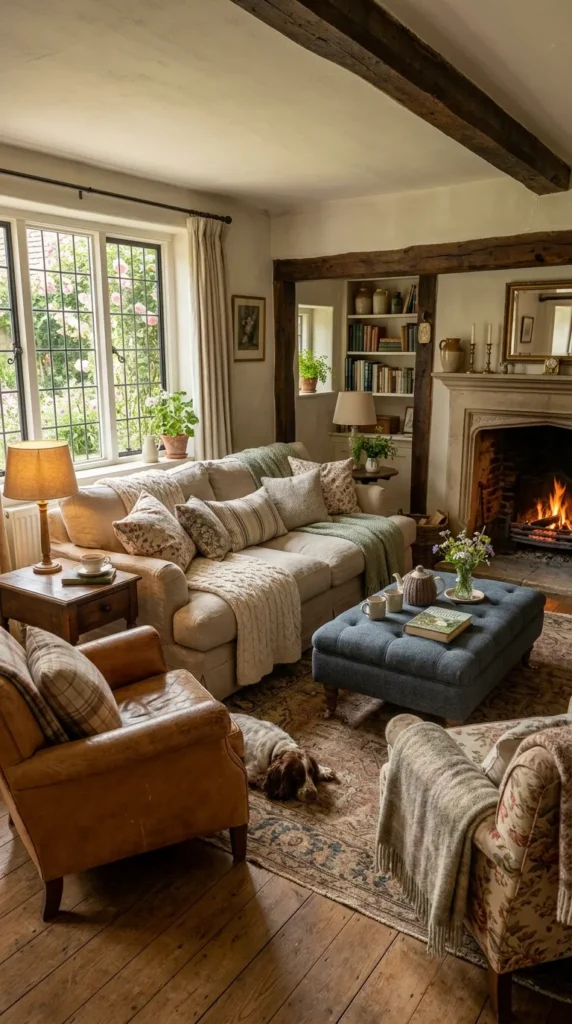
Cottage living rooms are made for sitting. Not perching on the edge of a designer sofa. Actually sitting with your legs tucked under you. Soft upholstered chairs that are deep enough to sink into. Sofas with down cushions that mold to your body. Ottoman footstools for actual foot elevation. Oversized chairs in natural fabrics that look like they have been loved and used.
Comfort matters more than appearance. A worn linen chair that is genuinely comfortable beats a perfect chair you avoid. The furniture should show signs of use. That is not failure. That is proof the space is actually lived in. Choose furniture specifically for comfort not for how it photographs.
3. Layered Lighting Creating Warmth Not Brightness
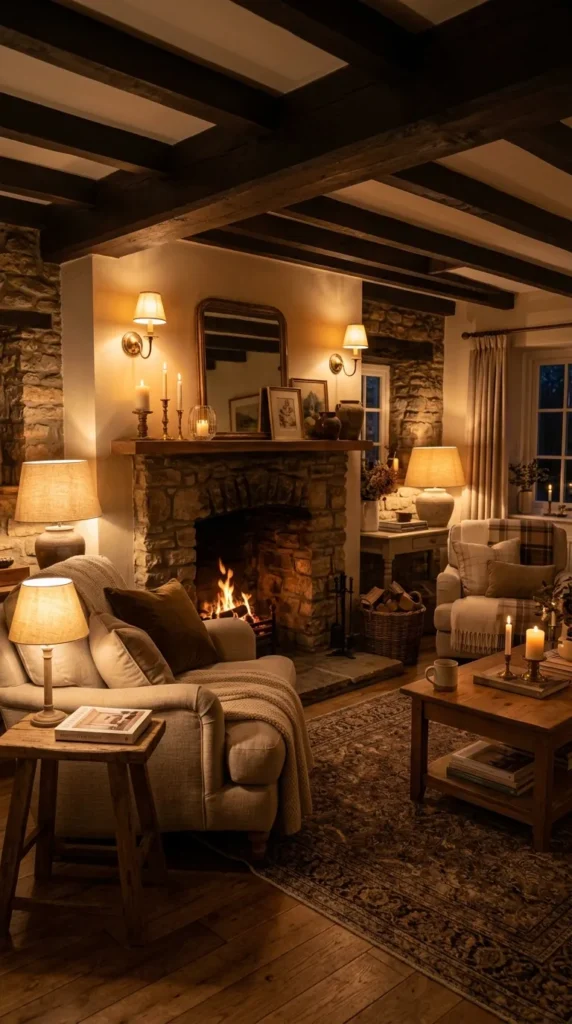
Cottage living rooms need warm light from multiple sources. Table lamps with cream or linen shades. Floor lamps in corners. Wall sconces creating ambient light. Candlelight because candlelight is inherently cottage. Avoid overhead bright lighting that feels clinical. The layering of warm light sources creates genuine atmosphere.
Use warm white bulbs around 2700 Kelvin creating amber light. Avoid cool white that feels institutional. Install dimmer switches allowing you to adjust light intensity creating different moods. The goal is warm light that makes people feel comfortable not bright light that feels like interrogation. The coziness comes from proper lighting.
Add a playful touch to your home by exploring 16 Toca Boca Living Room Ideas Worth Trying for colorful and creative decorating ideas.
4. Fireplace or Wood Stove as Focal Point
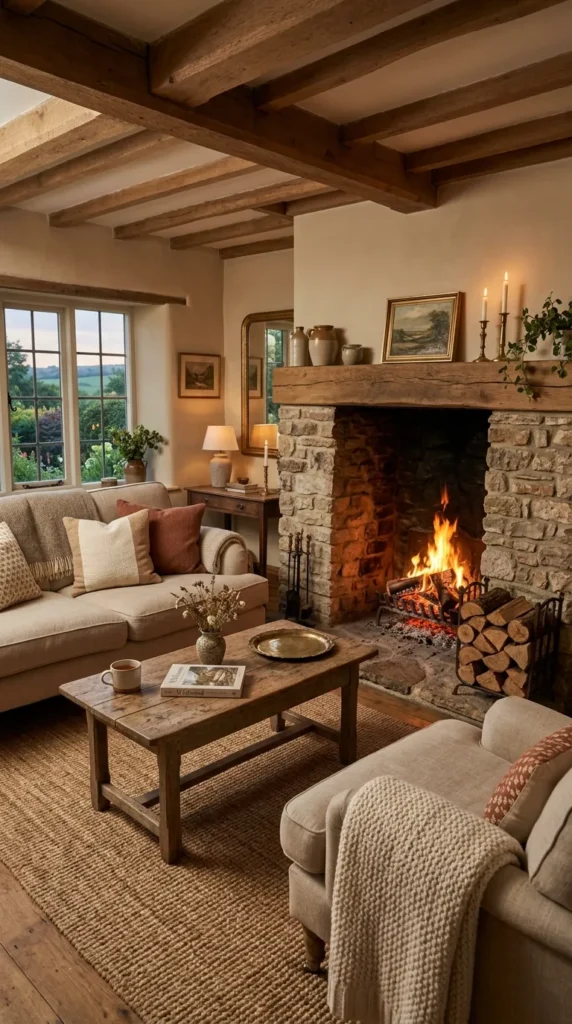
A fireplace or wood stove becomes the natural gathering point. Real fire or electric fireplace depending on your situation. The gathering around the fire is what cottage living is about. The warmth and light draws people. The sound and movement of flames creates atmosphere. A functional fireplace is ideal. A well-designed electric version works if you do not have actual fireplace.
If you have a fireplace use it genuinely. Keep wood stacked visibly beside it. Keep the hearth clean and welcoming. A fireplace without fire is just a hole in the wall. With fire it becomes the heart of the room. Even if you do not use it constantly, having it available changes how the room feels.
5. Natural Wood Elements Throughout
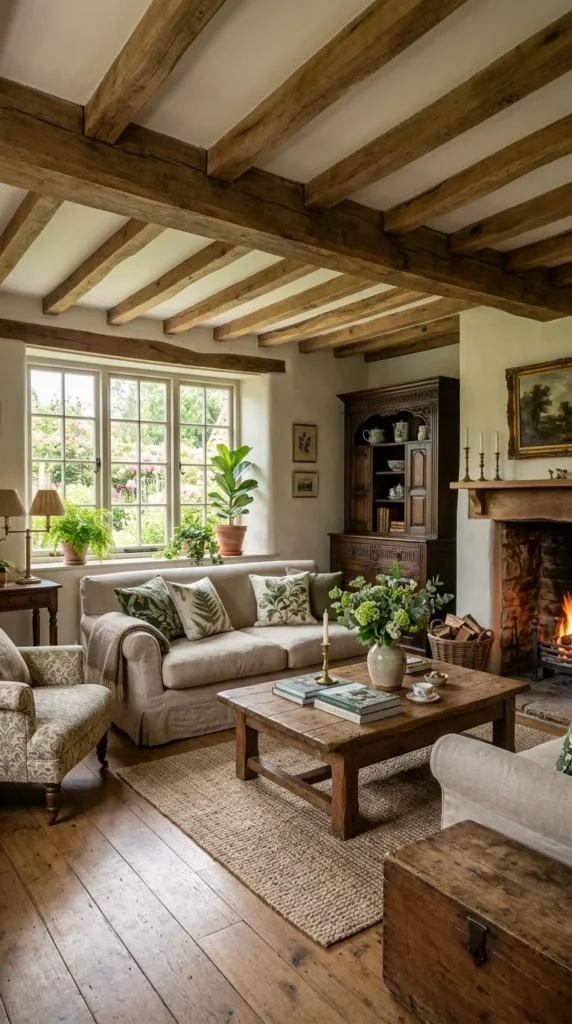
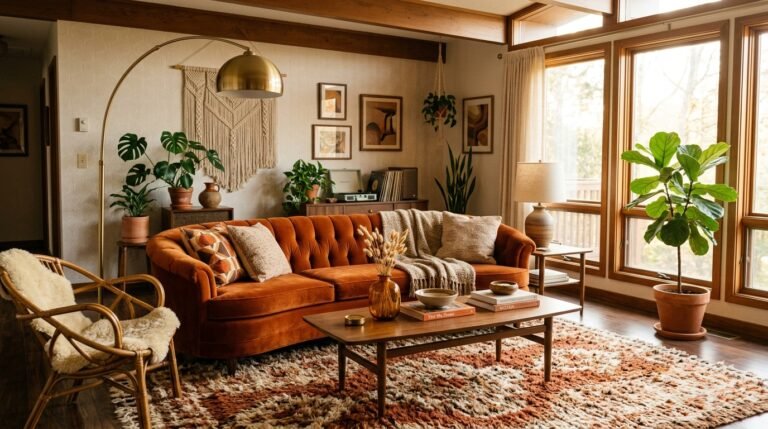
Wood is fundamental to cottage aesthetic. Wood beams on ceiling. Wood paneling on walls. Wood furniture in various finishes. Wood floors with visible grain. The natural material brings warmth and organic beauty. Wood shows age and wear which adds character. The patina of aged wood is exactly what cottage design celebrates.
Expose existing wood if possible. Paint over wood if necessary for your color palette but do it thoughtfully. Rough wood, smooth wood, light wood, dark wood. The variety of wood tones and finishes creates depth and character. The honesty of visible wood construction creates authenticity.
6. Collected Vintage and Secondhand Pieces
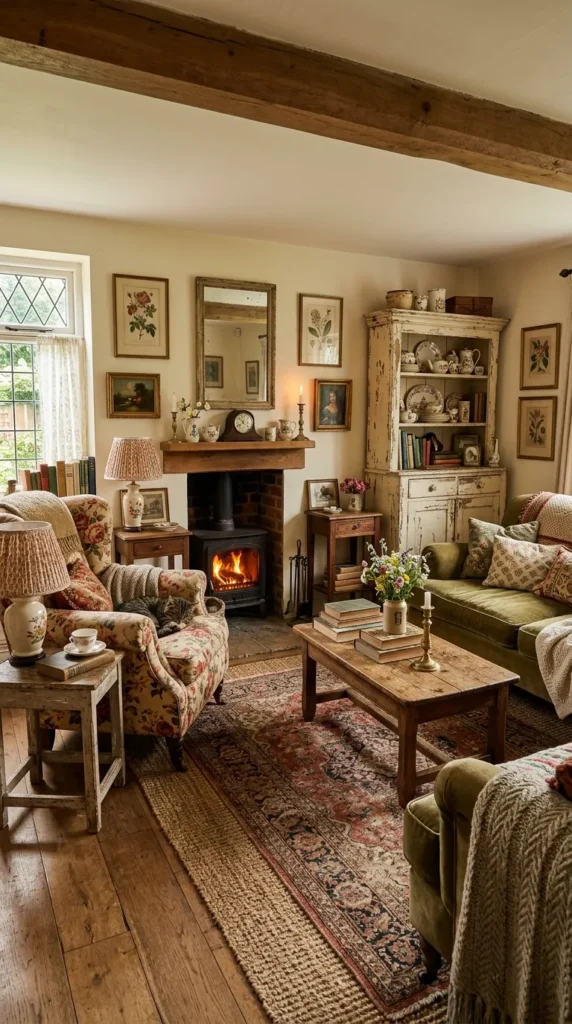
Cottage living rooms are filled with pieces found over time. Vintage side tables. Secondhand chairs. Pieces with history. The fact that the furniture came from different places is the point. It shows the room evolved from things actually collected not purchased as a coordinated set.
Hunt for pieces at antique shops, estate sales, thrift stores. The worn finish on a table. The slightly faded upholstery on a chair. The marks of age and use. These are marks of character not failure. Choose pieces specifically because you love them not because they match. The eclectic collection creates character.
7. Cozy Textiles in Natural Fibers
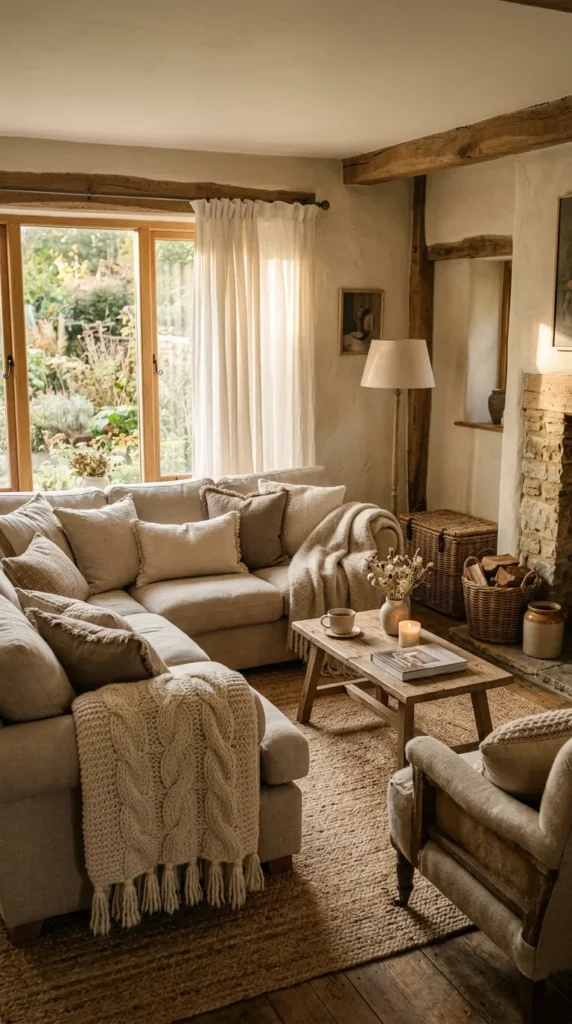
Throw blankets draped over chairs and sofas. Pillows in linen, wool, cotton. Area rugs in natural fiber. The textiles should feel good not just look good. Soft wool throws. Linen pillows. Cotton rugs. Natural fibers age beautifully and feel genuine. The textures visible in natural fibers prevent the space from feeling plastic or artificial.
Layer textiles creating depth and coziness. A wool throw over a chair. Linen pillows in various tones. A cotton rug defining the seating area. The layering creates visual interest and actual coziness. The natural fabrics wrinkle and wear which adds to the authenticity.
8. Open Shelving Displaying Collected Items
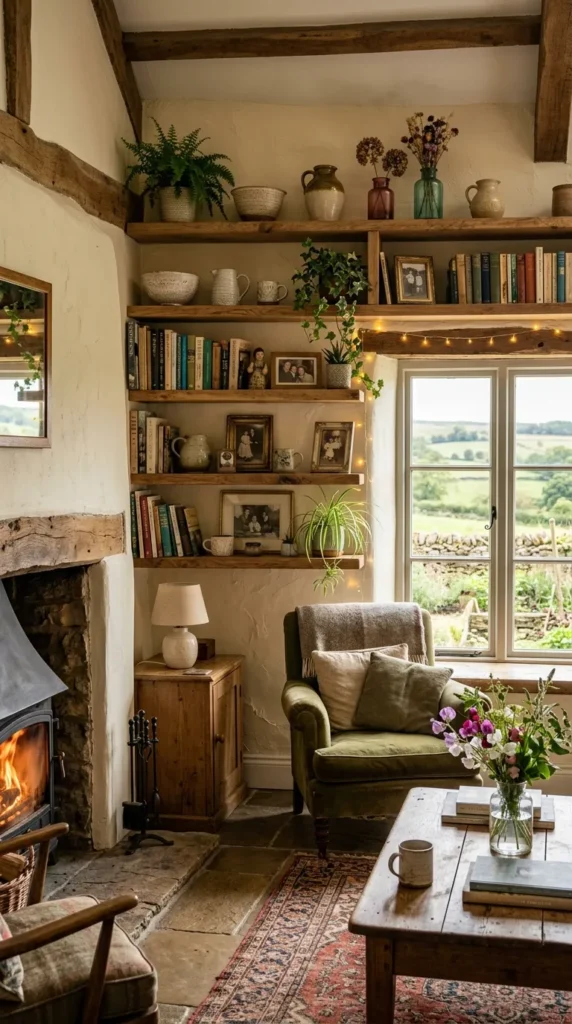
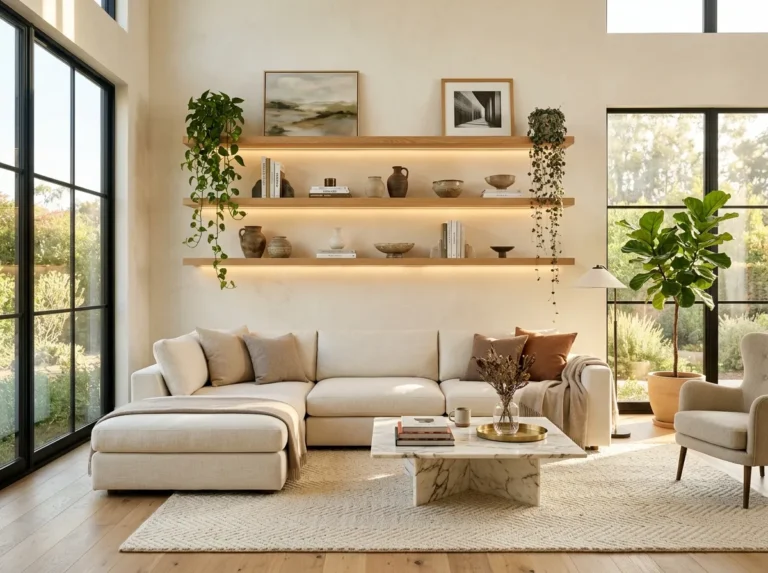
Open wooden shelving displays books, collected items, and treasured objects. Books organized by color or subject. Ceramic pieces collected over time. Personal objects that tell story. The shelving becomes visual autobiography. The curation should be visible. These are things you chose and love.
Style shelves with intention but not fussiness. Books grouped together. A few ceramics. Some space. The negative space prevents shelves from looking cluttered. Display items that genuinely matter. A collection of thrifted vases. Books you have actually read. Objects that tell story of your life.
9. Window Treatments in Light Natural Fabrics
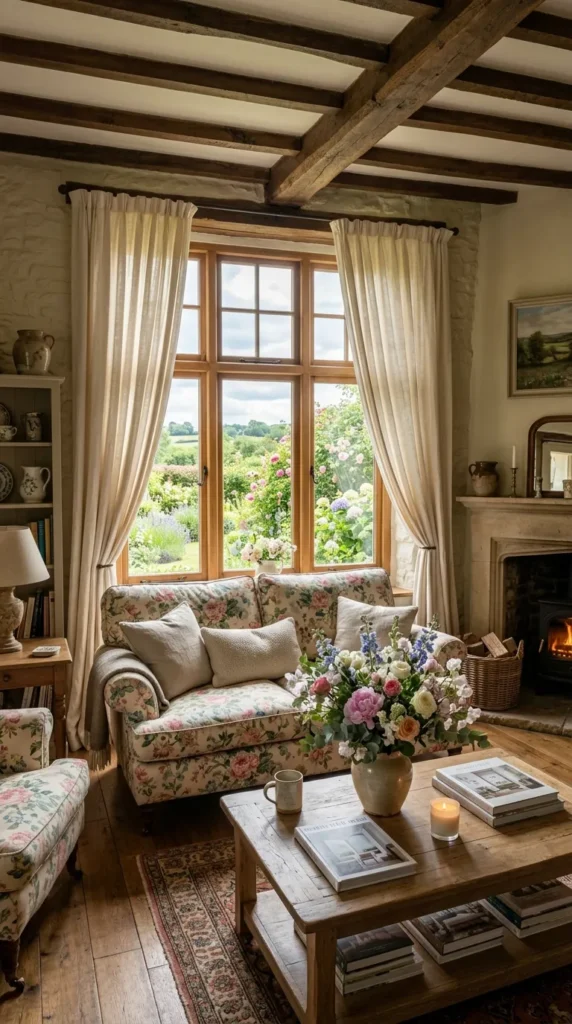
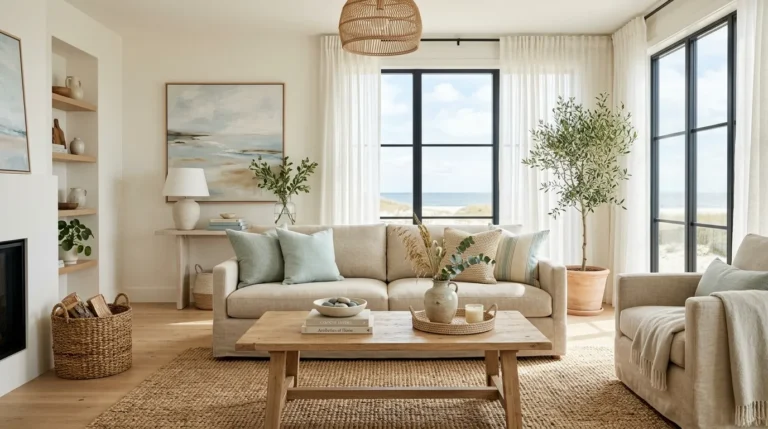
Cottage windows have soft curtains in light fabrics. Linen curtains in cream or soft white. Cotton curtains with subtle patterns. Lightweight fabrics allowing light penetration. The curtains should filter light not block it. The softness of natural fabrics in windows creates cottage feeling. Avoid heavy formal drapes.
Choose fabrics that feel like they belong in a cottage. Linen in warm cream. Cotton with subtle pattern. The fabrics should allow light to flow through. Sunrise through cottage curtains is iconic for good reason. The light quality in the room changes throughout the day. That is genuinely beautiful.
10. Patterned Textiles and Wallpaper
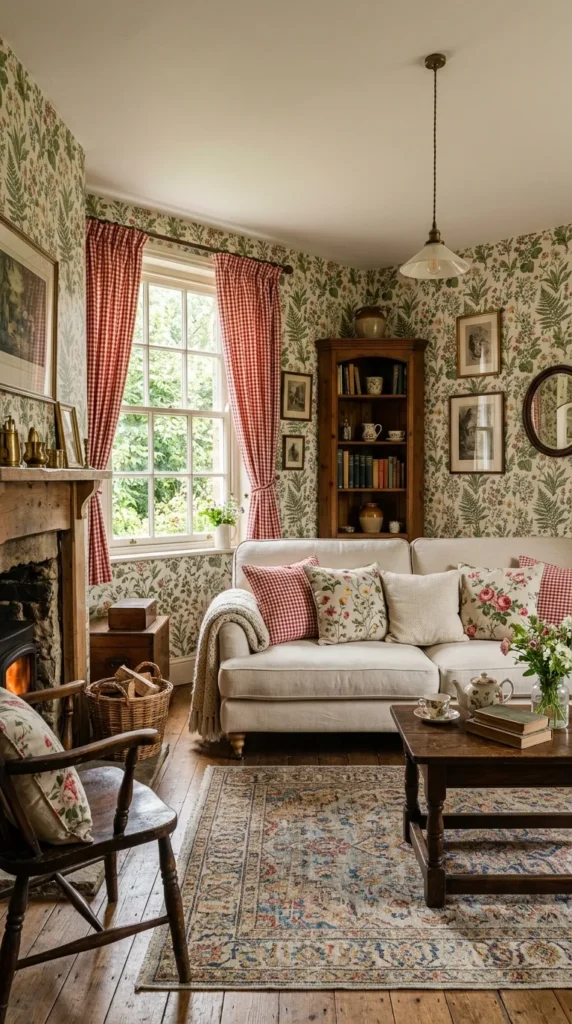
Cottage living rooms can handle pattern. Floral wallpaper. Patterned rugs. Patterned pillows. The patterns should feel traditional or vintage not trendy. Botanical patterns. Gingham checks. Toile. The patterns should feel timeless. One patterned wall works better than pattern everywhere. One patterned rug grounds the space. Patterned textiles add personality.
Choose patterns you genuinely love. Botanical wallpaper. Checked curtains. Floral pillows. The patterns should feel like they have always been there not like trendy decoration. The timeless quality comes from choosing patterns that feel classic.
11. Collections of Ceramics and Pottery
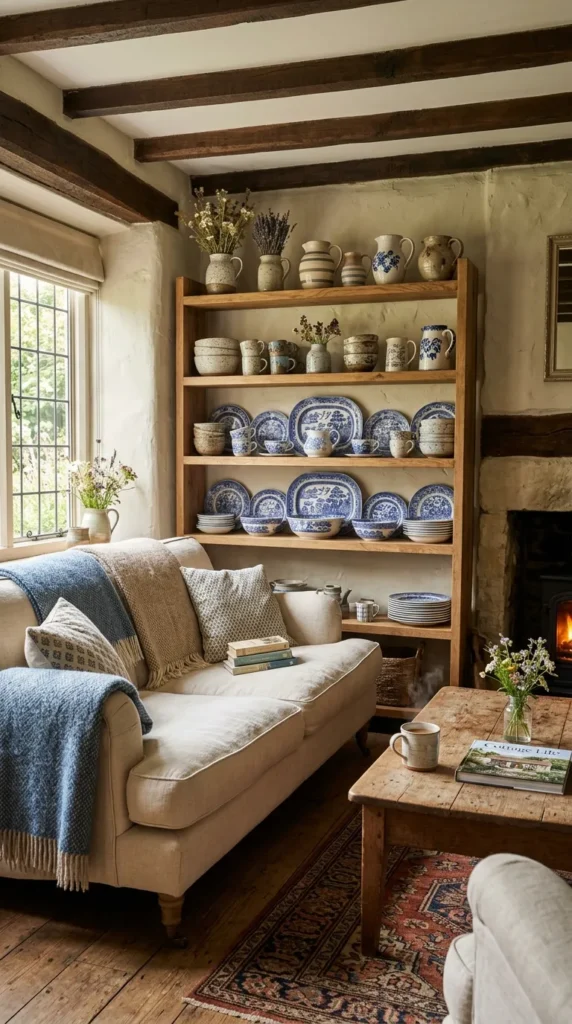
Display collected ceramics and pottery in a way that shows genuine interest. Blue and white pottery. Cream colored pieces. Handmade ceramics. The collections become décor. The curation is visible. These are things you chose specifically and collected over time.
Arrange collections on open shelving or in glass-front cabinets. The arrangement should feel purposeful. Maybe grouped by color. Maybe by type. The visible curation shows these items matter. Random assortments of beautiful pieces create genuine character. The handmade quality of ceramics brings warmth.
12. Natural Elements from Outdoors
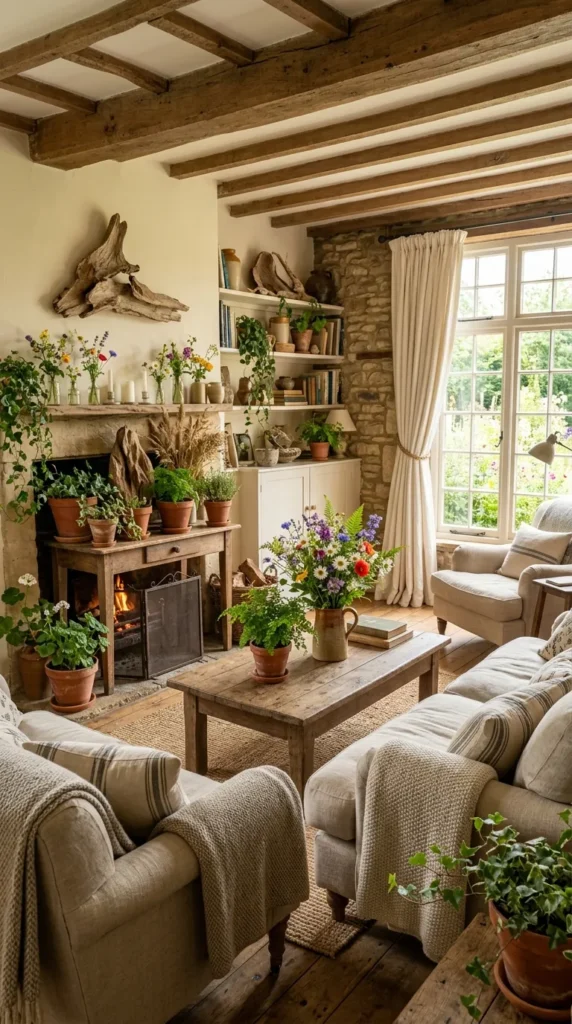
Fresh flowers in simple vases. Branches in large vessels. Stones or smooth driftwood displayed on shelves. Plants thriving in windows. Natural elements bring the outdoors inside. The changing flowers with seasons keeps the space feeling alive and connected to the natural world.
Change seasonal displays reflecting what is growing and available. Spring bulbs in glass vases. Summer wildflowers. Fall branches. Winter greenery. The seasonal changes create rhythm and connection to actual world. Natural elements prevent spaces from feeling static.
Need a functional corner for work? Discover 19 Living Room Desk Ideas for Small Spaces for beautiful space-saving inspiration.
13. Personal Photographs and Family Moments
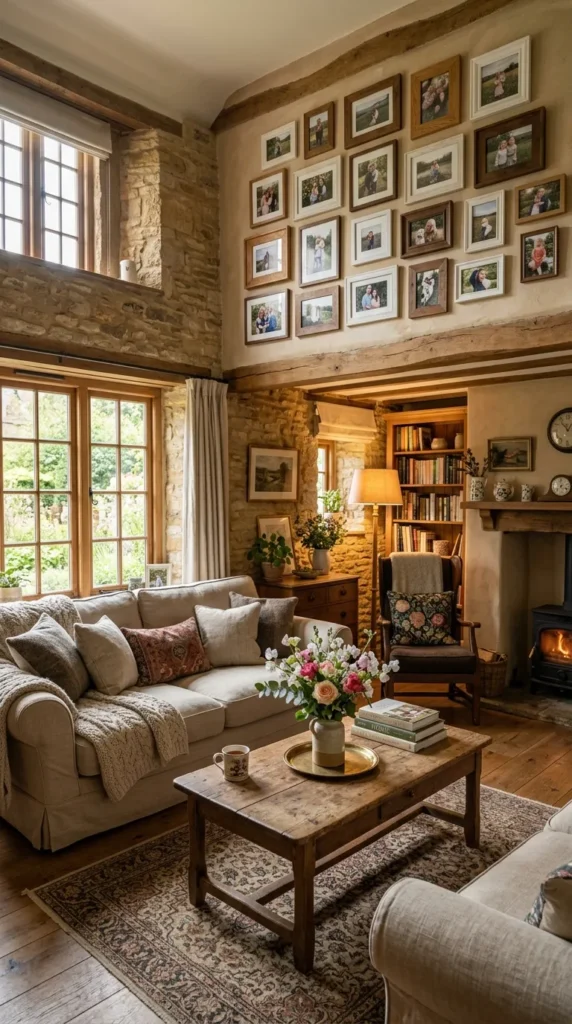
Display photographs of people and moments that matter. Family photos in simple frames. Travel photographs. Candid moments. The photographs make the space deeply personal. Visitors see your life reflected in the walls. The intimacy creates genuine welcome.
Frame photographs simply in wood or black frames. Arrange in loose gallery walls. Mix photograph sizes. The personal nature of photographs makes spaces feel lived in. People recognize themselves or their own family moments. The emotional resonance creates genuine connection.
14. Books Visible and Actually Used
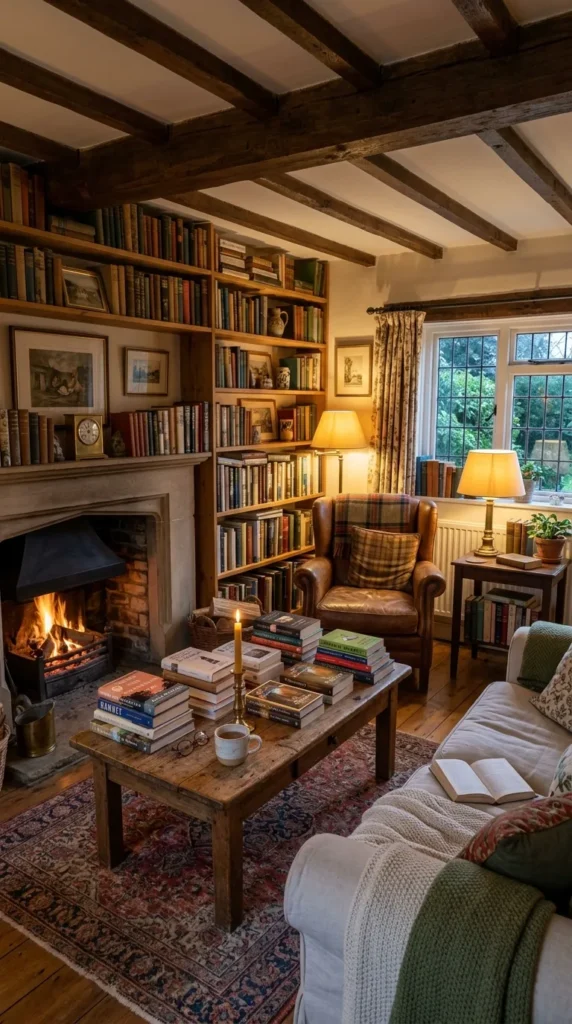
Stack books on tables and shelves. Display books you actually read. Design books about homes. Poetry. Novels. Travel guides. Books open on side tables. The visibility of books signals this is a thinking space. The obvious use signals actual living. A cottage living room has books everywhere because someone actually lives there reading.
Organize books by color or subject. Include books you are actively reading. Include reference books you use. The mix of organized and casually piled books shows genuine use. Visitors pick up books and discover new interests. The intellectual stimulation creates welcome.
15. Small Details That Show Genuine Care
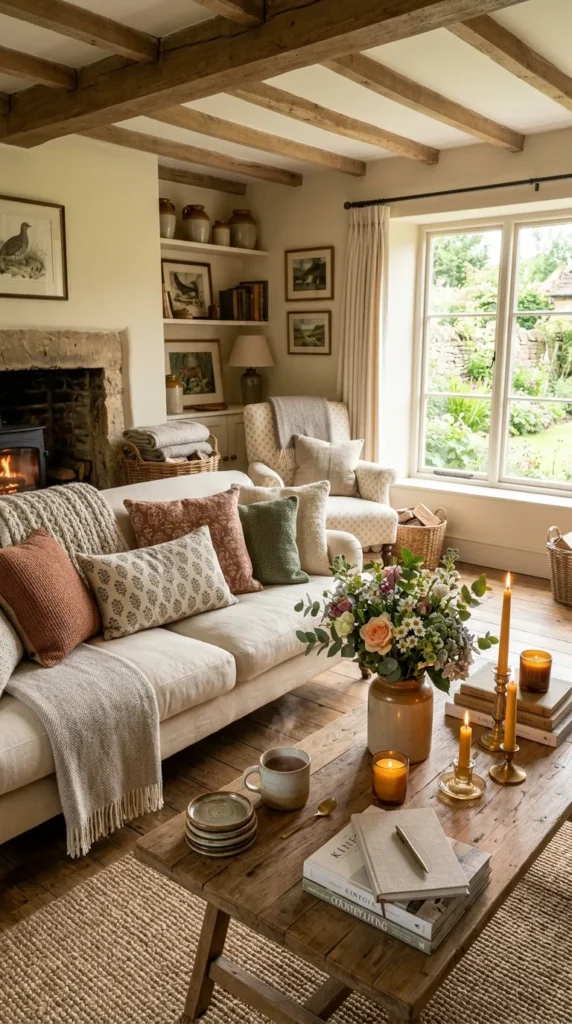
Coasters on tables for protecting surfaces. Fresh soap in the bathroom. Comfortable cushions for guest seating. Quality hinges on doors. Small details that show care for the space and for visitors. The thoughtfulness creates genuine welcome. People notice details even subconsciously.
These details say you care about your space and about people in it. You thought about comfort. You maintain the space. You want visitors to feel looked after. The small care creates emotional safety. Guests feel genuinely welcomed not tolerated.
16. Neutral But Warm Flooring
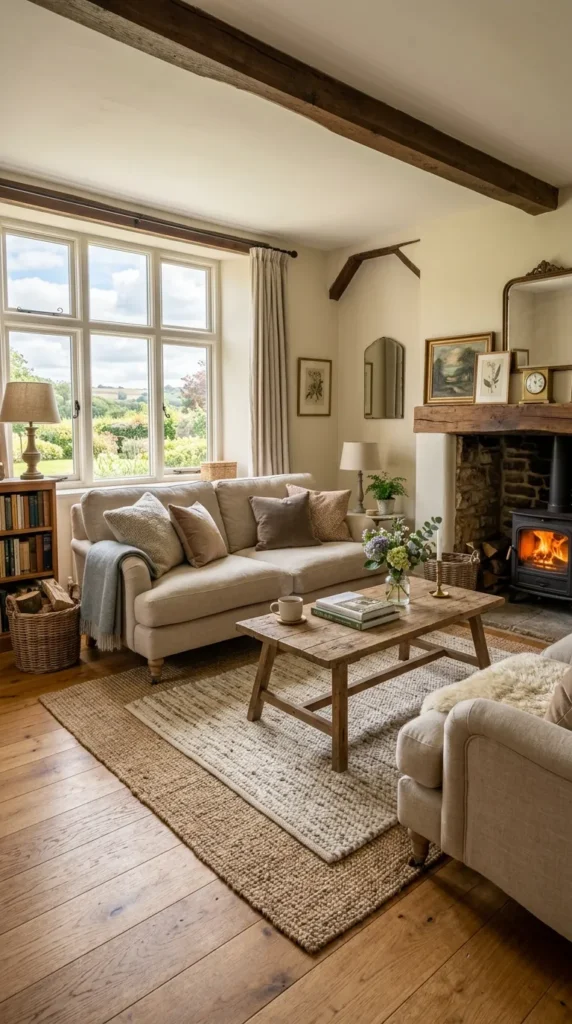
Wood floors or natural tile in warm tones. Avoid stark white or cold grey. Warm wood tones. Warm honey toned tile. The flooring should feel welcoming. Area rugs in natural fiber layered for comfort. The combination of warm flooring and cozy rugs creates physical comfort.
Flooring is the foundation for entire room feeling. Cold flooring makes spaces feel unwelcoming no matter what else is done. Warm flooring immediately creates welcome. The natural aging of wooden floors adds character. The worn patina is charm not failure.
17. Small Functional Details Serving Real Purpose
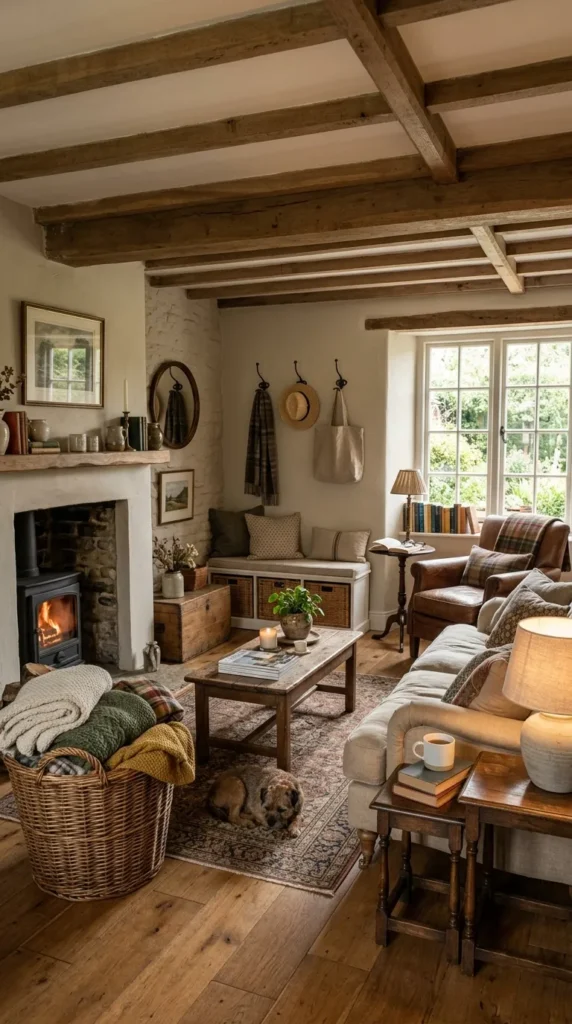
A side table next to a chair for resting tea cup. Hooks on walls for hanging coats. A basket for holding blankets. Small shelves for book stacks. A surface for displaying collected items. Every detail serves function. The functionality shows the space is actually lived in. The details create genuine comfort.
Do not add details purely for decoration. Every item should serve purpose. Hooks are useful and decorative. Baskets hold things and look beautiful. Small tables serve function and aesthetic. The dual purpose creates spaces that are both beautiful and genuinely functional.
18. Authentic Style Not Designer-Decorated Feeling
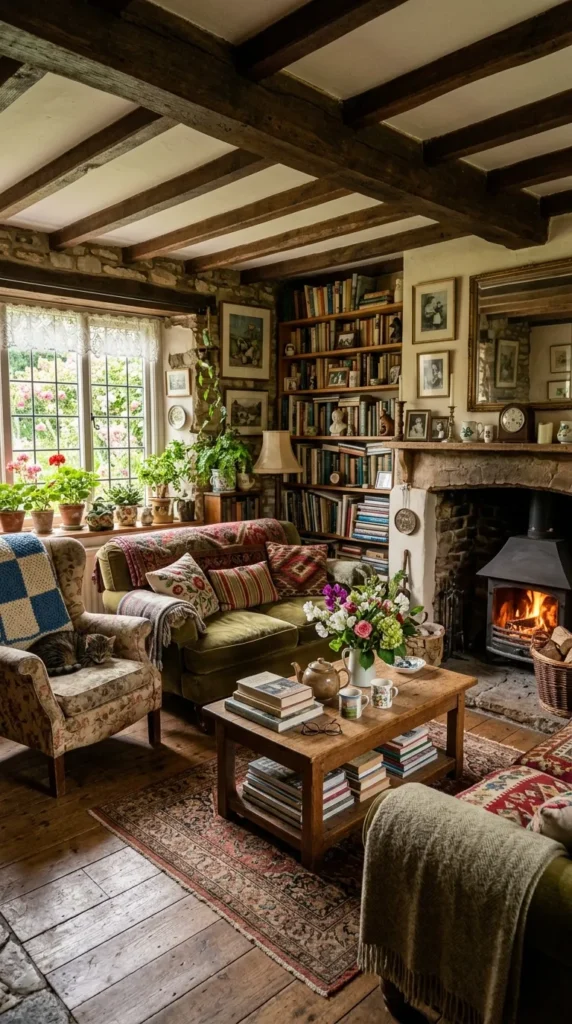
The space should feel like your genuine home not like it was designed by someone else. Your taste visible. Your interests evident. Your life reflected. The authenticity is what creates welcome. People sense when spaces are genuine versus when they feel designed for show. Authenticity is fundamentally welcoming.
Do not try to match design magazines. Do not worry about coordinating or looking professional. Worry about creating a space that genuinely reflects who you are and how you actually live. The personality and authenticity create welcome that no design rule can achieve.
19. Conversation-Friendly Furniture Arrangement
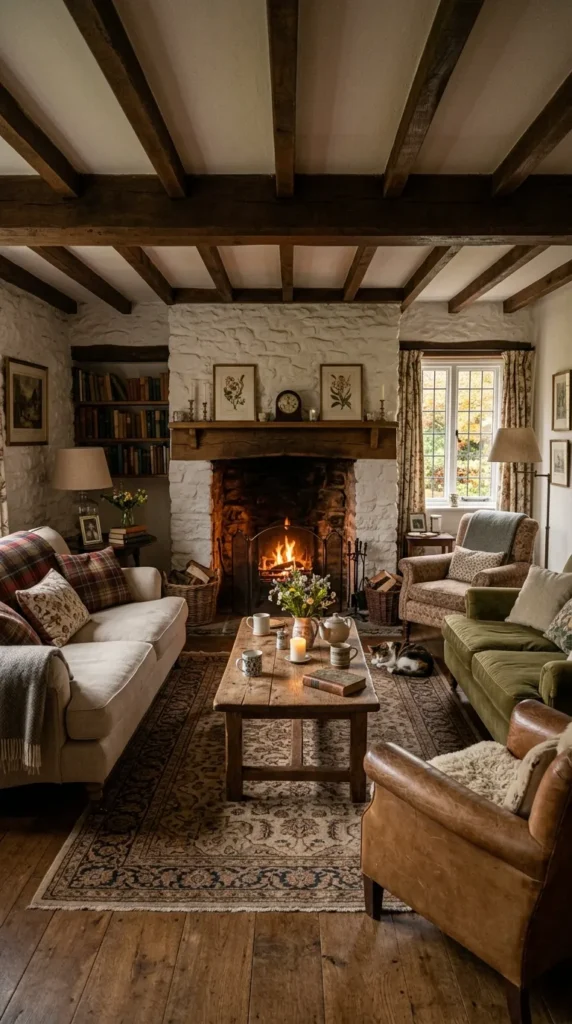
Arrange furniture to encourage conversation. Chairs facing each other. Sofas angled toward each other. Small tables between seats for setting drinks. The arrangement signals this is a gathering space. People can actually talk. They are not sitting shoulder to shoulder staring straight ahead.
Furniture arrangement tells visitors whether conversation is welcomed. A cozy corner with two chairs facing each other. A sofa and chair angled toward each other. The intentional arrangement creates invitation. People immediately know they are welcome and conversation is desired.
20. Quiet Corners for Individual Comfort
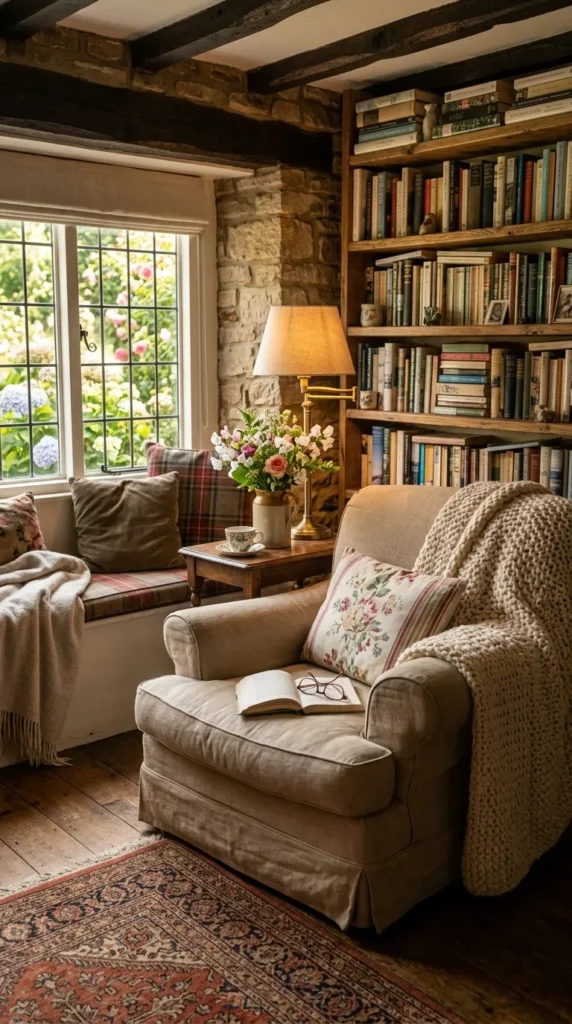
A reading chair with good light in a quiet corner. A window seat with cushions. A small space for solitude. Cottage living rooms balance gathering space with quiet individual space. Not everyone wants group interaction all the time. Providing quiet space shows thoughtful hospitality.
Create small nooks where people can sit alone if desired. Window seats for reading. Armchairs in corners with good light. The option for solitude within group setting is genuinely hospitable. People feel welcome whether they want social interaction or quiet time.
21. Genuine Warmth and Actual Hospitality
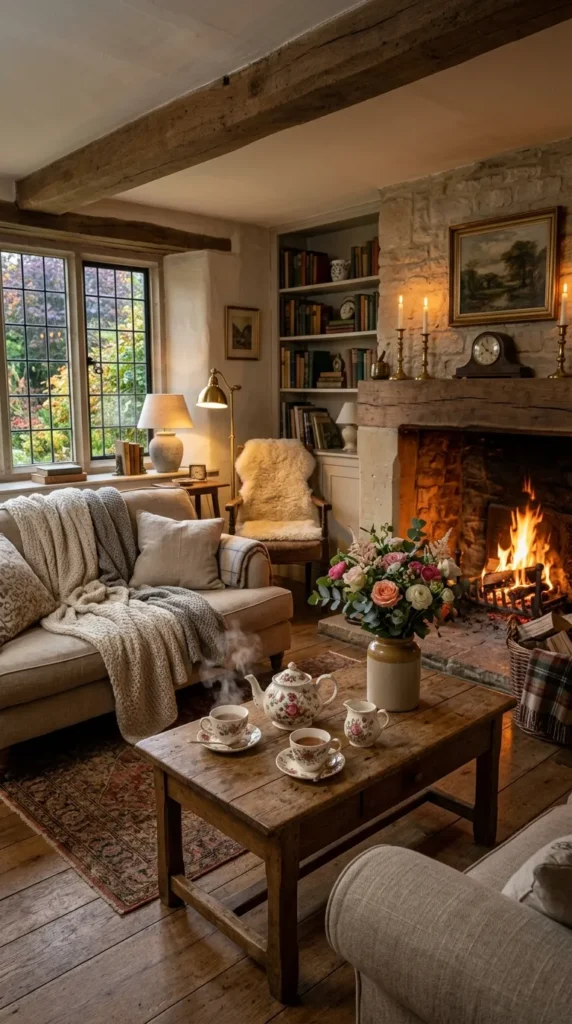
The final element is genuine warmth and actual hospitality. Creating space where people feel welcome because you actually want them there. Offering tea or coffee. Making sure guests are comfortable. Remembering preferences and interests. The physical space supports the emotional reality of genuine welcome.
The most beautiful cottage living room fails without actual hospitality. The most modest space succeeds with genuine welcome. Create the physical space that supports your genuine desire to have people in your home. Make them comfortable. Show them they matter. Make them feel like they belong. That is cottage living room at its core.
Creating Cottage Living That Is Actually Warm
A cottage living room is not about decorating a specific style. It is about creating a space where you genuinely live and where people genuinely feel welcomed. Start with warm colors that make you happy. Add comfortable furniture you actually use. Layer warm lighting creating atmosphere. Display things that matter to you. The result will be warm and welcoming because it is genuine.
Do not try to recreate a design magazine cottage. Create your own cottage from how you actually live and what you actually love. The authenticity is what creates genuine warmth. The genuine warmth is what creates welcome. The welcome is what makes people want to spend time in your space.
A cottage living room succeeds when visitors do not want to leave. Not because the décor is impressive but because they feel genuinely welcomed and genuinely comfortable. When that happens, you have created something real. That is the whole point.