12 Japandi Kitchen Ideas That Actually Work
Japandi is one of those design words that gets used so loosely it has almost lost meaning. In most applications it means beige with a wooden cutting board and a single plant and the result looks like every other neutral kitchen on the internet. Real Japandi design is more specific and more demanding than that. It is the intersection of Japanese minimalism, which values emptiness as a positive quality and treats every object as something that must earn its place, and Scandinavian functionalism, which values honest materials and the kind of warmth that makes a spare room feel inhabited rather than vacant. When those two sensibilities meet correctly in a kitchen the result is a room with genuine quiet intelligence that feels restful to cook in and beautiful to look at.
The kitchen is where Japandi design either works fully or collapses into aesthetics without substance because a kitchen is used too constantly and too practically for a design that is only visual to survive daily contact. A Japandi kitchen that cannot be cooked in comfortably, that has nowhere to put things, that looks beautiful when empty and chaotic when someone is actually making dinner, has failed at the most basic level regardless of its material quality. These 12 ideas cover the real requirements of a Japandi kitchen, the ones that determine whether the design holds up under the conditions of actual use rather than only under the conditions of a photograph.
1. Choose Natural Wood as the Primary Cabinet Material
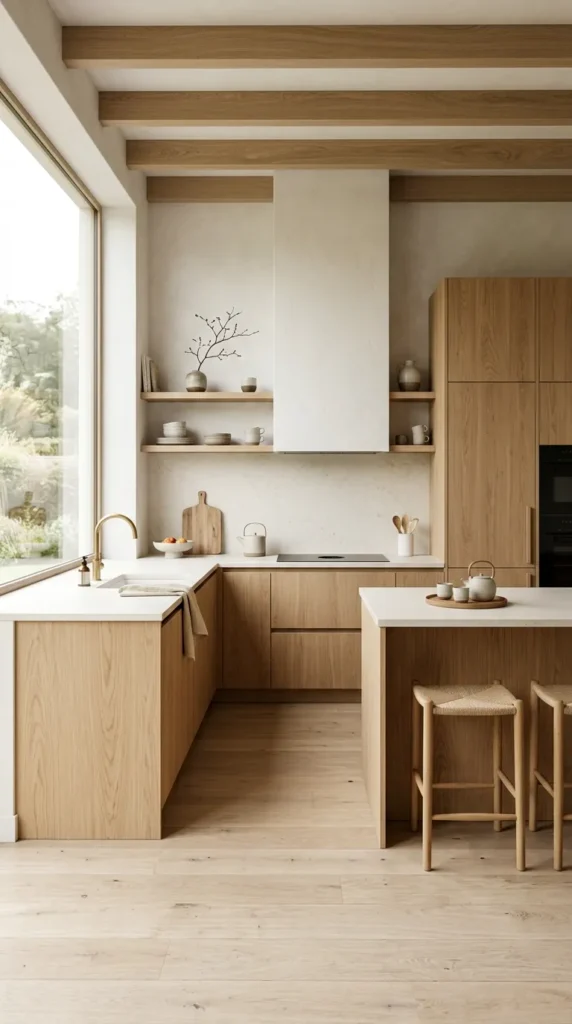
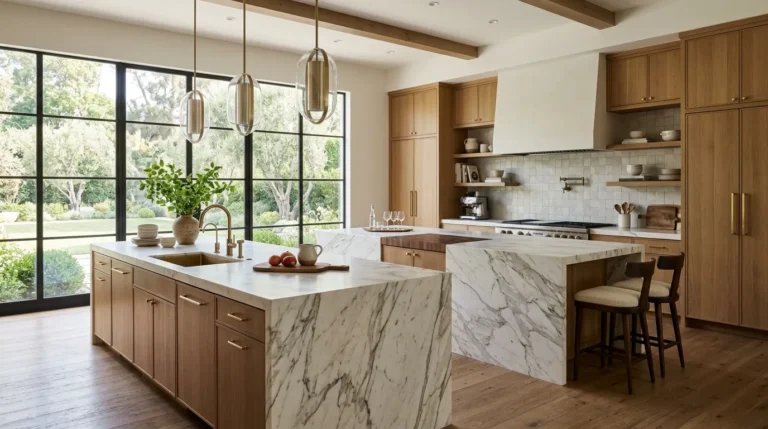
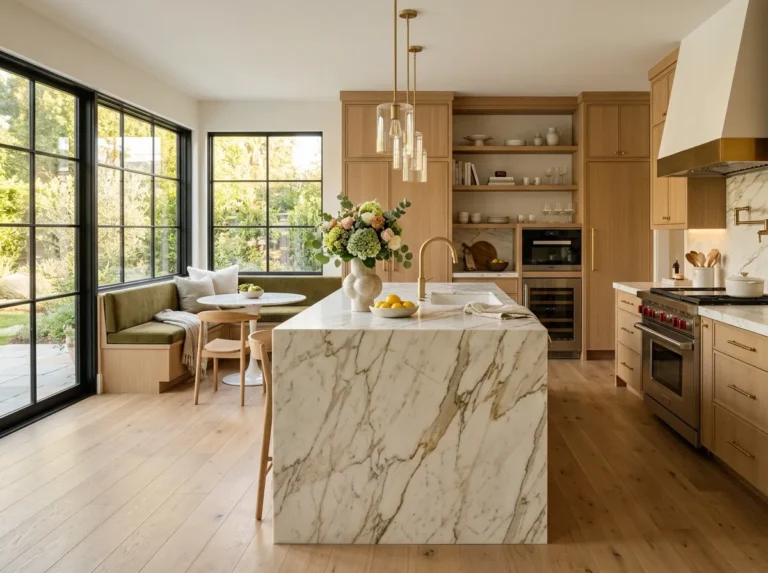
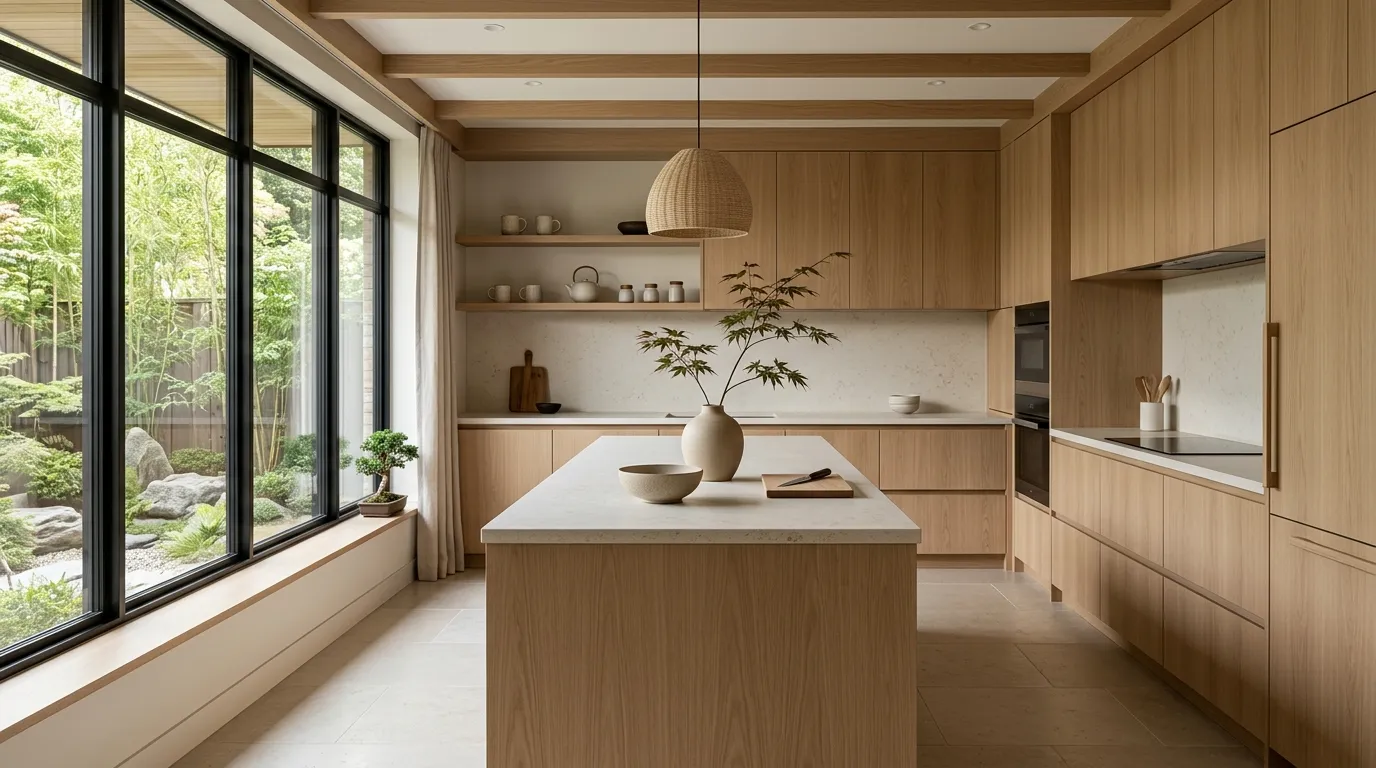
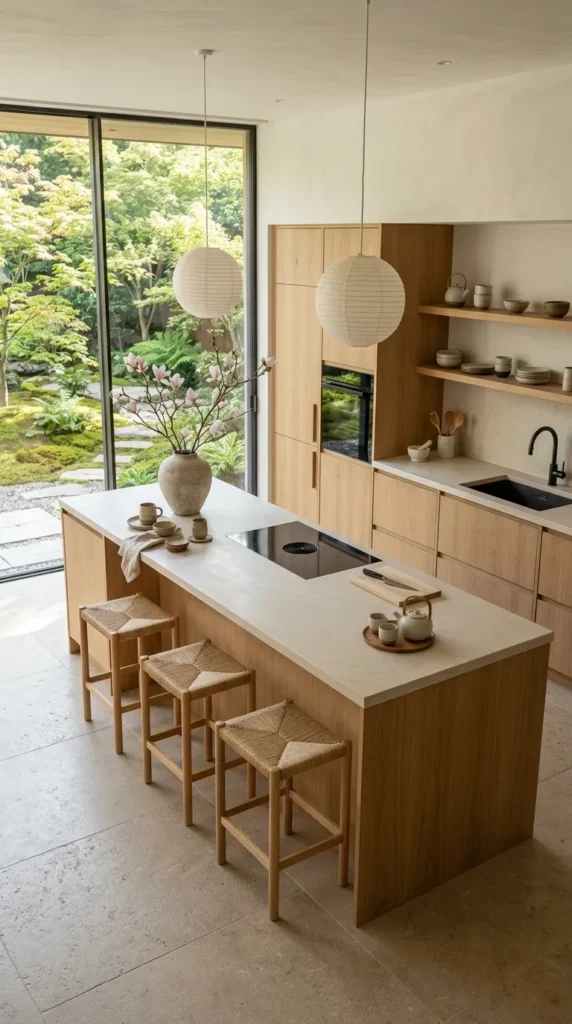
Wood is the single most important material in a Japandi kitchen because it provides the warmth that Japanese minimalism needs in order to feel welcoming rather than cold and the natural honest material quality that Scandinavian design requires in order to feel authentic rather than decorative. The specific wood matters. Light ash and pale oak create a kitchen that feels bright and Scandinavian in its lightness. Darker walnut creates a kitchen with more Japanese gravity and visual weight. Both are correct Japandi choices and the decision between them should be based on the kitchen’s natural light levels and the overall atmosphere the room needs to create.
The wood should be treated with a finish that allows the grain to remain visible rather than a lacquer that creates a synthetic uniformity across the surface. An oiled or hardwaxed finish that brings out the grain’s natural depth while protecting the wood from moisture creates a cabinet surface with the genuine material quality that distinguishes a Japandi kitchen from a kitchen that simply uses wood as a trendy material choice.
2. Keep the Palette to Three Materials Maximum
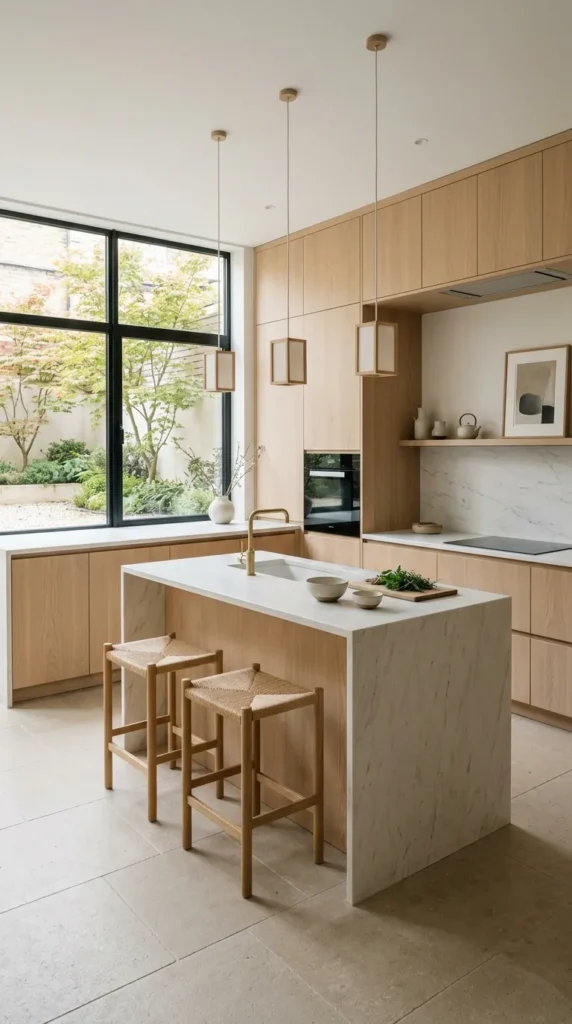
The discipline of limiting the kitchen’s material palette to three materials is one of the practices that separates genuine Japandi design from the generic neutral kitchen. Three materials, one for the cabinetry, one for the countertop, and one for the backsplash or floor, create a kitchen with the visual restraint that the aesthetic requires. Every additional material beyond three increases visual complexity in a design philosophy that treats complexity as a problem rather than a virtue.
The three materials should be chosen for how they work together rather than for how each one looks individually. Pale ash cabinetry, honed white marble countertop, and a matte limestone floor tile create three materials that belong to the same warm natural family and that create depth through their variation in texture rather than through contrast in color. This tonal consistency within a limited material palette is the specific quality that makes a Japandi kitchen feel considered rather than simply neutral.
3. Use Handleless Cabinets or Minimal Hardware
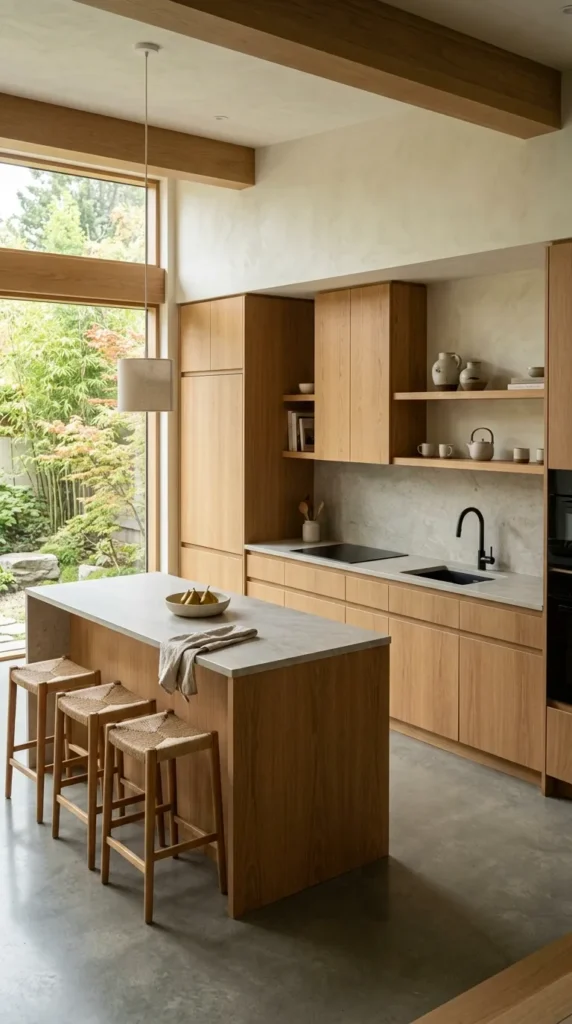
Handleless kitchen cabinets or cabinets with the most minimal possible hardware create the clean uninterrupted surface that Japandi design requires. A cabinet front covered in hardware, decorative pulls, ornate knobs, or handles with complex profiles, introduces visual noise that disrupts the calm surface quality that the aesthetic is built on. The cabinet front in a Japandi kitchen should read as the material it is made from rather than as a surface decorated with applied hardware.
Push to open mechanisms that eliminate hardware entirely create the most minimal result. Integrated recessed pulls that are part of the cabinet profile rather than applied to it create a slightly less minimal result with the practical advantage of more reliable door and drawer operation over time. Simple straight bar pulls in a warm metal, aged brass or brushed bronze, create the least minimal option within the Japandi framework but are acceptable when the bar profile is genuinely simple and the metal tone relates to the other warm materials in the kitchen.
4. Prioritize Counter Clarity Above All Other Styling Decisions
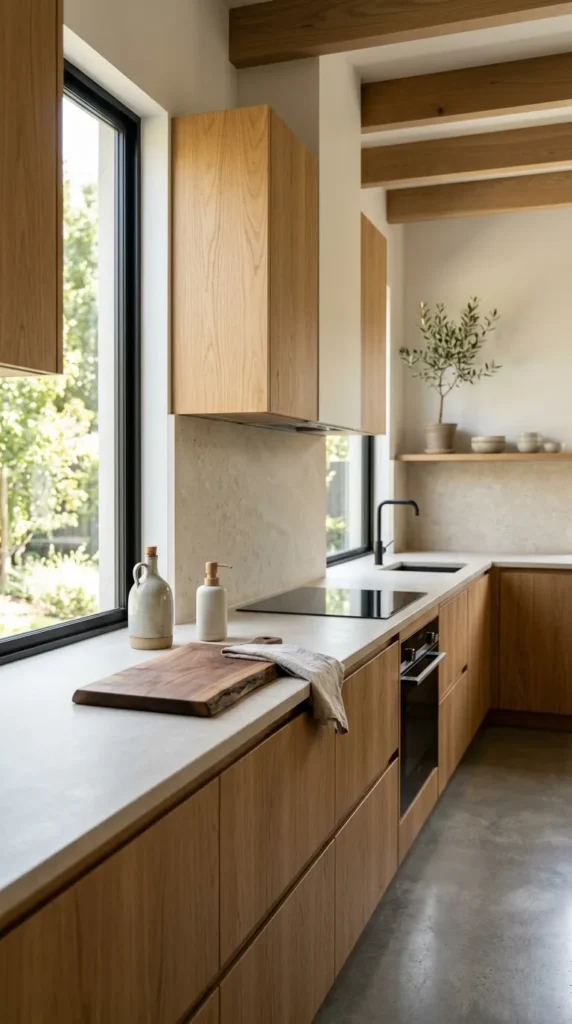
The Japandi kitchen counter should be clear. Not clear in the sense of having nothing on it, which is impractical in a working kitchen, but clear in the sense of containing only the objects that genuinely belong there rather than the accumulated objects that arrive on a kitchen counter and never leave. A wooden chopping board used daily. A ceramic oil bottle at the hob. A simple soap dispenser at the sink. These things earn their place on the counter through daily use. Everything else should have a home inside a cabinet.
The discipline of counter clarity is the hardest Japandi kitchen practice to maintain because kitchen counters accumulate things naturally and the accumulation happens gradually enough that each addition seems reasonable at the time. A quarterly counter edit that removes everything that has not been used in the past month and finds it either a home inside a cabinet or a reason to leave the kitchen entirely maintains the clarity that makes the Japandi kitchen look and feel the way it is supposed to rather than sliding into the generic neutral kitchen that accumulates a cutting board and a plant while filling the remaining counter with everything else the kitchen owns.
5. Choose Matte Finishes Over Gloss Throughout
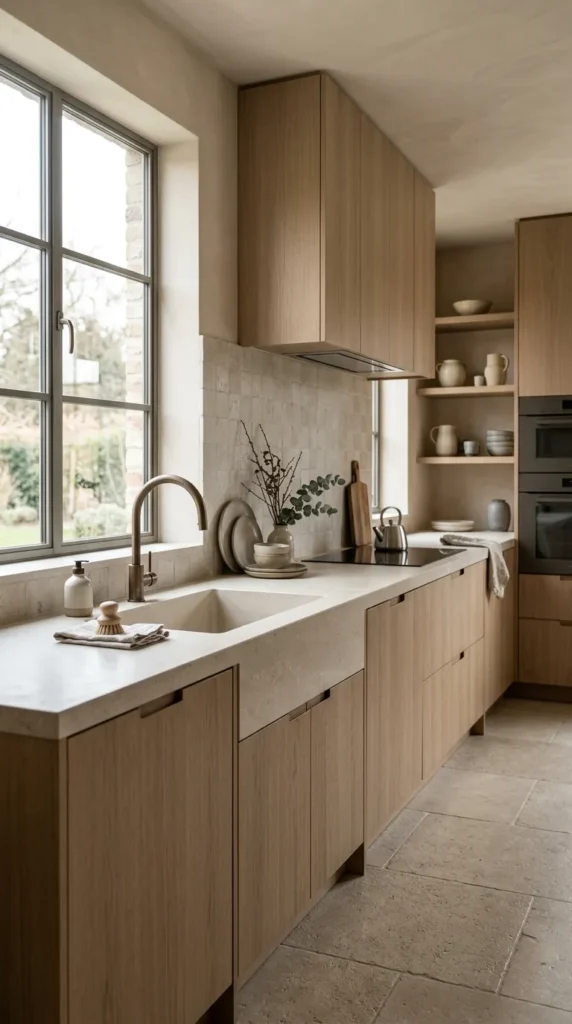
Matte finishes on every surface in a Japandi kitchen create the specific quality of light absorption and visual softness that the aesthetic requires. Gloss finishes reflect light in a way that creates brightness and visual energy. Matte finishes absorb light in a way that creates depth and visual calm. Japandi design is built on calm rather than energy and the finish choices throughout the kitchen should reflect that consistently.
Matte cabinet fronts rather than gloss or satin. Honed stone countertop rather than polished. Matte or satin tile rather than glossy ceramic. Matte tap and hardware finishes rather than mirror polished. Each of these choices individually makes a modest contribution to the kitchen’s overall surface quality and together they create a room whose surfaces relate to each other with a consistency that makes the design feel resolved rather than assembled from separate material decisions.
6. Install Under Cabinet Lighting as the Primary Task Light
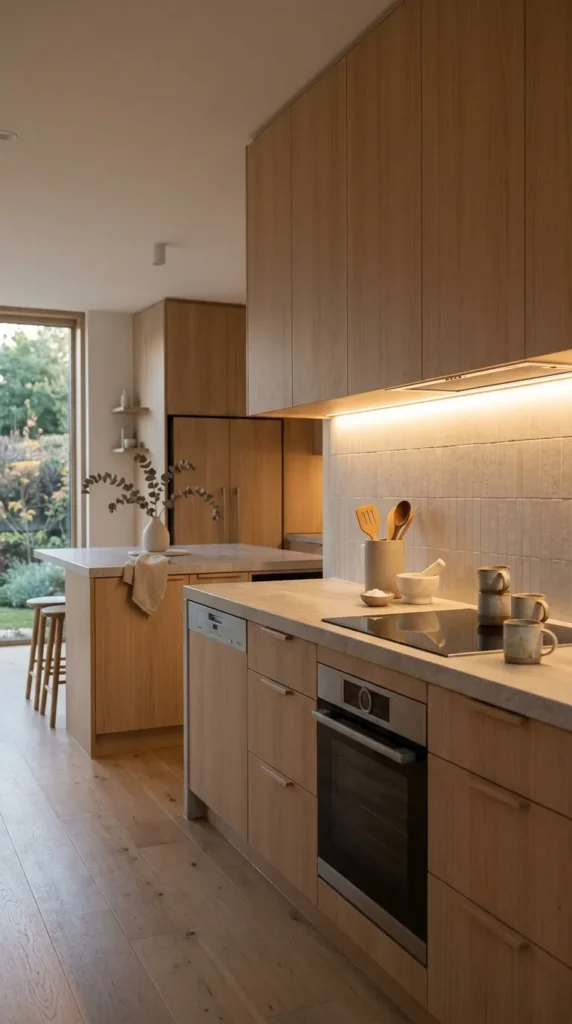
Under cabinet lighting that washes the countertop surface with warm direct light provides the best task lighting available for kitchen work while creating the minimum visual interference with the clean cabinet surfaces above. The light source is hidden behind the cabinet’s lower edge and the light falls where it is needed, on the counter where food is prepared, without any visible fixture creating visual complexity on the kitchen wall or ceiling.
The color temperature of under cabinet lighting in a Japandi kitchen should be consistently warm at 2700K to maintain the warmth of the natural materials surrounding it. Cool white task lighting in a kitchen of warm wood and natural stone creates a temperature mismatch that makes the kitchen feel clinical during the hours of active use despite the warmth of its materials. Warm under cabinet lighting maintains the kitchen’s material warmth at every hour of the day and makes cooking in it a genuinely pleasant sensory experience rather than an efficiently lit functional one.
7. Include a Single Considered Object on Each Surface
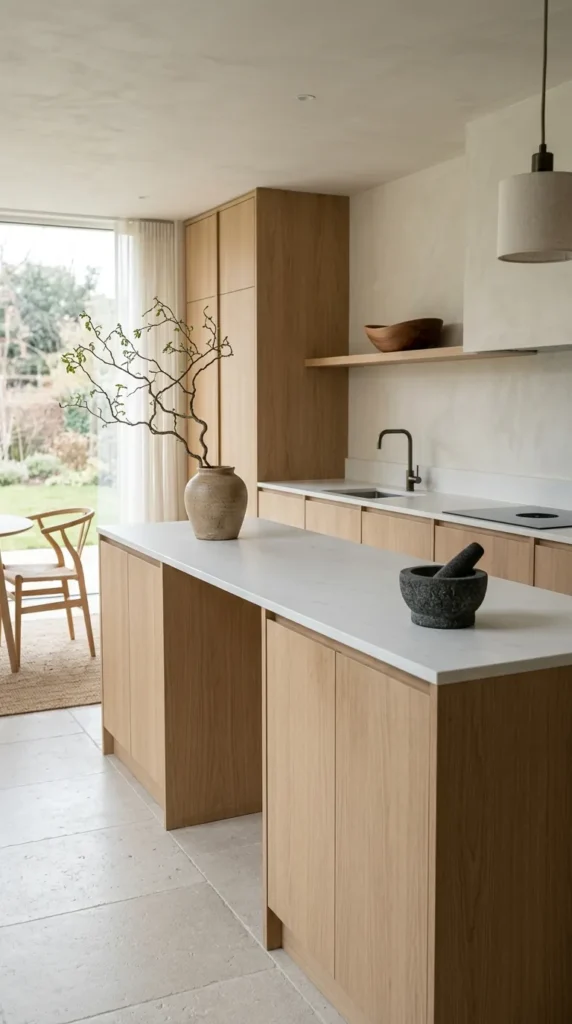
The Japandi approach to kitchen styling is not to empty surfaces entirely but to place one genuinely considered object on each surface and leave the rest clear. The Japanese concept of ma, the value of intentional empty space, applies to kitchen surfaces as much as to room layouts. One object on a surface is a choice. Two objects begin to be a collection. Three objects become clutter. The single object on each surface creates the visual punctuation that makes the surrounding empty space feel intentional rather than empty.
The objects chosen for Japandi kitchen surfaces should be things that are used rather than things that are purely decorative. A ceramic mortar and pestle that is genuinely used for cooking. A wooden salad bowl that comes out for meals and lives on the counter between them. A simple ceramic vase with a single stem when flowers are in season. These objects have a quality of honest use that purely decorative objects in a Japandi kitchen lack and that quality is what makes them feel appropriate rather than out of place in a design philosophy that values function as much as beauty.
8. Use Open Shelving Sparingly and With Discipline
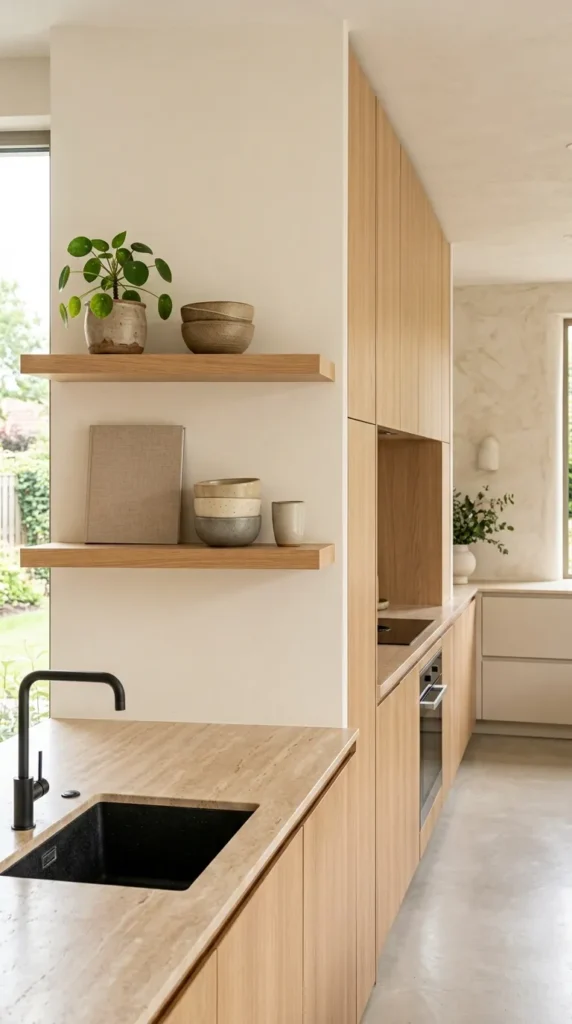
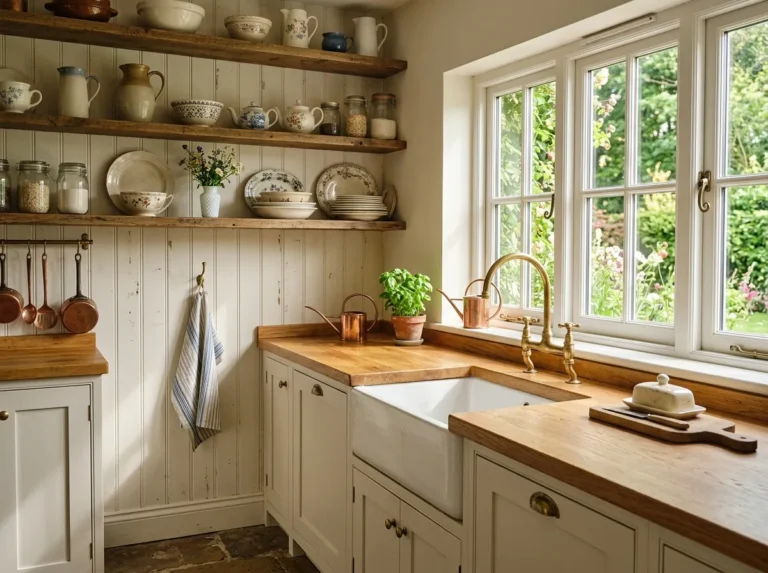
Open shelving in a Japandi kitchen requires more discipline than in any other kitchen design context because the aesthetic demands that what is displayed on open shelves is worth displaying. A Japandi open shelf holds four or five objects arranged with genuine attention to spacing and material relationship. The same shelf holding everything that did not fit in the closed cabinets has abandoned Japandi principles entirely regardless of how good the shelf material is.
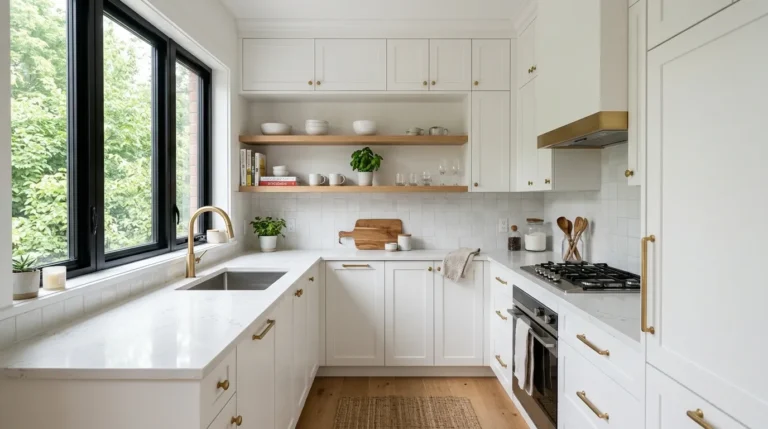
Two or three open shelves in a Japandi kitchen placed deliberately rather than throughout the room creates storage display opportunities without creating the pressure to fill them that a full wall of open shelving generates. A single shelf beside a window for a small plant and two ceramic pieces. A shelf above the hob for the oils and spices used in every cooking session. These specific placements serve specific purposes rather than creating general display space that becomes general storage over time.
9. Integrate Appliances Behind Cabinet Fronts
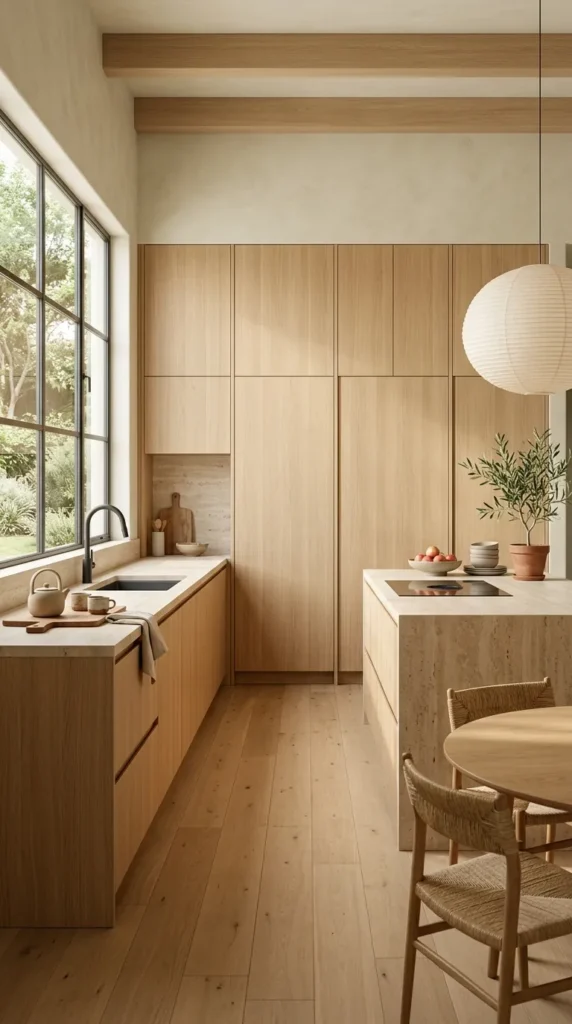
Integrated appliances that disappear behind cabinet fronts matching the rest of the kitchen cabinetry maintain the visual calm of the Japandi kitchen in a way that freestanding appliances cannot. A refrigerator, dishwasher, and microwave all presenting the same cabinet face as every other cabinet in the kitchen creates a room whose surfaces are consistent rather than interrupted by the varying colors, forms, and finishes of different appliance brands and models.
The practical requirements of appliance integration include leaving adequate ventilation space behind integrated units and ensuring that the cabinet fronts used are rated for the heat and moisture that the appliances behind them generate. A properly integrated kitchen appliance behind a correctly specified cabinet front lasts as long as the appliance itself. An appliance integrated behind an inadequately specified cabinet front creates door warping and finish deterioration that defeats the visual purpose of the integration within a few years of use.
10. Bring Natural Light In and Protect It
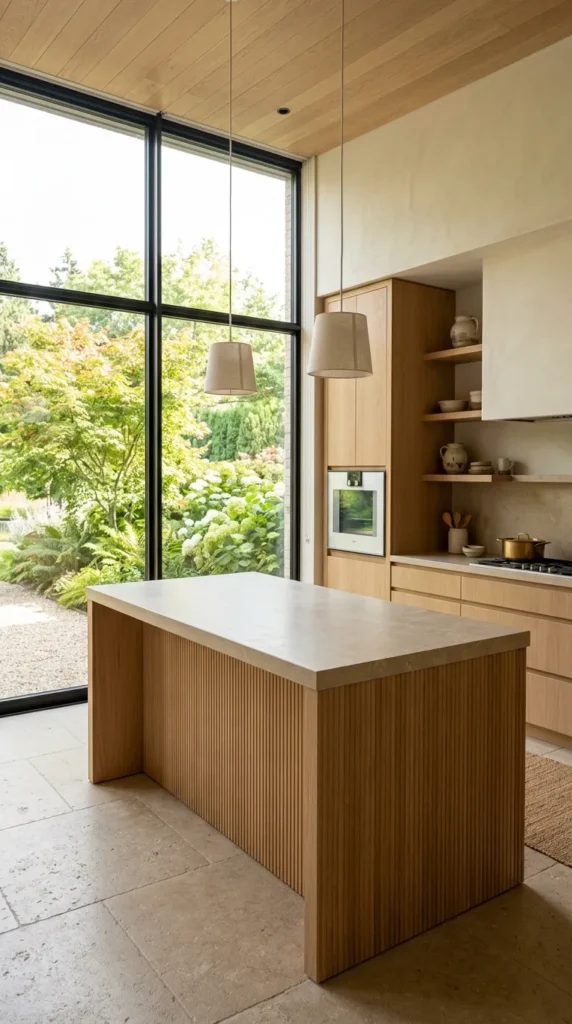
Natural light is treated as a primary material in Japandi design rather than as a practical requirement to be managed. A Japandi kitchen maximizes the natural light available from its windows and protects that light from being blocked by window treatments, upper cabinets positioned to obscure windows, or clutter on windowsills that interrupts the light’s path into the room. A completely clear windowsill in a Japandi kitchen is not a missed styling opportunity. It is the correct Japandi treatment of a light source.
Window treatments in a Japandi kitchen should be simple enough to be removed entirely when the light is needed and functional enough to provide the shade or privacy required when the window faces a situation where those are necessary. Simple linen roller blinds that disappear when rolled up or simple linen panels on a minimal track that stack completely clear of the window opening are the treatments that suit the Japandi kitchen most naturally because they provide function without adding decorative complexity to surfaces that the design asks to remain simple.
11. Choose a Stone or Concrete Sink Over Stainless Steel
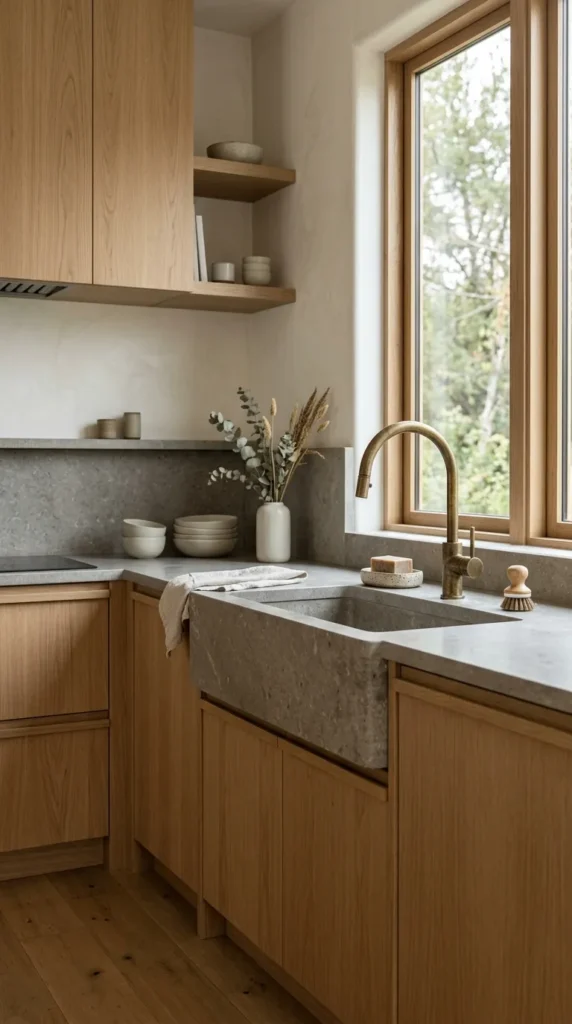
The sink in a Japandi kitchen is an opportunity to introduce a material with genuine natural quality at one of the kitchen’s most used and most visible positions. A stone sink in soapstone or basalt, a concrete sink, or a ceramic sink in a simple form with a warm tone all create a sink presence with the material honesty that Japandi design values and that stainless steel, regardless of its functional quality, cannot provide because stainless steel is an industrial material that reads as industrial in a context that is trying to achieve something warmer and more organic.
The tap above a stone or concrete sink should be simple in form and warm in finish. A tall single lever tap in aged brass or dark bronze creates the right relationship between the sink’s natural material quality and the tap’s metal quality without the visual complexity of elaborate tap forms or the coolness of chrome that suits industrial kitchens rather than Japandi ones.
12. Edit the Kitchen Regularly and Without Sentiment
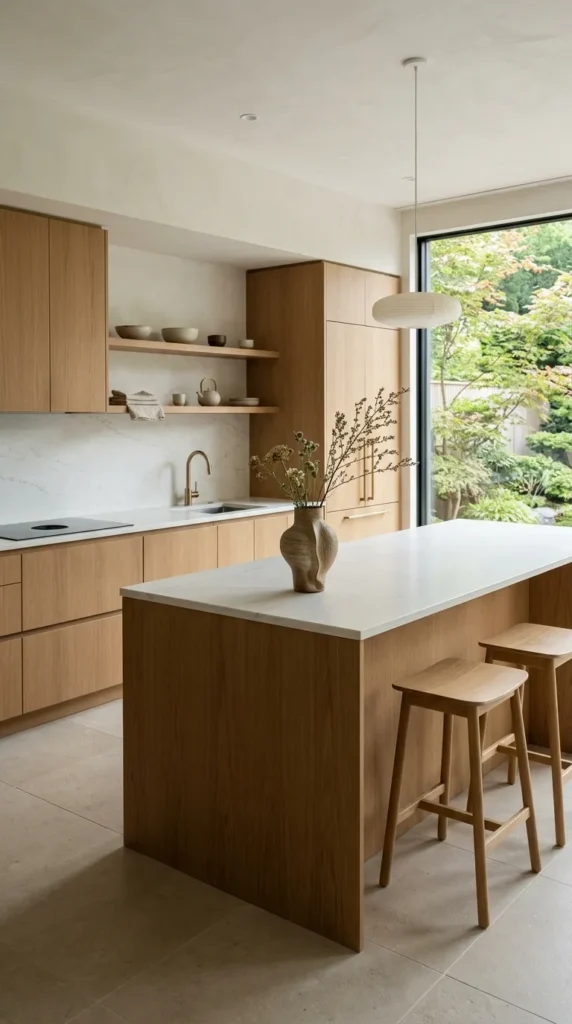
The Japandi kitchen is not a design that is achieved once and maintained passively. It requires ongoing editing of what the kitchen contains, how surfaces are used, and what objects earn a place in a room built on the principle that every object should justify its presence. Objects that were appropriate when they arrived and have since stopped being used justify their removal as clearly as objects that were never appropriate in the first place.
A monthly kitchen edit that walks through every surface and every cabinet with the question of whether each object is genuinely used and genuinely belongs in the kitchen maintains the design’s integrity over time. Things removed from the kitchen in this edit either find another home elsewhere in the house or leave the house entirely. The Japandi kitchen that is edited regularly continues to feel like a Japandi kitchen five years after it was designed. The same kitchen that is never edited becomes a neutral kitchen that once had Japandi aspirations and has since been overtaken by the accumulation that kitchens naturally attract when no one is actively maintaining the standard of restraint the design requires.
Final Thoughts
A Japandi kitchen works when the restraint it requires is understood as a daily practice rather than a design decision made once at installation. The materials can be perfect and the cabinet style can be exactly right and the hardware can be minimal and considered and the kitchen can still fail to be genuinely Japandi if the counter is covered in accumulated objects and the open shelf is being used as overflow storage and the surfaces that were supposed to breathe are doing the work of a room that was designed without enough storage.
Start with the materials and the layout because those create the foundation. Then address the storage so that there is genuinely enough closed storage for everything the kitchen needs to contain. Then maintain the counter clarity and the surface editing as the ongoing practice that keeps the kitchen what it was designed to be rather than what every kitchen becomes without that attention.