21 Clothes Storage Ideas for Small Spaces
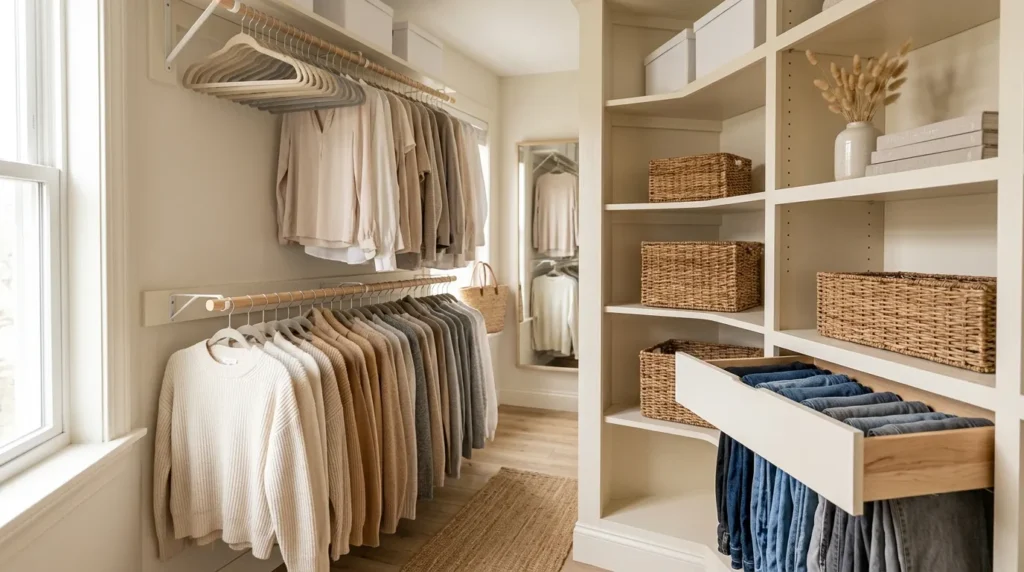
Having a tiny closet is one of those problems that sounds small until you’re standing in front of it every morning wondering where to put anything. I lived in a studio apartment with a closet that was maybe 18 inches wide, and it was genuinely the most stressful part of my day. I’d shove hangers in, and they’d jam. I’d squeeze one more sweater onto a shelf, and the whole stack would collapse. Folded clothes piled up on my bed because there was nowhere else for them to go. It was chaos.
The real problem wasn’t that I had too many clothes (though I probably did). It was that I wasn’t using the space strategically. Once I stopped thinking about clothes storage as a closet problem and started thinking about it as a space problem, everything changed. You’ve got walls, doors, under furniture, corners, and ceiling space that aren’t being used. This article walks through 21 specific ways to organize clothes in small spaces some cost almost nothing, some require a small investment, but all of them actually work because they’ve been tested in real tiny apartments, dorm rooms, and bedrooms. By the end, you’ll see your space differently and realize you have way more storage potential than you thought.
Double Your Closet Rod Space with Cascading Hangers
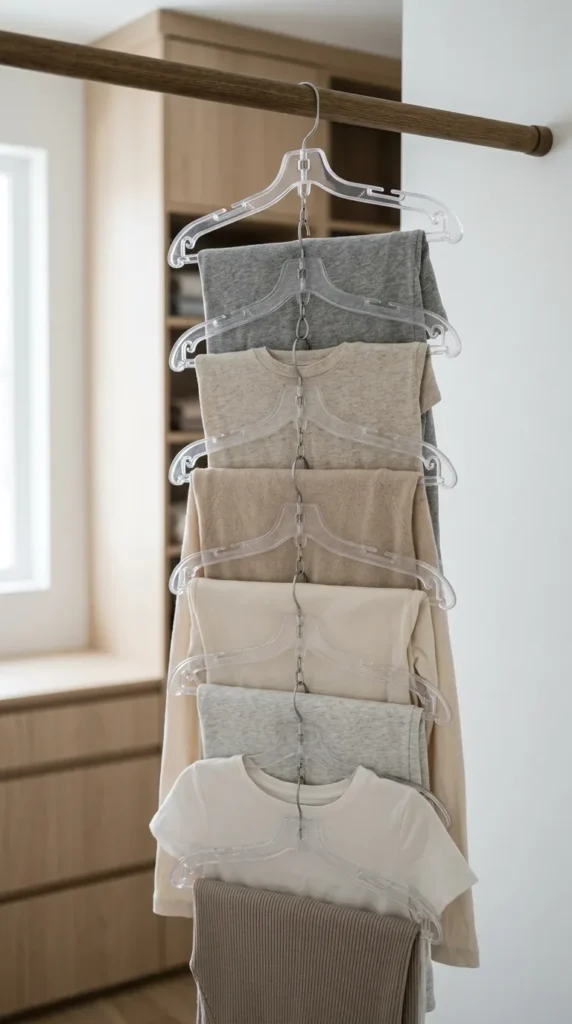
If you’ve only got one rod in your closet, you’re wasting vertical space. Cascading hangers plastic hangers with hooks that chain together vertically instantly double or triple your hanging space without taking up extra floor room. A single hook becomes four or five hanging spaces.
I installed cascading hangers in my closet and was shocked how many more pieces I could fit. Instead of 15 hangers across the rod, I suddenly had 40-45 pieces hanging. The key is grouping similar items together all jeans on one chain, all sweaters on another so you can actually find what you want without unraveling the whole chain. Don’t use them for heavy items like coats (they’ll strain the hanger and clothes might wrinkle), but for lightweight things like T-shirts, dresses, and lightweight tops, they’re a game-changer. They cost about $15 for a pack of five, so the investment is tiny compared to the storage gain.
Use the Back of Your Closet Door
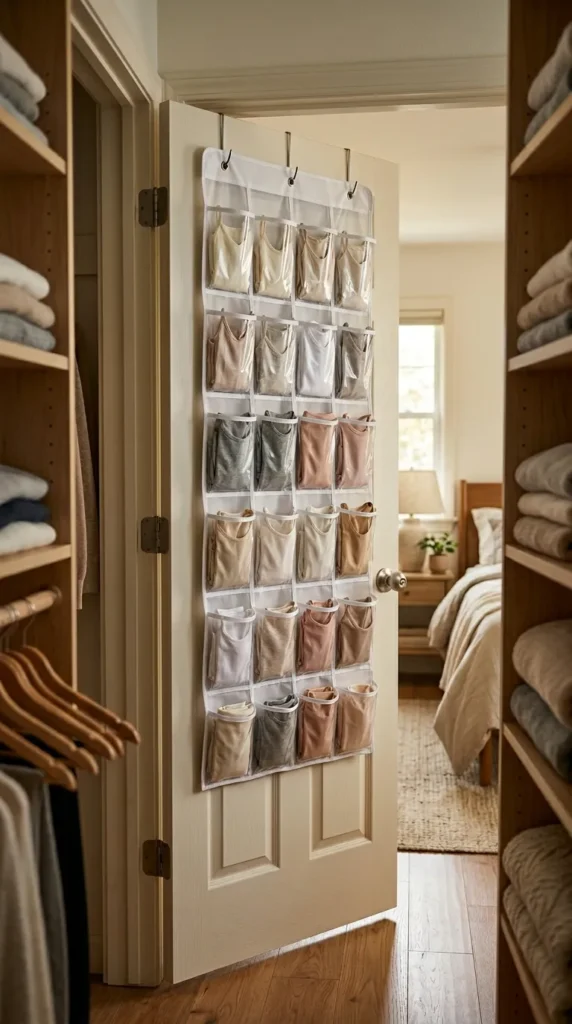
The inside of a closet door is basically free real estate that most people ignore. This is perfect for lightweight clothes, belts, scarves, or accessories. An over-the-door organizer with clear pockets can hold 12-15 light items like tank tops, camisoles, or delicate pieces that don’t need much weight-bearing.
I hung a clear pocket organizer on my closet door and filled it with off-season tank tops, workout tops, and lightweight layers. Suddenly I had space on my main rod for things that needed more hanging room. You can also use adhesive hooks on the inside of the door nothing fancy, just basic hooks in a line and hang small baskets or fabric bags for lightweight accessories. The door swings into your closet when you open it, so nothing gets crushed. This trick alone freed up about 20% of my main rod space.
Stack Shelves Vertically in Closet Corners
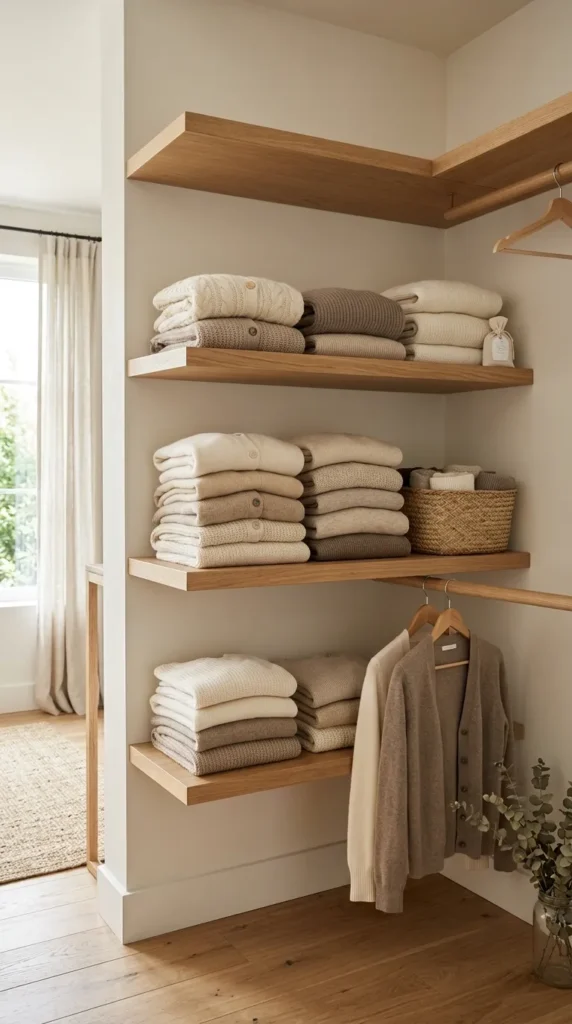
Closet corners are usually wasted space. Adding extra shelves either mounted shelves or stackable shelf dividers creates multiple levels for folded items without taking up more floor space. Two or three shelves in a corner hold way more than one.
I added a vertical shelving unit in one corner of my closet, and it became the home for all my sweaters, cardigans, and lightweight pants. Having dedicated shelf space for folded items meant my rod was completely free for hanging dresses, jackets, and things that actually need to hang. Shelf dividers (vertical metal separators) prevent folded stacks from tumbling over when you pull one item out. If you can’t install permanent shelves, stackable plastic organizers work just as well and don’t require drilling.
Keep Under-Bed Storage Organized with Labeled Bins
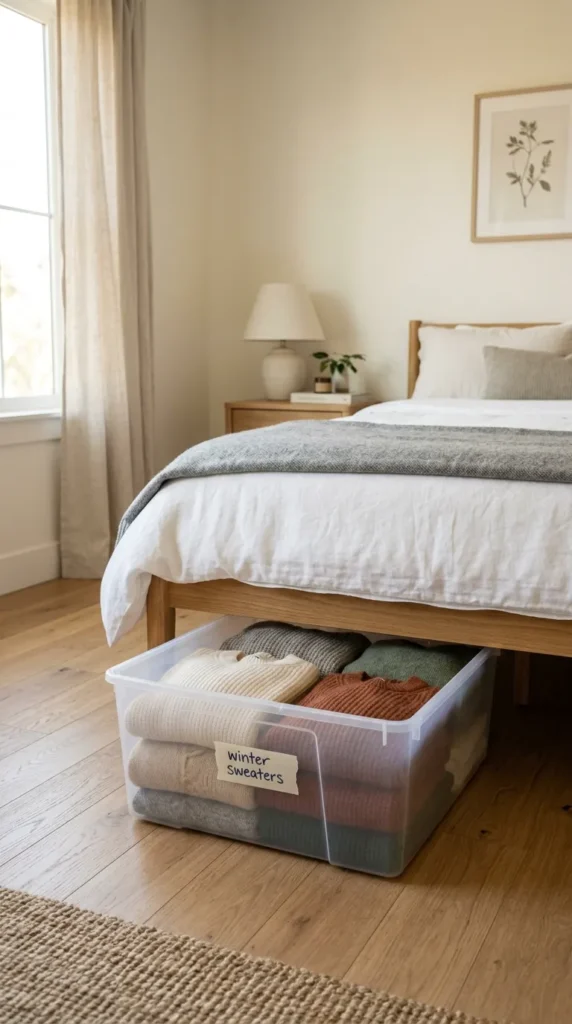
Under-bed storage is perfect for off-season clothes, bulky items, or anything you don’t access constantly. The trick is keeping it organized so you don’t buy duplicate items because you forgot what’s stored underneath. Clear plastic bins with labels solve this instantly.
I store my winter clothes in clear containers under my bed from April through October, and I always know exactly what’s there. I label each container with what’s inside winter sweaters, thermal leggings, heavy jeans. Using clear containers instead of opaque ones is genuinely important because you can see the contents without opening them. Keep a simple inventory on your phone or a note on your mirror if you’re storing things you might want to access or donate during the season. The under-bed space holds way more than most people realize typically four to six large bins depending on bed height.
Need to organize your wardrobe too? Explore 16 Small Closet Ideas Worth Trying for smart ways to maximize every inch.
Install a Second Rod or Rail System
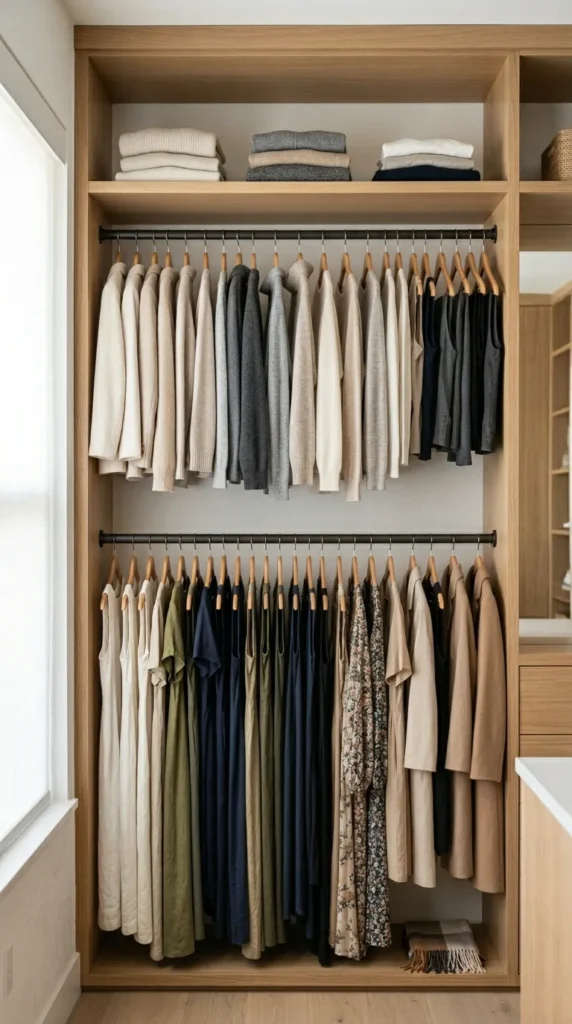
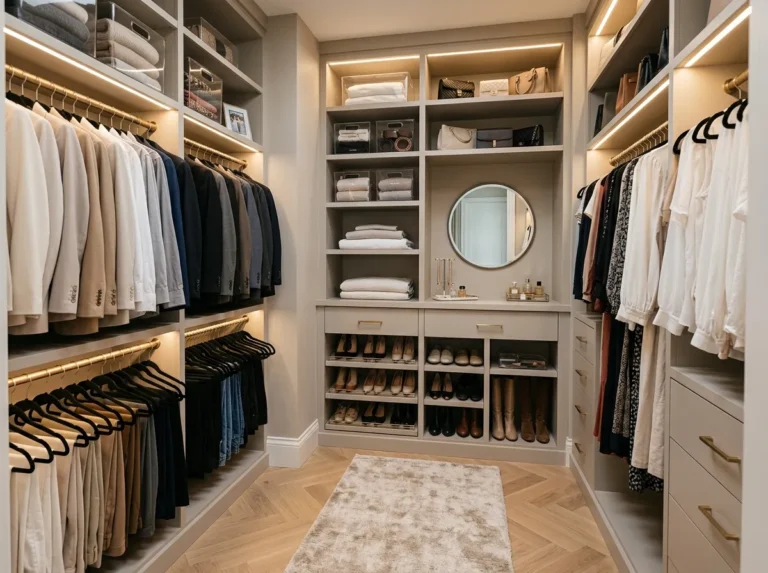
If your closet has height above the existing rod, you can install a second rod about two feet above the first one. This creates two levels of hanging space for shorter items like shirts, jackets, or folded pants. It’s one of the highest-capacity storage additions you can make.
I had about 30 inches of space above my existing closet rod, so I installed a second rod specifically for lightweight tops and jackets. This doubled my hanging capacity without touching anything else. Shorter items hang on the lower rod, longer pieces like dresses hang on the top rod. The downside is that the upper rod is less convenient to reach, so use it for seasonal items or clothes you don’t wear constantly. Installation is simple you just need a few brackets and screws, and it costs about $30-40 for a decent rod and mounting hardware. This single upgrade probably freed up more space than any other storage solution I’ve tried.
Use Vacuum Storage Bags for Bulky Items
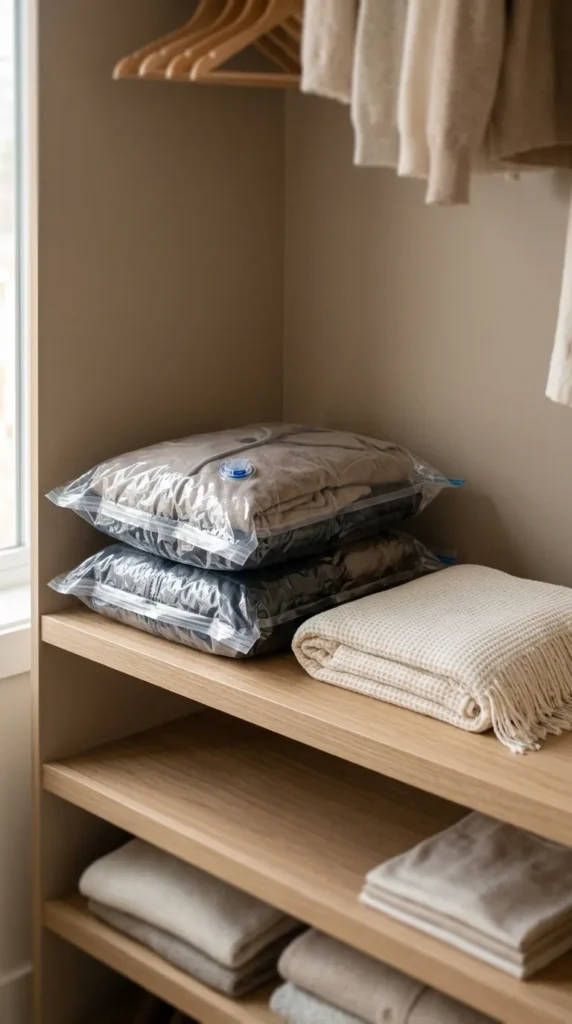
Bulky winter coats, heavy sweaters, and comforters take up crazy amounts of space. Vacuum seal bags compress items by 75%, which is genuinely life-changing if you’re storing seasonal clothing. One bag holds what would normally take up an entire shelf.
I vacuum-seal my winter coats in spring and suddenly I have shelf space for lighter spring clothes. Each bag holds 2-3 heavy coats depending on size. A regular household vacuum works fine just don’t use a shop vac because it’s too aggressive and can damage clothing. The downside is that heavily compressed items like sweaters can develop creases that don’t always come out. So I only vacuum seal coats and outerwear, not delicate knits. Check on sealed items every few months to make sure nothing’s getting moldy or damaged. If you’re serious about seasonal storage, this method saves more space than almost anything else.
Utilize the Space Above the Closet Rod
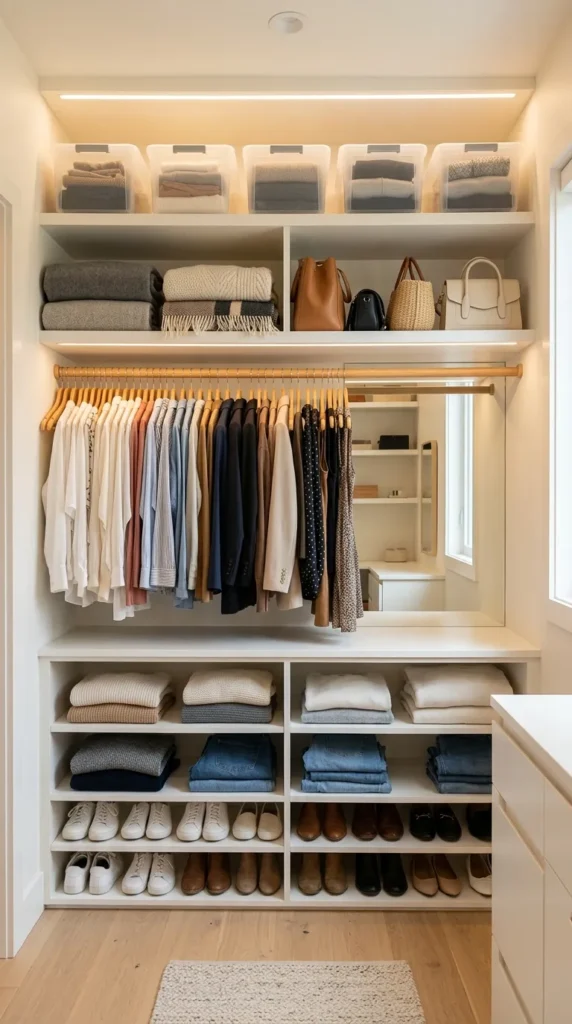
The wall space above your closet rod is usually empty. Install a shelf or two along the top one shelf about 12 inches above the rod, and potentially another 12 inches above that. This creates overhead storage for items you don’t access often.
I use the top shelf in my closet for out-of-season handbags and belts. The middle shelf holds extra blankets and light jackets. Because the space is above my head, I can’t see it clearly without looking up, so I keep things there that don’t need to be accessible daily. Clear plastic storage boxes work great up here because you can see what’s inside. This overhead space is easy to forget about, but it’s surprisingly useful for bulkier items that don’t fit on your regular shelves.
Try Slim Hanging Organizers for Vertical Space
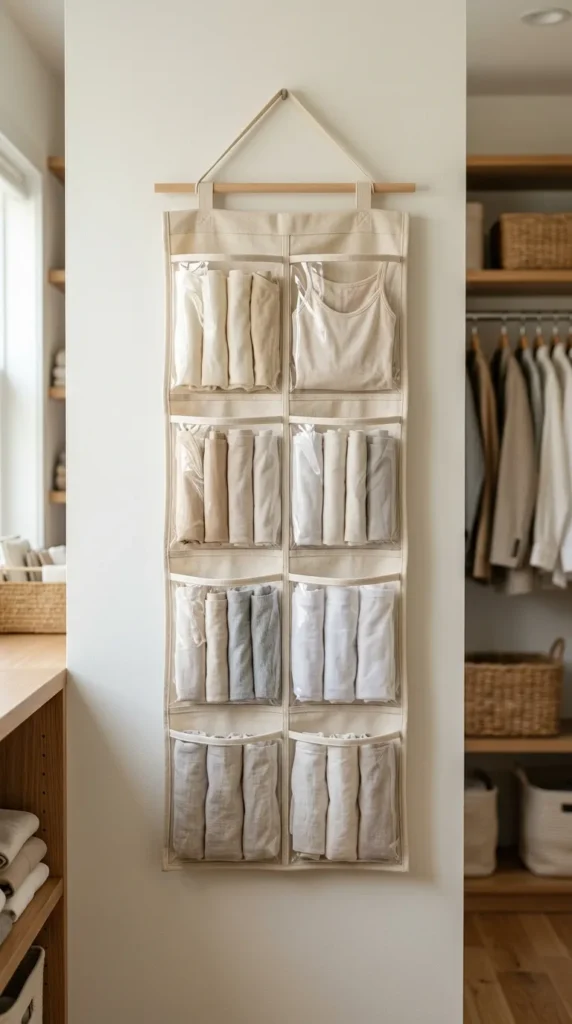
Hanging organizers with multiple compartments sometimes called over-the-door organizers or hanging closet organizers maximize vertical space without taking up floor room. A single organizer with 10-12 pockets holds a surprising amount of lightweight clothing.
I hung a clear hanging organizer on one closet wall and filled it with lightweight shirts, camis, and layering pieces. It holds about 12-15 items and keeps them visible and accessible. The key is choosing organizers with clear pockets so you can actually see what’s inside without dumping everything out. Fabric organizers in white or natural linen coordinate with most closets and look intentional rather than like storage overflow.
Use Shelf Dividers to Maximize Folded Clothes
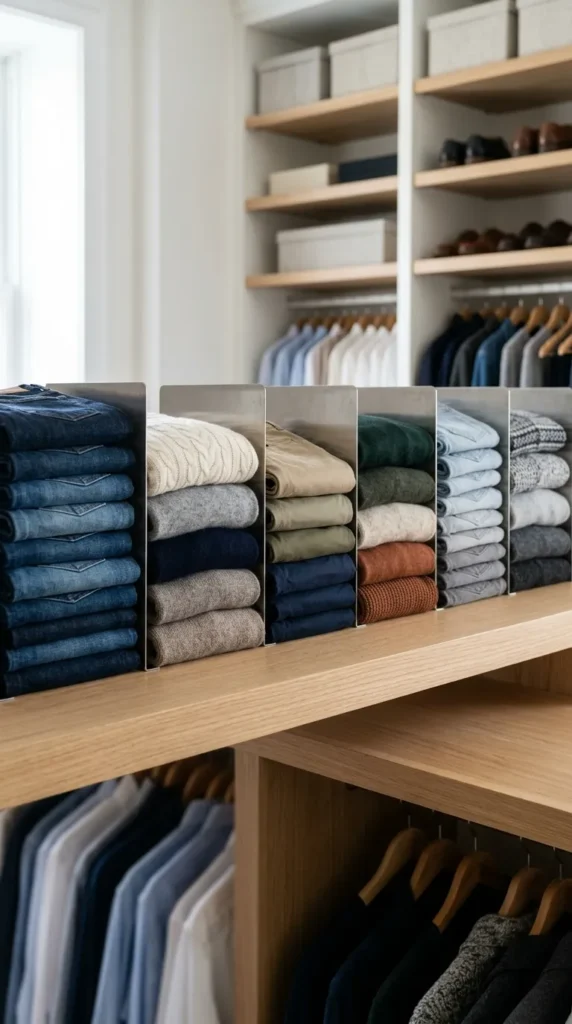
If you’re stacking folded clothes on shelves, shelf dividers (those thin metal or plastic separators) prevent the whole stack from tumbling when you pull one item out. They also make your folded stacks more stable and accessible. One shelf can hold multiple distinct stacks instead of one big pile.
I use metal shelf dividers in my closet, and suddenly my shelves are way more organized. All my jeans live in one section, sweaters in another, casual pants in another. It takes 30 seconds to find what you want instead of unraveling an entire stack. Dividers are cheap usually $5-10 for a pack of adjustable ones and they work with any shelf height. This is one of those tiny investments that genuinely changes how organized your space feels.
Install a Floating Shelf Above Your Dresser
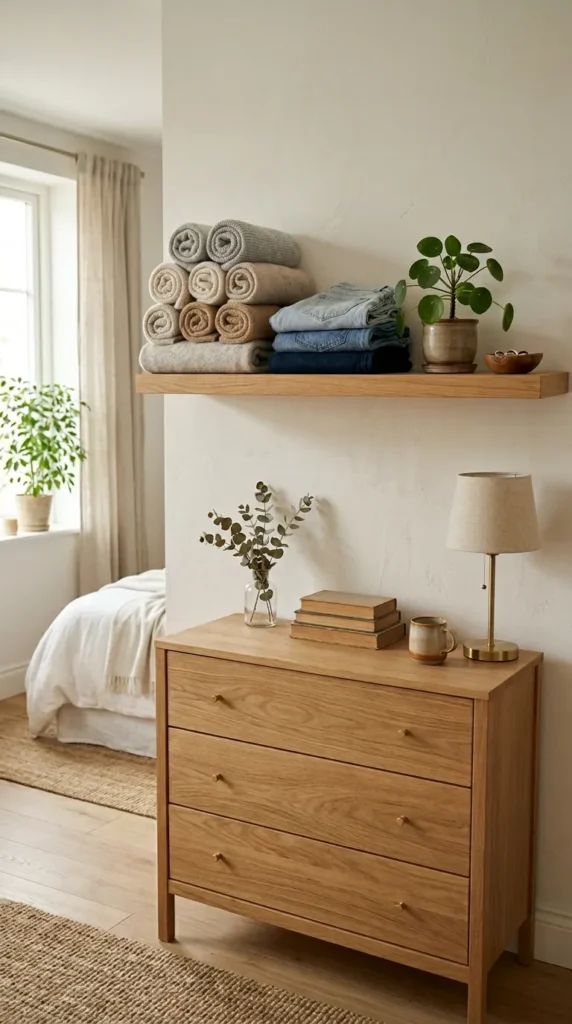
If you have wall space above a dresser, floating shelf creates additional folded clothes storage without taking up floor space. One shelf holds at least 10-15 folded sweaters or jeans depending on how neatly you fold.
I added a floating shelf above my dresser and use it for rolled sweaters and lightweight pants. Rolled items (instead of folded flat) save space and look more intentional on a visible shelf. Choose a shelf that’s deep enough about 10-12 inches—so rolled items don’t tip forward. This works especially well in bedrooms where closet space is really limited. The shelf becomes part of your bedroom design if you style it nicely, so it’s not just storage it’s also decoration.
Use a Slim Rolling Cart for Accessible Storage
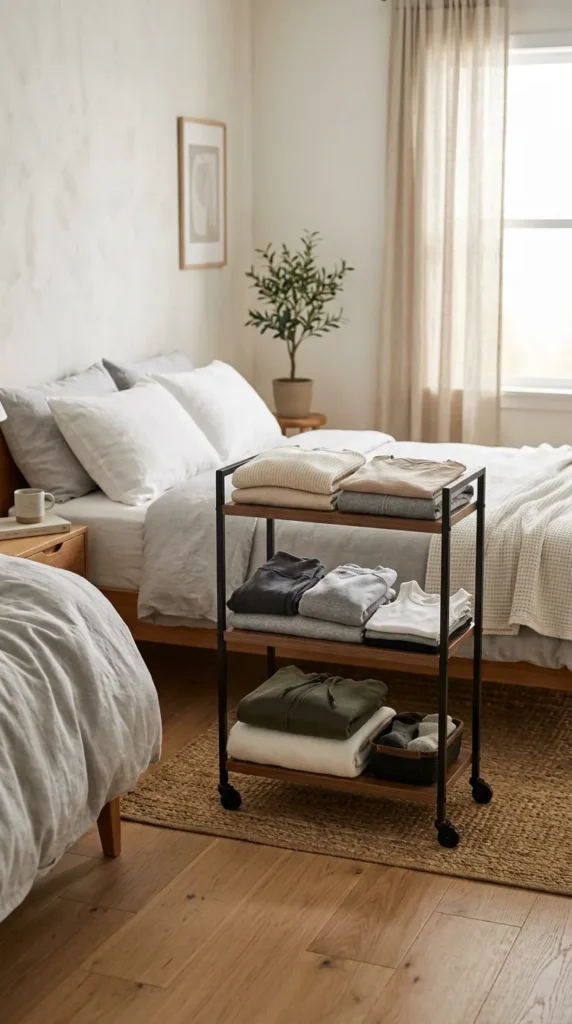
A narrow rolling cart the kind with 3-4 shelves and a small footprint fits in closets, corners, or against bedroom walls. Each shelf holds folded clothes, and wheels make it easy to access items at the back. This works especially well in rooms where closet space doesn’t exist.
I keep a rolling cart next to my bed for easy-access clothes workout gear, loungewear, extra sweaters. Having wheels means I can pull it forward whenever I need something from the back shelf, then roll it back. The narrow profile fits into tight spaces that larger furniture can’t use. Carts cost $30-60 depending on quality, and they’re temporary (no installation), so if you move you can take them with you.
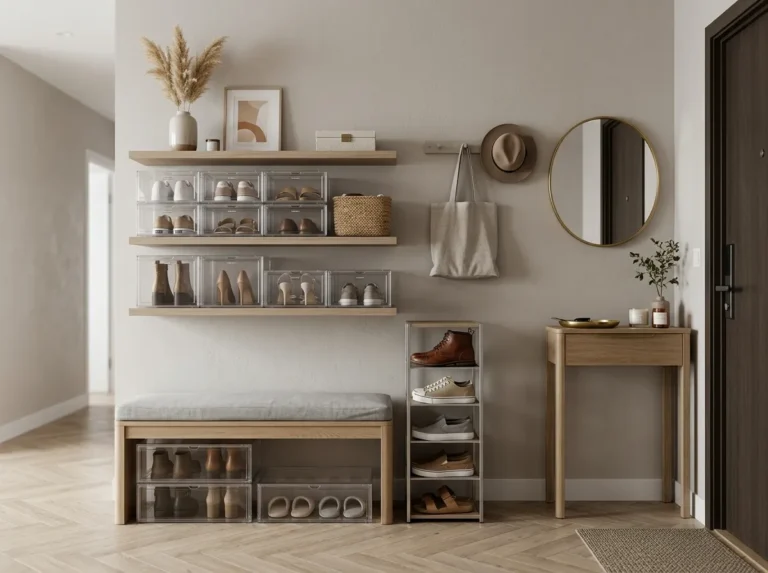
Keep your footwear just as organized with these 14 Shoe Storage Ideas for Small Spaces for clutter-free living.
Maximize Hanger Space with Slim Velvet Hangers
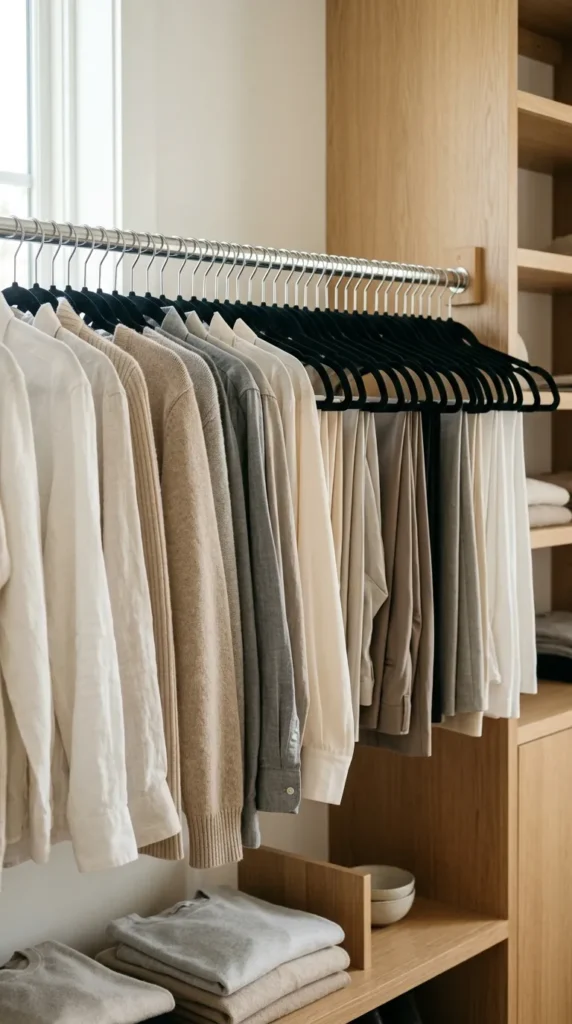
Switching from plastic or wooden hangers to slim velvet hangers can increase your closet’s hanging capacity by 20-30%. Velvet hangers are 40% thinner than standard hangers, so more items fit on the same rod. Plus, velvet grips clothes so nothing slides off.
This sounds like a tiny change, but I genuinely switched all my hangers to velvet hangers and fit way more clothes on my existing rod. Dark velvet hangers blend into the closet background better than bright plastic ones. Yes, they cost more than cheap plastic hangers, but if you’re in a storage crisis, the investment pays off instantly. Buy a pack of 20-30 and see how many more items suddenly fit.
Utilize Drawer Space with Organizer Inserts
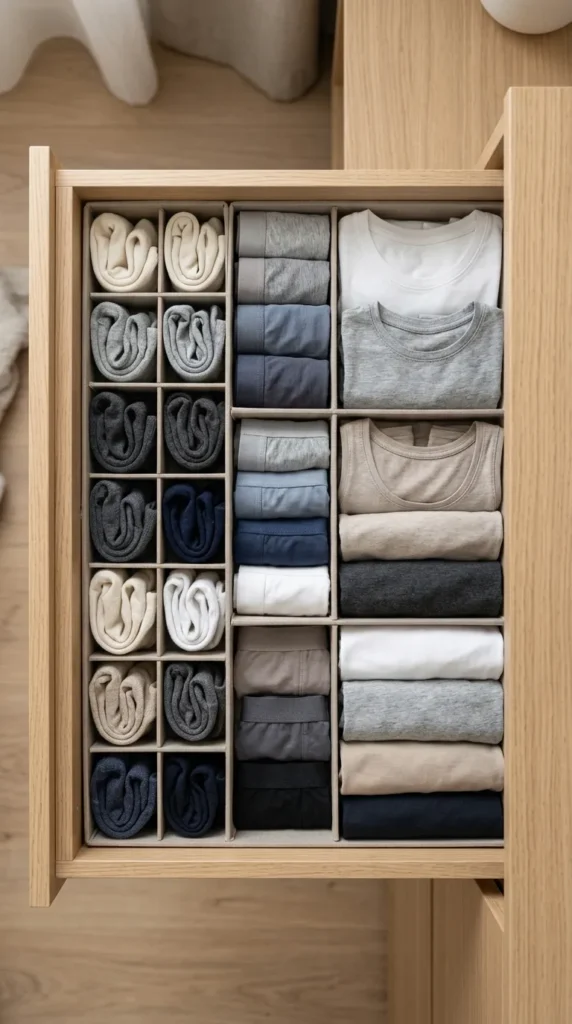
If you have a dresser, drawer dividers maximize the space by creating dedicated compartments for different items. Bras, underwear, socks, and lightweight tops each get a section so nothing gets crushed or lost in the back.
I use fabric drawer dividers in my dresser and now I actually know what’s in every drawer without digging. Everything has a designated spot. The dividers cost about $15-20 for a set and genuinely make dressing easier because you’re not fighting through a jumbled mess. This is one of those small changes that feels luxurious immediately.
Store Jeans Vertically Like Files
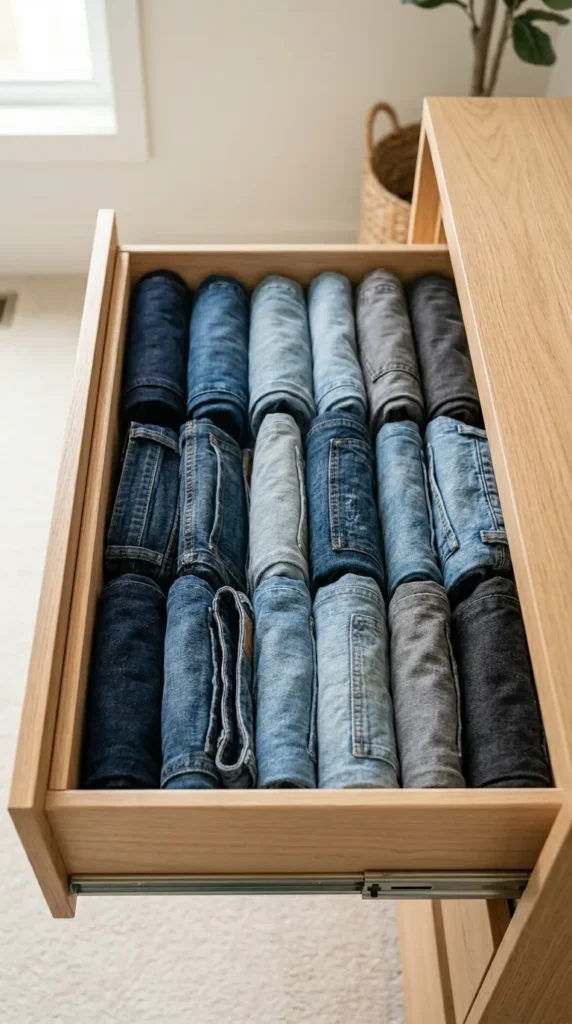
Instead of stacking jeans in a pile, store them vertically in a drawer or basket like files in a filing cabinet. You can see every pair without pulling the whole stack, and they take up way less space than flat stacking.
I switched to vertical jean storage and doubled how many pairs fit in my dresser drawer. Rolling jeans tightly before standing them up saves even more space. This method works for any thick items like sweaters or activewear too. It’s genuinely a game-changer for anyone with limited drawer space.
Create a Capsule Wardrobe to Reduce Overall Clothing
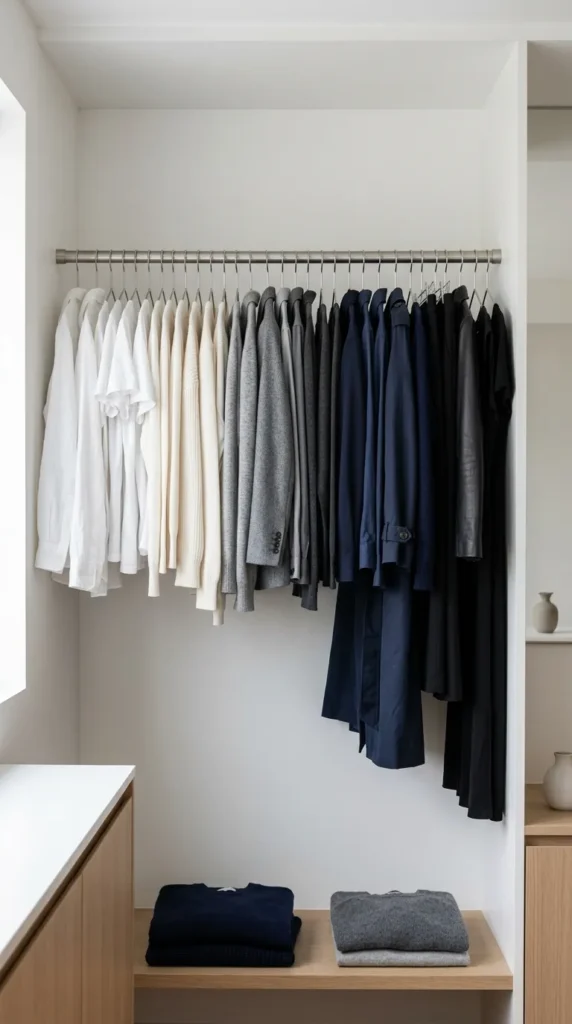
The most effective way to solve clothes storage in small spaces is honestly to own fewer clothes. A capsule wardrobe a curated collection of pieces that all coordinate and work together takes up dramatically less space than a closet full of random items.
I’ll be honest: this is the solution I resist but that actually works best. When I downsized from about 80 pieces to a 30-piece capsule wardrobe, my closet suddenly felt spacious. I could see everything. Nothing got lost. I wore everything I owned because it all coordinated. A capsule wardrobe is basically choosing a color palette (like neutrals plus one accent color), buying quality basics in that palette, and filling in with only pieces that work with everything else. Sounds restrictive, but it’s actually freeing. You don’t need to start with a full capsule even reducing from 80 pieces to 50 makes a huge difference.
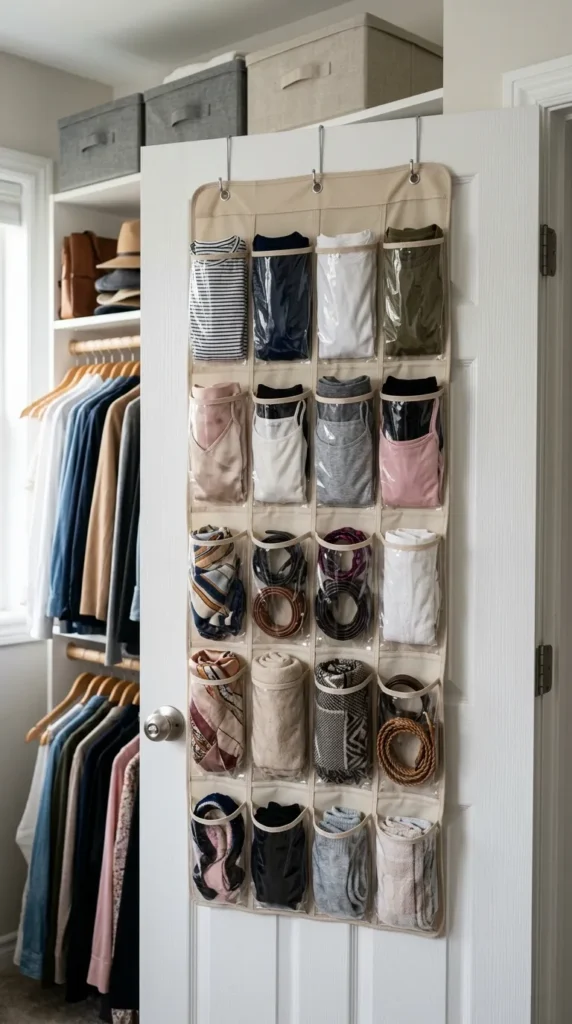
Use Hanging Shoe Organizers for Non-Shoe Items
Clear pocket shoe organizers aren’t just for shoes. They hold lightweight clothing items like bras, underwear, tank tops, or rolled-up accessories. Hanging on a door or hook, they take advantage of vertical space while keeping items visible.
I use a clear hanging organizer primarily for lightweight t-shirts and camisoles, and it’s surprisingly effective. The clear pockets let you see what’s there, and items stay organized. This is a great option if you have limited drawer space and need a visible storage solution for smaller items.
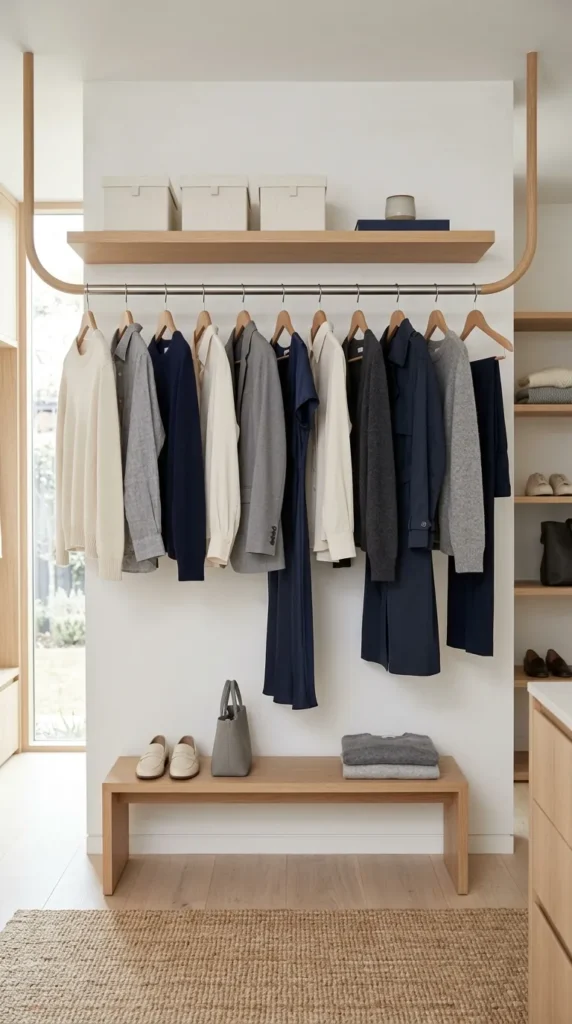
Build a Wardrobe Around Neutral Colors
Limiting your color palette means fewer clothes needed because everything coordinates. If you stick to neutrals (black, white, gray, cream, beige, navy) plus one or two accent colors, you need fewer total pieces because they all work together.
When I switched to a mostly neutral wardrobe with touches of navy and green, I instantly needed fewer clothes. Every top works with every bottom. Every sweater goes with every pair of pants. You’re not buying backup pieces in different colors because you literally need six different white tops. One or two work with everything. This isn’t about being boring it’s about being strategic.
Install a Clothing Rail in an Unused Corner
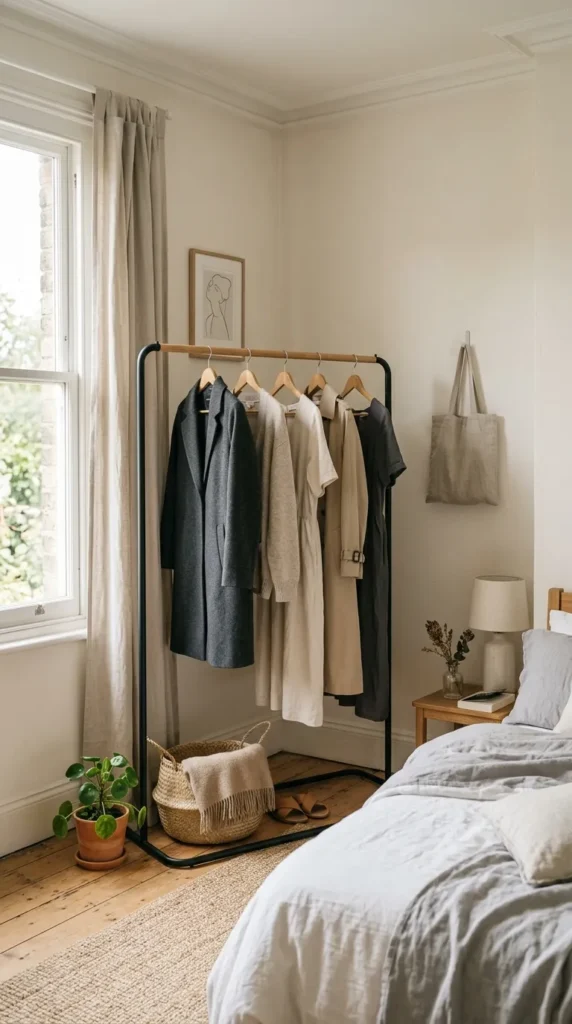
A standalone clothing rail (basically a freestanding closet rod) in a corner creates extra hanging space without installation. You can hang coats, dresses, or lightweight items. It works in bedrooms, corners, or against bare walls.
I have a clothing rail in the corner of my bedroom that holds my coats and out-of-season dresses. It’s temporary, requires no drilling, and fits in a space that otherwise wasn’t being used. Depending on the rail, it costs $30-80 and instantly adds hanging capacity without being too permanent or intrusive.
Use Shelf Baskets for Categorized Storage
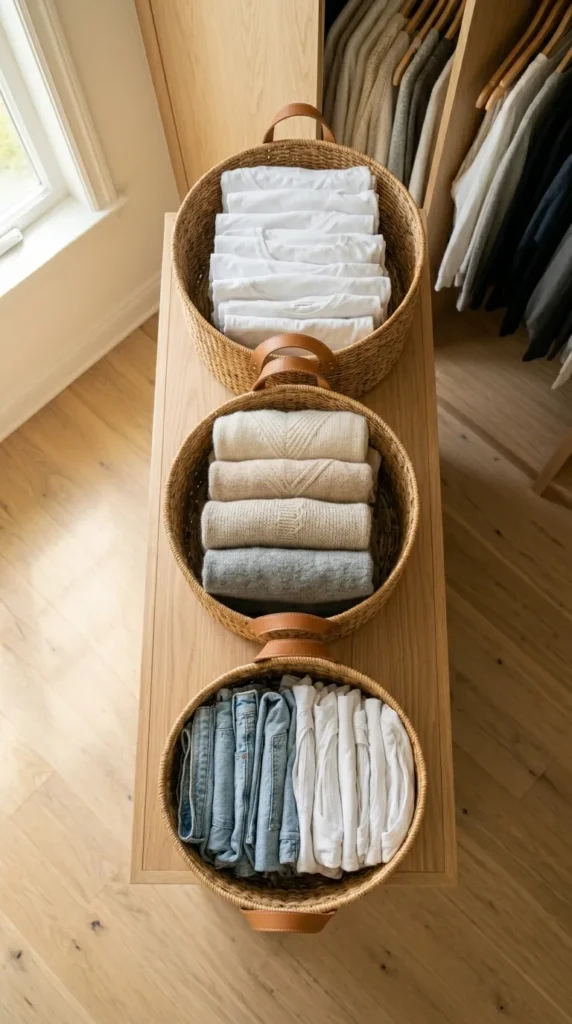
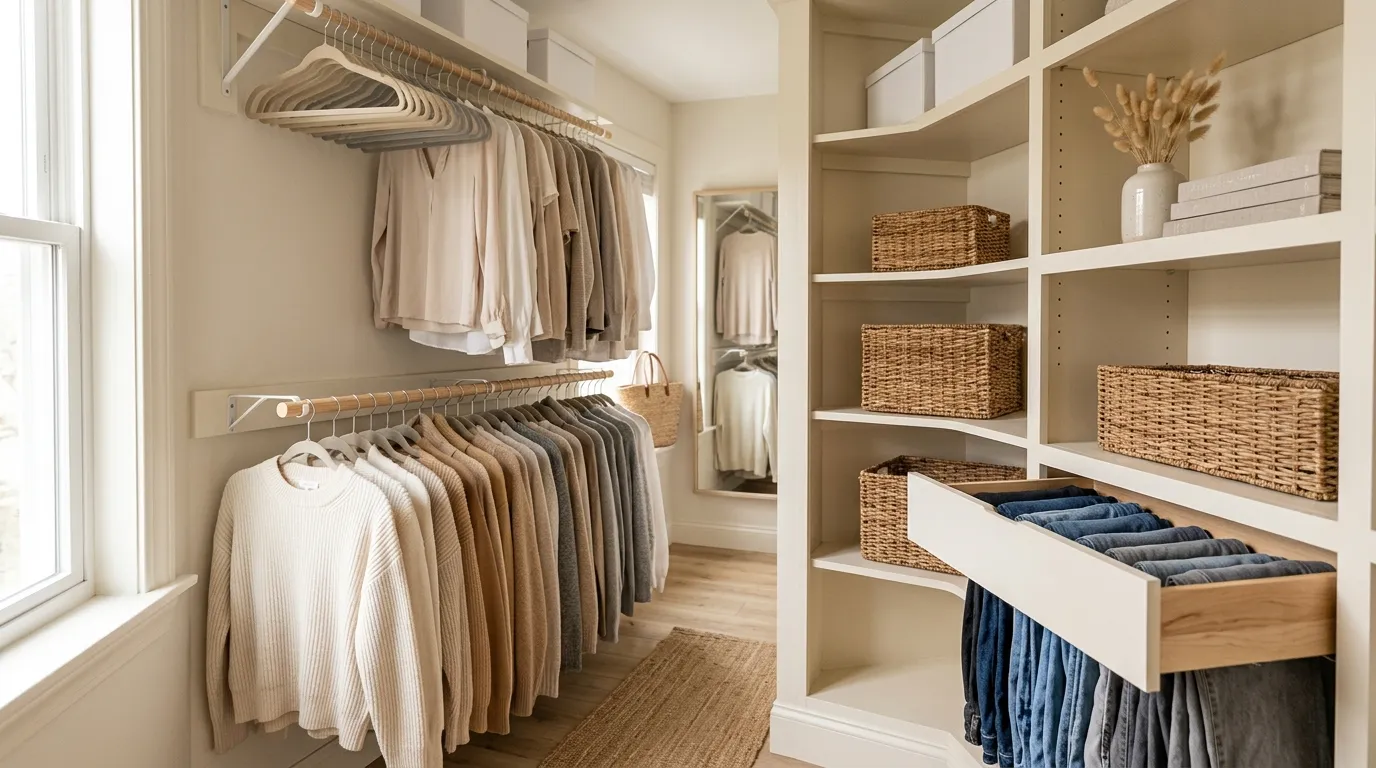
Woven baskets or fabric bins on shelves organize folded clothes by category while using vertical space efficiently. All sweaters in one basket, all jeans in another, all t-shirts in another. Baskets make shelves look intentional and organized.
Baskets also hide the visual clutter of folded clothes while keeping items accessible and visible by category. I use three baskets on my closet shelf one for sweaters, one for everyday pants, one for lightweight layers. When I need something, I know exactly which basket to open. Baskets cost $10-30 depending on size and quality.
Final Thoughts
Small space clothes storage isn’t about having less style or fewer options it’s about being strategic and intentional with what you own and how you store it. You probably have more storage potential than you realize. A second rod here, a shelf there, some hanging organizers, strategic use of vertical space these small additions add up to genuinely usable closet capacity.
Start by evaluating your space honestly. Look at walls, corners, doors, and above existing furniture. Pick one storage solution that matches your space and your needs. Maybe it’s cascading hangers, maybe it’s a second rod, maybe it’s finally organizing with shelf dividers. Test it for a week. If it works, add another solution. The point isn’t perfection it’s creating a system that actually lets you find and wear the clothes you own. Once you start thinking in terms of vertical space instead of floor space, your small closet stops feeling like a limitation and starts feeling like a puzzle you can actually solve.