14 Shoe Storage Ideas for Small Spaces
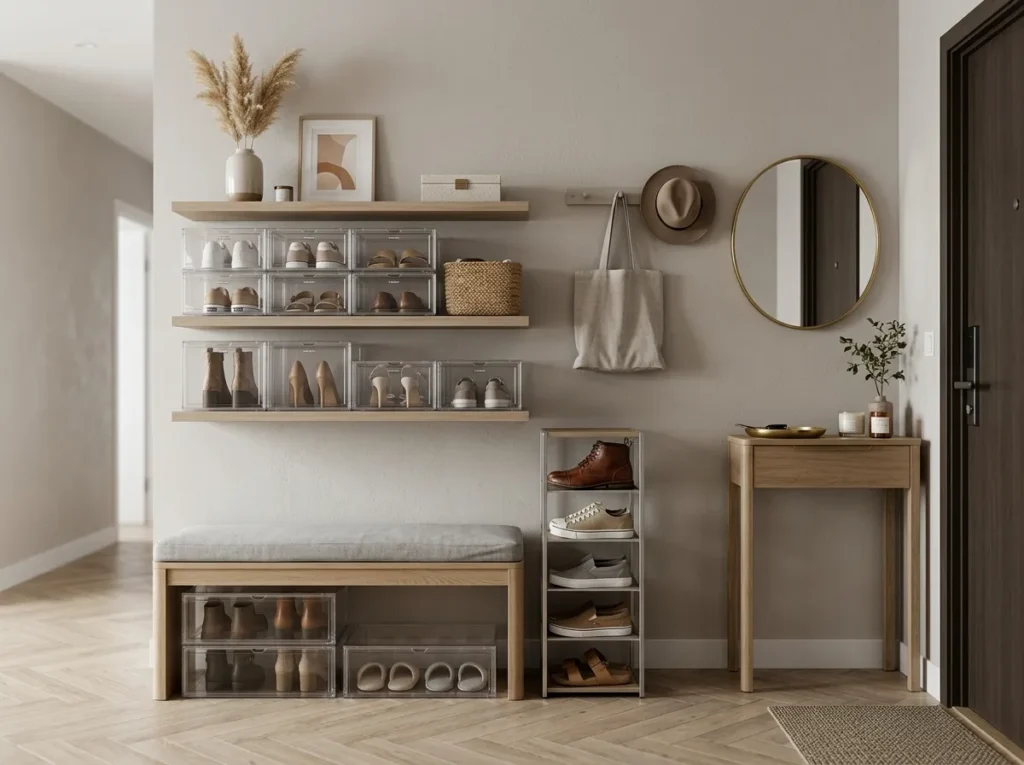
Small spaces and big shoe collections don’t mix well. I know because I’ve been there standing in my tiny bedroom surrounded by sneakers, heels, and boots with nowhere to put them. The frustration of not being able to find a pair when you need it, or worse, tripping over a shoe pile at midnight, gets old fast. But here’s the good news: you don’t need a mansion to solve this problem. What you need is a smarter approach.
The right shoe storage solution can actually make your small space feel bigger, keep your shoes in better condition, and make getting dressed way less stressful. Whether you’re living in a studio apartment, a dorm room, or a bedroom the size of a closet, I’ve tested enough storage hacks to know what actually works and what’s just Pinterest eye candy. This article walks you through 15 real ideas some dirt cheap, some a bit fancier that fit actual small spaces and won’t make your room look like a shoe warehouse.
1.Your Shoes Deserve Vertical Real Estate
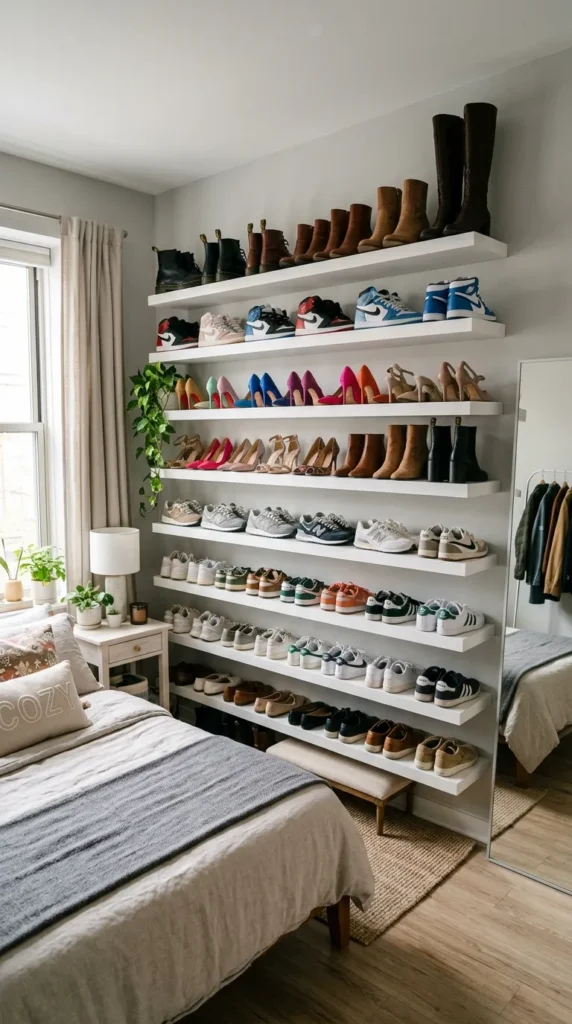
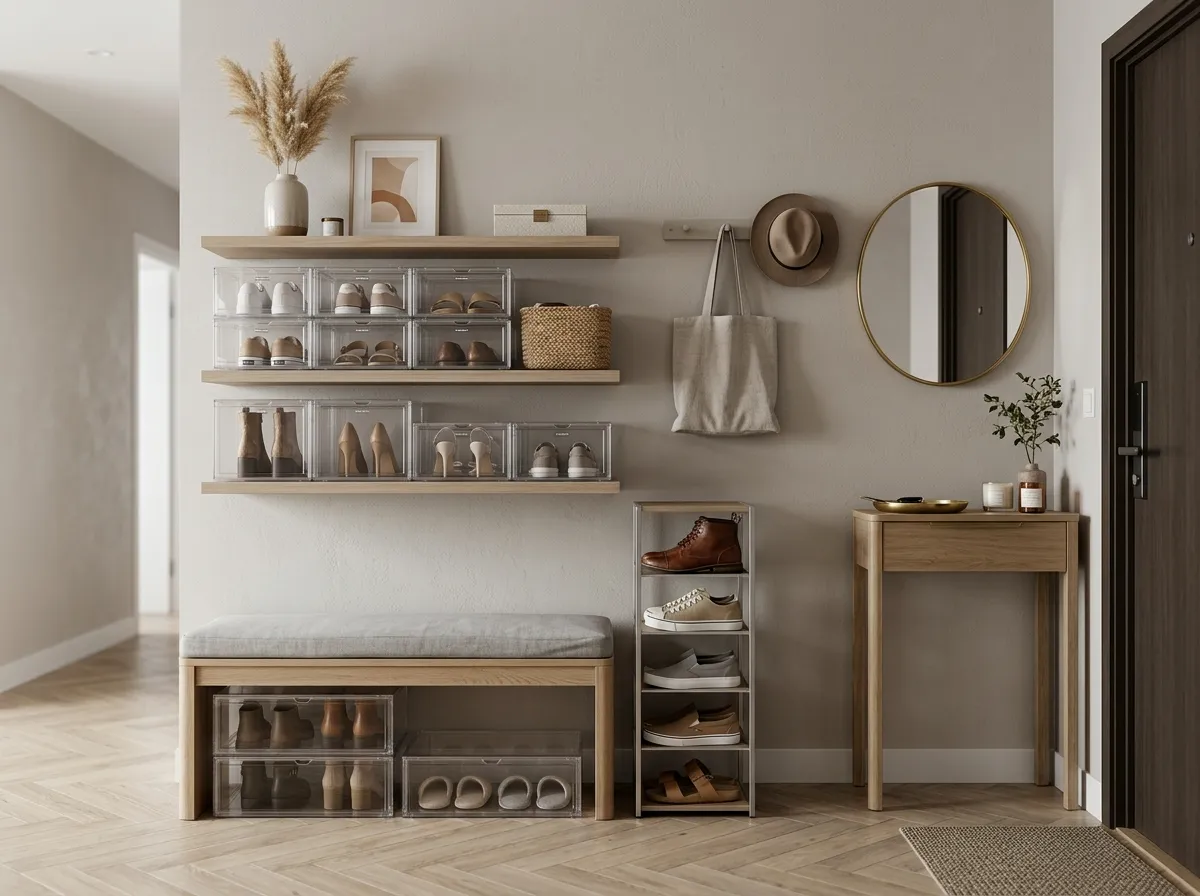
Walls are your secret weapon when floor space is gone. Seriously, stop thinking horizontally and start thinking up. Floating shelves above a doorway, along a blank wall, or even in a closet corner can hold anywhere from 8 to 20 pairs depending on the setup. The key is picking shelves that are deep enough about 12 inches is perfect so shoes don’t tumble off the back.
I installed three floating shelves above the radiator in my old studio and was shocked how many shoes fit. What I learned the hard way is that spacing matters. Leave at least 10 inches between shelves if you’re stacking boots vertically, but 8 inches works fine for flats and sneakers. Dark shelves (I used charcoal) hide dust way better than white ones, and they photograph better too if you’re into that aesthetic thing. Pro tip: add a small lip or edge to the front of the shelf. It’s only a few dollars more but prevents shoes from sliding off when you grab one in a rush.
2.The Door Trick Nobody Talks About
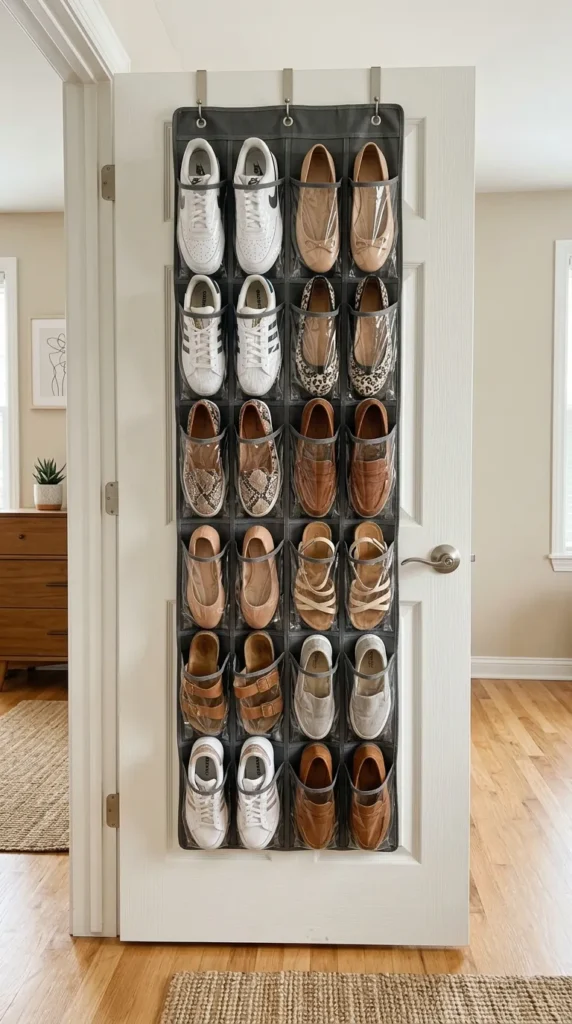
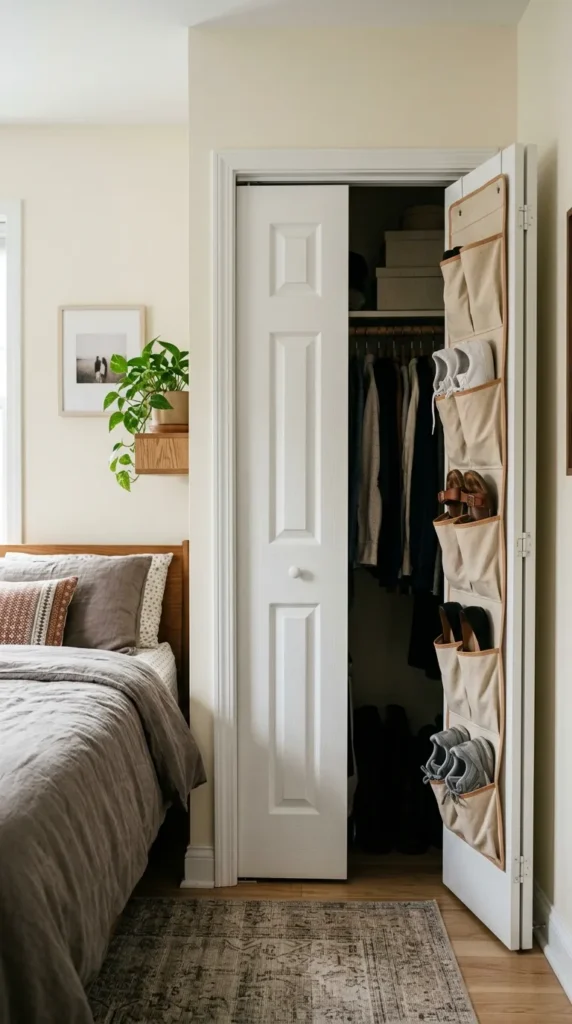
Doors are basically free storage staring you in the face. Over-the-door shoe organizers the hanging ones with clear pockets can hold 12 to 24 pairs depending on the style. The best ones have reinforced pockets and don’t bow outward weirdly after a few months. Honestly, I used to think these looked cheap, but the newer fabric ones actually look intentional and clean.
The real trick is putting it on the right door. Your bedroom closet door is obvious, but don’t forget the back of your bedroom door, bathroom door, or even a hallway closet. Just make sure the door swings freely and won’t hit your feet when you walk through. I had a client who put one on her entryway coat closet door and it totally cleaned up her bedroom. The organizer itself costs $20-40, takes five minutes to hang, and honestly saves more space than most paid solutions I’ve tried.
3.Under-Bed Storage: Not Just for Winter Coats
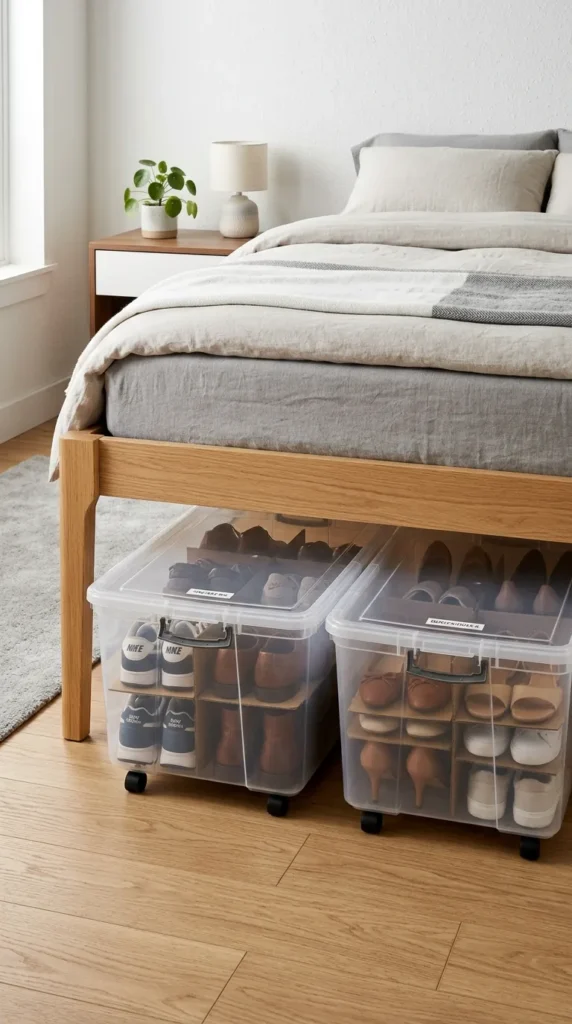
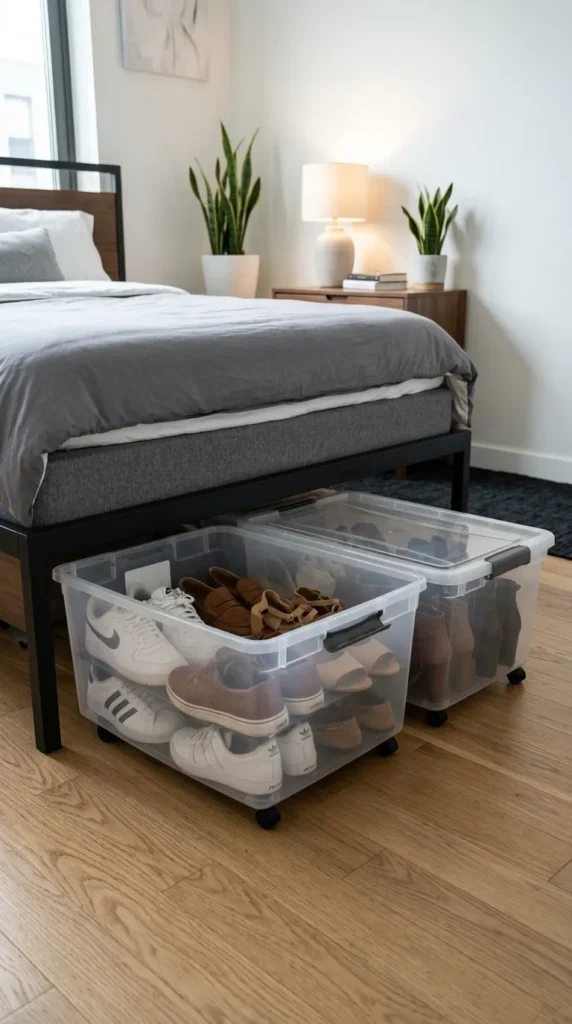
Under-bed storage containers are a lifesaver if you’ve got clearance. A standard bed usually gives you about 12 inches of space underneath, which is perfect for flat shoe boxes or slim storage bins. The trick is using containers with wheels regular ones get stuck and become a pain to pull out when you actually need a shoe.
Pick clear plastic containers, not opaque ones. You’ll actually remember what’s down there if you can see it. I’m specific about this because I once bought a pair of shoes and forgot I already owned them because they were hidden in an unmarked bin. Dark or cream fabric labels on the ends of containers help even more just write something like “sandals” or “winter boots” so you don’t have to peek inside. Honestly, this method works best for shoes you wear seasonally. Your everyday shoes should stay accessible somewhere you see them.
4.Shelf Dividers Change Everything
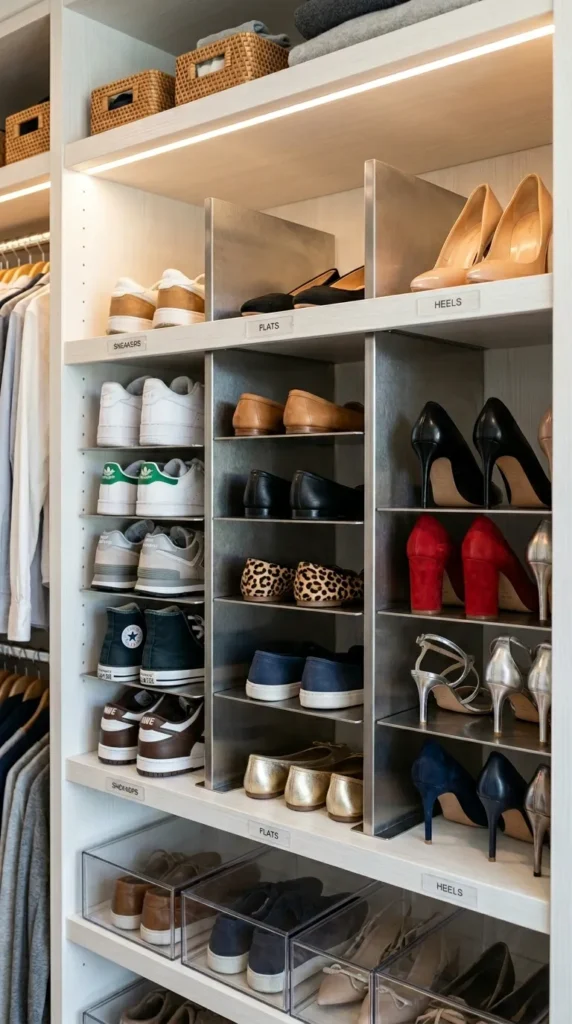
This one’s so simple it’s almost embarrassing how much it helps. Shoe dividers (those thin metal or plastic separators) make shelves actually usable instead of turning into a tumbled pile. They’re like three dollars for a pack and work inside closets, on open shelving, or in storage cubes.
I use them in two ways. First, I separate shoes by type heels in one section, sneakers in another, flats in another. Takes 30 seconds to find what you need. Second, if you’ve got smaller shoes (kids’ shoes, sandals, flats), I stack them vertically between dividers. It’s like a shoe filing system, and it doubles your shelf capacity. The metal ones hold up better than plastic over time, and black dividers blend in better than silver if your shelves are dark.
Need more organization inspiration? Browse 21 Clothes Storage Ideas for Small Spaces for clever storage solutions throughout your home.
5.Clear Containers Are Your Best Friend
Buying shoes you don’t remember owning is embarrassing. I’ve done it, and I know others have too. Clear plastic bins solve this instantly. When everything’s visible, you don’t duplicate purchases, and you’re actually motivated to wear what you own.
I’m not talking about those massive plastic storage bins that take up half your closet. Get smaller ones like the 5-quart size that hold 4-6 pairs each. Stack them in a closet corner, on a shelf, or even under your bed. Label them with painter’s tape on the front (it comes off clean later). This method takes more space than a shoe rack but keeps shoes pristine and dust-free, which matters if you live somewhere dry or if you care about shoe longevity. The downside? You can’t see everything at once unless you organize by color or type, so spend two minutes thinking through your system before you buy containers.
6.Over-the-Closet Rod Hooks for Small Closets
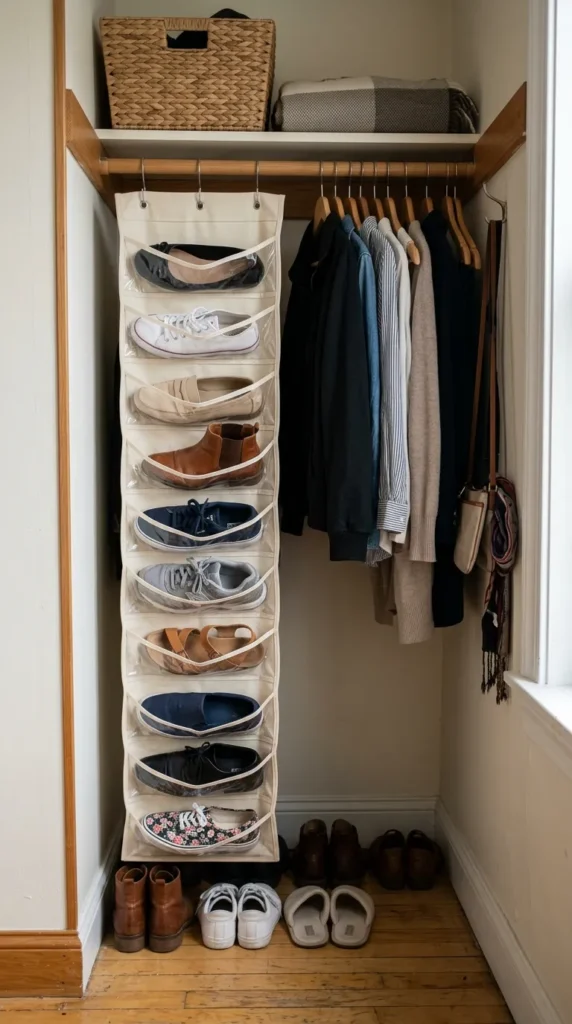
If your closet has a rod, you’ve got unused real estate right above it. Hooks screwed into the closet rod or the wall above it can hold hanging shoe organizers, clear shoe bags, or even individual shoes on hangers. It sounds weird until you actually see it working.
I tested this in a narrow closet and hung a over-the-rod hanger with five pockets. Suddenly I had 10 more shoes stored without touching the floor. The shoes stay clean, they’re visible, and it only cost $12. The only catch is making sure the hanging organizer doesn’t block light if you only have one closet light. Also, heavier shoes (boots, athletic shoes) work better than delicate heels on this setup because they won’t bend or deform hanging.
7.Slim Shoe Racks for Tight Corners
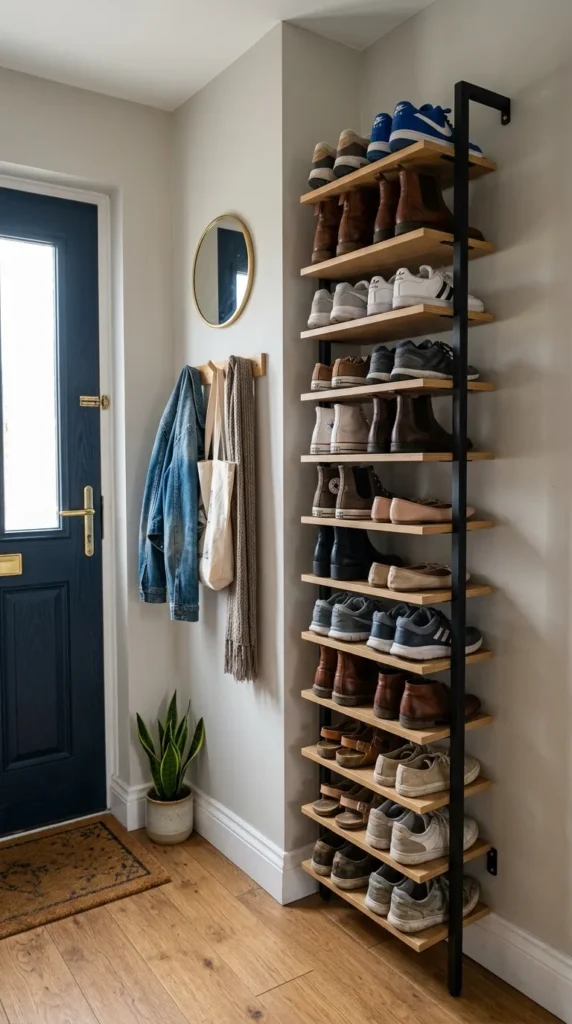
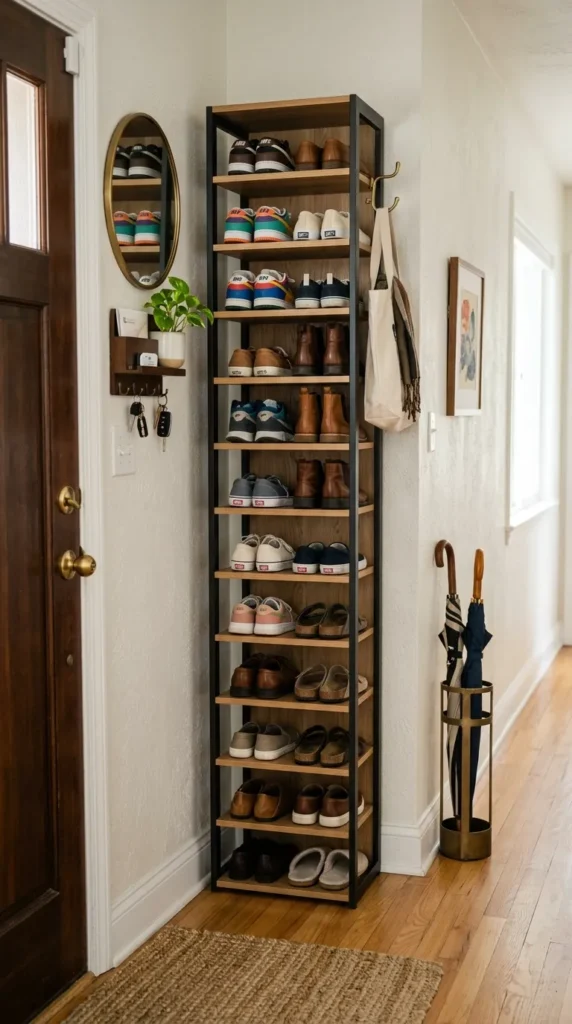
Not all shoe racks are bulky. Slim, vertical shoe racks the kind that look like narrow metal towers fit in corners or against walls without stealing much space. They usually hold 8-12 pairs depending on size, and they cost between $30-80.
I have a particularly narrow corner in my entryway where a normal rack wouldn’t fit, so I grabbed a slim vertical one. It holds my everyday shoes (sneakers, flats, one pair of heels) and actually looks intentional rather than makeshift. Choose one in black, white, or natural wood to match your space. The chrome or shiny ones sometimes look a bit utilitarian unless that’s your vibe. Honestly, this solution works best for people with fewer shoes (under 20 pairs) who want easy access to everyday pairs.
8.Vacuum Seal Bags for Off-Season Storage
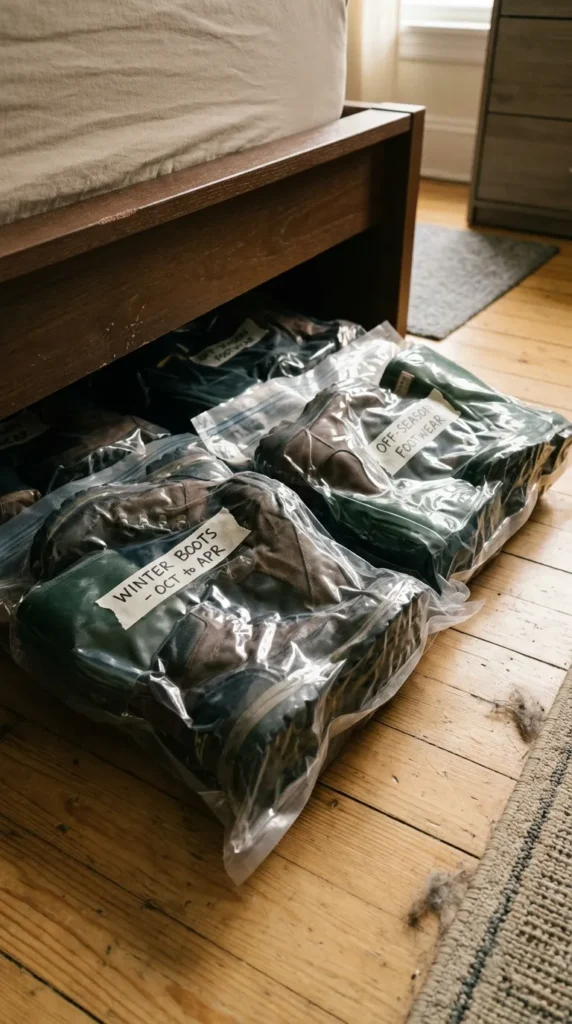
Seasonal shoes winter boots, heavy snow boots, rain boots take up serious space. Vacuum seal bags compress shoes by up to 75%, which is game-changing if you’ve only got under-bed or shelf space for storage.
Here’s the reality: this only works if you truly don’t need those shoes for months. Seal them in spring if you’re done with boots, and you’ll free up a ton of real estate. One downside is that compressed leather or suede needs to be checked occasionally to make sure it’s not getting moldy or developing creases. I learned this the hard way when I pulled out boots in November and they had permanent dents. Now I only vacuum-seal canvas or rubber shoes, and I check them every few months. Use a regular vacuum, not a shop vac less aggressive and won’t damage the bags.
9.Shoe Storage in a Narrow Hallway or Closet
Long, narrow closets are tricky. Instead of a standard closet rod, consider a double-hung rod system with hanging shoe organizers or clear shoe bags on each level. You’re using the vertical space twice and it actually works.
I see this done in small apartments a lot, and it’s one of the smartest hacks. Install a lower rod about 5 feet up (not eye level so it doesn’t feel weird walking past it), and boom you’ve got a second layer for shoes, belts, scarves, whatever. A fabric hanging organizer with 10 clear pockets costs about $20. This only works if you don’t need that closet rod for clothes, obviously. If you do, get a hanging organizer that hooks over the main rod instead it takes up minimal space and keeps shoes visible and accessible.
10.Repurpose a Bookshelf or Storage Cube
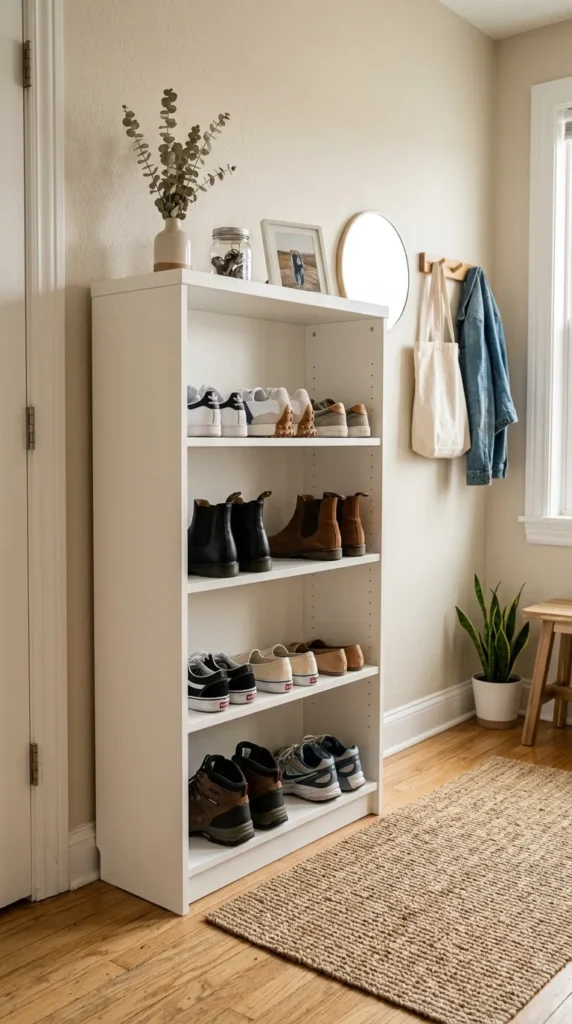
Sometimes the best shoe storage solution is literally furniture you already own. Bookshelves, storage cubes, and open shelving units work beautifully for shoes if you add dividers or containers. A four-cube storage unit ($40-60) can hold 16-20 pairs with the right organization method.
I turned an old bookshelf that was too short to use for books into a shoe shelf, and I love how it looks. I put one pair of statement shoes on display in each cube (face-out so you see them), and stacked other shoes in clear containers below. It’s become kind of a mini closet situation and honestly looks more intentional than most shoe storage I’ve seen. Just make sure the shelves are sturdy enough shoe weight adds up fast. If you’re going this route, commit to using matching containers or organizers so it looks cohesive.
Make the most of your wardrobe with these 16 Small Closet Ideas Worth Trying for practical closet organization.
11.The Flip-Down Door Organizer Method
Some smaller spaces have folding doors (like closets with bifold doors or accordion doors). There’s usually a metal frame and some empty space. You can attach shallow pockets or a slim shoe organizer directly to the inside of those doors without losing any functional space.
This works surprisingly well in kid’s closets or guest rooms with fold-down doors. I’ve seen people use small adhesive hooks and hang shoe bags directly on the door frame. Cost-wise, you’re looking at $15-30 total, which is way cheaper than buying actual furniture. The downside is that the shoe bags swing when you open the door, so this works better for lighter shoes and works best if you’re not constantly opening and closing that door multiple times a day.
12.Corner Tension Rod Hack
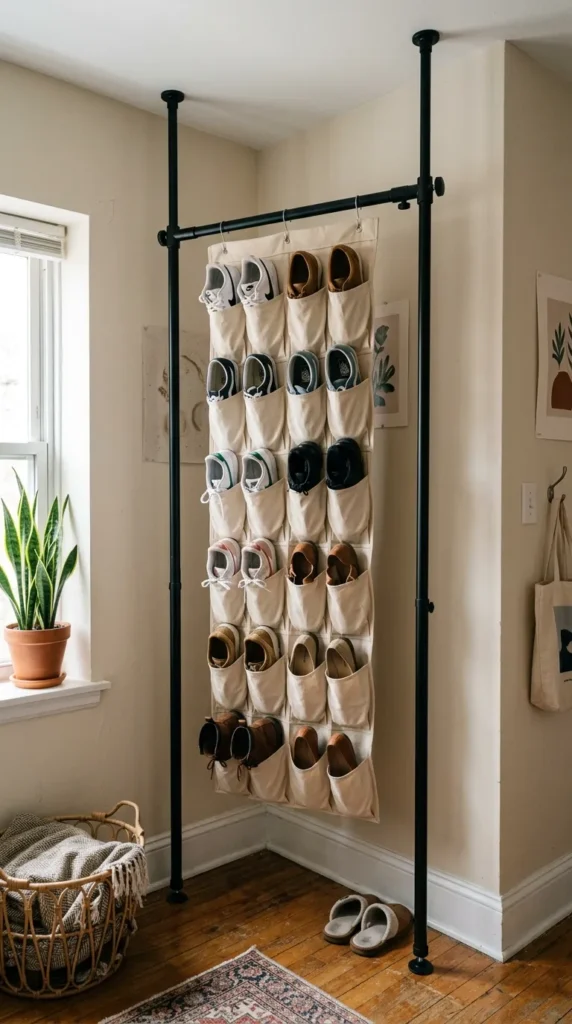
Tension rods the kind you use for curtains can be installed vertically in corners between floor and ceiling, then hung with shoe bags or small baskets. It’s unconventional, but it genuinely works in tiny spaces where nothing else fits.
I tested this in a studio with a completely unusable corner, and it was shockingly effective. Hang a few clear shoe bags on the tension rod, and you’ve got storage that costs about $12 and doesn’t require drilling. The downside is that the bags block the corner view, so this only works if that corner wasn’t being used for anything anyway. Don’t do this with heavy boots stick to lighter shoes because the tension rod can sag if overloaded.
13.Be Honest About What You Actually Wear
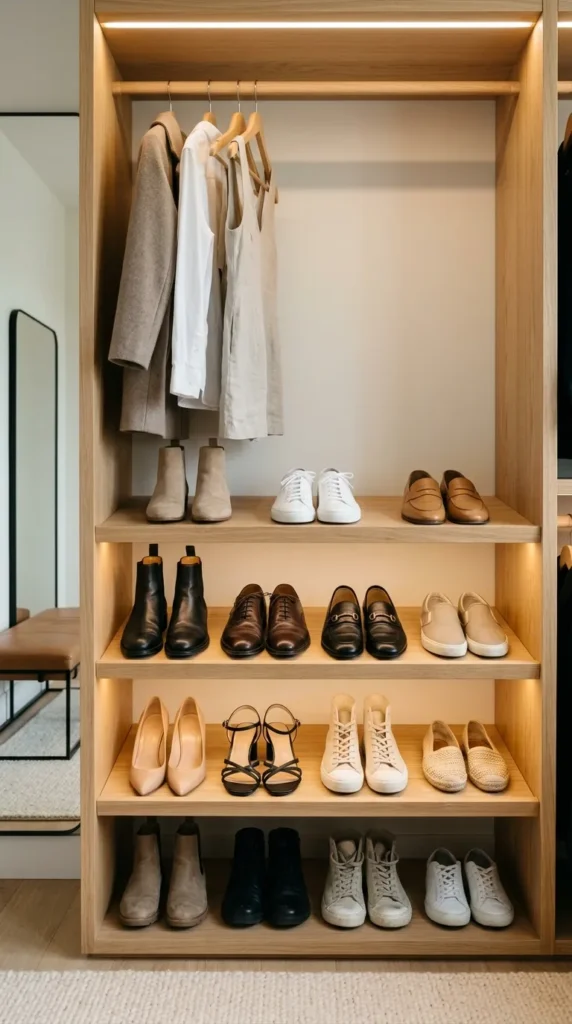
This isn’t really a storage solution, but it matters. Before you invest in storage, actually look at your shoes and ask yourself which ones you wear regularly. If there are pairs you haven’t touched in a year, they’re taking up valuable space.
I’m genuinely bad at this I keep shoes “just in case” even though I know better. But when I finally did a shoe audit, I realized I owned 8 pairs of black shoes and wore exactly two of them. Freed up a ton of space, donated the ones I wasn’t using, and suddenly my storage situation didn’t feel so impossible. Give this an honest try before you blame storage for being too small.
14.Make Your Storage System Actually Accessible
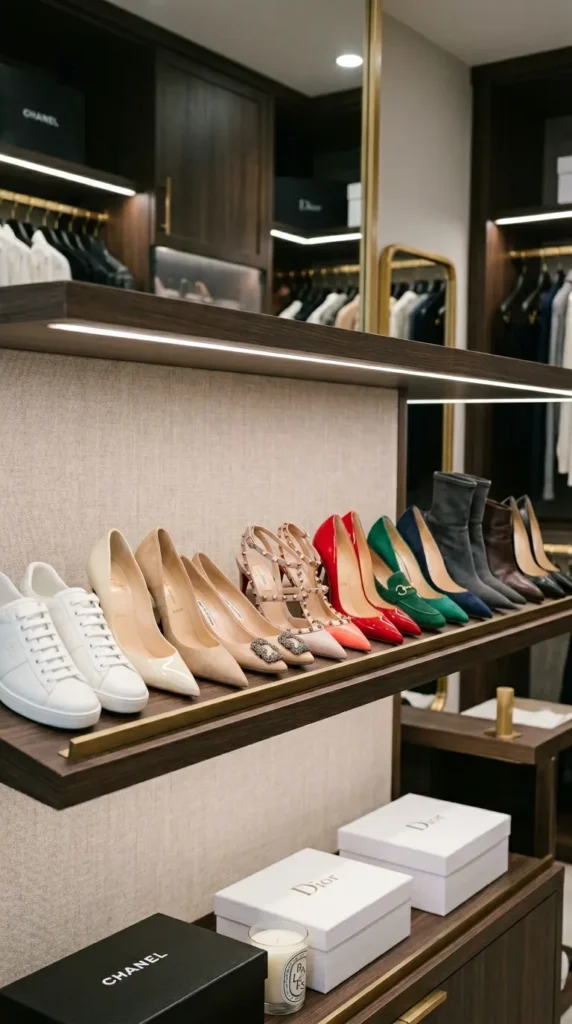
This is the part most people miss. You can have the most beautiful organization system, but if it takes five minutes to get a pair of shoes out, you’ll stop using it. Your everyday shoes should take literally three seconds to access. Your occasional shoes can be slightly less convenient. Your seasonal or special-occasion shoes? Fine, they can be tucked away.
I learned this when I spent way too much money on a closed storage system that looked amazing but was so inconvenient that I ended up leaving shoes in piles instead. Now my system is simple: everyday shoes in a slim rack by the door, other regular shoes in clear containers on a shelf I can see daily, and seasonal stuff under the bed. Total setup time is seconds, and I actually maintain it. Find the method that matches how you actually live, not how you think you should live.
Final Thoughts
Small spaces require small, smart solutions. You don’t need to own fewer shoes—you just need to be intentional about how you store them. Whether you go with floating shelves, under-bed containers, door organizers, or a combination of methods, the goal is the same: make your shoes accessible, keep them in good condition, and free up your floor space for actually walking around.
Start with one storage solution that matches your space and your lifestyle. Test it for a week. If it’s not working, try something else. The perfect shoe storage system isn’t about what looks best on Instagram it’s about what actually works in your real life, every single day. Let me know what method ends up working for you. Honestly, I love hearing which solutions real people actually stick with.