16 Ways to Do Mid Century Modern Dining
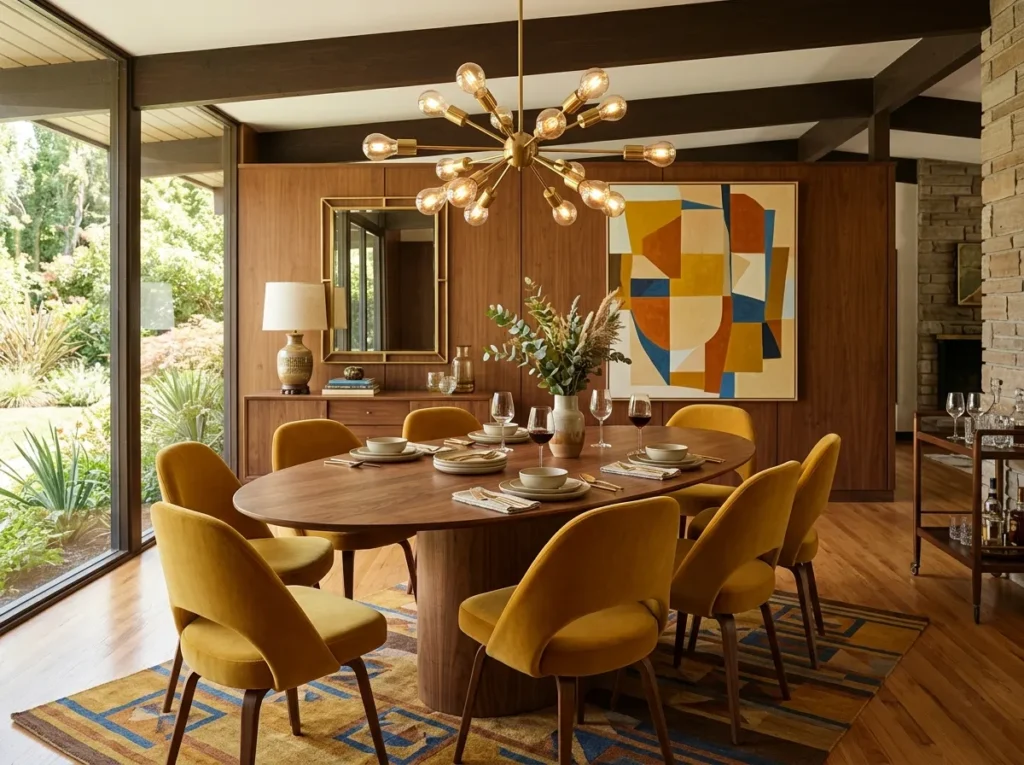
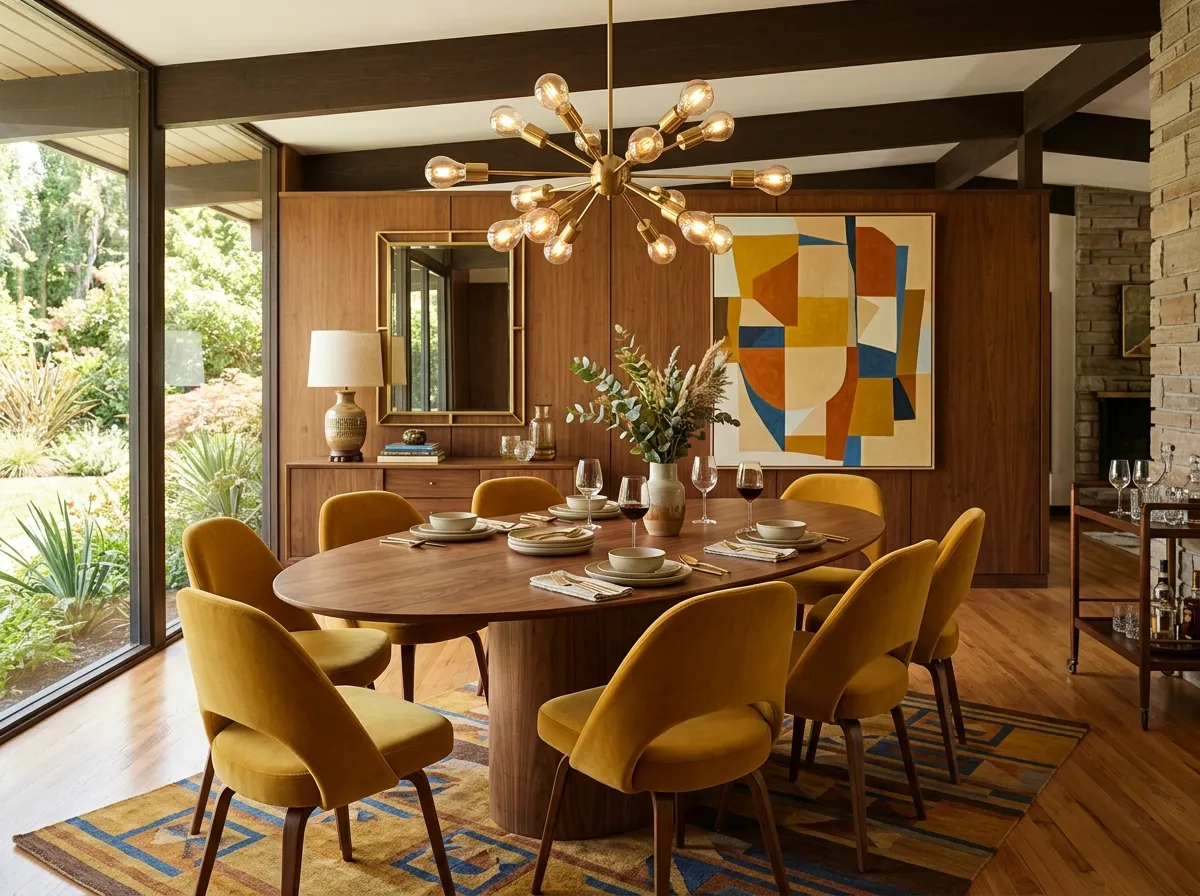
Mid century modern is one of those design styles that never fully goes away because the principles behind it are genuinely good rather than just fashionable. The furniture is designed to be used. The materials are honest. The forms are elegant without being fussy. And the whole aesthetic is warm in a way that other modernist movements are not because mid century design was trying to make everyday life more beautiful rather than more minimal or more conceptual. A mid century modern dining room done well feels like a room from a specific era that happens to be completely right for living in right now.
The challenge with mid century modern is that it has become so widely imitated and so broadly referenced that it is easy to end up with a dining room that feels like a pastiche of the style rather than a genuine expression of it. The tapered legs on everything, the sunburst clock on the wall, the molded plastic chair in the obvious colorway. These things are fine individually but assembled together without thought they create a room that reads as costume rather than design. Doing mid century modern dining well means understanding what the style actually values and applying those values with enough intelligence to make the room feel like it belongs to the people who live in it rather than to a mood board. These 16 ideas explain exactly how to do that.
1. Start With a Walnut Dining Table as the Foundation
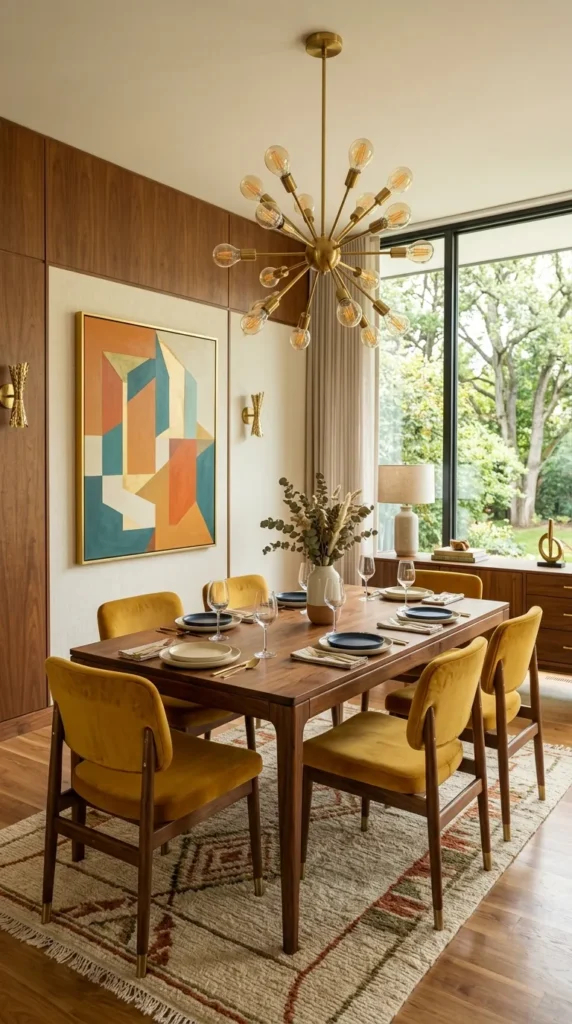
Walnut is the defining wood of mid century modern design and a solid walnut dining table is the single best starting point for a mid century dining room. The warm dark tone of walnut, its fine straight grain, and the way it responds to light creates a table surface with genuine presence that coordinates naturally with almost every other mid century element.
A walnut table with clean straight lines and tapered legs is an immediate and unmistakable mid century reference but it earns that reference through material quality rather than decorative detail. The grain of the walnut is the only pattern the table needs. Pair it with chairs in complementary warm tones and the table becomes a foundation that holds the room together without competing with anything placed on or around it.
2. Choose Chairs With Organic Molded Forms
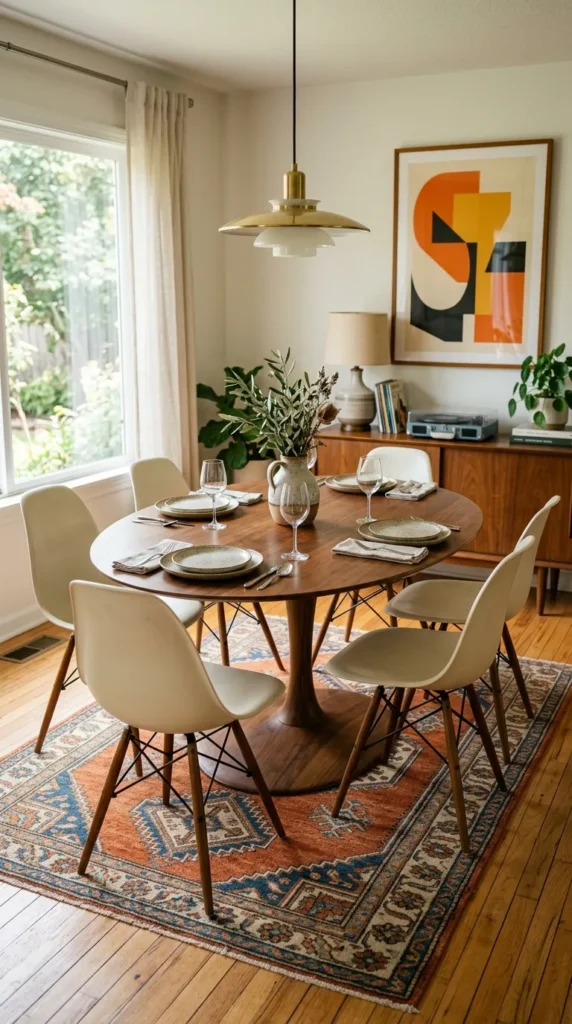
Mid century modern chair design is characterized by organic molded forms that follow the shape of the human body rather than imposing a geometric shape on it. The Eames shell chair, the Tulip chair, the Series 7 chair, all share this quality of being shaped around the person who will sit in them rather than asking the person to conform to the chair.
You do not need the originals to achieve this quality in a dining room. Many contemporary chairs share the same organic molded sensibility at a fraction of the cost. Look for chairs with continuous curves between the seat and back, legs that splay outward slightly to create a stable and visually light base, and materials like molded plywood, formed fiberglass, or upholstered foam that can hold complex curves. The organic quality of the chair form is more important than the specific designer or the specific material.
3. Use Tapered Legs on Every Piece of Furniture
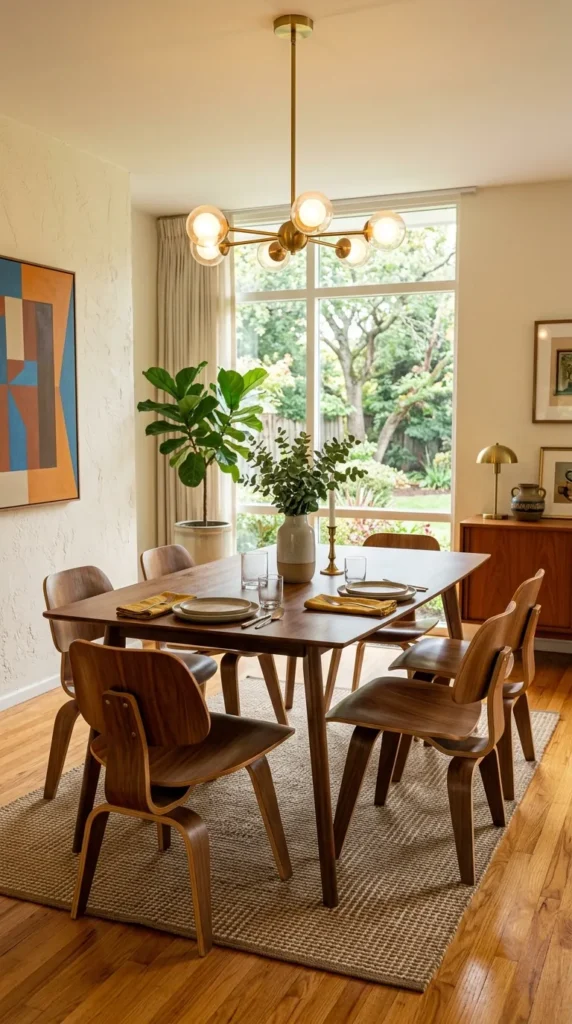
Tapered legs are the most recognizable mid century modern furniture detail and they appear on dining tables, sideboards, chairs, and occasional furniture throughout well done mid century rooms. The taper, widest at the top where it joins the furniture body and narrowing toward the floor, creates a visual lightness that makes furniture appear to float slightly rather than sitting heavily on the ground.
The effect of tapered legs throughout a dining room is that all the furniture looks like it belongs together even when pieces are from different sources or different eras. The consistent leg detail creates visual cohesion that unifies the room. When shopping for mid century dining room furniture check the leg detail first. Straight legs and turned legs both push the furniture toward other styles. Tapered legs are the detail that confirms the mid century reference.
4. Add a Sideboard Low and Long Against One Wall
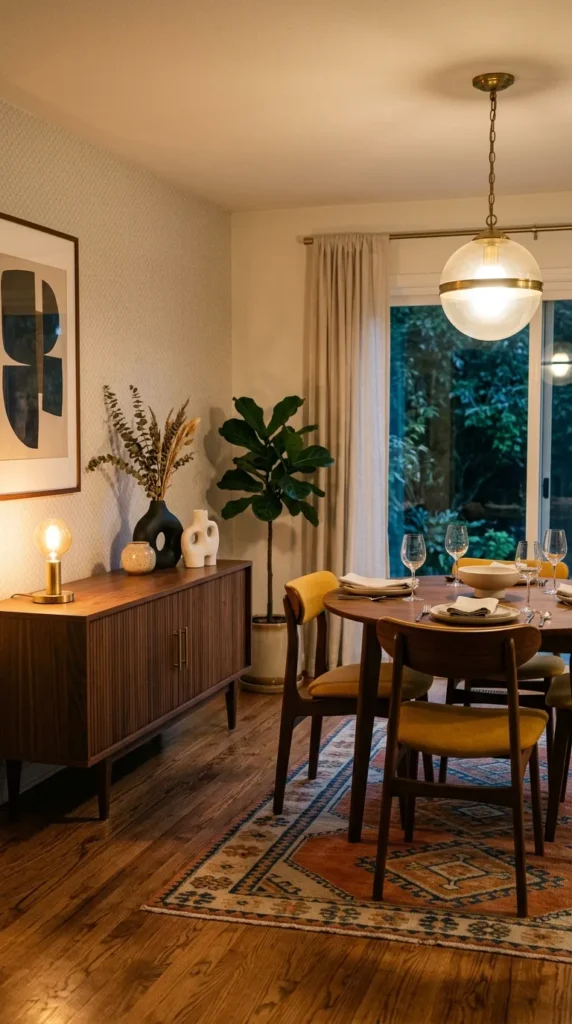
A low long sideboard against one dining room wall is as essential to mid century modern dining as the table itself. The horizontal emphasis of the sideboard, its length relative to its height, creates a strong ground plane along the wall that is one of the most characteristic mid century proportions in furniture design.
Mid century sideboards typically sit on tapered legs that raise them off the floor, which reinforces the floating quality that the style values throughout. The surface of the sideboard becomes the most important display area in the dining room and mid century styling uses this surface with restraint. One or two carefully chosen objects, a ceramic piece, a small plant, a sculptural object in brass or wood, rather than a collection of things. The restraint on the sideboard surface is as important as the sideboard itself.
Enhance your mid-century dining room with these 17 Ways to Get Dining Room Lighting Right for warm and inviting illumination.
5. Introduce an Accent Color Through Upholstery
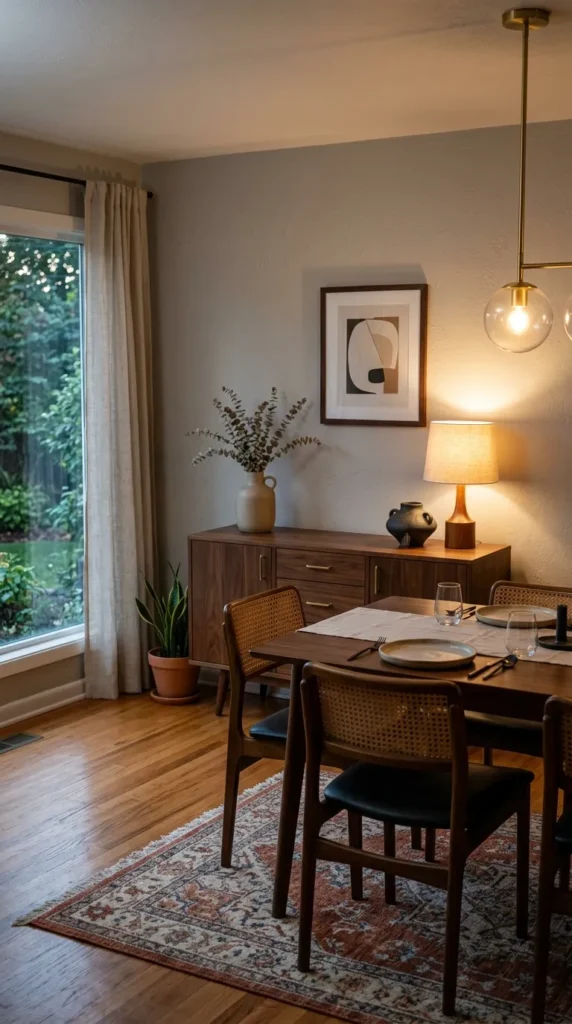
Mid century modern design embraced color in a way that earlier modernism had avoided and the dining room is the right place to express this through upholstered chair seats and backs in a bold accent color. Mustard yellow, burnt orange, forest green, deep teal, and warm rust are all colors with genuine mid century authenticity that bring warmth and personality to a dining room without requiring wall paint commitment.
The accent color works best when it appears in the chairs only and the surrounding room remains in warm neutrals and natural wood tones. This concentration of color at the seating level creates a visual rhythm around the table as each chair contributes its colored upholstery to the overall composition. Velvet upholstery in mid century accent colors has a particular richness that suits the warmth of walnut and teak wood tones especially well.
6. Hang a Statement Light With Sculptural Quality
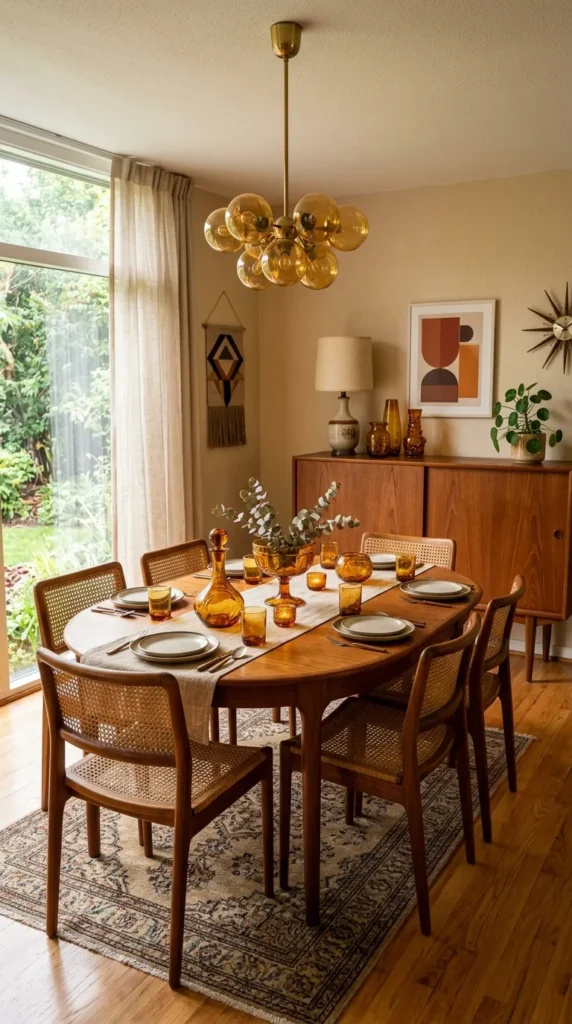
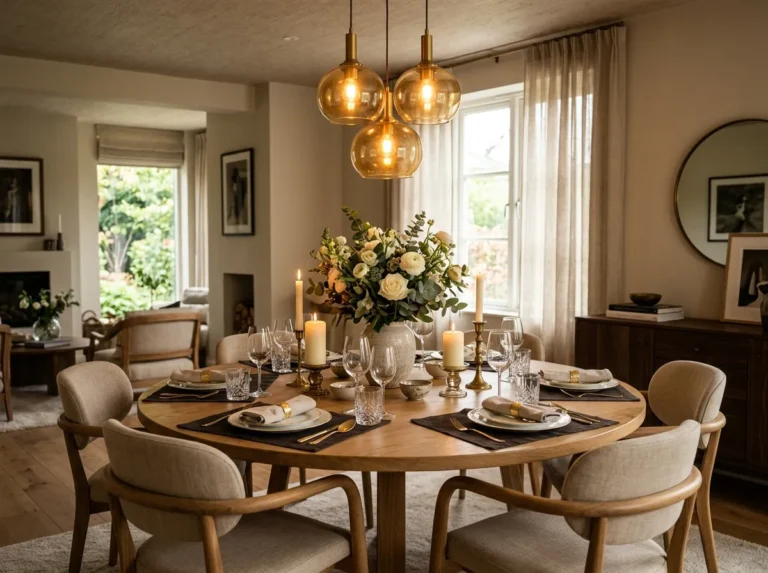
Mid century modern pendant lights and ceiling fixtures are characterized by sculptural quality, the fixture being interesting to look at as an object as well as being functional as a light source. Sputnik chandeliers, globe pendants in amber glass, cone shaped pendants in spun metal, and drum pendants in woven rattan all have this sculptural quality that makes them appropriate above a mid century dining table.
The fixture should be genuinely sculptural rather than simply decorative. There is a difference between a light that is interesting because of what it is made from and how it is formed and a light that is interesting because of added ornament. Mid century lighting is always the former. The interest comes from the shape and the material working together rather than from anything applied to the surface afterward.
7. Use Warm Amber or Teak Tones Throughout
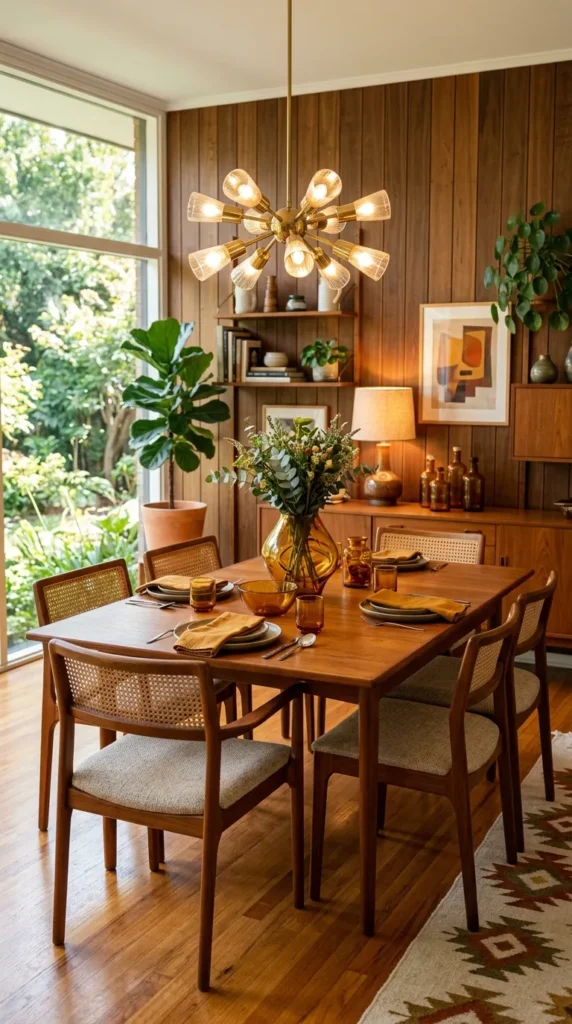
Teak was the defining wood of mid century Scandinavian design and its warm amber tone appears in dining room furniture, picture frames, decorative objects, and accessories throughout well executed mid century rooms. Even in rooms without actual teak furniture the warm amber tone of the wood family creates a color warmth at the object level that prevents the room from feeling cool or clinical.
Introduce warm amber and teak tones through multiple smaller elements if the main furniture is in walnut or another darker wood. Teak framed artwork, a teak serving board on the sideboard, teak handled cutlery, amber glass on the dining table. The accumulation of this warm wood tone across multiple small objects creates a color warmth that reads as intentional even when no single piece is dominant.
8. Choose Abstract or Graphic Artwork in Bold Colors
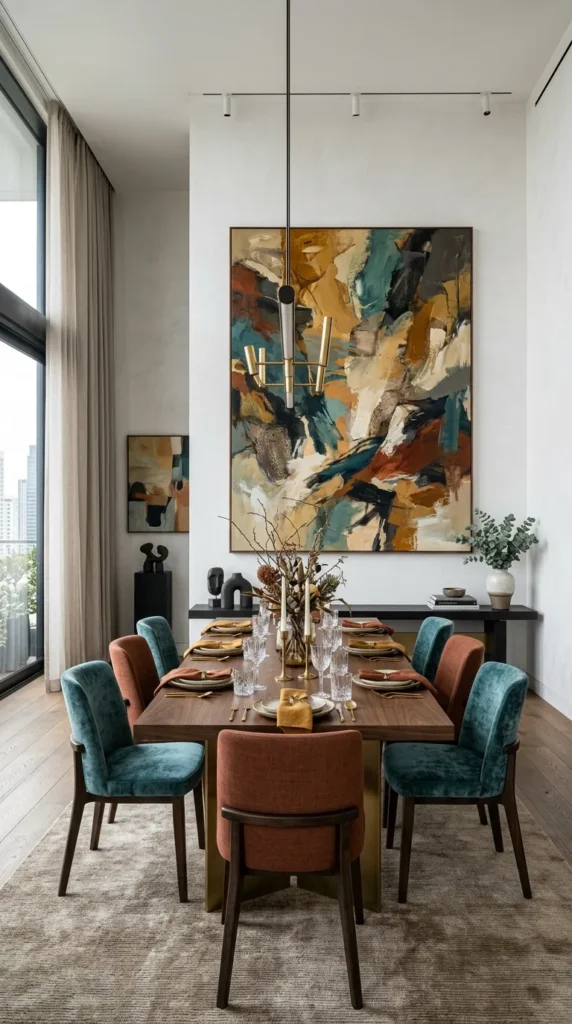
Mid century modern design has a strong relationship with abstract and graphic art because both movements were developing simultaneously and sharing the same values of honest form, bold color, and rejection of ornamental tradition. Abstract prints and graphic posters in the bold color palettes of the 1950s and 1960s suit mid century dining rooms because they are literally from the same cultural moment.
Original mid century artwork is available at many price points and contemporary prints in mid century style are available very affordably. The key quality to look for is boldness without complexity. Strong geometric forms in two or three colors, abstract organic shapes in warm tones, or graphic typography from the era all work in a mid century dining room. Avoid anything representational or narrative because figurative artwork sits outside the mid century aesthetic regardless of its period.
9. Add a Sunburst or Starburst Mirror Carefully
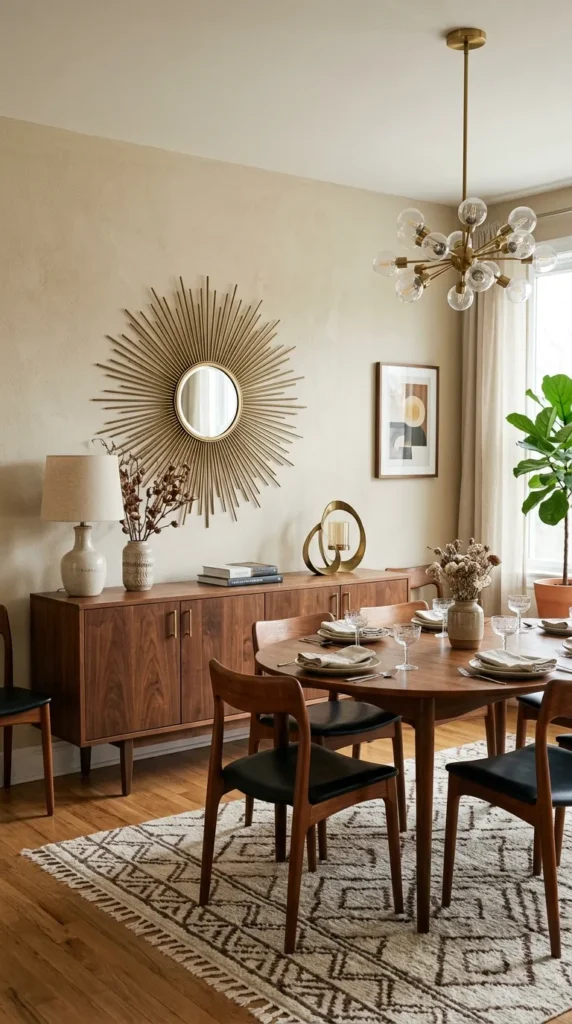
The sunburst mirror is one of the most recognizable mid century accessories and it can work beautifully in a dining room when used with restraint. The key word is carefully because the sunburst mirror has become so associated with mid century pastiche that it requires thoughtful placement and complementary surroundings to read as genuine rather than derivative.
A sunburst mirror in aged brass or natural wood above the sideboard in a room where every other mid century reference is subtle and considered looks genuinely right. The same mirror in a room already crowded with obvious mid century references looks like a checklist rather than a room. Use it as the one bold mid century gesture in a room that earns it through restraint elsewhere and the gesture lands correctly.
10. Bring In Ceramic Accessories With Organic Forms
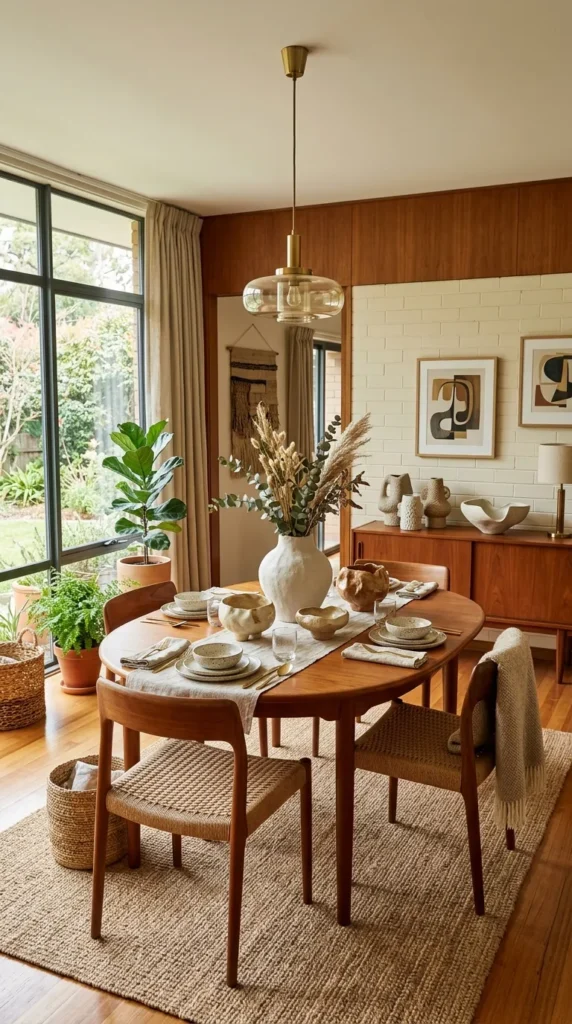
Mid century modern ceramics are characterized by organic forms that reference natural shapes without literally depicting them. Oval bowls with irregular rims, vases that widen asymmetrically, sculptural objects that suggest natural forms through abstraction. These ceramics share the same design values as mid century furniture and belong alongside it naturally.
Place ceramic accessories at multiple points in the dining room rather than grouping them all in one location. A ceramic vase on the dining table, a ceramic bowl on the sideboard, a small sculptural piece on a windowsill. The distribution of ceramic objects throughout the room creates a subtle visual thread that ties the space together without requiring any single object to carry too much weight.
Round tables pair beautifully with mid-century style. Browse 21 Ways to Style a Round Dining Table for more decorating inspiration.
11. Use a Geometric Rug Under the Dining Table
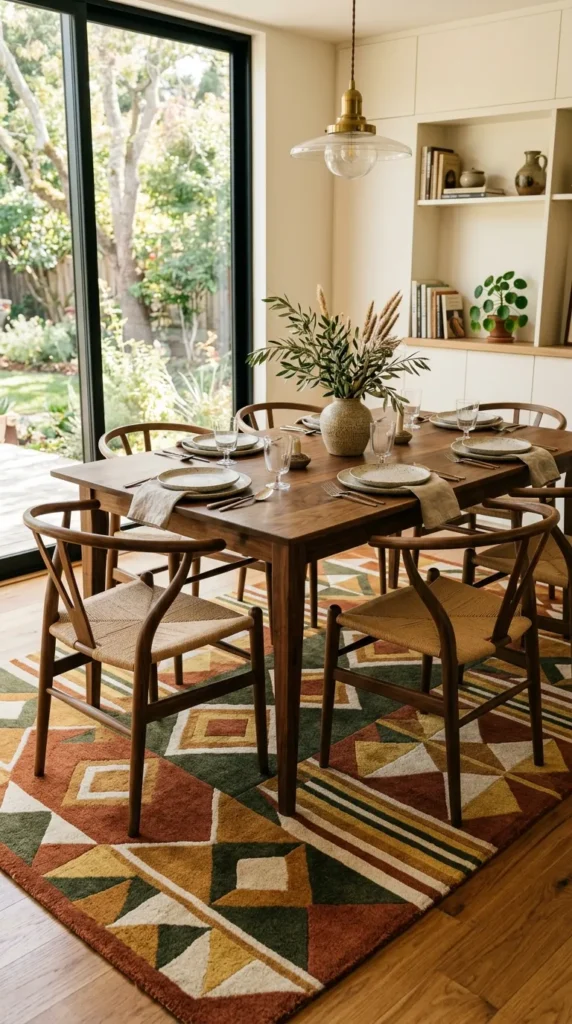
A rug with a bold geometric pattern in warm tones under the dining table grounds the space and introduces pattern to a room that might otherwise feel too restrained. Mid century modern design used geometric pattern in textiles, wallpaper, and floor coverings in a way that was bold without being ornamental because the geometry was abstract rather than decorative.
The rug should be large enough that all chair legs sit on it when pulled out from the table. The geometric pattern should be in the warm color family of the room, tones of ochre, rust, teal, olive, and warm brown rather than cool blues and grays that push the palette in a different direction. A well chosen geometric rug is often the element that makes a mid century dining room feel complete because it introduces the pattern layer that the walls and furniture are specifically avoiding.
12. Keep the Walls in a Warm Putty or Ochre Tone
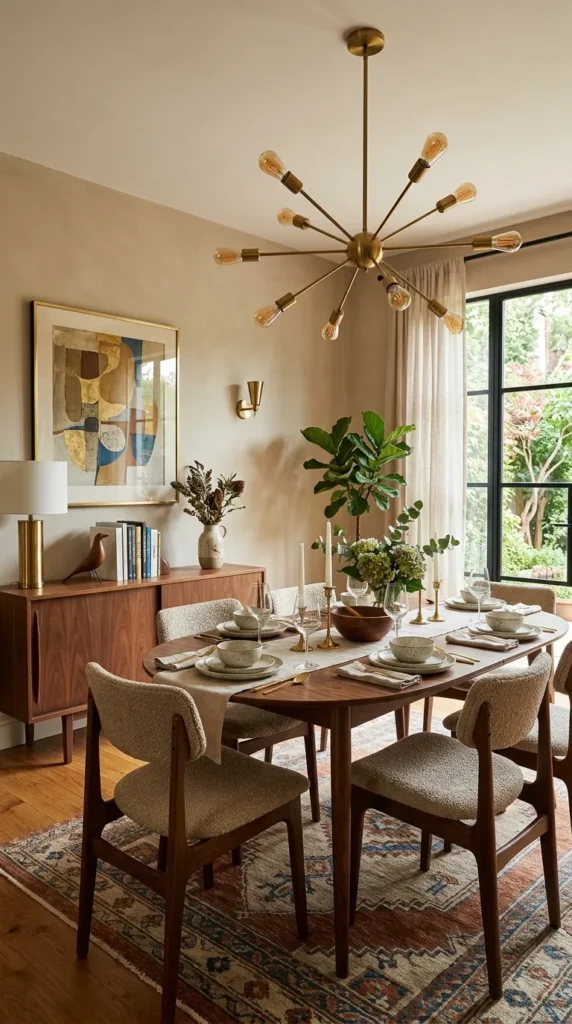
Mid century modern dining rooms look best against warm neutral walls rather than white walls or bold color walls. Warm putty, soft ochre, pale terracotta, and warm greige all create a wall color that complements the wood tones and textile colors of mid century furniture without competing with them or draining their warmth.
White walls make mid century furniture look colder than it is because the stark contrast between the white wall and the warm wood tones emphasizes the difference rather than creating harmony. A warm neutral wall in a similar temperature to the wood tones creates a room where the furniture looks settled and at home rather than placed against a neutral backdrop. The wall becomes part of the warmth of the room rather than a surface the furniture sits against.
13. Mix Teak and Walnut for Tonal Depth
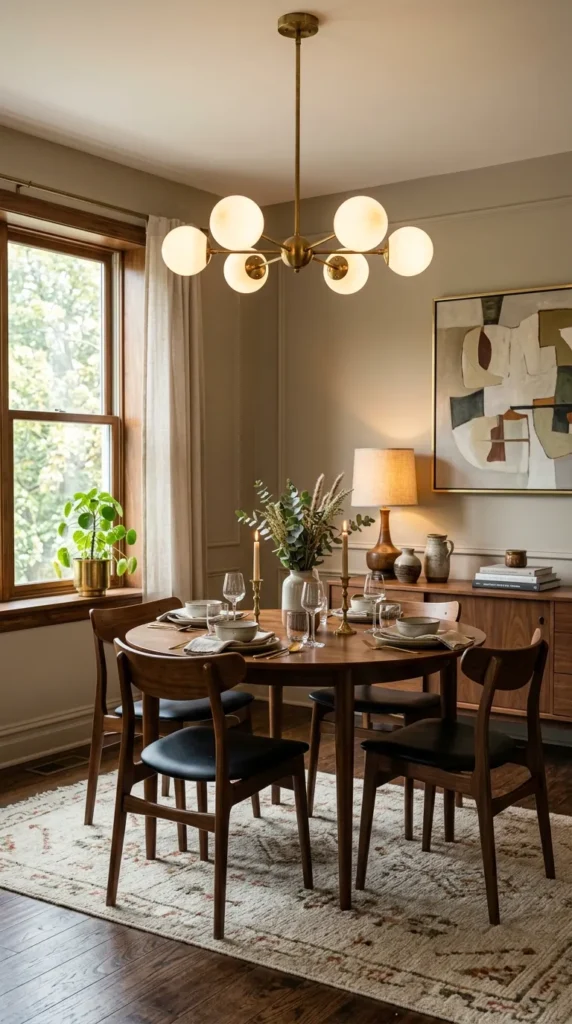
Using both teak and walnut in the same mid century dining room creates tonal depth that a single wood species alone does not achieve. The difference between the warm amber of teak and the cooler darker brown of walnut is subtle enough that the two woods coordinate naturally while creating enough variation that the room has visual interest at the material level.
A walnut dining table with teak framed chairs, or a walnut sideboard alongside teak decorative objects, creates the kind of material layering that makes a room feel assembled over time rather than purchased as a complete set. The mixing of related wood tones is one of the things that gives genuinely good mid century rooms their quality of depth and authenticity that single wood showroom settings do not possess.
14. Use Brass Hardware and Accents Throughout
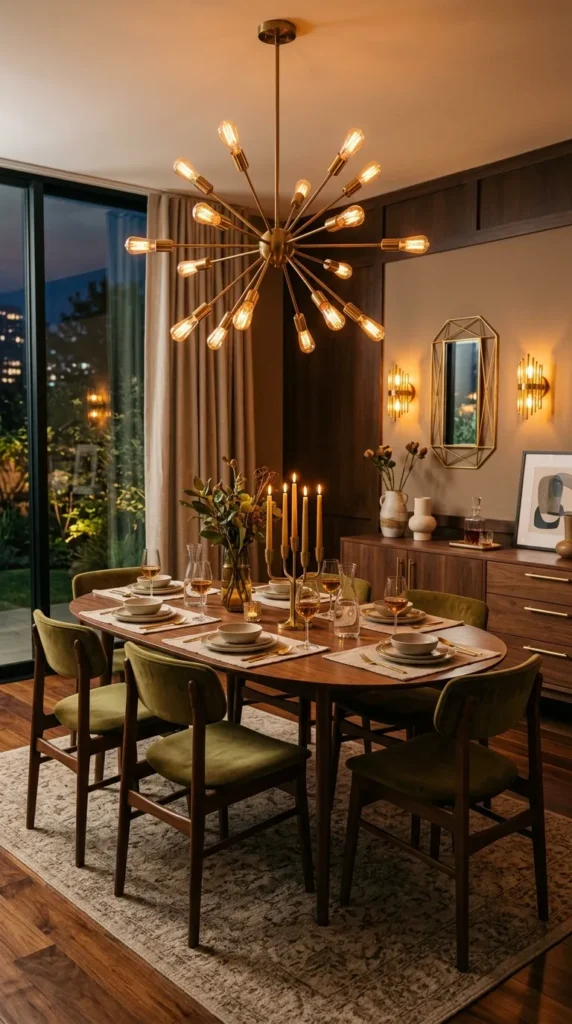
Brass appears throughout mid century modern interiors in hardware, light fixtures, decorative objects, and furniture details because the warm metal tone coordinates naturally with the wood tones and textile colors of the style. Aged or brushed brass rather than polished bright brass creates the right quality, warm and slightly worn rather than shiny and new.
Brass handles on the sideboard, a brass pendant above the table, brass candlestick holders on the dining table, a brass picture frame on the wall. Each individual brass element is a small contribution but together they create a warm metallic thread through the room that ties separate elements into a coherent whole. The accumulation of brass throughout a mid century dining room is what gives the room its golden quality, a warmth that comes from multiple small sources working together rather than one dominant element.
15. Introduce a Tulip or Pedestal Style Side Table
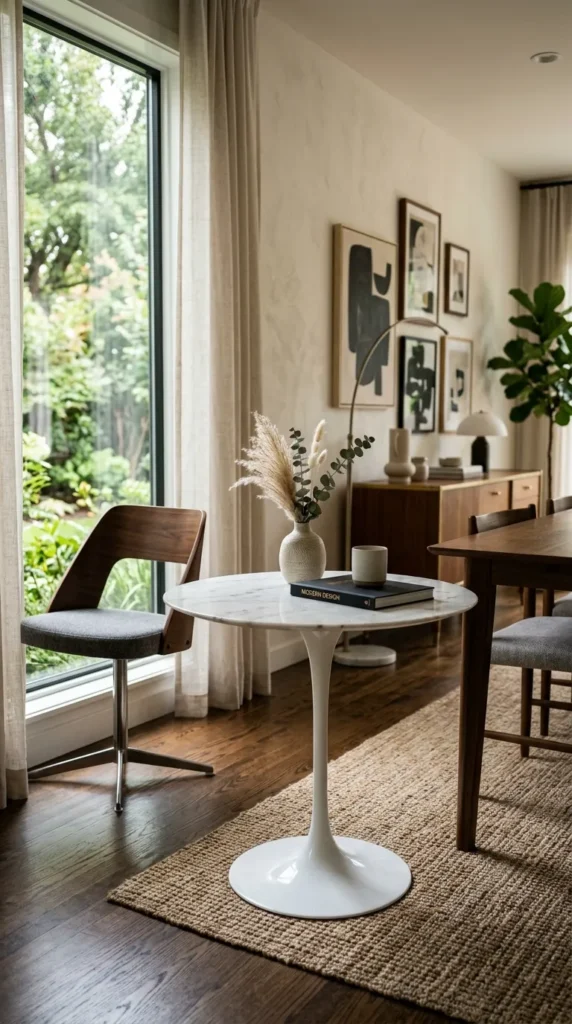
A tulip or pedestal style side table or occasional piece, characterized by a single central column support rather than four legs, introduces the most radical and still striking mid century furniture form to the dining room. Eero Saarinen designed the original Tulip collection specifically to eliminate the clutter of legs under furniture and the result is a form so resolved that it looks completely contemporary sixty years later.
A small tulip side table near the dining room can hold a lamp, a plant, or drinks during entertaining without contributing to the visual complexity of the leg forest that multiple four legged pieces create. The single column form reads as genuinely different from every other furniture piece in the room which makes it the most powerful mid century reference available. Use it once and let it be the formal mid century moment in a room that otherwise achieves the style through subtler means.
16. Edit Constantly and Remove What Does Not Belong
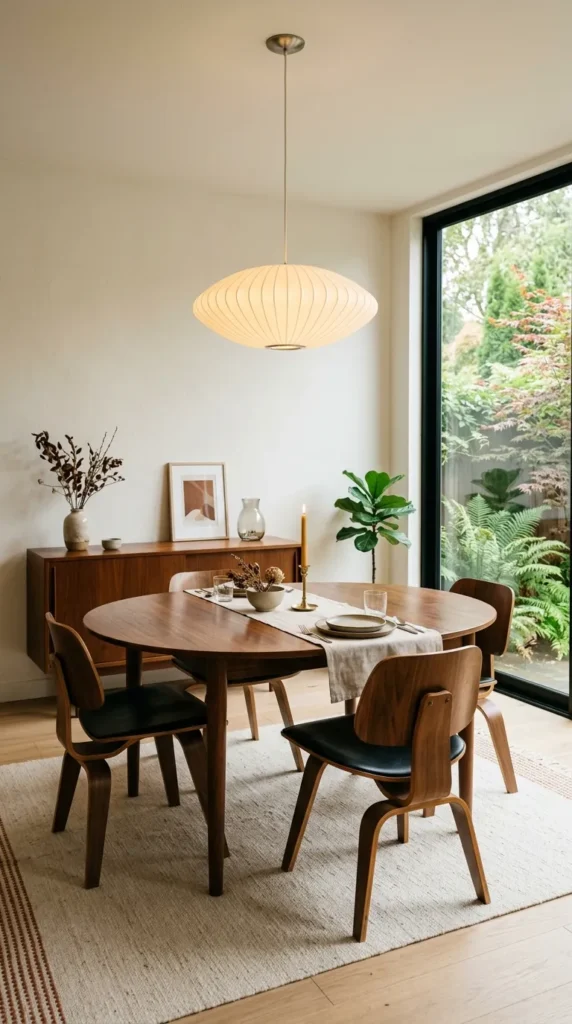
The final and most important way to do mid century modern dining right is to edit the room constantly and remove anything that does not belong to the values of the style. Mid century modern is not maximalist. It does not accumulate. It selects. The difference between a mid century dining room that feels genuine and one that feels like a pastiche is almost always about what has been removed rather than what has been added.
Walk through the dining room and look at every object. If it is there because it has always been there rather than because it belongs, remove it. If it is decorative without being genuinely beautiful, remove it. If it introduces a material, color, or form that the room has not already established as part of its vocabulary, remove it. The editing process is the design process in a mid century room and it never fully stops because the room is always at risk of accumulating things that dilute the clarity that makes mid century modern dining genuinely worth doing.
Final Thoughts
Mid century modern dining done right is not about collecting the right pieces or achieving the right references. It is about applying a set of values consistently enough that the room feels like it comes from a single clear intention rather than a series of separate purchases. Warm wood tones. Organic chair forms. Tapered legs. A sculptural light. An accent color through upholstery. Bold geometric pattern at the floor level. Brass throughout. And a discipline about editing that keeps the room clear enough that everything in it can be seen and appreciated.
Start with the table. Get that right and everything else has something worth building around. Then add the chairs, the light, the sideboard, and the accessories in that order, editing as you go and removing anything that does not make the room more itself. The mid century modern dining room that emerges from that process will feel like somewhere genuinely worth eating in every single day.