19 Dining Room Wall and Wallpaper Ideas
The walls of a dining room do more work than most people give them credit for. They set the tone before anyone sits down. They decide whether a meal feels rushed or relaxed, ordinary or worth remembering. I spent years ignoring my dining room walls entirely, treating them as background rather than as part of the design, and the room showed it. Then I covered one wall in a dark botanical wallpaper and suddenly the entire room had a point of view. Guests noticed it immediately. The room finally felt finished in a way that new furniture had never managed to achieve.
Walls and wallpaper are the most impactful change you can make to a dining room because they surround you completely. Unlike a new table or a different light fixture, the walls are always there, working on the atmosphere whether you are conscious of it or not. These 19 ideas cover the full range from dramatic full room wallpaper treatments to simple painted wall techniques that transform a space without requiring professional help. Some are bold commitments. Some are easy weekend projects. All of them take a dining room from forgettable to genuinely considered.
1. Dark Botanical Wallpaper on All Four Walls
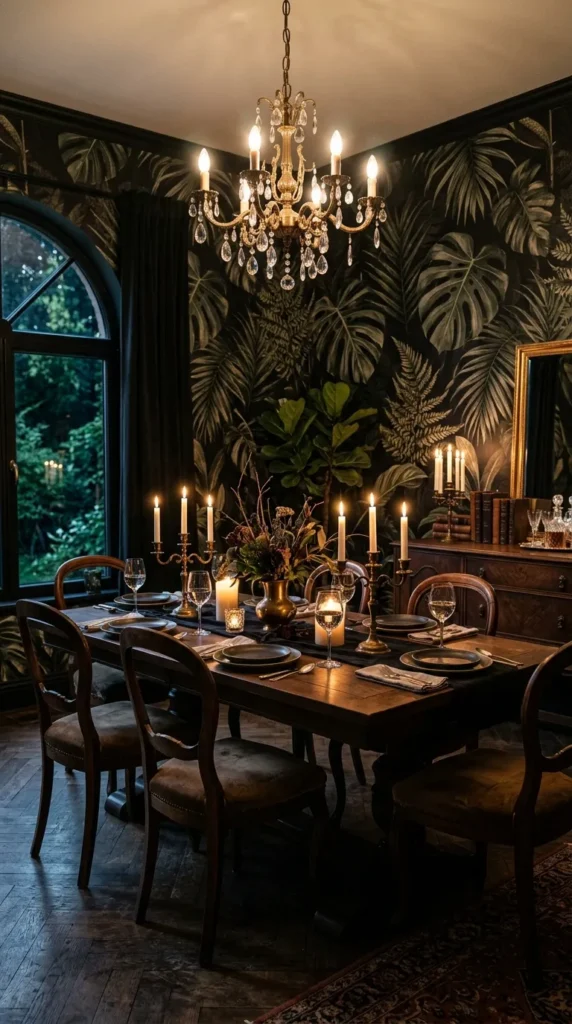
Dark botanical wallpaper is the single most transformative thing you can do to a dining room. A black or deep green background covered in detailed botanical illustrations creates a room that feels like eating inside a Victorian greenhouse and that is exactly as wonderful as it sounds.
The pattern adds visual richness that no painted wall can match because your eye keeps finding new details every time you look at it. Done on all four walls the effect is completely immersive. The room stops feeling like a room and starts feeling like an environment. Keep furniture simple when using this wallpaper because the walls are already doing enough. A plain wooden table, simple chairs, and white ceramic tableware let the botanical pattern breathe without competition.
2. Painted Shiplap Wall in a Deep Moody Shade
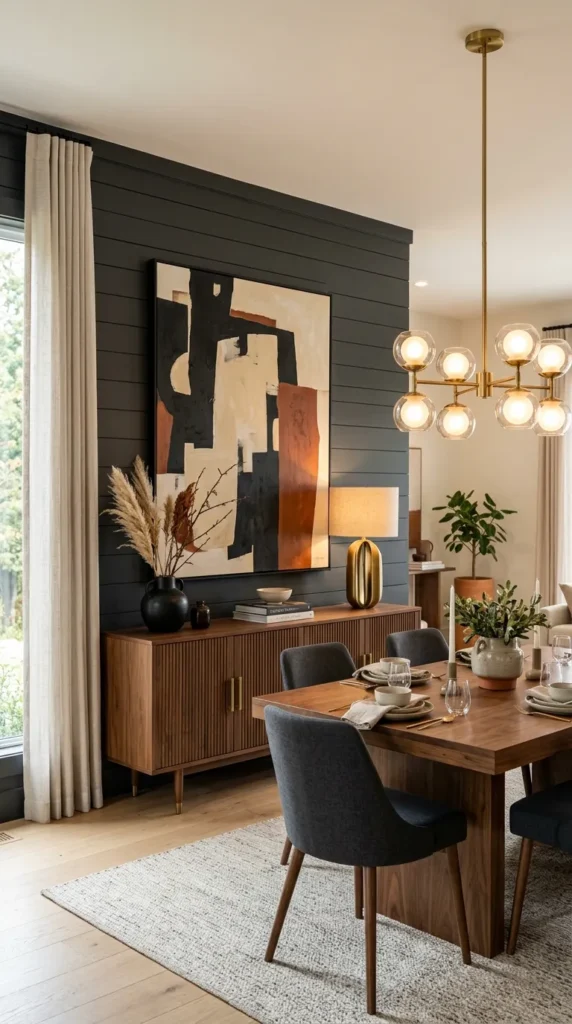
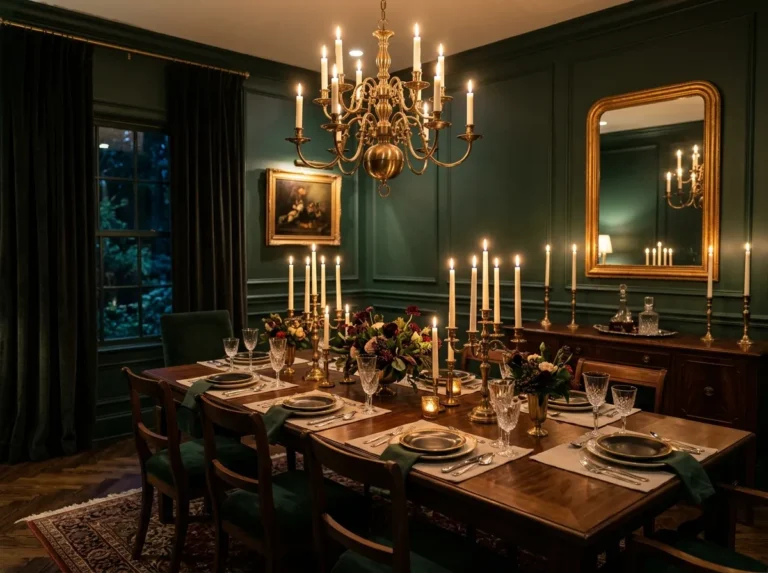
Shiplap paneling painted in a deep tone like forest green, navy, or charcoal creates a dining room wall with texture and architectural weight that flat paint alone cannot achieve. The horizontal lines of the shiplap add movement while the dark color adds depth.
This works especially well as a single feature wall behind a sideboard or a buffet table because it creates a focal point that the rest of the room can organize around. The texture of the shiplap catches light differently throughout the day which keeps the wall feeling alive rather than static. Paint the shiplap in the same color as the rest of the walls for a tonal effect or contrast it with lighter walls for a more traditional feature wall approach.
3. Grasscloth Wallpaper for Organic Texture
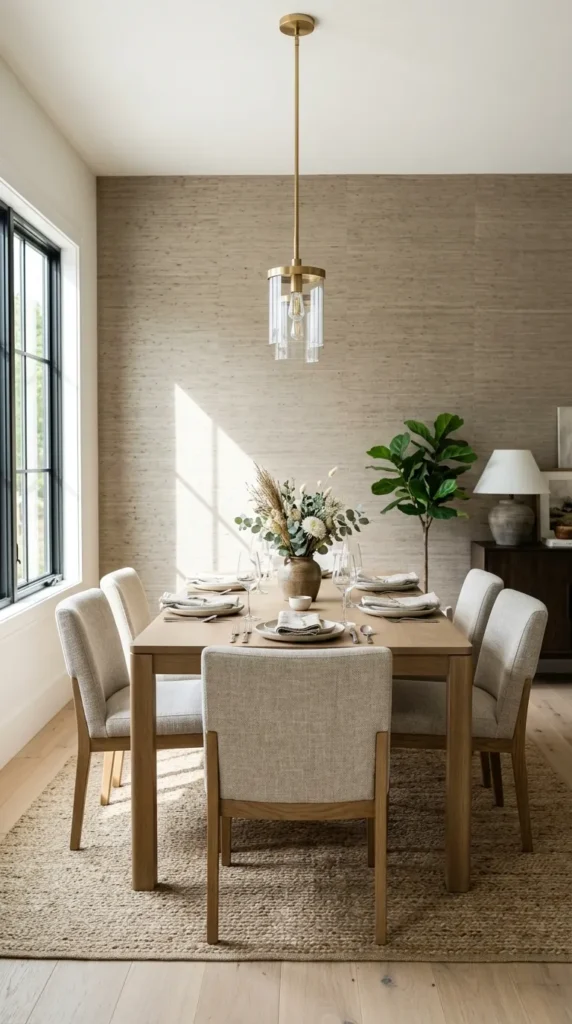
Grasscloth wallpaper brings natural texture to dining room walls in a way that feels genuinely different from both painted walls and printed wallpaper. The woven surface catches light and creates subtle shadow that makes the wall itself look dimensional.
Grasscloth comes in a range of tones from pale honey to deep charcoal and works in both contemporary and traditional dining rooms. The texture it adds is quiet rather than loud, which makes it ideal for rooms where you want warmth and depth without a strong pattern competing with the furniture and tableware. It also ages beautifully, developing a slightly uneven patina over time that makes it look more expensive rather than worn.
4. Geometric Painted Wall Pattern Using Tape
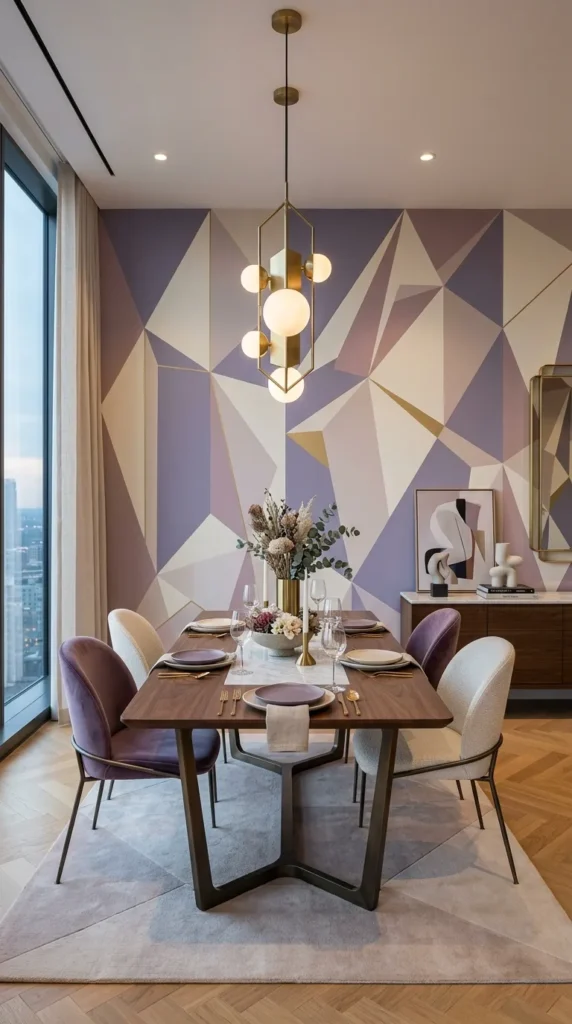
A geometric pattern painted directly onto the wall using painter’s tape creates a custom dining room feature wall that looks professionally done and costs almost nothing beyond the paint itself. Diamonds, chevrons, wide stripes, or overlapping triangles all work beautifully in dining rooms.
The key is choosing colors from the same family rather than contrasting colors that fight each other. Two tones of the same green, or a warm white over a cream base, create pattern with subtlety. Bold contrast like black on white creates a more graphic effect that suits contemporary dining rooms. This is a weekend project that genuinely transforms a wall and the satisfaction of having made it yourself adds something to the room that purchased wallpaper cannot replicate.
5. Full Wall Mural Wallpaper Behind the Dining Table
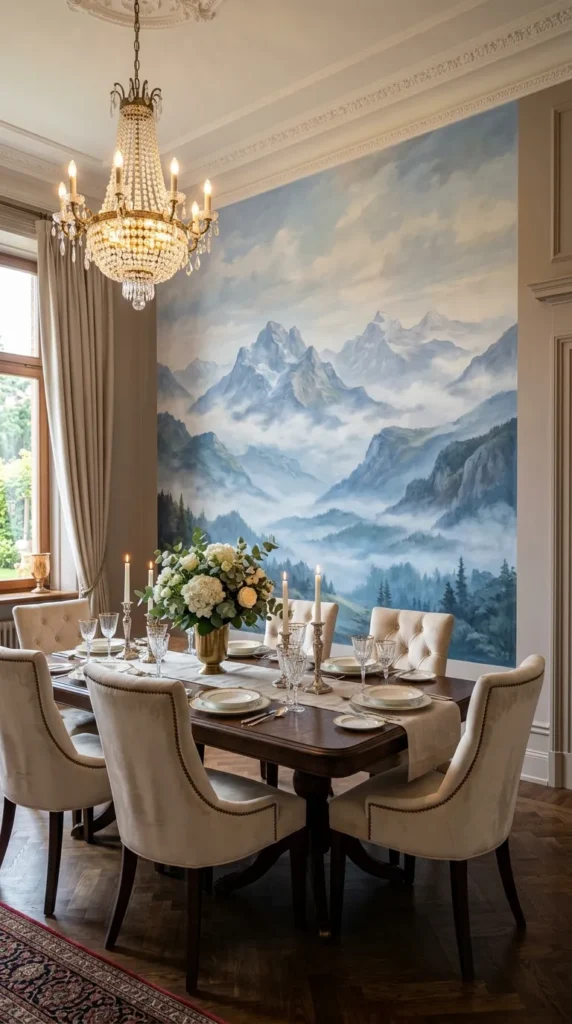
Mural wallpaper scaled to fill an entire wall creates the most dramatic dining room backdrop available. A landscape, a forest scene, an abstract wash of color, or an architectural scene printed at full wall scale turns the dining room into a room with a story.
The wall behind the dining table is the natural placement because it is what guests face when seated. Getting that wall right makes every meal feel like it is happening somewhere specific and intentional. Mural wallpapers are more accessible than ever and many can be ordered to custom dimensions. The installation takes an afternoon and the result lasts for years. This is genuinely the highest impact single change you can make to a dining room wall.
6. Limewash Paint for Ancient Organic Depth
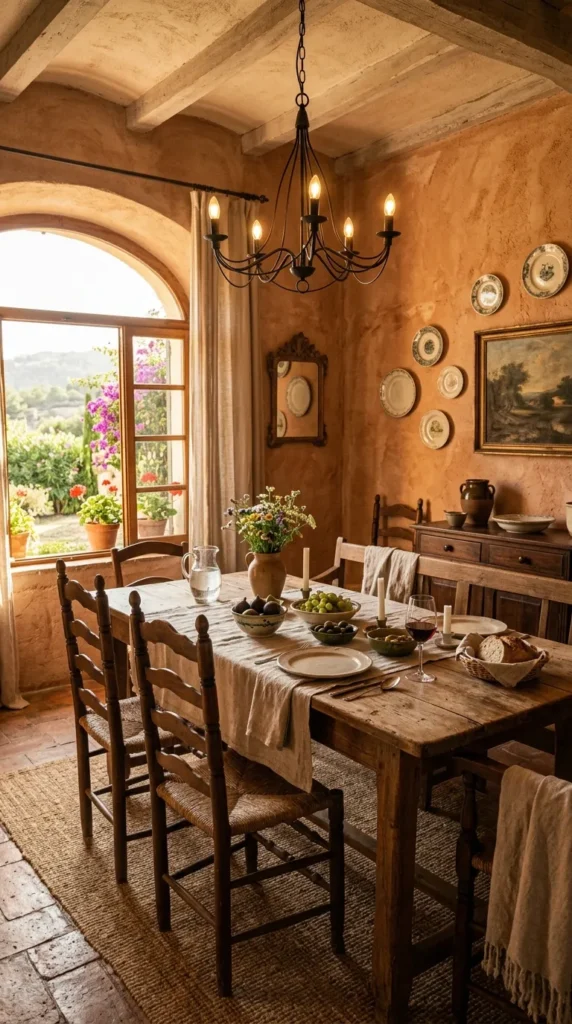
Limewash paint applied over a dining room wall creates a texture that looks genuinely aged, like plaster that has been there for two hundred years and developed character through every one of them. No two limewashed walls look the same because the technique requires irregular application that creates organic variation.
The depth of limewash comes from its translucency. Multiple thin layers build up slowly and the underlying layers show through the top coat in a way that no flat paint can replicate. Limewash works in warm ochres and terracottas for a Mediterranean feel, in pale off whites for a more restrained version of the same effect, and in deeper shades like sage green or dusty blue for something more contemporary. The effect is genuinely beautiful and surprisingly achievable as a DIY project with some practice.
7. Wainscoting With Contrasting Upper Wall Color
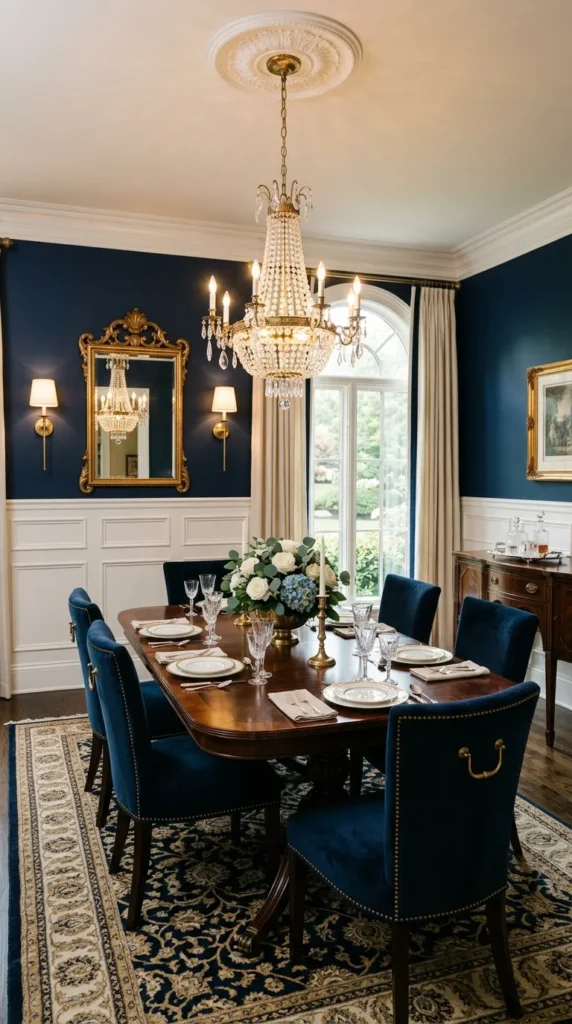
Wainscoting divides the dining room wall horizontally, typically at chair height, with paneling below and a different treatment above. Done with a contrasting color above the wainscoting the result is a room with architectural interest and deliberate design that looks far more expensive than it costs.
The classic version uses white painted wainscoting with a deep colored upper wall, navy or forest green or deep burgundy above the white panels. A more contemporary approach paints both sections in contrasting colors without using white at all, which creates a bolder and more unexpected result. Either version adds dimension to a dining room that flat walls simply do not have.
8. Velvet Finish Paint for Luxurious Depth
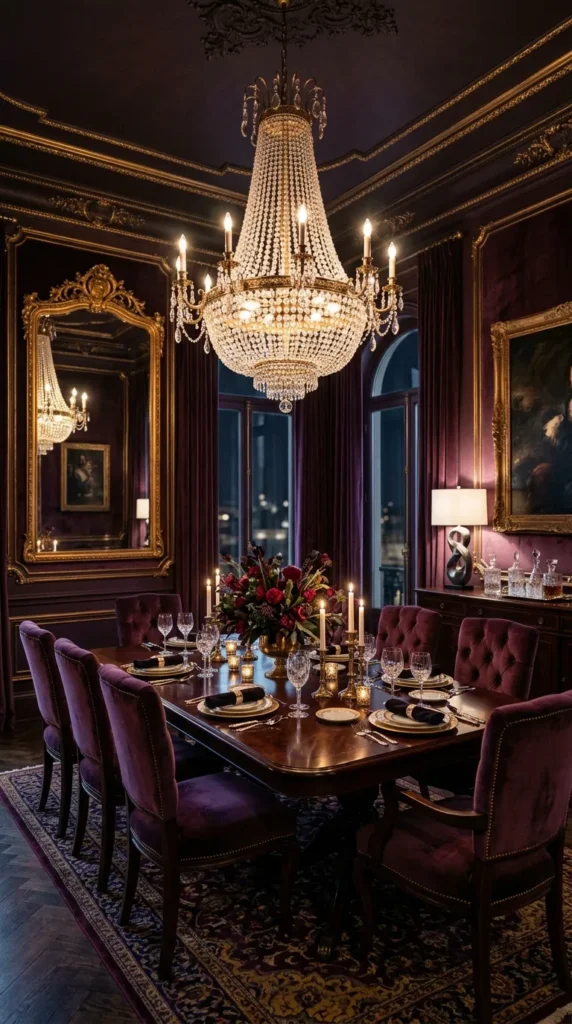
Velvet finish paint creates a surface that absorbs light rather than reflecting it, which gives walls a depth that matte paint cannot match and a softness that eggshell and gloss finishes do not have. Running your hand across a velvet finish wall feels noticeably different from any other paint surface.
In dining rooms this finish works best in deeper tones where the light absorption creates maximum richness. A velvet finish plum or midnight blue dining room wall has a quality that makes the color look almost three dimensional. The finish also hides minor wall imperfections better than any other paint type because the light absorption prevents shadow from gathering in small dents and marks. For a dining room with less than perfect walls this is genuinely the most practical as well as the most beautiful choice.
9. Toile de Jouy Wallpaper for Traditional Storytelling
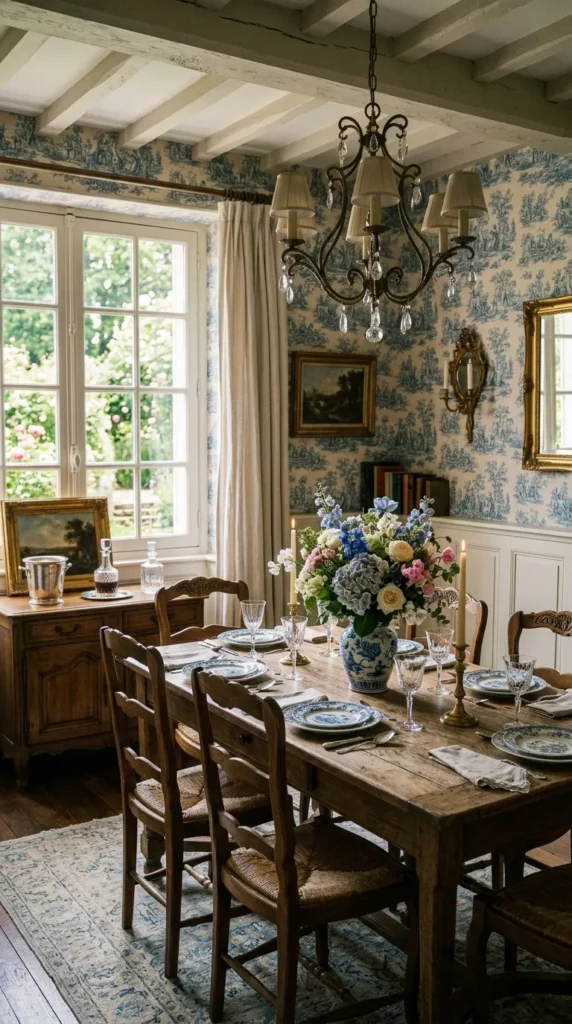
Toile de Jouy wallpaper features detailed scenic illustrations, typically pastoral or historical scenes, printed in a single color on a cream or white background. In a dining room it creates walls that tell a story and reward close looking in a way that abstract patterns do not.
The traditional pairing is red or blue toile on cream but contemporary versions come in forest green, charcoal, even black on white which suits more modern dining rooms. Toile works especially well in rooms with antique or traditional furniture because the illustrated quality of the pattern creates cohesion with older pieces. It also works unexpectedly well as a contrast to very contemporary furniture because the juxtaposition of old pattern and modern form creates visual tension that feels deliberate.
10. Vertical Stripes to Alter Room Proportions
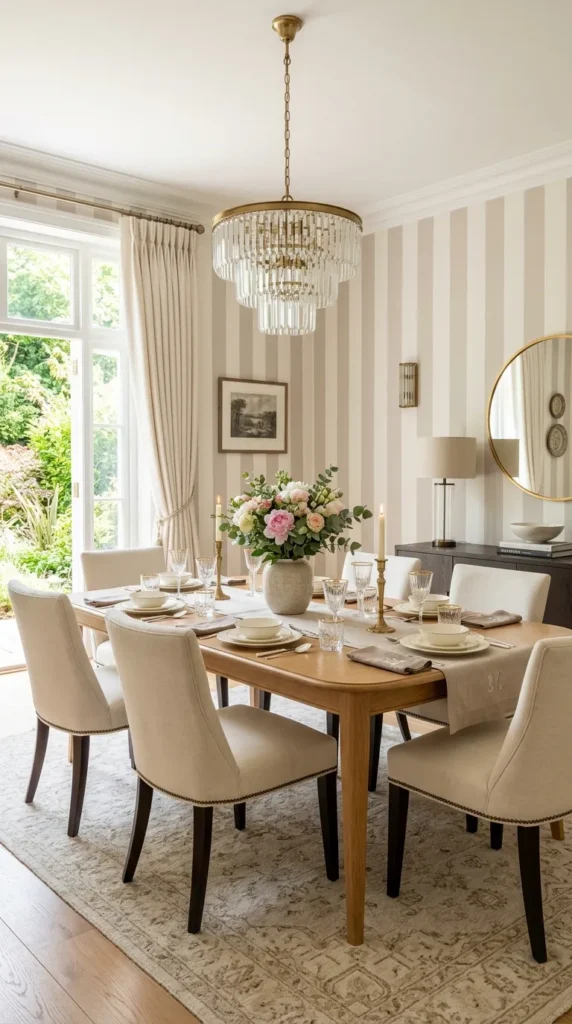
Vertical stripes painted on dining room walls create the optical illusion of height. In rooms with low ceilings this is genuinely transformative because the eye follows the vertical lines upward and the ceiling appears higher than it actually is.
Wide vertical stripes in two similar tones, a warm white and a soft cream for example, create subtle pattern that reads as texture from a distance. Narrower stripes in higher contrast colors create a more graphic effect that suits contemporary or maximalist dining rooms. The stripes do not need to be perfectly equal in width to look good. Wider alternating stripes have their own appeal and are easier to execute with painter’s tape than precise narrow ones.
11. Exposed Brick Wall Left Raw or Painted
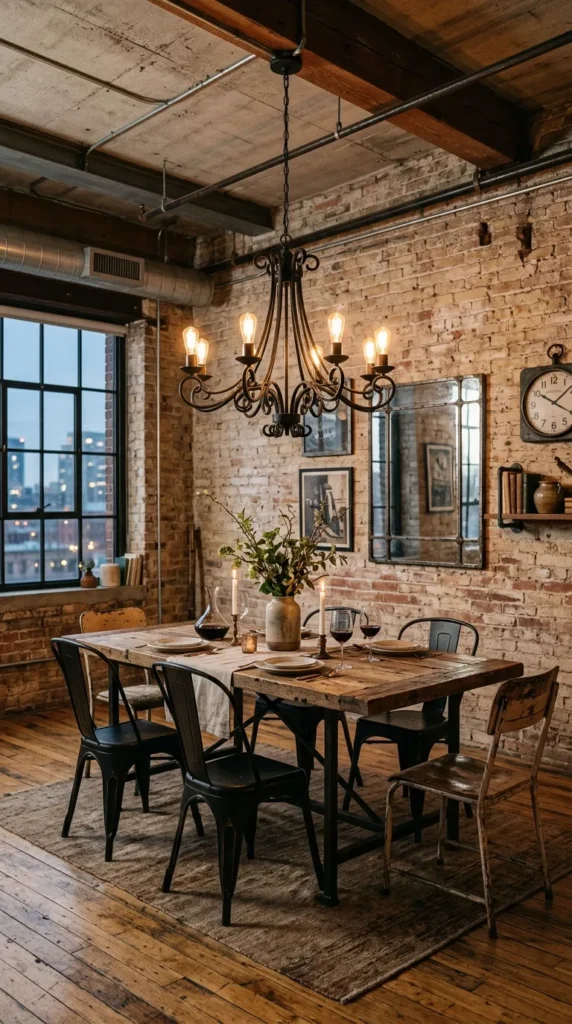
An exposed brick wall in a dining room adds texture and history that no other wall treatment can replicate because it is genuinely old material rather than an imitation of age. Raw brick creates a casual industrial atmosphere that works beautifully with wooden furniture and simple ceramic tableware.
Painting brick white or off white softens the industrial quality and creates something more romantic and relaxed. Painting brick in a dark color like charcoal or forest green creates something dramatic and unexpected that looks nothing like typical exposed brick treatments. If you have a brick wall beneath plaster it is worth investigating whether it can be uncovered because the material underneath is almost always more interesting than what is covering it.
12. Wallpaper on the Ceiling Instead of the Walls
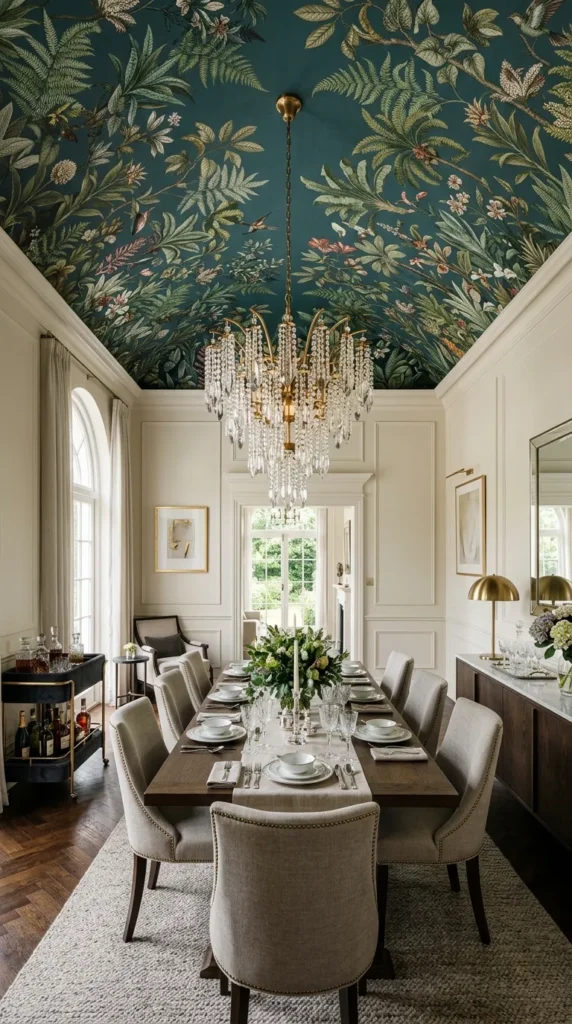
Taking wallpaper off the walls entirely and applying it only to the ceiling creates a dining room that surprises everyone who walks in because no one expects to look up and find pattern there. The walls can stay painted in a solid color that picks up one shade from the ceiling wallpaper.
This works especially well with geometric patterns, star motifs, or botanical designs that read well from below. The ceiling becomes the focal point of the room which is an unusual and genuinely delightful inversion of normal design expectations. Guests seated at the table have a beautiful view above them throughout the meal which creates a very specific kind of atmosphere that is completely different from anything walls alone can achieve.
13. Wood Paneling Painted in a Single Bold Color
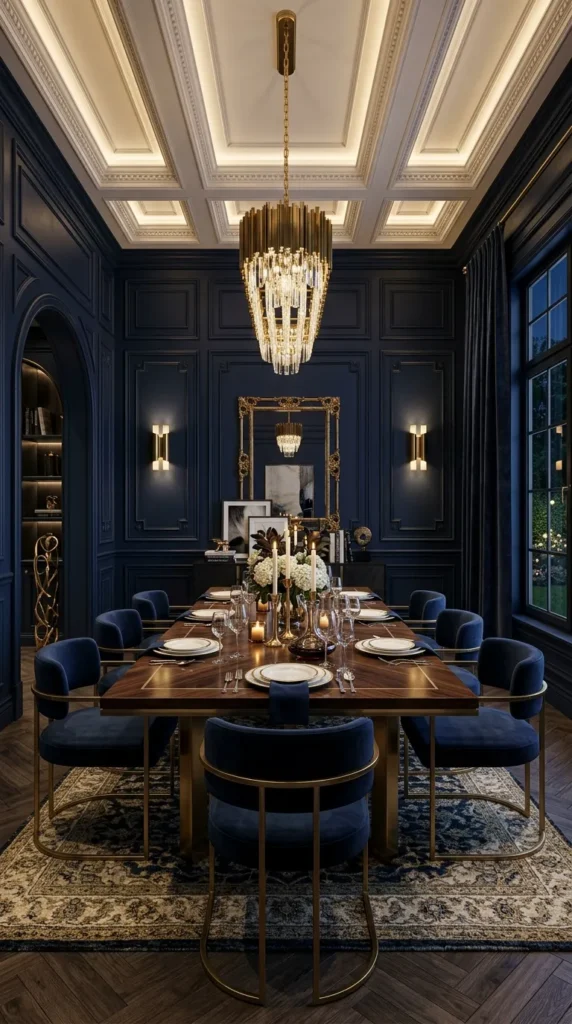
Full wall wood paneling, whether original to the house or newly installed, painted in a single bold color creates a dining room with texture, architectural weight, and color all working together simultaneously. The shadow lines between panels add dimension that flat walls do not have.
Deep navy painted paneling with simple brass hardware and warm lighting is one of the most sophisticated dining room looks achievable at any budget. Forest green paneling with natural wood furniture has been popular for years because the combination is genuinely timeless. Even contemporary geometric paneling in a deep terracotta or warm plum creates a room that feels designed from the ground up rather than assembled piece by piece.
14. Abstract Painted Wall Treatment by Hand
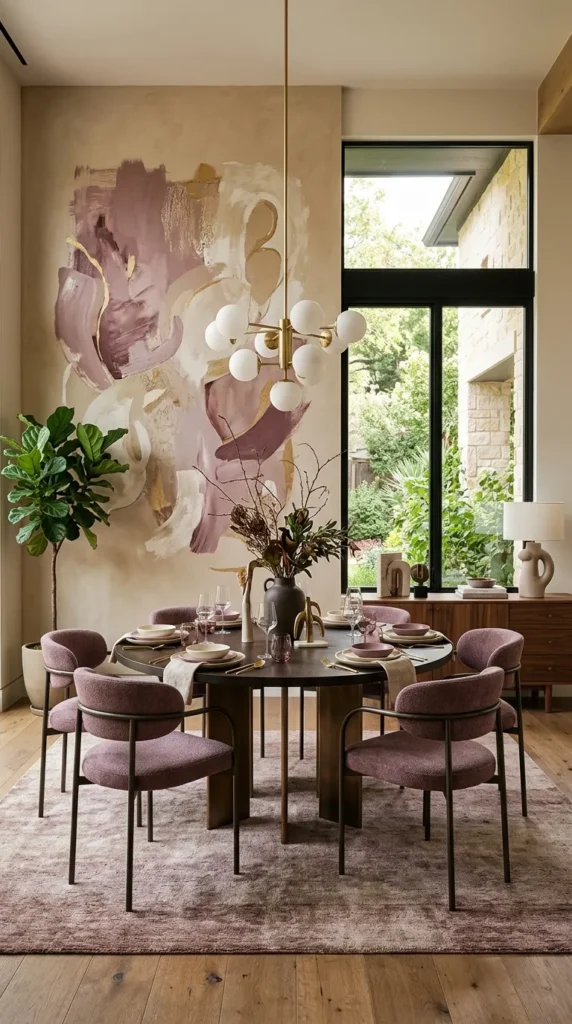
A hand painted abstract treatment directly on the dining room wall creates something that cannot be bought and cannot be replicated anywhere else. Large sweeping brushstrokes in complementary colors, a wash of diluted paint over a base coat, or gestural marks in a single contrasting tone all create walls with genuine artistic personality.
The imperfection is the point. A hand painted wall looks different from professional work and it is supposed to. The variation in coverage, the visible brushstroke direction, the areas where the base coat shows through are all part of what makes the wall feel made rather than applied. This works especially well in dining rooms with contemporary or eclectic furniture because the handmade quality adds warmth to spaces that might otherwise feel too clean or minimal.
15. Metallic Wallpaper for Evening Dining Drama
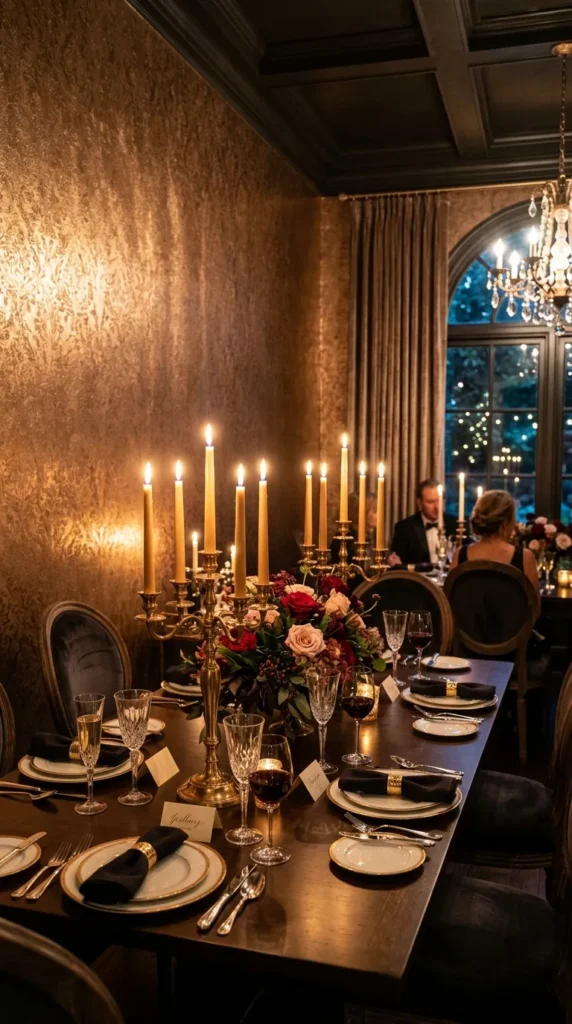
Metallic wallpaper in gold, bronze, or copper creates a dining room that comes alive in the evening under warm lighting in a way that no other wall treatment manages. The metallic surface reflects candlelight and pendant light in shifting patterns that make the walls seem to move during dinner.
By day metallic wallpaper reads as a warm textured surface with subtle sheen. By evening with candles on the table it transforms entirely and the dining room becomes genuinely atmospheric in a way that requires almost no effort once the wallpaper is up. This is a wall treatment that works harder than any other on this list because it changes character with the light rather than looking the same at every hour of the day.
16. Colorwashed Wall for Soft Uneven Depth
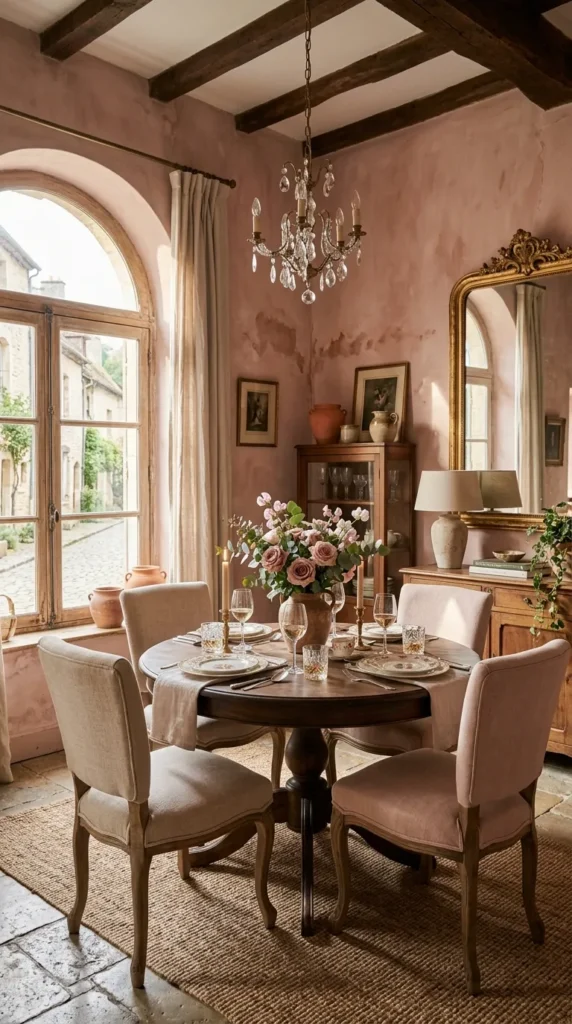
Color washing is a paint technique where a diluted glaze is brushed over a base coat in loose irregular strokes, creating a wall that looks as though the color has been absorbed into the plaster rather than applied on top of it. The result is soft and organic with natural variation across the surface.
Color washing works in almost any shade but is most effective in warm tones where the layering creates depth that reads as age. A terracotta colorwash over a pale peach base creates something that looks genuinely old in a beautiful way. A sage green colorwash over cream creates a soft Mediterranean quality. The technique is forgiving to execute because the irregularity is the intended effect rather than something to be corrected.
17. Maximalist Wallpaper With Multiple Competing Patterns
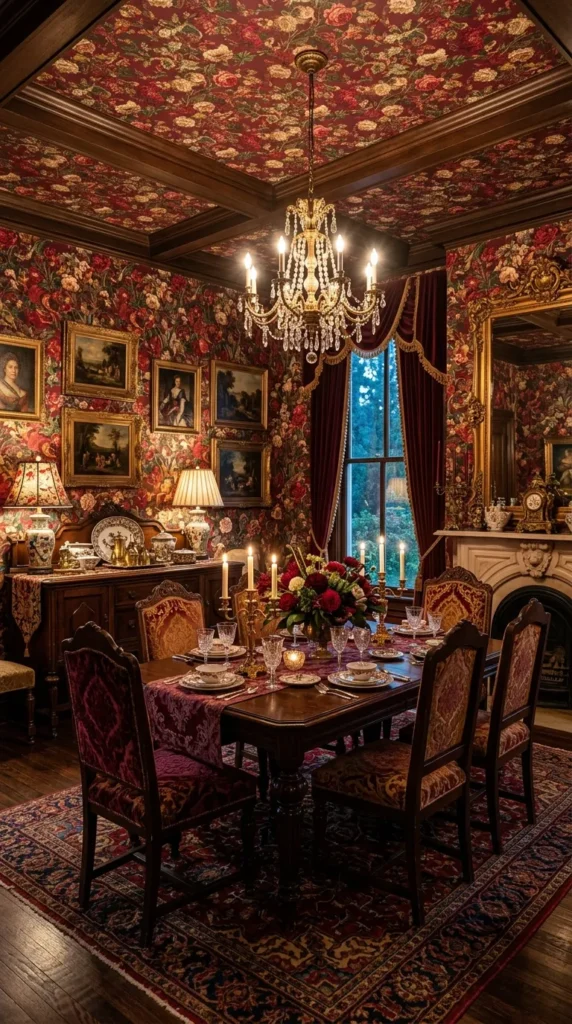
Using maximalist wallpaper with a dense, complex pattern in a dining room is a commitment that rewards the people who make it fully. Busy florals, intricate damasks, detailed geometric repeats, and layered abstract patterns all fall into this category and when used without restraint they create dining rooms with extraordinary visual richness.
Done right means choosing a wallpaper where the colors already tell you what else to put in the room. If the wallpaper has deep blue, warm gold, and cream in it then the furniture, textiles, and tableware should pull from those same colors rather than introducing new ones. The wallpaper becomes the design brief and everything else responds to it. This is the most maximalist approach on this list and the one that requires the most confidence but creates the most memorable result.
18. Paneled Wall With Inset Wallpaper Sections
Combining wall paneling with wallpaper inside the panels creates a dining room feature wall with more detail and craft than either treatment achieves alone. The paneling provides architectural structure while the wallpaper inside each panel adds pattern and color.
A simple grid of rectangular panels with a botanical or geometric wallpaper inset looks genuinely custom because very few people think to combine the two elements. Paint the paneling in a color that coordinates with the wallpaper rather than contrasting it strongly and the whole wall reads as one considered treatment rather than two separate decisions stuck next to each other. This works especially well on the wall behind a sideboard or a built in buffet.
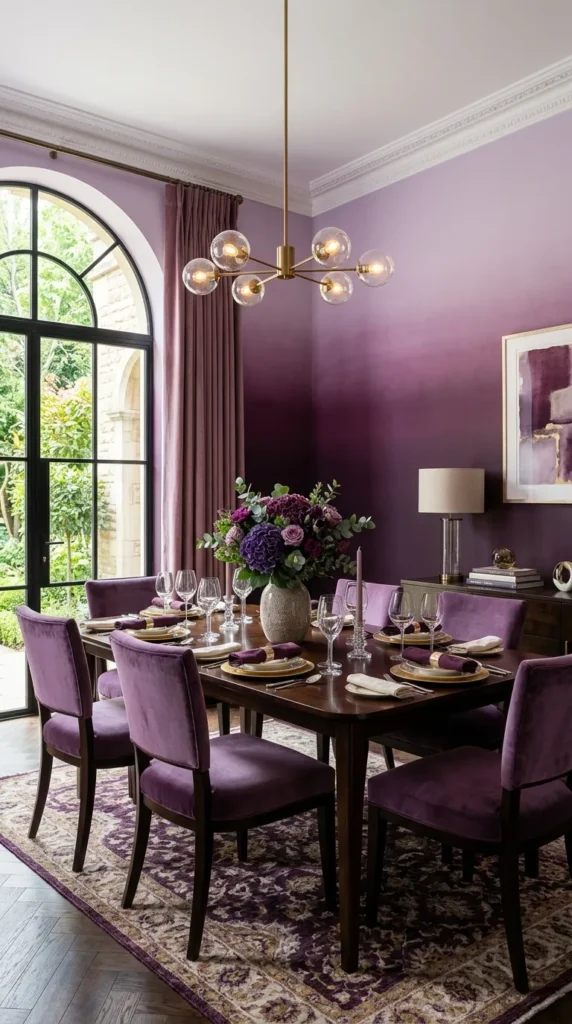
19. Ombre Painted Wall From Dark Base to Light Top
An ombre wall that transitions from a deep saturated color at the bottom to a much lighter version of the same color at the top creates a dining room with the quality of light that you get just before sunrise or just after sunset. The gradation feels natural rather than constructed because color in nature rarely exists in a single flat tone.
The technique requires some practice but is achievable without professional help. The key is blending the two colors while both are still wet rather than trying to blend across a dry edge. A deep forest green fading to pale sage, a rich terracotta fading to warm peach, or a midnight blue fading to pale sky all create walls that feel genuinely artistic. The ombre should run vertically with the darkest shade at the bottom to mirror the way natural light actually behaves in a space.
Final Thoughts
Dining room walls are not background. They are the first thing a room communicates and the last thing guests forget. Every idea on this list transforms a dining room not because the wall treatment is clever but because it makes a decision and follows it all the way through. A half committed wall treatment is worse than no treatment at all because it signals uncertainty rather than intention.
Pick the idea from this list that you have been thinking about since you first read it. That instinct is usually right. Order the wallpaper sample or pick up the paint and spend a weekend making the room into something worth sitting in. The meals you eat in it afterward will feel different and the people sharing them with you will notice even if they cannot explain exactly why.