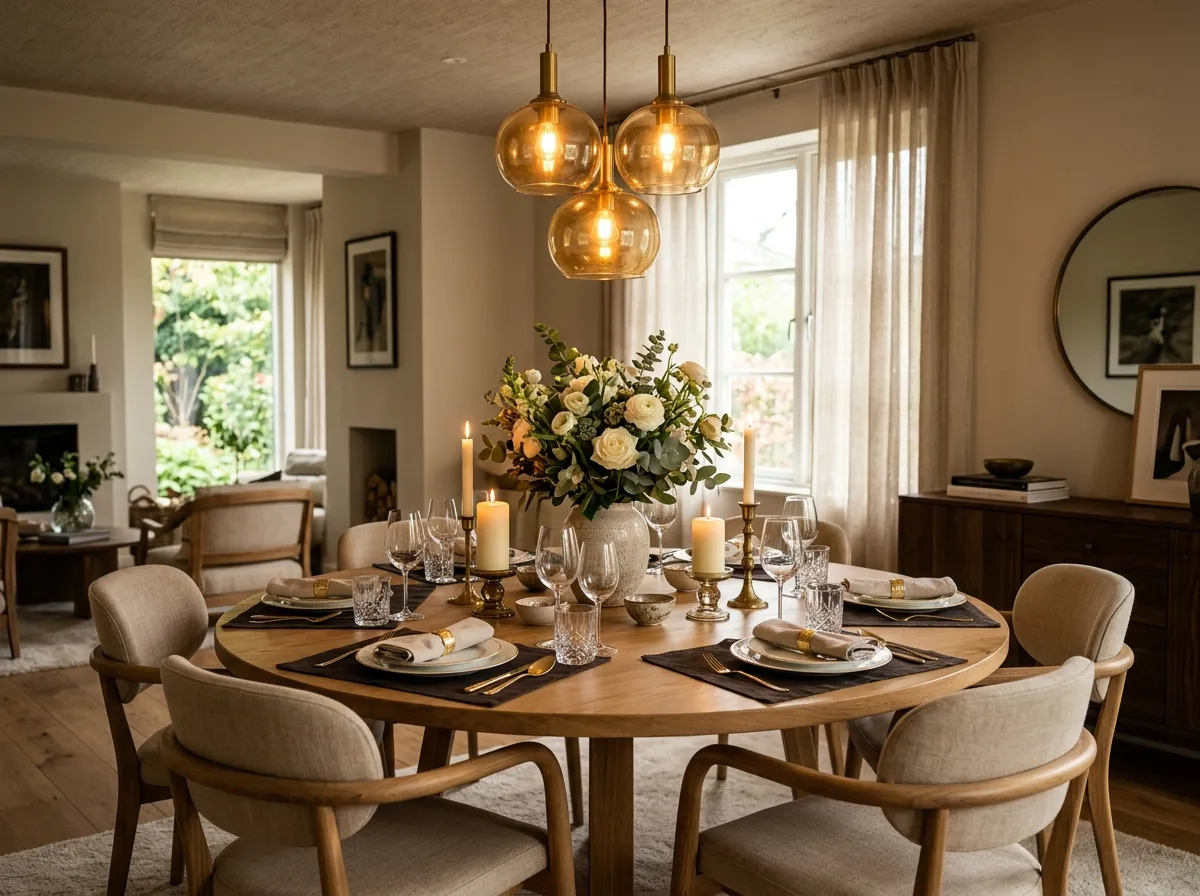
21 Ways to Style a Round Dining Table
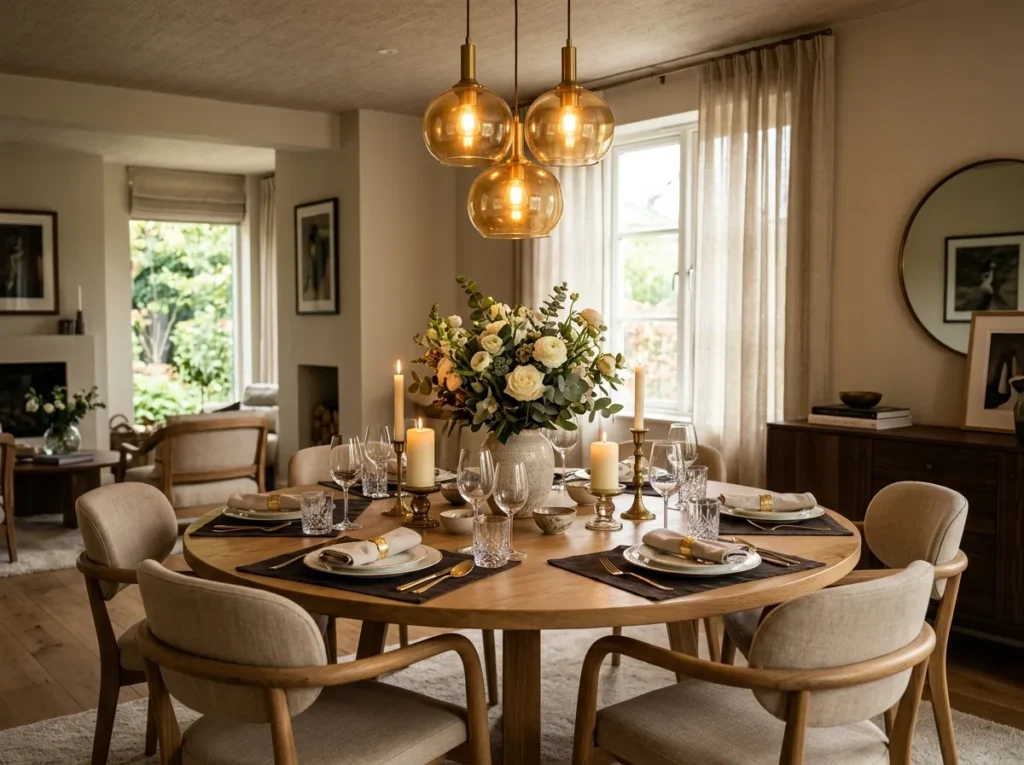
Round dining tables are the most social shape a table can be. No head of the table, no hierarchy, everyone equally close to everyone else. I switched from a rectangular table to a round one three years ago and the change in how people behaved around it was immediate and noticeable. Conversations became more inclusive. People stayed longer. The table itself became an invitation rather than just a surface. But a round table also presents a specific styling challenge because the circular shape and the lack of a defined end means the center is always visible from every seat and the styling has to work from all angles simultaneously.
Getting a round dining table right is not about filling the center with something large enough to justify the space. It is about understanding that every element you place on a round table will be seen from multiple directions at once and choosing accordingly. These 21 ideas cover everything from simple everyday styling to elaborate entertaining setups, from budget friendly approaches to more considered investments in pieces that will work on the table for years. Every idea here has been thought through specifically for the round format because what works on a rectangular table does not always translate.
1. A Single Large Statement Vase in the Center
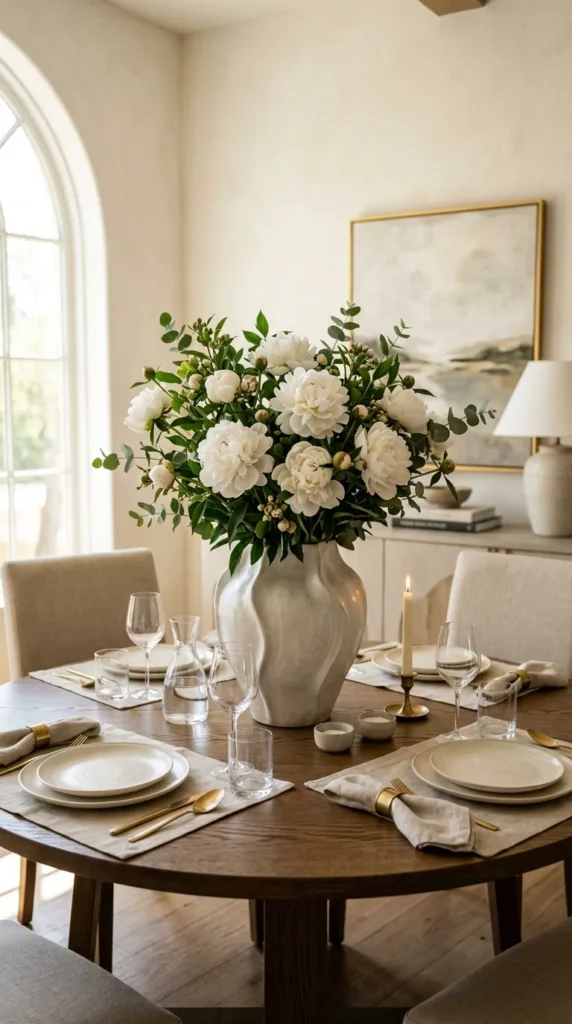
One genuinely large vase placed at the center of a round dining table does more styling work than several smaller pieces clustered together. The key word is large. A vase that is too small for the table looks lost rather than intentional.
Choose a vase with a strong silhouette, something with a defined neck or an interesting curve, and fill it with a single variety of stem rather than a mixed arrangement. All white peonies, all eucalyptus, all dried pampas grass. The restraint in the flower choice makes the vase and the arrangement feel considered rather than assembled. The vase should be tall enough to be seen from across the table but not so tall that it blocks sightlines between seated guests.
2. Cluster of Candles at Varying Heights
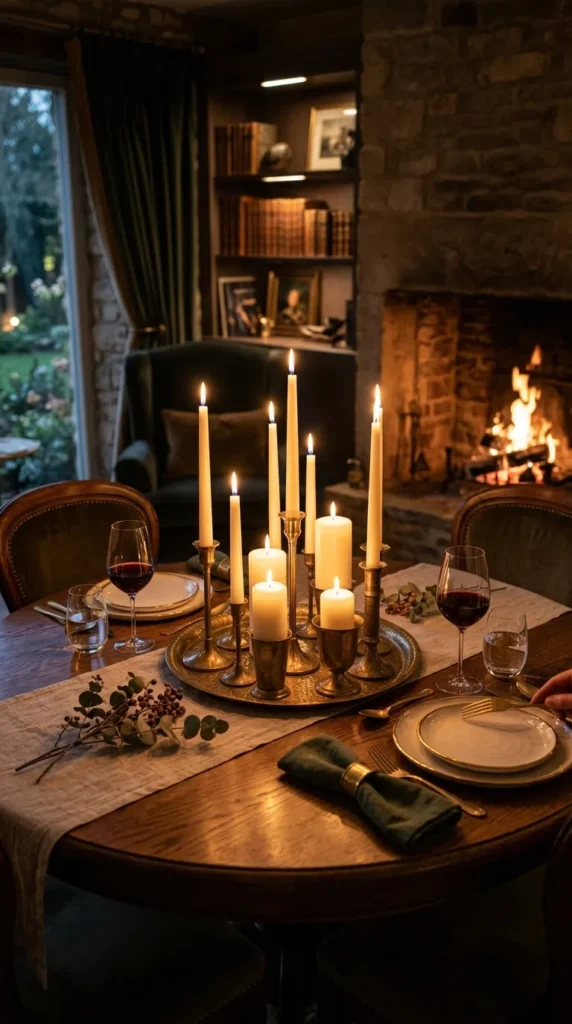
Three to five candles in different heights grouped at the center of a round table create atmosphere that no other centerpiece matches. The asymmetry of different heights prevents the cluster from looking stiff and the varying heights mean the arrangement has movement even when nothing is burning.
Use candle holders in the same material throughout, all brass, all clear glass, all ceramic, to give the cluster visual cohesion despite the height variation. Taper candles in simple holders look elegant. Pillar candles on small plates or trays look more casual and abundant. Either version works as everyday styling or as an entertaining centerpiece. The cluster shape suits a round table particularly well because it mirrors the circular form of the table itself.
3. Low Floral Arrangement That Keeps Sightlines Clear
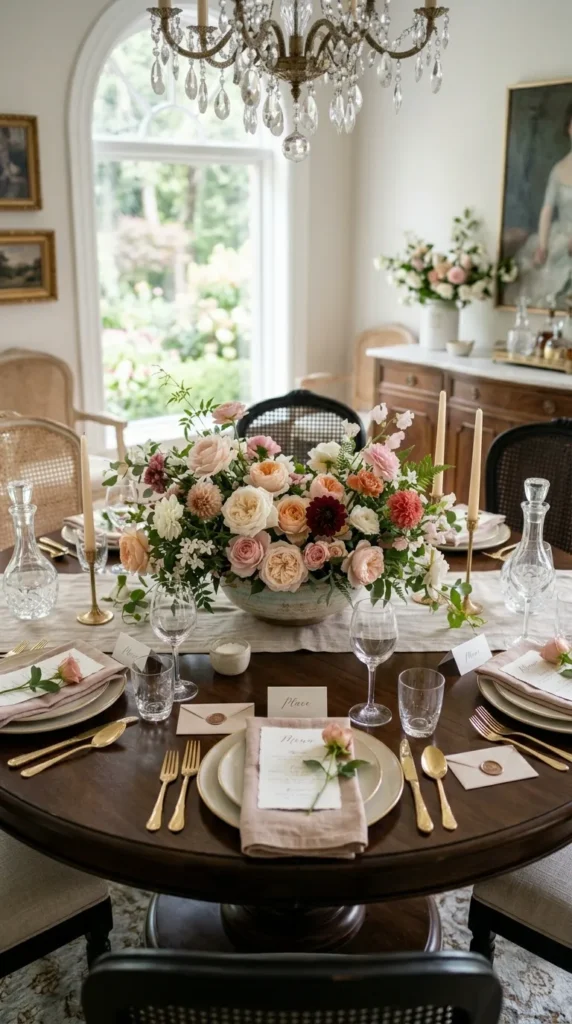
A low and wide floral arrangement rather than a tall one solves the sightline problem that plagues round dining table centerpieces. When flowers sit below eye level at the seated position everyone can see and talk to everyone else without leaning around a centerpiece.
Wide shallow vessels, low ceramic bowls, and cut crystal compotes all work as containers for low arrangements. Pack them generously with blooms so the arrangement looks abundant rather than sparse. Garden roses, ranunculus, and dahlias all work beautifully in low arrangements because their full heads create volume without requiring height. This styling approach is particularly useful for tables where conversation is the priority and the centerpiece is meant to enhance rather than dominate.
The right lighting can completely transform your dining area. Discover 17 Ways to Get Dining Room Lighting Right for practical lighting inspiration.
4. Styled Tray With Multiple Small Objects
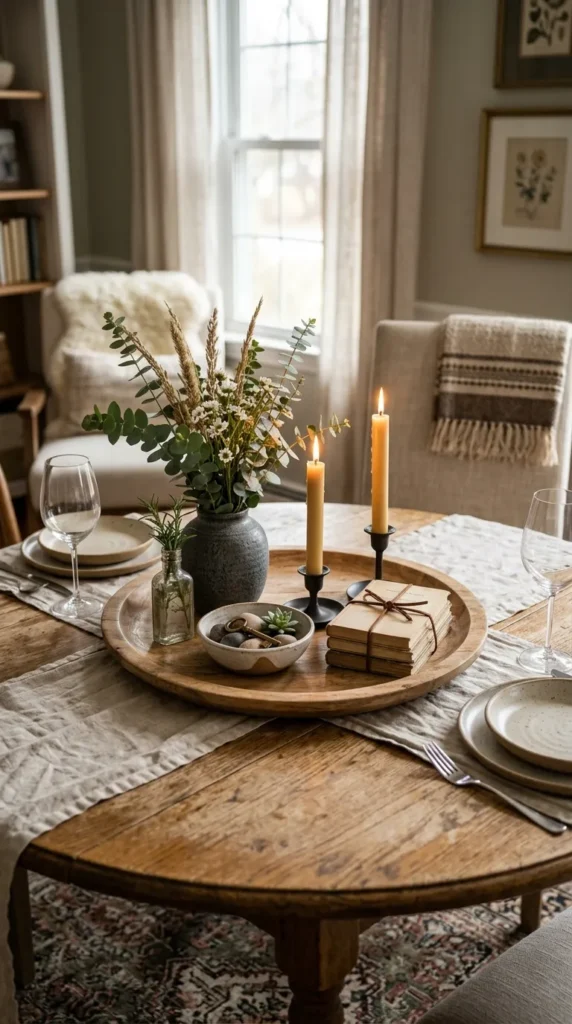
A tray placed at the center of a round table gives permission to group multiple small objects together in a way that looks collected rather than cluttered. The tray creates a defined boundary and within that boundary the eye reads everything as a single arrangement rather than separate pieces.
Fill the tray with a small vase, two or three votives, a small ceramic object, and perhaps a few loose stems or leaves. The variety within the contained space creates visual interest without the arrangement spilling across the table surface. Round trays obviously suit round tables well but rectangular trays in natural wood or aged brass also work because the contrast of shapes is itself a styling choice.
5. Seasonal Fruit as Everyday Centerpiece
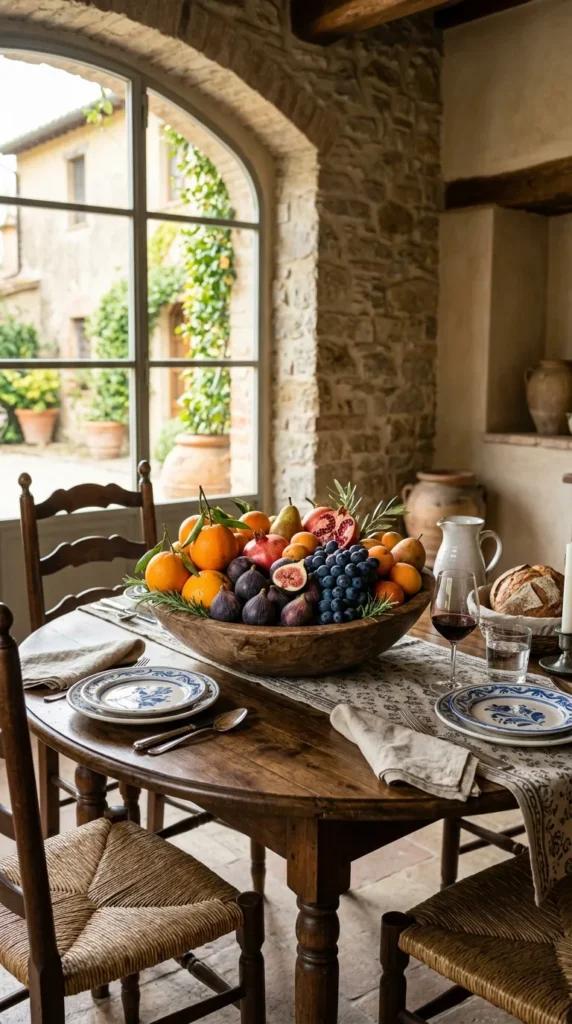
A bowl or a loose arrangement of seasonal fruit in the center of a round dining table is one of the oldest and most effective styling approaches because it is genuinely useful as well as beautiful. A wooden bowl filled with clementines in winter, figs in late summer, or green apples year round creates a centerpiece with color and texture that costs nothing extra because the fruit gets eaten.
The styling becomes more considered when you move the fruit out of a bowl and arrange it loosely on a flat plate or directly on the table surface with a few loose leaves tucked in between. This looser approach looks more European and less decorative, as though the fruit arrived from a market and was arranged without overthinking it, which is exactly the quality that makes it feel genuinely beautiful rather than staged.
6. Linen Table Runner Across the Diameter
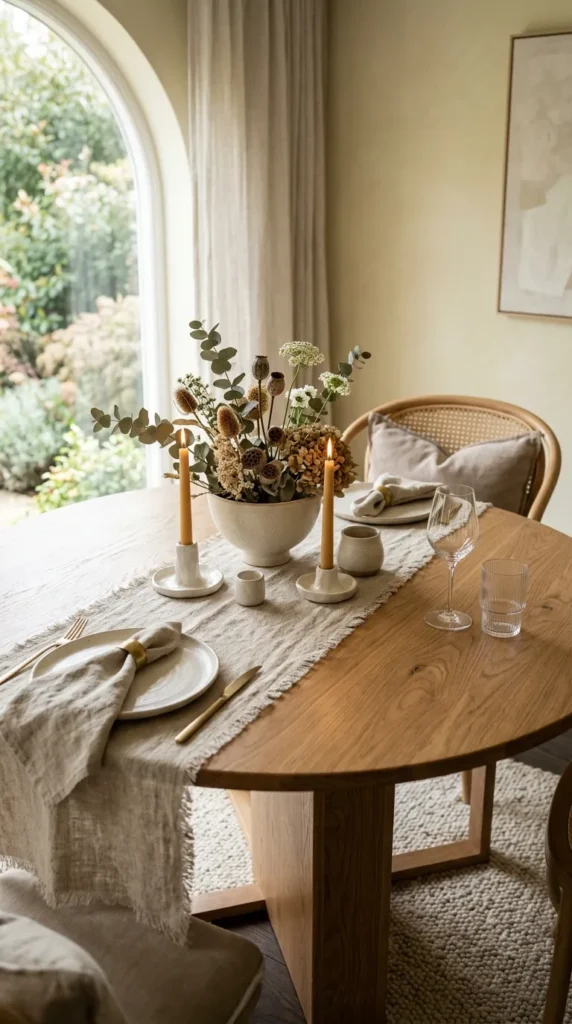
A table runner on a round table sounds counterintuitive because runners are typically associated with rectangular tables where they follow the long axis. On a round table a runner placed across the diameter creates a deliberate asymmetry that actually makes the round shape more interesting rather than fighting it.
Choose a runner in natural linen, heavy cotton, or a textured woven fabric rather than something synthetic. Let the ends drape slightly over the table edge rather than cutting them short. The runner gives you a defined zone for your centerpiece and prevents smaller objects from looking scattered. It also adds a layer of texture to the table surface that makes the overall styling feel more considered even when the centerpiece is very simple.
7. Potted Plant or Small Tree as Living Centerpiece
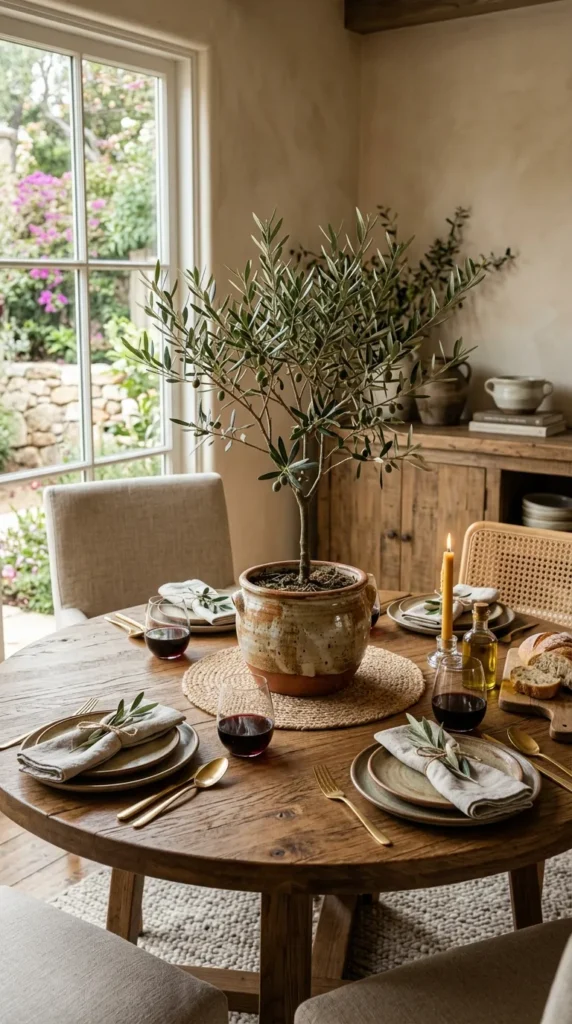
A single potted plant placed at the center of a round dining table brings a quality of life to the styling that cut flowers approximate but never quite match. A small olive tree, a fiddle leaf fig cutting in a beautiful pot, a trailing pothos in a ceramic vessel, or a cluster of succulents in a shallow bowl all work beautifully.
The practical advantage over cut flowers is longevity. A healthy potted plant on the table looks good for weeks or months rather than days. The styling advantage is that a living plant has a natural, uncontrived quality that no cut arrangement can replicate because it is genuinely growing rather than arranged. Choose a pot that is beautiful enough to be the focal point of the centerpiece because the pot is as important as the plant inside it.
8. Brass Candlesticks in Odd Numbers
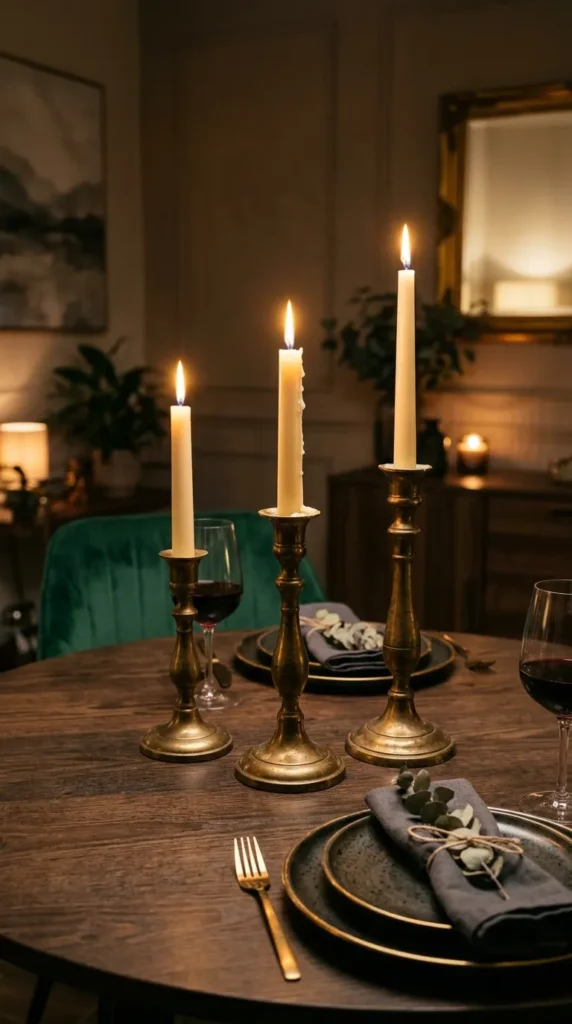
Odd numbers create better visual arrangements than even numbers in almost every styling context and brass candlesticks on a round dining table are no exception. Three brass candlesticks of slightly different heights grouped together in the center look more interesting and more intentional than two matching ones placed symmetrically.
Aged or antique brass works better than polished bright brass in most dining rooms because the patina reads as collected over time rather than purchased as a set. Mix heights and slight variations in style within the brass family rather than buying a matching set. The variation is what makes the arrangement look like it was built gradually rather than ordered all at once.
9. Dried Botanicals for Year Round Longevity
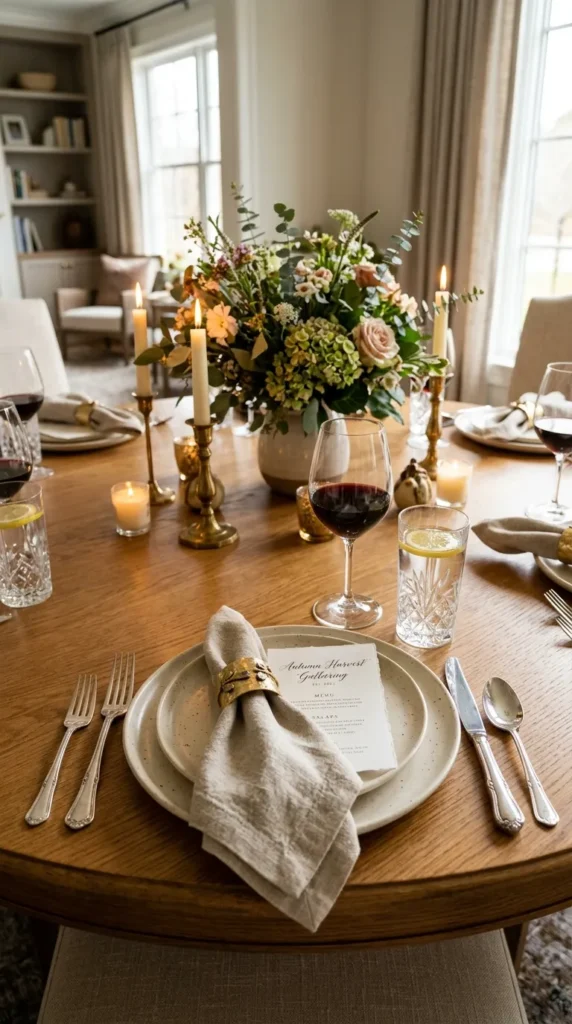
Dried botanical arrangements last indefinitely on a dining table which makes them one of the most practical centerpiece choices for everyday styling. Pampas grass, dried protea, preserved eucalyptus, dried lavender, and seed heads all create arrangements with genuine texture and visual interest that require no water and no maintenance.
The natural color palette of dried botanicals, warm creams, dusty roses, soft browns, and pale greens, suits almost every dining room color scheme. They work in both contemporary and traditional spaces. Dried arrangements look best when they are generous rather than sparse. A small tight bunch of dried stems looks underwhelming. A full abundant arrangement in a substantial vase looks considered and deliberately beautiful.
10. Napkin Rings as Part of the Table Story
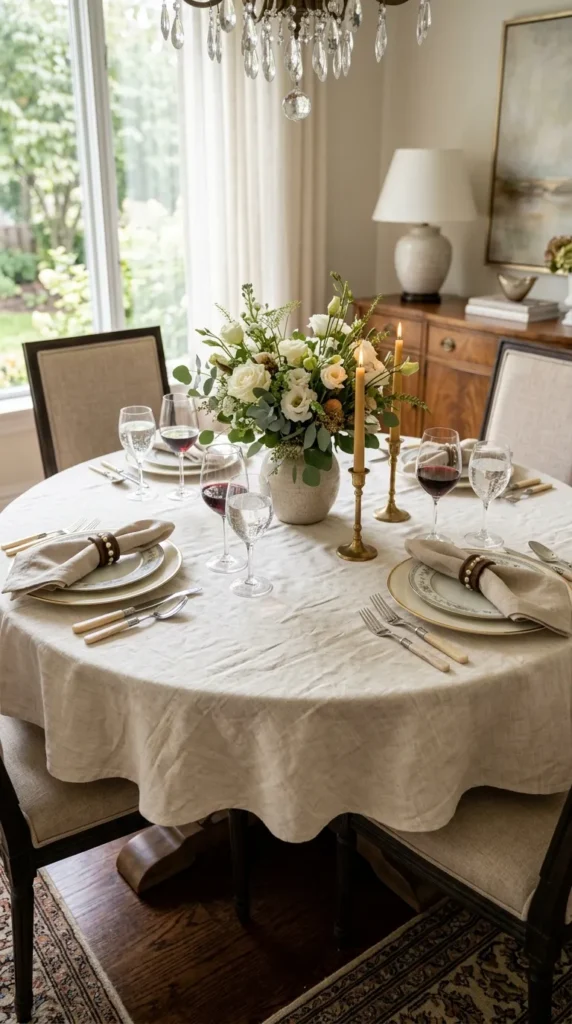
Napkin rings on a round dining table contribute to the overall styling in a way that is easy to underestimate. When all the napkins are folded and ringed in a consistent style the table setting becomes a coordinated whole rather than a collection of separate elements.
Beautiful napkin rings in aged brass, hand carved wood, ceramic, or woven rattan add texture and detail to each place setting that elevates the entire table. On a round table where every seat faces the center and every place setting is visible to every other guest, the napkin rings read as part of the centerpiece story rather than just practical holders. Choose napkin rings that coordinate with your centerpiece materials rather than matching them exactly.
11. Mix of Taper and Pillar Candles Together
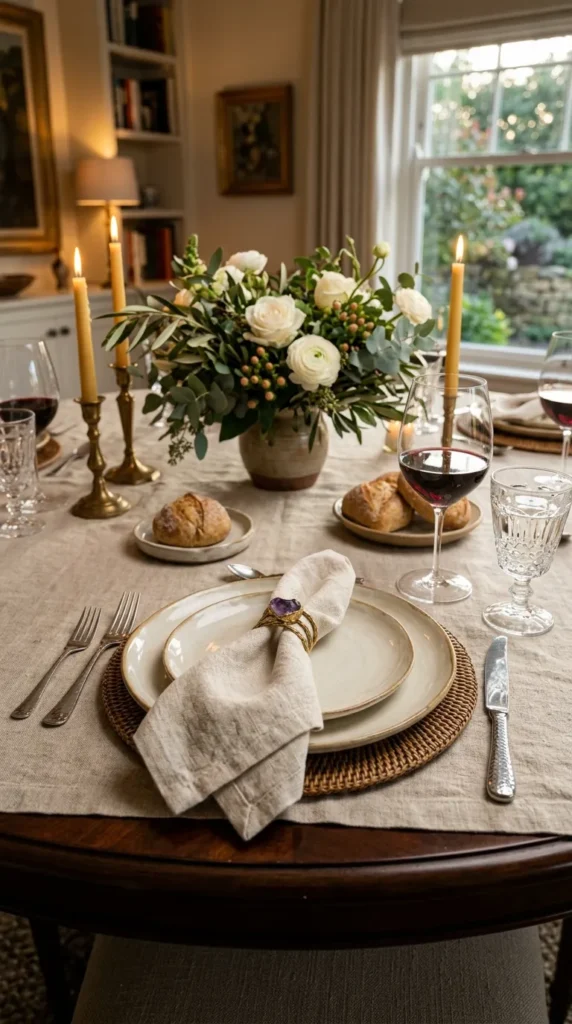
Mixing taper candles in tall holders with shorter pillar candles on plates or small stands creates a candle centerpiece with more visual complexity than either type achieves alone. The different silhouettes create variety and the different heights create movement.
Group them asymmetrically rather than spacing them evenly around the center of the table. A cluster of three tapers and two pillars placed slightly off center looks more natural and more interesting than five candles placed at equal intervals in a circle. Tuck a few small fresh leaves or loose flower heads among the bases of the candles to connect the flame elements to something organic.
12. Stacked Books With a Small Object on Top
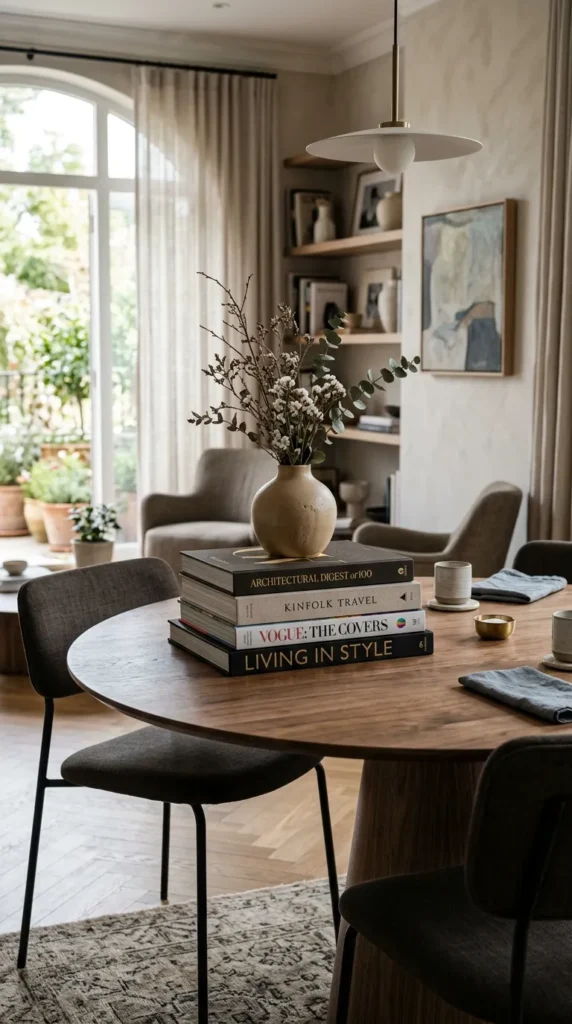
A small stack of beautiful books placed at the center of a round table with a single object on top, a ceramic figurine, a small vase, a stone, creates an unexpectedly effective and completely personal centerpiece. The books suggest that the dining room is used for more than eating and give guests something to pick up and look at.
Choose books with beautiful spines or covers rather than hiding them face down. Art books, travel photography books, and well designed hardcovers all work. The stack should be no more than three books high and the object on top should be small enough that the books remain the focus rather than becoming just a pedestal. This styling approach is particularly good for everyday use because it is genuinely interesting rather than purely decorative.
Create a timeless dining space with these 16 Ways to Do Mid-Century Modern Dining for classic furniture and décor ideas.
13. Herb Garden in Small Pots as Functional Centerpiece
Small terracotta pots of fresh herbs grouped at the center of a round dining table create a centerpiece that is useful during the meal as well as beautiful before it. Basil, rosemary, thyme, and mint all look lovely in small pots and can be picked from during cooking or used as table garnishes.
The terracotta pots themselves have a warm earthy quality that suits casual dining beautifully. Group three or five pots of different herbs together on a small wooden board or tray rather than spacing them individually around the table. The grouping creates a centerpiece with enough visual weight to anchor the round table while the variety of leaf shapes and shades of green creates subtle visual interest.
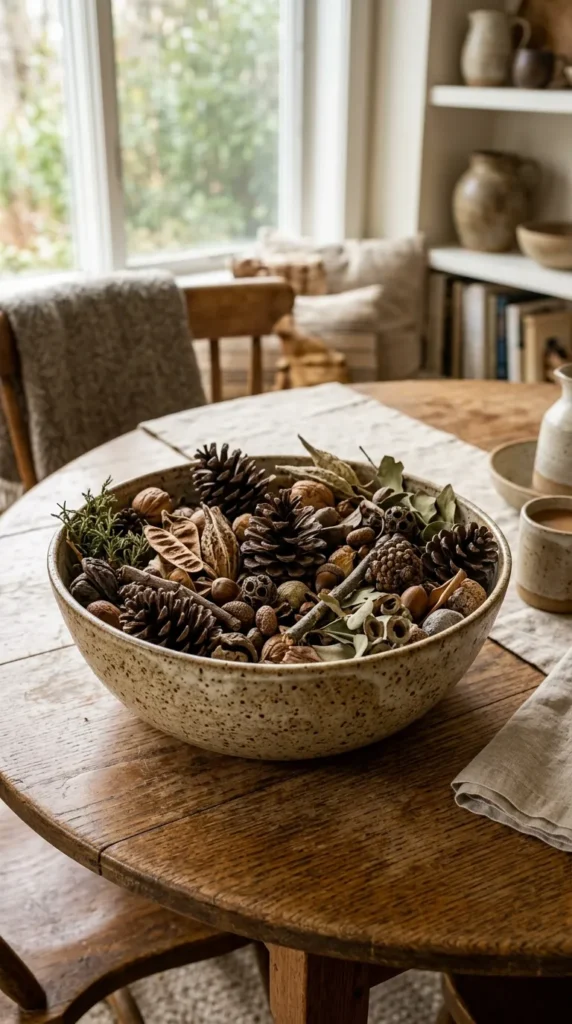
14. Statement Bowl Filled With Natural Objects
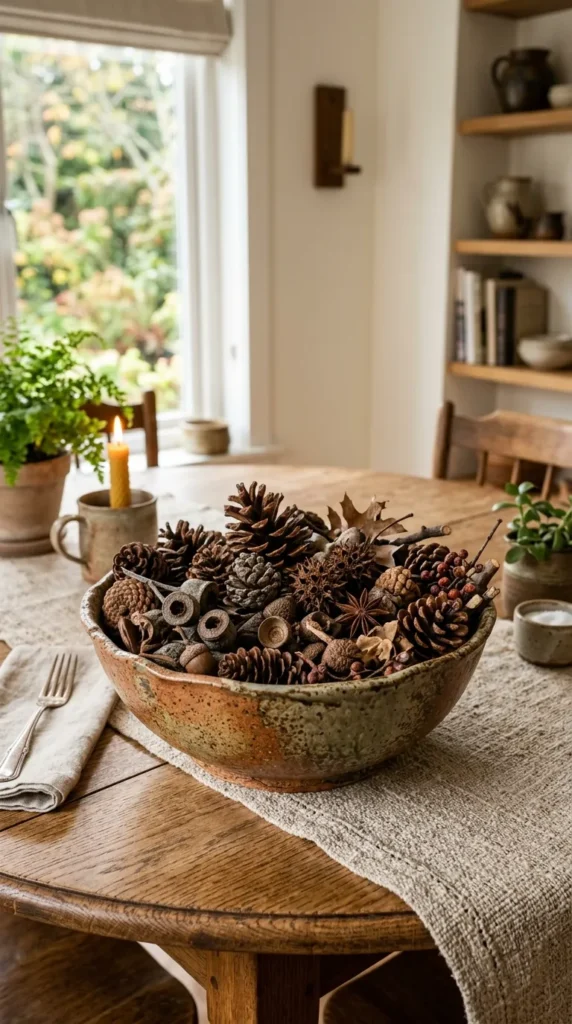
A large ceramic or wooden bowl filled with natural objects collected from outside creates a centerpiece that changes seasonally and costs almost nothing. Pine cones, smooth river stones, dried seed pods, small branches, citrus fruit with leaves still attached, and seashells all work beautifully.
The bowl itself matters as much as what is inside it. A beautiful handmade ceramic bowl or a turned wooden bowl has enough presence to be a centerpiece on its own. What goes inside it is almost secondary. Change the contents with the seasons and the centerpiece updates itself without requiring new purchases. This is the most sustainable styling approach on this list and one of the most visually satisfying.
15. Fresh Flowers From the Garden in Simple Vessels
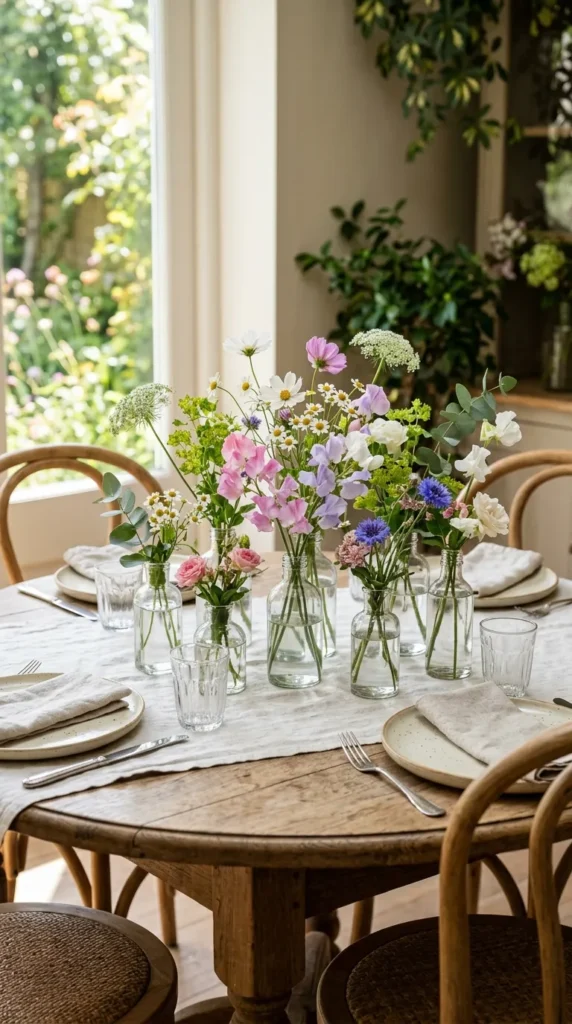
Flowers cut directly from a garden and placed in simple vessels without formal arranging look more beautiful on a dining table than expensive florist arrangements in many situations. The slightly wild quality of garden flowers, the uneven stem lengths, the mix of blooms and foliage, reads as generous and abundant rather than careful and controlled.
Use several small vessels rather than one large formal arrangement. A few stems in a small glass bottle, a handful of blooms in a ceramic jug, two roses in a bud vase. The collection of small vessels spread loosely across the center of a round table suits the format beautifully because the arrangement is naturally multidirectional and looks equally good from every seat.
16. Woven Placemats as Part of the Centerpiece
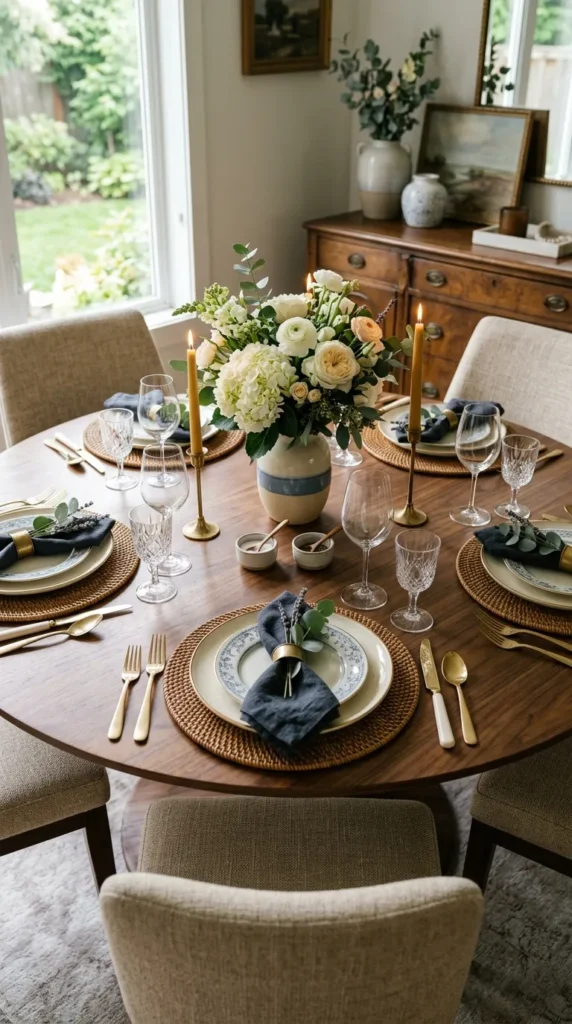
Woven placemats in natural materials like jute, seagrass, or rattan contribute to the overall styling of a round dining table rather than existing purely as practical items. When placemats are beautiful enough the table setting becomes its own decoration and the centerpiece can be simpler because the table surface is already doing styling work.
Choose placemats with interesting texture and a color that coordinates with your centerpiece rather than neutral placemats that read as purely functional. Layering a smaller woven placemat over a larger linen one at each setting adds depth and creates a table setting with visual richness without requiring an elaborate centerpiece to compensate.
17. Sculptural Object as a Non Floral Centerpiece
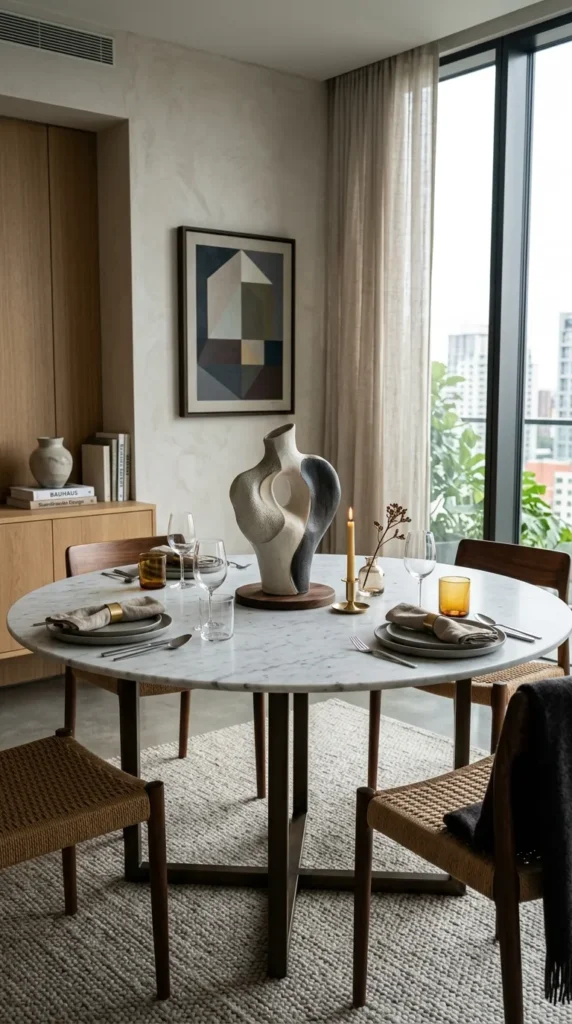
A single sculptural object at the center of a round dining table creates a centerpiece that lasts indefinitely and never requires maintenance. A beautiful ceramic sculpture, a piece of driftwood with an interesting shape, a large smooth stone, or a handblown glass object all work as non floral centerpieces.
The sculptural approach works best when the object is genuinely interesting from multiple angles since every seated guest will see it from a different direction. Avoid objects that have a clear front and back because on a round table someone will always be facing the back. Choose objects that reward looking from any angle equally.
18. Layered Linens in Complementary Tones
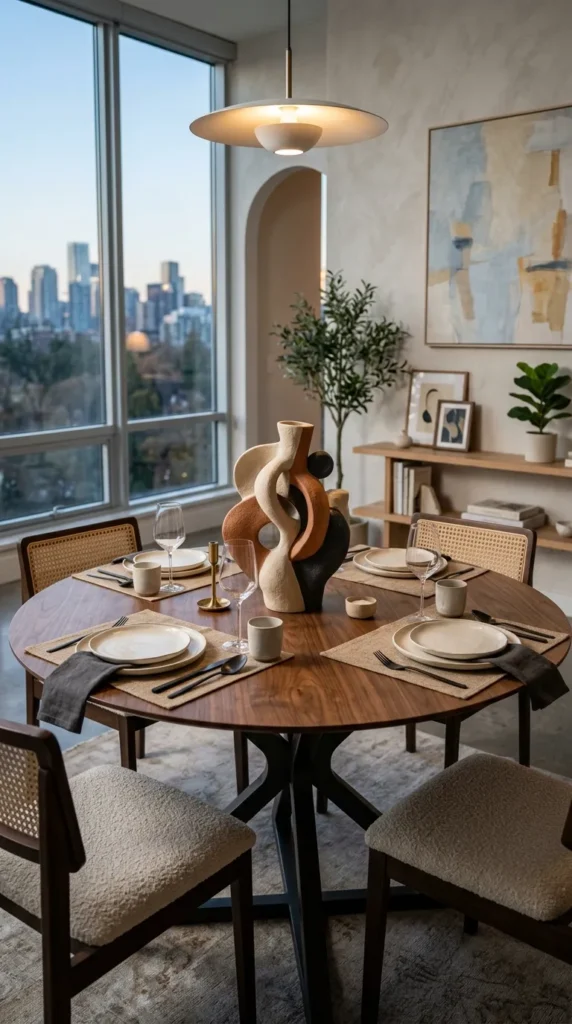
Layering different linens on a round table, a full tablecloth with a runner across the diameter and individual napkins in a third coordinating tone, creates a table surface with texture and depth before any centerpiece is added. The linens do the heavy lifting and the centerpiece can be minimal.
Natural linen in different tones works best for layering because the material has enough texture to create visual interest even between similar colors. A warm white tablecloth with a natural oatmeal runner and terracotta napkins creates a table surface that looks completely considered with nothing more than a single candle in the center.
19. Holiday Specific Styling With Seasonal Materials
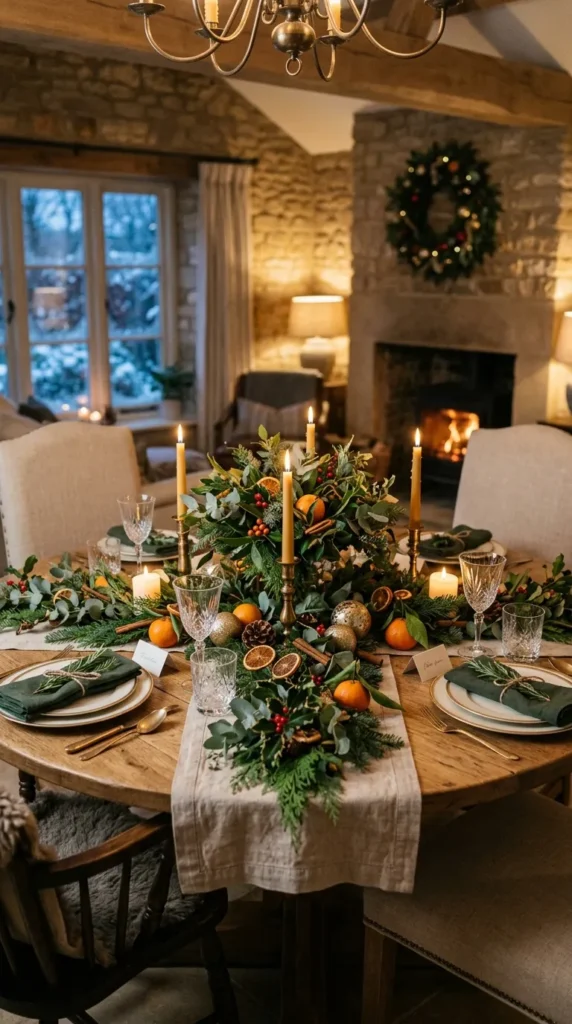
Styling a round dining table specifically for a holiday or celebration using seasonal materials creates a centerpiece that feels genuinely appropriate to the occasion rather than generic. Pine branches, clementines, and gold candles for winter. Fresh tulips and pale linen for spring. Dried grasses and pumpkins for autumn.
The seasonal approach to round table styling works because the materials available in each season have their own inherent beauty that requires very little additional styling to communicate. Gather what is available, place it generously in the center of the table, and the season itself does most of the work.
20. Monochrome Table Setting in One Color Family
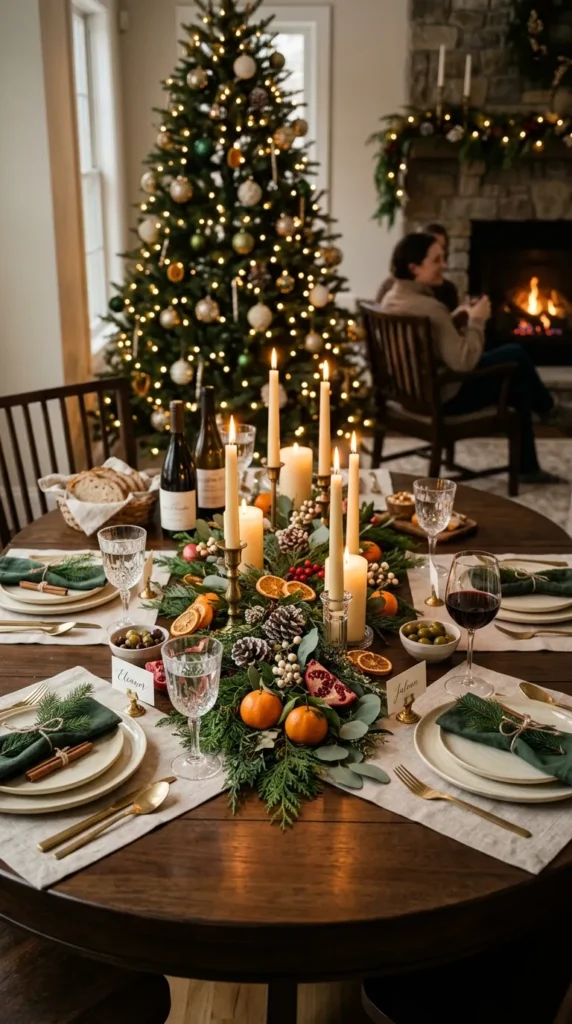
Styling an entire round table in one color family, tableware, linens, flowers, and candles all within the same color range, creates a table setting with a graphic quality that is impossible to achieve with mixed colors. An all white table with cream candles and white flowers looks extraordinary in its restraint. An all terracotta table with rust linen and amber glass looks equally striking in its warmth.
The monochrome approach removes the need to make multiple color decisions and replaces them with a single direction that guides every choice. It also photographs beautifully from above which makes it the most popular approach for styled round tables in food and interiors photography.
21. Overhead Pendant Light as Part of the Styling
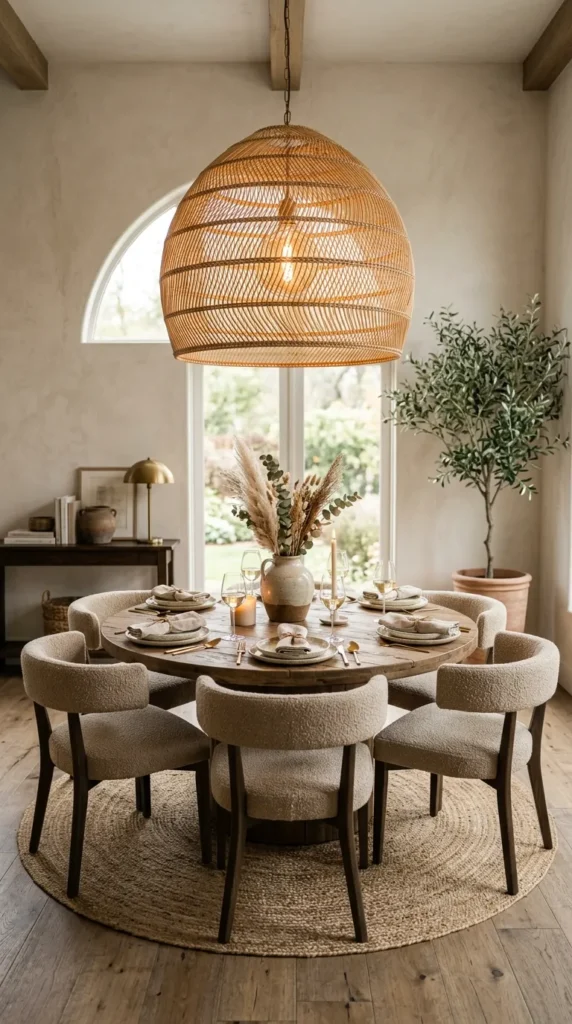
The pendant light hanging directly above a round dining table is as much a part of the styling as anything placed on the table surface below it. A beautiful pendant in rattan, aged brass, smoked glass, or hand blown ceramic completes the round table styling in a way that nothing on the table surface can compensate for if the light above is wrong.
Consider the pendant and the table as a single composition when styling. A low hanging pendant with warm bulbs creates intimacy and draws the eye down toward the table. A statement pendant in a strong material adds visual weight above the table that balances an otherwise simple surface styling. Get the light right and the rest of the styling becomes easier because the composition has a clear top and a clear center to work between.
Final Thoughts
A round dining table is one of the most generous pieces of furniture a home can have because it treats every seat equally and makes every meal feel like a gathering rather than a transaction. Styling it well is simply a matter of respecting that quality by choosing centerpieces and table elements that work from every angle and enhance the natural warmth the round shape already creates.
Start with one idea from this list that fits what you already have. A cluster of candles from your existing collection. A bundle of herbs from the garden in a jar. A tray that is already in a cupboard filled with small objects from around the house. The best styled round tables rarely arrive fully formed. They develop over time as you understand what the table needs and what it can do without.