30 Yellow Kitchen Ideas for a Cheerful Home Style
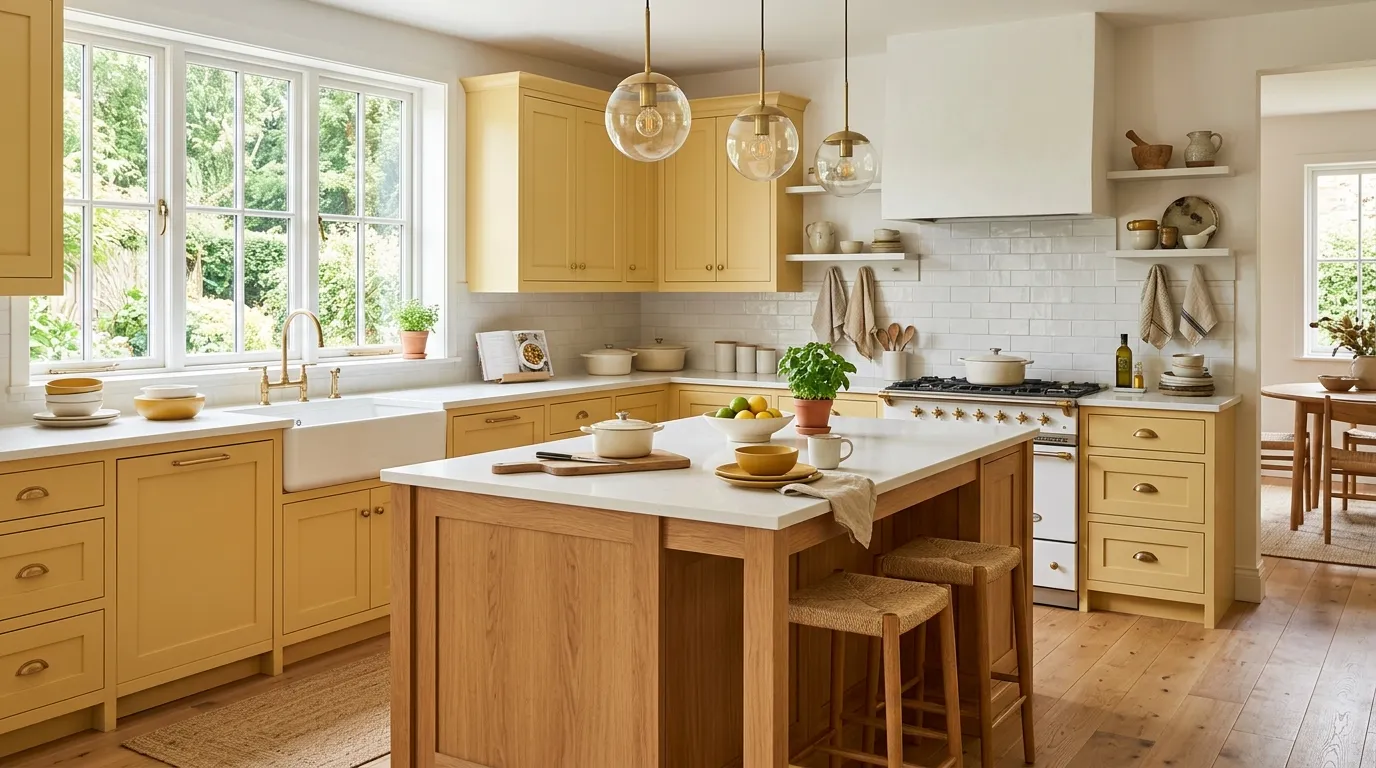
Yellow is one of the few colors that people either commit to fully or avoid entirely, and both reactions come from the same place. A poorly judged yellow kitchen looks dated within a few years or reads as overwhelming the moment the paint dries. A well judged yellow kitchen does the opposite. It makes a room feel warmer in every season, it photographs beautifully in every light, and it tends to be the space in the house that people actually want to sit in rather than pass through.
The difference between those two outcomes usually comes down to a handful of decisions made early: which shade of yellow, how much of the kitchen it covers, what it sits next to, and whether it suits the amount of natural light the room actually gets. Yellow is not one color. Butter, lemon, mustard, and ochre behave completely differently on cabinetry, and each one asks for a different supporting palette. These 30 ideas cover the full range, from a full mustard cabinet commitment to the smallest, safest ways to bring yellow into a kitchen that isn’t ready for more than an accent.
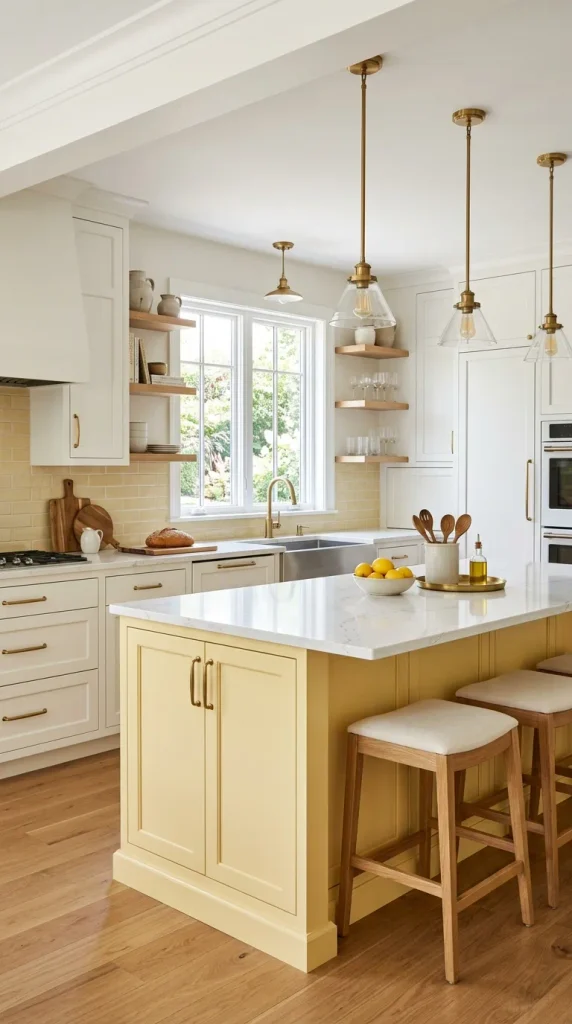
1. Choose Butter Yellow for a Soft, Livable Base
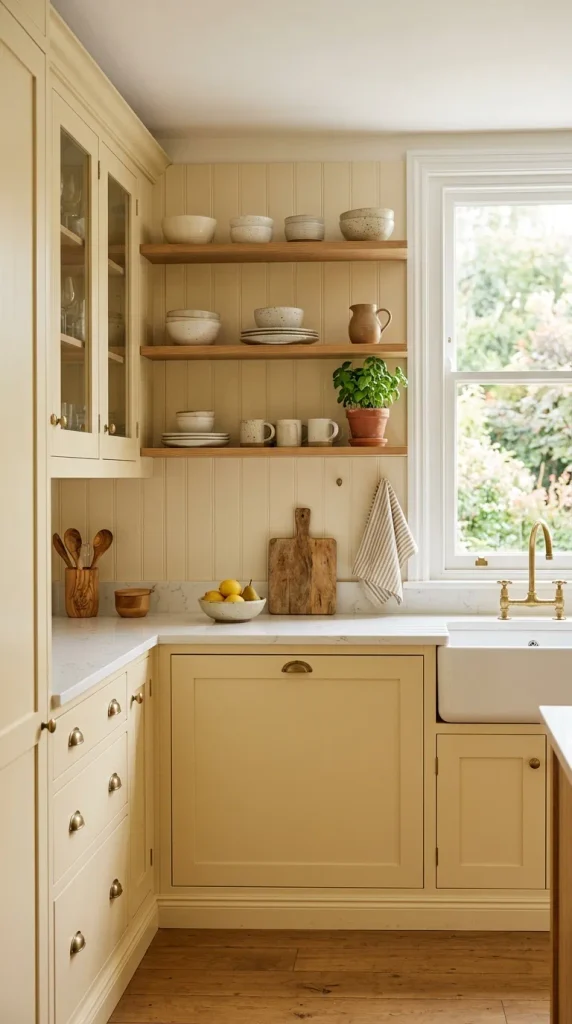
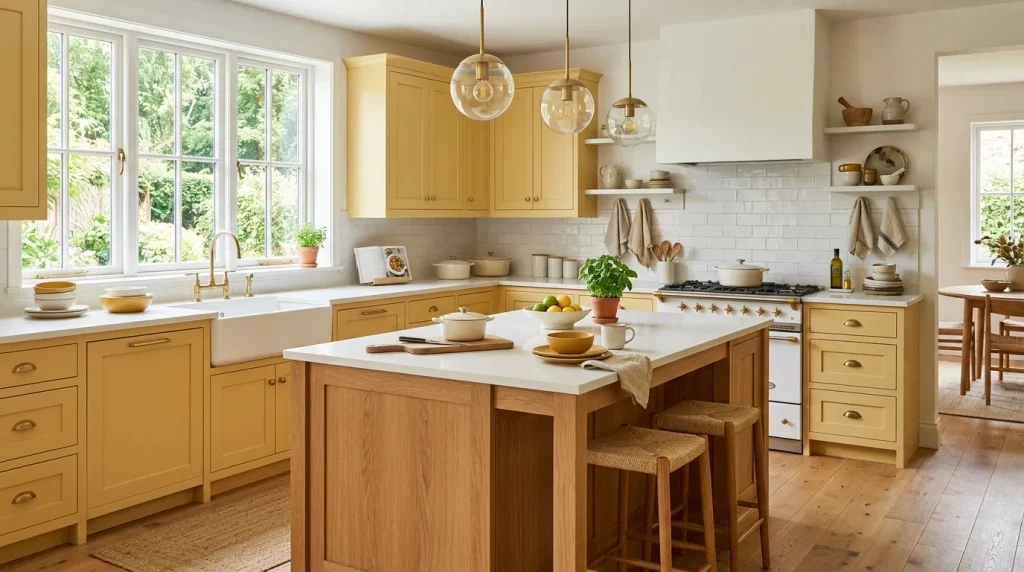
Butter yellow is the most forgiving shade for anyone nervous about committing to color on cabinetry. It has enough cream and white mixed into it that it reads as warm neutral rather than saturated color, which means it sits comfortably in a kitchen for years rather than feeling like a trend the moment it goes up. It also pairs with almost anything, from brass to black to natural wood, without a single element in the room needing to be reconsidered.
Butter yellow works especially well on full cabinet runs because the softness of the tone prevents the room from feeling like it is closing in, which is a real risk with more saturated yellows used at that scale. It is the shade to choose for a first yellow kitchen, or for anyone who wants the warmth of the color without the visual weight of a bolder version.
2. Go Bold With Mustard Cabinets
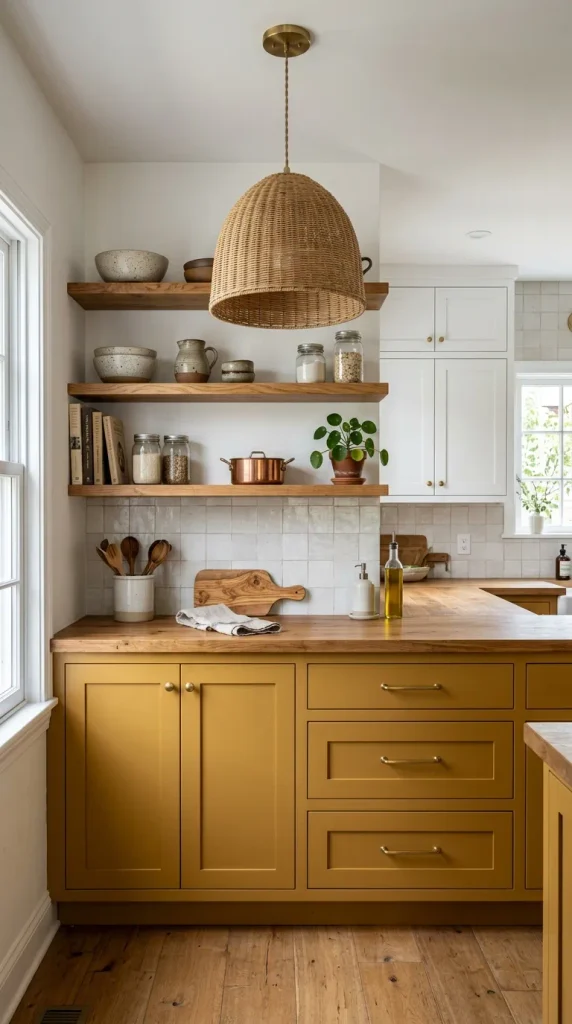
Mustard is yellow pulled toward brown and green, and it carries a completely different mood than butter or lemon. It reads as grounded and slightly vintage rather than bright and cheerful, which makes it the shade for a kitchen that wants warmth without sweetness. Mustard lower cabinets against white uppers or open shelving is one of the most reliable combinations in a yellow kitchen because the mustard stays contained to the lower half where it grounds the room rather than dominating it.
Mustard also photographs exceptionally well against natural materials. Wood countertops, woven pendant shades, and unlacquered brass hardware all sit naturally against mustard in a way that feels considered rather than themed. It is a more confident choice than butter yellow and rewards that confidence with a kitchen that looks distinct rather than generic.
3. Pair Yellow With Crisp White for Classic Freshness
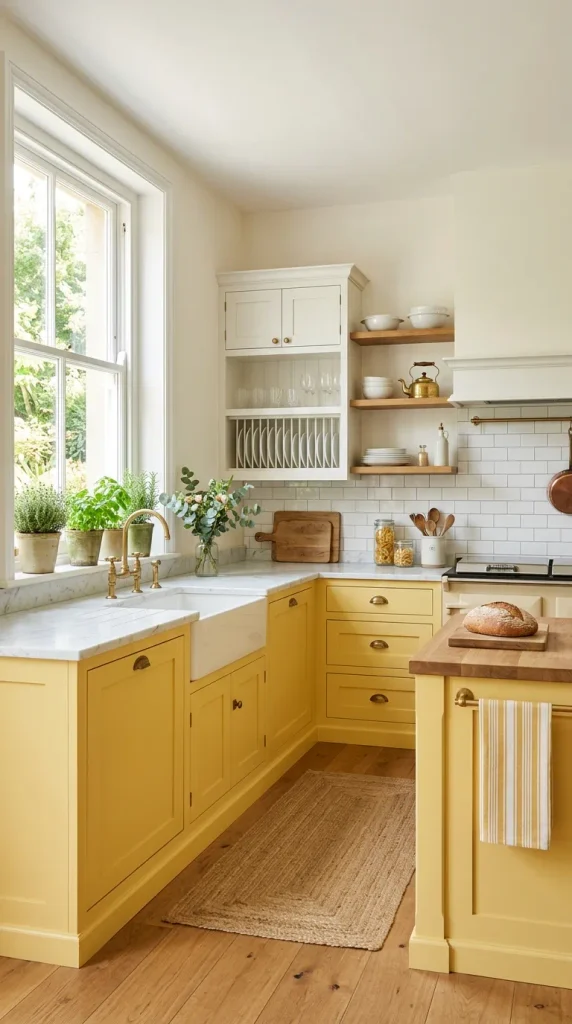
White and yellow together is the combination most people picture when they imagine a cheerful kitchen, and it earns that reputation because it works. White countertops, white walls, or white upper cabinets give yellow lower cabinets or a yellow island somewhere to breathe, and the contrast keeps the color feeling fresh rather than heavy no matter how saturated the yellow itself is.
This pairing suits kitchens that get good natural light because the white amplifies rather than absorbs it, and the yellow adds warmth without darkening the room the way a deeper accent color would. It is also the easiest combination to live with long term because white never dates and never fights with the yellow for attention, which means the yellow can be the one element that changes if the room ever needs a refresh.
4. Balance Yellow With Navy for Contrast That Works
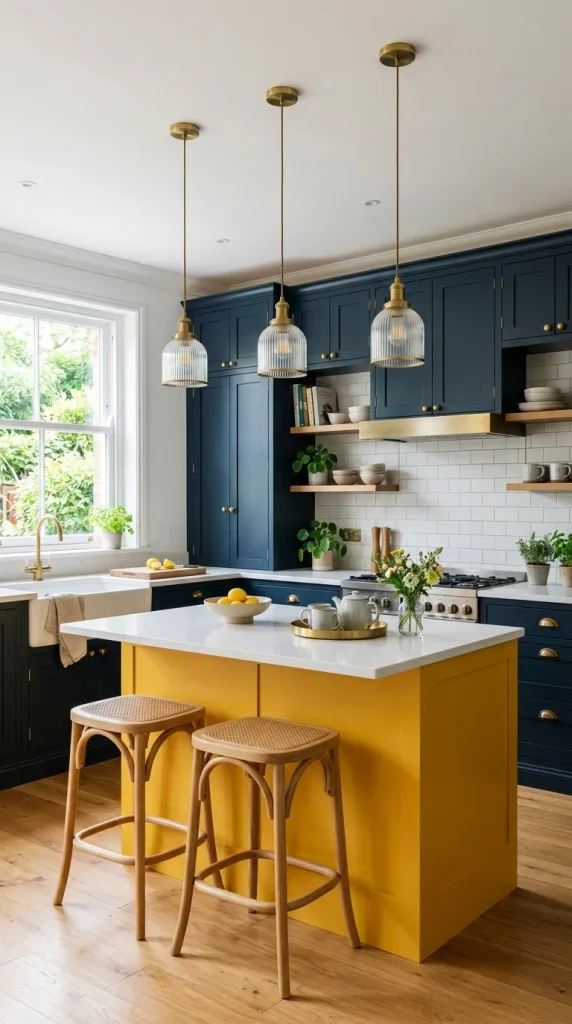
Yellow and navy sit opposite each other in warmth, which is exactly why the combination works so well. The navy cools the room down and adds visual weight at the bottom or in an accent area, while the yellow keeps the overall feeling warm and prevents the navy from making the kitchen feel dark or formal. Navy lower cabinets with a yellow island, or navy walls with yellow open shelving, both use this contrast well.
The key to making this combination feel intentional rather than jarring is keeping the ratio uneven. A kitchen that is roughly two thirds navy and one third yellow, or the reverse, looks considered. A kitchen split evenly between the two colors tends to look like two separate decisions rather than one cohesive scheme.
5. Use Yellow Only on the Island
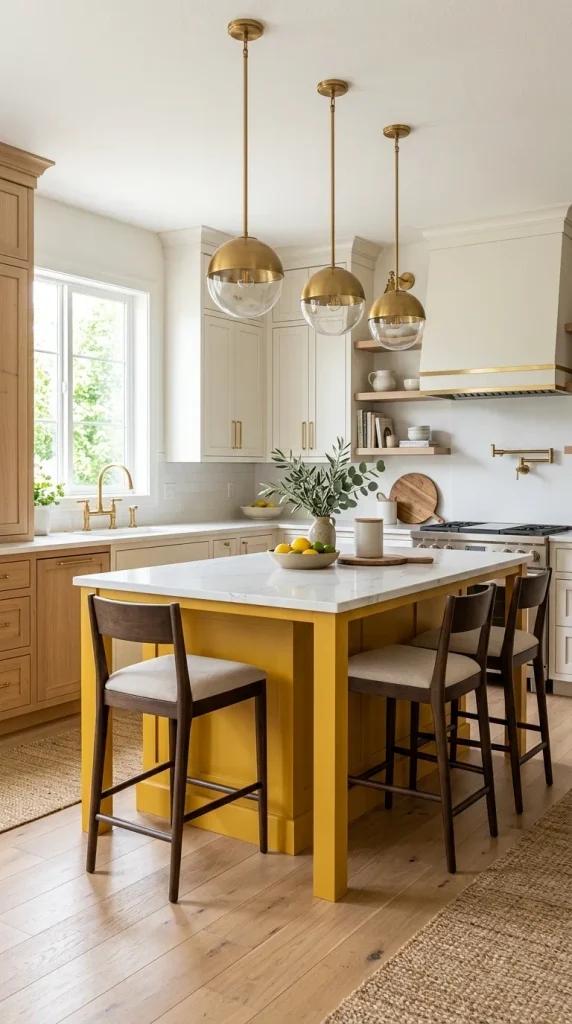
For anyone who wants yellow in the kitchen without repainting every cabinet, the island is the natural place to start. An island painted a confident yellow against white or wood cabinetry elsewhere in the room becomes the focal point of the space without requiring a full commitment to the color, and because the island is usually the smallest cabinet run in the kitchen, even a bold saturated yellow feels manageable rather than overwhelming.
This approach also makes future changes easier. Repainting a single island if the color ever feels tired is a weekend project. Repainting an entire kitchen’s worth of cabinetry is not. Starting with the island is the lowest risk way to test whether a household actually likes living with yellow before committing further.
6. Try a Yellow and Sage Green Combination
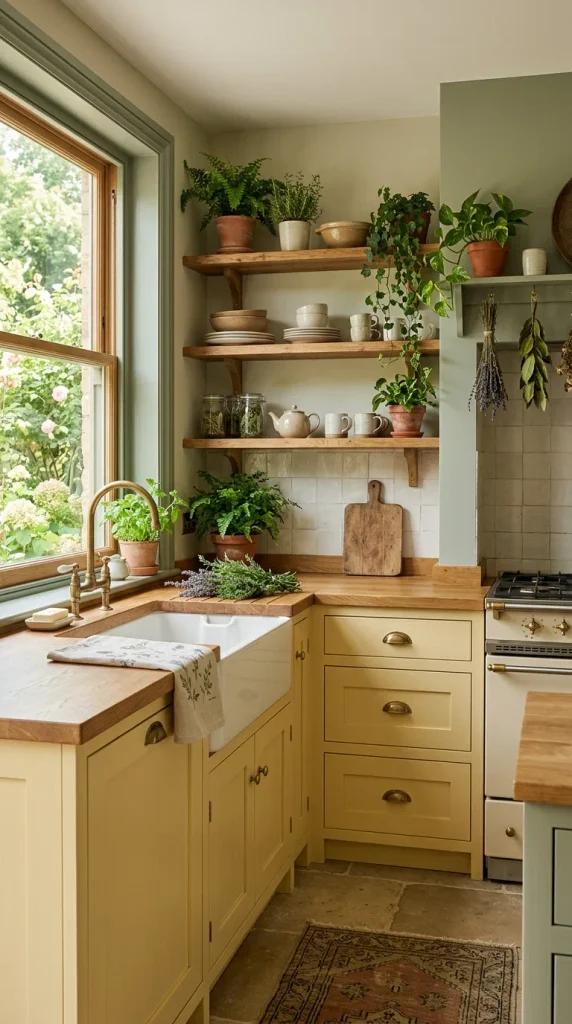
Yellow and sage green share an undertone that makes them unusually easy to pair, since both sit in the warm, slightly muted end of their respective color families rather than in a bright, saturated version. Sage green cabinetry with yellow accessories, or yellow lower cabinets with sage green walls, both read as garden inspired and calm rather than bright and busy, which is the opposite of what most people expect from a yellow kitchen.
This combination suits kitchens aiming for a soft, botanical feeling rather than a bold graphic one. It works particularly well with natural wood countertops and brass or unlacquered hardware, since both colors share enough warmth with those materials that nothing in the room reads as competing for attention.
7. Add Yellow Through a Painted Accent Wall
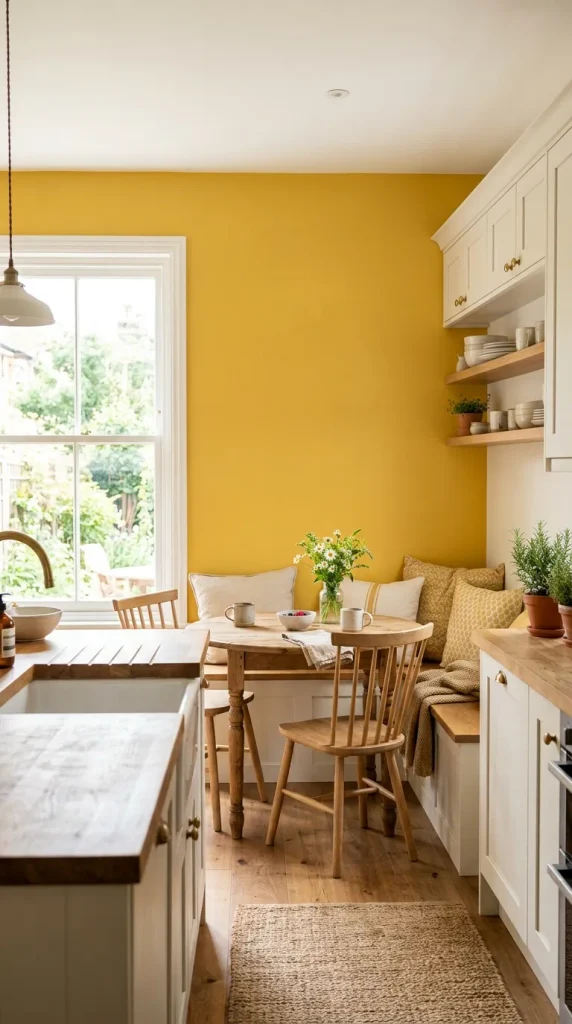
A single yellow wall, usually the one behind open shelving or a breakfast nook rather than a full wraparound, is one of the lowest commitment ways to bring the color into a kitchen. It avoids the cost and disruption of repainting cabinetry entirely while still giving the room a clear focal point and a genuine dose of warmth.
This approach works best when the wall in question is not interrupted by too many cabinets or appliances, since a yellow wall broken into small visible sections between cupboards loses the impact that makes the idea work in the first place. A clear run of wall, even a narrow one, does more for the room than a wider wall chopped up by cabinetry.
8. Choose Yellow Open Shelving Over Full Cabinetry
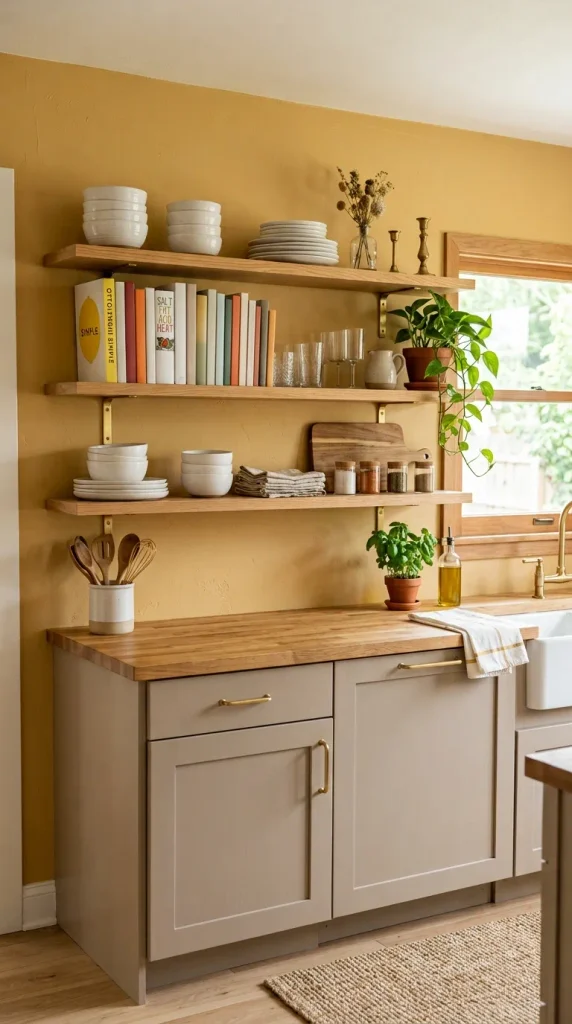
Painting the back panel or the shelf brackets of open shelving yellow, rather than the cabinets themselves, brings color into the kitchen at a scale that is easy to control and easy to change. The yellow shows through the gaps between dishes and cookware rather than dominating the wall, which creates a layered, curated look rather than a flat block of color.
This idea suits kitchens where the owner wants to display attractive dishware, glassware, or cookbooks, since the yellow backing gives those objects a warm backdrop that makes them stand out more than a white or wood backed shelf would. It is also one of the easiest ideas on this list to execute in an afternoon with a small can of paint.
9. Bring in Yellow Through a Statement Backsplash
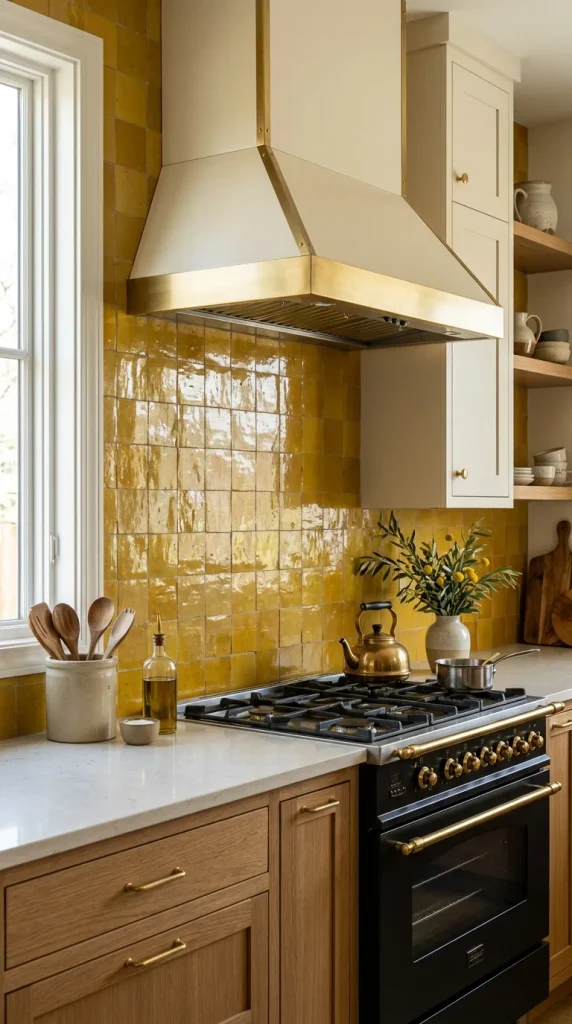
A yellow tile backsplash, whether in a solid color or a pattern that incorporates yellow, adds the color at eye level where it has the most visual impact without touching cabinetry or walls at all. This makes it a strong option for rented kitchens or for anyone not ready to commit to yellow cabinetry, since a backsplash is a smaller and more contained area to change later if needed.
Yellow zellige or handmade look tile in particular photographs beautifully because the natural variation in the glaze catches light differently across the surface, which prevents a solid block of yellow from looking flat the way a uniform painted surface sometimes can at that scale.
10. Use Pale Lemon for Small Kitchens
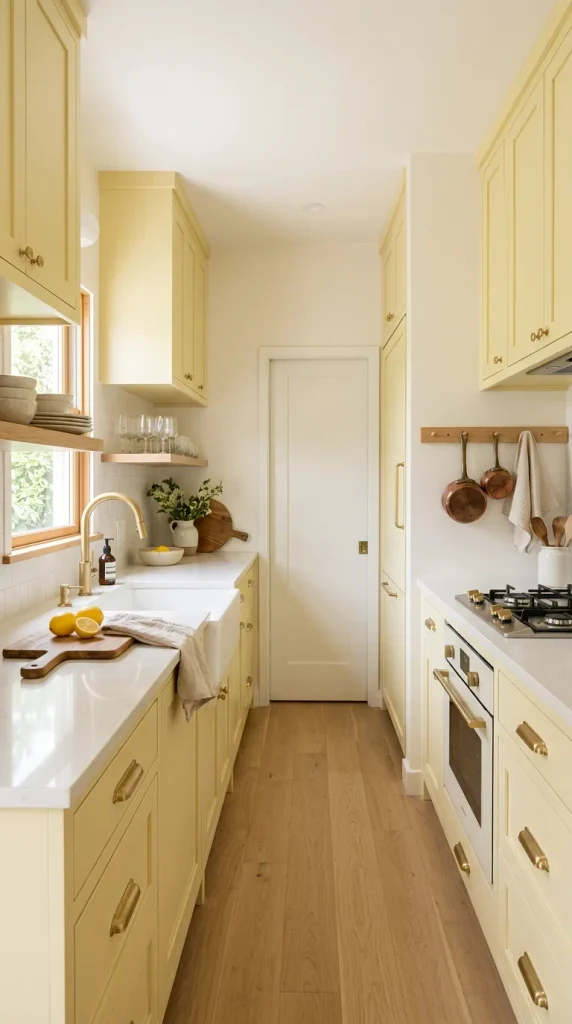
Pale, diluted lemon yellow is one of the few colors that can be used across an entire small kitchen without making the room feel smaller, because the tone is light enough to function almost like a warm white while still carrying enough color to feel deliberate. Full cabinetry in pale lemon in a small galley or apartment kitchen reads as bright and airy rather than closed in.
This shade avoids the trap that catches many small yellow kitchens, where a saturated color used across every surface in a tight space starts to feel visually loud rather than cheerful. Pale lemon gets the warmth without the intensity, which is exactly what a compact room needs.
11. Pair Yellow With Black for a Graphic Look
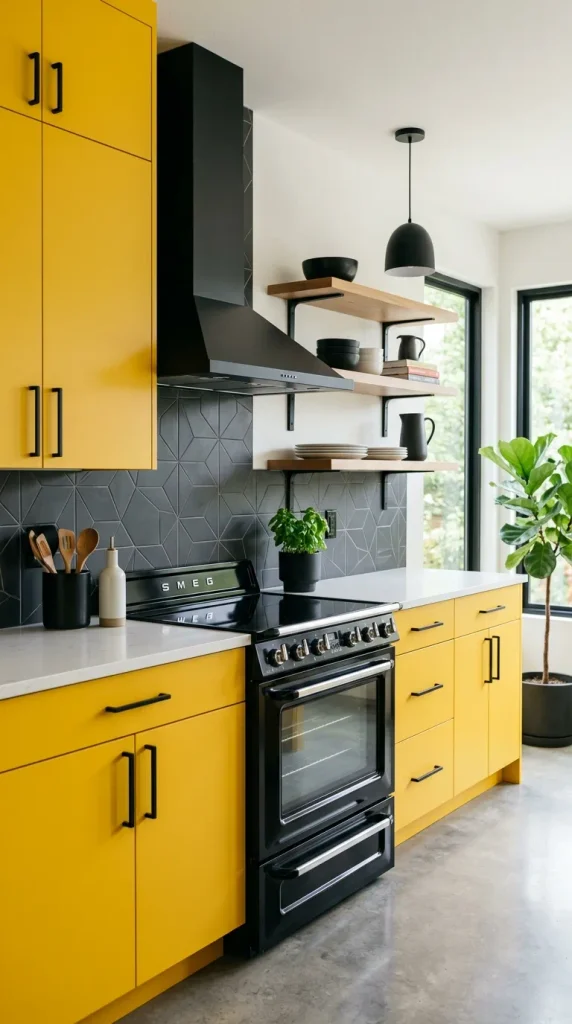
Yellow and black together read as confident and slightly retro, closer to a design statement than a soft, cozy palette. Black hardware, a black range, or black lower cabinets against yellow uppers or a yellow island creates strong visual contrast that suits a kitchen aiming for a bold, modern look rather than a traditional cottage feeling.
This pairing works best with a clean, uncluttered design elsewhere in the kitchen, since the contrast between the two colors already carries a lot of visual energy on its own. Adding heavy pattern or multiple other accent colors into a black and yellow kitchen usually competes with the pairing rather than complementing it.
12. Choose Yellow Bar Stools as a Low Commitment Entry Point
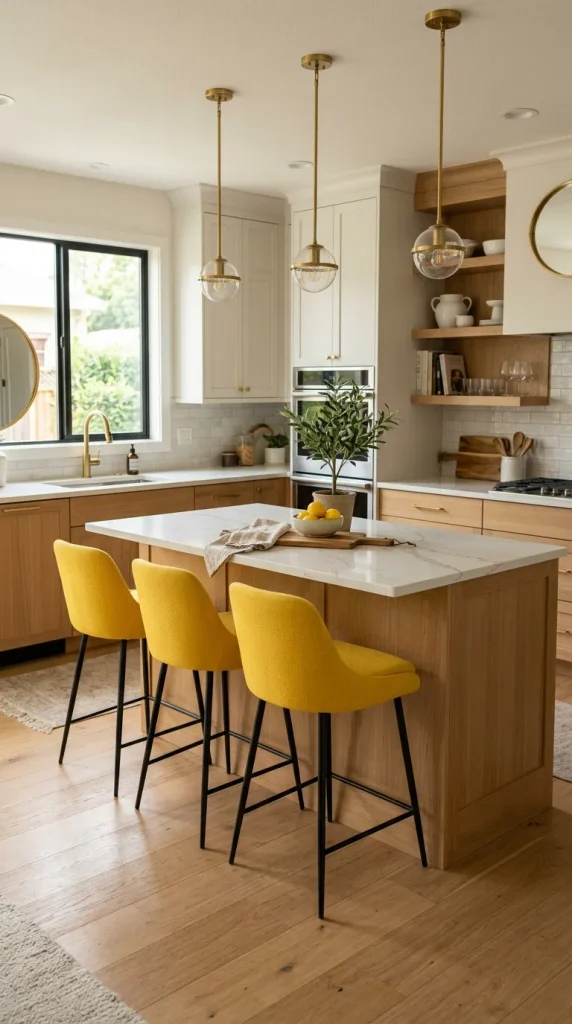
For anyone still deciding whether they want yellow in the kitchen at all, bar stools are close to a risk free way to test it. A pair of yellow stools at an island or breakfast bar introduces the color at a scale that is easy to remove or swap out entirely if the household decides the color is not for them, without any of the cost or disruption of repainting.
This is also a genuinely effective styling move on its own, independent of whether it leads to further yellow elsewhere. Two or three matching yellow stools against a neutral kitchen give the room a clear point of interest and a sense of personality that plain wood or black stools do not provide.
13. Hang Yellow Pendant Lights
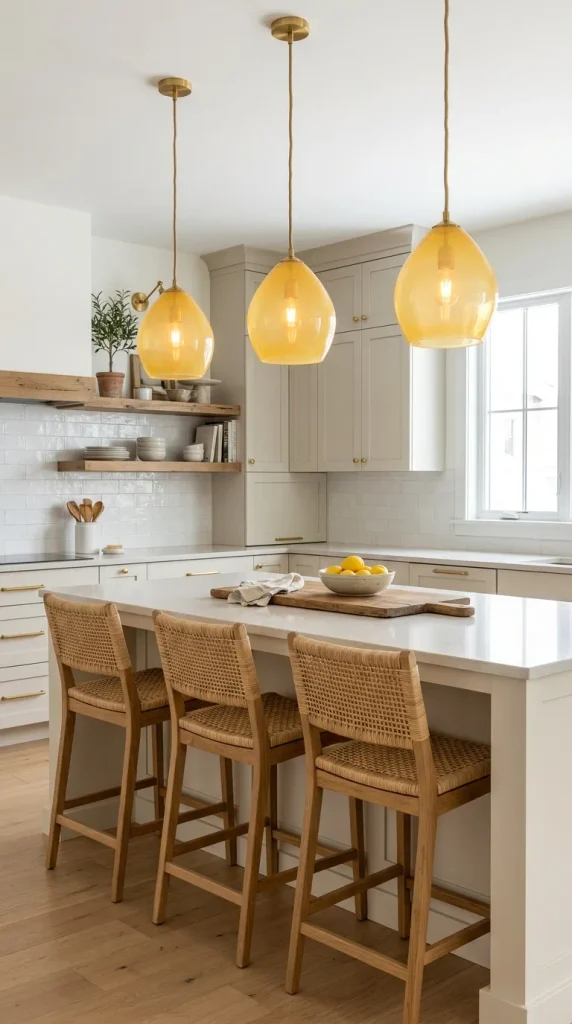
A pendant light with a yellow shade, whether opaque or a translucent amber glass that glows warm when lit, brings color into the kitchen at the ceiling level where it draws the eye without competing with countertop or cabinet finishes. This is particularly effective over an island or a dining table within the kitchen, where the light becomes a natural focal point of the room.
Glass pendants in warm amber or honey tones have the added benefit of casting a genuinely warm light when switched on, which reinforces the cheerful quality of the color even after dark rather than only during daylight hours when the fixture itself is visible.
14. Use Yellow Curtains to Soften Hard Surfaces
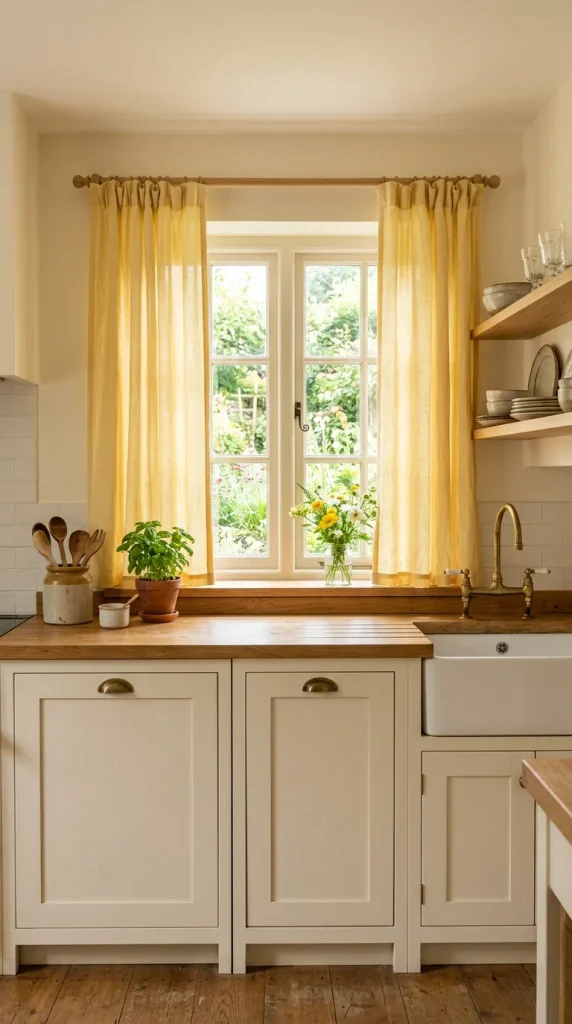
A kitchen window dressed in a yellow linen or cotton curtain softens what is often the hardest surfaced room in the house, where tile, stone, and cabinetry dominate and textiles are usually limited to tea towels. A yellow curtain adds both color and softness in one move, and because curtains are inexpensive relative to cabinetry or tile, this is one of the easiest ideas on the list to try and change later.
This works particularly well in kitchens with a farmhouse or cottage sensibility, where a slightly gathered curtain on a simple rod suits the overall look better than a more structured window treatment would.
15. Add a Yellow Rug for Warmth Underfoot
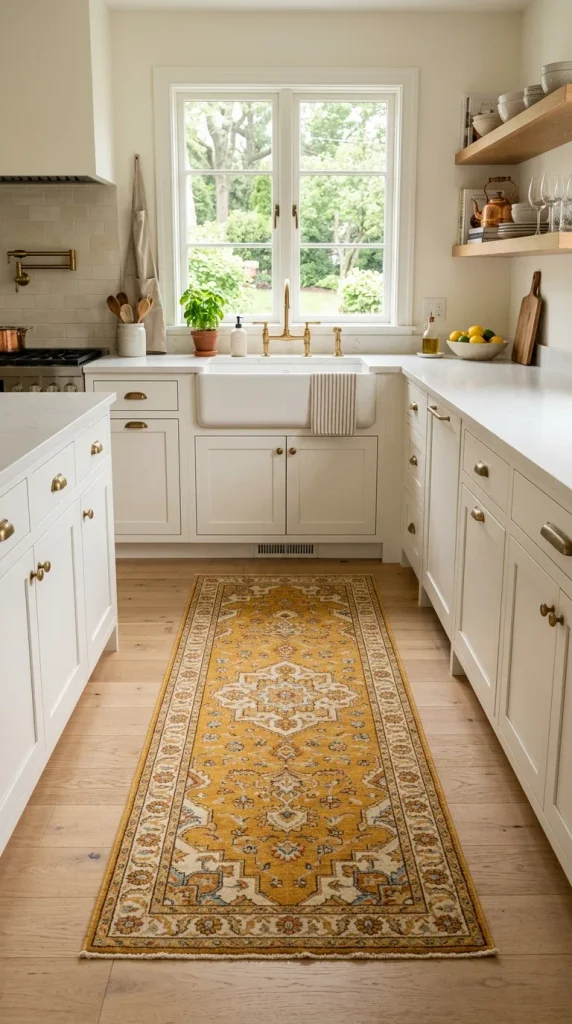
A yellow runner or kitchen mat, usually placed in front of the sink or the stove where standing time is highest, brings warmth to the floor level of the kitchen and gives tired feet something softer than tile to stand on. Choose a low pile, washable rug for kitchen use specifically, since kitchen floors deal with spills and dropped food in a way that other rooms do not.
A patterned yellow rug, rather than a solid one, tends to hide the daily wear of a kitchen floor better than a solid color would, which matters given how much foot traffic and occasional splatter a kitchen rug is exposed to compared with a rug in almost any other room.
16. Choose Yellow Appliances as a Retro Statement
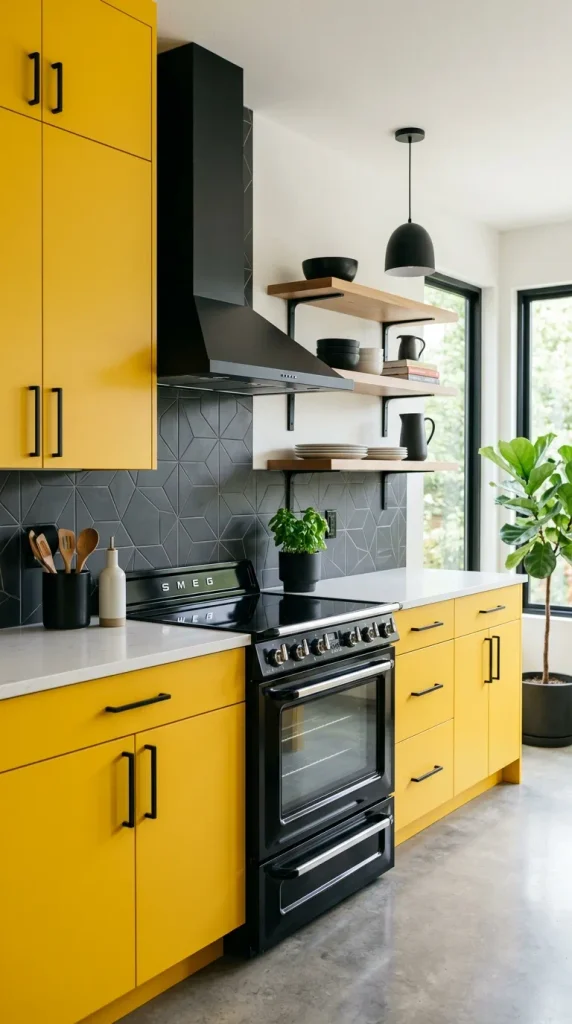
A yellow refrigerator, range, or stand mixer brings a strong nostalgic quality to a kitchen that most other yellow ideas on this list do not carry in the same way. Retro style appliance lines in mustard or butter yellow have become widely available again, which makes this a realistic option rather than a vintage hunt, though it remains a significant financial and visual commitment compared with paint or textiles.
This idea suits kitchens with a clear mid century or retro design direction already established, since a yellow appliance dropped into an otherwise contemporary kitchen can feel out of place rather than intentional. It works best as part of a considered overall style rather than as a single standalone statement.
17. Try a Yellow Farmhouse Kitchen
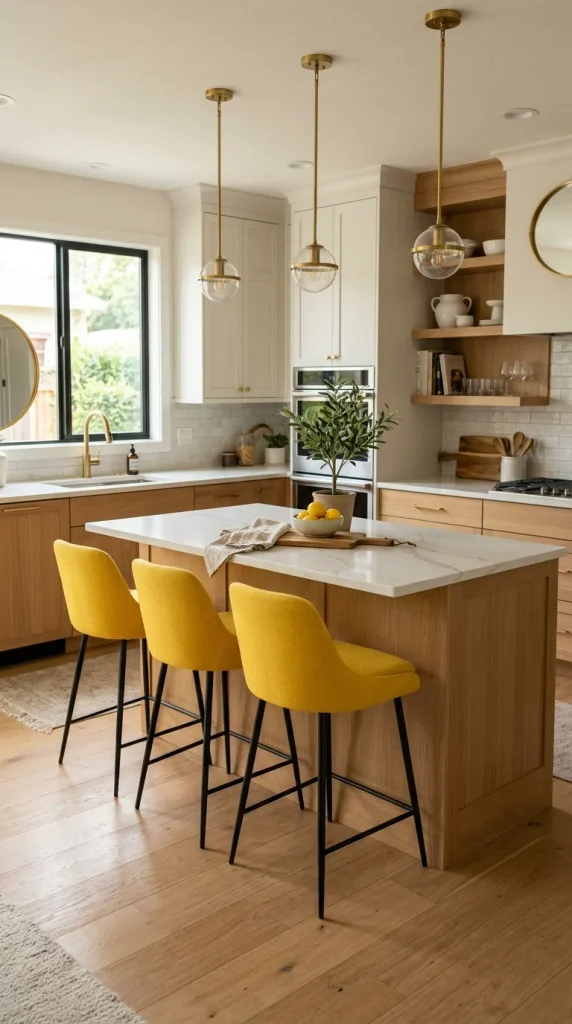
Farmhouse kitchens lean on warm, slightly worn tones already, which makes mustard or ochre yellow a natural fit for lower cabinetry, an island, or open shelving in this style. Paired with shaker style cabinet doors, brass or black hardware, and butcher block or natural stone countertops, yellow reinforces the lived in warmth that defines the farmhouse look rather than fighting against it.
This combination photographs particularly well with visible wood beams or a farmhouse sink, both of which share enough warmth with mustard and ochre tones that the whole kitchen reads as cohesive rather than assembled from separate ideas.
18. Go Modern With Yellow and Matte Black Hardware
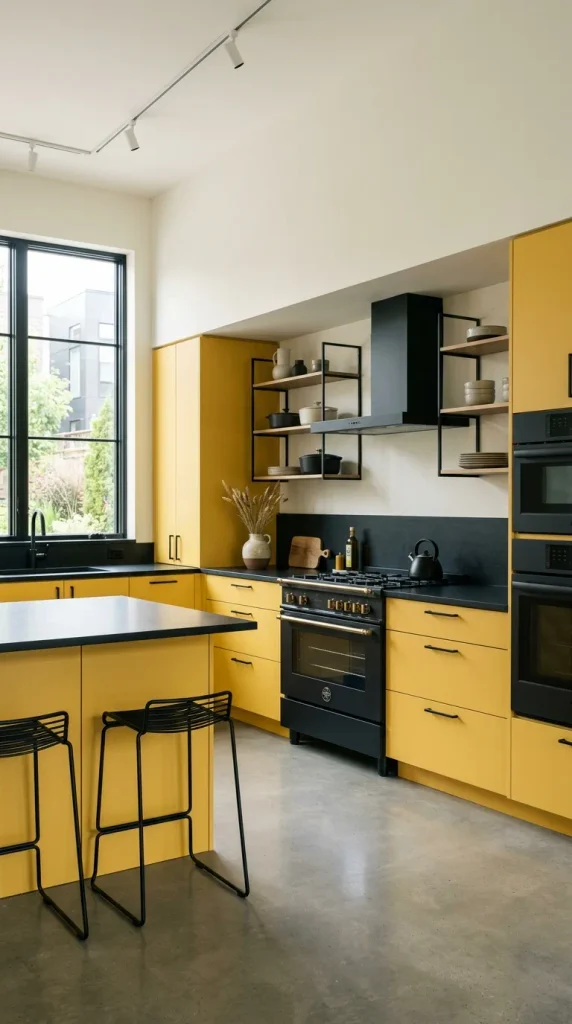
A contemporary yellow kitchen relies on restraint elsewhere to keep the color from tipping into a retro or cottage feeling. Flat panel cabinetry in a clean, saturated yellow, paired with matte black hardware, a black or stainless range, and minimal open shelving, creates a graphic, current look rather than a nostalgic one.
Keeping the surrounding materials simple and matte rather than glossy or ornate is what separates this modern approach from the vintage inspired ideas elsewhere on this list. The yellow does the visual work on its own, without competing pattern, texture, or hardware detail pulling attention in multiple directions at once.
19. Use Yellow in a Cottage Style Kitchen
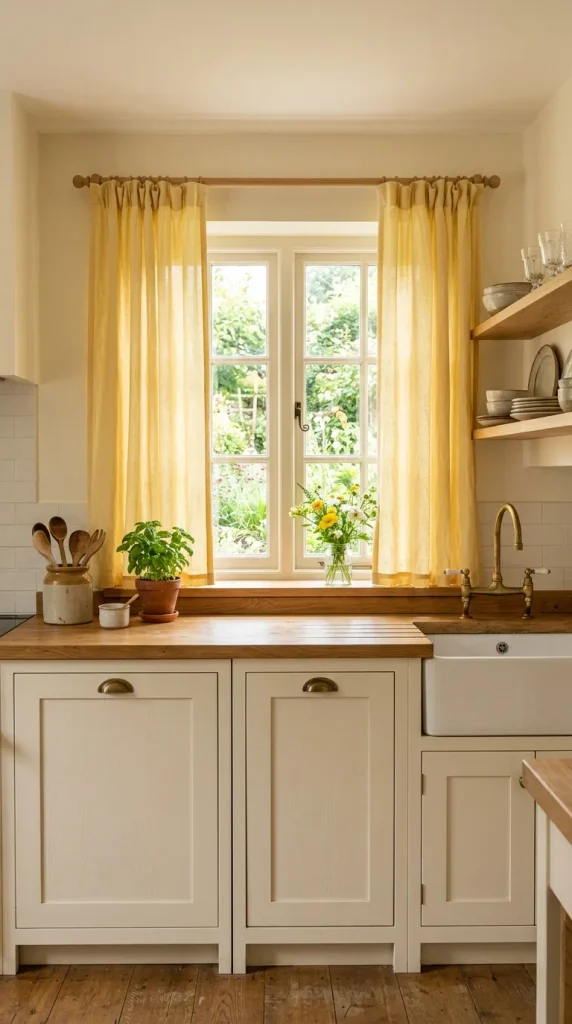
Cottage kitchens favor softer, slightly faded tones over saturated ones, which makes a muted butter or pale mustard yellow a better fit for this style than a bright, clean lemon. Combined with beadboard paneling, ceramic knobs, and open shelving displaying mismatched but coordinated dishware, a soft yellow reinforces the gentle, collected feeling that defines cottage style.
This is one of the more forgiving styles on this list for anyone nervous about color, since the cottage aesthetic already embraces a slightly imperfect, lived in look that makes a soft yellow feel like part of the room’s history rather than a bold new addition.
20. Pair Yellow With Warm Wood Tones
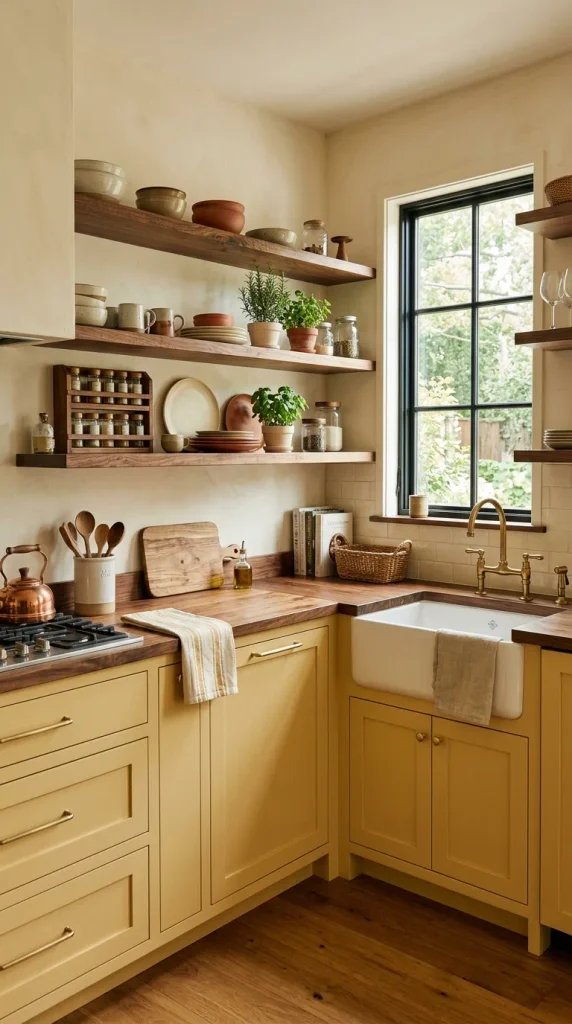
Yellow and natural wood share enough warmth that the pairing almost never looks wrong, regardless of which shade of yellow is used or how much of the kitchen it covers. Wood countertops, open shelving, or flooring alongside yellow cabinetry or accents create a cohesive warm palette that feels grounded rather than themed.
This pairing is particularly effective for anyone who wants a bold yellow without the kitchen feeling like a single note color scheme, since the wood introduces enough texture and tonal variation to balance the flatness of a painted surface, no matter how saturated that surface is.
21. Choose Yellow Grout for Subtle Detail
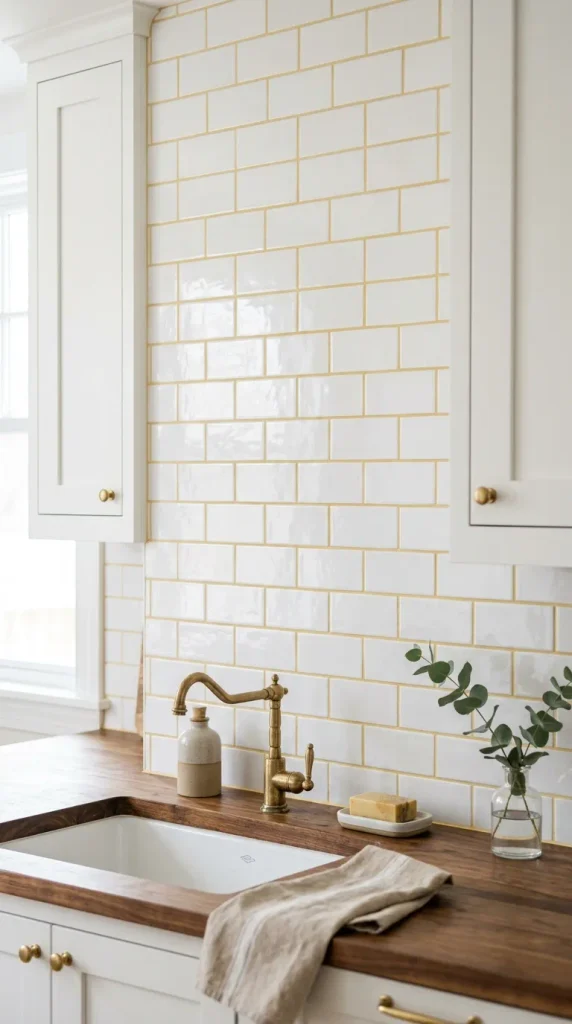
For a much smaller dose of the color than a full backsplash, yellow grout used with white or cream tile introduces a subtle grid of color across the wall without committing to yellow tile itself. This is a detail that photographs well up close and adds genuine personality to an otherwise plain tile choice, while remaining subtle enough not to dominate the room from a distance.
This idea works particularly well with a simple white subway tile, where the grout lines become a deliberate design feature rather than a purely functional one, giving the wall a pattern that a plain grout color would not provide.
22. Add Yellow Through Ceramics and Cookware
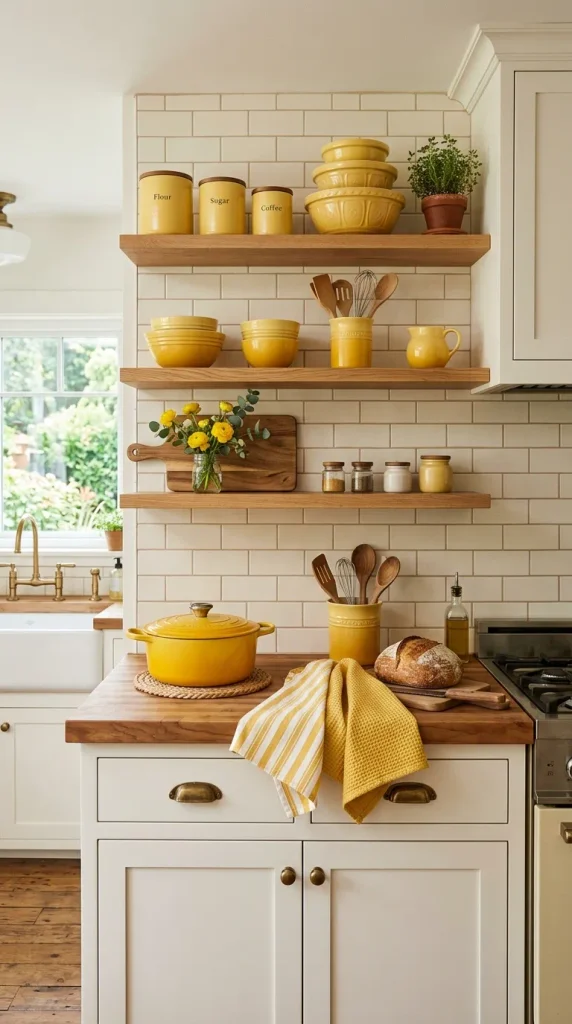
Yellow dutch ovens, mixing bowls, ceramic canisters, and dish towels are one of the easiest ways to bring the color into a kitchen with zero permanent commitment. Displayed on open shelving or a countertop, these pieces give a neutral kitchen genuine warmth and personality that can be edited, added to, or removed entirely as tastes change.
This approach also tends to be the most budget friendly idea on this list, since it relies on accessories and everyday cookware rather than any renovation, painting, or replacement of fixed elements in the room.
23. Use Ochre for a Deeper, Moodier Yellow
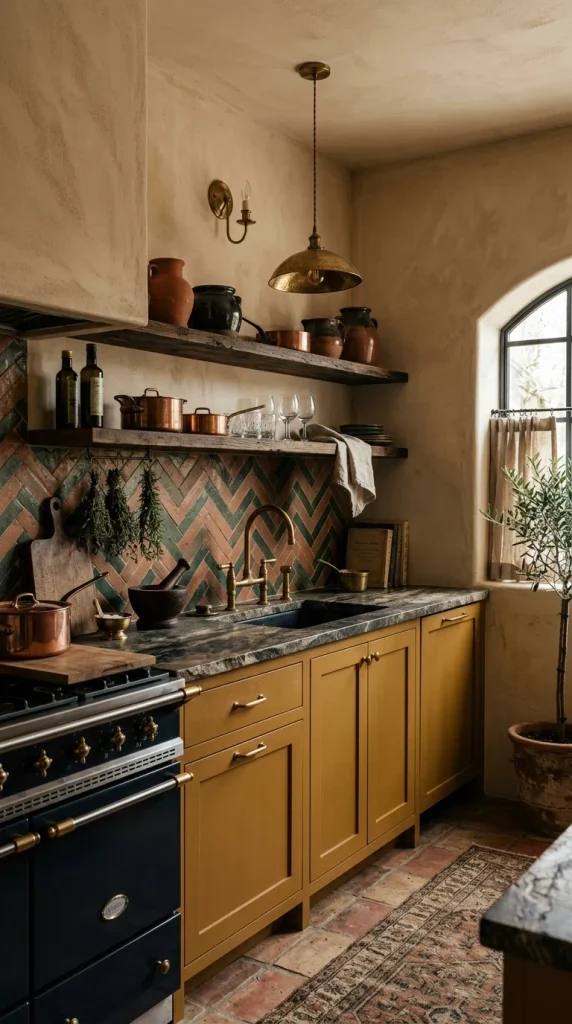
Ochre sits at the deepest end of the yellow family, closer to a burnt or earthy tone than a bright one, and it suits kitchens aiming for a warm, moody atmosphere rather than a light and airy one. Ochre cabinetry or an ochre accent wall works particularly well in kitchens with limited natural light, since the depth of the color does not rely on bright sunlight to look intentional the way a pale lemon does.
This shade pairs naturally with terracotta, rust, and deep green, all of which share enough warmth to sit comfortably alongside ochre without any one color reading as out of place against the others.
24. Try Two Tone Cabinets With Yellow Lowers
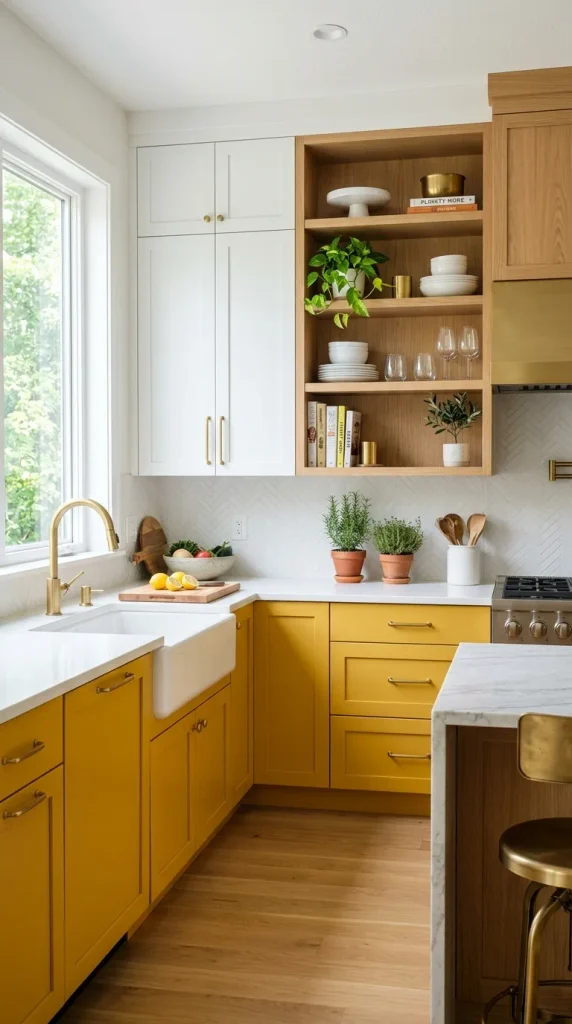
Yellow lower cabinets paired with white, cream, or wood upper cabinets is one of the most balanced ways to use a bold yellow across an entire kitchen without the color overwhelming the room. Keeping the yellow below eye level grounds the space, while the lighter uppers keep the room feeling open and bright rather than closed in by color on every surface.
This two tone approach also gives a kitchen more visual structure than a single color used throughout, since the horizontal line where the two tones meet naturally draws the eye across the room in a way that a flat, single color scheme does not.
25. Add Yellow Through a Window Treatment Alone
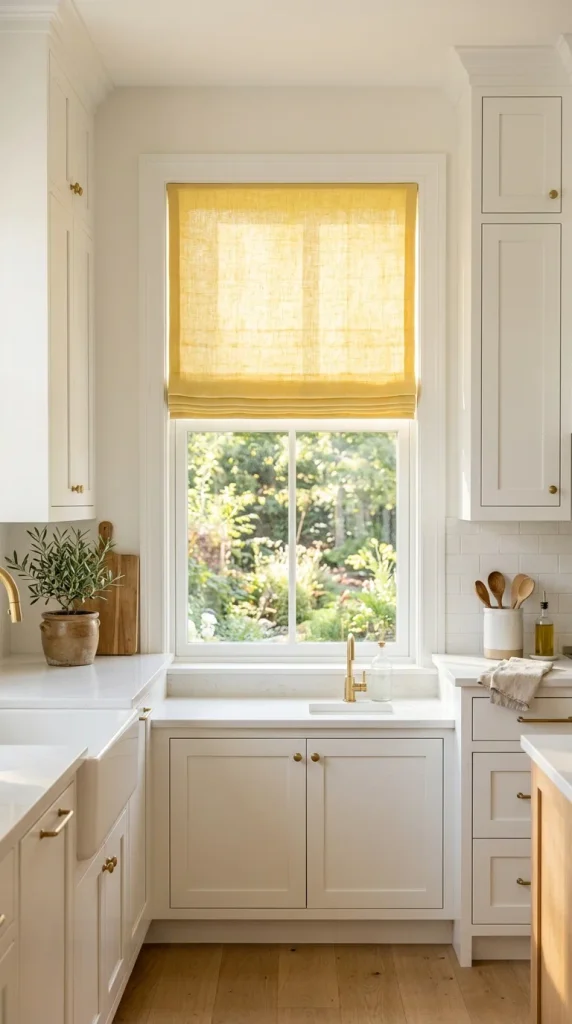
For a kitchen with a single, prominent window and no appetite for color anywhere else, a yellow roman shade or simple café curtain at that one window can be enough to establish a cheerful mood for the entire room. Because the treatment covers a defined, contained area, this approach carries very little visual risk compared with painting a wall or cabinet run.
This idea suits kitchens where natural light streams through the window for part of the day, since the yellow fabric filters that light with a warm cast that spreads a soft version of the color across the room even beyond the window itself.
26. Choose Yellow for a North Facing Kitchen
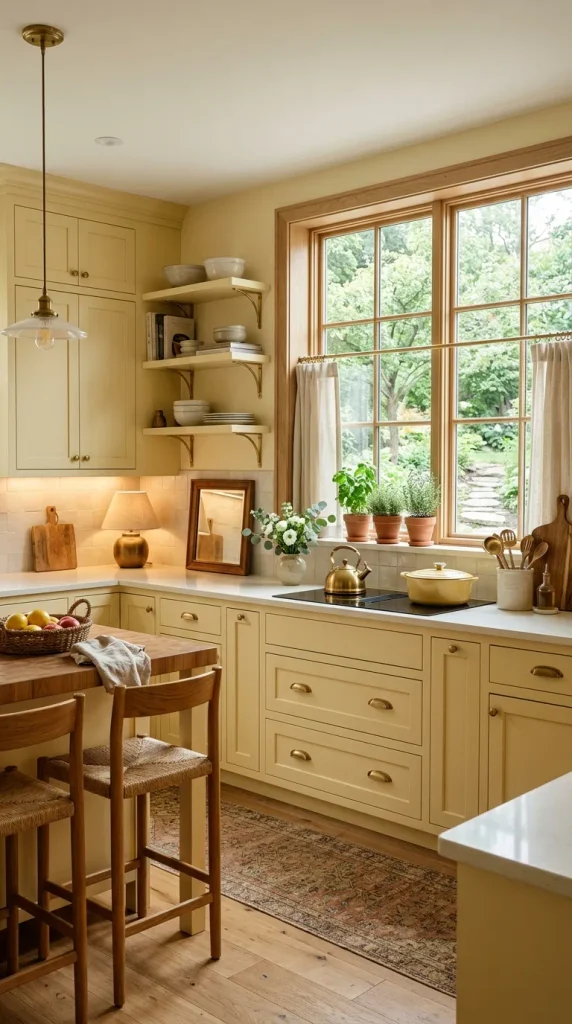
North facing kitchens receive cooler, flatter natural light throughout the day, and yellow is one of the most effective colors for counteracting that coolness. A butter or soft lemon yellow used on cabinetry or walls in a north facing kitchen adds warmth that the room does not get naturally from its light, which is a more strategic reason to choose the color than appearance alone.
This is worth considering even for households not otherwise drawn to yellow as a general style preference, since the practical benefit of warming up a consistently cool room can outweigh a purely aesthetic hesitation about the color.
27. Use Yellow Sparingly in a Small Galley Kitchen
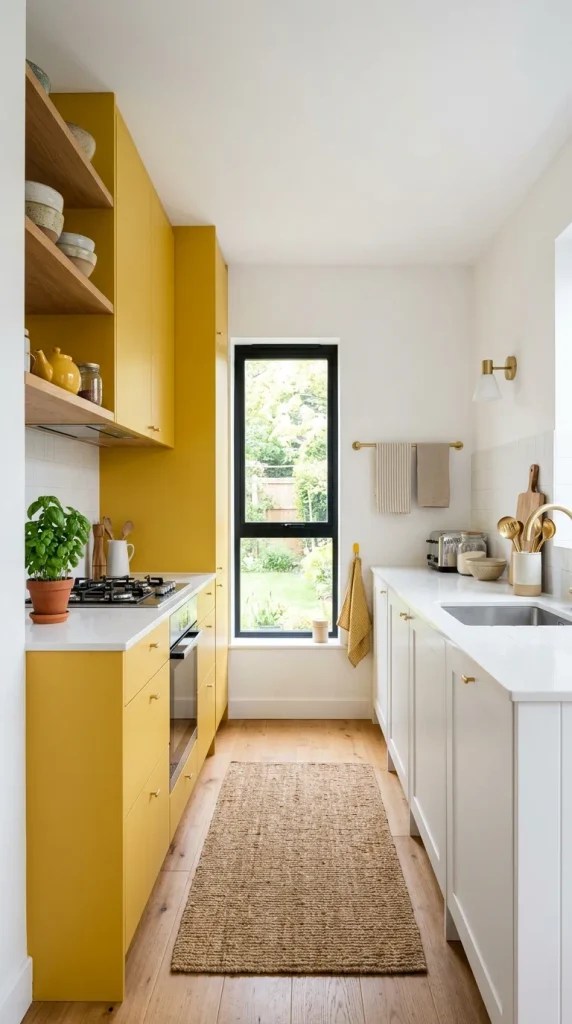
A narrow galley kitchen with cabinetry on both sides can feel overwhelmed by a saturated yellow used across every surface, since the color has nowhere to recede and the narrow width of the room amplifies rather than dilutes it. In this layout, yellow works best restricted to one wall, one run of open shelving, or accessories rather than the full cabinet run on both sides.
Keeping the opposite wall in white or a light neutral gives the eye somewhere to rest and prevents the narrow space from feeling like it is closing in, which is the most common complaint about bold color used at full scale in a galley layout.
28. Pair Yellow With Terracotta for Warmth
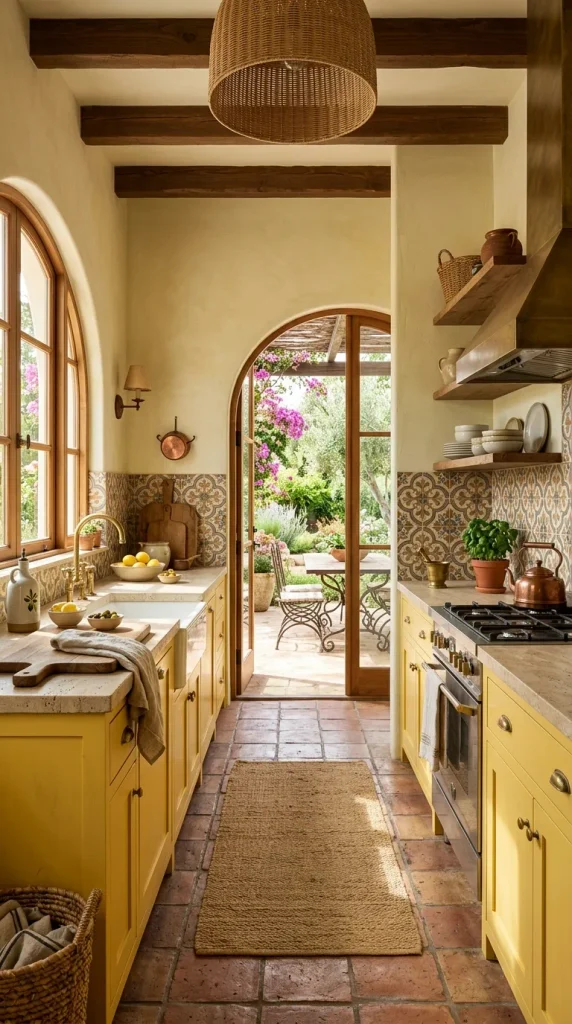
Yellow and terracotta together lean into a warm, Mediterranean feeling that suits kitchens built around natural materials like stone, unlacquered brass, and woven textures. Terracotta tile flooring or a terracotta backsplash alongside yellow cabinetry or accents creates a sun washed palette that feels particularly suited to kitchens that open onto an outdoor dining or garden space.
This pairing avoids the coolness that yellow can sometimes carry when placed against white or grey, since both colors sit in the same warm family and reinforce rather than balance each other’s warmth.
29. Consider Yellow With Terracotta for Warmth
Yellow is a polarizing color for buyers in a way that white, grey, and most neutrals are not, and a kitchen fully committed to a bold yellow can be a genuine obstacle for some buyers even when the execution is excellent. This is not a reason to avoid the color, but it is a reason to think about the timeline of the kitchen before committing fully, particularly for a household that expects to sell within the next few years.
For anyone concerned about resale but still drawn to the color, the accent based ideas on this list, an island, a backsplash, open shelving, or accessories, deliver the cheerful effect of yellow without the same resale risk as full cabinetry, since all of those elements can be changed relatively easily by a future owner who prefers something else.
30. Refresh Yellow Accents Seasonally Rather Than Repainting
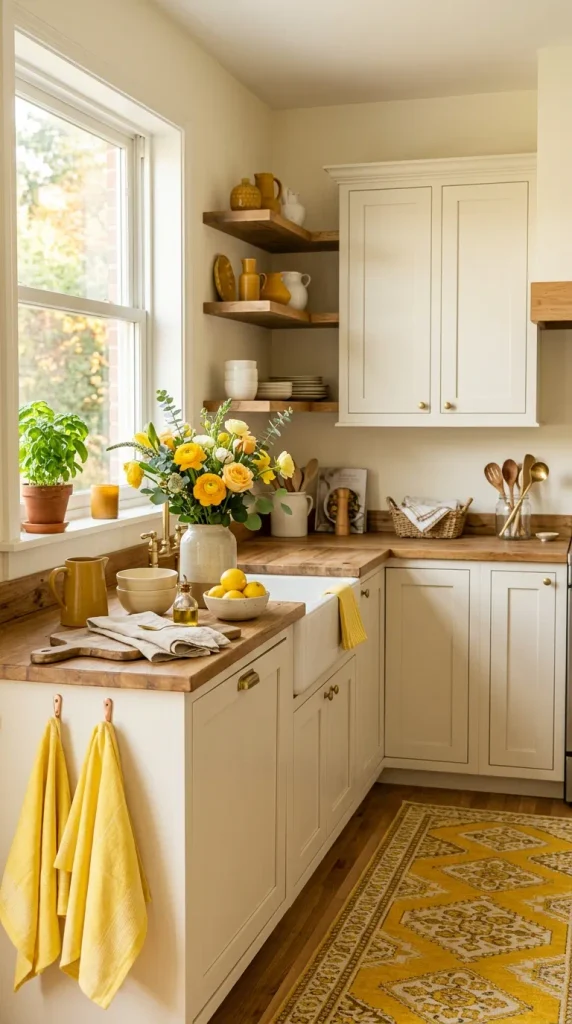
For a kitchen that uses yellow through accessories, textiles, and smaller accent pieces rather than fixed cabinetry, the color can be dialed up or down through the year without any permanent change. Bright lemon dish towels and a yellow rug in spring and summer, swapped for deeper mustard and ochre accents in autumn and winter, keep the kitchen feeling current and considered across every season rather than fixed in one mood year round.
This seasonal approach also extends the life of accent pieces, since rotating them in and out of daily use rather than leaving the same items out permanently reduces wear and keeps each piece looking fresher for longer when it comes back into rotation.
Final Thoughts
A yellow kitchen works when the shade, the scale, and the surrounding materials are chosen deliberately rather than when yellow is simply applied to whatever surfaces are available. Butter and pale lemon suit small spaces and low natural light. Mustard and ochre suit kitchens that want warmth without brightness. Full commitment suits a household ready to live with the color for years, while an island, a backsplash, or a set of accessories suits anyone who wants to test the idea first.
Start with the amount of yellow that matches actual comfort with the color rather than the boldest version seen online, and build from there. A kitchen that uses yellow with intention, in the right shade and the right amount for the space, is one that stays cheerful for years rather than one that needs to be repainted the moment the trend moves on.