17 Wabi Sabi Interior Design Ideas That Embrace Imperfection
Perfect homes are exhausting. I say this as someone who spent three years trying to make everything flawless matching throw pillows, pristine white walls, not a speck of dust visible. It looked great for about five minutes, and then real life happened. A cup of coffee left a ring. My daughter’s chalk drawings marked the wall. A plant dropped a leaf. Instead of enjoying my space, I was constantly fighting it.
Then I discovered wabi sabi, a Japanese philosophy that finds beauty in imperfection, impermanence, and the natural aging process. And honestly? It changed how I think about my home. Wabi sabi isn’t about being messy or neglecting your space it’s about embracing the authentic patina of living, celebrating worn edges, and finding peace in things that aren’t picture-perfect. If you’re tired of chasing impossible standards and want a home that actually feels lived-in and loved, wabi sabi might be exactly what you need. This article covers 17 concrete ways to bring that philosophy into your interior, whether you’re redesigning your whole place or just shifting your mindset about the space you already have.
Embrace Cracked and Chipped Ceramics
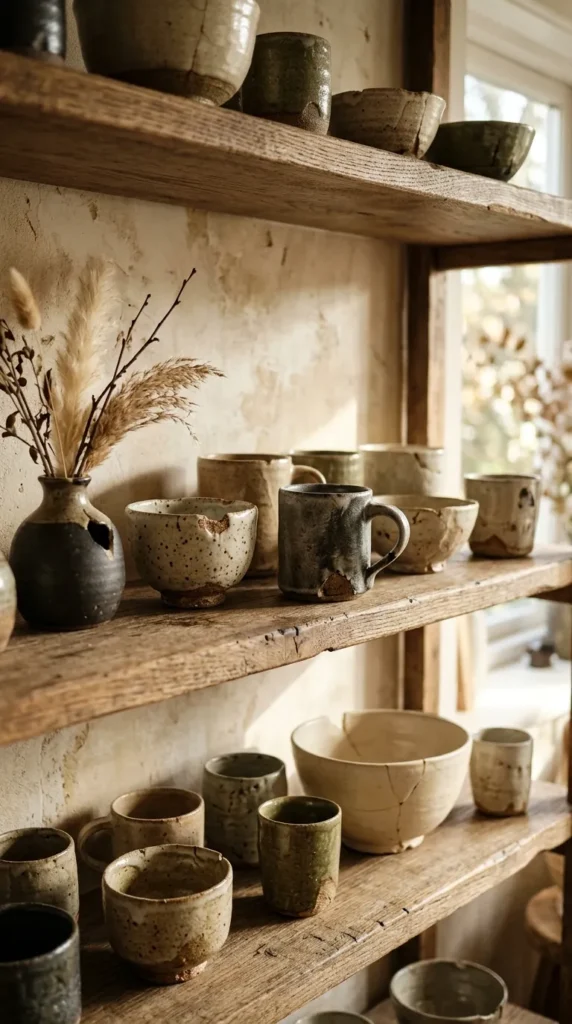
Most of us throw away a ceramic mug the moment it chips. But wabi sabi sees that crack as a story proof that the mug has been used, loved, and has earned its imperfections. Instead of hiding damaged ceramics in the back of a cabinet, display them. A chipped bowl becomes functional art on a kitchen shelf. A cracked vase with flowers still looks beautiful, maybe even more so.
I kept a handmade ceramic dish that had a visible crack down the middle, and it became one of my favorite pieces. Instead of bothering me, the crack makes me appreciate it more. Use cracked ceramics for actual purposes hold keys by the door, display succulents, serve snacks. The Japanese practice of kintsugi (repairing broken ceramics with gold) takes this further, but even without gold repair, the cracks themselves are worth keeping. The texture and visible mending tell the real story of an object’s life. Don’t hide these pieces; put them where you see them daily.
Let Your Walls Show Their Age
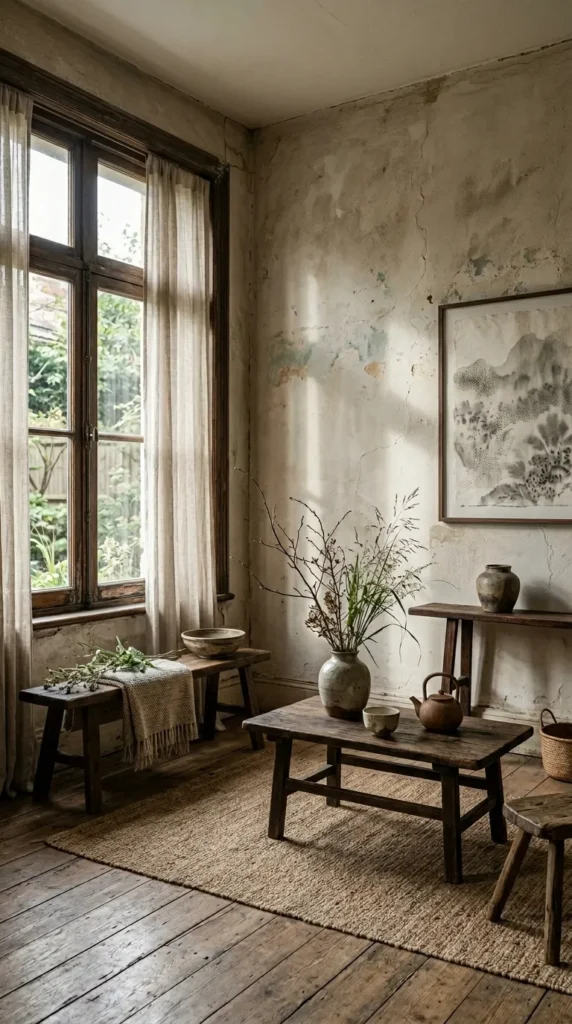
Pristine white walls feel sterile. Wabi sabi embraces walls that show time and use—subtle cracks, slight discoloration, uneven paint. You don’t need to intentionally distress walls (that’s not wabi sabi, that’s faking it), but when your walls naturally show wear, lean into it instead of fighting it.
I stopped repainting my entryway walls when they started to show slight wear, and honestly, they look more interesting now than they did when freshly painted. The slight yellowing and tiny hairline cracks give the space character. If you want to intentionally bring this energy without waiting for decay, choose muted, earthy colors—warm grays, soft whites with gray undertones, or warm beiges that show dust and time more gracefully than bright white. When paint does chip or scratch, you don’t need to touch it up immediately. Let it sit for a while. You might find you like the layered, imperfect look more than you expected.
Bring in Weathered Wood Furniture
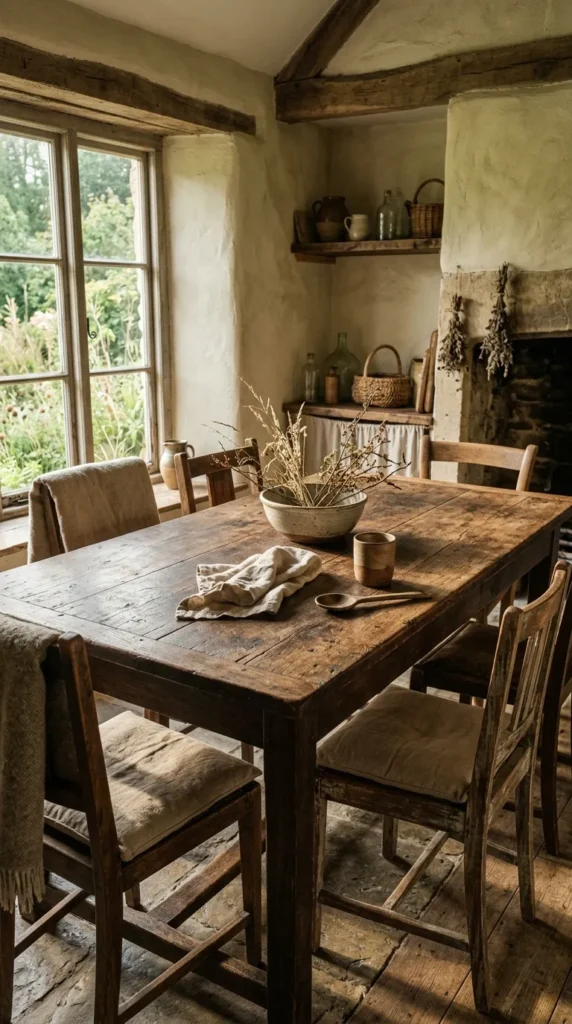
Weathered, aged wood furniture is the heart of wabi sabi interiors. Not new wood that’s been artificially distressed actual old wood with a genuine patina. A wooden table with water rings from decades of use, shelves with uneven wear, a dresser with scratches and faded stain. This wood tells its own story without you having to do anything.
I found an old wooden table at an estate sale that had visible scratches and uneven stain things that would have bothered me years ago. Now I love how it shows its history. The worn spots aren’t flaws; they’re evidence of being part of people’s lives. Hunt for older wooden pieces at thrift stores, estate sales, or even Facebook Marketplace. The pieces that look “too worn” in photos often photograph worse than they look in person. Don’t refinish them. Let the wood age naturally. If it needs a protective coat, use a matte finish that doesn’t highlight the damage. The point is preserving that honest, lived-in look.
Display Collections Imperfectly
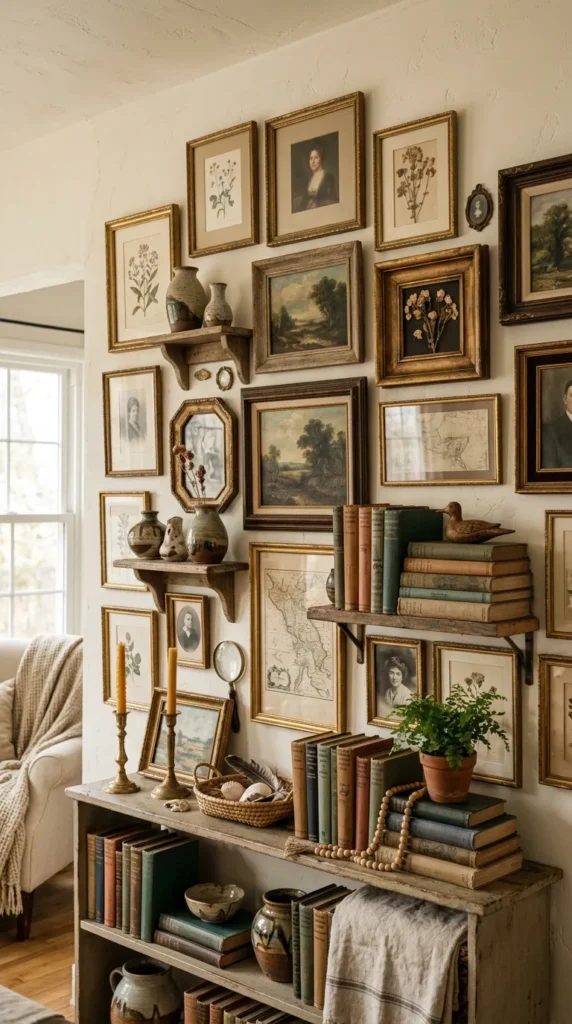
Perfect gallery walls are beautiful but kind of soulless. Wabi sabi collections are displayed more casually slightly asymmetrical, mixed sizes and frames, books stacked horizontally and vertically. The chaos feels intentional because it reflects actual life, not a design magazine.
I arranged my collection of vintage plates on a wall without measuring or leveling anything first, and I genuinely think it looks better than when I spent two hours getting everything perfectly aligned. Plates overlap slightly. Heights vary. Some frames are wood, some are metal, nothing matches. It looks collected, not curated, and that’s the whole point. If you’re building a collection, embrace the fact that things won’t coordinate perfectly. A mix of ceramic, glass, wood, and metal actually looks more interesting than everything in matching frames. Don’t overthink the arrangement. Move things around when you feel like it. Imperfection is the point.
Use Natural Fabrics with Visible Wear
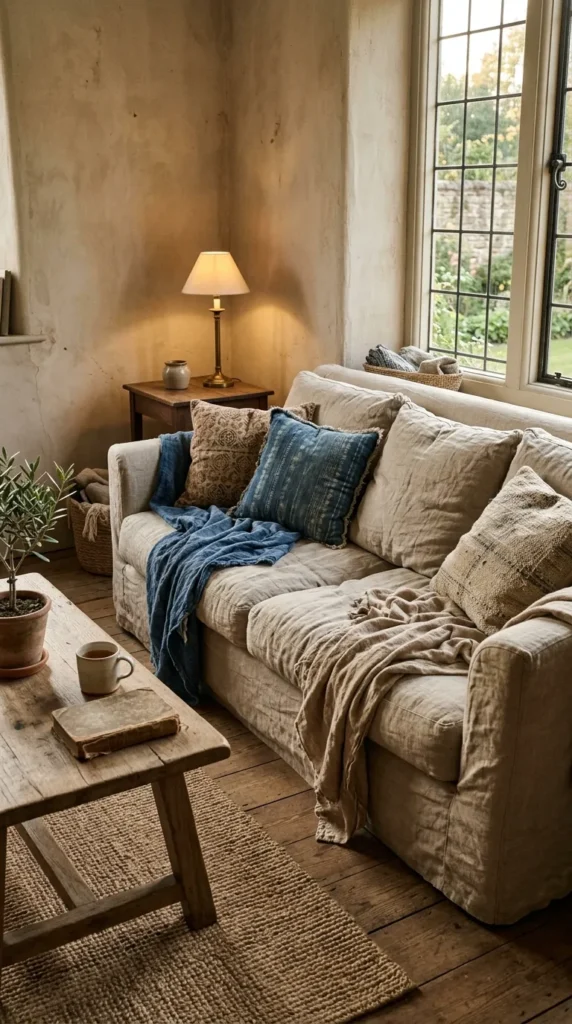
Linen, cotton, and wool with visible wear threads loose, fabric faded from washing, slight pilling embody wabi sabi way better than pristine, perfect fabrics. A linen pillow cover that’s been washed 100 times and is slightly faded is infinitely more wabi sabi than something brand new and stiff.
I deliberately chose an undyed linen couch cover knowing it would stain and age. And it has. There’s a coffee mark that won’t come out, the fabric is slightly soft and worn in places, and honestly, I love it more because of that. It doesn’t look like a designer showroom, it looks like home. When choosing textiles, pick natural, washable fabrics that age gracefully. Raw linen, organic cotton, undyed wool. Yes, they’ll stain. Yes, they’ll fade. That’s exactly why they’re perfect for wabi sabi. Don’t fight the stains embrace them as proof the space is being used and lived in.
Incorporate Flawed, Handmade Pottery
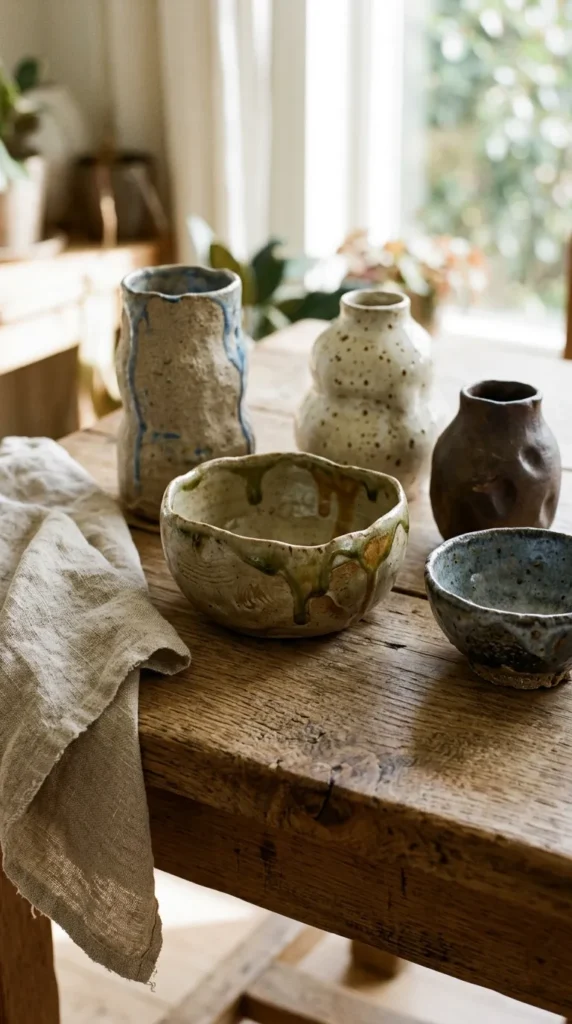
Mass-produced ceramics are uniform and perfect. Handmade pottery is uneven, slightly asymmetrical, with visible fingerprints and imperfections. That’s where the soul is. A mug that’s slightly thicker on one side, a bowl with an uneven rim, a vase that sits just a little bit crooked these imperfections are features, not bugs.
Seek out local ceramicists or artisans making handmade pieces. Yes, they cost more than store-bought ceramics, but they’re actually wabi sabi in nature. The slight variations in glaze, the uneven walls, the marks from the artist’s hands this is authentic. Every piece is different, which means you’re not trying to match or replace things. When a handmade mug chips, that single chip doesn’t matter because the whole piece was never meant to be perfect. Use handmade pottery daily. Let it get more stained, more worn, more perfect through imperfection.
Embrace Natural Light and Shadows
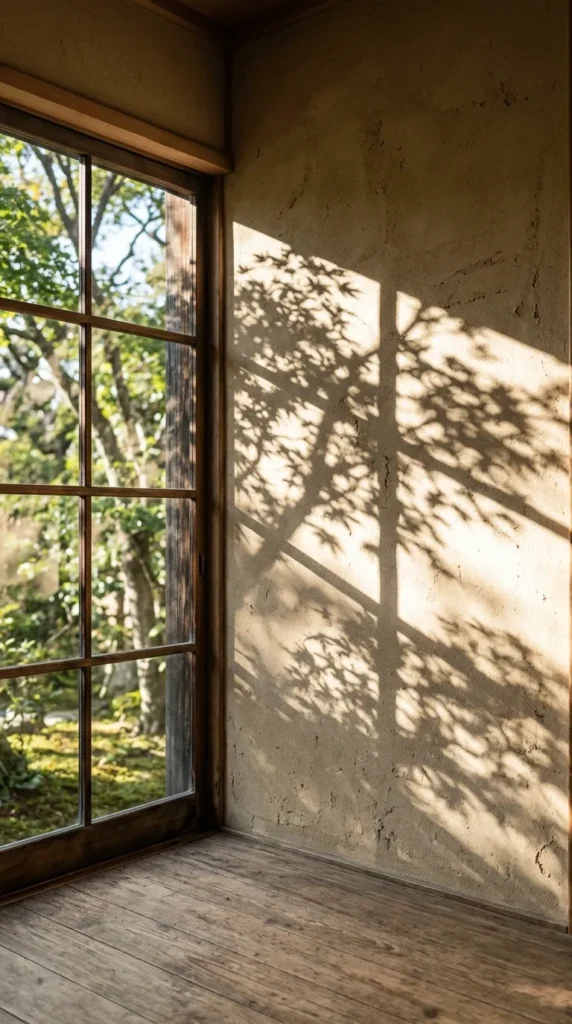
Wabi sabi doesn’t hide shadows or try to light everything evenly. Instead, it embraces the play of natural light, uneven lighting, and the shadows that create depth and mystery. A room lit entirely by lamps doesn’t have the same energy as spaces with natural shadows and uneven brightness.
I stopped obsessing over getting enough light in every corner, and my living room actually feels more atmospheric now. The corner by the window is bright, and the opposite corner is intentionally dimmer. Shadows create texture and depth that flat, even lighting erases. Don’t use bright overhead lights that eliminate all shadows. Instead, layer softer, warmer light sources lamps, natural light through windows, maybe candles. Let parts of the room be darker and less defined. Imperfect lighting is more beautiful and honestly more restful for your eyes than trying to make everything equally bright.
Feature Exposed, Unfinished Elements
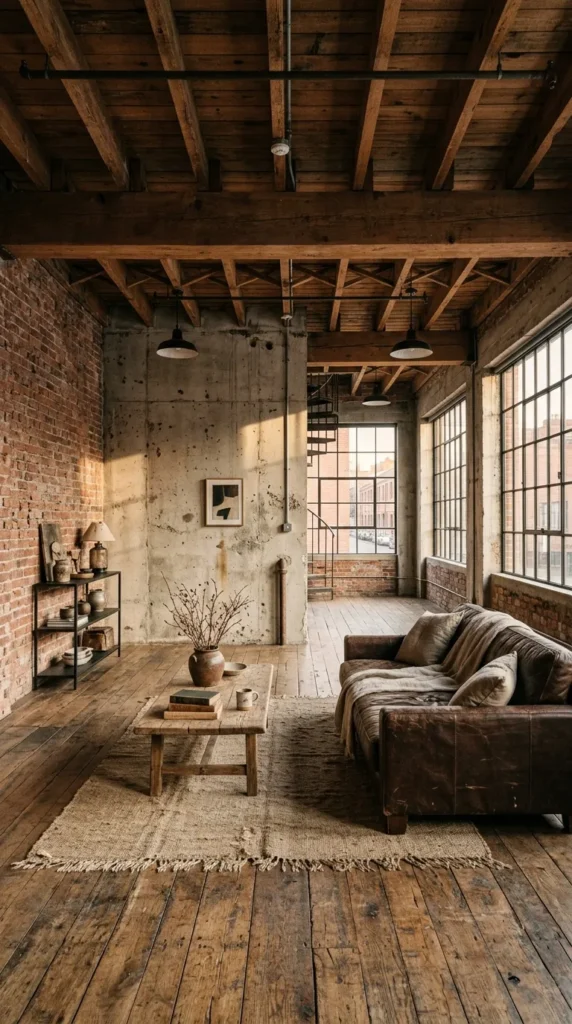
Exposed brick, unfinished plaster, visible wood beams, raw concrete these aren’t imperfections to hide, they’re features to celebrate. Wabi sabi finds beauty in structural honesty, the bones of a building visible and unadorned.
If you have exposed brick or wood in your space, resist the urge to cover it or make it “finished.” I live in an older apartment where plaster is crumbling slightly in one corner. A designer would have fixed that immediately. I left it. Now it’s one of my favorite design features because it’s honest and real. If you don’t have exposed elements naturally, don’t artificially create them (that defeats the purpose). But if they’re already there, lean into them. Let brick be brick. Let wood be wood. Paint can chip off walls naturally. Don’t fight it. The point is authenticity, not aesthetic.
Choose Artwork with Visible Aging
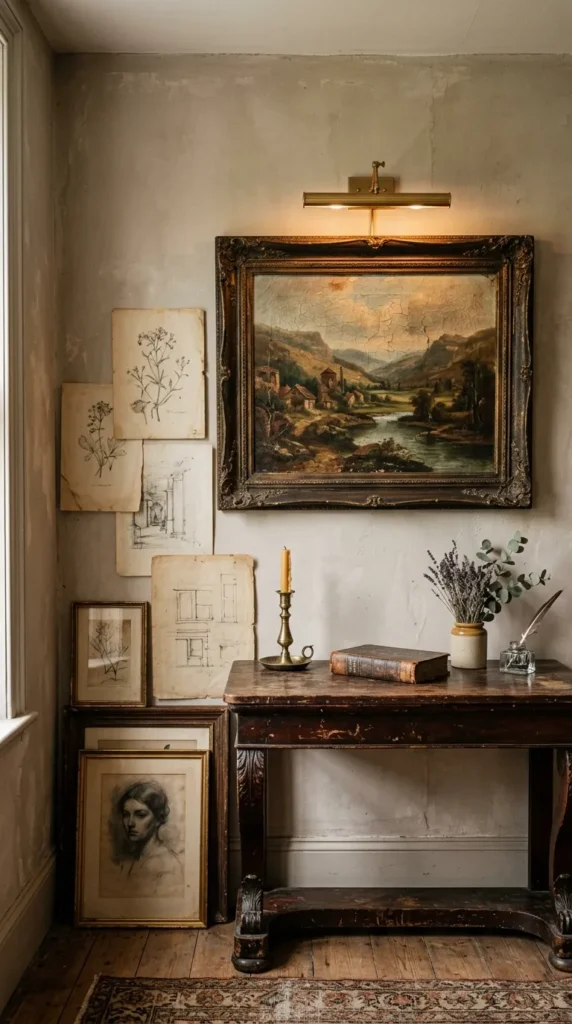
Instead of buying new prints or artwork, hunt for older pieces vintage paintings with age spots on canvas, old prints with yellowed paper, antique drawings with foxing (those brown spots from age). These show time passing, which is fundamentally wabi sabi.
I framed a vintage portrait from an estate sale that has visible cracks in the paint and faded areas. It’s genuinely more interesting than a perfect new piece would be. The cracks and fading are part of its character. Estate sales, antique shops, and online marketplaces are goldmines for aged artwork. Don’t clean it up or try to restore it to “like new” keep the patina. If you’re drawn to it because of its imperfections, that’s the whole point. Hang it without a mat to show the full aged paper edges and any yellowing that’s happened over decades.
Use Uneven, Mismatched Tableware
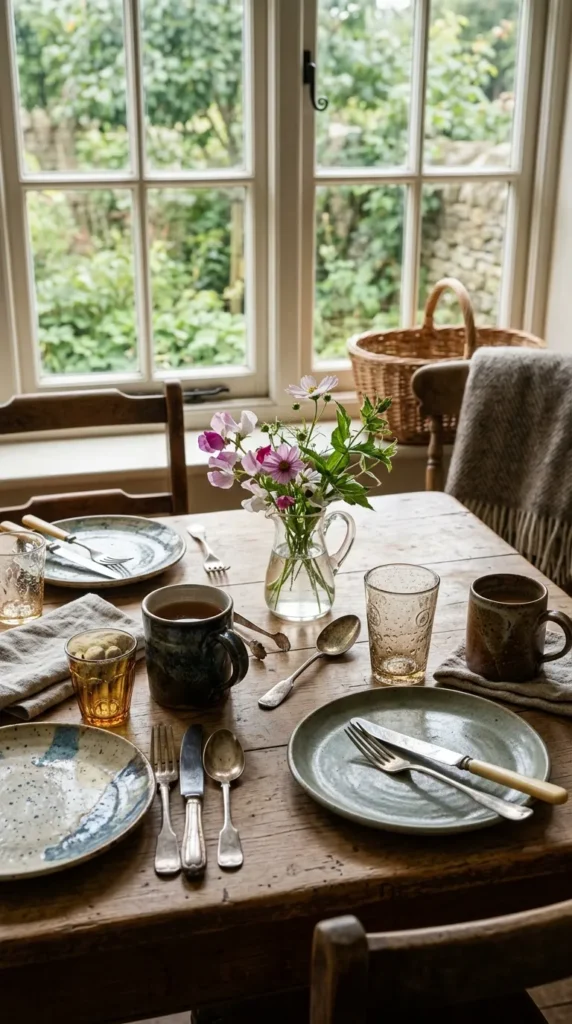
Matching dishes and utensils feel sterile. Wabi sabi kitchens have collected pieces different plates from different eras, mismatched bowls, vintage silverware that doesn’t match. Your everyday dishes should reflect actual living, not a catalog.
I deliberately don’t match my dishes. I have white plates from my grandmother, blue bowls I found at a thrift store, and a random collection of mugs that I’ve accumulated over years. When I set the table, nothing coordinates, and somehow that feels more honest and interesting than everything matching. Start collecting mismatched pieces intentionally. Hunt thrift stores for individual plates in earthy colors, vintage silverware, glass cups with a bit of wear. The inconsistency is the beauty. When you break a dish, you don’t need to find a match because there’s no set.
Keep Plants That Aren’t Perfect
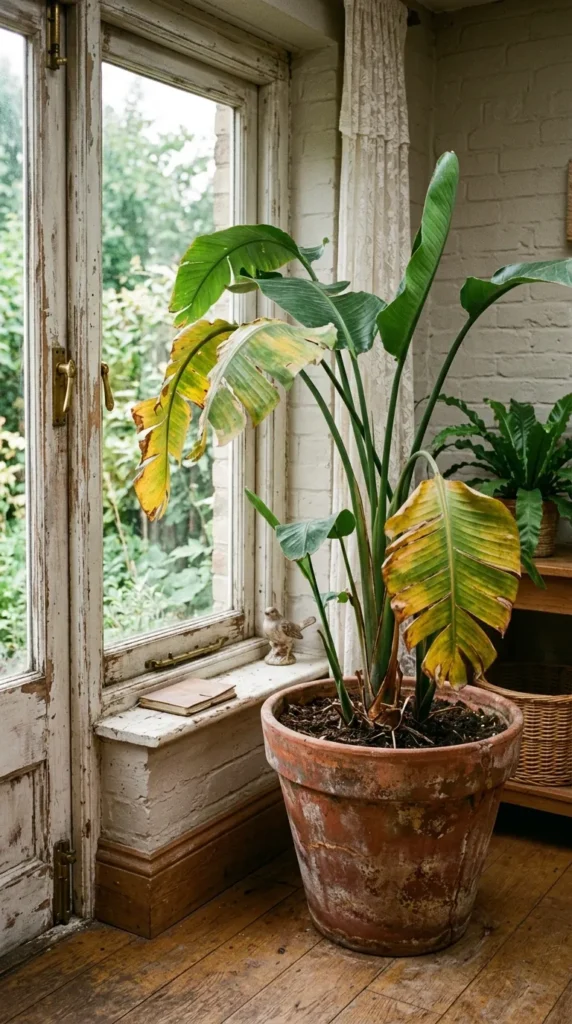
Real, lived-with plants have brown leaf edges, slightly droopy stems, and won’t win any Instagram plant photos. That’s wabi sabi. A slightly struggling succulent with some brown edges is more beautiful than a photosynthesis-perfect plant that’s been fussed over constantly.
I used to trim every brown edge off plant leaves. Now I leave them. A plant that’s been with me for three years and shows it slightly discolored pot, visible dust on leaves, asymmetrical growth is more meaningful than a fresh nursery plant. The imperfections show time spent together. Don’t stress about making your plants look perfect. If a leaf is brown, leave it until you prune the whole plant. Crooked growth is character. Let plants get a bit dusty if they’re on high shelves. The patina of plant care is more beautiful than clinical perfection.
Display Books Imperfectly
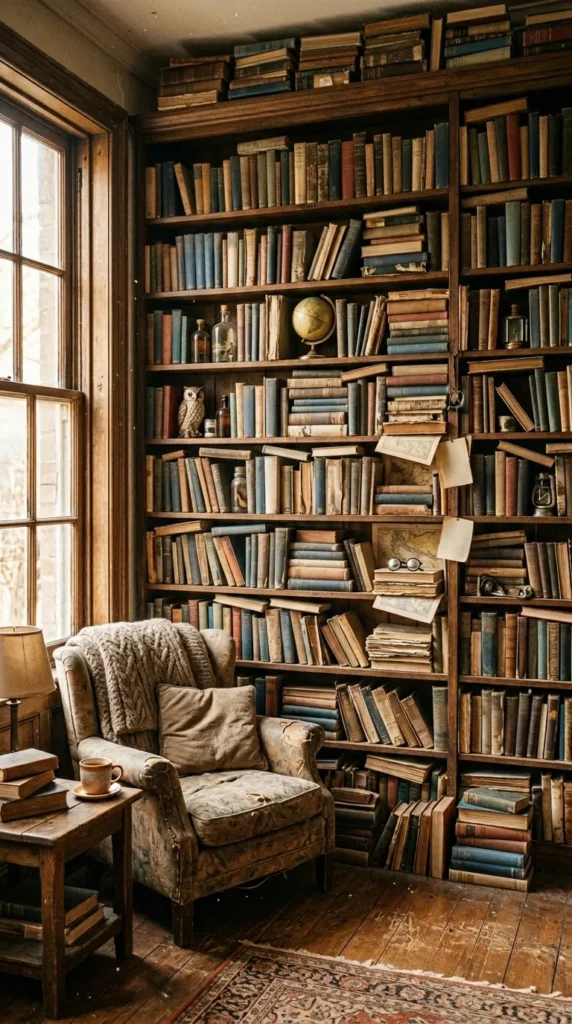
Tidy, color-coordinated bookshelves are visually pretty but kind of soulless. Wabi sabi books are stacked, slightly worn, faded from reading, shelves uneven. The books should look read and loved, not pristine and decorative.
I stopped arranging books by color and size, and honestly my shelves look so much better now if by “better” you mean more authentic and lived-in. Books are stacked both horizontally and vertically, spines face out and cover-out randomly, some faded from being in sunlight for years. The damage and wear prove the books have been read, handled, loved. Dust collects slightly on tops of books I don’t dust them constantly. That slight dust is proof they’ve been part of the space for a while. If you’re building a library, don’t worry about matching editions or making everything coordinate. Mix new and old, different sizes, worn and crisp. The variety is the whole point.
Use Faded, Worn-in Textiles
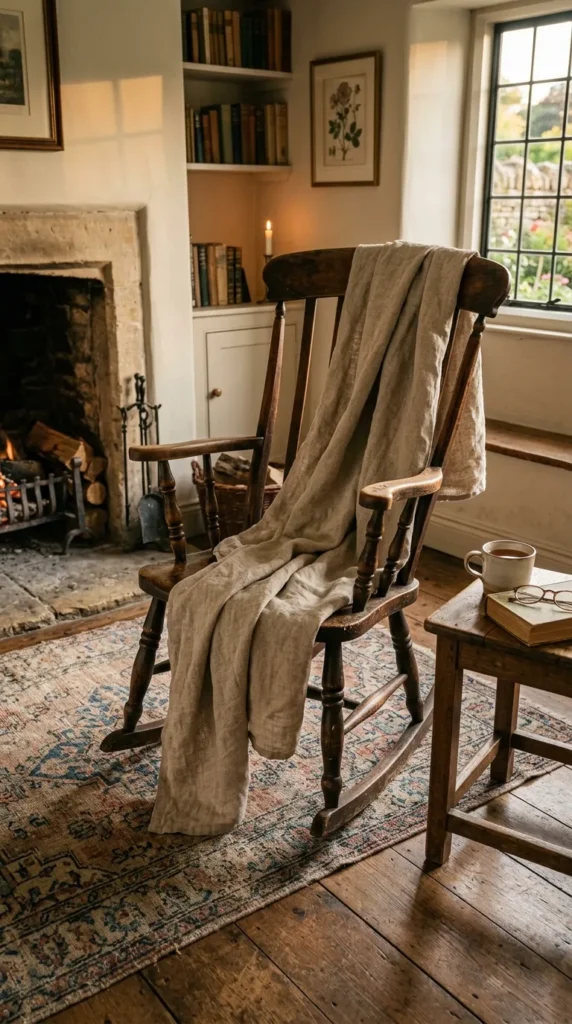
Blankets that have been washed a hundred times, rugs that show foot traffic patterns, curtains faded from years of light exposure these textiles are infinitely more wabi sabi than something new and stiff. Wear and age make textiles better, not worse.
I have a linen throw blanket I’ve had for seven years. It’s soft in some spots from use, slightly thin from washing, and faded in streaks where it’s been in the sun. It’s one of my favorite things in my home now because of that wear, not despite it. When choosing textiles, pick high-quality natural fibers that age beautifully and then actually use them. Wash curtains, sit on rugs, use blankets. Let them fade and wear naturally. Don’t try to preserve them in pristine condition. The point is that they’re part of your actual life, visible through the wear and softness that comes from being used.
Create an Imperfect Entryway
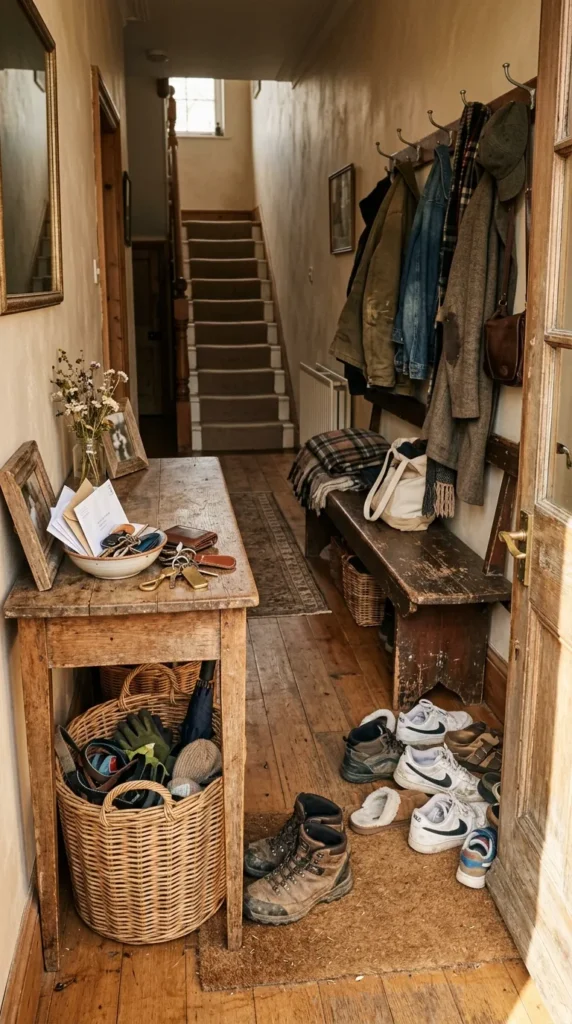
Your entryway doesn’t need to be showroom-ready. Wabi sabi entryways feel lived-in slightly cluttered with actual coats and shoes, maybe a wall showing the wear of hands passing, a table with visible dust and objects from daily life. Real, not curated.
My entryway has a worn wooden table where keys pile up, a few coats always hanging, and no attempt at perfection. I used to stress about keeping it neat and minimal. Now I let it be what it actually is the transition space between outside and inside. The wear on the wall from years of hands brushing it, the scratches on the table from keys and bags, the slight disorganization that’s what makes it feel like home. Don’t stage your entryway. Let it function honestly. The imperfect, slightly cluttered space tells the true story of how you actually live.
Embrace Slow, Natural Aging
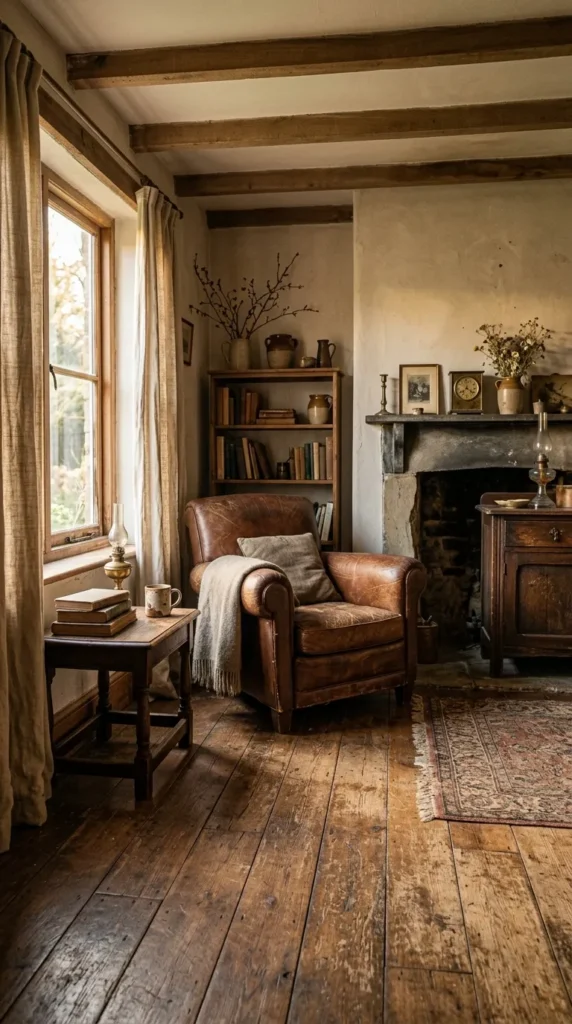
The most important wabi sabi principle is letting things age naturally instead of constantly replacing or refreshing them. A home that ages gracefully, where objects develop patina and surfaces show time passing, embodies wabi sabi way more than a space that’s constantly updated and maintained.
Stop fighting the aging process and start embracing it. Don’t repaint walls immediately when they need refreshing. Let them age. Don’t replace furniture when it shows wear love it more because of the wear. Don’t hide stains or damage with new accessories. Let them sit and become part of the space’s character. A five-year-old couch with visible wear is infinitely more wabi sabi than a brand-new one. A wall that’s been painted the same color for a decade, slightly faded and marked, is more beautiful than a fresh paint job. Time and use aren’t the enemy; they’re what create real beauty.
Final Thoughts
Wabi sabi interior design isn’t about being poor or unable to afford nice things it’s about finding real beauty in authenticity, age, and imperfection. It’s giving yourself permission to stop chasing impossible standards and instead embrace the honest, lived-in home you actually have. Your cracked mug, your worn table, your mismatched dishes, your faded fabrics these aren’t flaws to fix. They’re proof of a life well-lived in a space you genuinely love.
Start by looking at your current home with fresh eyes. Instead of seeing damage, see patina. Instead of spotting disorder, see authenticity. Pick one element maybe an old wooden piece, a chipped ceramic, or a worn textile and lean into its imperfection instead of hiding it. You might find that once you embrace one imperfect element, the whole approach starts to make sense. Your home doesn’t need to be perfect. It needs to be real.