26 Burnt Orange Bedroom Ideas for a Warm and Cozy Vibe
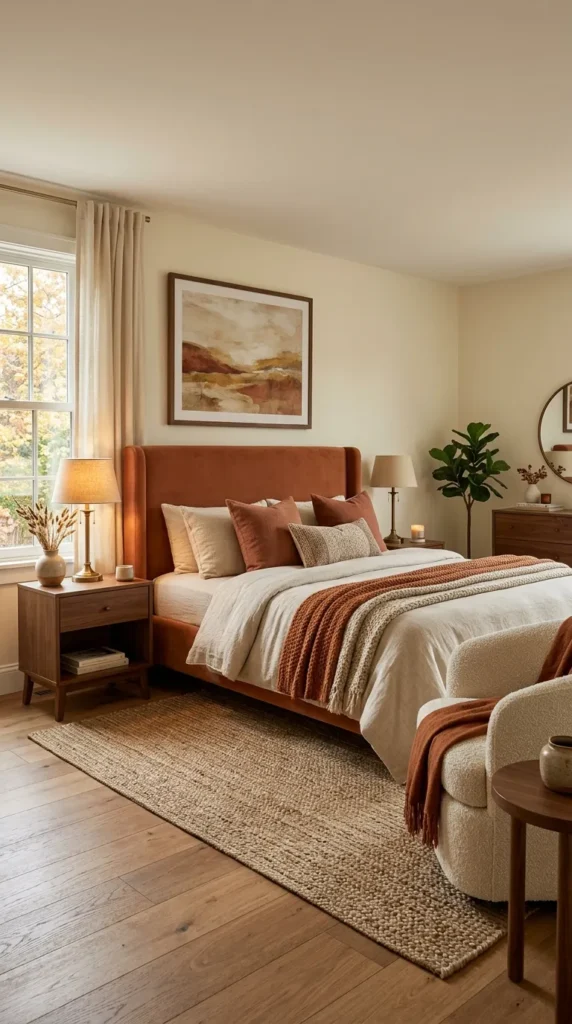
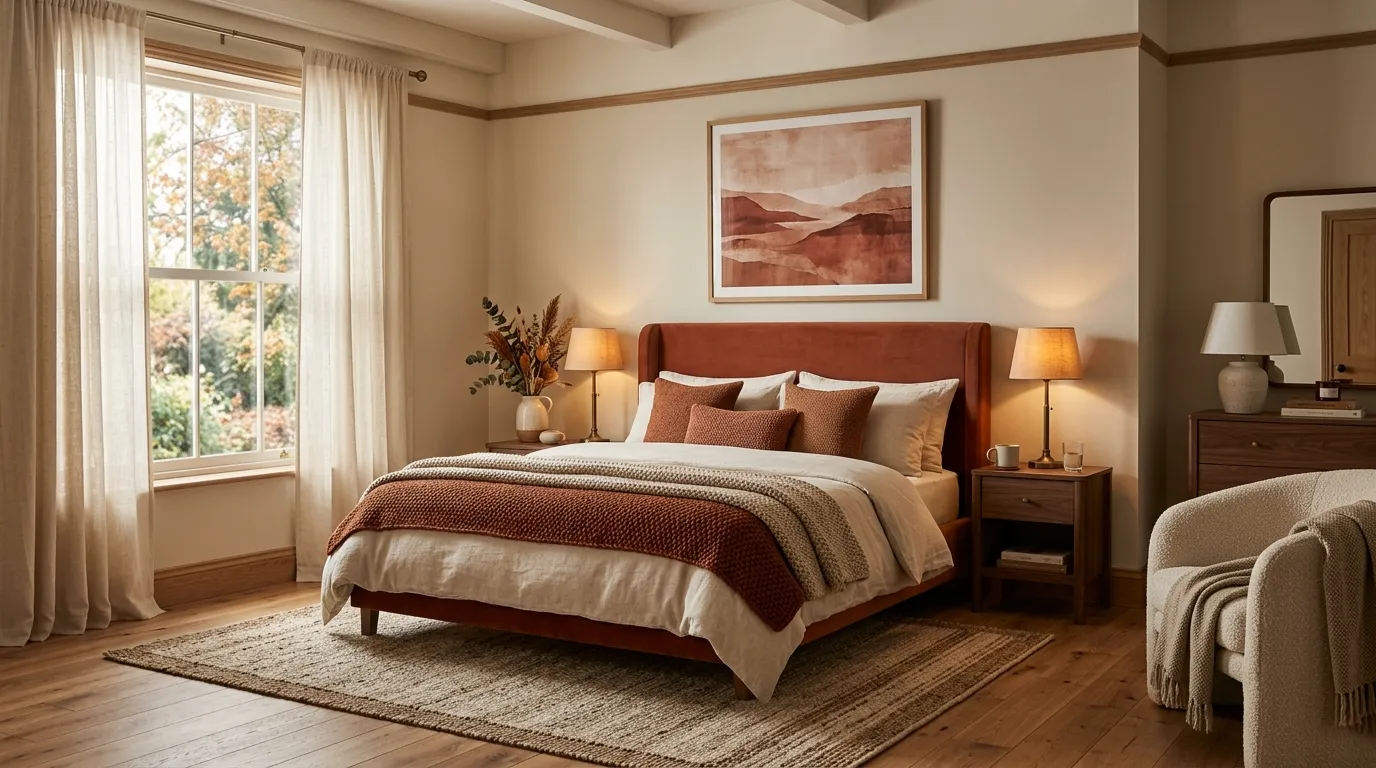
Burnt orange is one of the most underrated colors in bedroom design, warm enough to feel instantly cozy and grounded enough to avoid the loud, citrus quality of brighter oranges. It sits closer to terracotta and rust than to anything you’d associate with a traffic cone, which is exactly why it works so well in a room meant for rest. Used thoughtfully, it can turn a plain bedroom into a space that feels like the inside of an autumn evening, without ever feeling dated.
The challenge with burnt orange is similar to any strong color choice: too much of it in the wrong places can feel heavy, while too little can make the effort feel accidental rather than intentional. These 26 ideas cover the full range, from full commitment on the walls to smaller, more restrained touches through textiles and accessories, so you can find the version that suits how bold you actually want the room to feel.
1. Paint the Walls in a Muted Burnt Orange
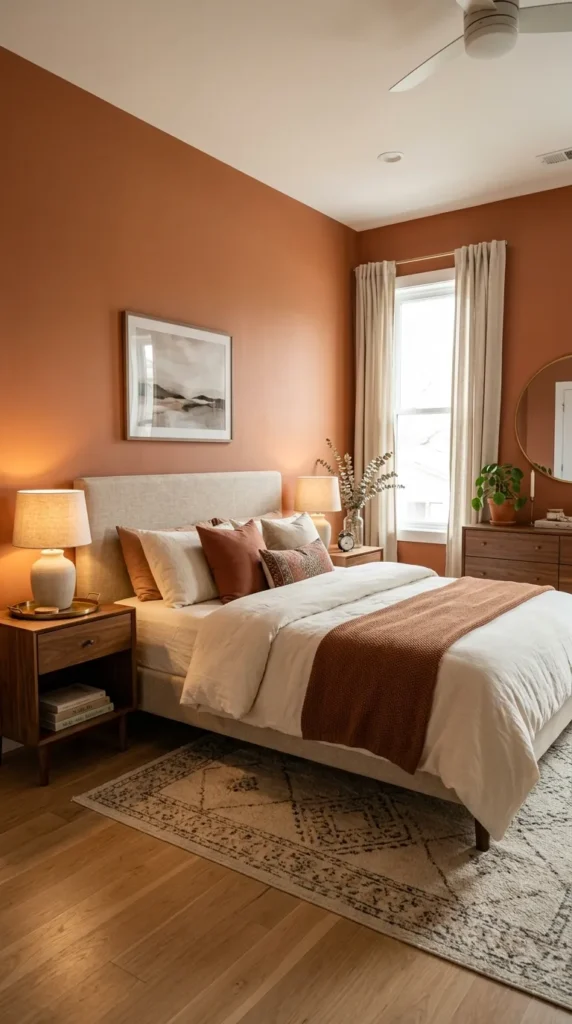
A full wall of burnt orange, whether across the entire room or just behind the bed, gives the color room to do what it does best: make a space feel warm and enveloping rather than sharp or overwhelming. A muted, slightly dusty version of the shade reads as sophisticated instead of loud, especially in a room with warm wood furniture already in place.
If painting the whole room feels like too much, start with a single accent wall behind the headboard. It gives you the depth and warmth of the color without requiring every other decision in the room to be built entirely around it.
2. Pair It With Warm White or Cream
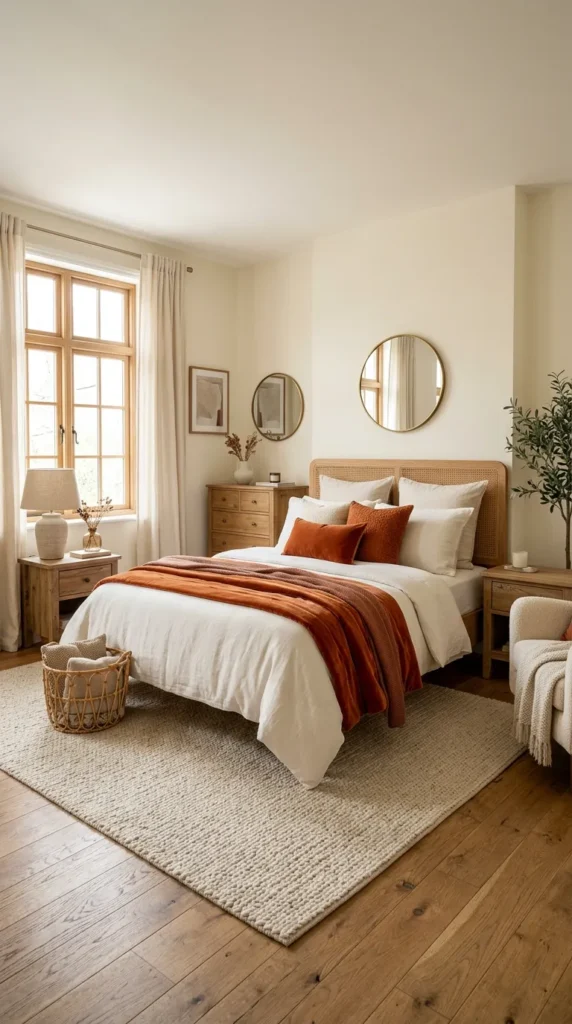
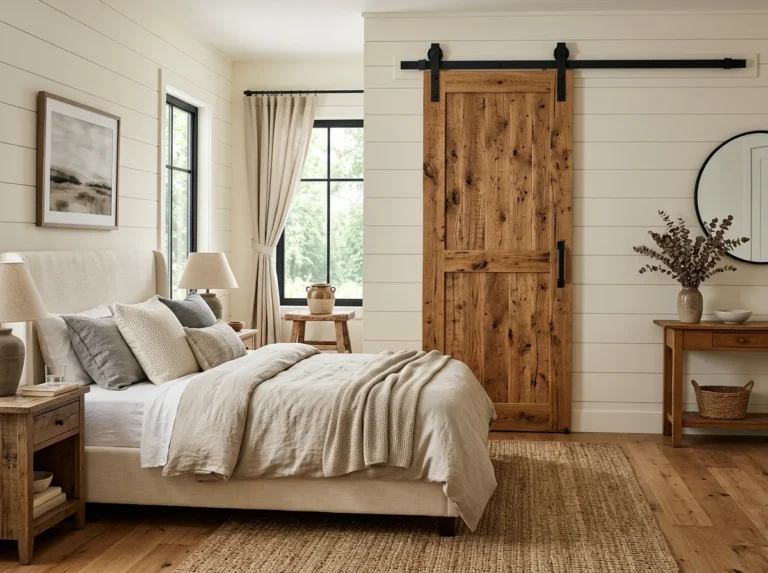
Warm white or cream walls let burnt orange stand out through textiles and furniture without committing to painted walls in the color itself. This combination keeps the room feeling bright and airy during the day while the orange accents bring in the coziness once evening light takes over.
Bedding, curtains, or a single upholstered chair in burnt orange against a cream backdrop is often enough to establish the palette clearly. The contrast does most of the visual work, so you don’t need to layer the color into every corner of the room.
3. Add a Burnt Orange Velvet Headboard
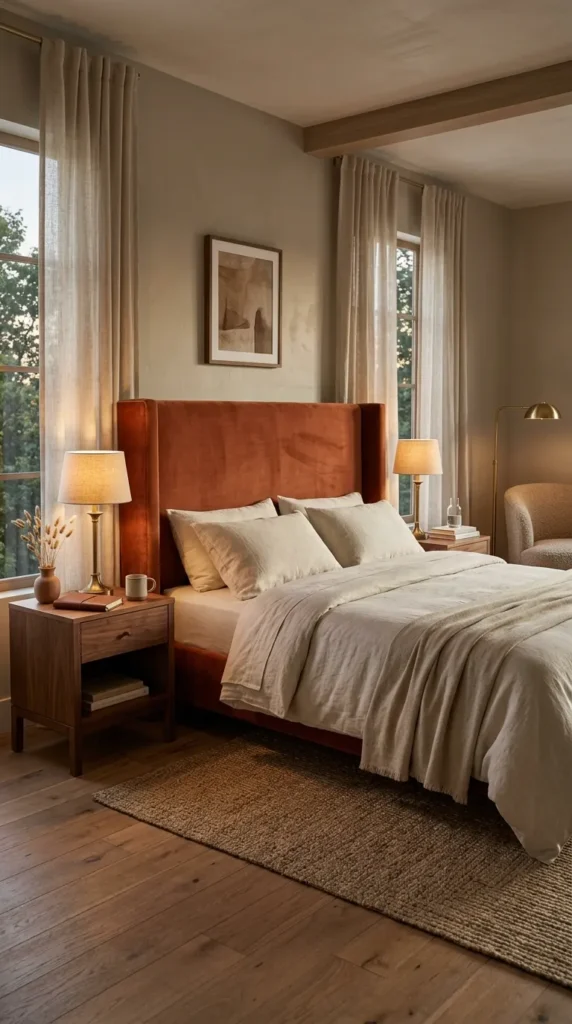
Velvet catches light in a way flat paint never can, which makes a burnt orange velvet headboard one of the most effective single pieces for bringing real richness into the room. The texture softens the color, keeping it from reading as too bold even in a fairly saturated shade.
Pair the headboard with simple, neutral bedding so the color has room to be the clear focal point of the bed, rather than competing with a patterned duvet or an equally bold set of pillows.
4. Layer in Warm Wood Furniture
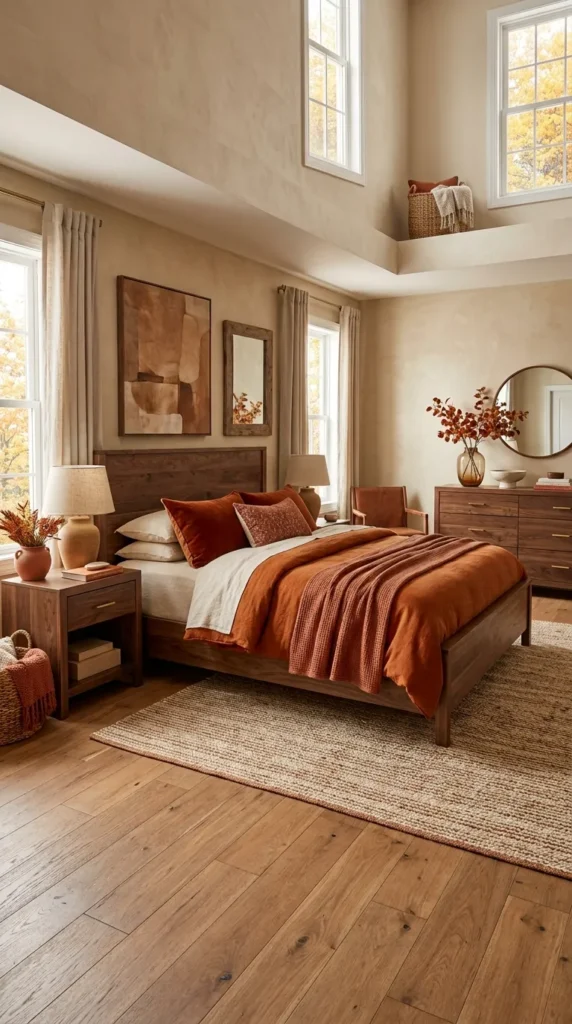
Burnt orange and warm wood share the same undertones, which is part of why the two look so natural together. Walnut, oak, and teak furniture ground the color and keep the room feeling earthy rather than overly saturated, especially when the wood carries some visible grain.
A wooden bed frame, nightstands, or a dresser in a warm tone gives the burnt orange accents something solid to sit against, and the combination ages well since both materials tend to deepen and warm further over time.
5. Use Terracotta and Rust as Supporting Tones
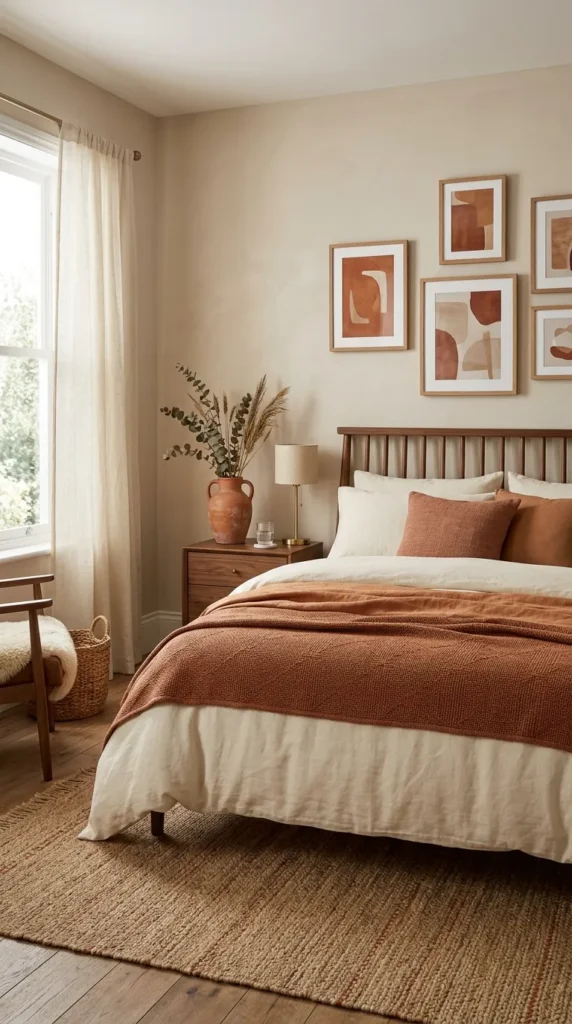
Rather than treating burnt orange as the only warm color in the room, bring in terracotta and rust as close relatives. The subtle variation between these shades adds depth without introducing a color that feels unrelated, since they all sit in the same earthy family.
A terracotta vase, a rust throw pillow, or a woven basket in a similar tone can extend the palette in small ways, keeping the room from feeling like it relies on a single flat shade of orange throughout.
6. Add Brass or Gold Hardware
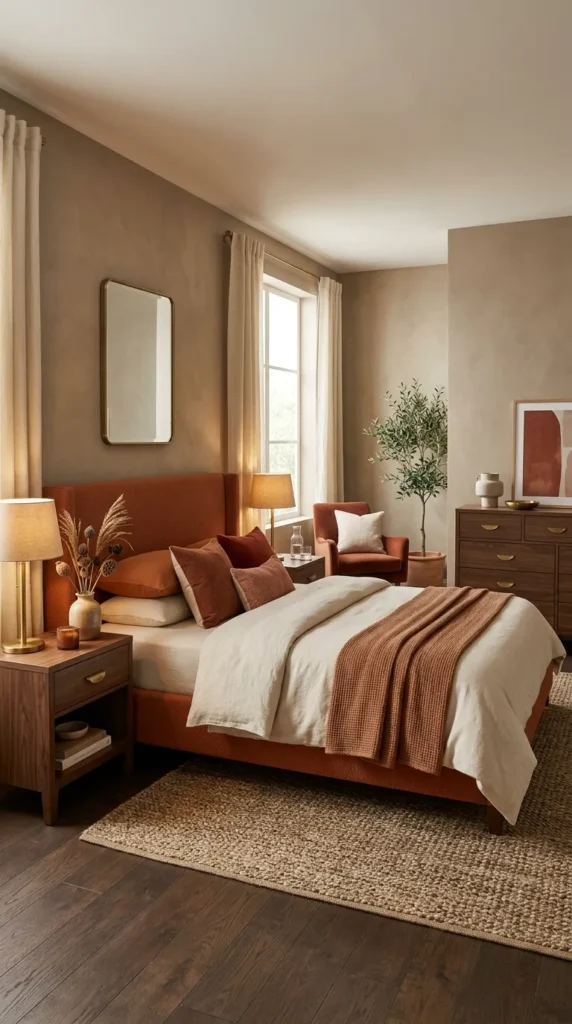
Burnt orange has enough warmth to pair beautifully with brass and gold, and small details like drawer pulls, a lamp base, or a mirror frame pick up that same undertone. The metallic finish adds a touch of shine that keeps the room from feeling entirely matte and flat.
Aged brass tends to suit this palette slightly better than a bright polished finish, since the softer tone feels more in keeping with the earthy, grounded character burnt orange already brings to the room.
7. Choose a Burnt Orange Area Rug
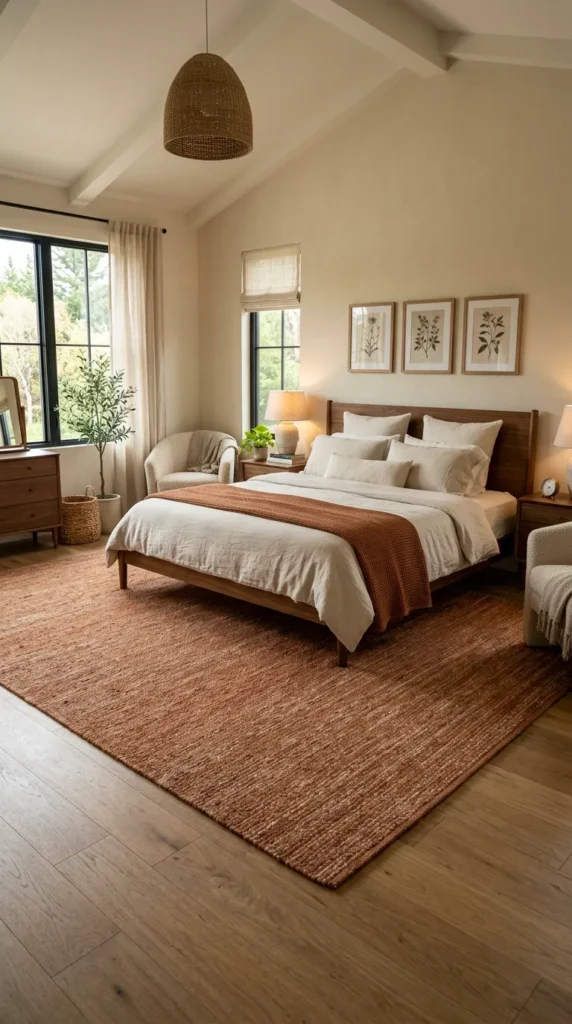
A rug is one of the easiest ways to bring color into a room at floor level without committing to paint or major furniture. A burnt orange rug, whether solid or patterned with cream and rust woven through it, grounds the space and ties the palette together from the bottom up.
If the walls are already a bold color, a more muted or patterned rug keeps the room from feeling too saturated. In a neutral room, a solid burnt orange rug can act as the main source of color on its own.
8. Add Burnt Orange Throw Pillows and a Blanket
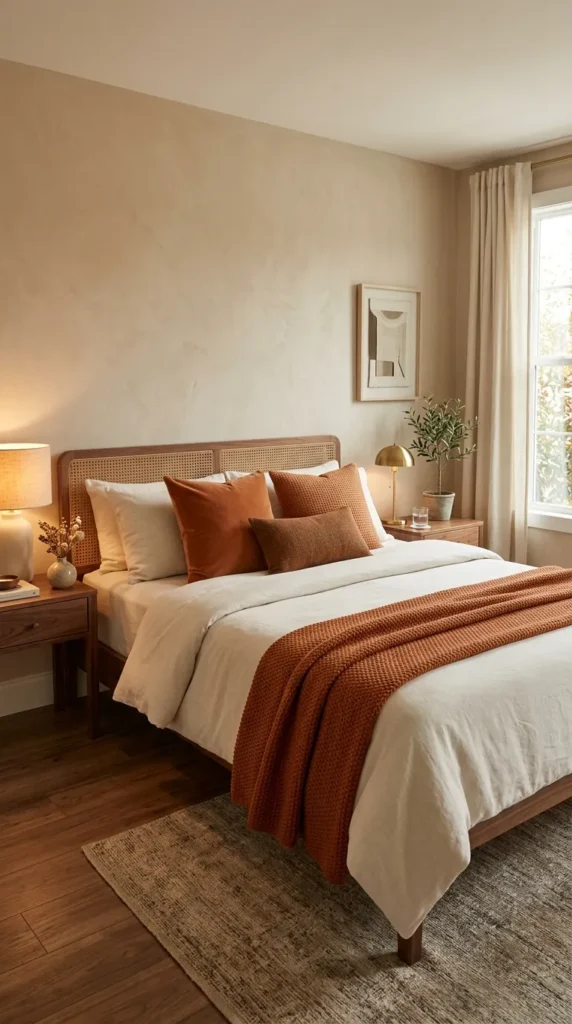
Pillows and a folded throw are the lowest cost, most flexible way to bring burnt orange into a bedroom, and they can be swapped out easily if your taste changes down the line. A couple of pillows in the color, layered against neutral bedding, is often enough to establish the palette clearly.
Mixing textures, a knit throw against a smooth cotton pillow, for instance, adds richness that a single flat fabric wouldn’t achieve, and it keeps the bed from feeling too uniform even with just a small amount of color.
9. Use Linen Curtains in a Soft Rust Tone
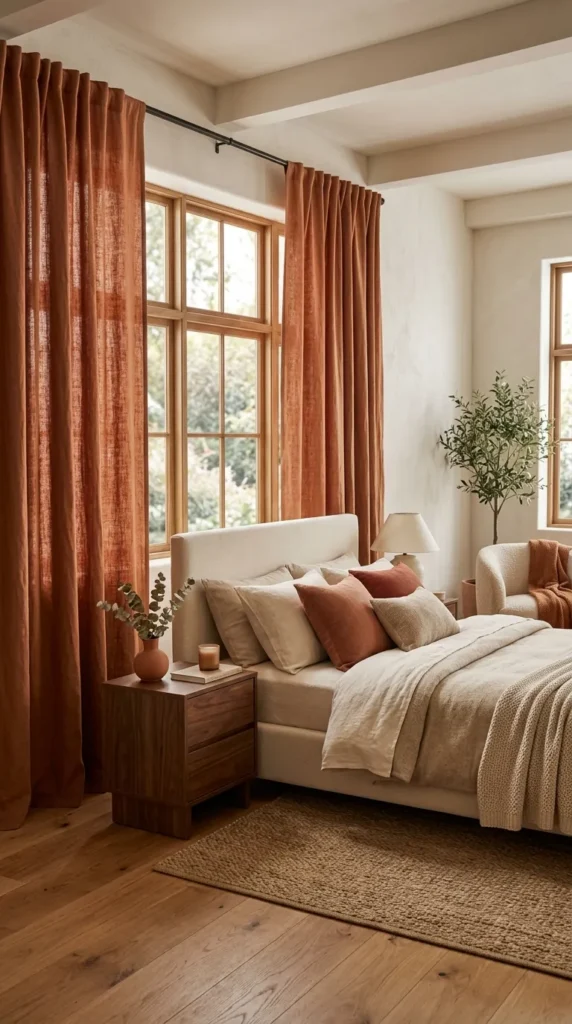
Linen curtains in a soft rust or burnt orange shade let natural light filter through with a warm, slightly golden cast, which reinforces the cozy mood this color is known for. Linen’s natural texture also keeps the look relaxed rather than overly formal.
Floor length curtains in this tone frame the window nicely without blocking too much light, striking a balance between the drama of a bold color and the practical need for a bright, livable bedroom.
10. Add a Burnt Orange Accent Chair
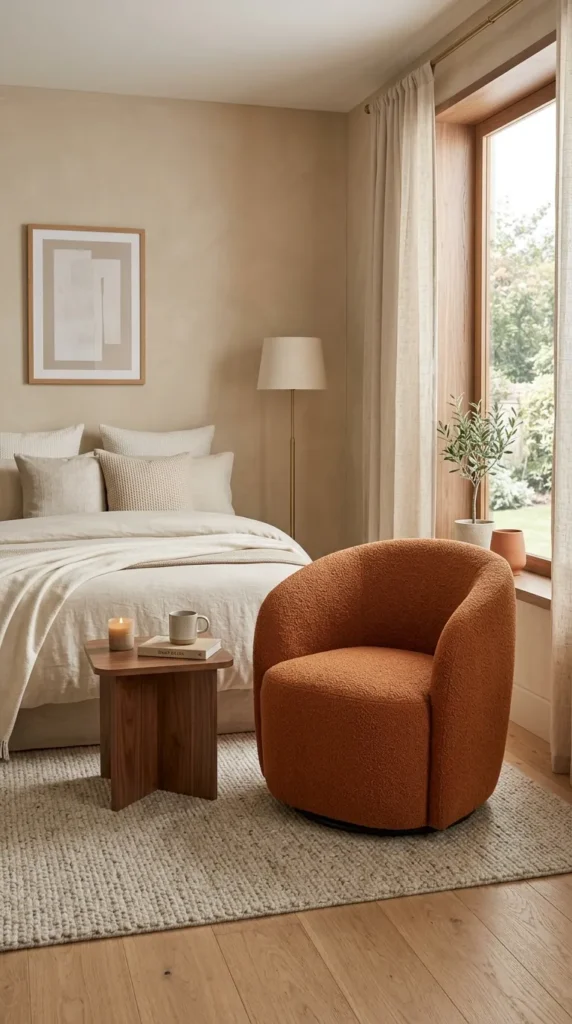
A single upholstered chair in the corner of the bedroom is an easy way to introduce a large dose of color without repainting or reupholstering the bed itself. A bouclé or velvet chair in burnt orange adds both color and texture in one piece.
Keep the rest of the seating area simple, a small side table and a floor lamp are usually enough, so the chair itself remains the clear focal point of that corner of the room.
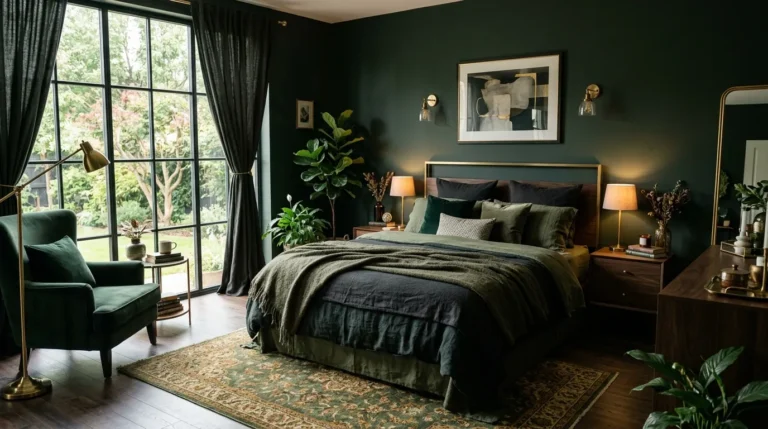
11. Pair With Deep Green Accents
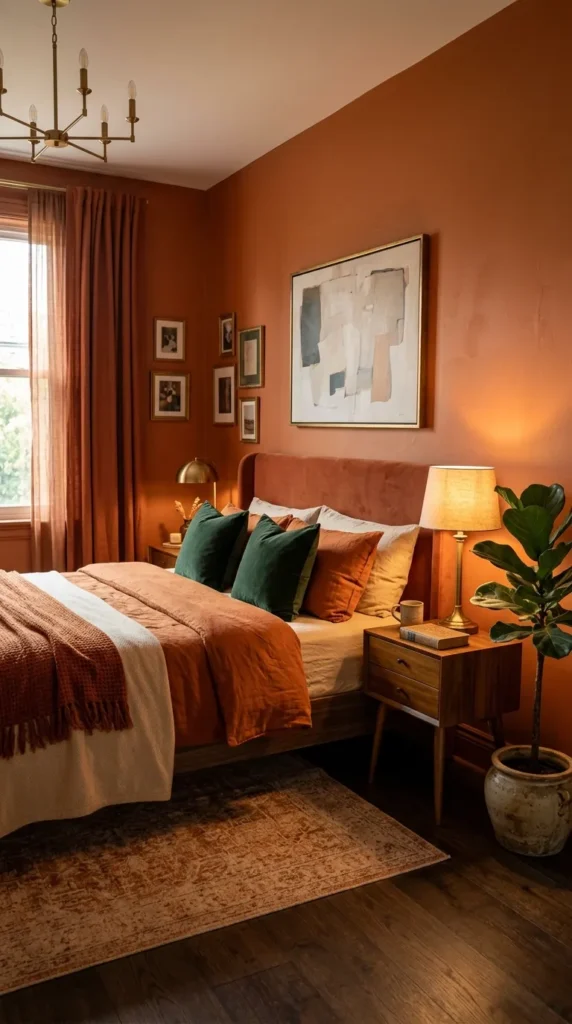
Burnt orange and deep green sit opposite each other on the color wheel, which means they naturally balance and intensify one another without clashing. A green velvet cushion or a scattering of plants against a burnt orange wall or bedding creates a rich, layered look.
Keep the ratio uneven, with burnt orange remaining the dominant tone and green used more sparingly, so the room doesn’t start to feel like two competing color schemes fighting for attention.
12. Add Warm, Layered Lighting
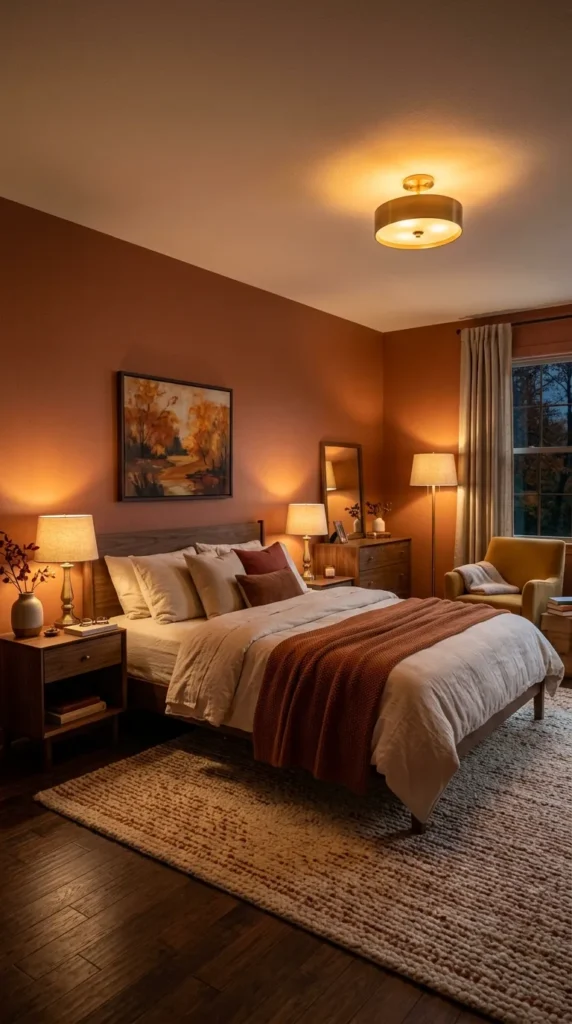
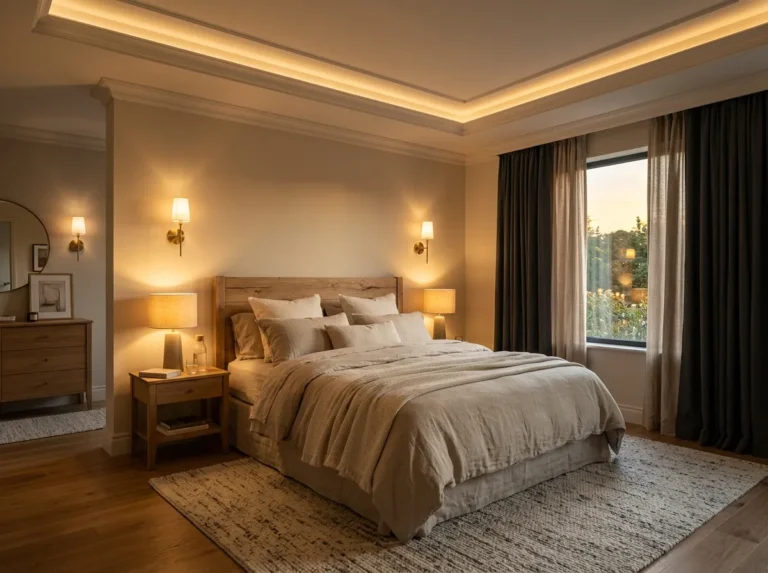
Burnt orange depends on warm lighting to look its richest. Cool white bulbs can flatten the color and make it look dull or slightly muddy, while warm toned bulbs bring out its full depth, especially in the evening when overhead lighting alone tends to flatten a room.
Layer in a floor lamp, a bedside lamp, and a dimmable overhead fixture rather than relying on a single light source. The combination makes the room feel warmer and more intentional once the sun goes down.
13. Use a Burnt Orange Duvet or Comforter
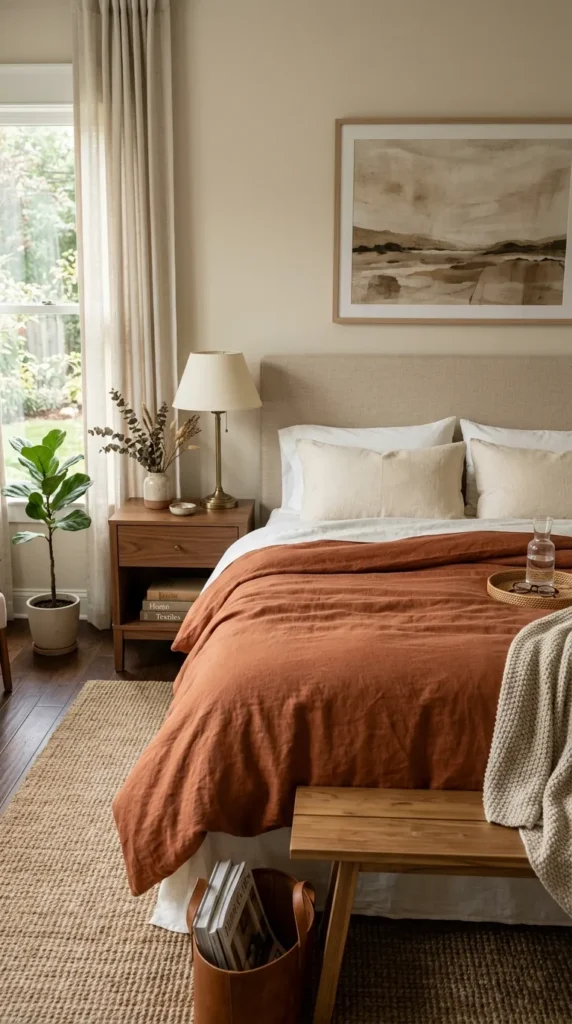
Making the bedding itself the primary source of color is one of the boldest but most effective ways to use burnt orange, since the bed is usually the visual center of the room. A solid burnt orange duvet against simple white or cream sheets keeps the look clean rather than busy.
If a full duvet feels like too much commitment, a burnt orange throw folded at the foot of the bed achieves a similar effect on a smaller, easier to change scale.
14. Add Woven and Natural Textures
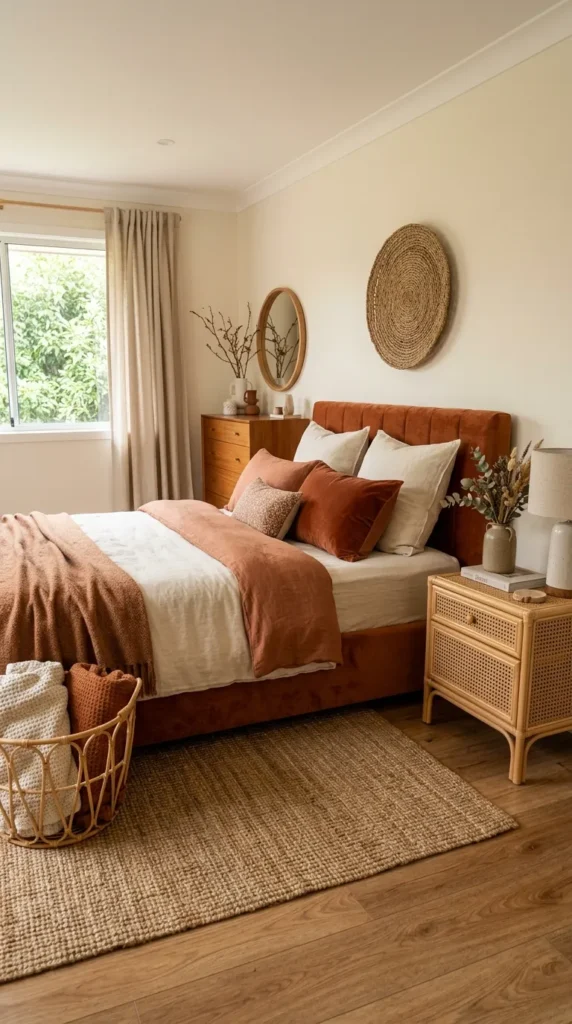
Jute rugs, rattan furniture, woven baskets, and other natural textures pair naturally with burnt orange, since both share an earthy, grounded quality. These materials soften the boldness of the color and keep the room feeling relaxed rather than overly styled.
A rattan headboard or a woven wall hanging alongside burnt orange textiles brings texture into the room without adding another color, which helps the space feel layered rather than flat.
15. Try a Burnt Orange and Navy Combination
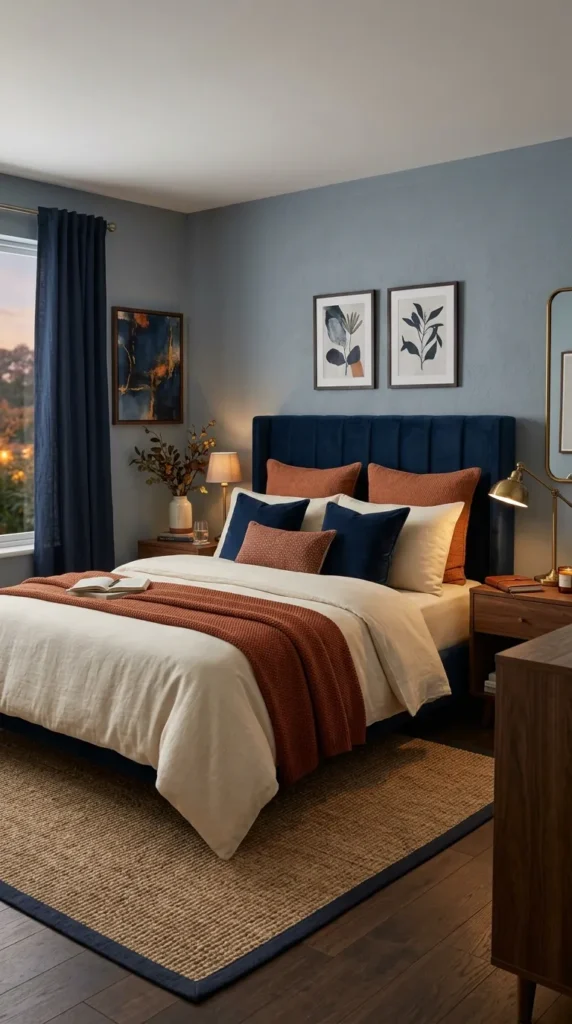
Navy is dark enough to ground burnt orange without competing with it, and the pairing reads as sophisticated rather than themed. A navy headboard or bedding paired with burnt orange pillows and a throw creates a rich, slightly moodier bedroom than an all warm palette would.
This combination works particularly well in a room with brass accents already in place, since brass ties both colors together and adds the shine that keeps the pairing from feeling too heavy.
16. Add Botanical Prints or Real Plants
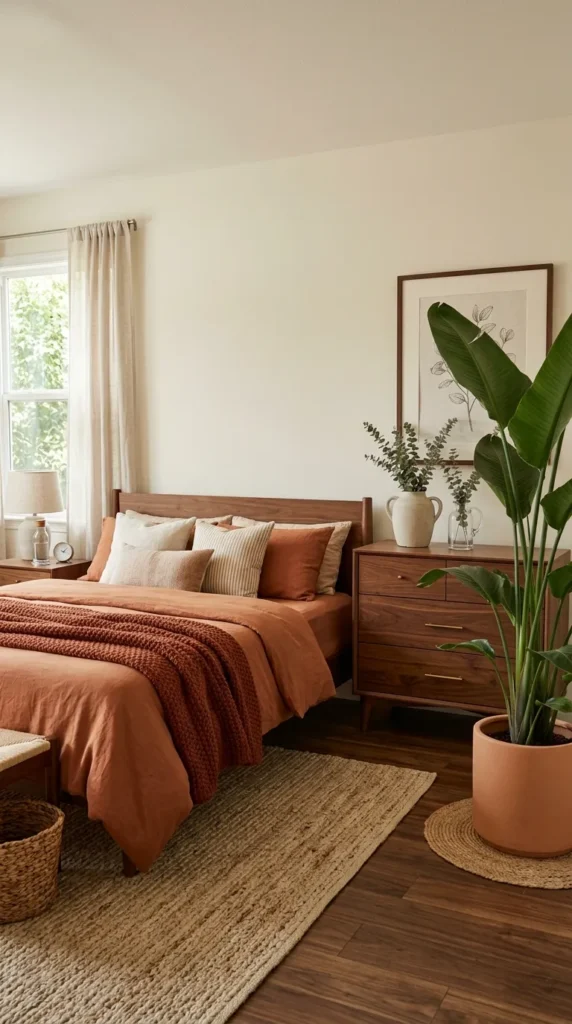
Greenery, whether real plants or botanical artwork, brings a natural contrast to a burnt orange bedroom and keeps the palette from feeling entirely warm toned. A trailing plant on a dresser or a large leafy plant in the corner adds life and a different shade of color to break up the room.
Cluster a few plants of different heights together rather than spreading single pots evenly around the room, since a grouped arrangement tends to look more deliberate and considered.
17. Use a Burnt Orange Ottoman or Bench
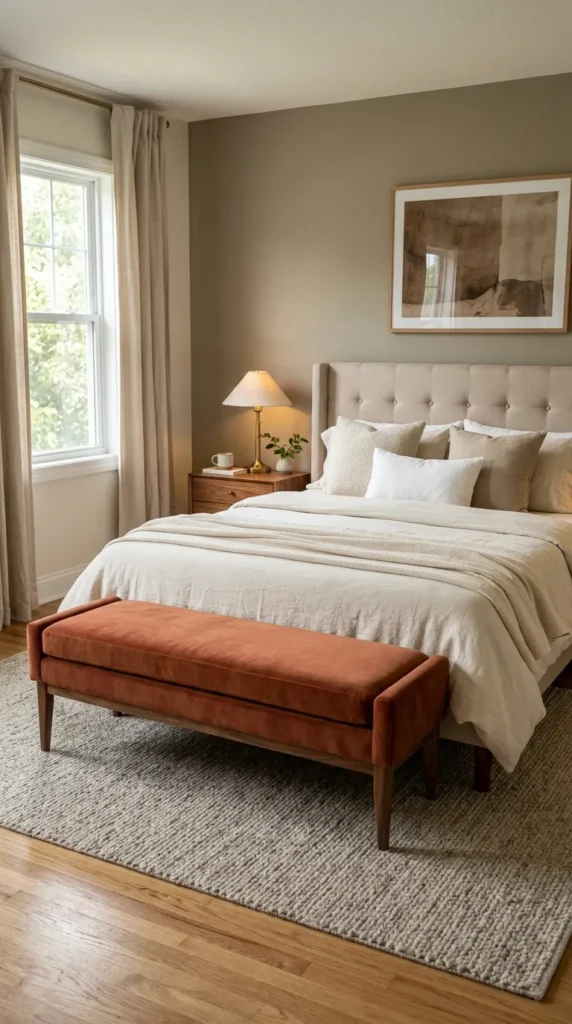
A bench or ottoman in burnt orange velvet or leather at the foot of the bed fills space that can otherwise feel empty, while adding color at a lower, grounding point in the room. It also gives the bed a finished, styled look without requiring a full headboard change.
If the bed and walls are already fairly neutral, this single piece can carry the entire color story for the room, keeping the overall commitment to burnt orange relatively low while still making a clear statement.
18. Add a Gallery Wall With Warm Tones
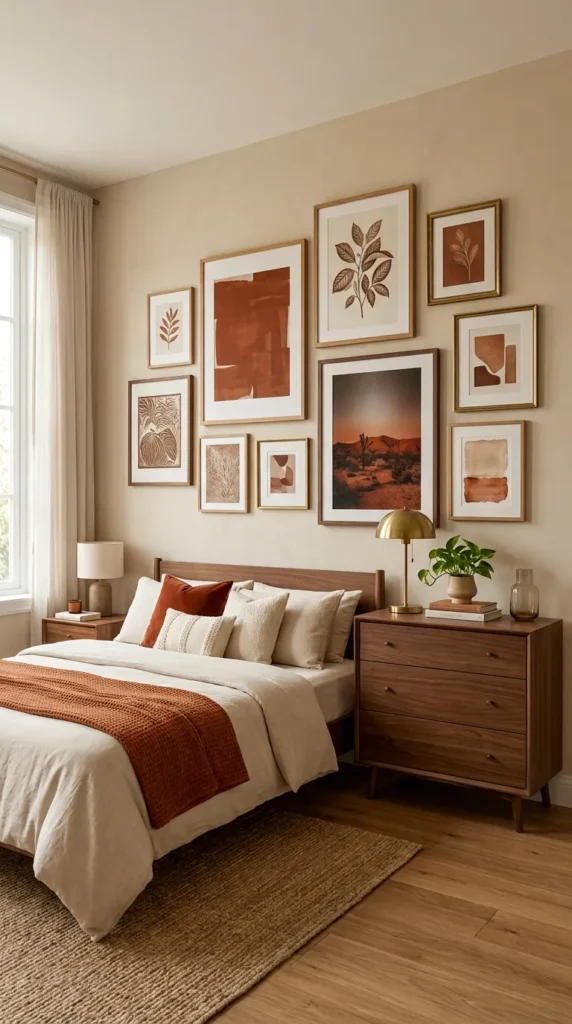
A gallery wall mixing photographs, botanical prints, and abstract art in warm, earthy tones reinforces the burnt orange palette without requiring every piece to match exactly. Repeating small amounts of rust, cream, or brown throughout the frames ties the wall together.
Position the gallery wall above a headboard or dresser rather than scattering pieces around the room, so it reads as one considered grouping instead of several unrelated decisions.
19. Use Burnt Orange in a Small Bedroom
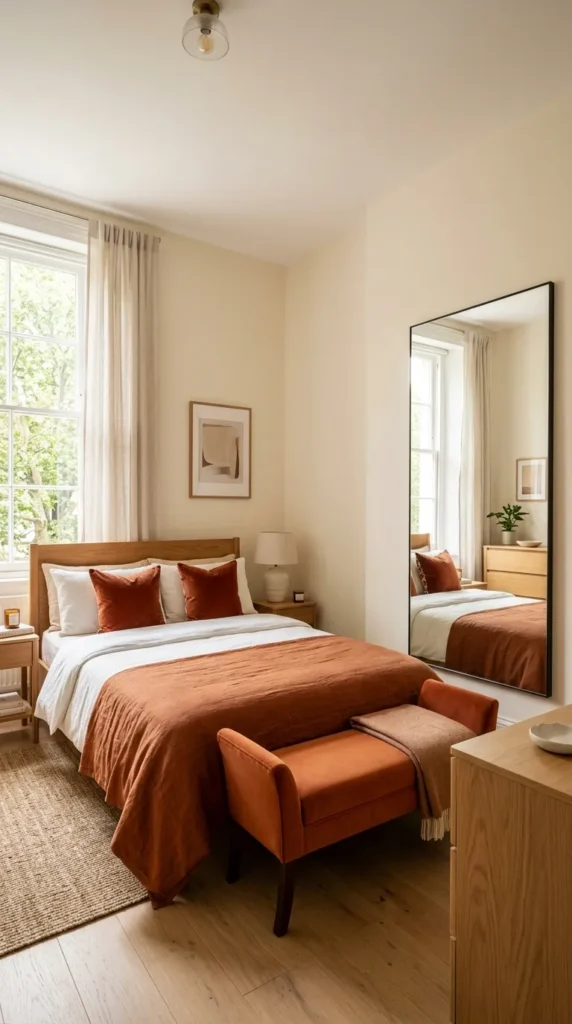
A smaller bedroom can still handle burnt orange, provided it’s introduced in a controlled way. Rather than painting every wall, use the color through bedding, a single chair, or curtains, and keep the rest of the room in warm neutrals to avoid the space feeling closed in.
A mirror opposite the window helps reflect light and keeps a smaller, warmer toned room from feeling too enclosed, especially if the walls themselves stay a lighter shade.
20. Add a Burnt Orange Table Lamp
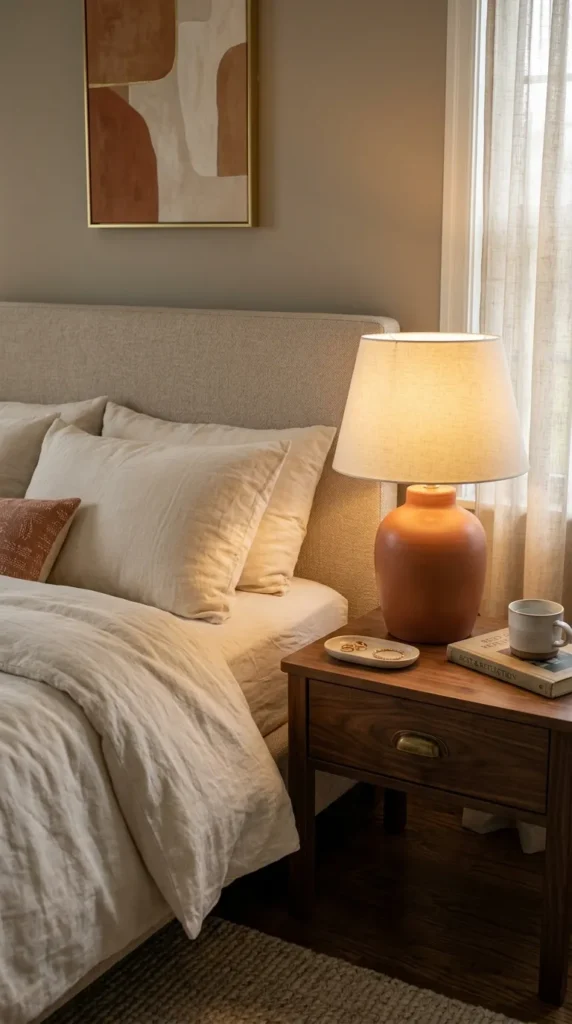
A ceramic or glass lamp base in burnt orange on a nightstand introduces color right where the eye lands most often in the evening, while also contributing to the room’s warm, layered lighting. The lamp becomes a small sculptural object rather than just a light source.
Pair it with a cream or warm white shade rather than a stark white one, so the light itself feels golden and consistent with the rest of the room’s warm tone.
21. Mix in Mustard as a Secondary Accent
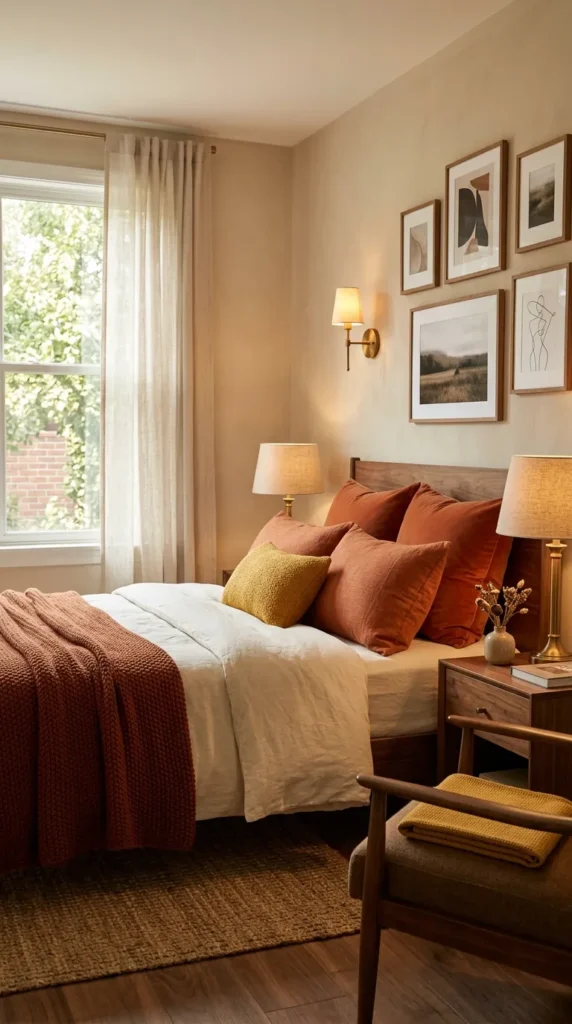
Mustard sits close enough to burnt orange on the color wheel to feel related rather than competing, and a small amount used sparingly, a single pillow or a folded throw, adds another layer of warmth without introducing a truly different palette.
Keep mustard to an accent role only. Too much of it alongside burnt orange can start to blur into a single, overwhelming block of warm color rather than reading as two distinct, complementary tones.
22. Choose Burnt Orange Bedding With a Subtle Pattern
Instead of a solid burnt orange duvet, a subtle pattern, a fine stripe, a small floral, or a woven texture worked into the fabric, adds visual interest while keeping the overall color story intact. This works well in a bedroom that already has a fair amount of solid color elsewhere.
Keep the pattern scale small to medium so it reads as texture rather than competing for attention with any other patterned element already in the room, such as a rug or curtains.
23. Add a Burnt Orange Vanity Chair or Stool
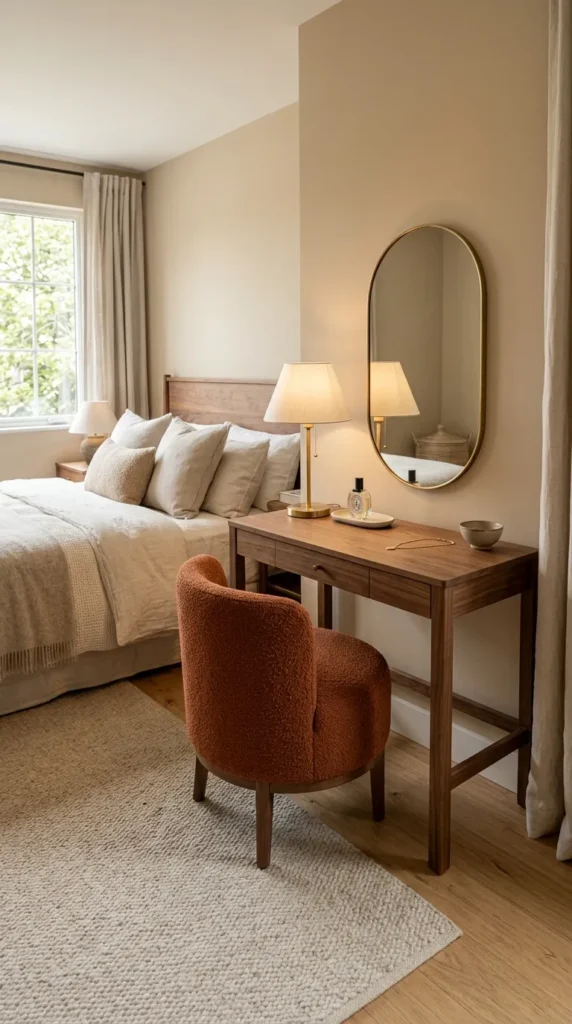
If your bedroom includes a vanity or dressing table, a small burnt orange stool or chair tucked underneath adds a pop of color in a functional corner of the room. It’s a low commitment way to bring the palette into a space that might otherwise stay entirely neutral.
A velvet or bouclé cushion on the stool adds texture as well as color, making the corner feel considered rather than like an afterthought squeezed in among the vanity’s other furniture.
24. Use Warm Neutral Bedding With Burnt Orange Accents Only
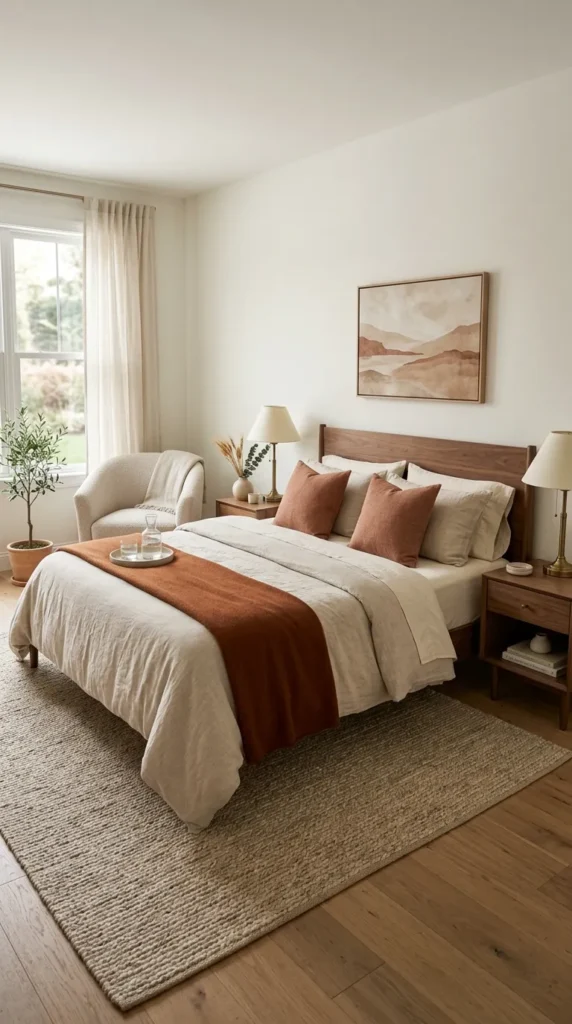
For a more restrained approach, keep the bedding itself in warm cream, oatmeal, or beige, and introduce burnt orange only through a few smaller accessories, a throw, a couple of pillows, or artwork nearby. This keeps the room flexible if your taste shifts over time.
This approach also makes the color easier to swap seasonally, since it’s contained to a handful of smaller, less expensive pieces rather than built into the bed itself or the walls.
25. Add Black Accents for Contrast
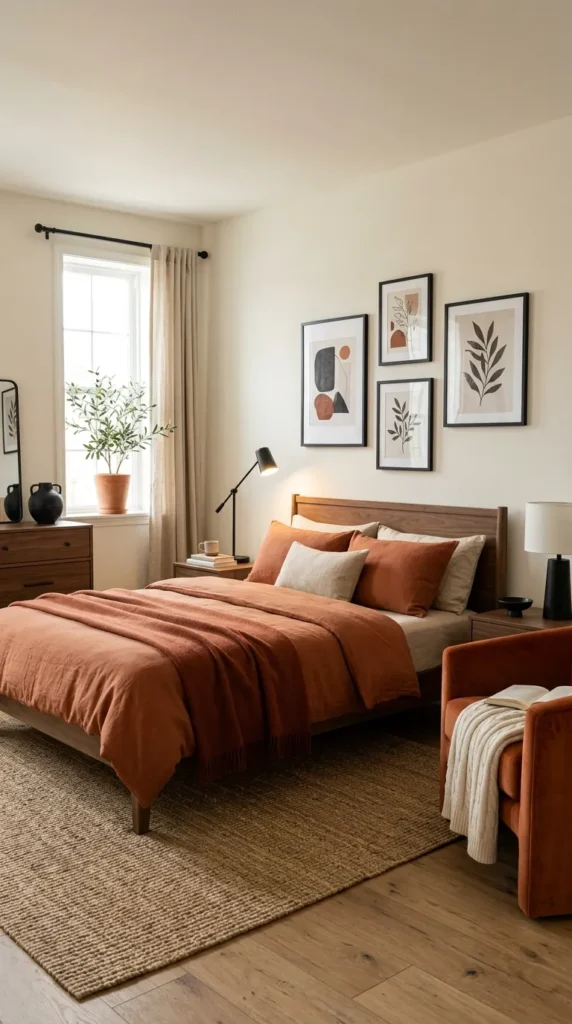
A touch of black, whether through a picture frame, a metal lamp base, or window frames, sharpens up a burnt orange bedroom and keeps it from feeling entirely soft and warm. Black acts as a small, grounding punctuation mark against all the warmth elsewhere in the room.
Keep black to smaller fixtures and hardware rather than large furniture pieces, unless you’re deliberately going for a bolder, more contemporary look throughout the rest of the room.
26. Balance the Room With a Lighter Neutral
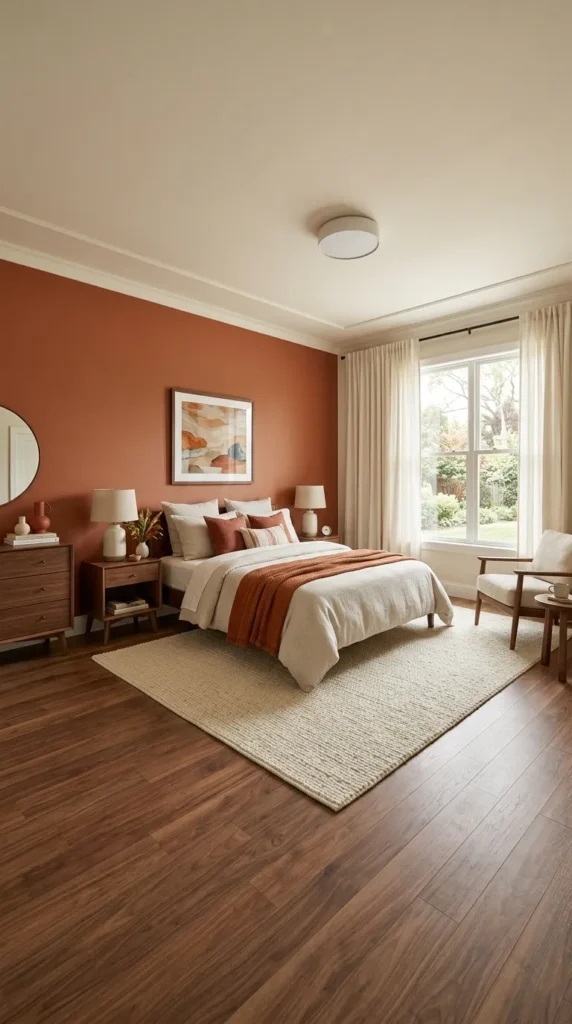
A bedroom built entirely around burnt orange, without any lighter element to offset it, can start to feel heavy, particularly in a room with limited natural light. A cream rug, a pale ceiling, or ivory curtains gives the eye somewhere to rest and keeps the space feeling open.
This balancing element doesn’t need to be large. Even one piece, a light colored bench cushion or a pale drapery lining, is often enough to keep the overall scheme feeling warm and cozy rather than overwhelming.
Final Thoughts
A burnt orange bedroom works best when the color is balanced deliberately, warm and grounding on its own, but layered with wood, texture, and a few contrasting tones so the room never feels one dimensional. The result is a space that feels genuinely cozy rather than simply loud.
Start with the largest decisions, the walls and the bed, before layering in smaller accents through textiles, lighting, and accessories, and keep any additional colors used sparingly once the burnt orange palette is established. A bedroom built this way delivers the warm, inviting feeling this color promises without ever tipping into something that feels overwhelming.