15 Master Bedroom Ideas for a Dreamy Escape
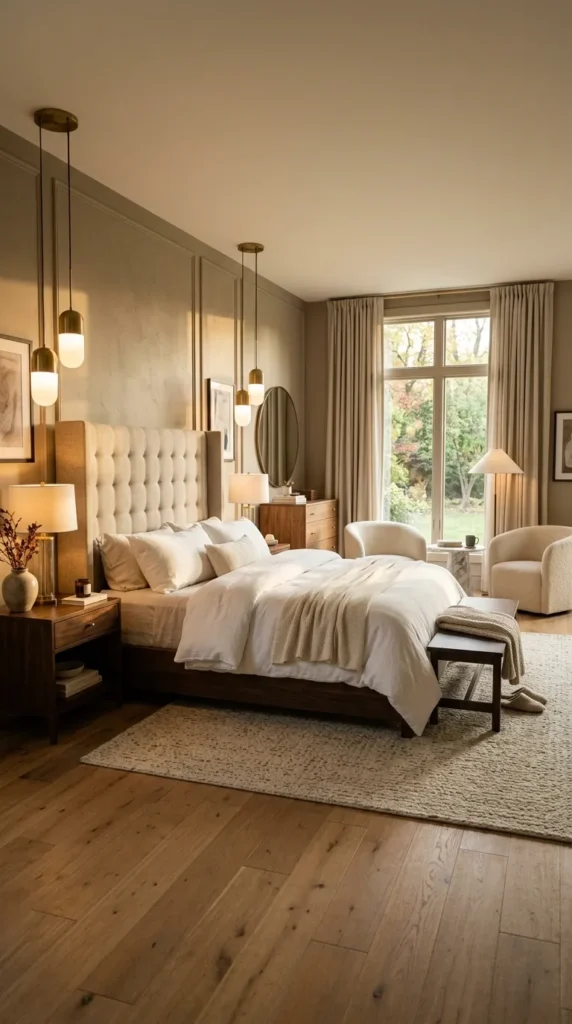
The master bedroom is the room in the home that most consistently receives the least design attention relative to its importance in the daily life of the people who inhabit it, and this inversion of priority the guest bedroom wallpapered, the living room carefully furnished and lit, the kitchen renovated to a high standard while the master bedroom makes do with whatever was there when the previous occupants left is one of the most common and most quietly consequential mistakes that homeowners make. The room where the day begins and ends, where the transition between the demands of the world outside and the restoration of sleep happens, where the quality of the environment has a direct and measurable effect on the quality of rest and therefore on the quality of everything else this room, of all rooms, deserves the most thoughtful and the most personal design attention available. The master bedroom that has been genuinely designed not decorated as an afterthought once the rest of the house is complete, but thought about carefully, invested in deliberately, and built around the specific needs and the specific sensibility of the people who sleep in it creates a quality of daily life improvement that compounds invisibly but persistently across every morning and every evening for as long as the room exists in its designed form.
What distinguishes a master bedroom that functions as a genuine private retreat from one that merely contains a bed and adequate storage is not the size of the room or the budget available to furnish it it is the quality of the design thinking applied to the three elements that matter most in any bedroom: the atmosphere created by the combination of light, color, and texture; the physical comfort provided by the bed, the bedding, and the thermal quality of the room; and the organizational clarity of the storage that allows the room to remain calm and ordered rather than accumulating the visual chaos of daily life that undermines the restfulness of any sleeping environment regardless of how beautifully it has been designed. These fifteen master bedroom ideas address every dimension of creating a room that genuinely deserves the name retreat a room that its occupants enter at the end of the day with genuine pleasure and leave each morning feeling genuinely restored.
1. A Hotel-Inspired Master Bedroom for Daily Luxury
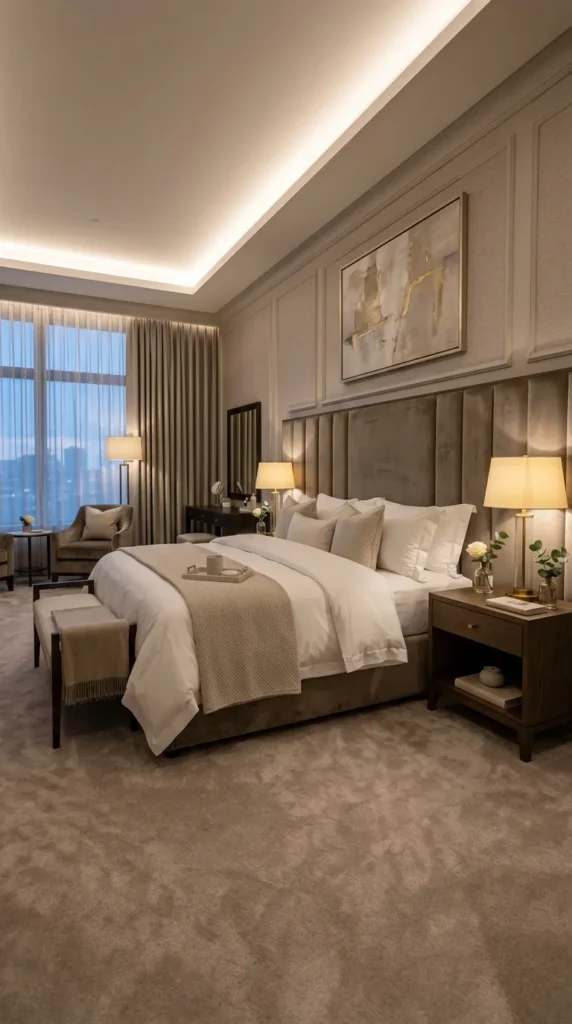
The hotel bedroom specifically the bedroom of a genuinely good hotel rather than a generic one has become the aspirational reference point for master bedroom design for a reason that has nothing to do with the hotel’s brand and everything to do with what the hotel’s designers understood about what a sleeping environment needs to provide: absolute visual calm achieved through rigorous simplicity, bedding of such quality that its physical presence is felt rather than merely seen, lighting so carefully considered that every activity from reading to dressing to the transition into sleep is served with exactly the right quality and quantity of light, and a quality of material throughout the carpet underfoot, the curtain fabric, the furniture’s timber that communicates investment without ostentation. The hotel bedroom creates luxury not through abundance of decoration but through quality of restraint every element present is of genuine quality, and nothing is present that does not contribute something essential to the room’s function or its atmosphere.
Translating the hotel bedroom philosophy into a master bedroom requires beginning with the subtraction of whatever is currently in the room that fails the test of genuine quality or genuine necessity, rather than with the addition of new elements the hotel bedroom’s most powerful quality is its editing, its refusal to accommodate anything that does not belong. A master bedroom that has been honestly edited whose surfaces are clear of the accumulated objects of daily life, whose walls are not covered in a mixture of unrelated decorative gestures, whose furniture each serves its function with quality and visual restraint is already most of the way to the hotel bedroom’s quality of serene, daily luxury. Add to this edited room bedding of genuine quality in a simple white or cream palette, curtains of sufficient weight and fullness to create complete darkness for sleeping, a bedside lamp on each side of the bed that provides focused reading light with a warm bulb in the 2700K range, and the hotel bedroom’s essential character is achieved. The refinements the upholstered bed frame, the quality of the carpet underfoot, the specific material of the bedside tables are matters of personal taste and budget that improve the result without being prerequisite to it.
2. A Dark, Moody Master Bedroom for Atmospheric Intimacy
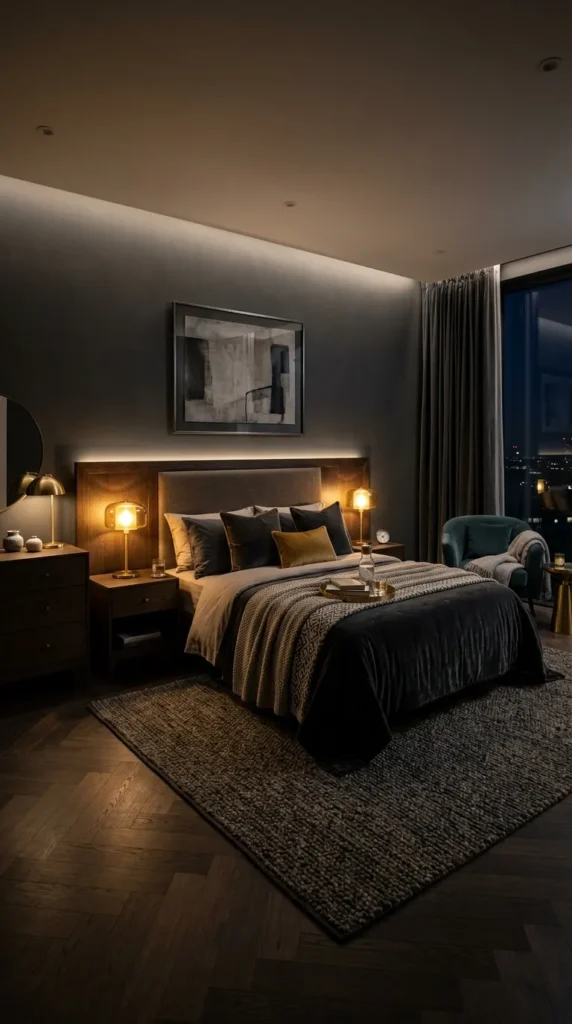
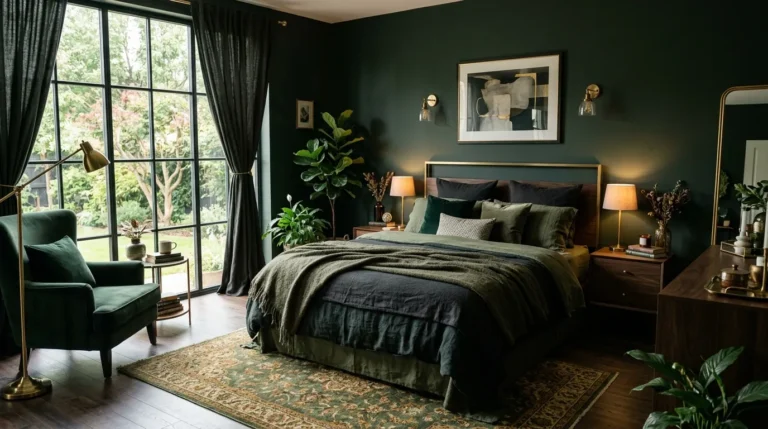
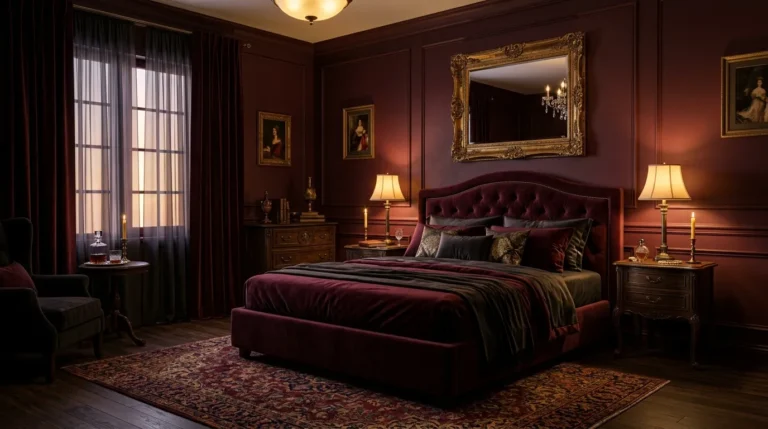
The dark master bedroom walls in deep navy, forest green, charcoal, plum, or near-black creates an atmosphere of enveloping intimacy and nocturnal beauty that the pale, light-maximizing bedroom philosophy that dominates most contemporary bedroom design cannot achieve by definition, because the atmosphere of a dark bedroom is specifically the atmosphere of enclosure, of being held within the room rather than exposed within it, of the room creating its own quality of warmth and depth rather than borrowing these qualities from the natural light that light walls merely reflect. The dark bedroom at its best layered with warm lamplight, furnished with materials of genuine quality, dressed with bedding of luxurious simplicity creates an environment of such concentrated, focused comfort that entering it at the end of the day feels like arriving at the room’s own specific quality of peace rather than simply at the absence of activity. It is the bedroom that takes its function as a sleeping and resting environment most seriously and expresses that seriousness through the most direct possible visual means: making the room genuinely dark, genuinely enclosed, genuinely separate from the bright, demanding world outside it.
The master bedroom that succeeds in a dark palette is the one whose approach to lighting compensates most completely for the walls’ absorption of natural light because dark walls absorb rather than reflect light, the artificial lighting in a dark bedroom must be more generous, more layered, and more carefully positioned than the lighting in a pale bedroom where walls distribute the light naturally. A minimum of four individual light sources at varying heights creates the layered warmth that prevents a dark bedroom from feeling oppressive: a pendant or ceiling fixture for general orientation light, bedside lamps for reading light and bedside atmosphere, a floor lamp for ambient fill in the corner or beside the reading chair if the room contains one, and accent lighting behind shelving or beneath a floating bedside unit for the final layer of warmth at the lowest level. All light sources in a dark bedroom should use the warmest available bulbs 2700K or lower because the contrast between the dark walls and the light sources is the room’s primary visual composition, and warm light against dark walls creates a quality of golden, intimate warmth that cool light against dark walls cannot approach.
3. A Master Bedroom With a Dedicated Reading Corner
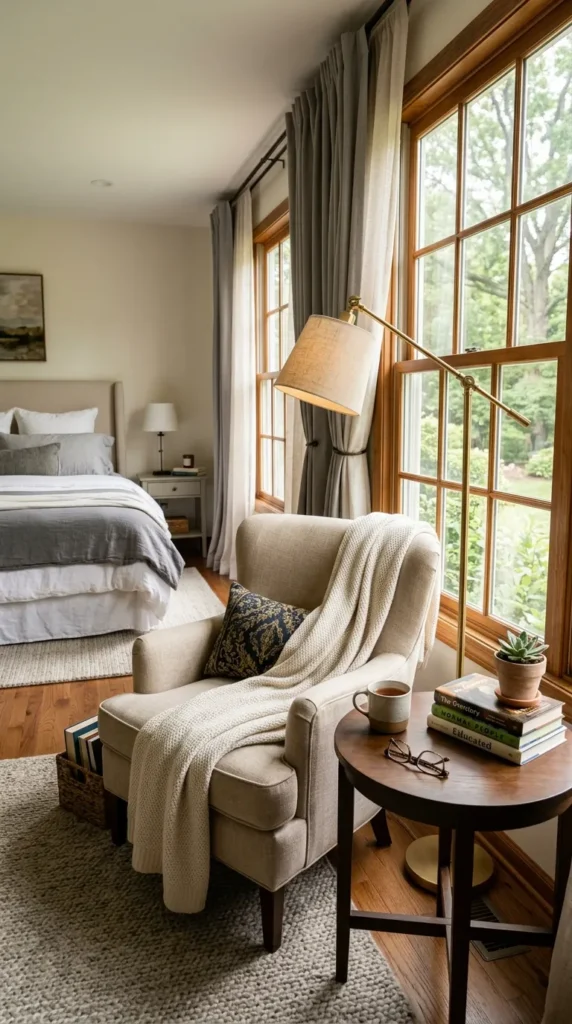
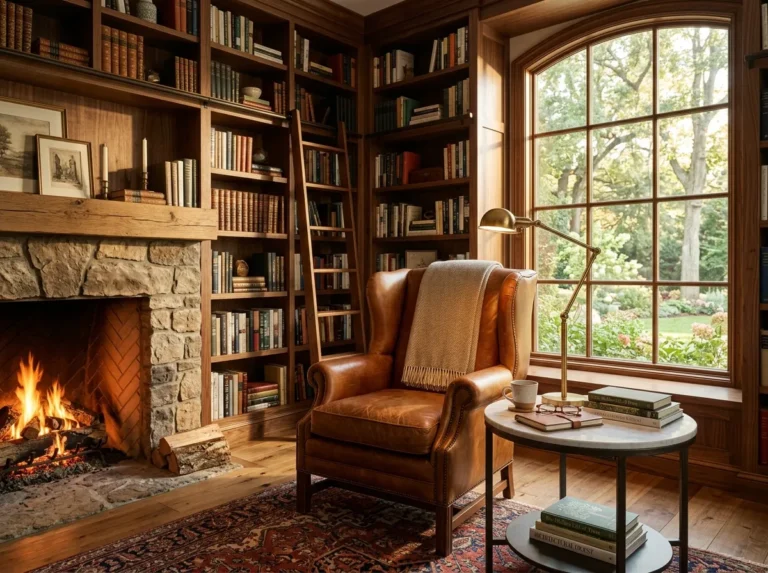
The master bedroom that contains a dedicated reading corner a specific area of the room set apart from the sleeping zone by its furniture, its lighting, and its clearly distinct purpose creates a bedroom of dual character and dual function that suits the reality of how most bedrooms are used more honestly than the bedroom designed purely for sleeping. The reading corner is the bedroom’s daytime territory the place where a cup of tea is taken in the morning before the day’s obligations begin, where the evening’s last half hour of reading happens in a comfortable chair rather than in the slightly awkward semi-reclined position that reading in bed eventually creates, and where the bedroom becomes a genuinely inhabitable room rather than simply a place of departure and return. A bedroom with a reading corner is a room that its occupants choose to spend time in during waking hours rather than retreating to only when sleep requires it, which changes the room’s relationship to daily life from a necessary facility to a genuine sanctuary.
The reading corner that works best in a master bedroom is one whose elements are chosen with the same specificity and the same quality as the sleeping zone’s elements an armchair of genuine comfort and genuine material beauty rather than a chair that was placed in the corner because it had no other home, a floor lamp or a swing-arm wall sconce that provides exactly the quality of warm, directed light that comfortable extended reading requires, a small side table at arm height that holds the current book, the reading glasses, the cup of tea, and the few objects that belong to this specific territory of the room. The chair’s fabric should relate to the bedroom’s textile palette a velvet in a coordinating deep tone, a boucle in a warm neutral, a patterned fabric that references the curtain or the bedding so that the reading corner reads as designed within the room’s overall composition rather than furnished independently of it. Position the reading corner to receive natural light from the window during daylight reading hours while remaining visually connected to the rest of the bedroom rather than tucked into a corner so private that it feels separated from the room it belongs to.
Create a luxurious retreat with inspiration from 12 Luxurious Dark Gray Bedroom Ideas for elegant bedroom styling.
4. A Master Bedroom Built Around the Bed as Furniture
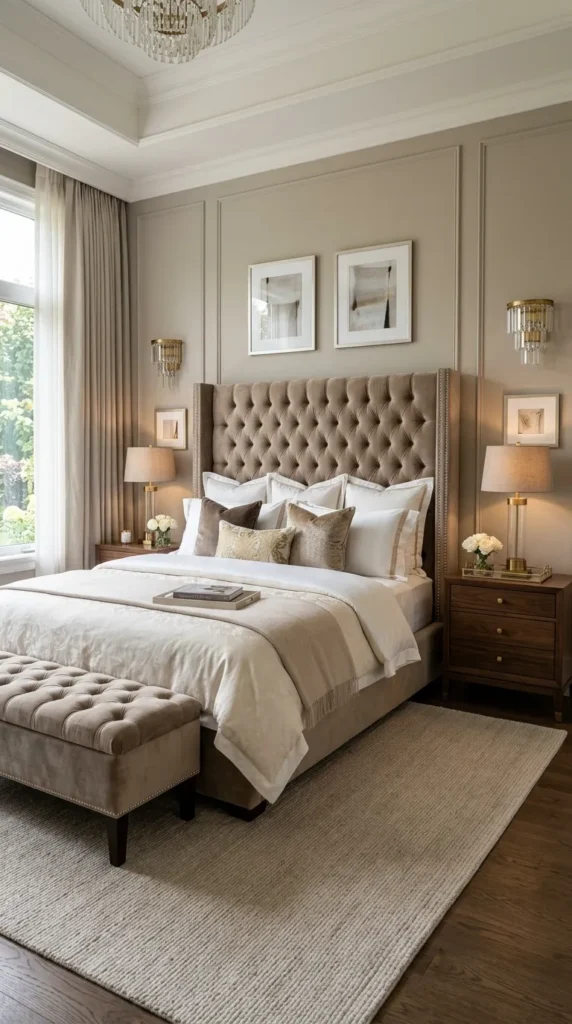
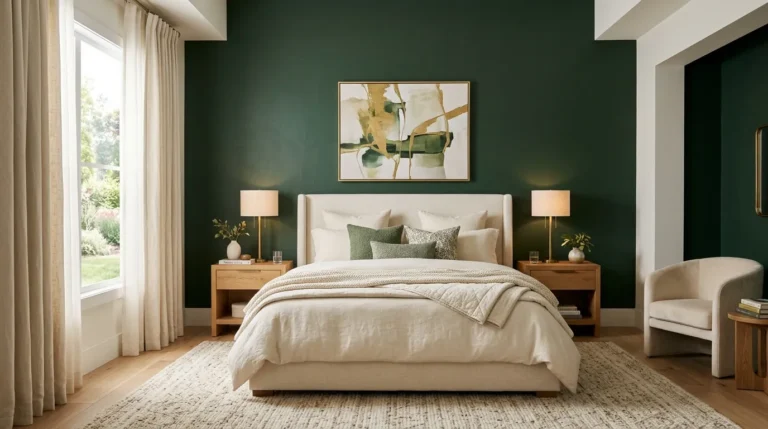
The bed is the master bedroom’s primary piece of furniture in every sense it occupies more floor space than any other single element, it is the first thing the eye finds when entering the room, it determines the positions of the bedside tables and the lamps and the furniture on the room’s opposite wall, and its visual character the height of its headboard, the color and texture of its upholstery or timber, the quality and simplicity or complexity of its frame determines the room’s overall design direction more completely than any other single decision. The master bedroom built around a genuinely significant bed one chosen for the quality of its construction and the beauty of its form rather than for its adequacy as a sleeping platform creates a room whose primary focal point is a piece of furniture of genuine design authority, and whose remaining decisions the wall color, the bedside tables, the curtain fabric, the lighting are made in explicit service of the bed’s character rather than independently of it.
The bed frame that creates the most powerful master bedroom focal point is one whose headboard is both tall enough and wide enough to read as a significant architectural element in the room’s composition a headboard that reaches to or near the ceiling in rooms with generous ceiling height, or that extends across the full width of the bed and beyond in rooms with lower ceilings where the headboard’s height must be limited, creates a bed whose presence in the room is genuinely commanding rather than merely adequate. An upholstered headboard in a quality fabric a deep velvet, a refined bouclé, a textured linen in a carefully chosen color creates a bed of material richness and visual warmth that a timber or metal headboard of equivalent scale cannot quite replicate, because the fabric’s softness and its light-absorbing quality create a backdrop of genuine comfort behind the sleeping position rather than the harder, more reflective surface that non-upholstered headboards provide. The bed’s base whether a platform, a divan, a sleigh form, or a four-poster should be chosen with the ceiling height and the room’s proportions explicitly in mind, because a bed whose form is correctly scaled to the room’s specific dimensions creates a composition of natural rightness while a bed whose proportions suit a different room creates a discomfort the eye registers without always being able to name.
5. A Master Bedroom With a Spa-Inspired Ensuite Connection
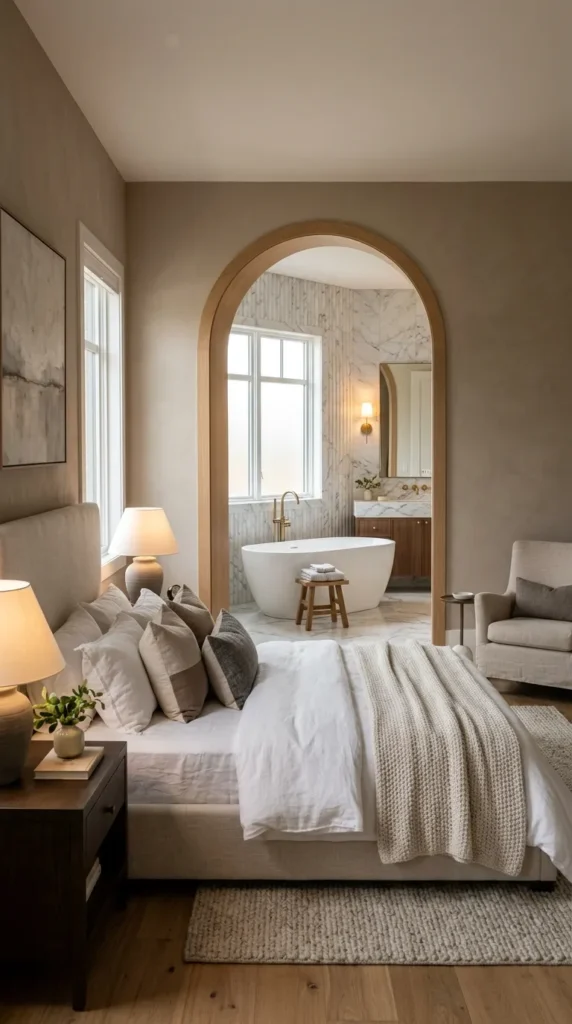
The master bedroom whose spatial organization creates a deliberate, designed connection between the sleeping zone and an ensuite bathroom through an open doorway framed with architectural detail, through a wet room whose glass wall allows visual connection between bath and bed, through a dressing room or wardrobe corridor that serves as a transitional zone between the two spaces creates a suite of private rooms rather than a single bedroom, and the quality of daily life within a suite is fundamentally different from the quality of daily life within a single room because the transition between sleeping, bathing, and dressing happens within a continuous, designed private territory rather than requiring departure from one room and arrival in another. The bedroom-to-bathroom connection also allows design decisions made in one space to influence and enhance the other the palette chosen for the bedroom informing the bathroom’s tile selection, the material of the bedroom’s furniture appearing again in the bathroom’s vanity, the lighting philosophy of the sleeping zone extending into the bathing zone with the same warm, layered approach.
The transition between a master bedroom and its ensuite is the design detail that most clearly communicates the quality of thought applied to the private suite as a whole, and the options for this transition range from the purely functional a standard door in a standard frame to the architecturally significant a wide, frameless opening whose proportions invite visual connection between the two spaces, a pocket door that disappears entirely when the spaces are used as a continuous whole, a glazed wall or partial wall that allows light from the bathroom’s window to enter the bedroom while maintaining the visual connection between the two zones. The most beautiful master bedroom and ensuite connections are those that treat the threshold between the two spaces as an architectural event rather than a practical necessity a moment of transition whose design creates the sense of moving between two related but distinct environments rather than simply passing from one room into another.
6. A Neutral Master Bedroom That Relies on Texture for Richness
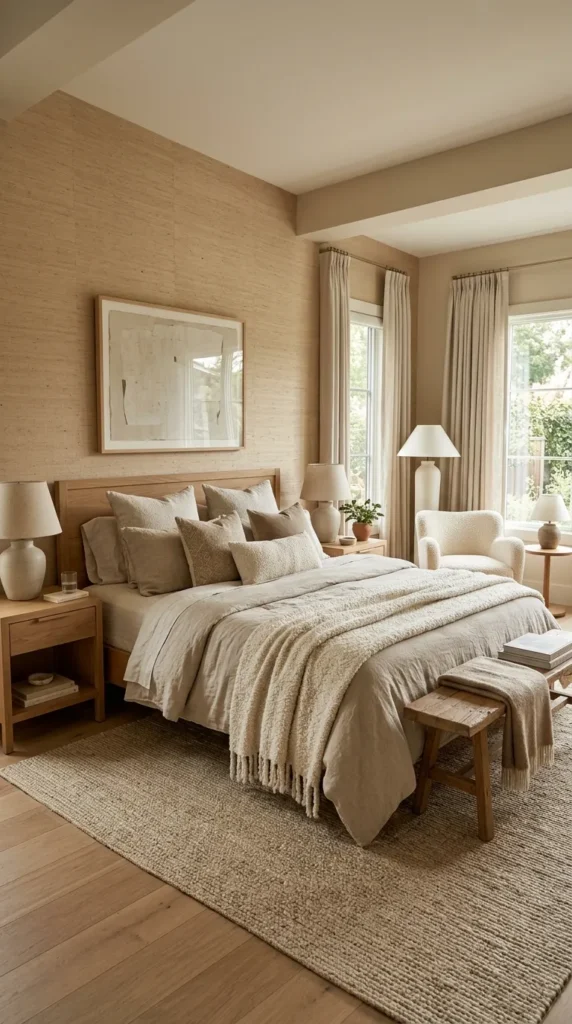
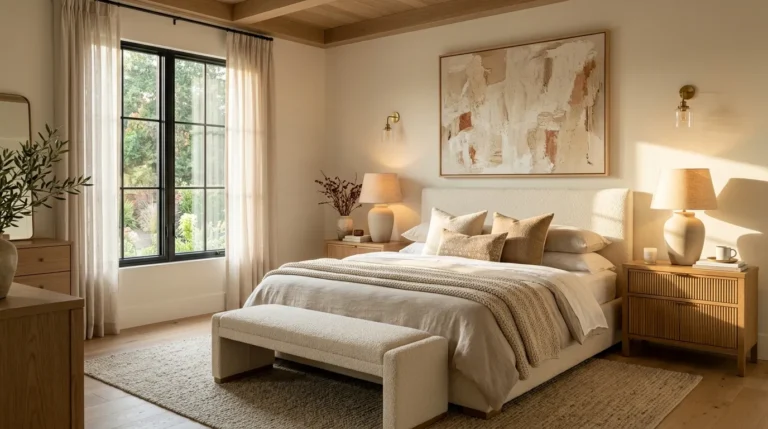
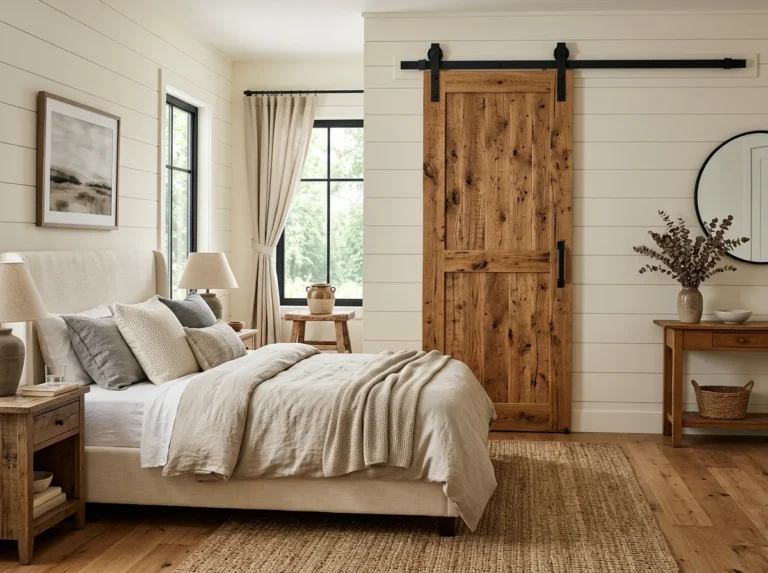
The neutral master bedroom a bedroom whose palette is entirely composed of whites, creams, warm greys, natural linens, and the other colors that sit in the non-committal zone between warm and cool, between presence and absence is the most misunderstood bedroom configuration in contemporary interior design, because its neutrality is consistently mistaken for blandness by those who have not seen a genuinely well-executed example of the genre and misunderstood as safe or lacking courage by those who confuse color with design ambition. The neutral bedroom done with genuine skill and genuine material investment is among the most beautiful and most restful bedroom environments available, because its restraint in color is compensated by extraordinary richness in texture the specific weight and weave of the linen bedding, the particular nap of the bouclé throw, the grain of the timber bedside table, the texture of the grasscloth wallpaper, the pile depth of the wool rug — and this textural richness creates a room of sensory depth and material complexity that colorful bedrooms, for all their visual impact, often lack because their color does so much work that the material beneath it receives less attention.
The neutral bedroom that achieves genuine richness through texture requires not merely the presence of multiple textures but the presence of textures of genuine quality in each material category linen bedding rather than cotton-polyester blend, a wool or silk rug rather than a synthetic fiber, a timber bedside table in a species with visible, interesting grain rather than a painted or laminated surface, a headboard in a natural woven fabric rather than a smooth manufactured material. The quality of each material is felt and seen most clearly in a room that has removed the distraction of color, and the neutral bedroom therefore makes the strongest possible argument for material quality because its restraint creates the conditions in which material quality is the room’s primary visual and sensory content. Layer the neutral palette through varying tones within the neutral range white bedding against a cream headboard against a warm greige wall against natural timber flooring so that the room has tonal depth and visual movement despite the absence of color, and the result will be a bedroom of quiet, profound beauty that improves the quality of every hour spent within it.
7. A Master Bedroom With Bespoke Built-In Storage
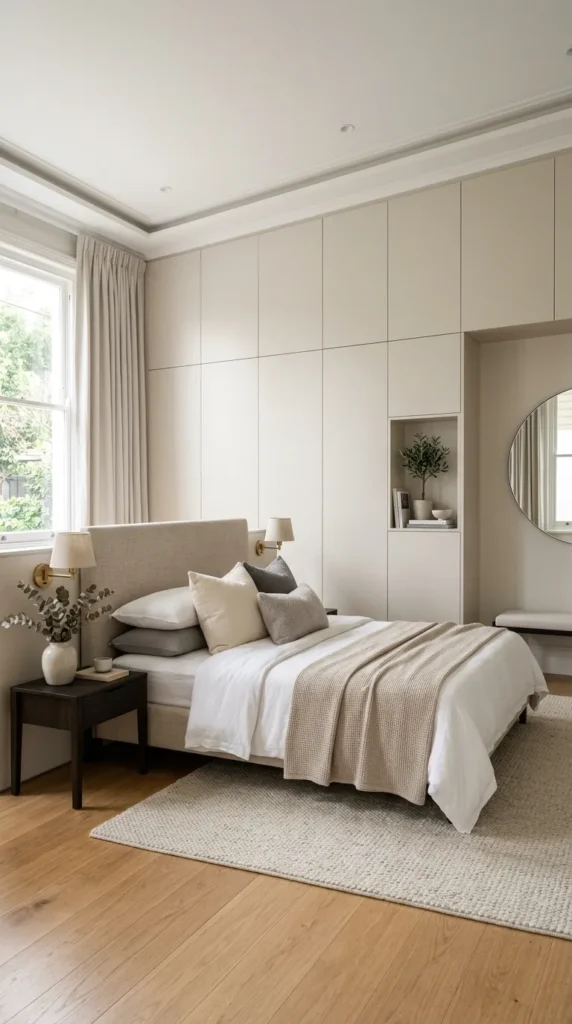
The master bedroom that contains well-designed built-in storage wardrobes and cabinetry designed and made specifically for the room’s dimensions, the occupants’ specific storage requirements, and the room’s aesthetic direction achieves a quality of spatial calm and organizational clarity that no freestanding furniture can replicate, because built-in storage eliminates the visual complexity of individual pieces of storage furniture competing for attention and replaces it with a single designed wall of storage whose calm, unified surface contributes to the room’s restful atmosphere rather than interrupting it. The wardrobe that is built into the room’s architecture flush with the walls, extending from floor to ceiling, its doors in a material that coordinates with the room’s palette disappears into the room rather than occupying visual space within it, and the bedroom that contains this kind of integrated storage feels larger, calmer, and more generous than the same bedroom furnished with freestanding wardrobes of equivalent capacity.
The design of bespoke bedroom storage should begin with a thorough and honest audit of what the storage must contain every category of clothing, every type of accessory, the specific quantity of hanging space and folded storage and shoe storage and drawer space that the room’s occupants actually require before any aesthetic decisions are made, because built-in storage that looks beautiful but fails to accommodate the specific storage requirements of its occupants is a design failure regardless of the quality of its cabinetry. The internal organization of the wardrobes the proportion of hanging rail to shelf space, the depth of drawers, the presence or absence of a built-in dressing area should be planned as specifically as the external appearance, using the actual dimensions of the clothing it will store rather than standard proportions that suit an average user rather than the specific person the storage is designed to serve. External door style shaker panel, flat slab, routed groove, integrated handle or push-open mechanism should be chosen in explicit relation to the room’s overall aesthetic direction so that the storage cabinetry reads as designed within the room rather than inserted into it from a different design context.
8. A Master Bedroom With Considered Curtains and Window Treatments
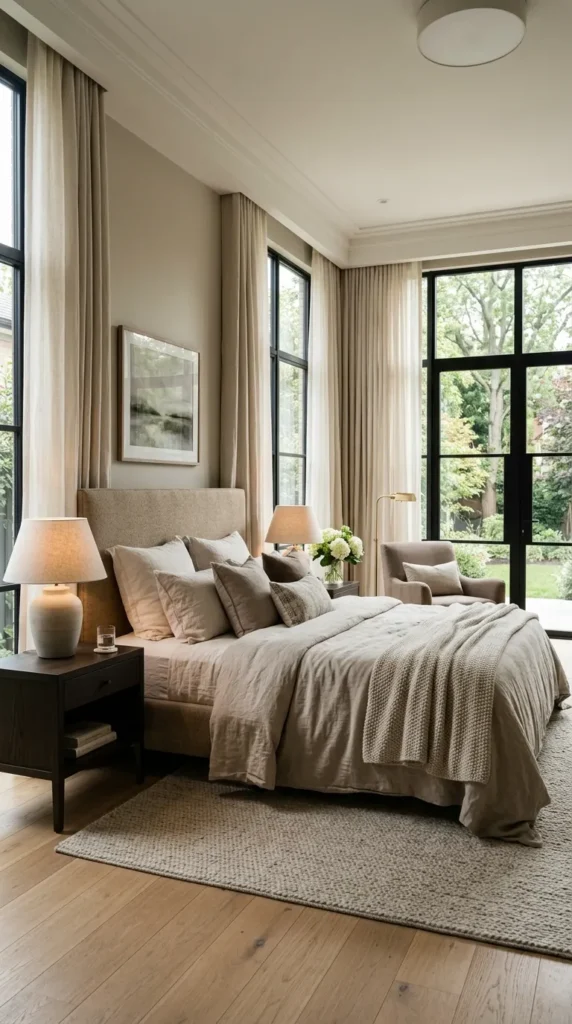
The curtains in a master bedroom perform a set of functions that no other bedroom element shares and that make them one of the room’s most consequential design decisions despite the fact that they spend most of their time in a position drawn back from the window where their decorative qualities are visible but their functional qualities are entirely irrelevant. The functions that bedroom curtains must perform include complete light exclusion for sleeping which requires a fabric of sufficient weight and opacity, or a blackout lining, to prevent the earliest summer dawn light from penetrating the room at five in the morning thermal insulation that prevents the cold of a winter window from creating a chill in the room during the night, acoustic softening that reduces the transmission of external noise through the window into the sleeping environment, and the decorative function of contributing a generous quantity of beautiful fabric to the room’s visual composition from a position the window that is the room’s primary source of natural light and therefore one of its most visually significant architectural features.
The specific decisions that master bedroom curtains require fabric weight and opacity, heading style, length relative to the floor, color and pattern, the presence or absence of a blackout lining, the choice between curtain pole and track each affect the curtains’ performance in ways that are felt in the quality of sleep and the quality of daily life in the room rather than simply in the room’s appearance. Floor-length curtains that pool slightly on the floor create a quality of generous, luxurious fabric fullness that accurately hung curtains whose hems hover precisely at the floor’s surface cannot achieve the slight puddling of fabric at the floor’s edge communicates abundance and deliberate excess in a way that suits the master bedroom’s aspiration toward genuine luxury. A blackout lining behind a beautiful fabric allows the curtain to perform its essential light-exclusion function without compromising the fabric choice to the practical requirement of opacity any beautiful sheer or lightweight fabric can be used for bedroom curtains with a blackout lining, expanding the curtain’s aesthetic possibilities to the full range of available fabrics rather than limiting it to the opaque.
9. A Symmetrical Master Bedroom for Visual Calm
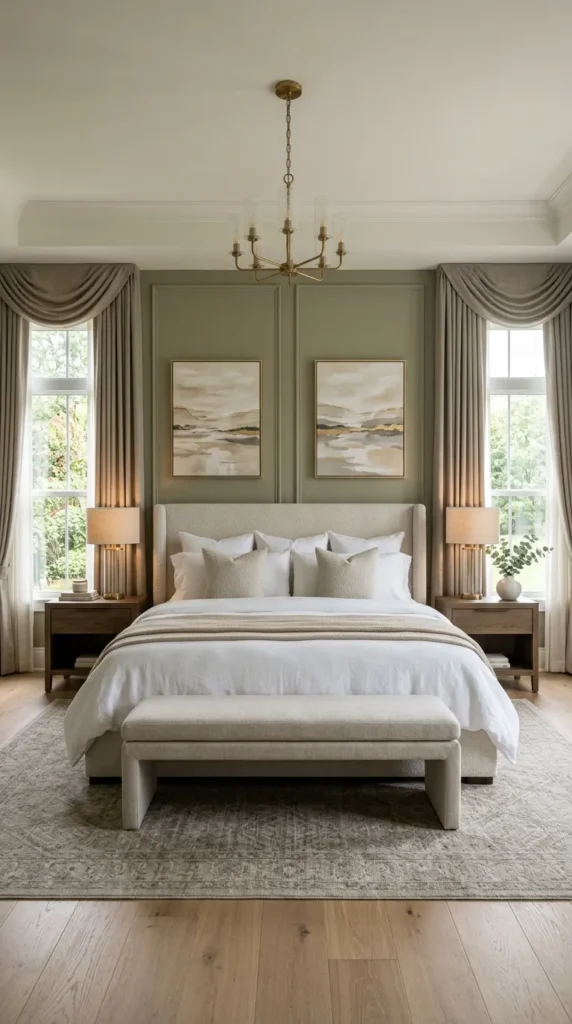
The symmetrical master bedroom where the bed is centered on the room’s primary wall with matching bedside tables, matching lamps, and matching storage or mirror arrangements on each side creates a visual order and a quality of balanced calm that asymmetrical bedroom arrangements cannot replicate with the same ease or the same immediacy. Symmetry is the design principle that the human brain processes most rapidly as organized and resolved, which means that a symmetrical bedroom creates its impression of calm and order faster and more completely than an asymmetrical one whose elements may be individually beautiful but whose arrangement requires more cognitive processing to read as balanced. The practical implication of this for a master bedroom a room whose primary function is to facilitate the transition into the least cognitively demanding state available to the human mind, which is sleep is significant: a room that creates an impression of visual order rapidly and effortlessly creates the conditions for relaxation more effectively than one whose visual complexity, however beautiful, maintains a level of cognitive engagement that works against the unwinding the bedroom is designed to facilitate.
The elements that create the most effective bedroom symmetry are those positioned at the room’s primary viewing angles the view from the doorway, the view from the foot of the bed and the most important of these is the relationship between the bed and its immediate surroundings. A bed centered on the headboard wall, flanked by bedside tables of identical height and depth, bearing lamps of identical design and height, with the same object or the same number of objects at identical positions on each surface, creates a composition of visual completeness that reads as designed and resolved from the moment of entry into the room. The walls above the bedside tables can reinforce the symmetry matching artwork, a pair of sconces, two small mirrors of identical size and frame or can provide a single centered element above the bed that the symmetry of the elements below anchors rather than duplicates. True symmetry is not required for the calm that symmetry provides approximate symmetry, where the elements on each side of the bed are close in height, size, and visual weight without being identical, creates most of the same visual calm with more room for individual expression in the specific objects chosen.
10. A Master Bedroom With an Upholstered Bed and Coordinating Textiles
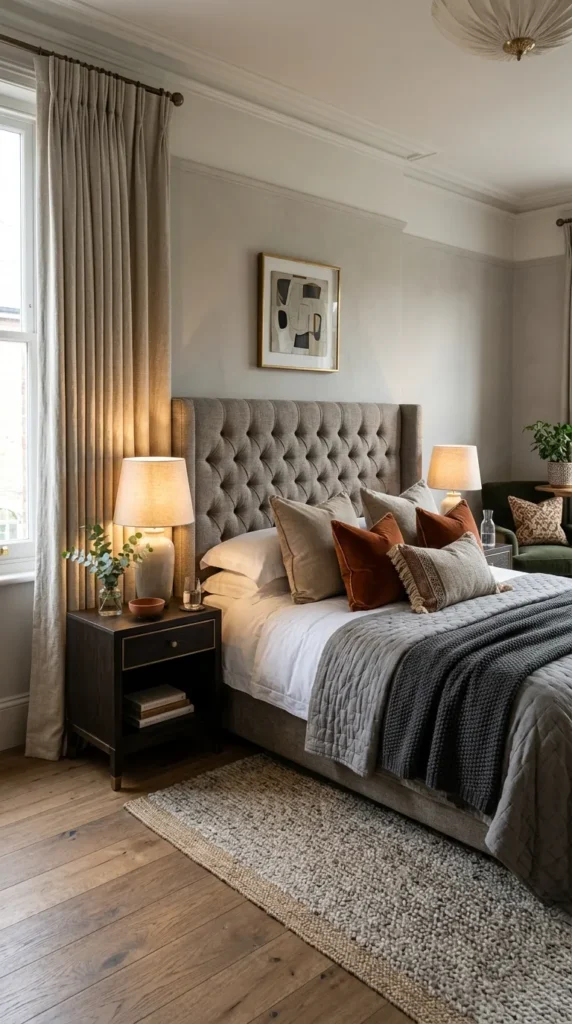
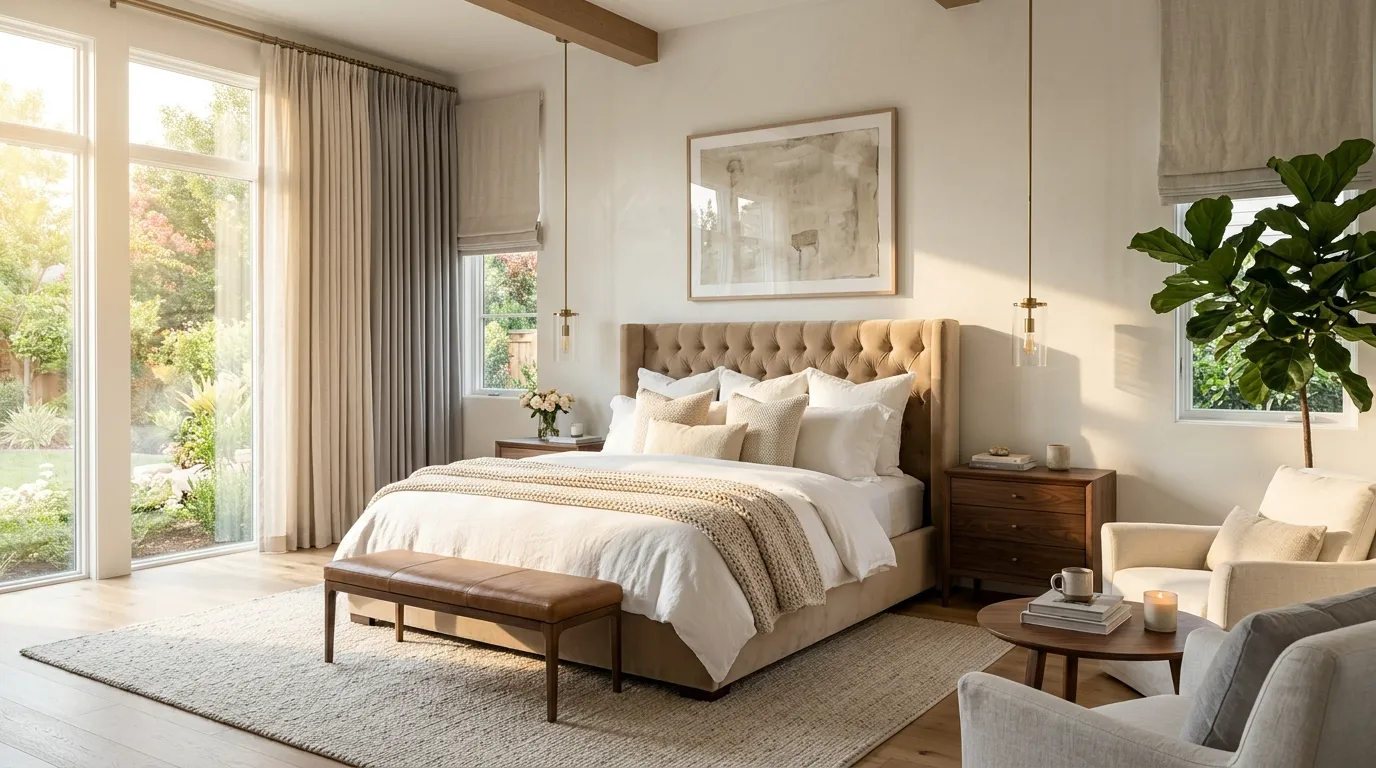
The master bedroom built around an upholstered bed a bed whose headboard and sometimes whose base are covered in fabric rather than left in timber or metal and coordinating textiles creates a bedroom of maximum textile warmth and visual softness, a room that appears to be composed primarily of fabric surfaces and that creates a quality of enveloping comfort that harder-surfaced bedrooms cannot achieve regardless of the quality of their materials. The upholstered bed’s fabric creates the room’s primary color or texture statement at the room’s visual center, and every other textile in the room the bedding, the curtains, the rug, the cushions, the throws should be chosen in explicit relation to this central fabric rather than selected independently. A velvet headboard in a deep dusty sage coordinates naturally with linen curtains in a warm ivory, a bouclé throw in cream, and a wool rug in a muted earth tone a palette unified by the headboard’s sage as its defining color and composed around it through the coordinating warmth of every other textile in the room.
The coordination of textiles in an upholstered bedroom does not mean matching matching fabrics in a bedroom create a showroom quality of uniform repetition that reads as overdetermined and slightly lifeless, because real rooms accumulate their textile character through the variety of materials and the slight variations of tone that create depth rather than through the sameness that catalog matching produces. A bedroom whose textiles share a color family and a quality of material warmth while varying in texture, weight, and specific tone creates a room of layered textile richness that matching cannot approach the linen that is slightly lighter than the velvet headboard, the bouclé whose cream is slightly warmer than the cotton pillowcase white, the wool rug whose weave contains tones of both the headboard’s sage and the curtain’s ivory each variation creating a layer of interest within the overall textile composition that makes the room feel genuinely curated rather than assembled from a single source with a single palette.
Finish your bedroom with the perfect ambiance using these 18 Warm Lighting Bedroom Ideas for a cozy and restful space.
11. A Master Bedroom With Statement Lighting
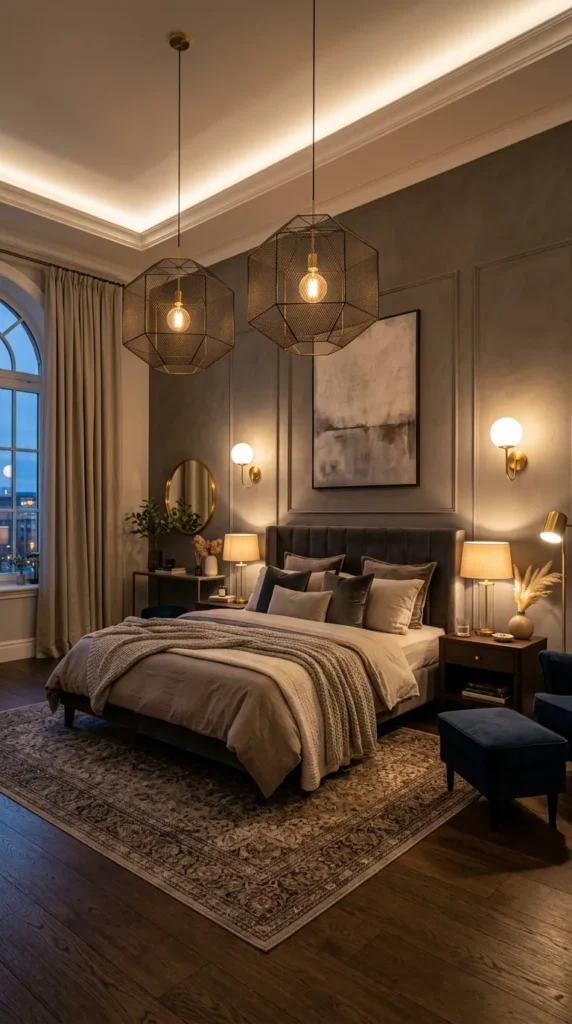
The master bedroom that treats its lighting as a design element of the same importance as its furniture and its textiles rather than treating it as a utility concern resolved by the addition of two bedside lamps and whatever ceiling fixture came with the room creates an atmosphere that the bedroom with adequate but unconsidered lighting cannot access regardless of how beautifully its other elements are chosen. Statement lighting in a master bedroom means lighting that is beautiful as a design object in its own right, that creates the specific quality of warm, layered, dimmable atmosphere that a bedroom needs, and that distributes its illumination in the right positions for every activity the bedroom serves the reading position on each side of the bed, the dressing area and the mirror, the general orientation light needed for moving around the room, and the atmospheric background light that creates the evening character of the room when tasks are complete and rest is beginning.
The lighting elements that contribute most to a master bedroom’s atmospheric quality are those that create warmth at human height rather than illuminating from above the bedside lamp that positions a warm shade at shoulder height, the floor lamp in the corner that bounces light off the wall and ceiling, the architectural wall light above the dressing table that illuminates the face for morning preparation without the harsh overhead quality of a ceiling fixture. A pendant above the bed a single beautiful shade hung on a long cord that positions the light source at a generous height above the bedside table surface creates a design feature of considerable elegance above each side of the bed while providing the bedside light that a table lamp provides from a position that frees the entire bedside table surface for use rather than dedicating a significant portion of it to a lamp base. All bedroom lighting circuits should be connected to dimmer switches the ability to adjust each light source’s intensity independently allows the room to transition smoothly from the bright functionality of getting dressed to the warm intimacy of reading to the near-complete darkness of sleep, which is the sequence that a well-designed master bedroom serves every evening without requiring any change of scene or any departure from the room’s designed character.
12. A Master Bedroom With a Dressing Room
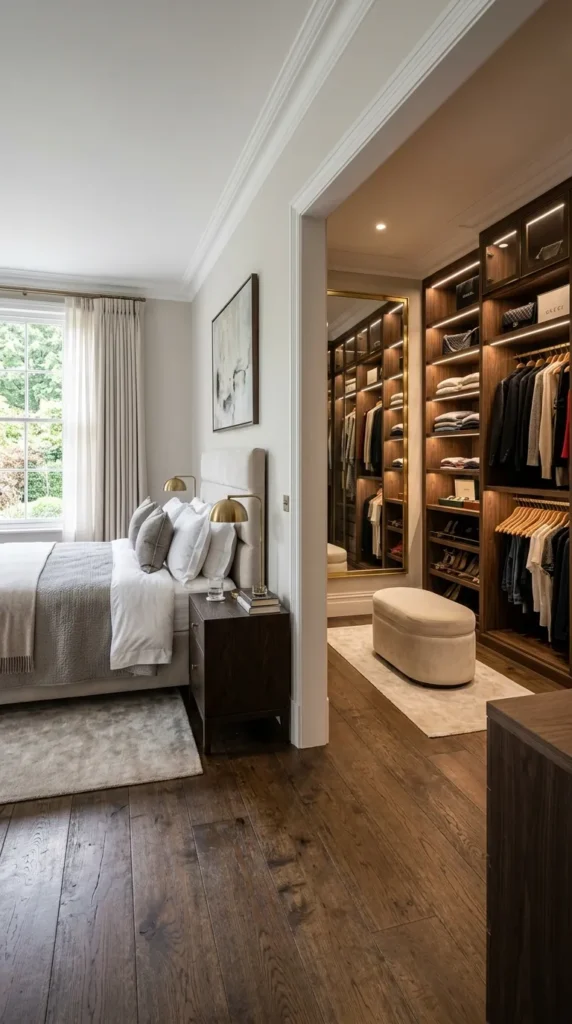
The master bedroom that is connected to a dedicated dressing room a separate space specifically designed for the storage, organization, and selection of clothing and accessories achieves the most complete separation between the activities of daily preparation and the activity of rest that residential design allows, and this separation has a quality-of-life benefit that is experienced most clearly in the morning, when one occupant can dress without disturbing the other who is still sleeping, and in the evening, when the decision of what to wear the following day can be made and the clothing prepared without the searching through wardrobes and the visual chaos of selection interrupting the bedroom’s restful atmosphere. The dressing room also removes from the master bedroom the storage furniture the wardrobes, the chest of drawers, the shoe rack whose visual mass and functional character, however well designed, inevitably give the bedroom some quality of a storage room rather than purely a sleeping and resting environment.
The dressing room that serves a master bedroom most completely is one that is designed with the same level of specificity as the bedroom itself not a general storage room but a designed organizational environment whose every element was planned around the specific clothing collection and the specific daily routine of the person who uses it. Full-length mirrors positioned at angles that allow the complete view of an outfit from the front and the back simultaneously. Lighting at the mirror that replicates the quality of light in which the clothing will be worn warm for evening wear decisions, neutral daylight for daywear decisions. Hanging rails at heights correctly calibrated for the lengths of the garments they will store — full-length rail for coats and evening dresses, two-tier rail for suits and separates, short rail for jackets and shirts. Drawers whose depths and widths suit the specific categories of folded clothing they contain. The dressing room whose organization serves its occupant’s specific routine eliminates the daily friction of a wardrobe that requires effort to navigate and replaces it with a morning ritual of ease and pleasure that is one of the quiet luxuries available to a well-designed home.
13. A Master Bedroom With Layered Rugs for Warmth and Texture
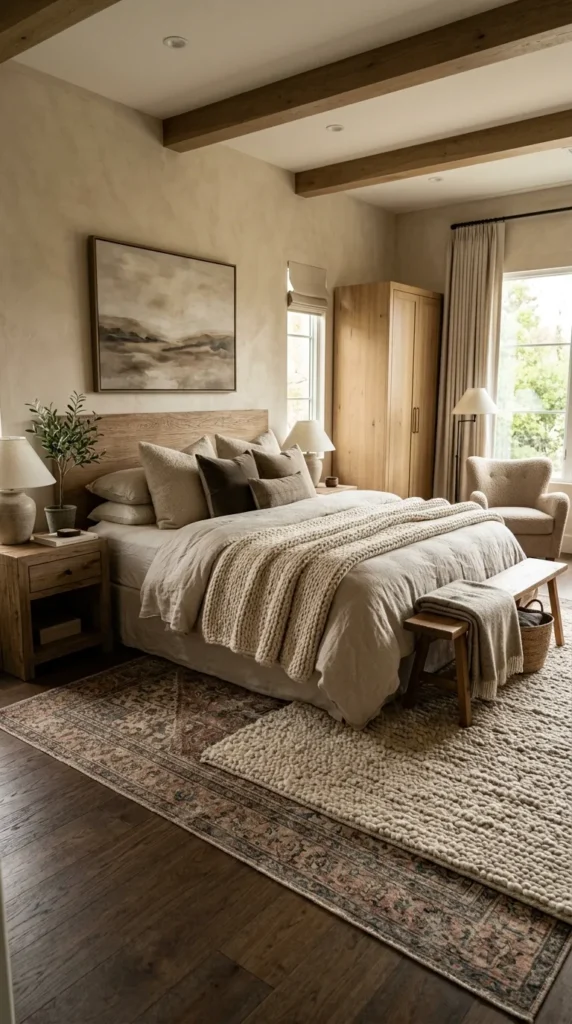
The master bedroom floor is one of the most consistently overlooked surfaces in bedroom design typically covered with a single rug centered under the bed, or left as bare timber or carpet without any additional textile layer and its treatment determines the quality of the experience of every barefoot step taken in the room, from the first foot that touches the floor upon waking to the last step to the light switch before sleep. A layered rug approach in a master bedroom two or more rugs of different sizes, textures, and patterns overlaid in the way that genuinely collected interiors accumulate their floor coverings creates a bedroom of extraordinary floor-level warmth and visual richness that a single rug, however beautiful, cannot match because the layering creates depth and variety that a single surface cannot possess. The large base rug that covers most of the bedroom floor, layered with a smaller, more richly patterned rug at the bedside position where bare feet meet the floor most frequently, creates a functional and beautiful floor composition that keeps the most tactile surface in the room at the most tactile position.
The rug materials chosen for a master bedroom layering approach should prioritize tactile quality as well as visual beauty, because the bedroom rug is experienced underfoot as much as it is seen, and the difference between a wool rug and a synthetic fiber rug of identical appearance is felt immediately and viscerally by bare feet regardless of how similar they look to dressed eyes from a standing position. A wool or wool-blend rug as the base layer dense enough to provide genuine cushioning and insulation from the floor beneath creates the quality of thermal and tactile comfort that synthetic fiber cannot replicate. A smaller handwoven rug a Moroccan beni ourain, a Turkish kilim, a flatweave with a pattern in the bedroom’s palette layered over the wool base at the bedside position adds visual richness and pattern interest at the floor level where it will be seen most closely and felt most directly. The positioning of the layered rugs in relation to the bed requires the same proportional thinking as any rug placement the base rug should extend at least 60 centimeters beyond the bed’s sides and foot to create a genuinely grounded composition, while the smaller overlay rug should sit at the bedside in a position that is both compositionally balanced and functionally precise.
14. A Master Bedroom With Art as Its Defining Feature
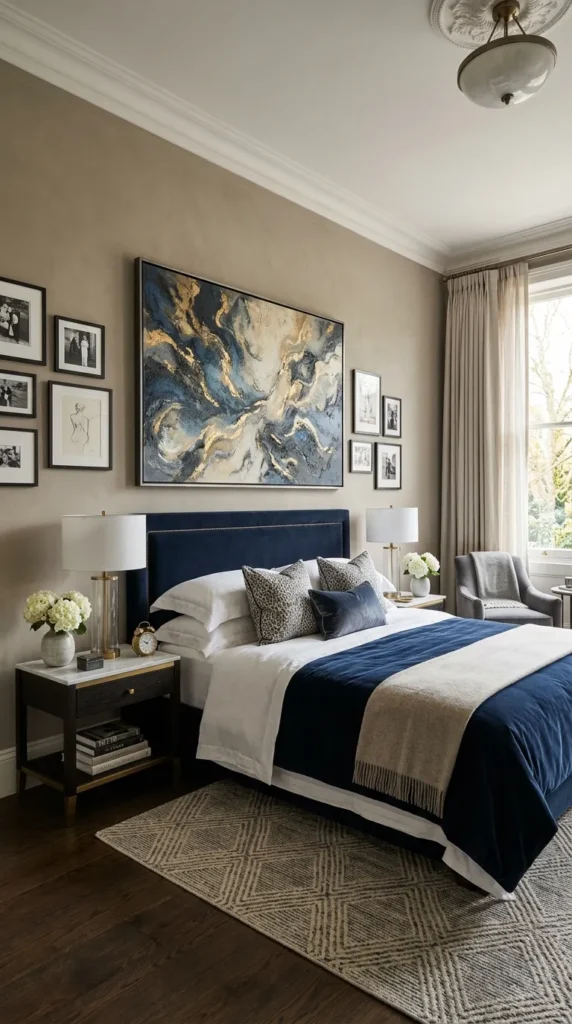
The master bedroom that treats its artwork not as a decorating afterthought something added to fill the wall above the bed once all other decisions have been made but as the room’s defining design element around which the palette, the textiles, and the furniture are chosen, creates a room of genuine cultural identity and genuine personal expression that bedrooms designed from furniture outward rarely achieve. A significant artwork in the master bedroom significant not necessarily in monetary terms but in personal terms, a work that the room’s occupant loves deeply and wants to live with in their most private space gives the bedroom an anchor of authentic personal character that makes the room feel genuinely inhabited rather than designed. The master bedroom is the most private room in the home and therefore the room most suited to containing the artwork whose meaning is personal and private rather than communicative and social the work that would require explanation in a living room but that simply belongs in a bedroom whose occupant does not need to justify their emotional response to it to anyone.
The relationship between the artwork chosen as a master bedroom’s defining element and the palette selected for the room around it is the design decision that determines whether the artwork reads as integrated into the room’s composition or as inserted into a room designed around different principles. The most beautiful master bedrooms built around significant artwork are those where the wall color, the bedding tones, and the curtain fabric were each chosen by taking specific colors from the artwork’s palette and using them in proportions that reinforce the artwork’s visual impact rather than competing with it. The dominant color of the artwork becomes the bedding’s color. The artwork’s background tone or a secondary color within it becomes the wall color. The curtain fabric’s tone is drawn from the artwork’s edge colors. The result is a bedroom that appears to have been built specifically to contain the artwork at its center which is exactly what the best art-defined rooms are.
15. A Master Bedroom That Changes With the Seasons
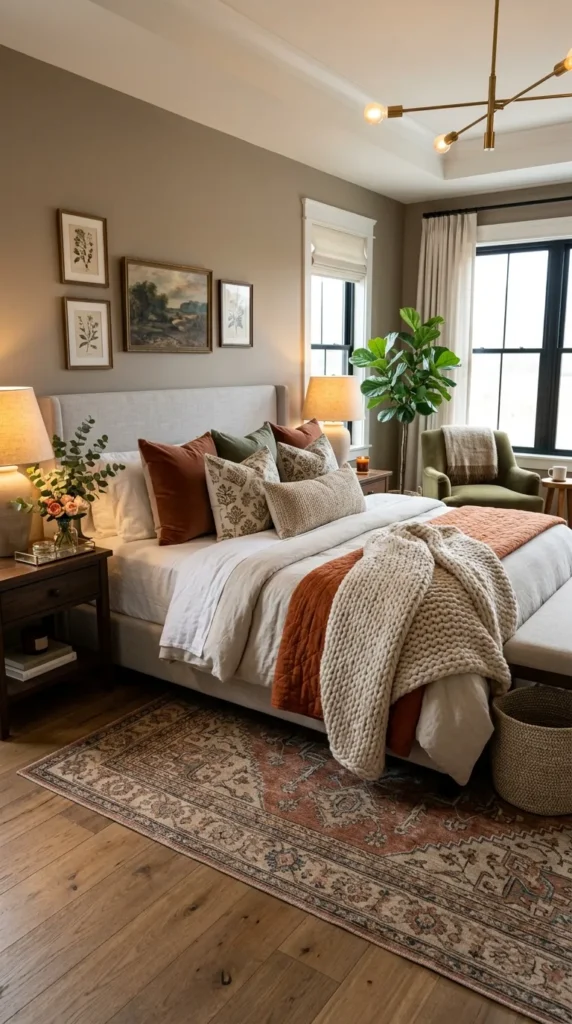
The master bedroom that is designed with seasonal change as an explicit part of its identity whose textiles, whose accessories, and whose decorative elements are rotated and refreshed at seasonal intervals rather than remaining fixed throughout the year in a single unchanging configuration creates a room of temporal richness and continuous renewal that the bedroom designed to remain identical throughout the year cannot provide. Seasonal change in a master bedroom is not merely an organizational strategy but a design philosophy the belief that a room that changes with the natural world outside it creates a quality of connection to seasonal rhythm that urban life and climate-controlled interiors otherwise entirely remove from daily experience, and that this connection has a psychological value in the bedroom that compounds over the years the room’s seasonal identity is maintained. The heavy wool blanket and the flannel sheets of winter replaced by the light linen coverlet and the cotton sheets of summer. The deep velvet cushions of the cold months exchanged for the lighter, brighter textiles of the warm season. The candles and the warm-toned accessories of autumn giving way to the fresher tones and the botanical elements of spring.
The practical organization of a seasonally changing master bedroom requires storage for the out-of-season textiles that is sufficiently organized and sufficiently accessible that the seasonal rotation is genuinely performed twice a year rather than intended and never executed. Vacuum storage bags for the bulk reduction of out-of-season duvets and blankets, labeled boxes for the seasonal cushions and throws, a wardrobe section dedicated to seasonal textile storage these organizational tools make the seasonal rotation a practical reality rather than an aspirational intention that the bedroom’s storage limitations prevent from happening. The design investment in a seasonally changing master bedroom is also an investment in a richer and more personal collection of textiles over time buying one beautiful set of winter bedding and one beautiful set of summer bedding creates a wardrobe of seasonal textile quality that a single year-round set can never match in variety or in the specific appropriateness of material to season, and the pleasure of bringing out the season’s specific textiles and putting them on the bed is a small, repeating domestic ritual of genuine quality.
Designing the Master Bedroom Your Daily Life Deserves
The master bedroom that genuinely functions as the private retreat its name promises is the one designed from the inside out from the specific needs, the specific sensory preferences, and the specific daily routines of the people who inhabit it rather than from a general idea of what a master bedroom should look like or contain. The bed that is exactly right for how you sleep. The lighting that provides exactly the quality of warm, dimmable illumination that makes the bedroom feel like rest rather than like a lit room. The storage that accommodates exactly what you own without friction or compromise. The textiles whose specific weight and material create the thermal and tactile environment in which your specific body sleeps best. The palette whose specific tones create the quality of atmosphere that your specific sensibility finds most restorative.
No design principle or design trend can substitute for this specificity, because the master bedroom’s quality is ultimately measured not by its appearance in a photograph but by the quality of the experience of waking in it every morning and returning to it every evening a measurement that only the room’s occupants can make and that only their specific preferences and their specific daily lives can inform. Design the master bedroom from that honest, specific, personal knowledge of what rest and restoration require for you specifically, invest in the quality of its materials to the level that daily use justifies and the room’s importance demands, and the bedroom that results will be the room in the home that earns its quality of investment most thoroughly and rewards it most consistently across every day of every year it remains in its designed form.