22 Accent Wall Bedroom Ideas to Add Style Today
An accent wall is one of the highest impact, lowest risk changes available for a bedroom that feels flat or unfinished. It gives the room a clear focal point, adds color, pattern, or texture in a contained area, and can usually be done in a weekend without touching the rest of the room’s furniture or layout. The best accent walls look deliberate rather than random, chosen to suit the room’s proportions, light, and existing style rather than picked simply because one wall needed something.
The options go well beyond a single coat of bold paint. Wood, plaster, wallpaper, molding, and fabric all create accent walls with completely different character, from dramatic and moody to soft and textural. These 22 ideas cover the full range, along with the practical considerations, which wall to choose, how much commitment each option requires, that determine whether an accent wall elevates a bedroom or just adds another surface competing for attention.
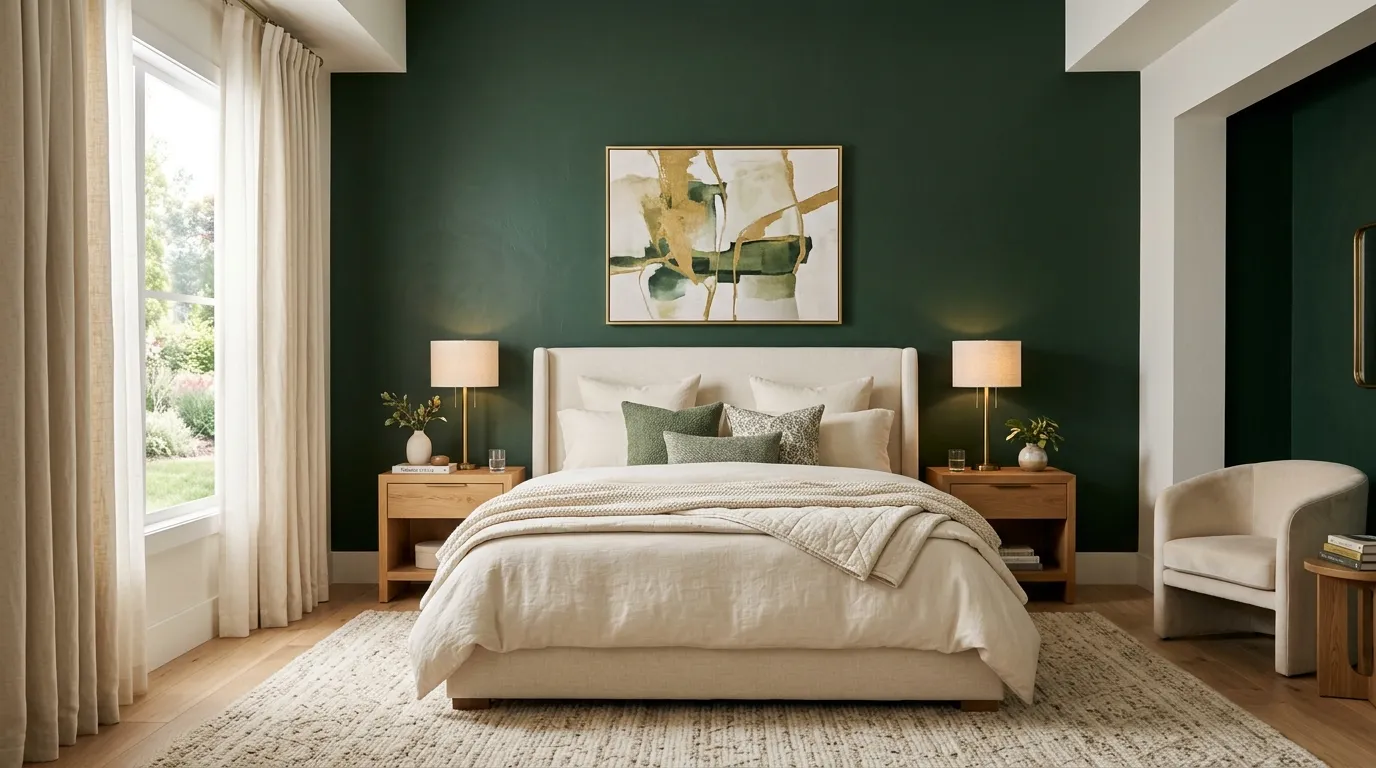
1. Choose a Deep, Saturated Paint Color
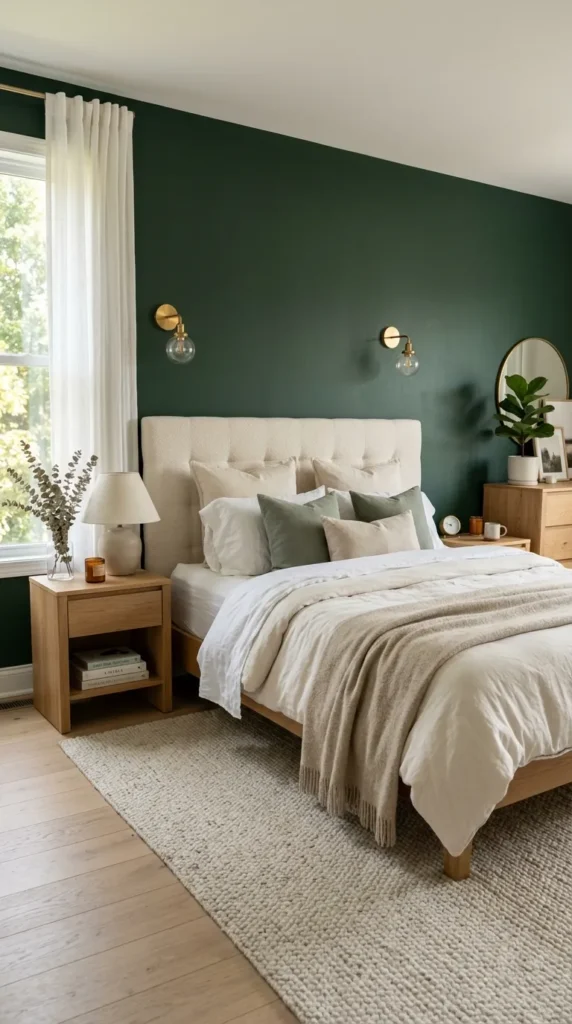
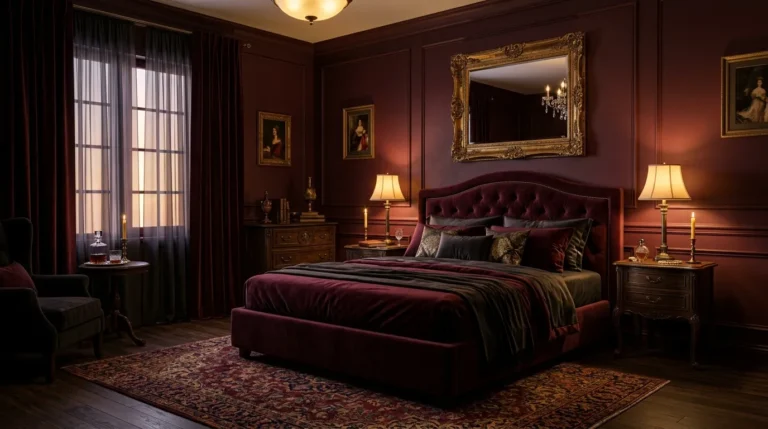
A single wall in a deep, saturated color, forest green, burgundy, navy, or ink black, is the most direct and least expensive way to create real impact in a bedroom. Because it’s contained to one wall, even a bold, dramatic color feels manageable rather than overwhelming, and it can be repainted relatively easily if tastes change down the line.
This works best on the wall directly behind the bed, where the color has the most visual presence without competing with windows, doors, or closets that interrupt the wall elsewhere in the room. Pairing the saturated wall with a lighter ceiling and trim keeps the room from feeling closed in.
2. Try a Soft, Muted Pastel for a Gentle Statement
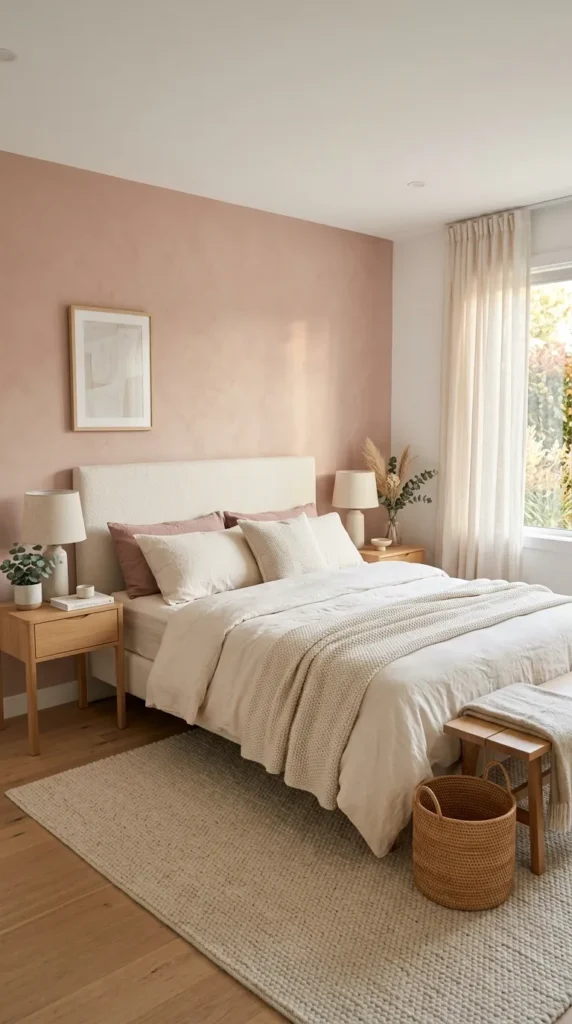
For a more understated version of the same idea, a muted pastel, dusty rose, sage, or a soft powder blue, introduces color and a clear focal point without the intensity of a fully saturated tone. This suits bedrooms aiming for a calm, gentle atmosphere rather than a bold, dramatic one.
Muted pastels also tend to be easier to coordinate with existing furniture and bedding, since their softness gives them more flexibility to sit alongside a wider range of other colors already present in the room without requiring a full redesign around the new wall.
3. Use Wood Slats for Texture and Warmth
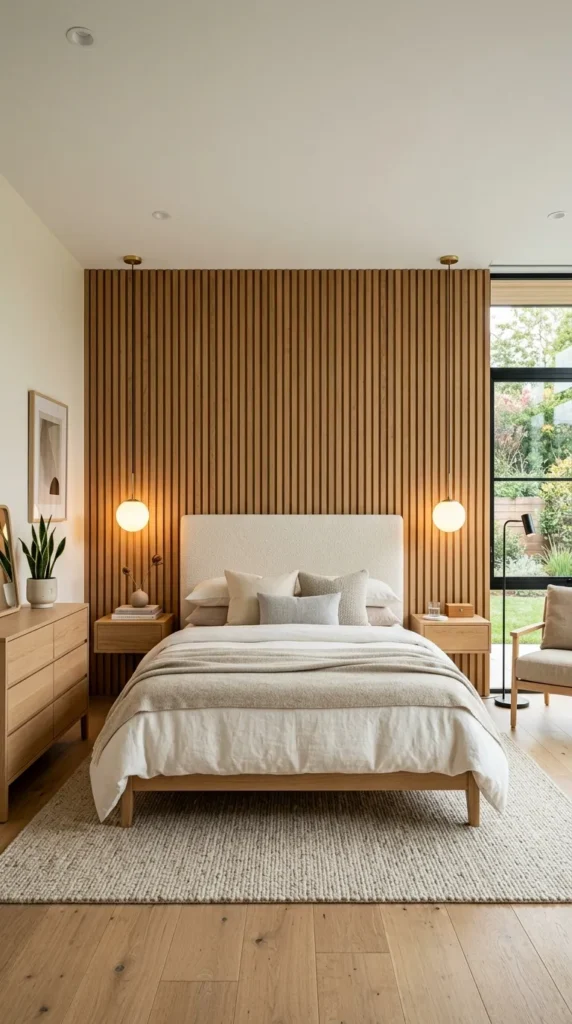
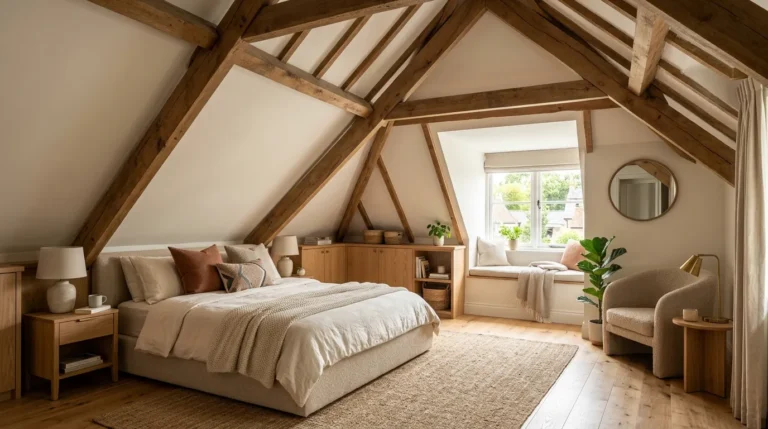
Vertical wood slats, either stained or left natural, add genuine three dimensional texture to a bedroom wall in a way that paint or wallpaper cannot replicate. The regular rhythm of the slats creates visual interest and a sense of craftsmanship, and the warmth of the wood grain softens a room that might otherwise feel flat or cold.
This treatment works particularly well behind the bed, where the vertical lines draw the eye upward and add height to the room. Slat walls also pair naturally with a wide range of styles, from mid century to Scandinavian to contemporary, making this one of the more versatile accent wall ideas available.
4. Add a Bold Pattern Wallpaper
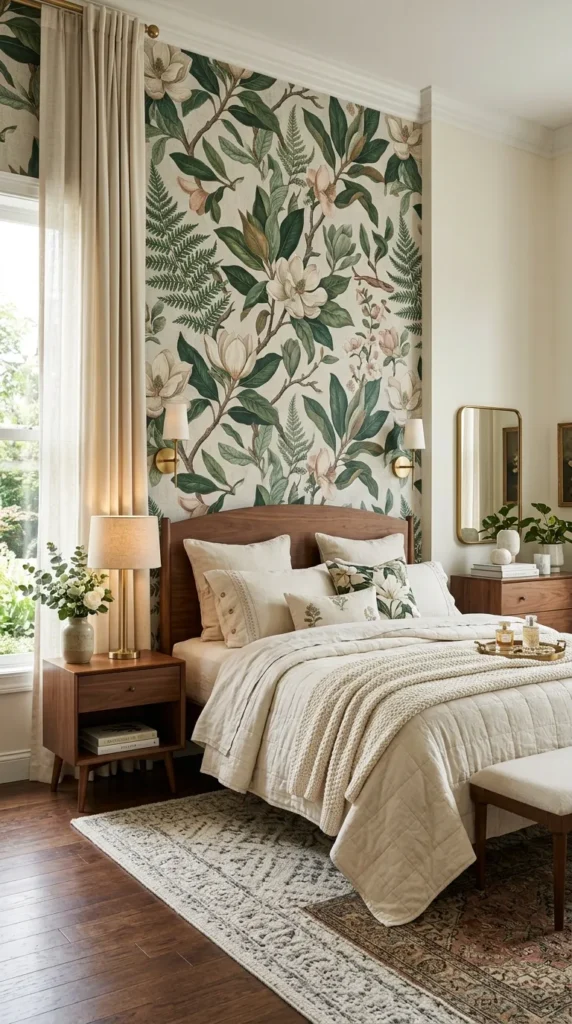
A wallpaper in a large scale, confident pattern, floral, geometric, or abstract, transforms a bedroom instantly and delivers far more visual complexity than paint alone can achieve. Because it’s limited to a single wall, even a genuinely bold pattern stays manageable rather than becoming visually overwhelming across the whole room.
Choosing a pattern with a color already present elsewhere in the room, in the bedding, a rug, or an accent chair, ties the wallpaper into the rest of the space rather than leaving it feeling like an isolated decision separate from everything else in the bedroom.
5. Try a Textured Plaster Finish
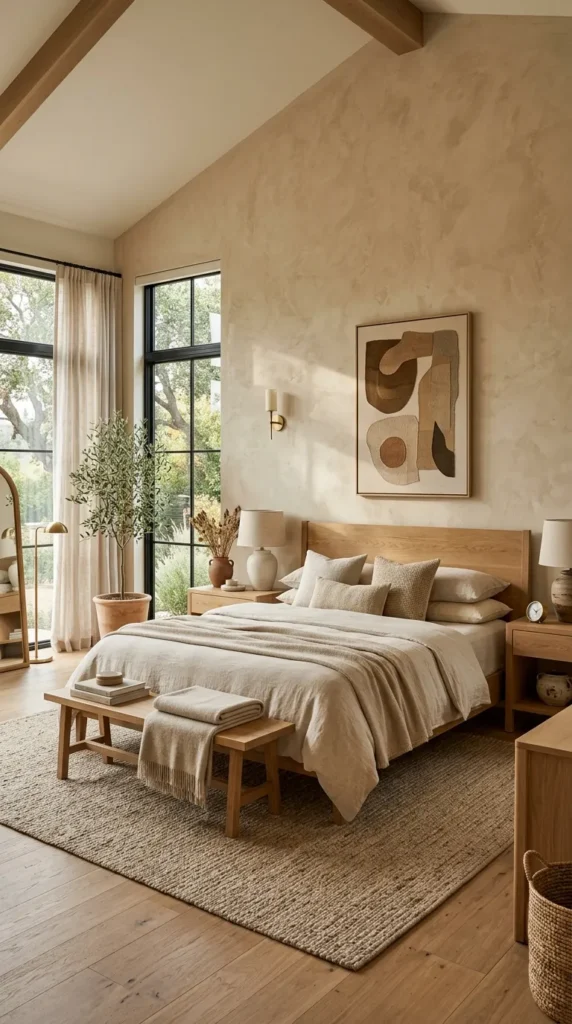
A hand applied plaster finish, whether a subtle Venetian plaster or a more rustic, textured limewash, brings depth and a handmade quality to a bedroom wall that flat paint cannot achieve. The way light catches the natural variation in the surface gives the wall a sense of movement throughout the day as the light shifts.
This treatment suits a bedroom aiming for an organic, tactile, slightly imperfect feeling rather than a crisp, graphic look. It’s a more involved and typically more expensive option than paint, but the resulting texture is difficult to replicate with any other accent wall material.
6. Use Board and Batten Molding
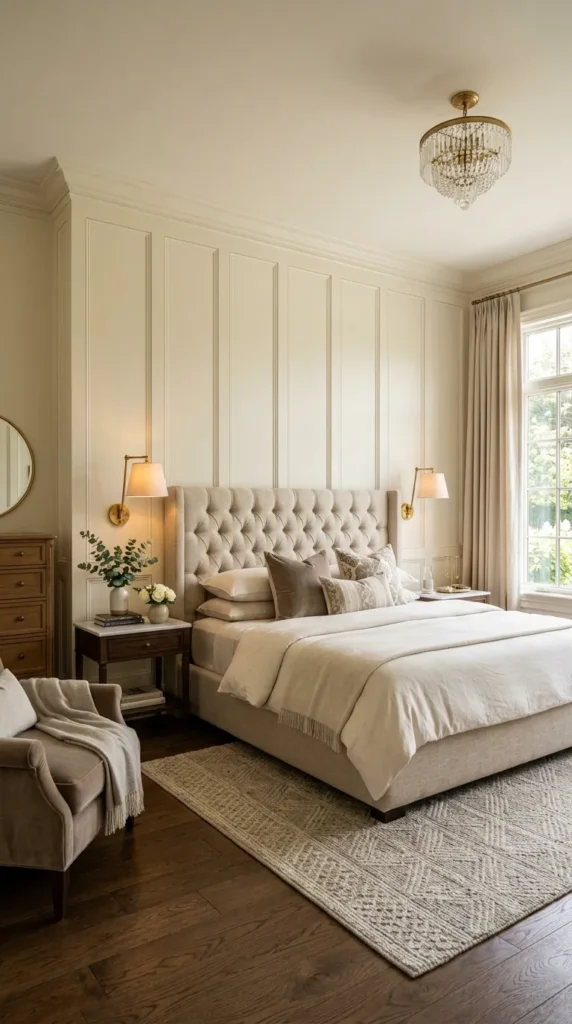
Board and batten, vertical strips of wood or trim applied in a grid or evenly spaced pattern across the wall, adds architectural detail and a crisp, structured look that suits a more classic or transitional bedroom style. Painted the same color as the wall itself, the molding creates subtle texture and shadow lines without introducing a second color.
Painted in a contrasting color instead, board and batten becomes a bolder design statement while still keeping the overall look tailored and considered rather than busy. Either approach adds a level of architectural interest that a plain painted wall on its own cannot provide.
7. Choose a Two Tone Color Block Wall
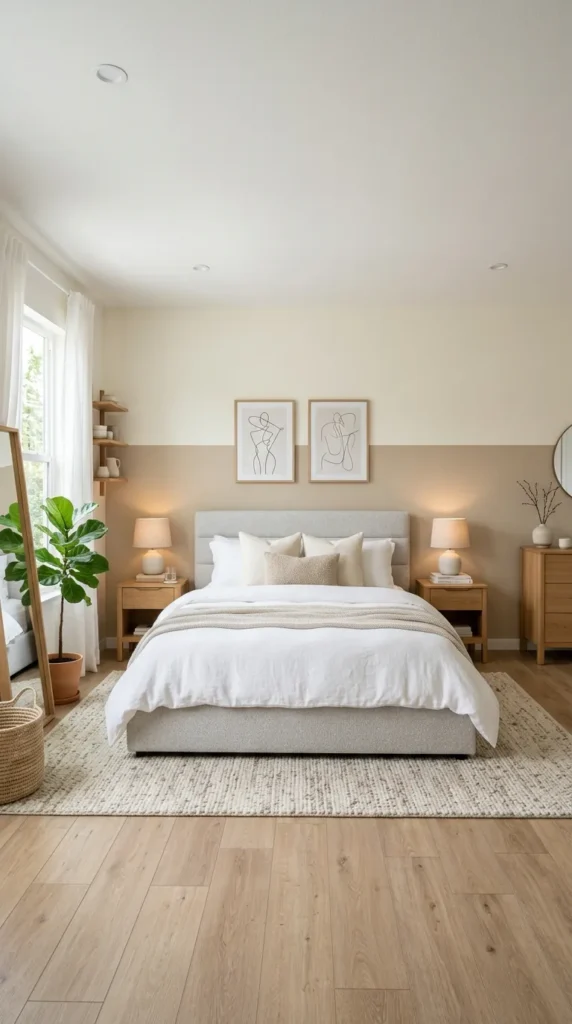
Splitting a wall horizontally, with a deeper color on the lower half and a lighter tone above, or the reverse, creates a graphic, contemporary accent wall that reads as more considered than a single flat color. This technique also visually lowers or raises the perceived ceiling height depending on where the color break is placed.
A straight, clean line at the color break, achieved with careful taping and measuring, is essential to this look working well. A wavering or uneven line undermines the crisp, deliberate quality that makes color blocking effective, so this is one of the accent wall ideas most worth taking slowly and carefully.
8. Add a Mural for a Fully Custom Look
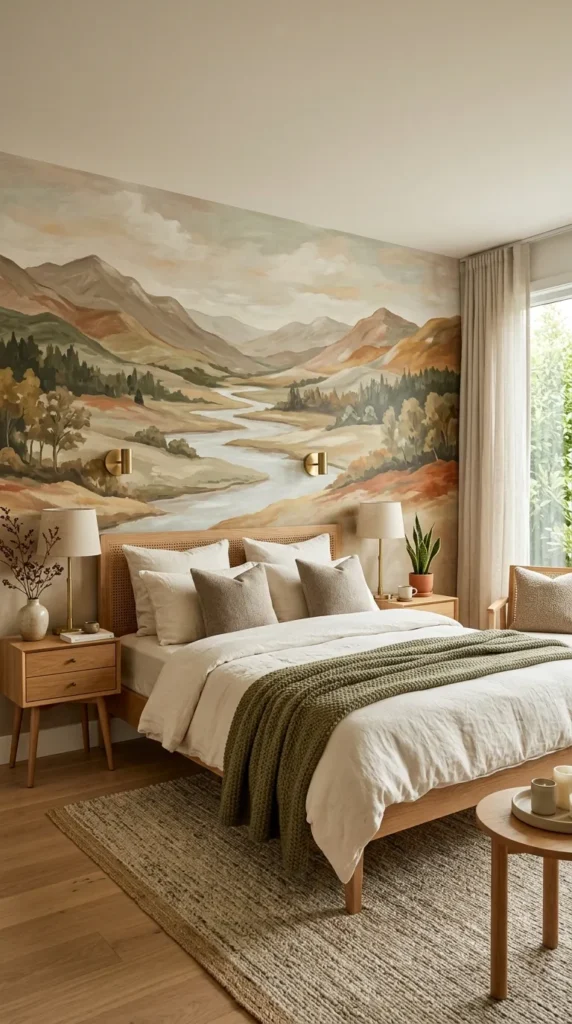
A hand painted or professionally printed mural, whether an abstract landscape, a botanical scene, or an artistic pattern, delivers a completely custom accent wall unlike anything achievable with standard paint or wallpaper. This is the most involved and typically most expensive option on this list, but it also offers the most creative freedom.
A mural works best when the scale and subject genuinely suit the room rather than being chosen purely for visual impact. A large scale mural in a small bedroom can overwhelm the space, so this idea benefits from careful planning around the room’s actual proportions before committing.
9. Use Shiplap for a Coastal or Farmhouse Feel
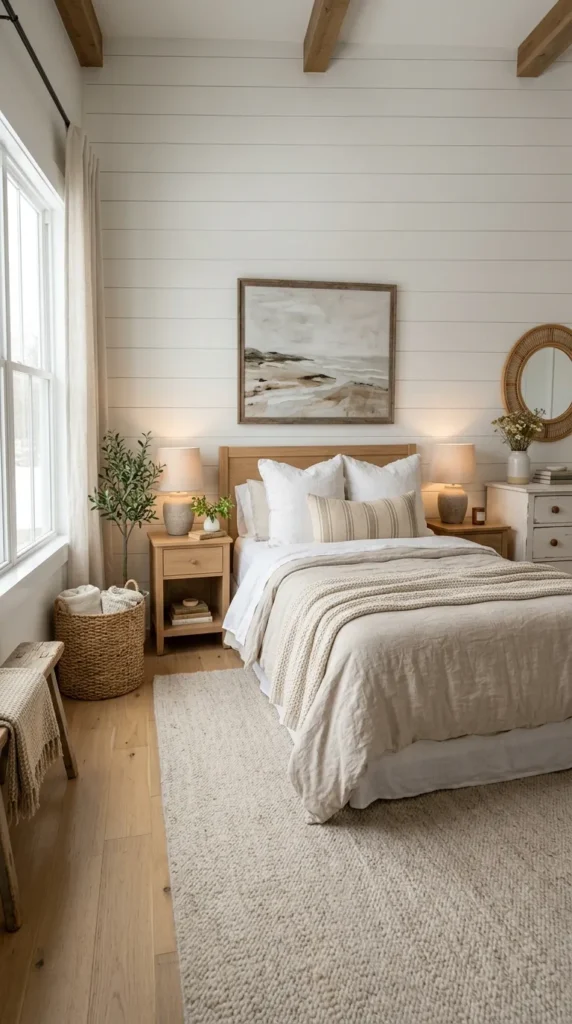
Horizontal shiplap paneling, whether painted white or in a soft color, brings a relaxed, coastal or farmhouse quality to a bedroom that suits a more casual, lived in style than many of the bolder options on this list. The horizontal lines and visible seams between boards add subtle texture without demanding much visual attention.
This treatment pairs particularly well with natural materials, linen bedding, woven baskets, and light wood furniture, which reinforce the same relaxed, unpretentious character shiplap brings to the wall itself.
10. Try a Brick or Brick Look Panel

Exposed or faux brick brings an industrial, urban character to a bedroom accent wall, whether it’s genuine existing brick uncovered during a renovation or a lightweight brick veneer panel installed specifically for this purpose. The texture and slight irregularity of brick contrasts effectively with smoother, more modern furniture and bedding.
This works especially well in a loft style bedroom or a room already leaning toward an industrial aesthetic, where brick reinforces rather than fights against the rest of the room’s material palette, including exposed beams, metal fixtures, or concrete flooring.
11. Choose Grasscloth Wallpaper for Subtle Texture
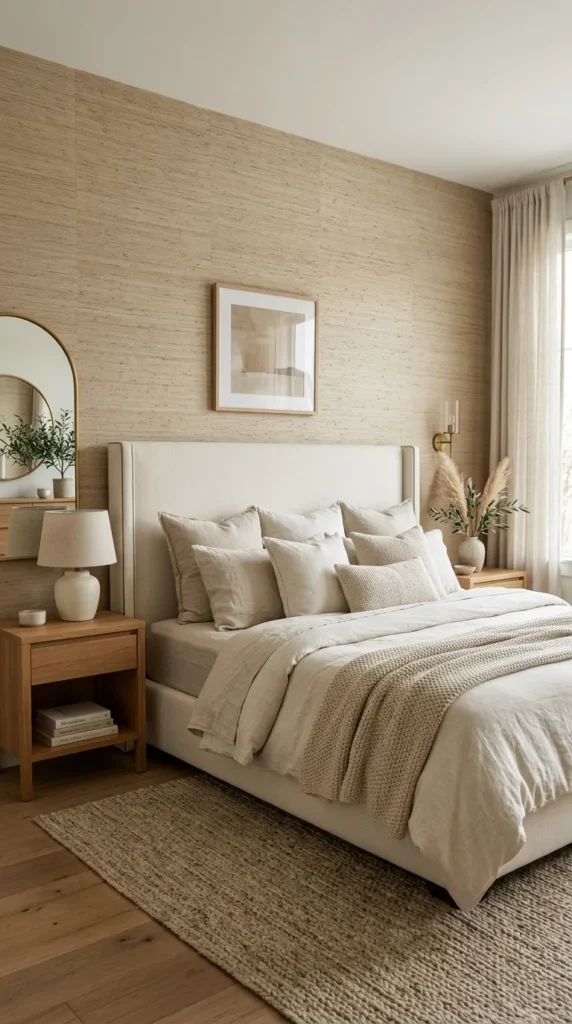
Grasscloth wallpaper, woven from natural fibers, adds texture and a warm, organic quality to a bedroom wall without relying on bold color or pattern to make its statement. The subtle variation in the weave catches light in a way that flat paint cannot, giving the wall depth even in a fully neutral tone.
This is one of the more sophisticated, understated options on this list, suited to a bedroom aiming for quiet texture over dramatic color. Grasscloth also tends to hide minor wall imperfections better than a smooth paint finish, which is a practical bonus in older homes.
12. Use Vertical Stripes to Add Height
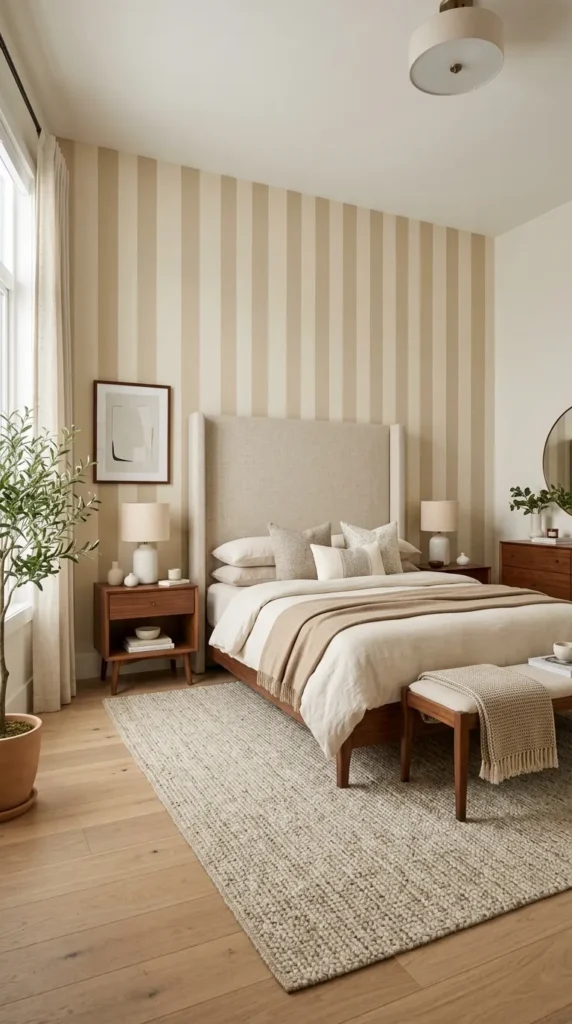
Painted or wallpapered vertical stripes create the illusion of a taller ceiling, drawing the eye upward along the length of the wall. This is a particularly useful accent wall idea for a bedroom with lower ceilings, where the visual trick of vertical lines genuinely changes how spacious the room feels.
Two tones close in value, rather than high contrast stripes, create a more subtle, sophisticated effect suited to a bedroom, while wider, more dramatically contrasting stripes read as bolder and more graphic. Either version delivers the height boosting benefit of the technique.
13. Try a Geometric Painted Pattern
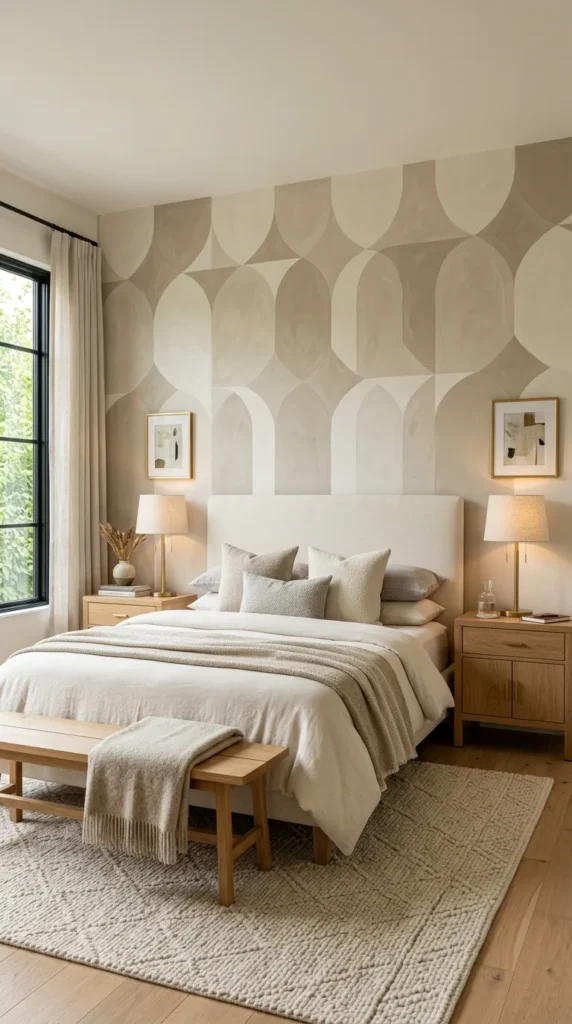
A hand painted geometric pattern, triangles, an arch shape, or a repeated diamond motif, gives a bedroom wall genuine artistic character without the cost of wallpaper or the complexity of a full mural. This can be achieved with careful taping and a limited color palette, making it more accessible as a DIY project than many other options on this list.
Keeping the pattern to two or three colors within the same tonal family maintains a cohesive, considered look rather than a busy, competing one, and allows the geometric shape itself to be the focus rather than a wide range of colors.
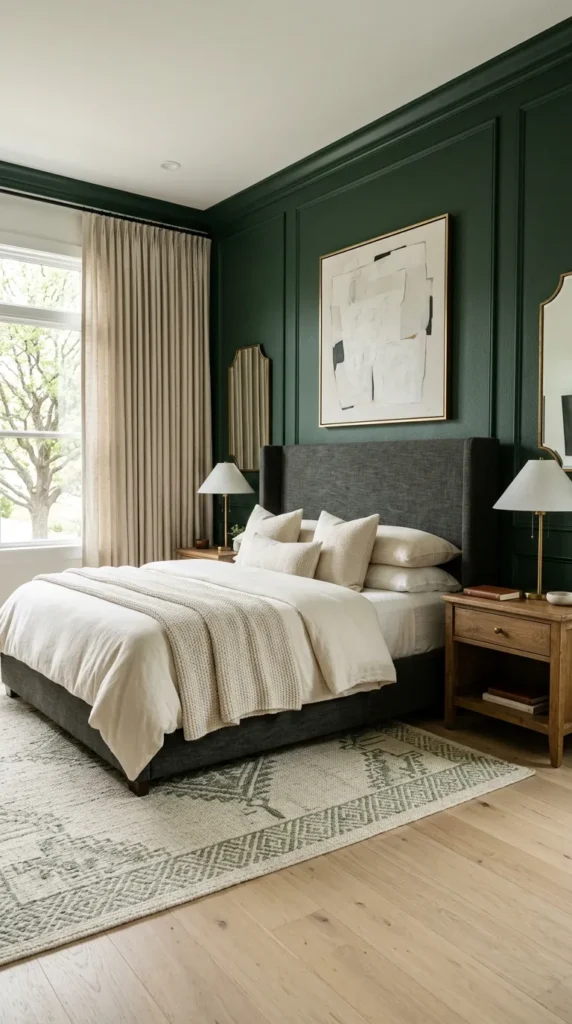
14. Add Picture Frame Molding for a Classic Look
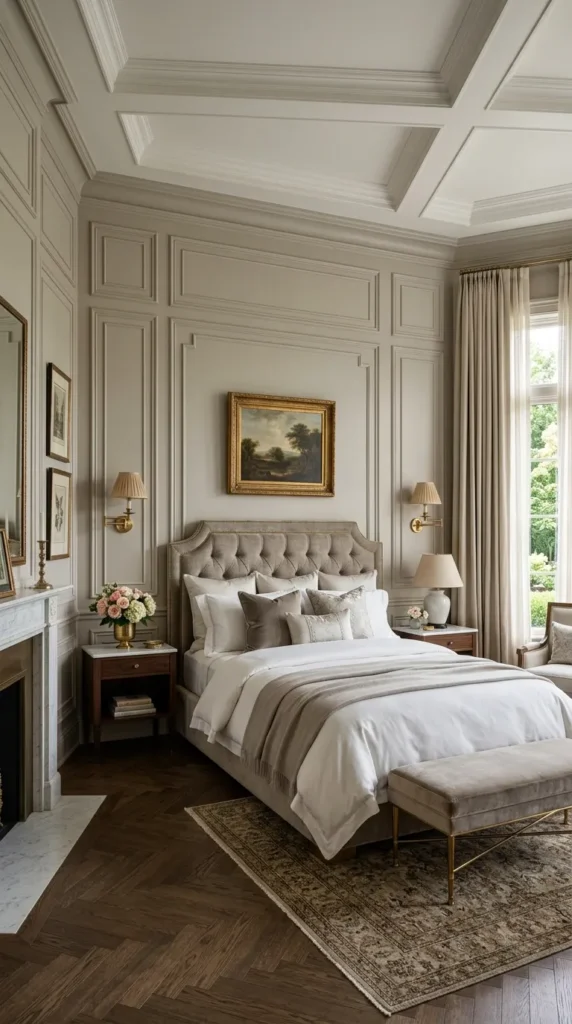
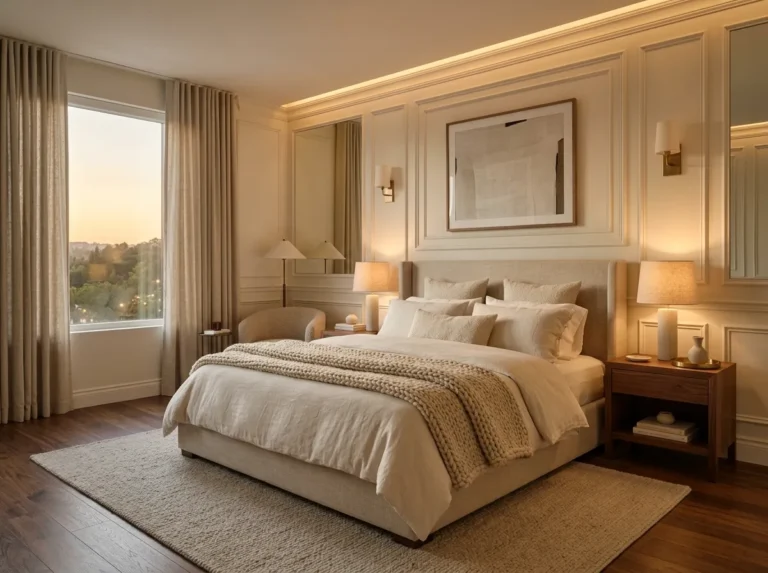
Picture frame molding, rectangular trim applied in a grid across the wall to mimic the look of framed panels, brings a traditional, architectural quality to a bedroom that suits a more classic or transitional style. Painted the same color as the wall, it adds shadow and dimension; painted in a contrasting color, it becomes a bolder statement.
This treatment works particularly well in bedrooms with higher ceilings and more traditional proportions, where the formality of the molding pattern feels appropriate to the room’s existing architecture rather than at odds with it.
15. Choose a Metallic or Textured Wallpaper for Glamour
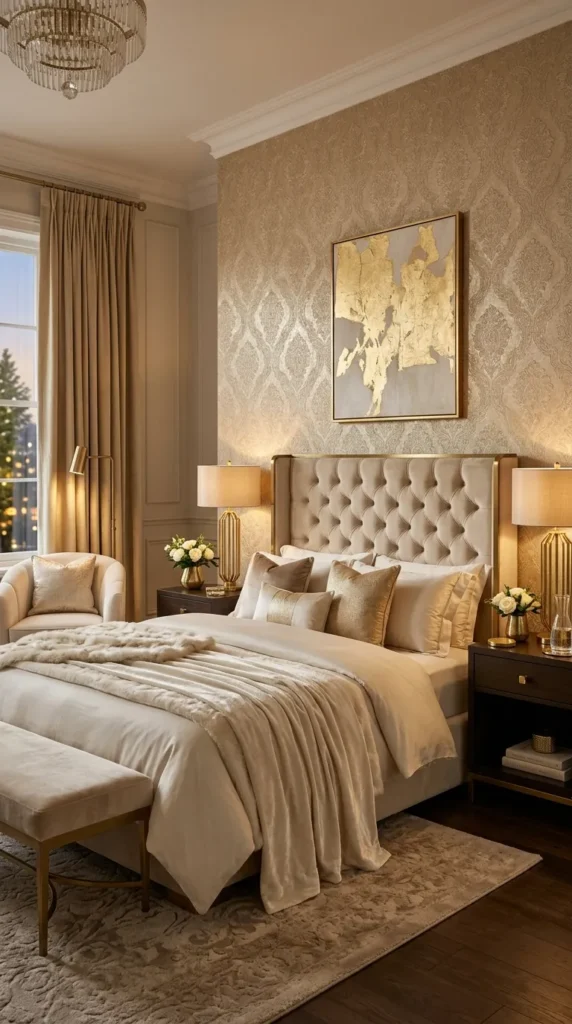
A wallpaper with a subtle metallic sheen or a textured, embossed finish introduces glamour and depth to a bedroom without relying on bold pattern or saturated color. The way the surface catches and reflects light, especially in the evening under warm lamp light, gives this kind of wallpaper a quality that flat paint simply cannot match.
This suits a bedroom aiming for a more luxurious, evening appropriate atmosphere, and it pairs particularly well with brass or gold accents elsewhere in the room, which pick up the same warm, reflective quality as the wallpaper itself.
16. Use Reclaimed Wood for an Organic, Rustic Look
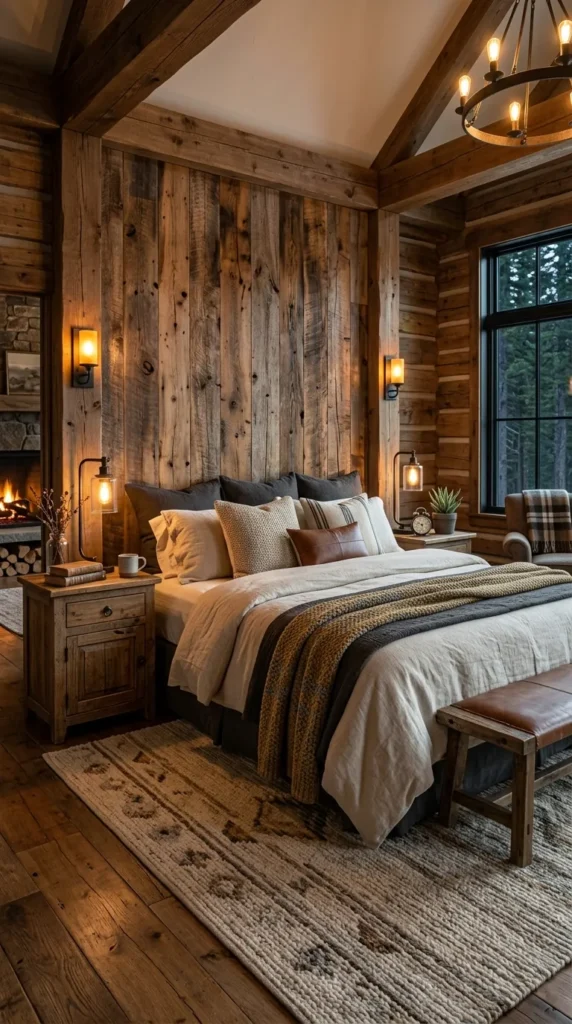
Reclaimed wood paneling, with its visible grain, knots, and variation in tone from board to board, brings genuine character and history to a bedroom wall that new, uniform materials cannot replicate. Every board is slightly different, which gives this treatment an inherently organic, one of a kind quality.
This works particularly well in a bedroom with a rustic, farmhouse, or cabin inspired style, where the imperfection and history of reclaimed wood reinforces the room’s overall sense of warmth and lived in character rather than feeling like a design afterthought.
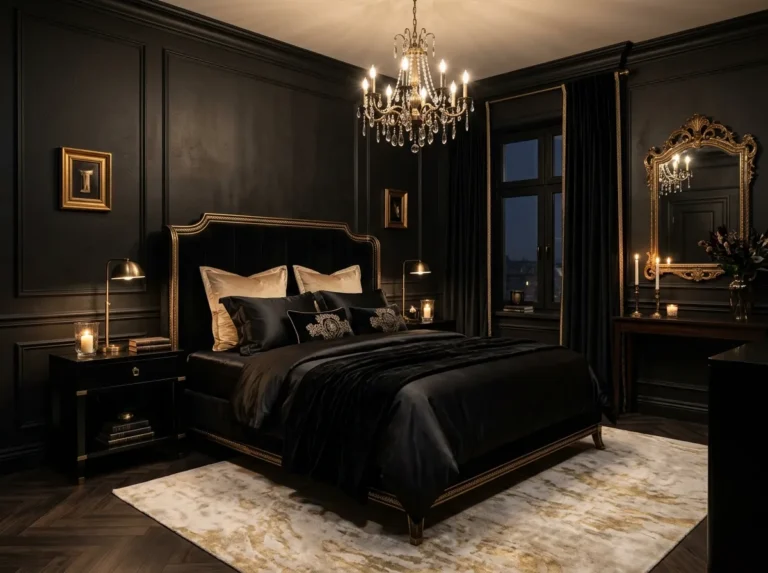
17. Try a Dark Charcoal or Black Wall for Drama
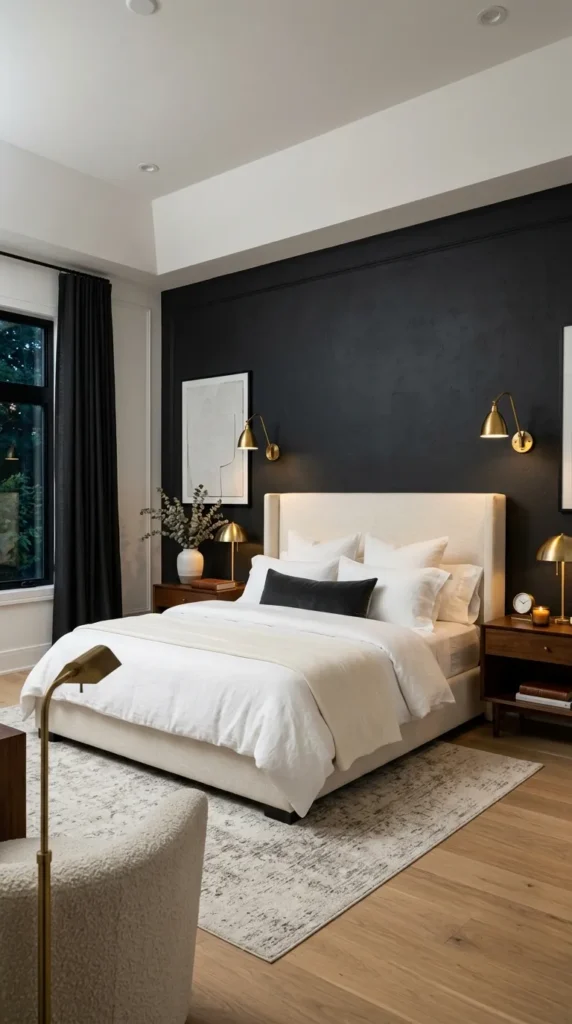
A single wall in dark charcoal or true black delivers the most dramatic version of the deep color idea covered earlier in this list, creating an intense, moody focal point that works particularly well behind a bed with warm lighting layered around it. The darkness makes any brass, gold, or warm wood accents in the room stand out more clearly by contrast.
This idea depends heavily on the rest of the room staying lighter, in the ceiling, floor, and remaining walls, to prevent the space from feeling closed in. A single black wall against an otherwise light room reads as bold and intentional rather than heavy.
18. Add Fabric Panels for Softness and Sound Absorption
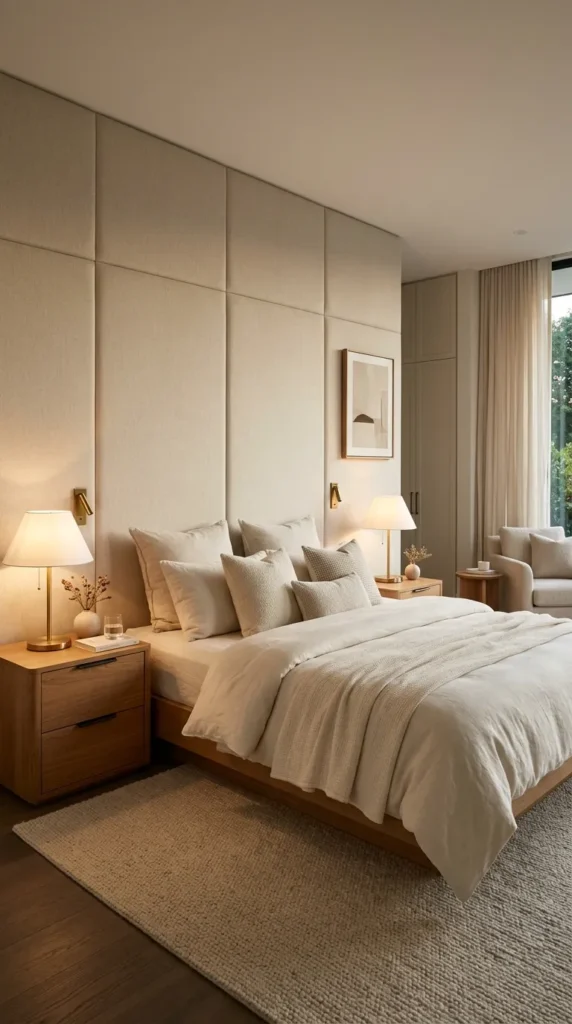
Upholstered fabric wall panels, whether a single large panel behind the bed or a series of smaller ones arranged in a pattern, add softness and a genuinely tactile quality that no hard material can replicate. Beyond the visual effect, fabric panels also absorb sound, which can make a bedroom feel quieter and calmer.
Linen, boucle, or a subtle velvet in a neutral tone all suit this treatment, and because the panels are typically mounted rather than permanently fixed, this is one of the more flexible accent wall options if the room’s style changes down the line.
19. Choose a Nature Inspired Botanical Print
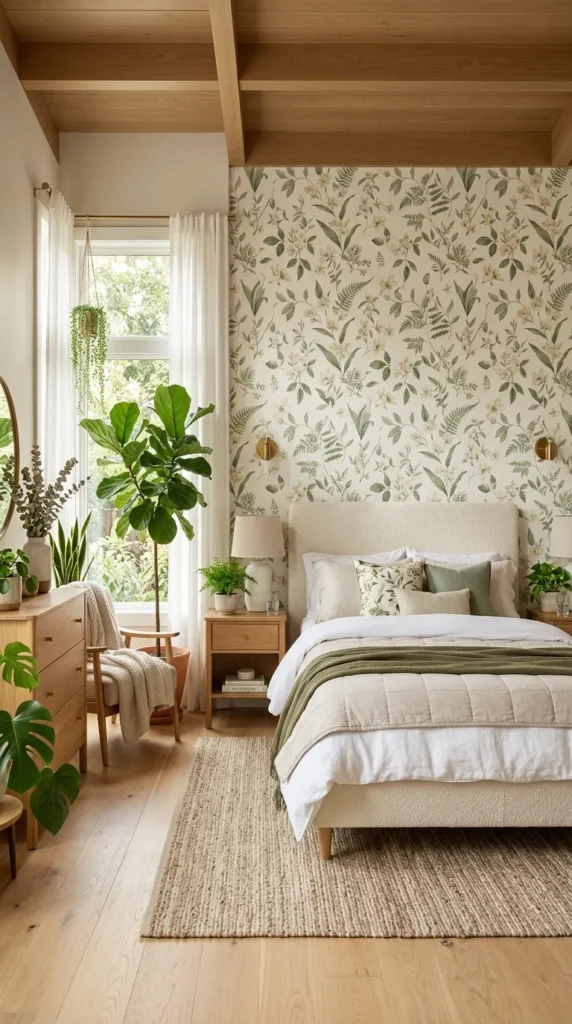
A wallpaper or mural featuring botanical illustration, whether densely patterned foliage or a more sparse, illustrative floral design, brings a calming, natural quality into the bedroom that suits a room aiming for a garden inspired or biophilic feeling. The organic shapes soften the straight lines of most bedroom furniture.
This works particularly well paired with real plants elsewhere in the room, which extend the botanical theme from the wall into three dimensional, living elements, reinforcing the overall sense of a room connected to nature rather than purely decorative.
20. Use Peel and Stick Wallpaper for a Renter Friendly Option
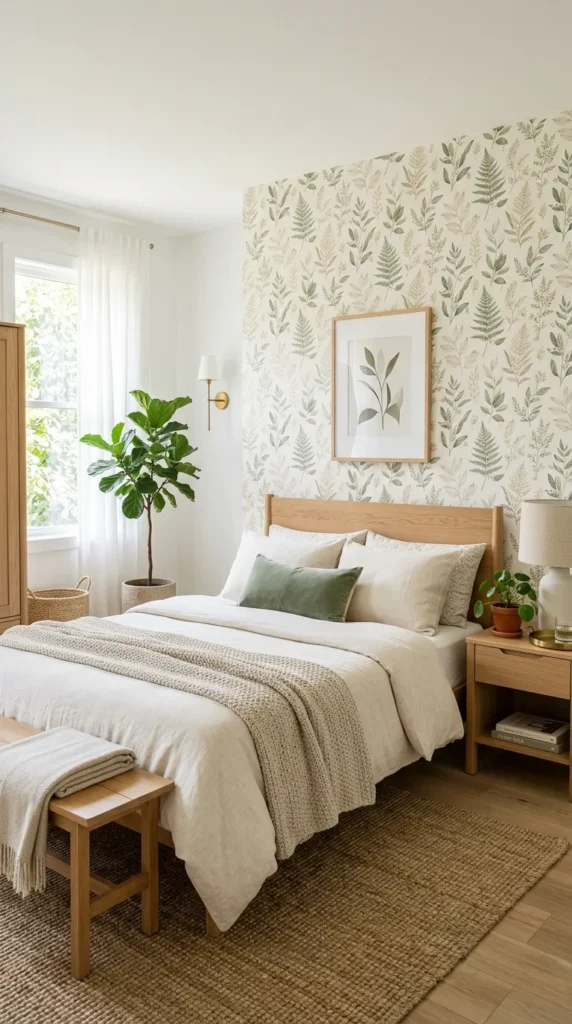
For anyone renting or otherwise hesitant to commit to a permanent change, peel and stick wallpaper delivers much of the visual impact of a traditional wallpapered accent wall without the same commitment or removal difficulty. Modern versions come in a wide enough range of patterns and textures to achieve almost any of the looks covered elsewhere in this list.
This is also a practical option for anyone wanting to test a bold pattern or color before committing to something more permanent, since a peel and stick wall can be removed and replaced relatively easily if the final result doesn’t work as well as expected.
21. Frame the Wall With a Ceiling to Floor Curtain
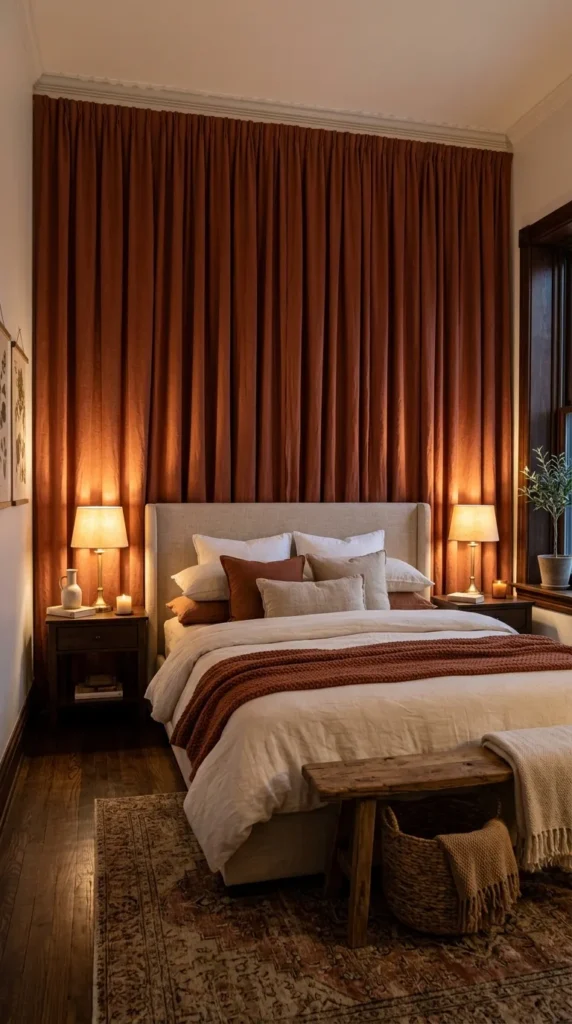
Rather than a hard surface treatment, a full wall of ceiling to floor curtain fabric behind the bed creates a soft, enveloping accent wall that moves gently with airflow and adds genuine texture without any permanent installation beyond a curtain rod. This works particularly well in a rented bedroom or for anyone who wants a dramatic look that can be changed easily.
A deep, rich colored fabric or a subtle textured weave both work well for this purpose, and the soft, slightly imperfect fall of the fabric brings a romantic, layered quality that a flat painted or papered wall cannot achieve on its own.
22. Place the Accent Wall Behind the Bed, Not to the Side
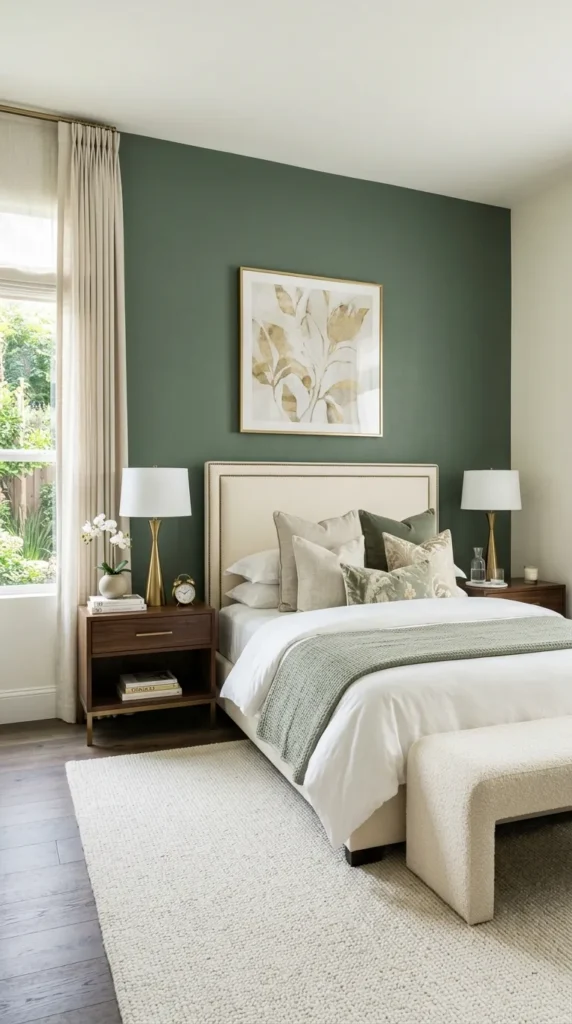
Regardless of which material or color is chosen, the wall directly behind the headboard is almost always the strongest placement for an accent wall in a bedroom, since it’s the wall most consistently in view and the one that naturally frames the bed as the room’s focal point. A side wall accent, by comparison, often ends up competing with the bed rather than supporting it.
The one common exception is a room where the bed sits against a wall interrupted by a window or door, in which case the next best option is usually the wall most visible from the doorway, ensuring the accent still functions as a clear focal point on entering the room.
Final Thoughts
An accent wall works best when it’s chosen with the same intention as any other major decision in the bedroom, considering the room’s proportions, existing style, and how much visual commitment the household is genuinely comfortable with. A bold, saturated color and a subtle grasscloth texture achieve very different effects, and both are valid depending on what the room actually needs.
Start with the wall behind the bed as the default placement, choose a treatment that suits the room’s existing materials and light rather than the most popular option online, and let the rest of the room stay simpler to give that one wall room to be the feature. A single well chosen accent wall does more for a bedroom than several competing design decisions ever could.