29 Mudroom Bench Ideas for a Functional Entryway
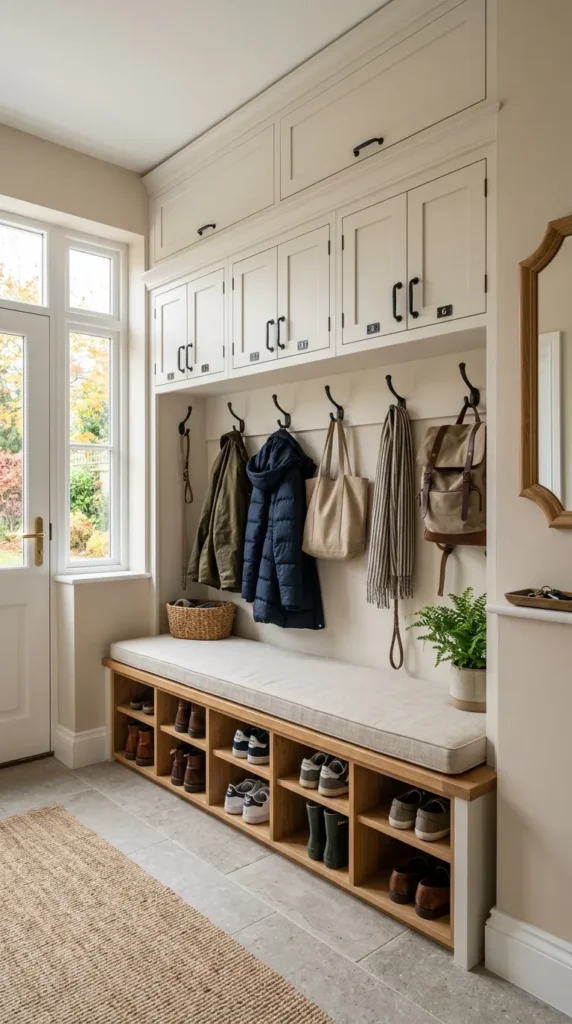
A bench is the single hardest working piece of furniture a mudroom can have, giving the household a place to sit while removing shoes and often doubling as storage for everything that would otherwise end up scattered across the floor. Choosing the right one shapes how well the entire entryway actually functions day to day.
The right bench depends on the household using it, how many people, how much storage is genuinely needed, and how much space the mudroom actually has to work with. These 29 ideas cover a wide range of materials, configurations, and storage styles to help find the bench that fits a specific entryway and the people who pass through it every day.
1. Choose a Built In Bench for a Custom Fit
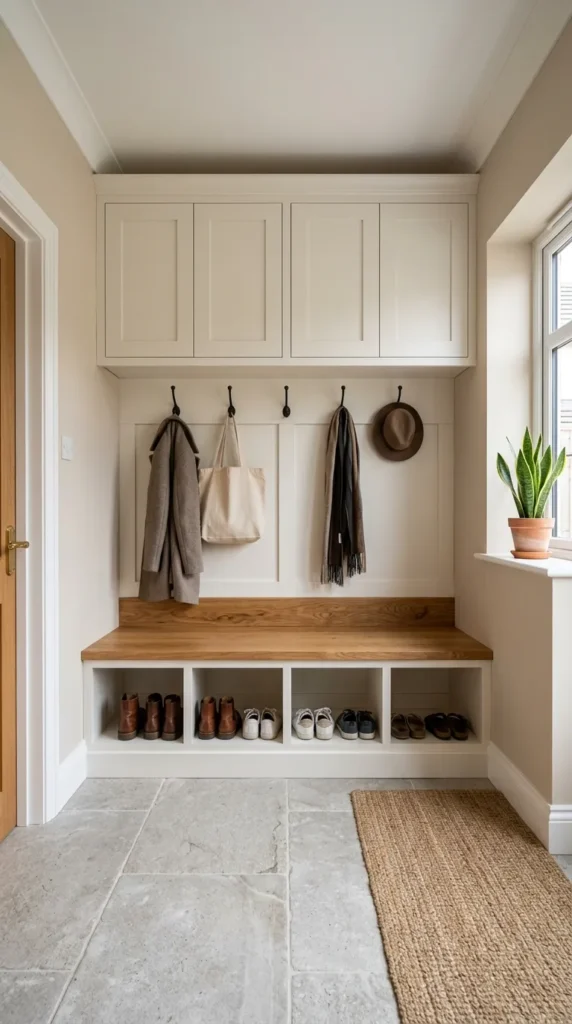
A bench built directly into the mudroom wall makes the most efficient use of the available space, since it can be sized exactly to fit the room’s actual dimensions rather than compromising with a standard, off the shelf size.
This option typically costs more and takes longer than a freestanding piece, but the payoff is a bench that looks and functions like it was always meant to be there, with no awkward gaps or mismatched proportions along the wall.
2. Add a Freestanding Bench for Flexibility
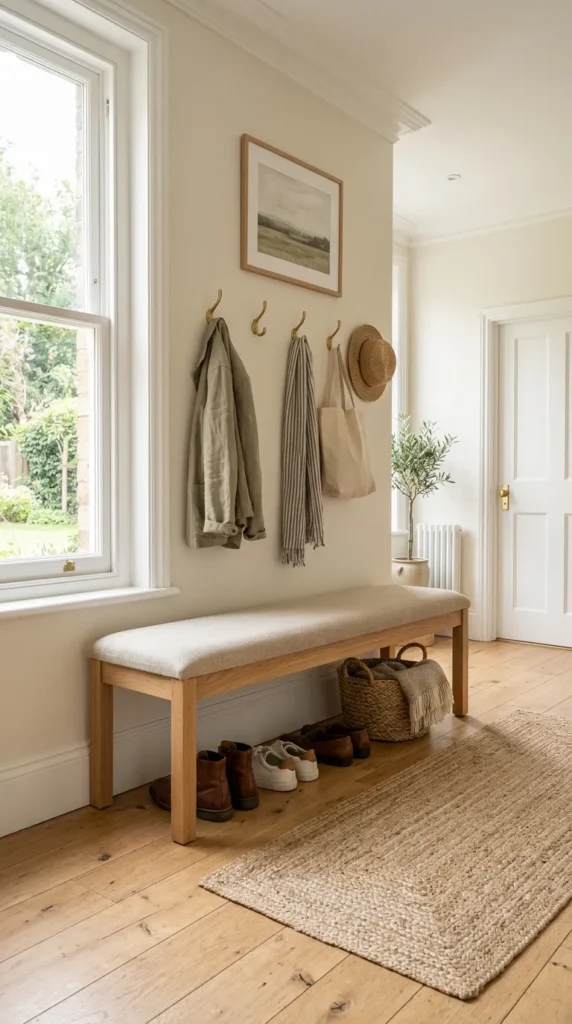
For anyone renting, still deciding on a permanent layout, or simply wanting the option to rearrange later, a freestanding bench offers nearly the same function as a built in without any permanent commitment to the space.
This works particularly well in mudrooms still finding their final layout, since a freestanding piece can be moved, replaced, or repositioned entirely without leaving behind any structural changes to patch or undo later.
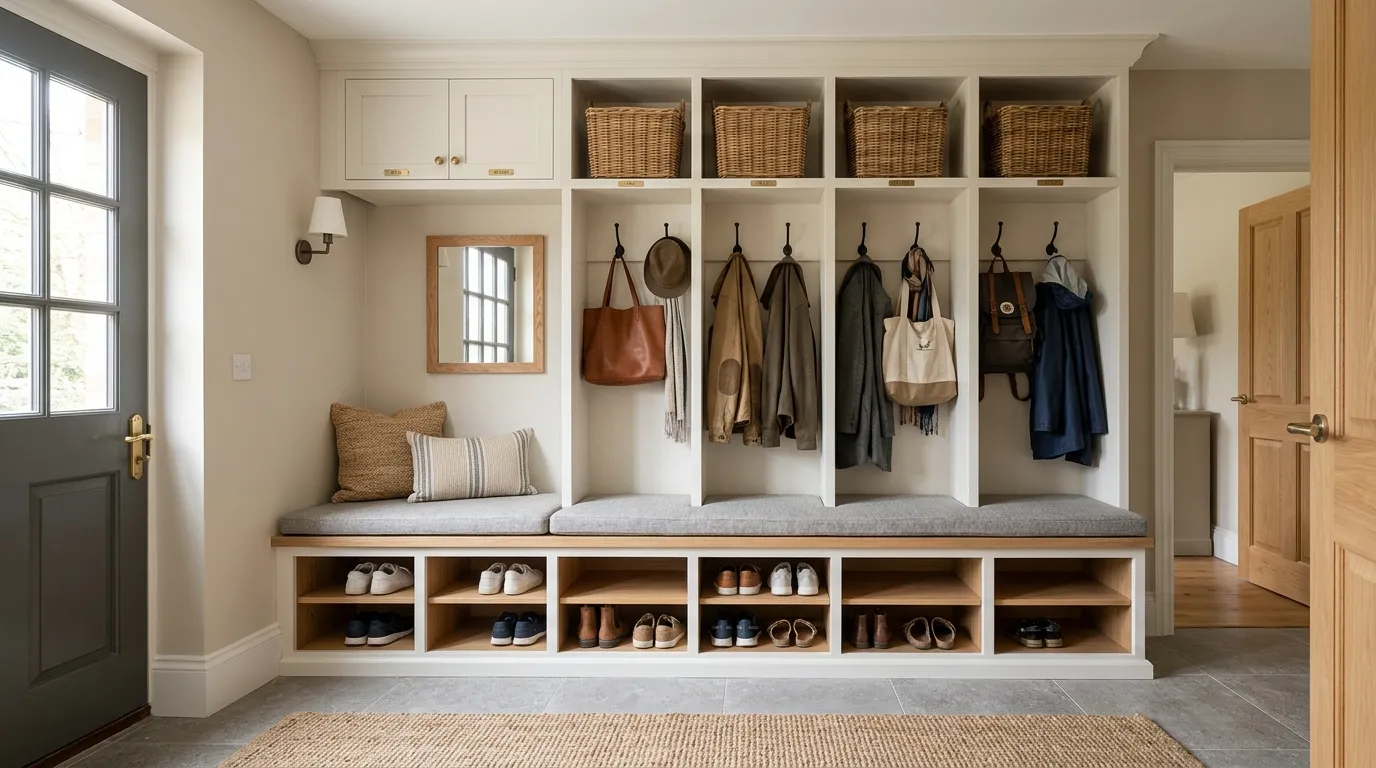
3. Choose a Bench With Cubbies Underneath
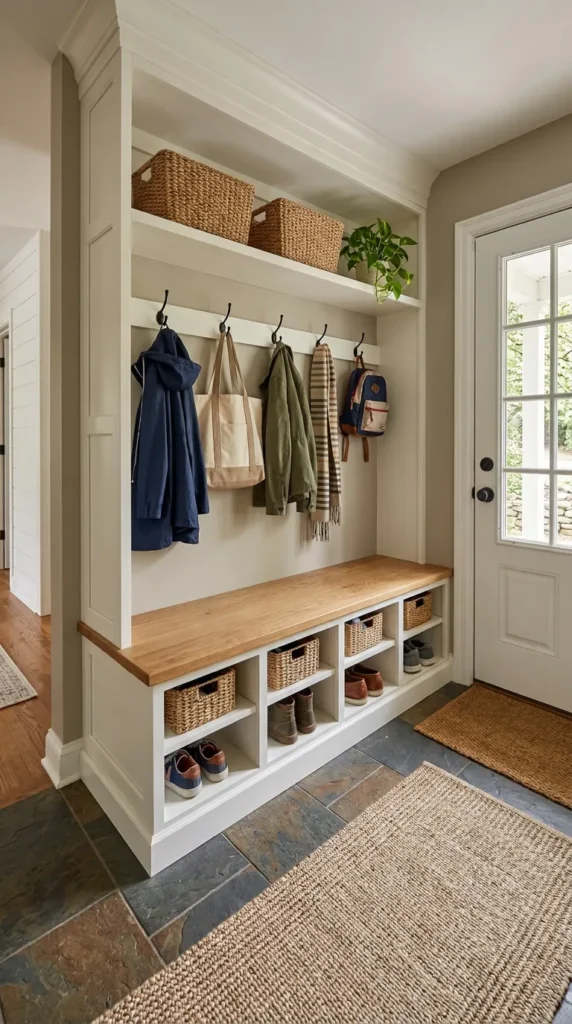
Open cubbies beneath the seat give each family member a designated spot for shoes, keeping footwear contained and visible rather than scattered loosely across the floor in front of the bench.
Sizing the cubbies to fit the actual number of household members using the entryway regularly, rather than a generic three or four opening design, makes a real difference in whether the system stays organized over time.
4. Add a Bench With Closed Storage Drawers
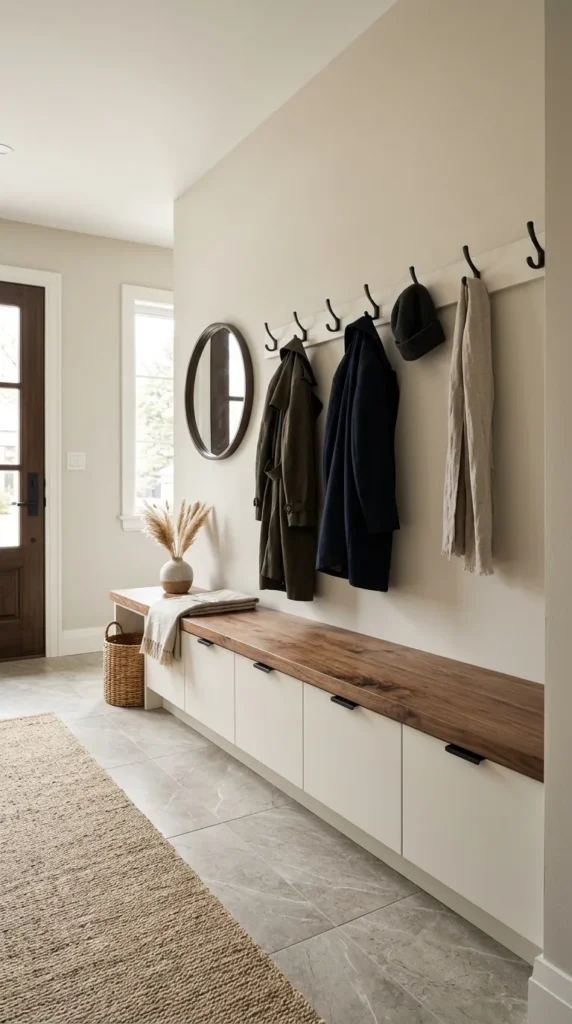
For households that prefer a tidier, less visually busy look, drawers underneath the bench hide shoes and gear behind a closed front rather than leaving everything on open display the way cubbies typically do.
This requires a bit more discipline to keep items actually put away, but for anyone who finds open storage visually cluttered, closed drawers deliver the same organizational function with a calmer, more streamlined overall appearance.
5. Use a Bench With Lift Up Storage Seating
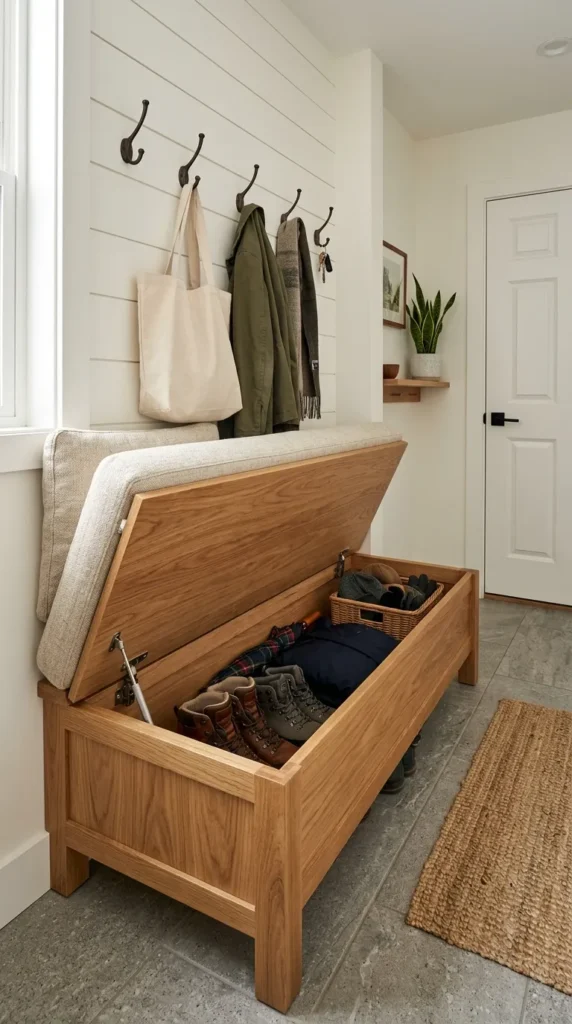
A bench with a hinged seat that lifts up to reveal storage underneath maximizes space in a smaller mudroom, since the storage compartment sits fully beneath the seating surface rather than requiring separate cubbies or drawers along the front.
This style works particularly well for storing bulkier seasonal items, winter boots, umbrellas, or sports gear, that do not need to be accessed as frequently as everyday shoes kept in a more visible cubby or open shelf.
6. Choose a Bench With Individual Lockers Above
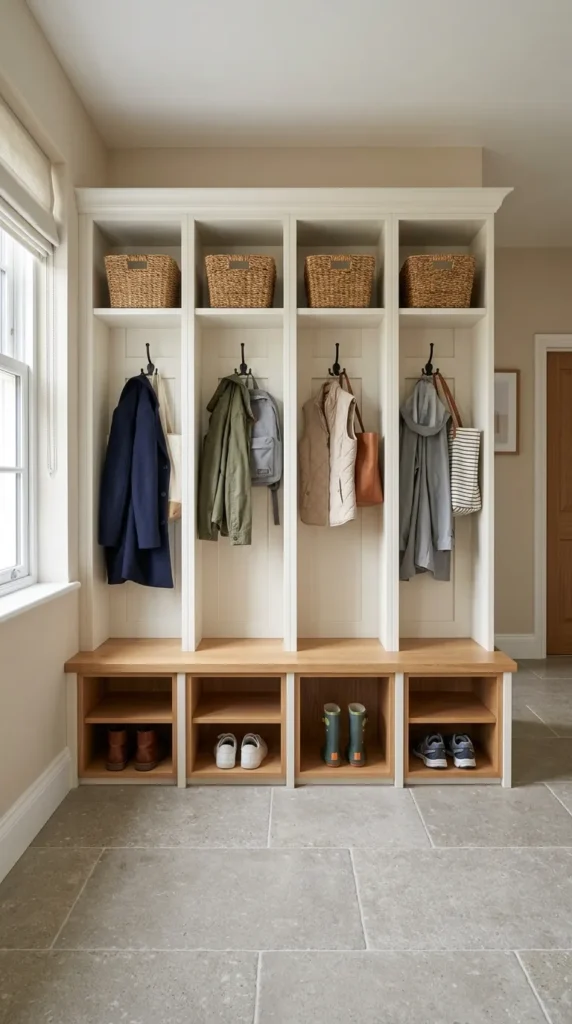
Pairing a bench with a column of small lockers rising above each seat gives every family member their own fully enclosed storage space, keeping coats, bags, and personal items separated and out of sight.
This configuration suits larger families particularly well, since it solves both seating and storage in one coordinated system, with each person’s section clearly defined rather than sharing an undifferentiated communal space.
7. Add a Wood Bench for Warmth and Durability
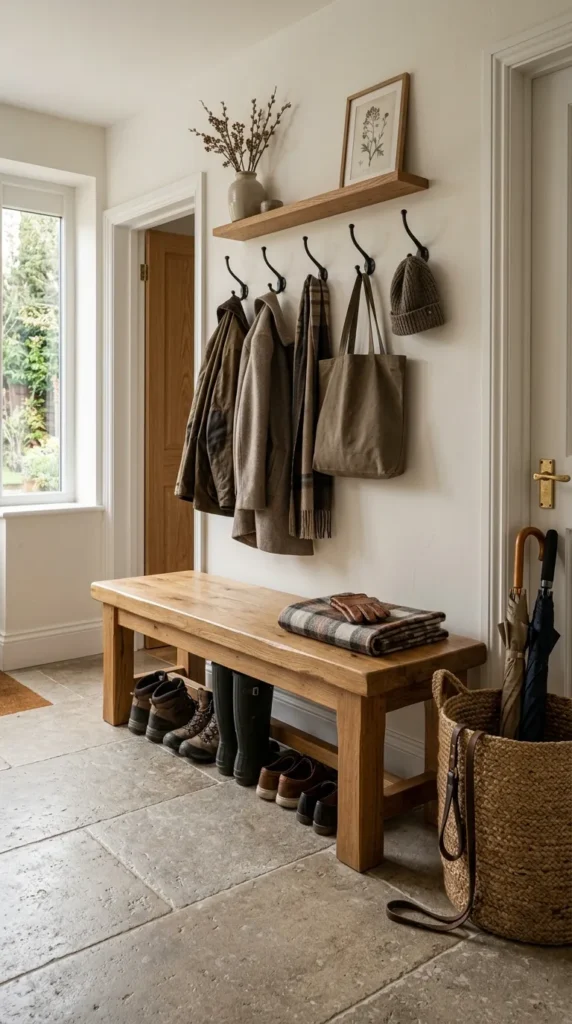
Solid wood remains one of the most durable and visually warm choices for a mudroom bench, holding up well to years of daily use while adding natural texture that pairs easily with almost any surrounding style.
Choosing a wood with a sealed or slightly weathered finish helps disguise the everyday scuffs and scratches this piece inevitably develops, keeping the bench looking presentable without needing to be treated with excessive caution.
8. Use a Metal Framed Bench for an Industrial Look
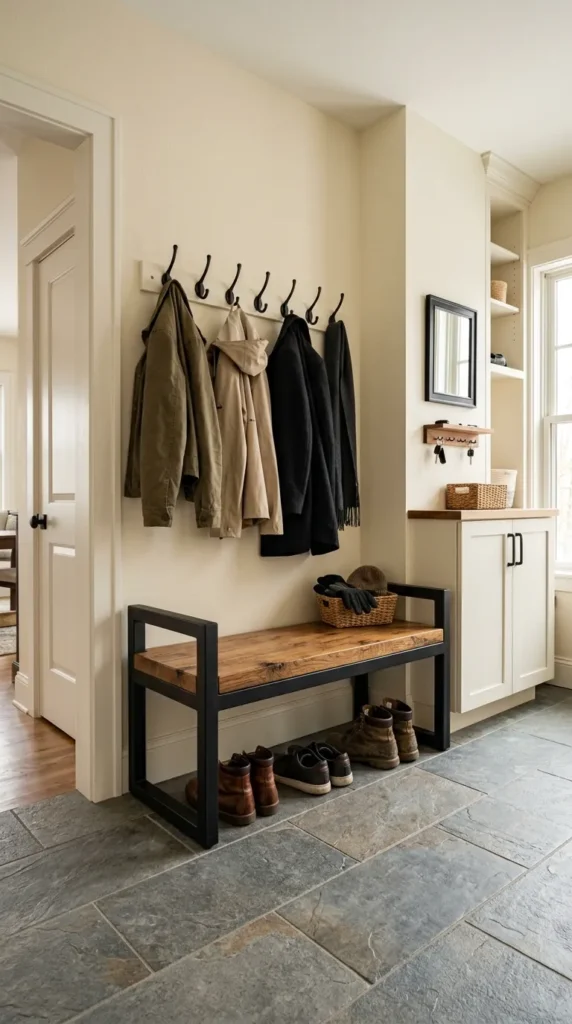
A bench with a black metal frame, paired with a wood or upholstered seat, brings a slightly industrial edge to the mudroom that suits homes with exposed brick, black hardware, or other metal detailing nearby.
This style also tends to be especially sturdy under regular daily weight and use, which matters in a room that deals with more physical wear than almost any other seating in the house.
9. Add an Upholstered Bench for Extra Comfort
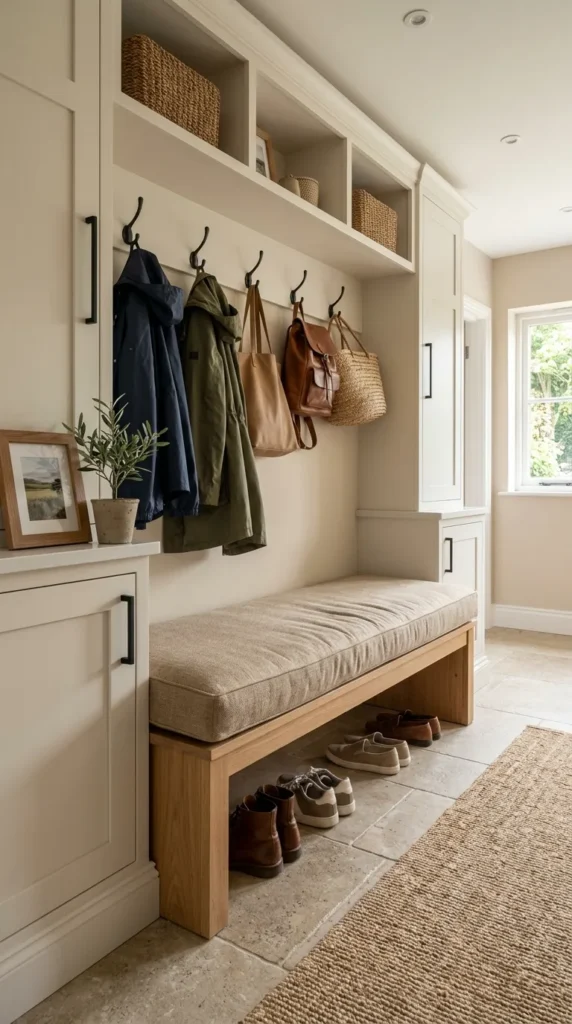
A cushioned or fully upholstered bench makes the daily task of removing shoes noticeably more comfortable than a hard wood or metal surface, and it softens the overall look of what can otherwise feel like an entirely utilitarian space.
Choosing an outdoor rated or easily cleaned fabric keeps this comfort upgrade practical, standing up to the dirt and moisture the rest of the mudroom regularly deals with rather than becoming something requiring constant spot cleaning.
10. Choose a Bench Sized for the Actual Household
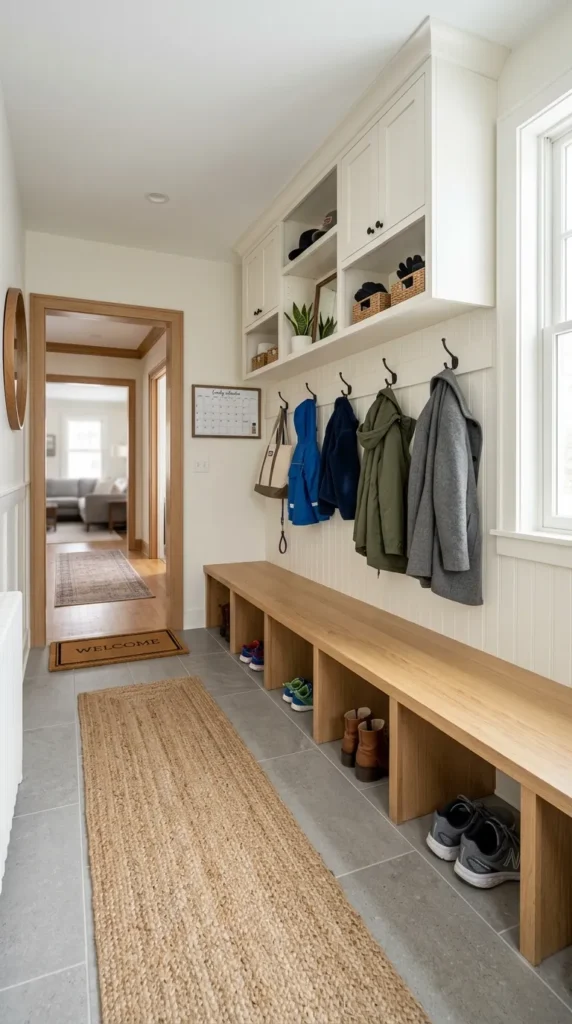
Rather than defaulting to a standard length, measuring how many people actually use the entryway at once, and sizing the bench accordingly, prevents the common problem of a bench too small for the household squeezing past each other every morning.
This small planning step matters more than almost any single style choice on this list, since even the most beautifully designed bench fails at its basic job if it cannot comfortably seat the people relying on it daily.
11. Add a Bench With a Built In Boot Jack
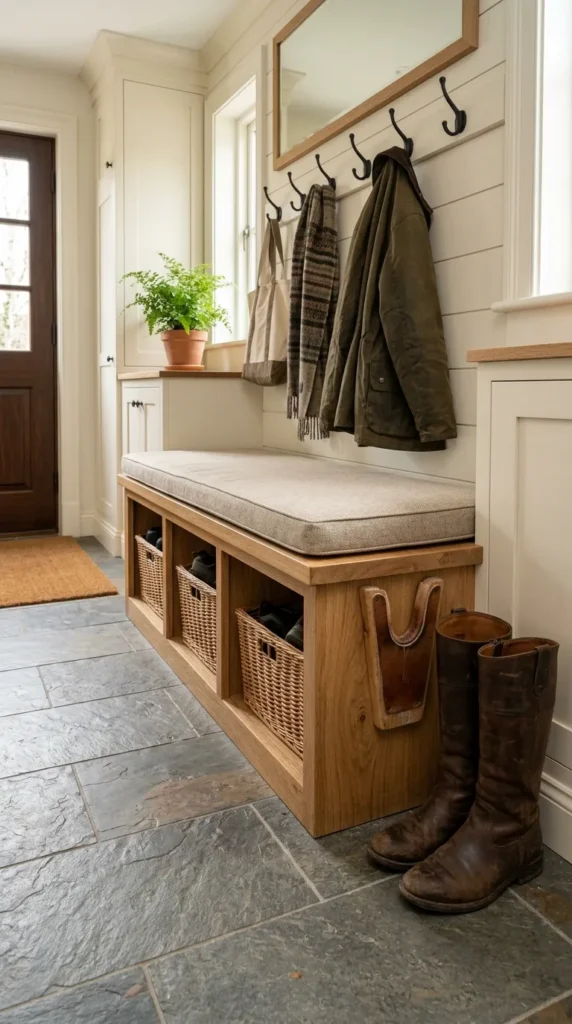
For households dealing with tall boots regularly, a bench with a built in notched attachment for pulling boots off hands free solves a small daily annoyance that a standard bench simply does not address on its own.
This works especially well in colder climates where winter boots see daily wear, turning what would otherwise be an awkward balancing act into a quick, simple part of the daily routine without needing to bend down at all.
12. Use a Bench With Hooks Mounted Directly Above It
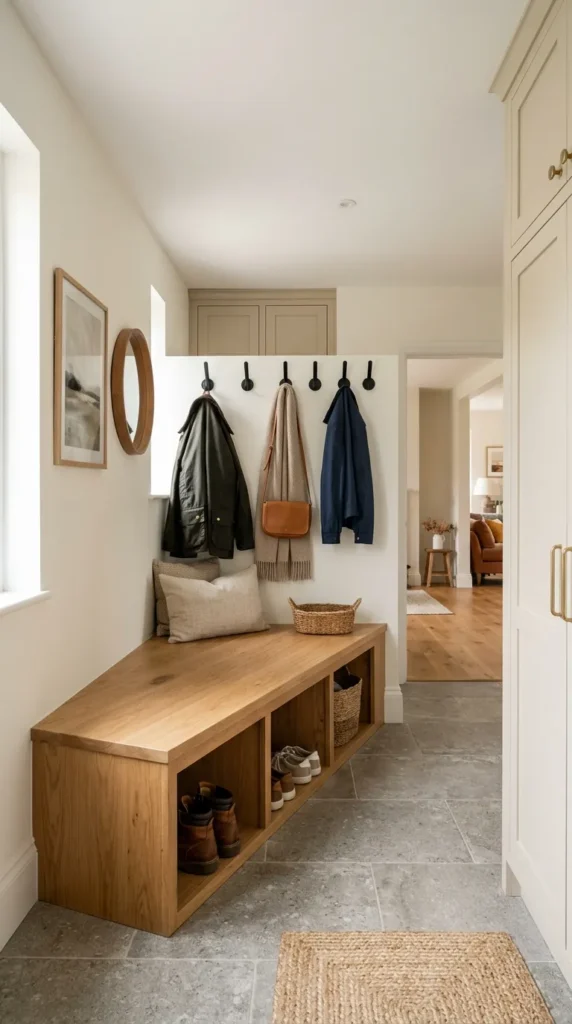
Mounting a row of hooks directly above the bench, rather than on a separate section of wall, keeps the entire seating and storage system contained to one coordinated zone rather than spread across the mudroom in a less organized way.
This layout also makes the connection between sitting down and hanging up a coat feel natural and automatic, since both actions happen in the same small area rather than requiring a walk to a separate part of the room.
13. Choose a Bench With a Slatted or Woven Seat
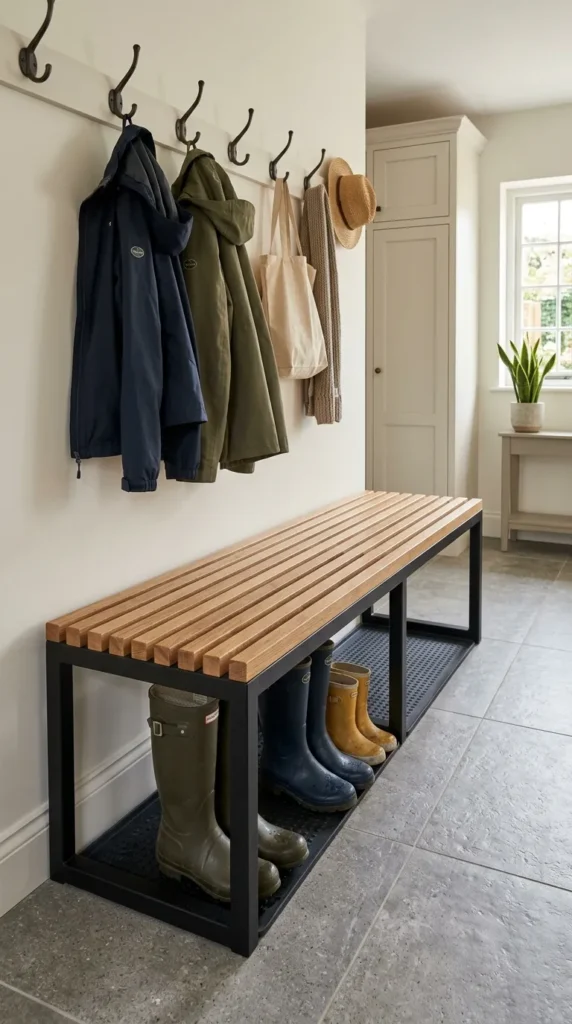
A bench with a slatted wood or woven rattan seat allows moisture from wet shoes or damp coats to pass through and air out, rather than trapping dampness against a solid, upholstered surface the way a fully cushioned bench sometimes does.
This is a particularly practical choice for households in wetter climates, where gear coming in from outside is more consistently damp and benefits from a seating surface designed to handle that moisture without holding onto it.
14. Add a Curved Bench for a Softer Layout
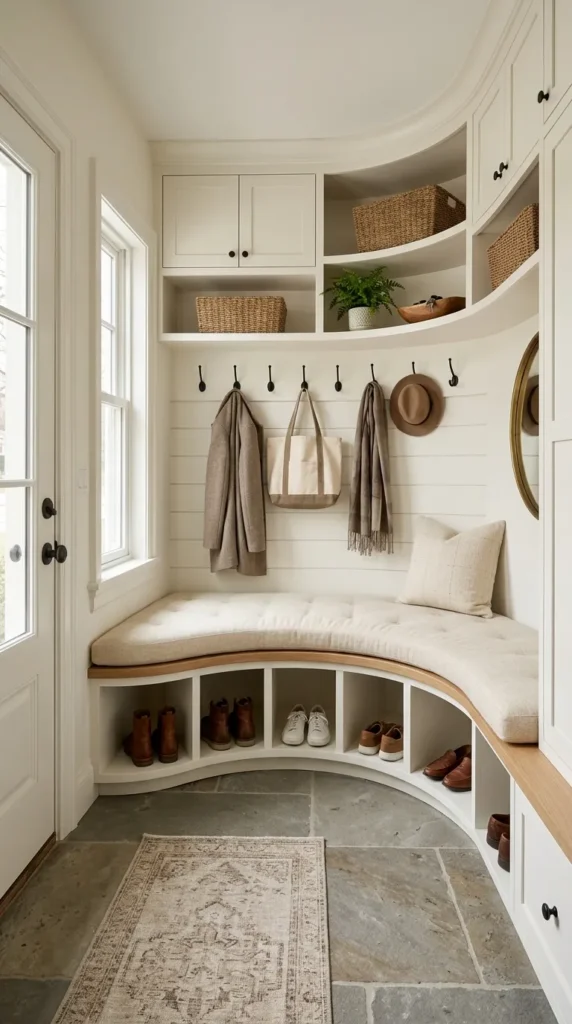
A bench with a gently curved shape, rather than a strictly straight rectangular design, brings a softer visual quality into the mudroom and can also work well in an entryway with an unusual or angled wall configuration.
This style suits homes leaning toward a more organic, contemporary interior design, and the curved shape often fits more comfortably into a corner or transitional space than a strictly straight bench would in the same footprint.
15. Use a Two Tone Bench for Visual Interest
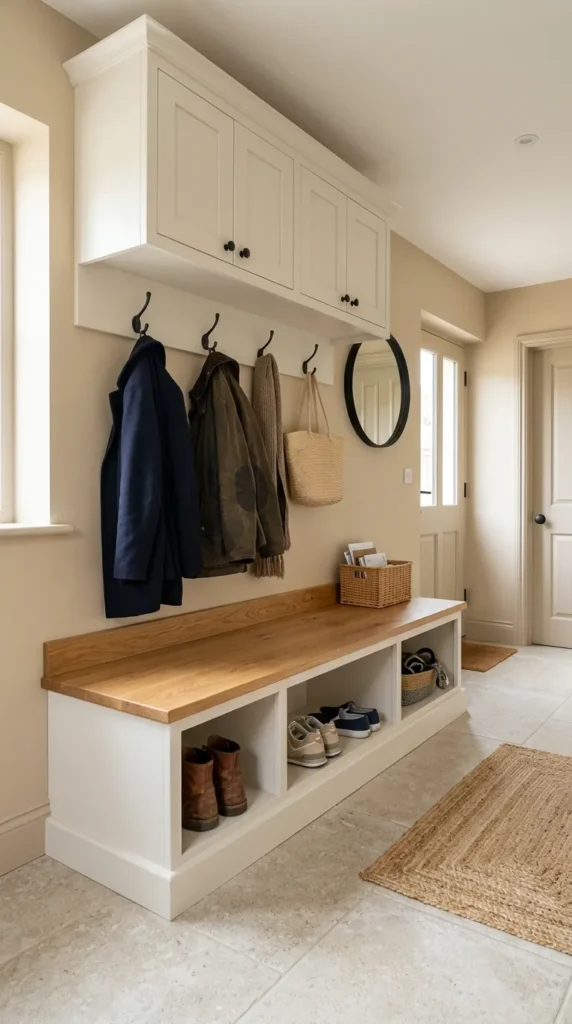
A bench combining two materials or colors, a dark wood seat with a white painted base, or a metal frame with a natural wood top, adds a bit of visual complexity that a single material bench does not offer on its own.
This approach also offers more flexibility when coordinating with the rest of the mudroom’s existing colors and materials, since a two tone bench can echo two different finishes already present in the surrounding space.
16. Add a Bench With a Basket Storage System
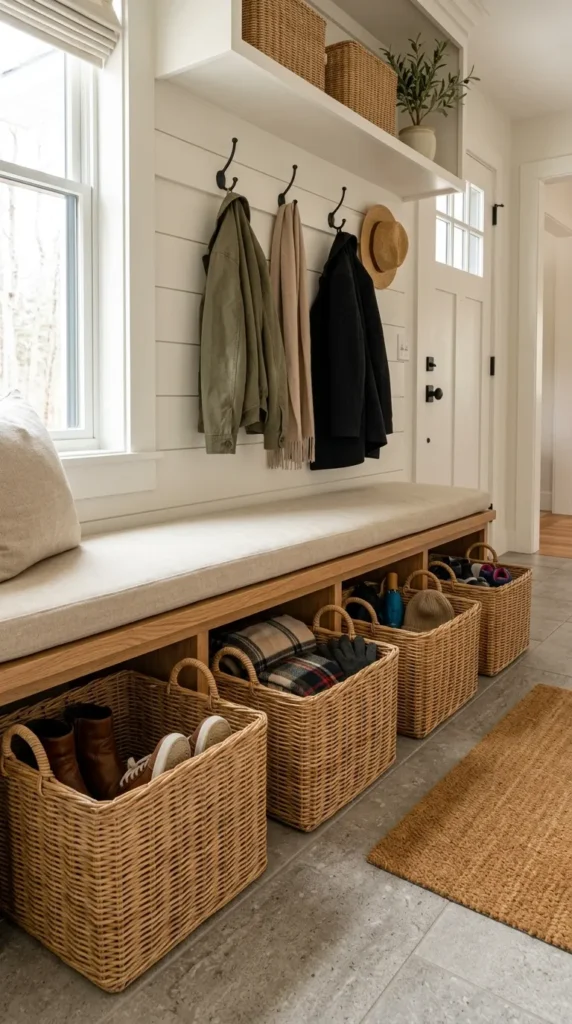
Rather than fixed cubbies or drawers, a bench designed around removable woven baskets combines flexible, easily accessible storage with a softer, more natural texture than plastic bins typically bring into the space.
This system also allows baskets to be pulled out entirely when needed, carried to a car or a closet for further sorting, which offers a bit more flexibility than storage fixed permanently in place beneath the bench.
17. Choose a Bench That Wraps Around a Corner
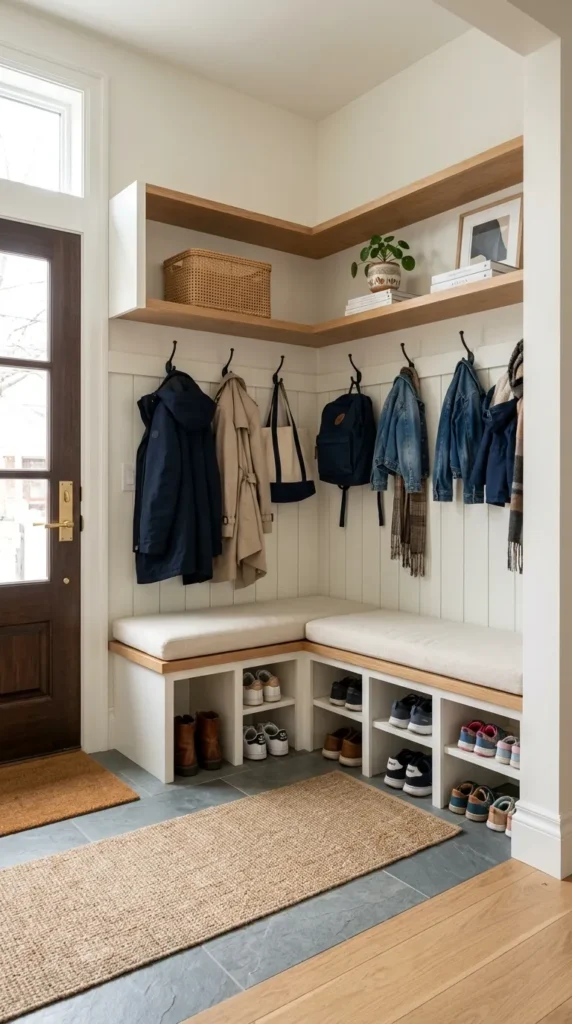
In mudrooms with an available corner, an L shaped bench that wraps around two walls maximizes seating capacity without extending the full length of either wall individually, which is especially useful in smaller or oddly shaped entryways.
This configuration also creates a slightly more social, gathered feeling than a single straight bench, giving multiple people a natural place to sit facing each other rather than lined up single file along one wall.
18. Add a Bench With a Padded Top and Hidden Storage
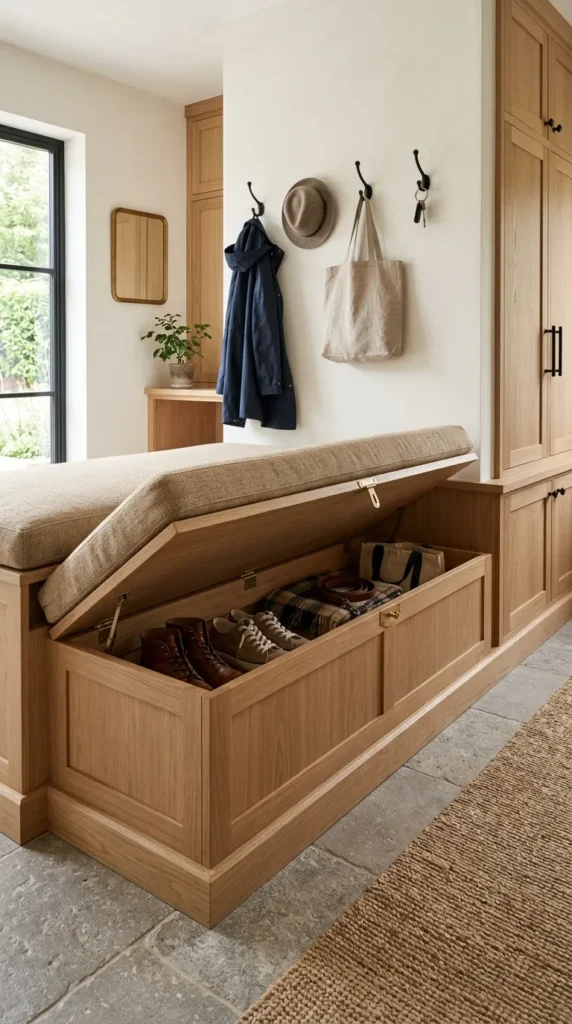
A bench that looks purely upholstered from the outside but conceals a hinged storage compartment underneath offers the comfort of a fully cushioned seat while still providing the practical storage a mudroom genuinely needs.
This works particularly well for households that want the mudroom to feel a bit more like a furnished room and less like purely utilitarian storage, without actually sacrificing the organizational function the space still needs to perform.
19. Use a Narrow Bench for a Tight Entryway
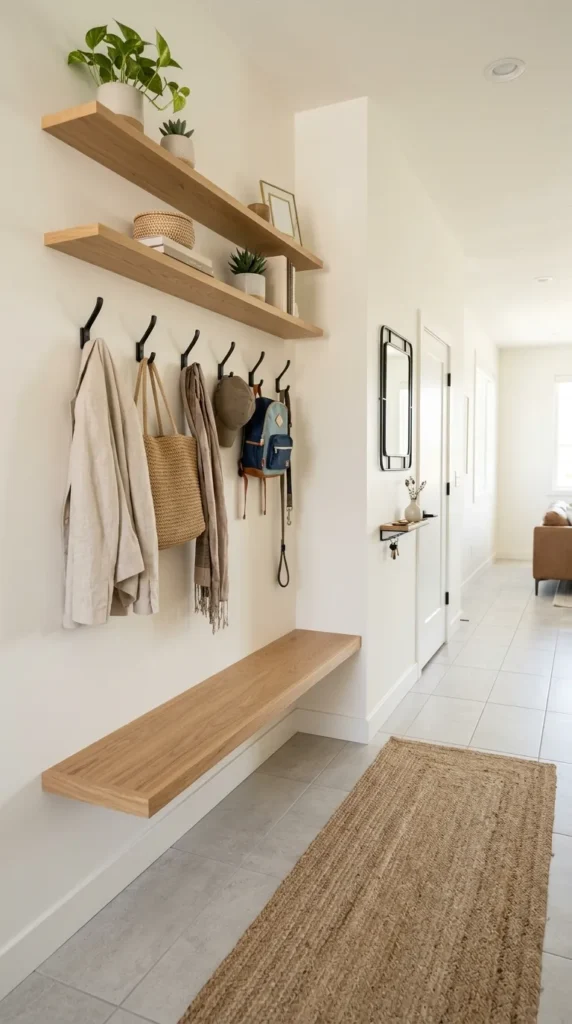
In mudrooms with limited depth, a narrow bench, sometimes without full storage underneath, still provides a place to sit without protruding far enough into the walkway to become an obstacle for people passing through.
This is a practical compromise for smaller homes, prioritizing the seating function over storage capacity, and pairing a narrow bench with wall mounted hooks and shelving elsewhere makes up for the storage space the bench itself cannot provide.
20. Add a Bench With a Chalkboard or Cork Panel Backing
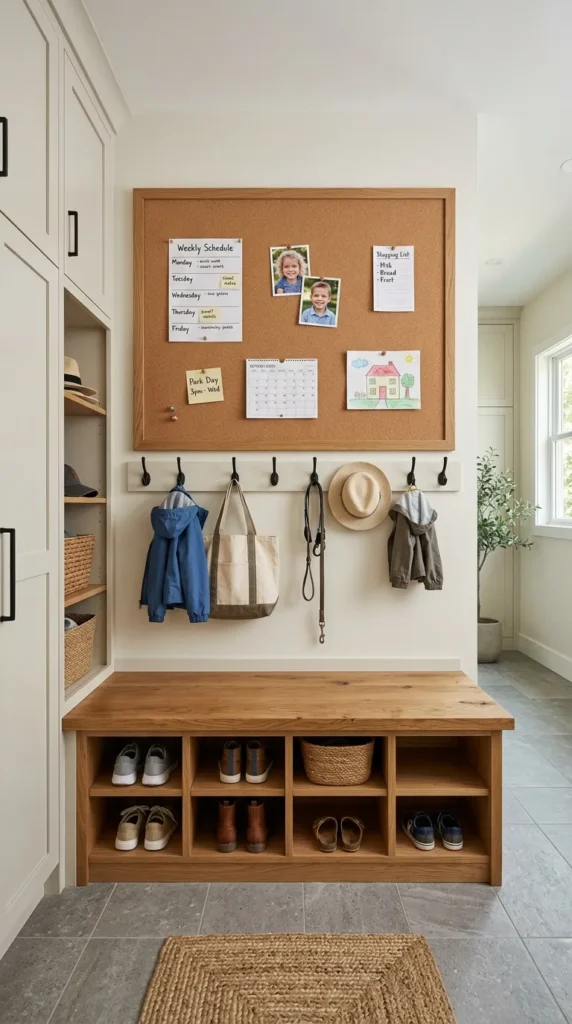
Positioning the bench against a wall finished with a chalkboard or cork panel gives the household a shared spot for notes and reminders directly above the seating area, combining two useful functions in the same coordinated space.
This works particularly well for families managing busy schedules, giving everyone a natural place to check reminders while sitting down to put on shoes each morning, rather than needing to glance at a separate part of the room entirely.
21. Choose a Bench Finish That Resists Moisture Damage
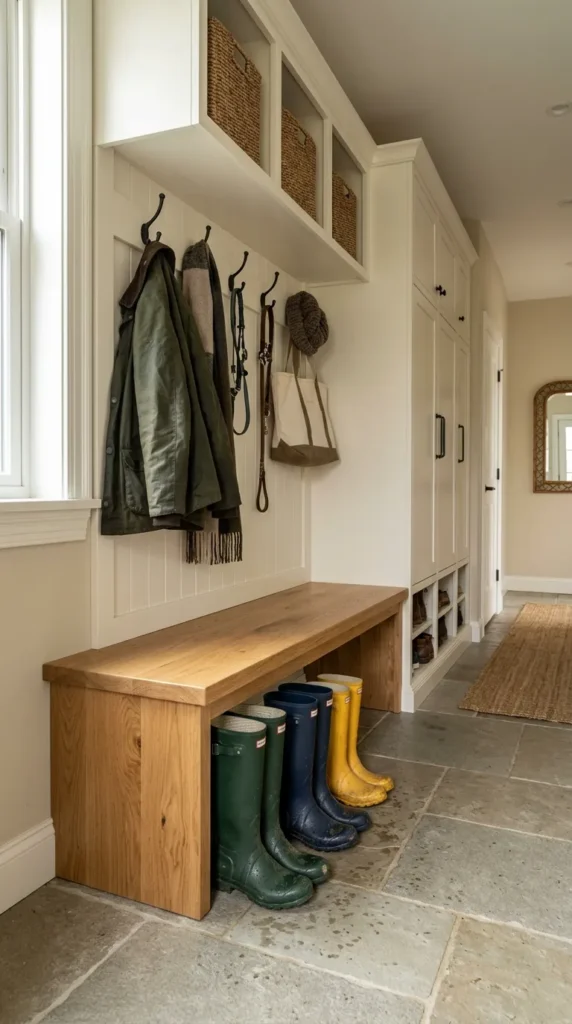
Because shoes and boots coming in from outside are often wet or damp, a bench finished with a sealed, moisture resistant coating prevents the warping and staining that untreated wood or fabric eventually develops under regular exposure.
This matters more for a mudroom bench than almost any other seating in the house, since this particular piece deals with damp footwear on a genuinely daily basis rather than occasional exposure furniture elsewhere might experience.
22. Add a Bench Designed for Small Kids
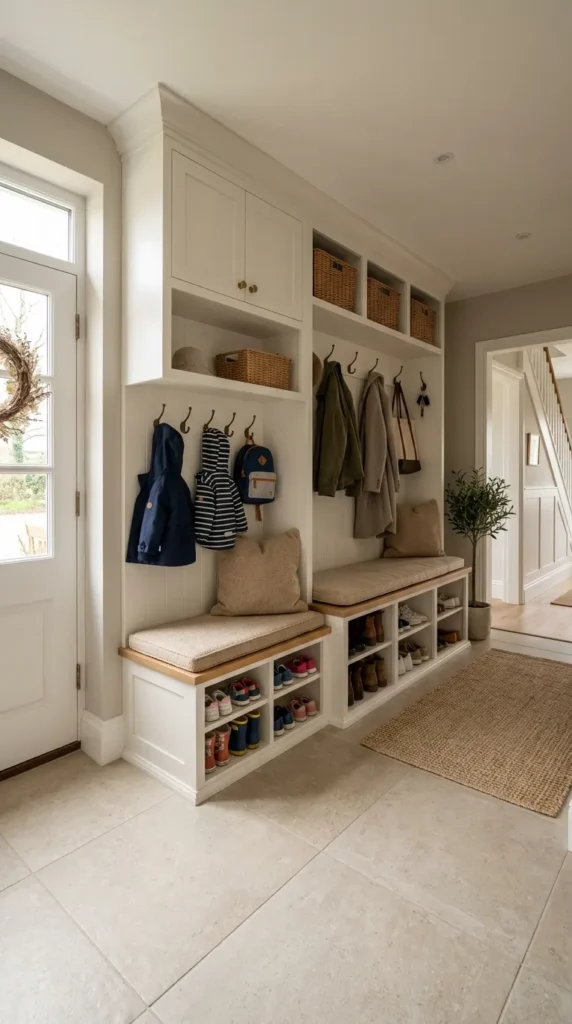
A lower, child sized bench section, either built into a larger family bench or as a separate smaller piece, gives young kids their own appropriately scaled spot to sit rather than needing help climbing onto adult height seating every time.
This small addition encourages independence in kids managing their own shoes and coats, building a habit that tends to carry into using the rest of the mudroom’s organizational system correctly and consistently as they get older.
23. Use a Vintage Bench for Character
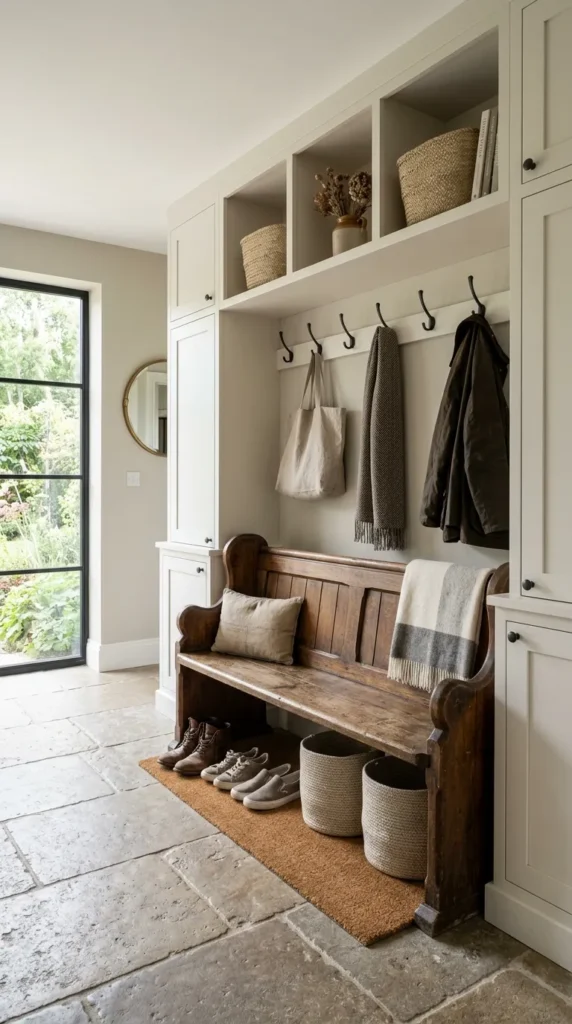
A reclaimed church pew, an antique storage trunk repurposed as a bench, or another vintage find brings genuine history and character into the mudroom, standing apart from the more uniform look of a brand new piece.
This works particularly well paired with simpler, more modern storage elsewhere in the room, letting the bench carry a bit of contrasting character rather than every element in the space matching a single uniform style throughout.
24. Add a Bench With Adjustable or Modular Storage
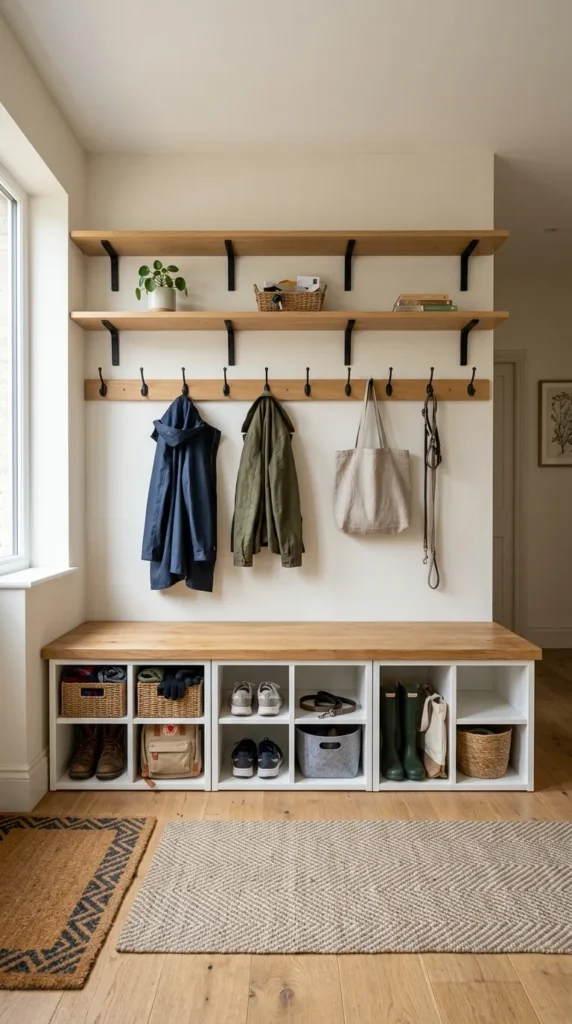
A modular bench system, with sections that can be added, removed, or rearranged over time, offers flexibility for households whose storage needs change as kids grow, seasons shift, or the family itself grows larger.
This approach requires a bit more planning upfront, but it means the bench can adapt over years of use rather than needing to be fully replaced the moment the household’s original configuration no longer fits its current needs.
25. Choose a Bench in a Bold Color for Personality
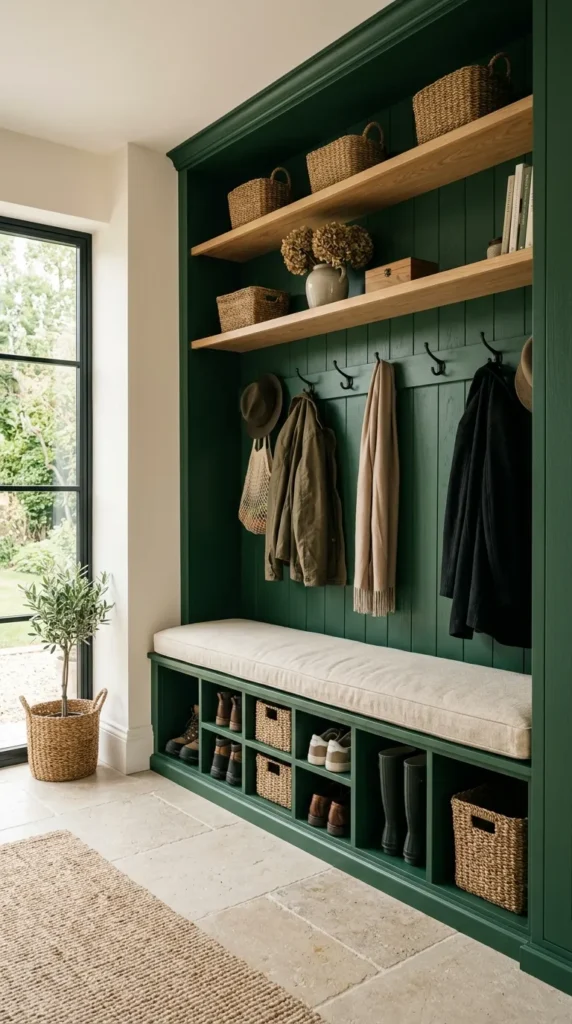
Rather than a neutral wood or black finish, a bench painted in a bold color, a deep green, a warm terracotta, or a cheerful yellow, gives the mudroom personality and turns a purely functional piece into a genuine design feature.
This works particularly well in a mudroom that otherwise leans utilitarian, giving the space a bit of warmth and character without requiring changes to the flooring, walls, or storage systems already in place around it.
26. Add a Bench With Ventilated Cubbies for Wet Shoes
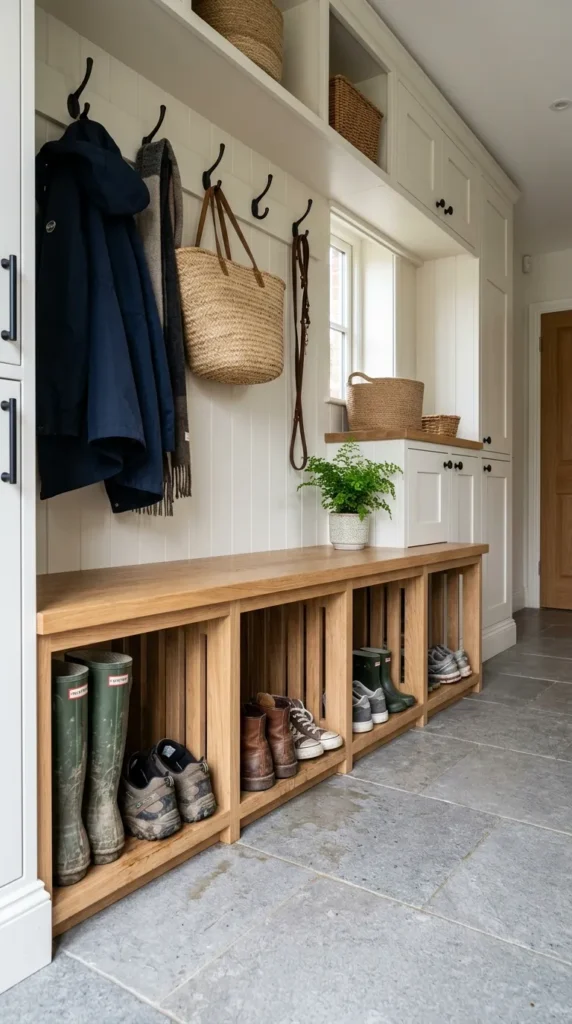
Cubbies with slatted or perforated backs allow air to circulate around wet shoes stored underneath the bench, helping them dry more fully than a fully enclosed, solid backed cubby would allow over the same period of time.
This small design detail matters more than it might initially seem, since shoes stored damp in an unventilated space tend to develop odor and mildew far more quickly than those given the chance to air out properly between uses.
27. Use a Bench That Doubles as a Plant Display
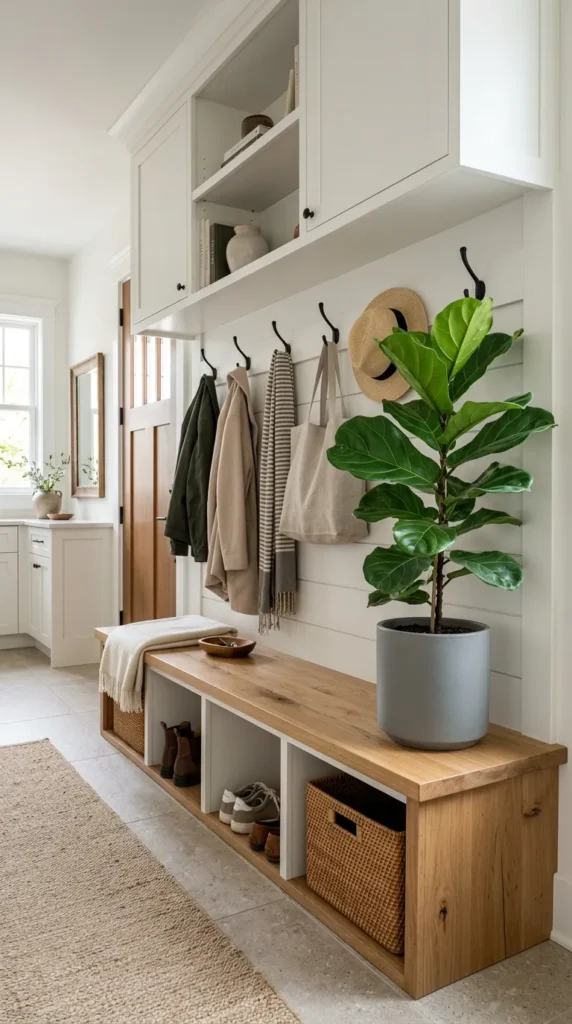
In mudrooms with a bit of extra length, one end of the bench left clear for a tall plant or a small arrangement brings a bit of life and color into a space that otherwise leans heavily on hard, functional surfaces.
This works particularly well as a way to soften the utilitarian feeling of a bench primarily focused on storage, giving the piece a small decorative moment alongside its main practical purpose within the entryway.
28. Add a Bench With Built In Charging Access
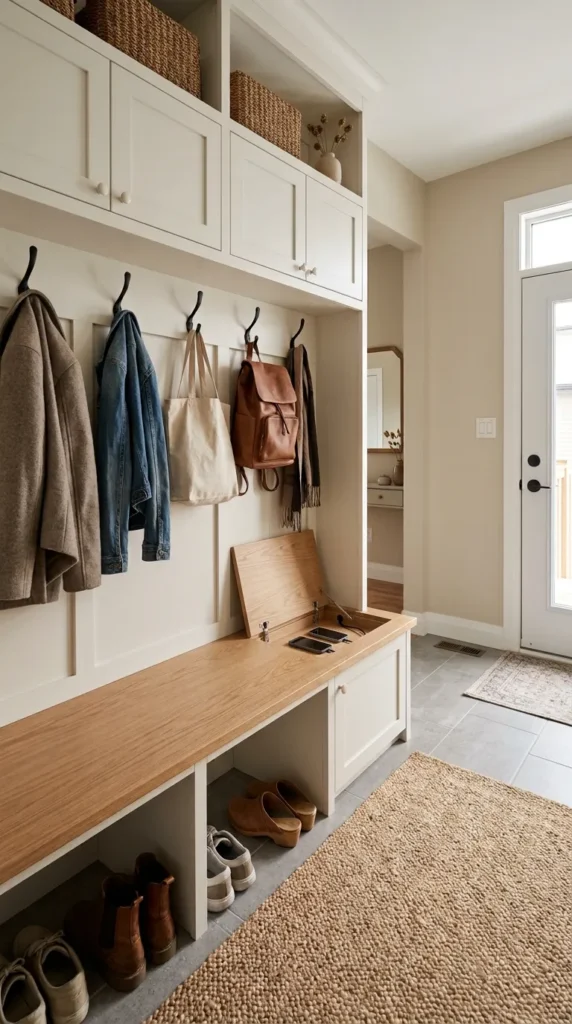
A bench positioned near an outlet, or one with a small built in charging station integrated into its design, gives the household a place to charge phones or devices right where bags and coats are already being set down.
This small functional addition keeps devices from ending up scattered across kitchen counters instead, consolidating another daily habit into the same coordinated zone the bench and its surrounding storage already handle.
29. Keep the Bench Proportional to the Room’s Scale
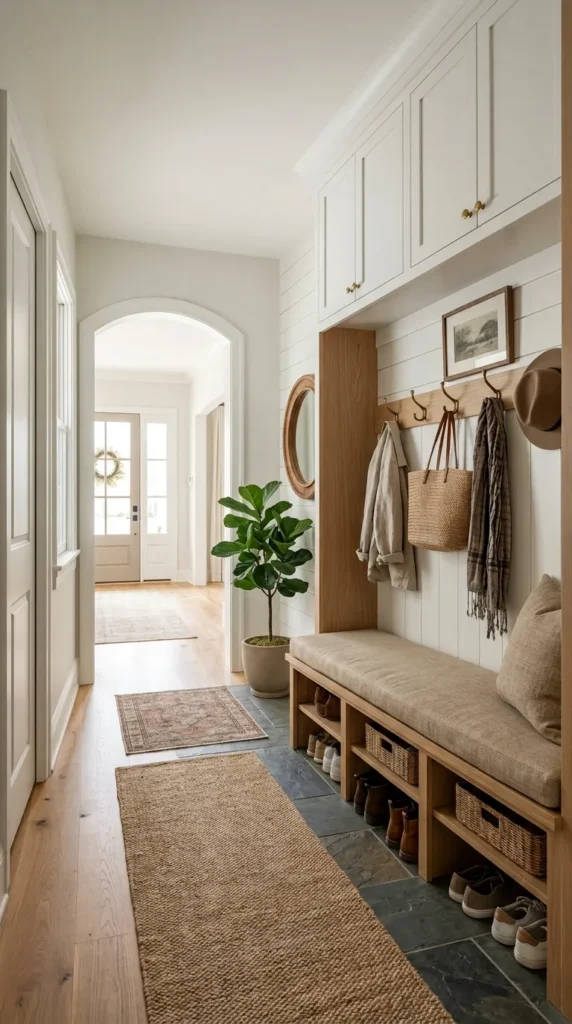
A bench that is too large for a small mudroom becomes an obstacle rather than a help, while one too small for a larger, more spacious entryway can look underwhelming and fail to anchor the room the way a properly scaled piece would.
Measuring the actual available wall space before choosing a bench, rather than estimating by eye, prevents this common mismatch and ensures the finished piece genuinely suits the proportions of the specific room it needs to function in every day.
Final Thoughts
A mudroom bench earns its place through daily use, not first impressions, which means the right choice depends far more on the household actually using it than on whatever style happens to be trending at the moment.
Start by measuring the space honestly and counting how many people the bench actually needs to seat, then choose a storage style, cubbies, drawers, or baskets, that matches how the household naturally organizes shoes and gear. A bench chosen with real daily habits in mind keeps the whole entryway functioning smoothly with very little ongoing effort required.