25 Stylish Barn Door Closet Ideas to Elevate Your Room
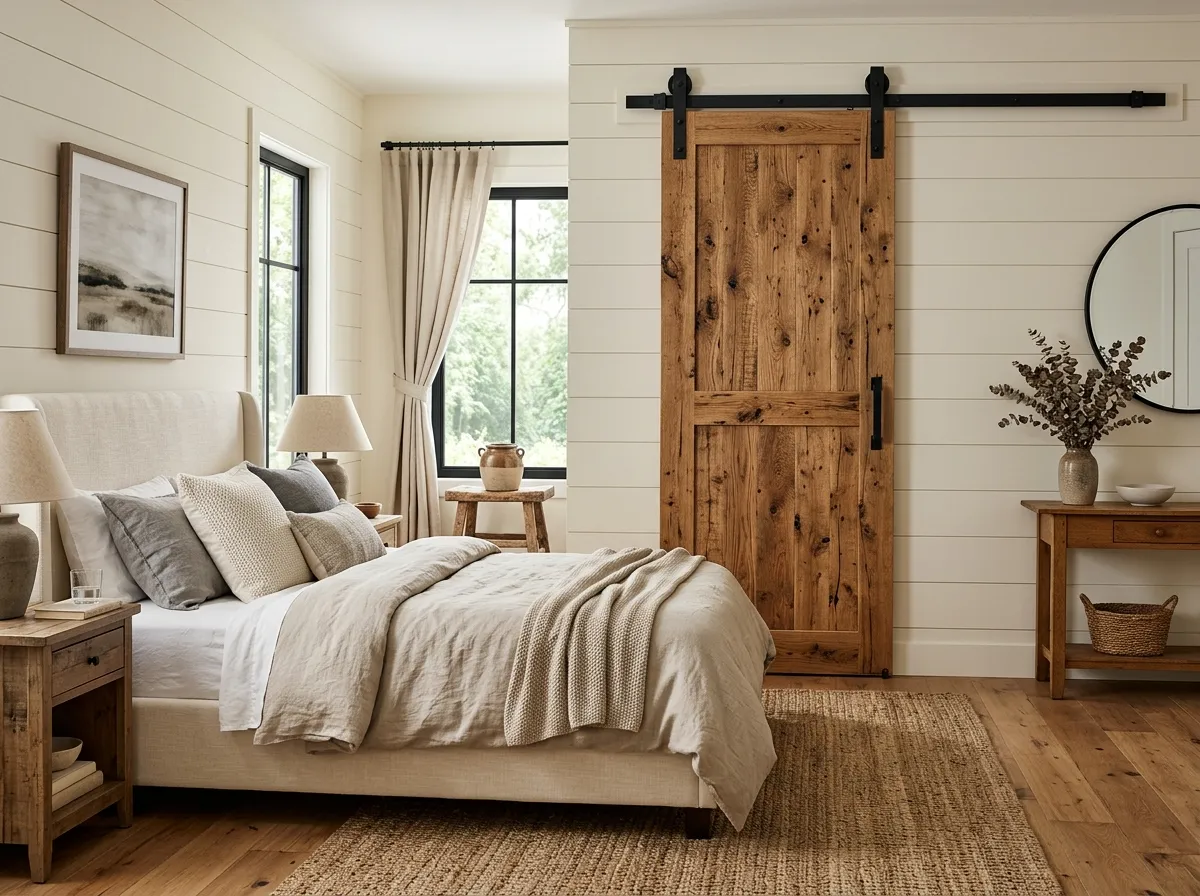
A barn door on a closet does something a standard hinged or bifold door rarely manages: it turns a purely functional element into a genuine design feature. Because the door slides along the wall rather than swinging into the room, it also solves a practical problem that many bedrooms and hallways struggle with, reclaiming floor space that a traditional door would otherwise require to open and close.
The right barn door depends heavily on the room it’s going into. A reclaimed wood door suits a farmhouse bedroom in a way that would look out of place in a sleek, contemporary space, while a black steel framed glass door does the opposite. These 25 ideas cover the full range of materials, finishes, and configurations, along with the practical details, hardware, wall clearance, track style, that determine whether a barn door closet looks genuinely considered or simply installed.
1. Choose a Single Sliding Door for a Narrow Closet
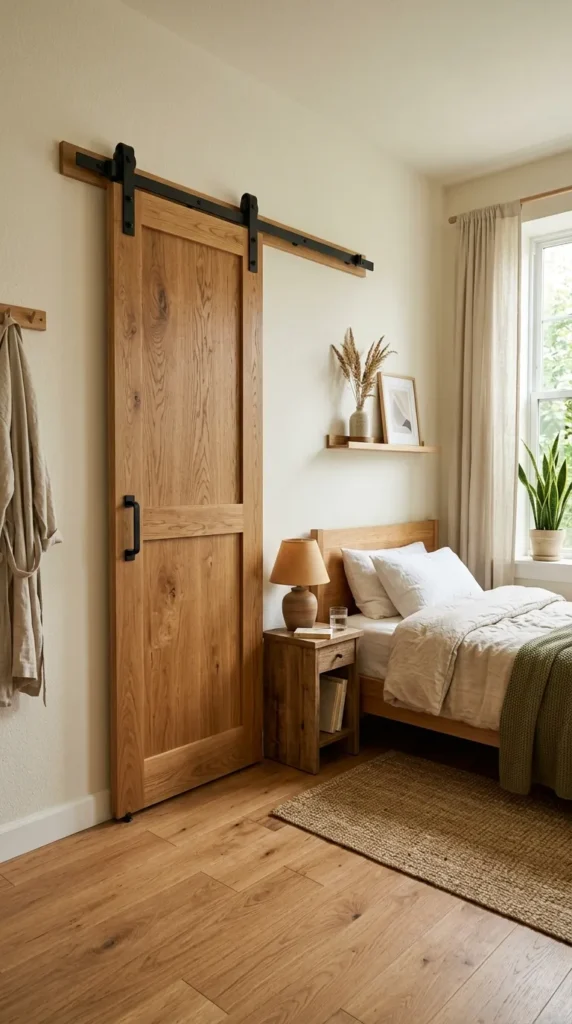
For a standard sized closet opening, a single sliding barn door is the simplest and most space efficient option, requiring only enough wall space to one side for the door to slide open fully. This makes it a straightforward upgrade for a bedroom or hallway closet that currently has a bifold or standard hinged door taking up unnecessary floor space.
A single door also keeps the hardware and installation relatively simple compared with a double door setup, which makes this the most accessible starting point for anyone new to barn doors and looking for a manageable first project rather than a larger renovation.
2. Use a Double Barn Door for a Wide Opening
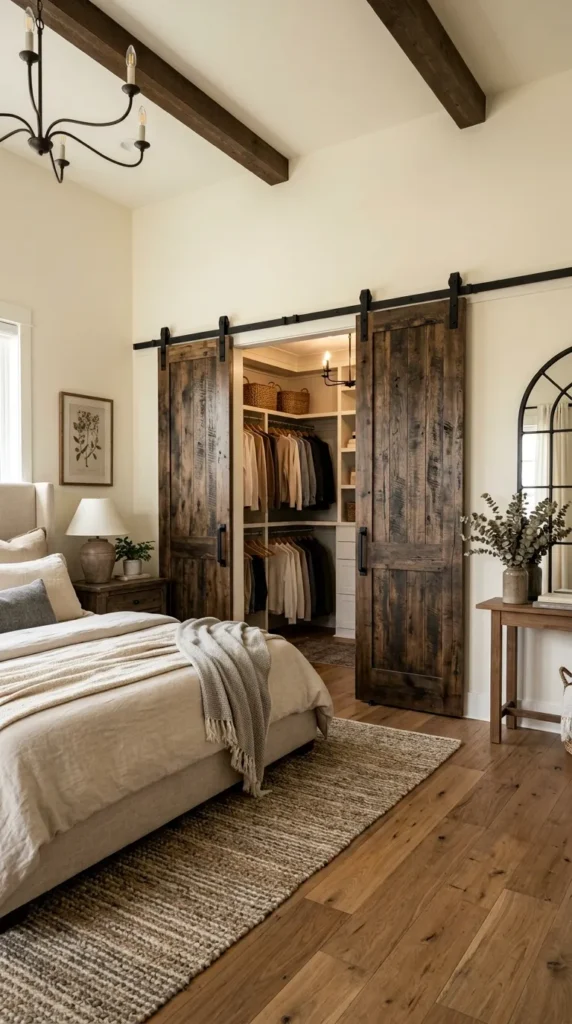
For a wider closet, particularly a walk in, two barn doors sliding in opposite directions along a shared track create a more balanced, symmetrical look than a single oversized door would. This configuration also allows the full width of the closet to be exposed when both doors are open, which is useful for a closet accessed frequently throughout the day.
Double doors require wall space on both sides of the opening for the doors to slide into, so this option depends on having enough uninterrupted wall on either side of the closet, which is worth confirming before committing to this configuration over a single sliding door.
3. Pick a Wood Finish That Matches Existing Flooring
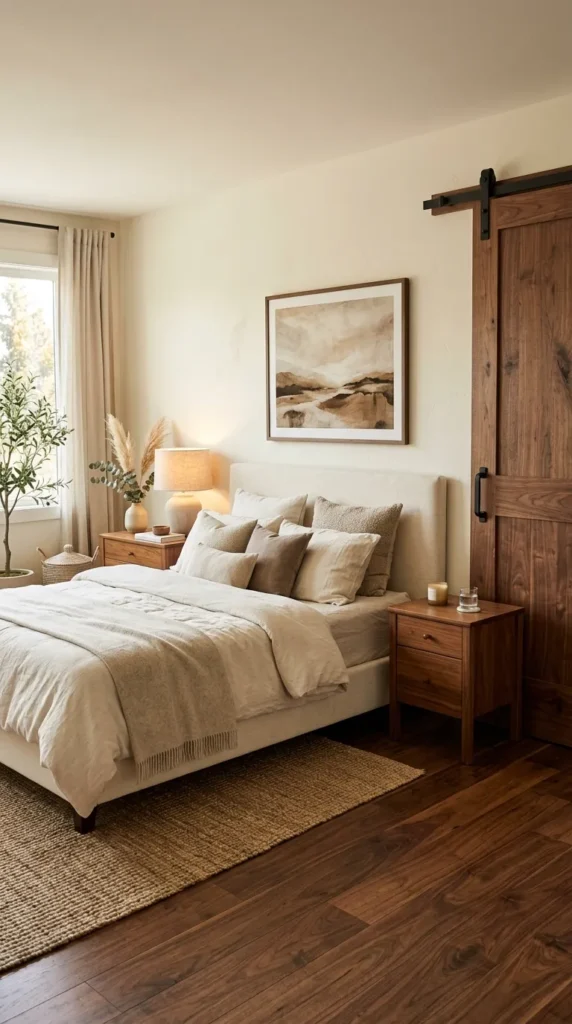
Choosing a barn door in a wood tone that closely matches or complements the room’s existing flooring creates a sense of intentional continuity between the door and the rest of the space, rather than the door reading as a separate addition unrelated to everything around it. This is a simple but effective way to make a new door feel like it belongs.
Where an exact match isn’t available, choosing a wood tone within the same warm or cool family as the flooring achieves a similar cohesive effect, even if the specific species or finish differs slightly between the two.
4. Try a Black Steel Frame Door for a Modern Look
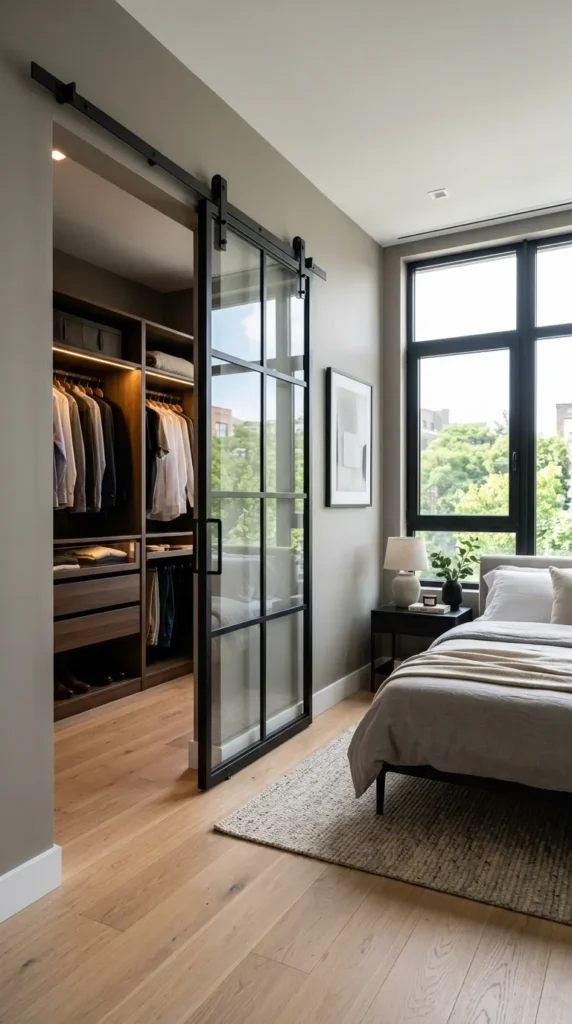
A barn door with a black steel frame, whether solid panels or glass inserts within the metal grid, brings a distinctly modern, industrial character that suits a contemporary bedroom or a room already leaning toward that aesthetic elsewhere. The thin, structured lines of the steel frame contrast sharply with the softer, more traditional look of a solid wood door.
This option pairs particularly well with matte black hardware throughout the rest of the room, light fixtures, cabinet pulls, window frames, creating a cohesive metal finish that ties the closet door into the broader design of the space rather than standing alone.
5. Add Glass Panels for a Semi Transparent Look
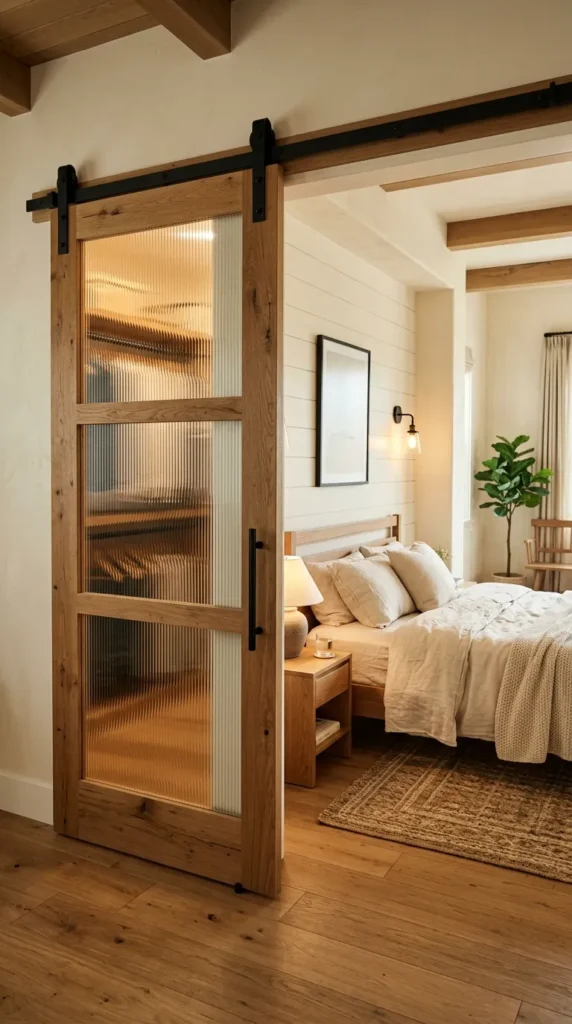
A barn door with glass panels, whether clear, reeded, or fluted, brings light through into a closet or hallway that would otherwise stay fully enclosed, while still providing a visual and physical barrier between the two spaces. This works particularly well for a pantry or linen closet where some visibility into the contents is genuinely useful.
Frosted or textured glass options provide this benefit while maintaining more privacy than clear glass, obscuring the specific contents of the closet while still allowing light to pass through, which is often the more practical choice for a bedroom closet specifically.
6. Use a Mirrored Barn Door for Dual Function
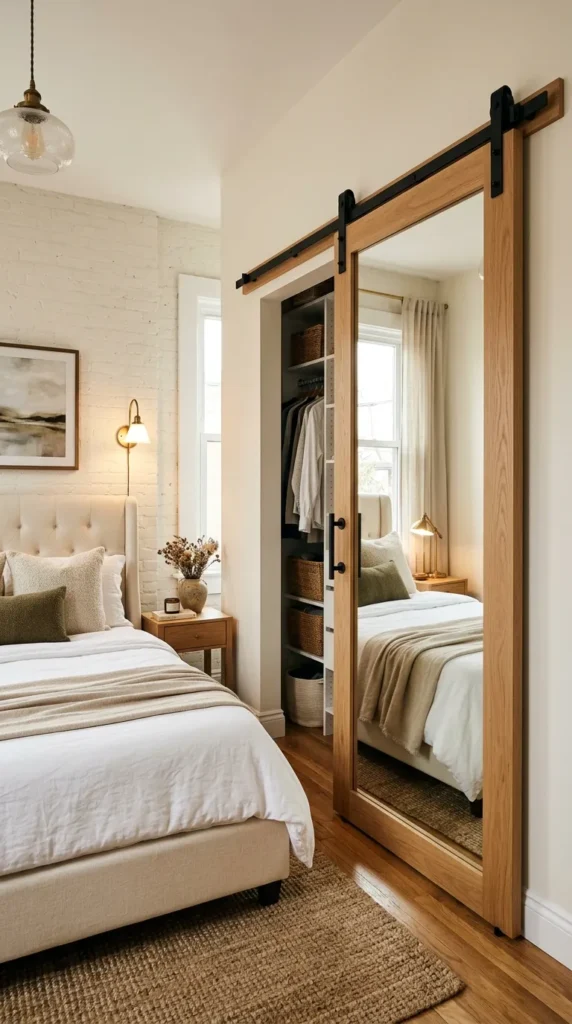
A full length mirror mounted directly onto a barn door panel combines two functional needs, closet access and a full length mirror, into a single piece, which is particularly valuable in a smaller bedroom where wall space for a separate mirror is limited. The sliding mechanism also means the mirror can be positioned exactly where it’s most useful by simply sliding the door.
This option works best with a sturdy, well balanced door and quality hardware, since the added weight of a mirror panel requires a track and roller system rated to handle it safely and smoothly over years of daily use.
7. Choose a Reclaimed Wood Door for Rustic Character
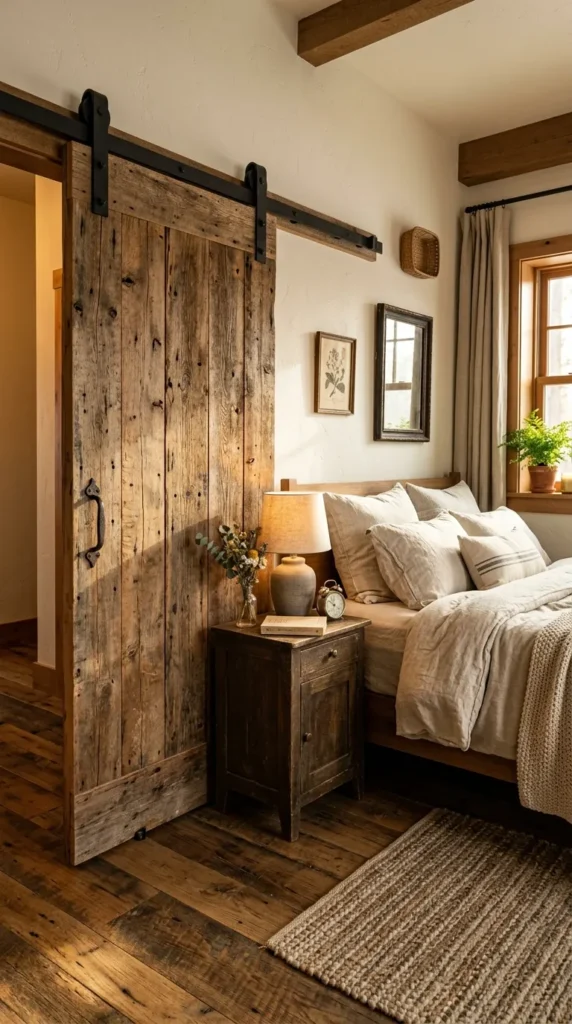
A barn door built from genuinely reclaimed wood, with visible grain variation, nail holes, and weathering across the surface, brings authentic history and character that a new, uniform wood door cannot replicate. Every reclaimed door is unique, which makes this option feel less like a mass produced fixture and more like a considered, one of a kind addition to the room.
This suits a farmhouse, rustic, or cabin style bedroom particularly well, where the imperfection and texture of the wood reinforces the room’s overall sense of warmth and history rather than reading as a modern addition layered onto an older aesthetic.
8. Paint the Door a Bold Contrasting Color
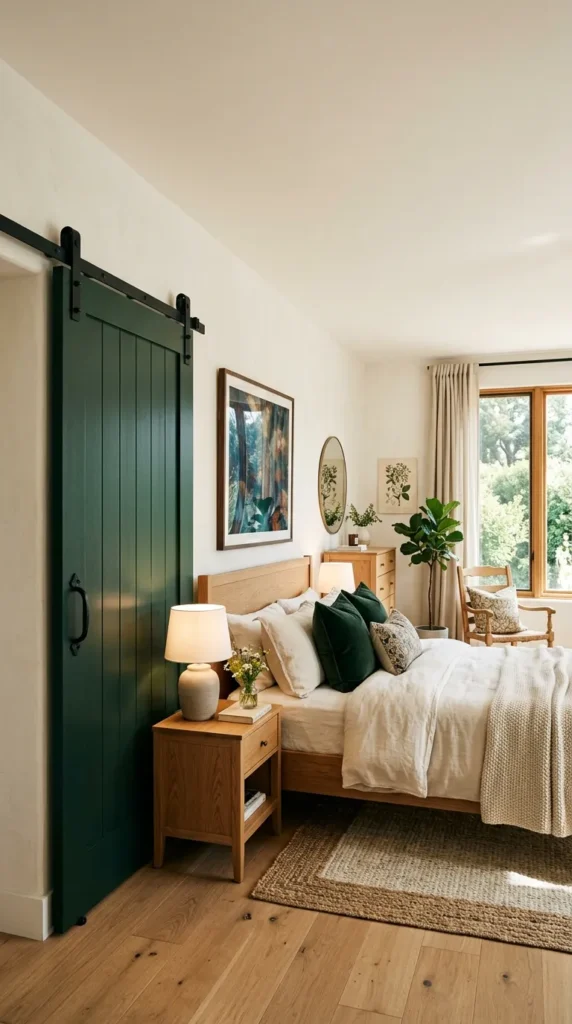
Rather than leaving the door in a natural wood finish, painting it a bold, contrasting color turns the barn door into a genuine statement piece within the room, particularly effective in a space with an otherwise neutral or muted palette. Deep navy, forest green, or matte black are all popular choices that read as confident without feeling overly trend driven.
This works especially well when the door color echoes an accent color already present elsewhere in the room, in the bedding, a piece of art, or an accent chair, tying the bold choice into the broader palette rather than leaving it feeling disconnected from everything else.
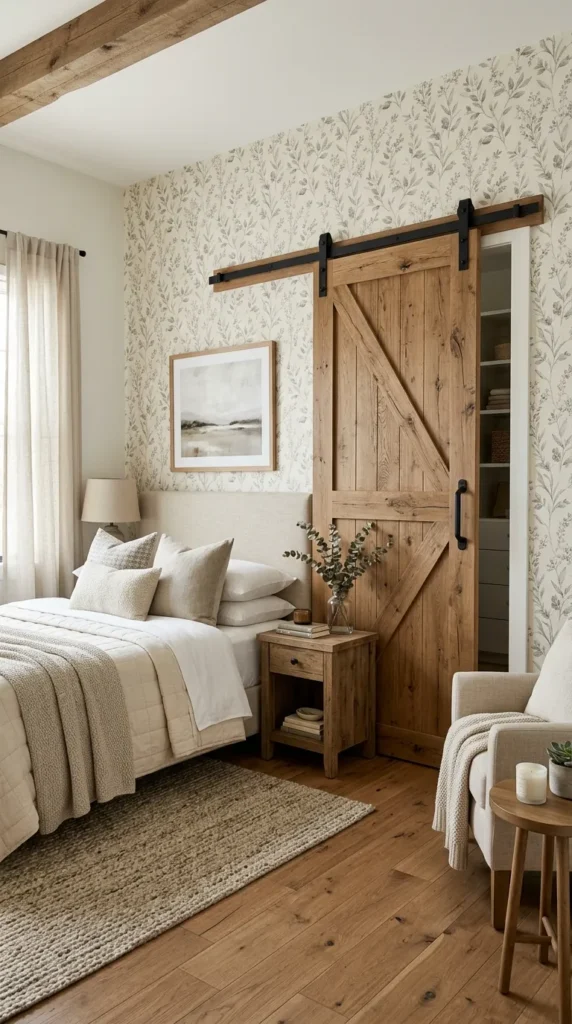
9. Add a X Pattern Frame for a Classic Farmhouse Look
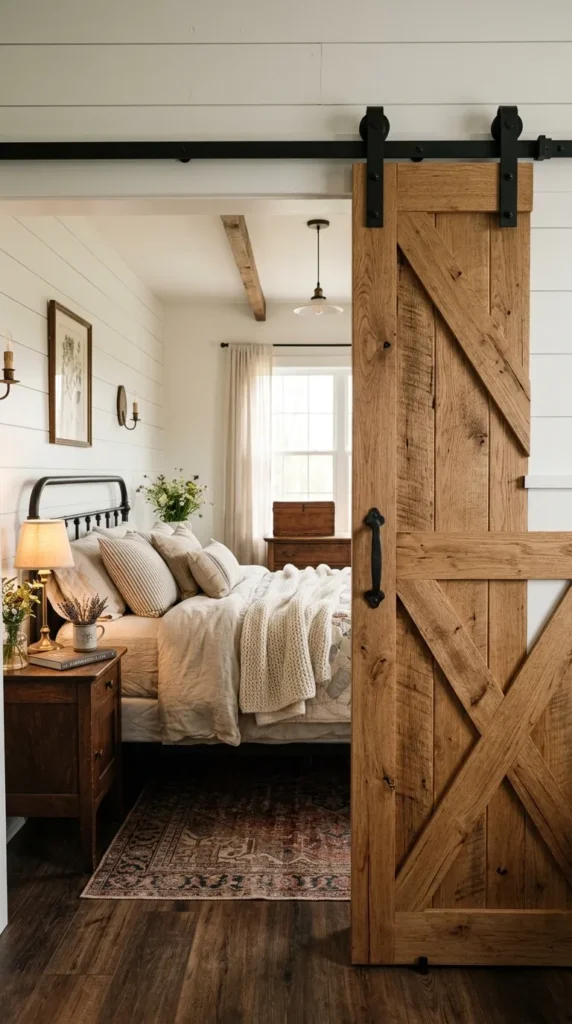
The diagonal X pattern across the face of a barn door is one of the most recognizable and enduringly popular styles for this type of door, and it reads immediately as classic farmhouse without requiring any additional styling to reinforce that character. The crossed pattern also adds structural framing that gives the door visual weight.
This style suits a room already committed to a farmhouse or rustic aesthetic elsewhere, shiplap walls, exposed beams, vintage hardware, since the X pattern reinforces rather than introduces that style, working best as part of a cohesive design direction rather than a standalone choice.
10. Use a Herringbone Panel Design for Visual Texture
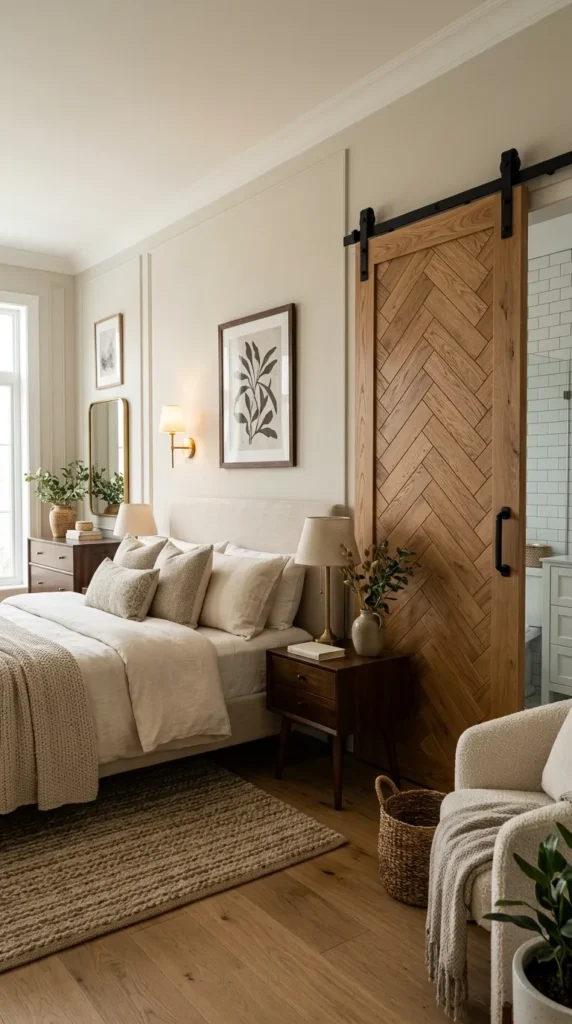
A herringbone pattern across the door’s wood panels creates a more intricate, higher end look than a standard flat or X patterned door, and the angled, interlocking pattern adds genuine visual texture that catches light differently across the surface. This is a more contemporary take on a traditional barn door style.
This option suits a bedroom aiming for a slightly more elevated, design forward look than the classic farmhouse X pattern provides, and it pairs particularly well with a more refined material palette elsewhere in the room, brass hardware, tailored bedding, and a considered color scheme.
11. Choose Matte Black Hardware for a Cohesive Finish
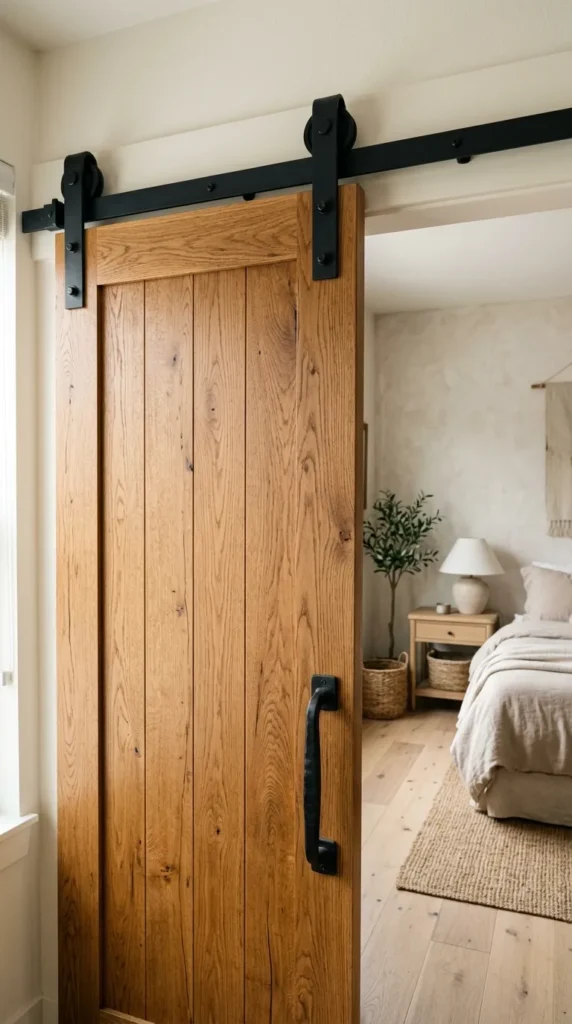
The track, rollers, and handle are as visually significant as the door panel itself, since the exposed track running along the top of the door is highly visible regardless of the door’s own finish. Matte black hardware is one of the most versatile and currently popular choices, working well against both light and dark wood tones.
Choosing hardware that matches or complements other metal finishes in the room, light fixtures, cabinet pulls, window hardware, extends the same cohesive approach covered in earlier ideas on this list, ensuring the barn door’s hardware doesn’t read as a mismatched afterthought against the rest of the room’s finishes.
12. Add Soft Close Hardware for Everyday Practicality
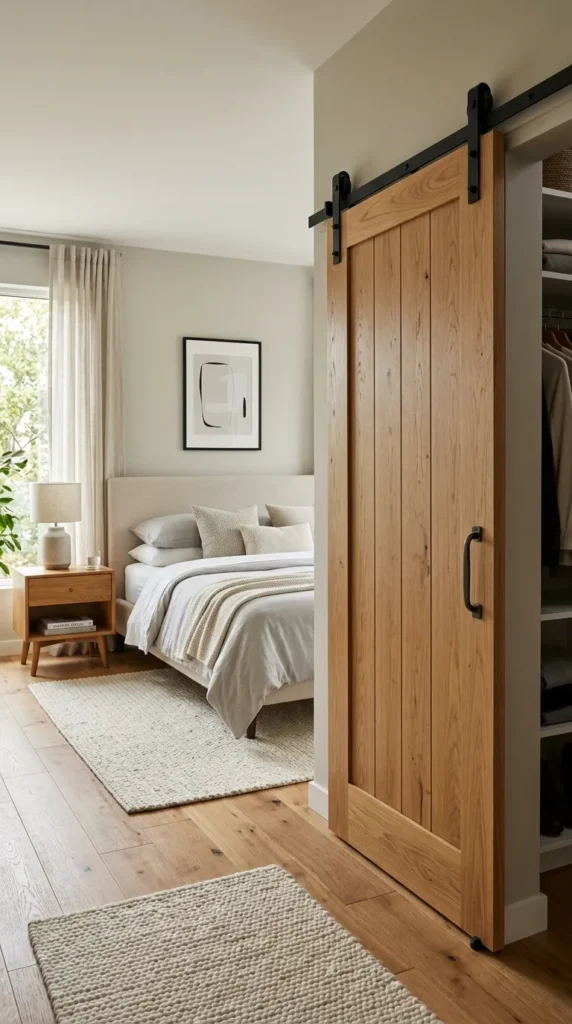
A soft close mechanism prevents the door from slamming shut when pushed with any force, which matters significantly for a door used multiple times daily and positioned in a bedroom where a loud bang can be genuinely disruptive. This upgrade is a relatively small additional cost compared with the overall installation but makes a noticeable difference in daily use.
Beyond the practical noise reduction, soft close hardware also protects the door and track from the wear that repeated forceful closing causes over time, extending the lifespan of the installation and keeping the sliding action smooth for longer.
13. Use a Frosted Glass Insert for Privacy With Light
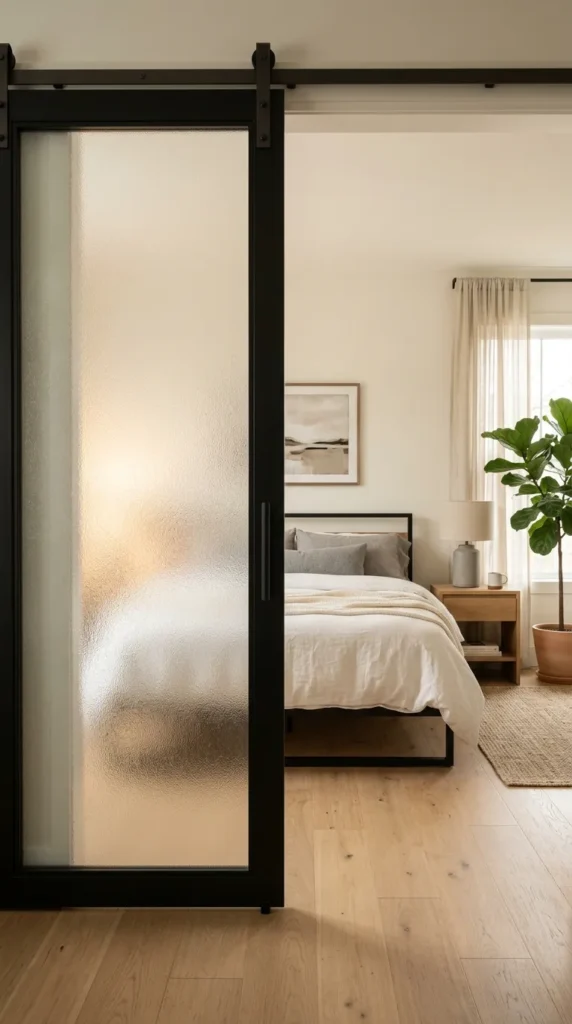
A door with a single large frosted glass panel, rather than a solid wood or metal surface, allows daylight from an adjacent window or room to filter through into a closet that would otherwise stay dark, while the frosted texture obscures the specific contents from view. This is particularly useful for a closet without its own interior light source.
This option suits a more contemporary bedroom aesthetic, and it pairs well with the same steel framing covered earlier in this list, creating a door that feels architectural and considered rather than purely functional.
14. Try a Two Tone Door for a Custom Look
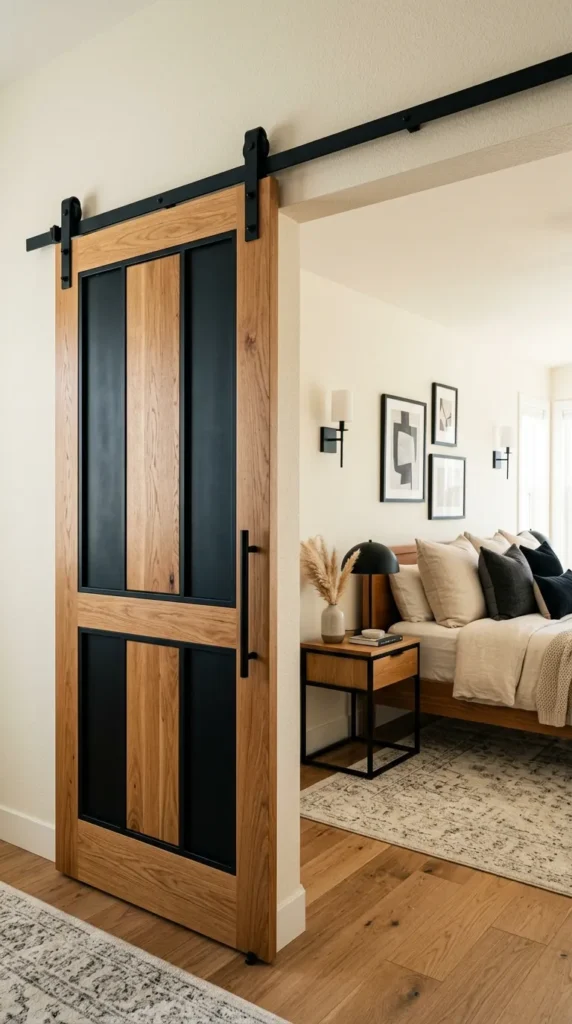
A door finished in two complementary wood tones, or a combination of wood and painted panels, creates a custom, bespoke look that a single tone door cannot achieve on its own. This approach allows the door to coordinate with two different elements in the room simultaneously, a wood tone matching the flooring and a painted section matching an accent color.
This is a more involved custom order than a standard single finish door, but the result reads as considerably more tailored to the specific room, rather than a stock item that could belong in any home regardless of its existing palette.
15. Add a Barn Door to a Walk In Closet Entrance
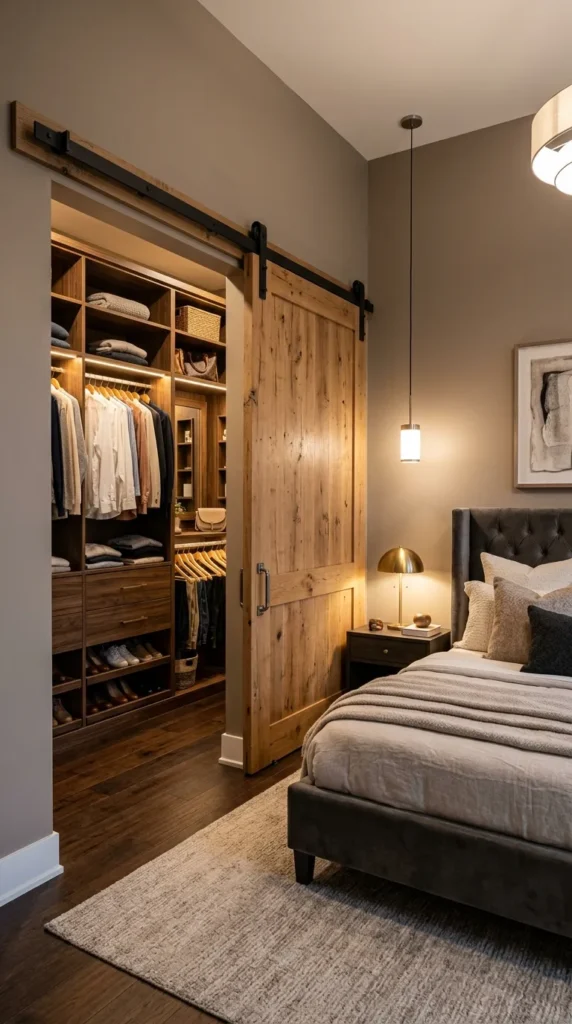
A walk in closet entrance is one of the most natural applications for a barn door, since the sliding mechanism avoids the swing clearance a hinged door would require directly in the bedroom’s walking path. This is particularly valuable in a bedroom where the closet entrance sits close to the bed or another piece of furniture.
A wider single door or a double door configuration, depending on the size of the opening, both work well here, and because a walk in closet entrance is typically used multiple times daily, this is one of the barn door installations most likely to deliver genuine everyday practicality alongside its visual impact.
16. Use a Barn Door in Place of a Bifold Door
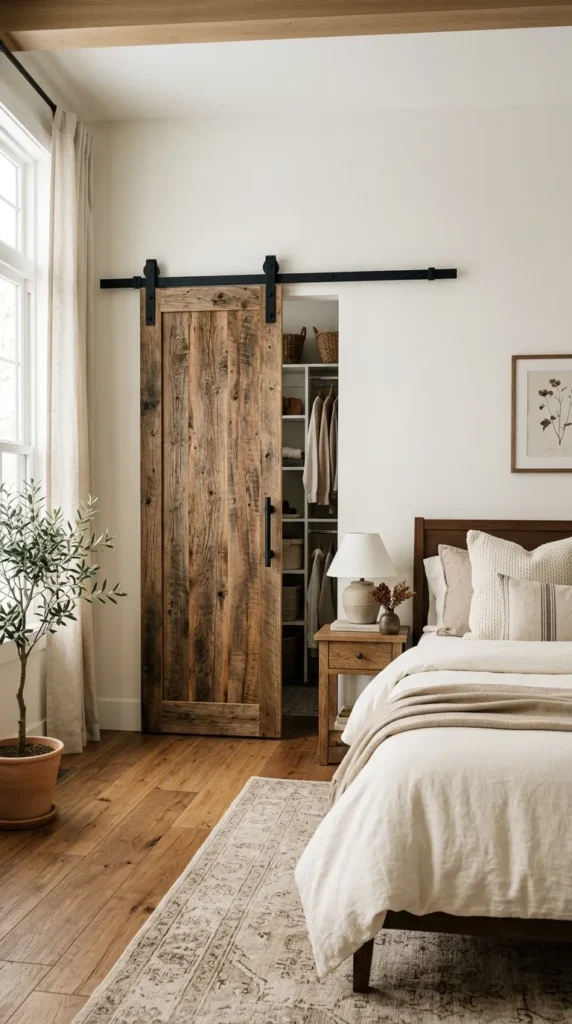
Bifold doors are a common but often visually unremarkable default for closets, and replacing one with a barn door is one of the most effective single upgrades available for a bedroom that otherwise feels unfinished. Unlike a bifold, a barn door doesn’t require folding hardware that can loosen or stick over time, and it presents a single, clean surface rather than several hinged panels.
This swap typically requires confirming there’s enough wall space beside the opening for the door to slide into, since bifold doors are often installed specifically because that wall space wasn’t available, which is the first thing worth checking before planning this particular upgrade.
17. Choose a Minimalist Flat Panel Door for Modern Rooms
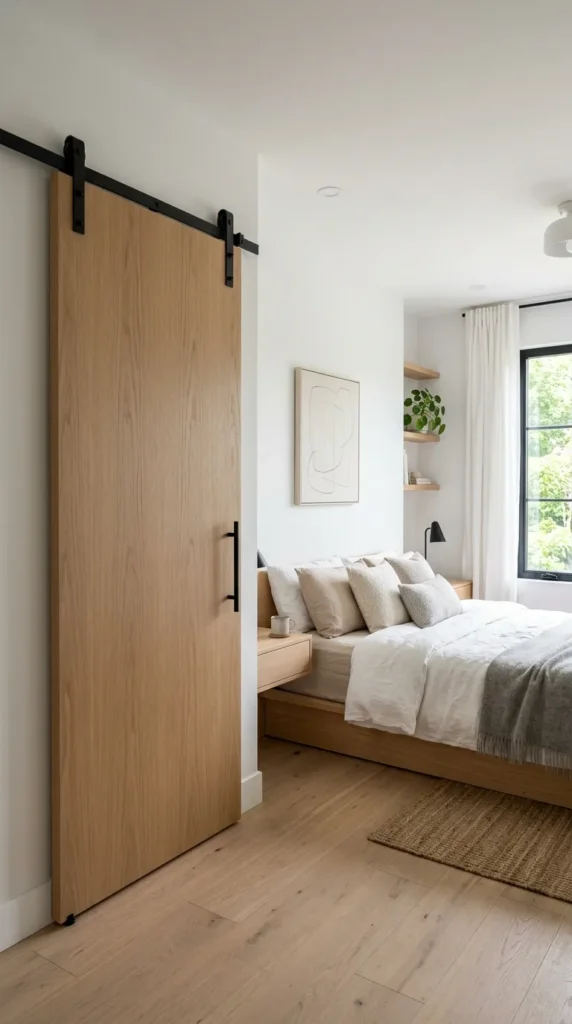
A completely flat, unadorned door panel, without an X frame, herringbone pattern, or visible grain detail, suits a minimalist or strictly contemporary bedroom where the goal is a clean, understated look rather than a rustic or decorative statement. The barn door hardware itself, the track and rollers, becomes the only visible detail against an otherwise plain surface.
This option works particularly well in a bedroom already built around clean lines and a restrained palette, where a more decorative barn door style would introduce visual complexity that works against the room’s overall minimal aesthetic.
18. Add Wallpaper Behind the Door Track for Depth
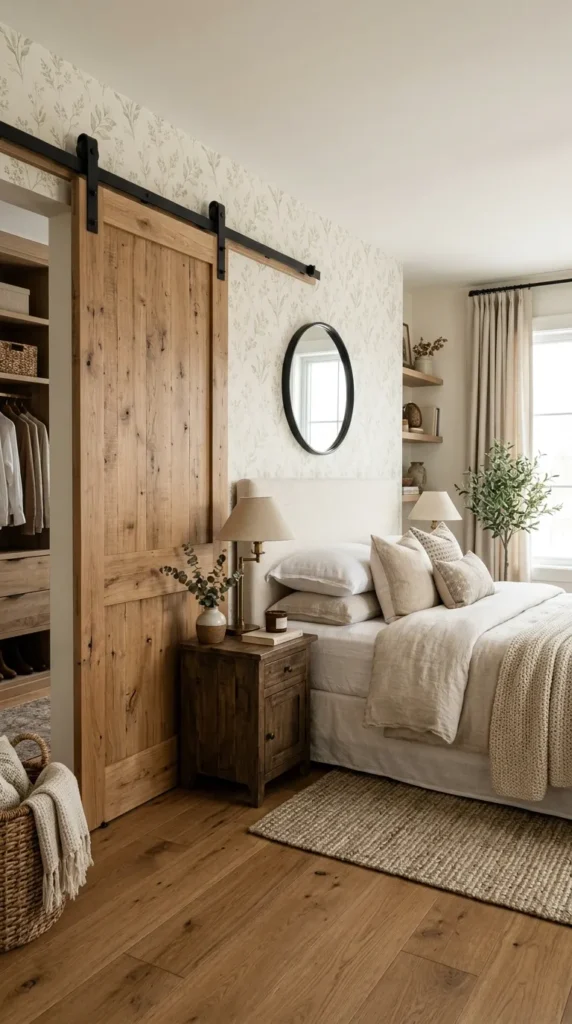
Because a barn door slides along the wall rather than swinging into a doorway, there’s typically a section of wall behind or beside the door that remains visible even when the door is closed. Wallpapering this section in a pattern or texture that complements the door adds depth and visual interest to what would otherwise be a plain expanse of wall.
This is a detail easy to overlook when planning a barn door installation, but it makes a meaningful difference to how finished the overall wall looks, particularly in a room where the door and its surrounding wall are highly visible from most angles.
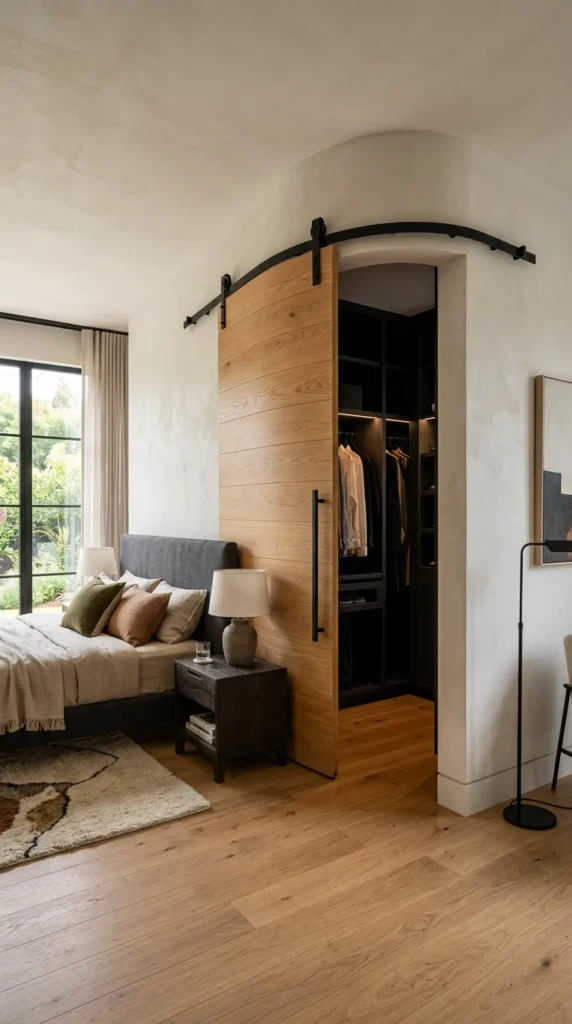
19. Use a Curved Track for an Angled Opening
For a closet opening on an angled wall, or a room with an unusual layout, a curved barn door track allows the door to follow that angle rather than requiring a straight wall section that many homes simply don’t have. This is a more specialized hardware option but opens up barn door installation to spaces that a standard straight track couldn’t accommodate.
This option is worth discussing with an installer experienced in this specific hardware, since a curved track requires more precise measurement and installation than a standard straight system to ensure the door continues to slide smoothly along its full range of motion.
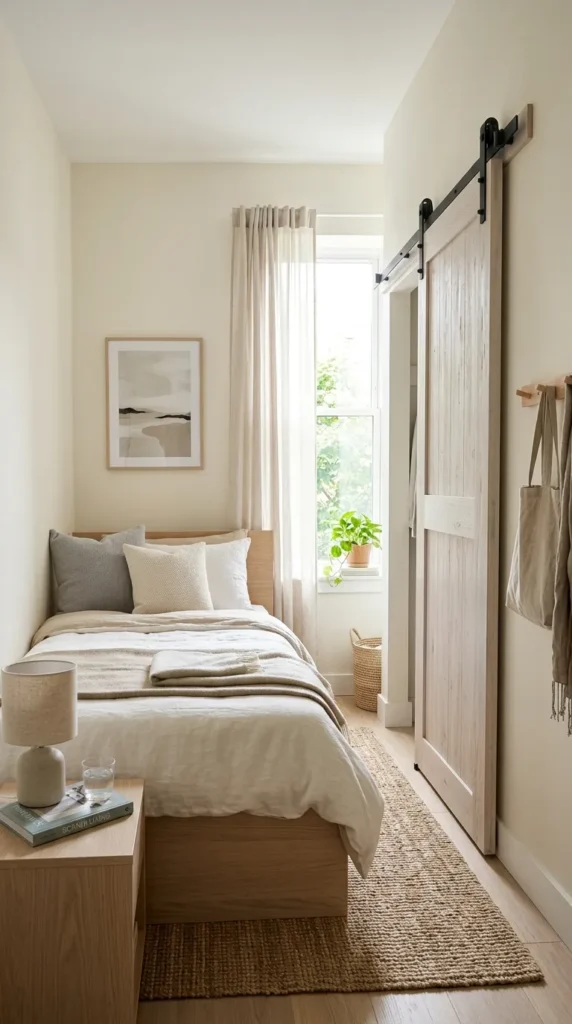
20. Choose a Lighter Wood Tone for Small Spaces
In a smaller bedroom, a barn door in a lighter wood tone, whitewashed oak, pale ash, or a bleached finish, keeps the door from becoming a visually heavy element in a room that’s already working with limited space. A dark, saturated door in a small room can read as overwhelming in a way the same door wouldn’t in a larger space.
This lighter approach also reflects more available light back into the room, which contributes to the sense of openness that matters more in a compact bedroom than a spacious one, where a darker, more dramatic door has more room to work without closing the space in.
21. Add Wall Sconces to Frame the Door
A pair of wall sconces mounted on either side of the barn door opening frames the door as a genuine architectural feature, similar to how sconces might flank a fireplace or a piece of art. This is a detail that elevates the door beyond its functional role and treats it as a considered part of the room’s overall design.
Warm toned bulbs in these sconces, matched to the lighting used elsewhere in the bedroom, extend the same warm, layered lighting approach that suits most bedroom styles, while also providing practical illumination for the closet entrance itself.
22. Use a Barn Door for a Laundry Closet
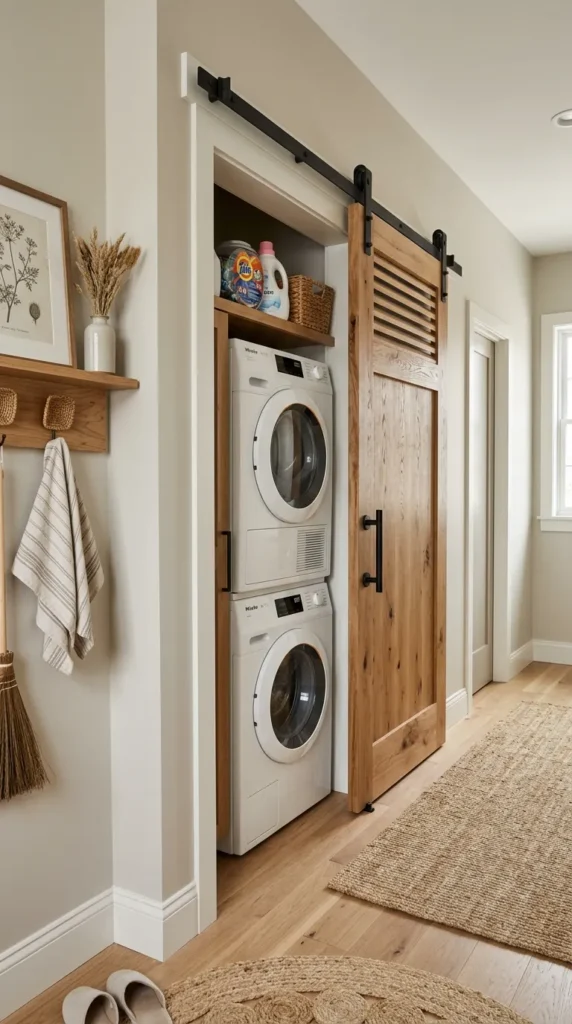
Beyond bedroom closets, a barn door works particularly well on a laundry closet, where the sliding mechanism keeps the door from swinging into a hallway or kitchen space that a hinged door would otherwise require clearance for. This application suits homes with a stacked or compact laundry setup tucked into a hallway or kitchen nook.
A door with some ventilation built in, slatted panels or a louvered design, is worth considering for this specific application, since it allows air circulation around the laundry appliances behind the closed door, which a solid panel door doesn’t provide.
23. Try a Vintage Inspired Hardware Finish
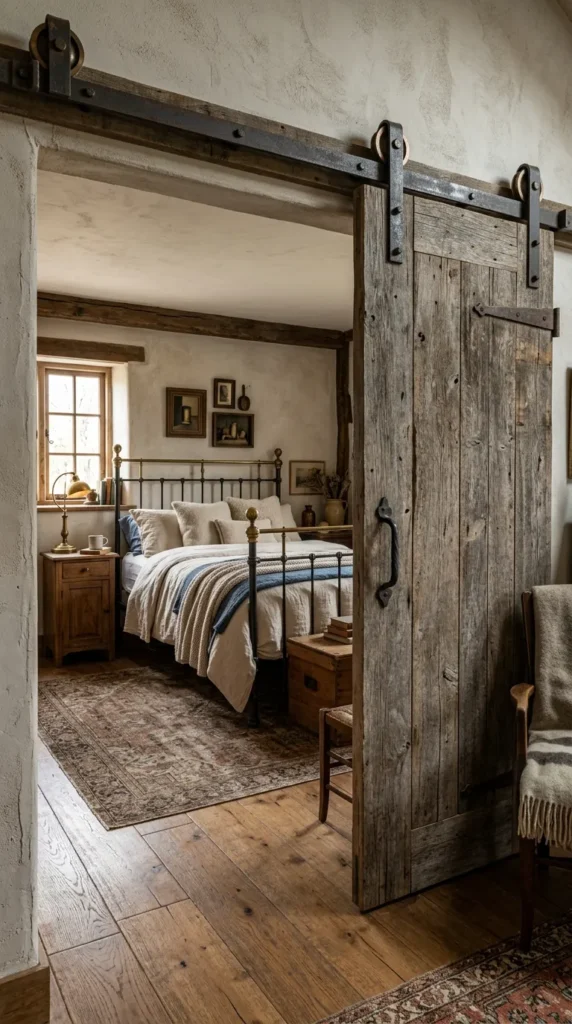
Beyond matte black, hardware in an aged bronze, oil rubbed finish, or a distressed iron look brings a more vintage, collected character to a barn door than the cleaner, more contemporary look of matte black or brushed nickel. This suits a room aiming for an older, more established feeling rather than a strictly modern one.
This hardware choice pairs particularly well with the reclaimed wood door covered earlier in this list, since both the wood and the hardware share the same sense of history and age, reinforcing a cohesive, considered look rather than combining a vintage door with distinctly modern fittings.
24. Add a Barn Door to Divide a Walk In Closet Into Zones
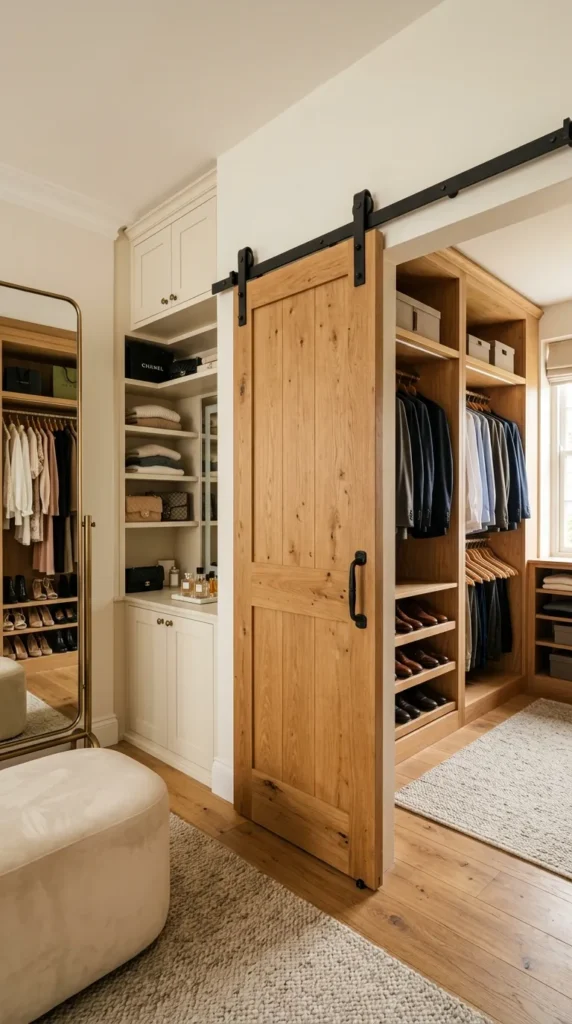
Within a larger walk in closet, a barn door can be used internally to divide the space into distinct zones, separating a dressing area from bulk storage, or creating a private section within a shared closet. This application uses the barn door’s space saving sliding mechanism inside the closet itself, not just at its entrance.
This is a particularly useful idea for a shared closet used by two people, where an internal barn door can create a sense of separation and privacy between two sides of the space without requiring a full wall to be built.
25. Keep the Wall Space Clear on Both Sides of the Track
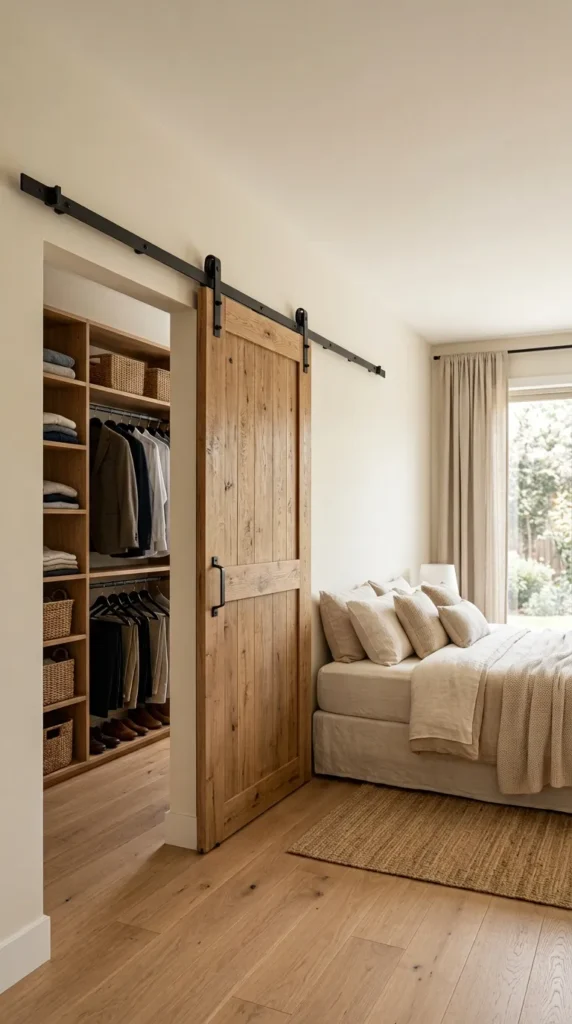
Whatever style or configuration is chosen, a barn door needs its full sliding path kept clear of furniture, artwork, or wall mounted fixtures, since anything positioned in that path defeats much of the purpose of choosing a sliding door in the first place. This is worth planning for before the door is installed, not adjusted for afterward.
Measuring the full slide distance of the door and marking that zone clearly during the planning stage prevents the common mistake of hanging art or placing a piece of furniture just slightly within the door’s path, which either blocks the door from opening fully or requires awkward repositioning of the door track after the fact.
Final Thoughts
A barn door closet works best when the style, wood tone, and hardware are chosen to genuinely suit the room it’s going into, rather than defaulting to whichever door happens to be most popular at the moment. A reclaimed wood door with an X frame belongs in a different room than a black steel framed glass panel, and matching that choice to the room’s existing character is what makes the door feel considered rather than trend driven.
Start by confirming the practical requirements, wall clearance, track length, and door weight, before choosing the finish and hardware details covered throughout this list. A barn door installed with those fundamentals right becomes a genuine long term feature of the room, functional every single day and distinctive enough to elevate the space well beyond what a standard closet door ever could.