16 Twin Bedroom Ideas
Designing a bedroom for two children at once comes with a unique set of challenges. You want the space to feel fair and balanced, but you also want each child to feel like the room reflects who they are as individuals. Finding that middle ground is easier than it sounds once you have the right layout ideas to work from.
This guide gathers sixteen thoughtful approaches to twin bedroom design, covering everything from layout and furniture choices to small personal touches that help each child feel seen. Whether your twins want a room that looks identical or one that celebrates their differences, there is an idea here to help guide the process.
1. Matching Mirror Image Layout
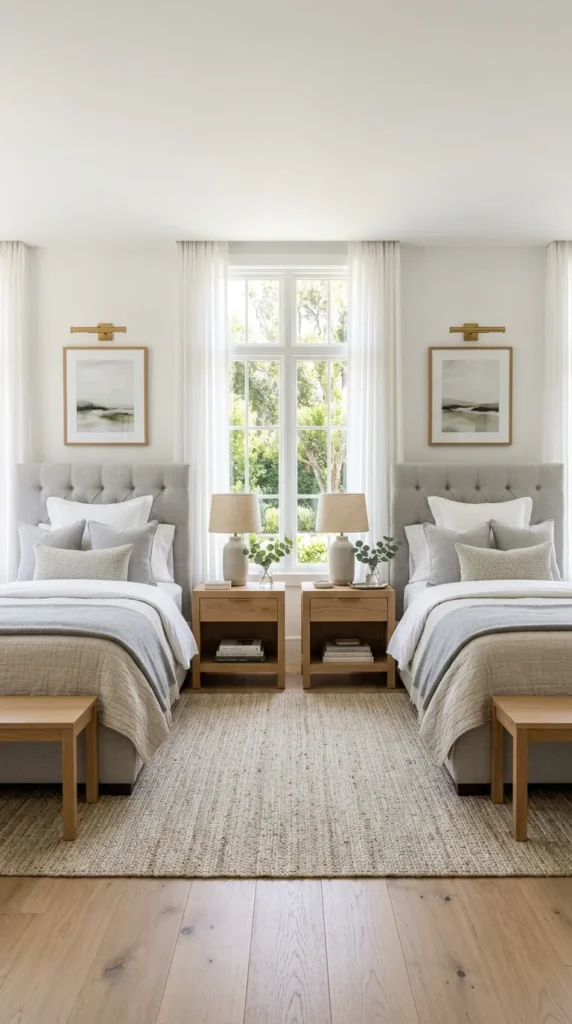
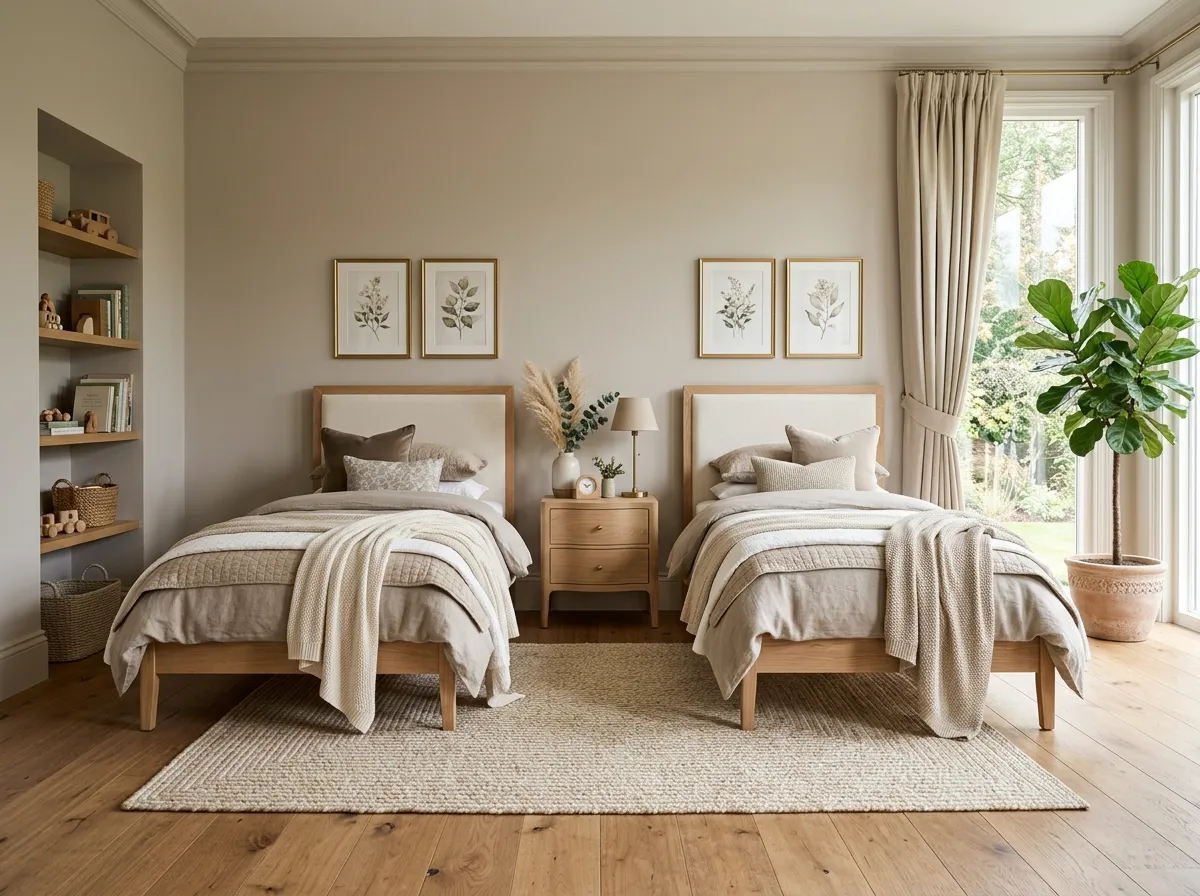
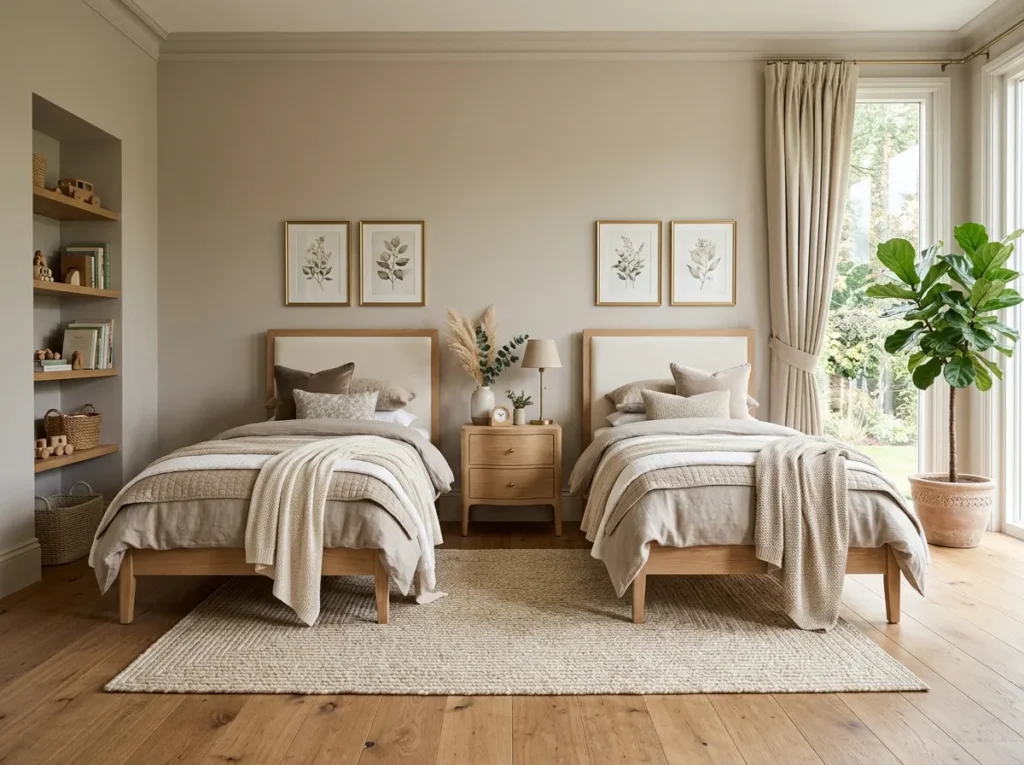
Arranging the room so each side mirrors the other creates an immediate sense of fairness that many twins appreciate. Identical beds, nightstands, and shelving placed symmetrically on opposite walls ensures neither child feels like they got the lesser half of the space.
This layout works especially well for younger twins who prefer consistency and equal treatment. A shared rug in the center of the room ties both sides together visually, reinforcing the idea that the space belongs equally to both children rather than being split into two separate territories.
2. Bunk Bed Twin Setup
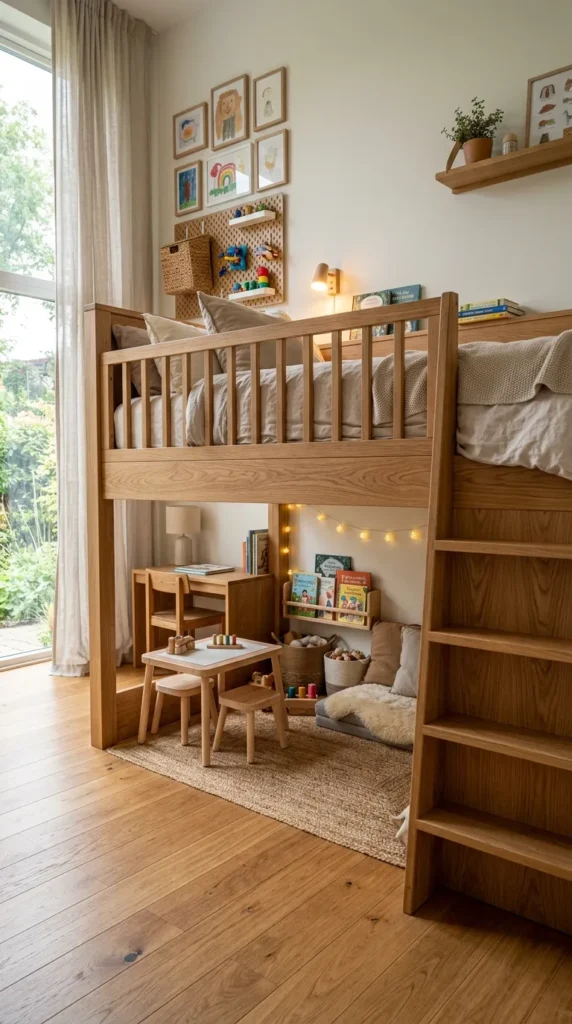
Bunk beds remain one of the most practical solutions for twin bedrooms, especially in homes with limited square footage. Stacking the beds frees up significant floor space for play, study, or simply moving around the room comfortably throughout the day.
Choosing a bunk frame with built in guardrails and a sturdy ladder keeps safety front and center, particularly for younger children. Letting each child pick their own bedding for their respective bunk adds a small but meaningful sense of ownership within a shared piece of furniture.
3. Color Coded Zones
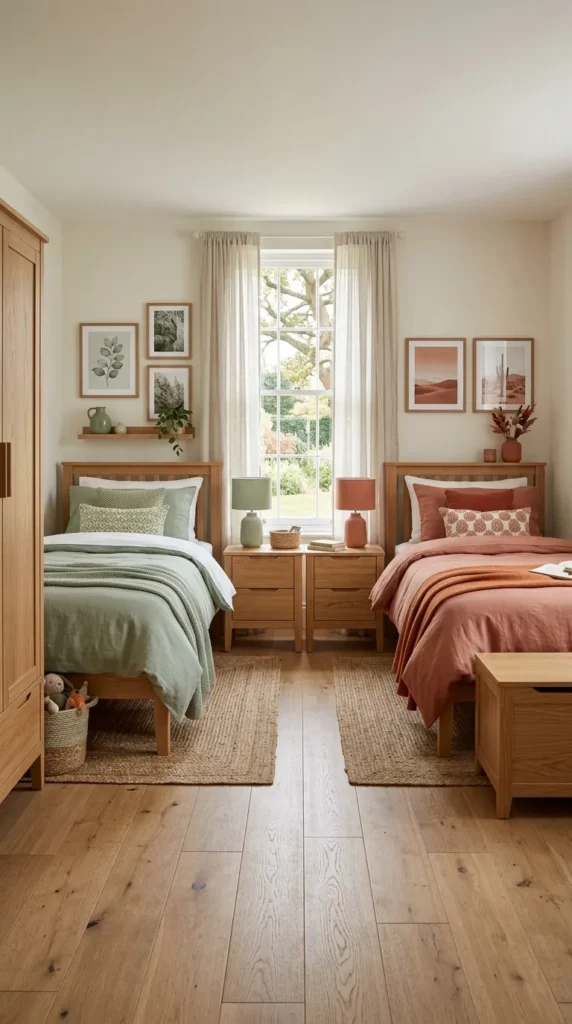
Assigning each child their own accent color helps define personal space without requiring a physical divider in the room. One twin’s side might lean toward soft blue accents, while the other favors warm yellow, all within the same overall neutral base palette.
This approach works particularly well for twins who want some individuality but still need to share a room harmoniously. Keeping the wall color neutral while introducing personality through bedding, artwork, and small decor items makes future changes easy as each child’s preferences continue to evolve.
Need even more space-saving inspiration? Browse 20 Murphy Bed Ideas for clever multifunctional bedroom solutions.
4. Shared Study Nook
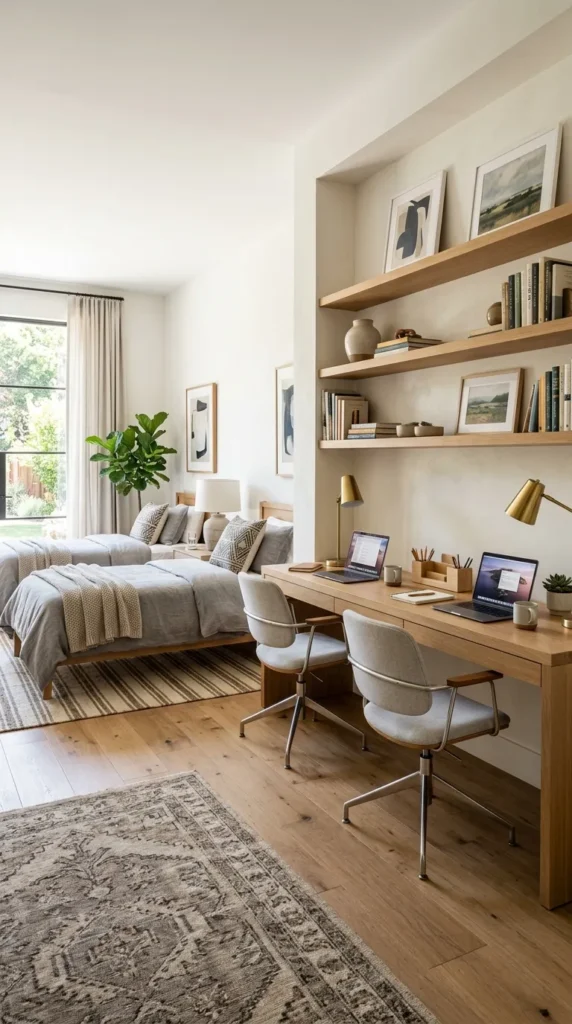
A dedicated study area between the two beds gives twins a common space to do homework or read without needing separate desks. A long shared table with two chairs works well for younger children, while older twins may prefer individual desks placed side by side.
Good task lighting above the nook makes the space functional well into the evening hours. This setup also encourages a sense of togetherness during quiet, focused time, which many parents find helps twins bond even as they grow older and become more independent.
5. Symmetrical Canopy Beds
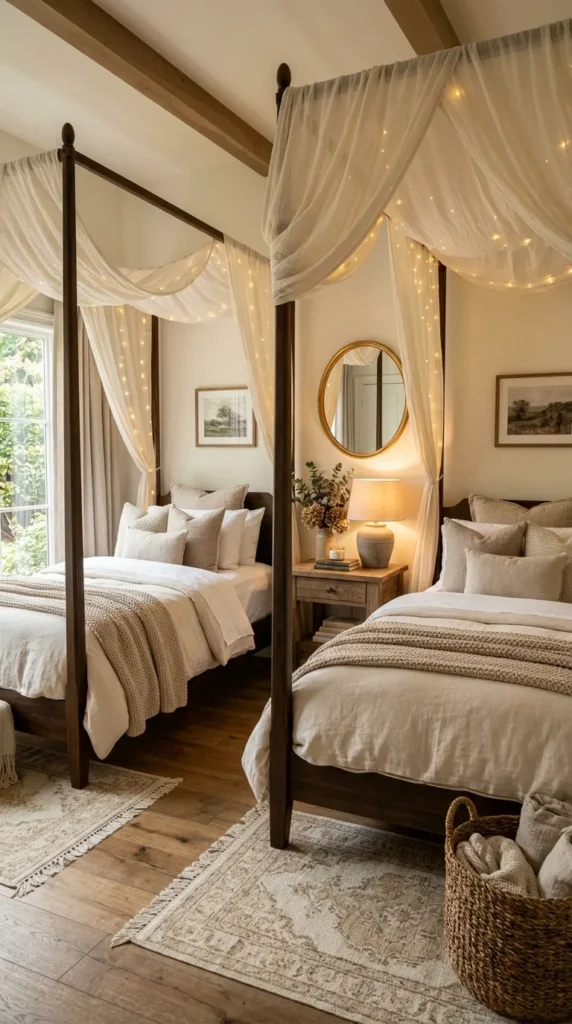
Twin canopy beds placed on opposite sides of the room add a touch of whimsy while maintaining the fairness of a symmetrical layout. Soft fabric draped over each frame creates a cozy, enclosed feeling that many children genuinely enjoy at bedtime.
Choosing identical canopy fabric in a neutral tone keeps the look cohesive, while allowing each child to personalize the inside of their own canopy with fairy lights or small hanging decorations. This idea works particularly well in bedrooms with higher ceilings that can accommodate the extra height.
6. Twin Beds with Shared Headboard Wall
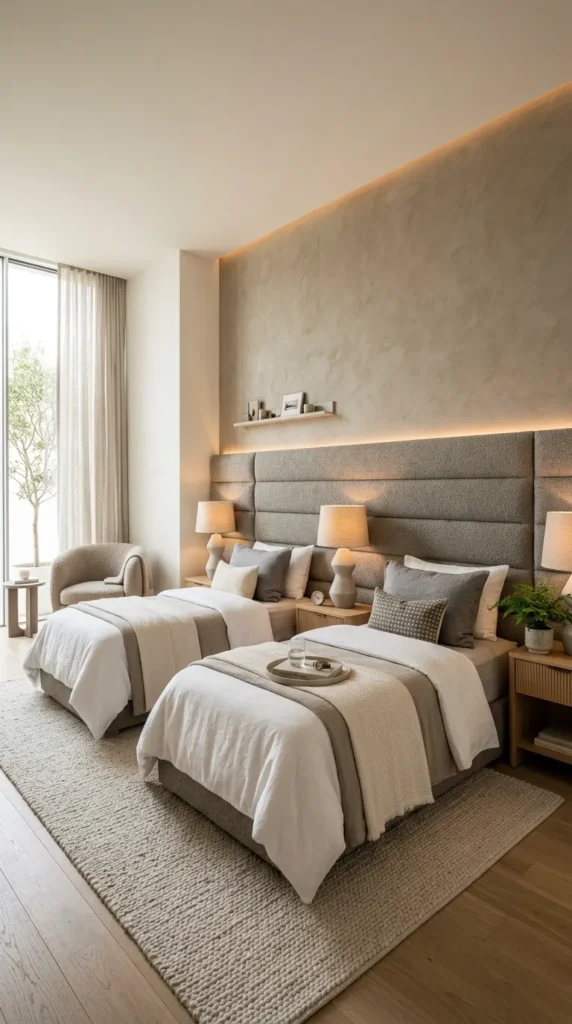
A single oversized headboard spanning the width of both beds creates a unified visual anchor for the entire room. This approach makes two separate beds feel like one intentional design choice rather than simply two pieces of furniture placed side by side.
Painting or wallpapering just the headboard wall in a bolder pattern or color adds interest without overwhelming the rest of the room. This idea works well for twins who want a more grown up, coordinated look rather than a room that reads as clearly divided down the middle.
7. Individual Reading Corners
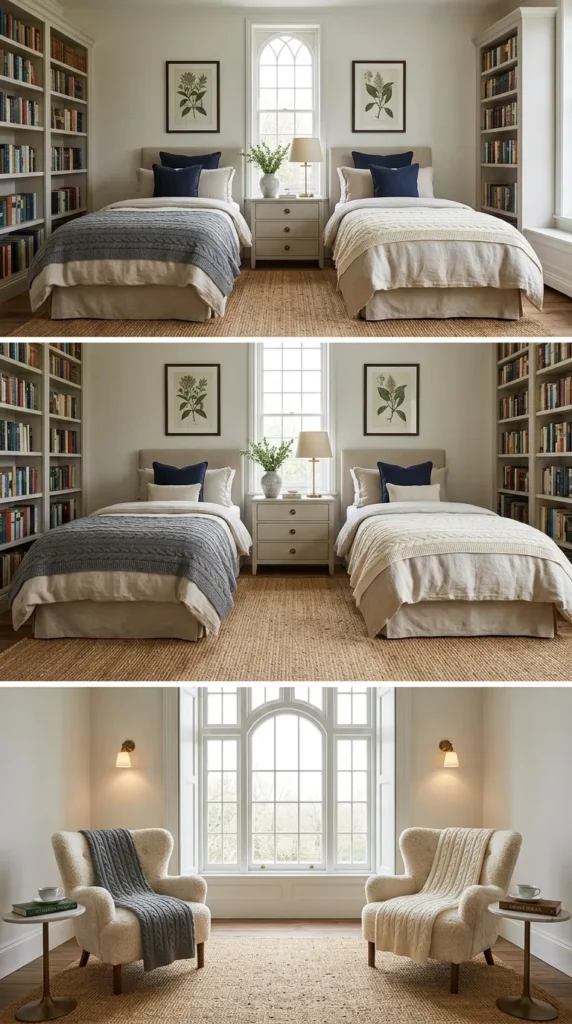
Carving out small reading nooks on each side of the room gives twins a private retreat within a shared space. A cozy chair or floor cushion, paired with a small bookshelf and a reading lamp, creates a personal corner that belongs entirely to one child.
This idea helps balance the togetherness of sharing a bedroom with each child’s need for occasional solitude. Letting each twin choose their own reading corner style, even within a coordinated overall room design, respects their individual personalities without disrupting the room’s general harmony.
8. Coordinating Patterned Bedding
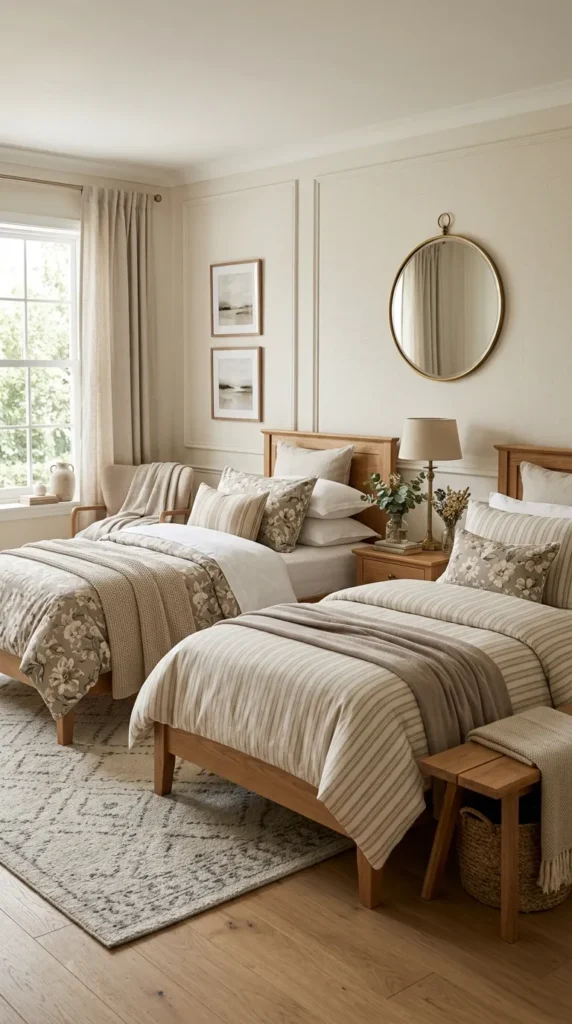
Rather than identical bedding, choosing two different patterns from the same color family keeps the room feeling cohesive while allowing each child some personal expression. One twin might choose stripes while the other prefers a floral or geometric print, all within a shared palette.
This approach tends to satisfy twins who are old enough to have their own clear preferences but still need to share a room peacefully. Keeping the coordinating patterns within the same two or three colors ensures the overall room still reads as one thoughtfully designed space.
9. Divided Rug Zones
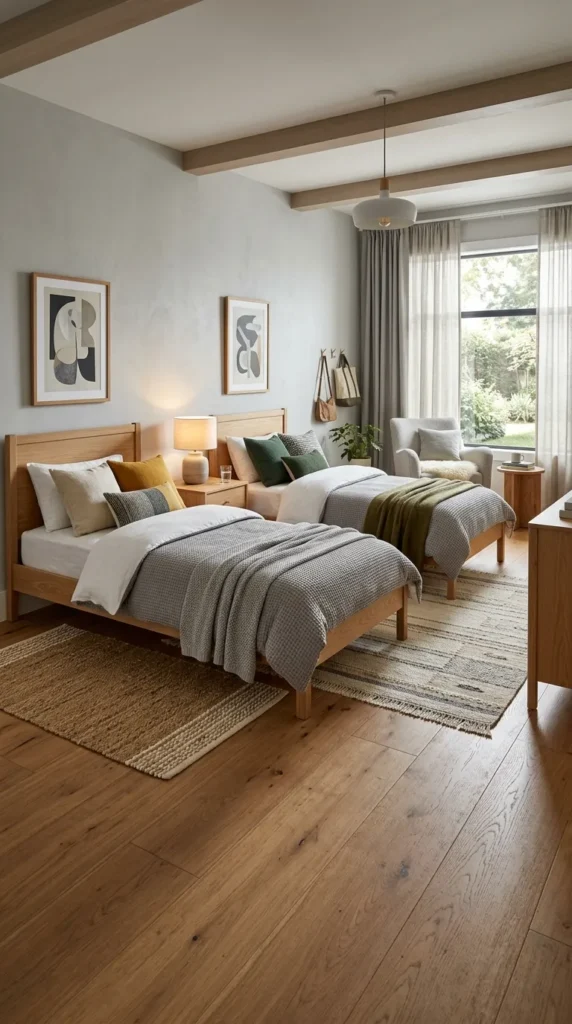
Using two separate rugs, one beneath each bed, subtly defines individual territory within the larger shared room. This works particularly well in open layouts where a physical divider is not practical or desired by the family.
Choosing rugs in complementary rather than identical patterns allows each child a small design choice of their own. This idea also adds warmth and softness underfoot on both sides of the room, which matters especially for children who spend a lot of time playing on the floor.
10. Twin Loft Beds with Play Space
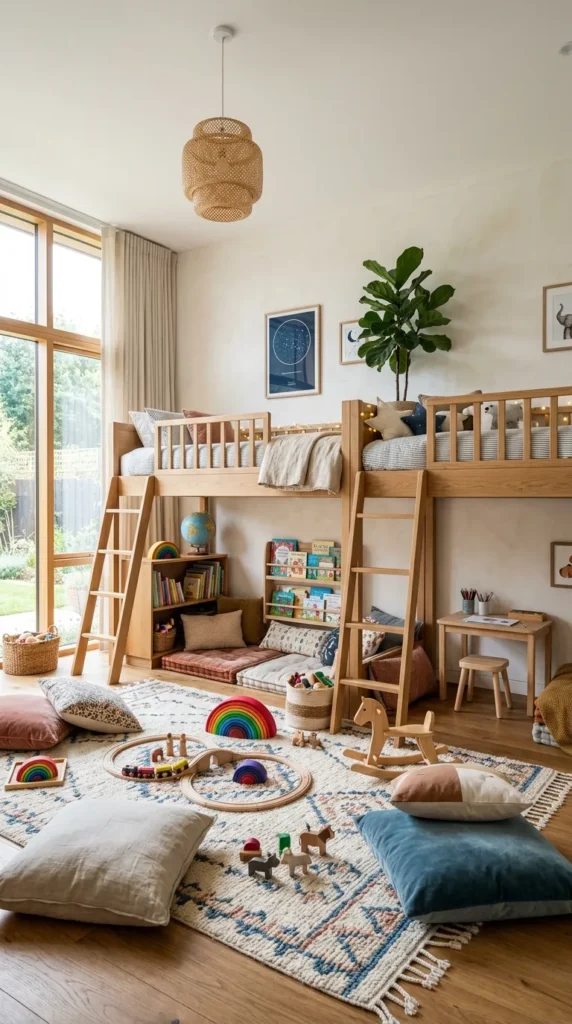
Loft beds raised above open floor space give twins both a place to sleep and a dedicated area underneath for play or study. Two loft beds facing each other, with a shared play zone in between, makes excellent use of a smaller bedroom’s total square footage.
Adding a soft rug and some floor cushions beneath the lofts creates an inviting space for imaginative play or quiet time together. This setup also naturally encourages sharing and cooperation, since the play area beneath both beds belongs equally to each child.
Make every shared bedroom feel complete with these 13 Bedroom Wall Decor Ideas for stylish finishing touches.
11. Gender Neutral Palette
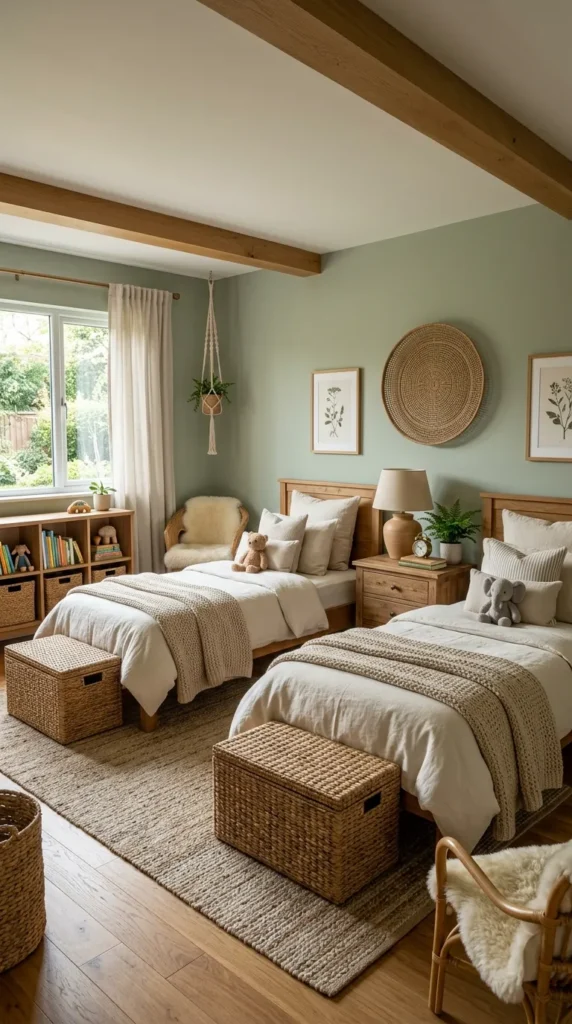
For twins of different genders sharing a room, a neutral base palette avoids leaning too heavily into either traditionally pink or blue territory. Soft sage green, warm terracotta, or gentle gray tones work beautifully as a shared foundation that feels fair to both children.
Personal touches like artwork, throw pillows, or small collectibles can then reflect each child’s individual interests without clashing with the overall room design. This approach tends to age well too, since neutral palettes require fewer updates as children grow and their preferences continue to shift over time.
12. Personalized Name Signs Above Beds
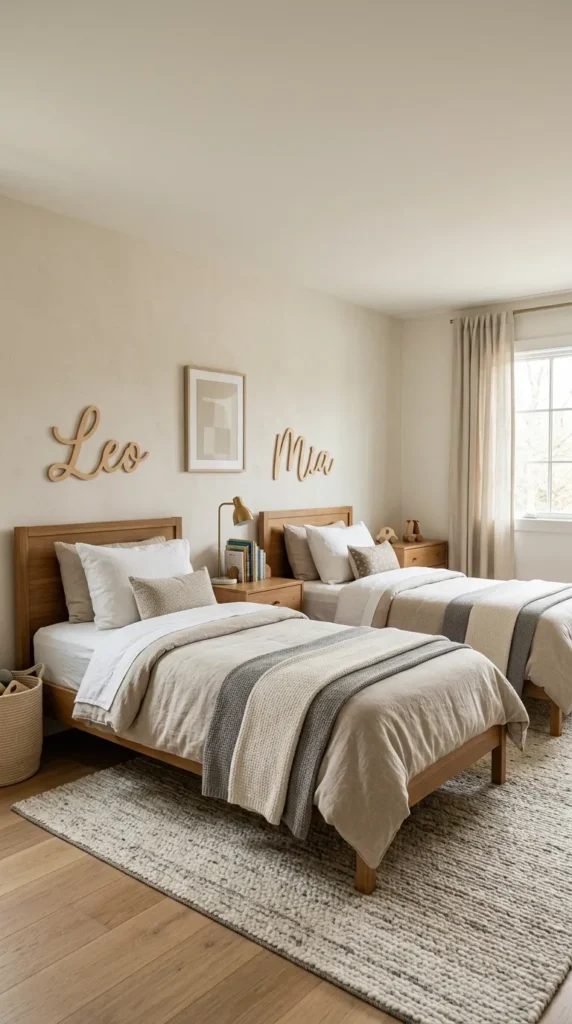
A simple wooden or fabric name sign hung above each bed gives twins an immediate, unmistakable sense of ownership over their own space. This small detail goes a long way toward making an otherwise shared room feel personal to each individual child.
Choosing signs in a matching font and style, but with each child’s name spelled out, keeps the room feeling coordinated rather than mismatched. This idea also works well as a simple weekend project, since name signs can easily be made or customized at home.
13. Shared Closet Organization Wall
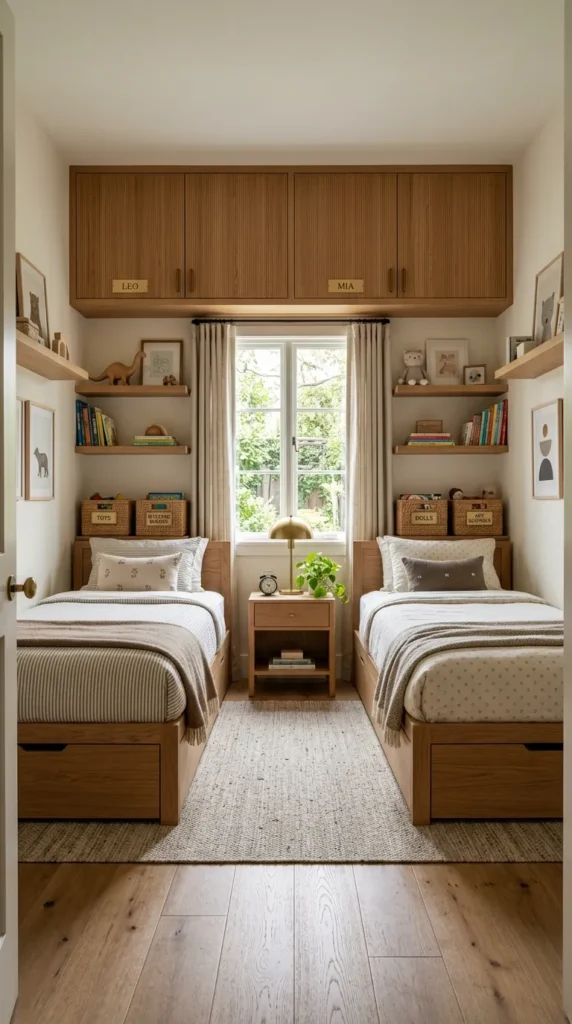
A single wall dedicated to closet and storage space, divided evenly between both children, keeps a twin bedroom organized and free of clutter. Labeled bins or baskets on each side make it easy for young children to keep their own belongings sorted and accessible.
This setup also teaches twins early lessons about sharing space fairly and respecting boundaries within a joint living area. Adding a small chalkboard or whiteboard label above each section allows children to personalize their own storage area even further as they grow older.
14. Twin Beds Facing Each Other
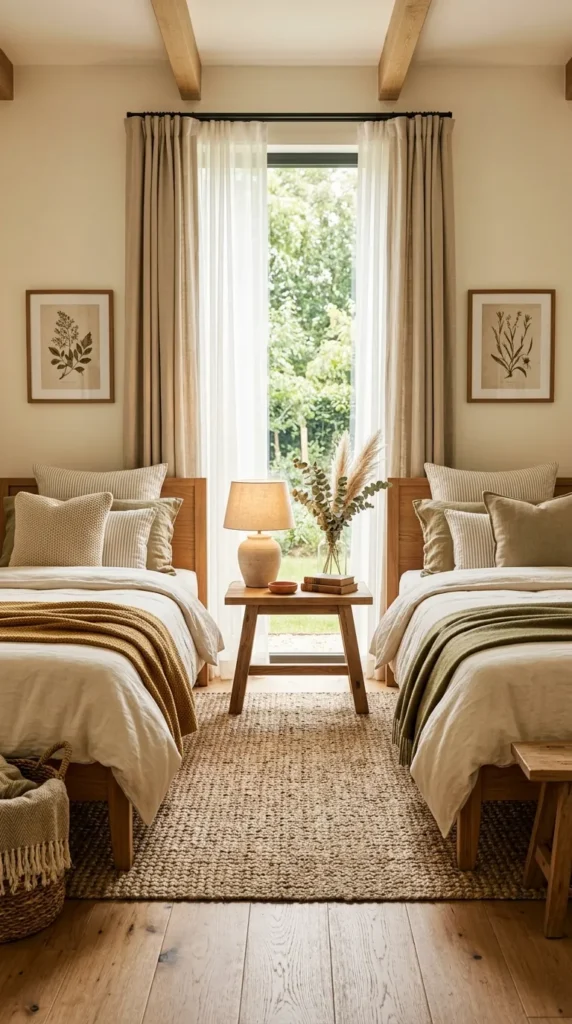
Positioning the two beds to face one another, rather than sitting side by side, creates a more social and connected feeling within the room. This layout works particularly well for younger twins who enjoy talking to each other before falling asleep at night.
A small shared rug or low table placed between the beds gives the space a natural gathering point during the day. This arrangement also makes it easy to add a shared nightlight or lamp in the middle, illuminating both beds equally without extra clutter.
15. Vintage Twin Bed Frames
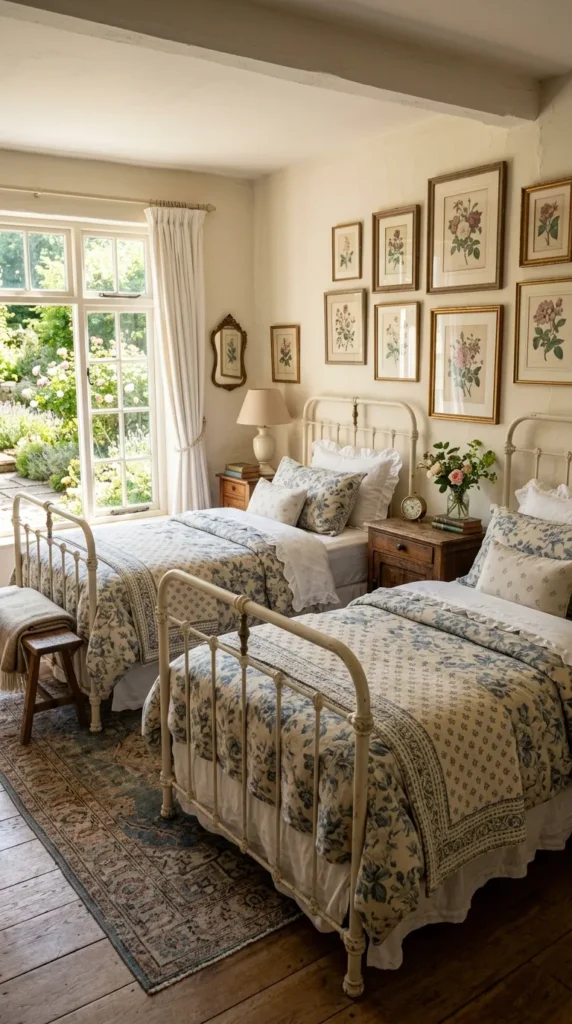
Vintage or antique style twin bed frames bring a sense of character and history into a shared bedroom that newer furniture often lacks. Wrought iron or carved wooden frames, placed on opposite sides of the room, add charm without requiring a fully themed design elsewhere.
This idea works particularly well for families who enjoy mixing old and new pieces throughout their home. Pairing vintage frames with simple, modern bedding keeps the overall look from feeling too dated, striking a nice balance between character and everyday practicality.
16. Space Saving Trundle Twin Beds
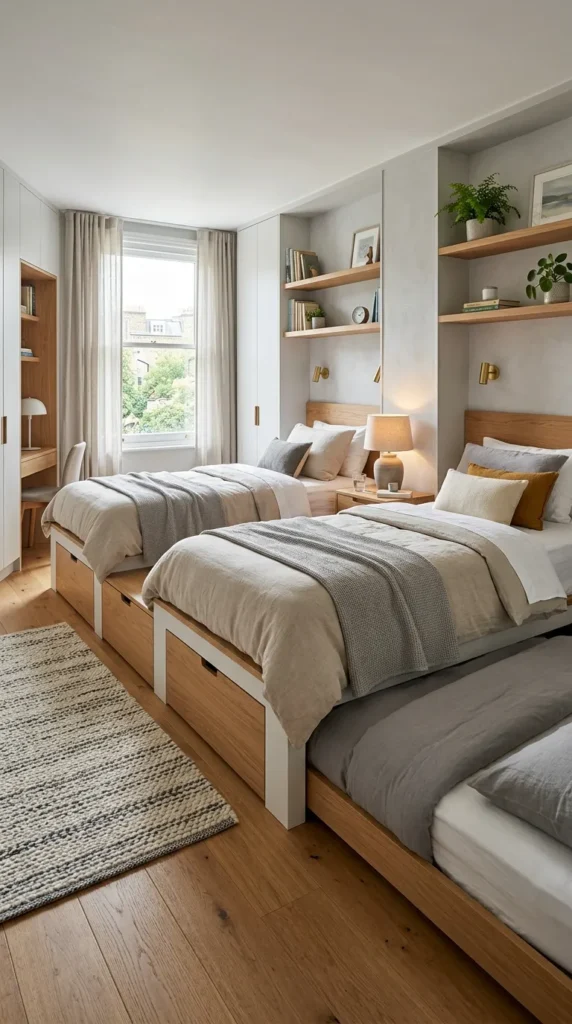
Trundle beds offer a clever solution for twin bedrooms that also need to accommodate occasional guests or sleepovers. A daybed style frame with a hidden second mattress underneath keeps the room feeling open during the day while still providing two full sleeping spaces when needed.
This setup works particularly well in smaller bedrooms where floor space is at a premium. Choosing matching daybed frames on each side of the room maintains the fairness twins often look for, while the hidden trundle feature adds genuine practical value beyond just everyday sleeping arrangements.
Final Thoughts
Designing a bedroom for twins is really an exercise in balance, giving equal weight to fairness and individuality at the same time. The sixteen ideas above offer different ways to achieve that balance, whether through layout, color, or small personal touches that let each child feel genuinely represented in the space.
Whatever combination of ideas you choose, involving both children in the process tends to lead to a room they actually love spending time in together. A shared bedroom, designed thoughtfully, can become one of the most meaningful spaces in a child’s early years, strengthening their bond long after the room itself eventually changes.